


Erhalten Sie Zugang zu diesem und mehr als 300000 Büchern ab EUR 5,99 monatlich.
- Herausgeber: Books on Demand
- Kategorie: Sachliteratur, Reportagen, Biografien
- Sprache: Englisch
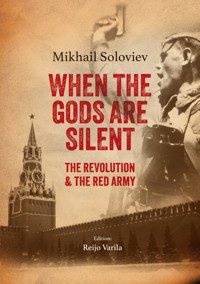
The writer Mikhail Soloviev is one of the most prominent Soviet writers who chose freedom under incredibly difficult circumstances. This work is a unique and truthful description of the greatest upheaval of our time - the three decades of the Russian Revolution. Essentially, the book is the autobiographical account of the author, Mikhail Soloviev, about his experiences during Stalin's time in the Soviet Union. Through his eyes we see the pain of a generation and the crucifixion of an entire nation. The core of this wonderful book is the author's chosen direction of life and the nation's hopes for the future. The events of Stalin's time are told vividly; in the descriptions of the events, you can already see indications of the future development of the country's history and the solutions of the current Russian leadership. The coercive measures of a government with no regard for human life put Soloviev's love for his country to the test. Hatred of Stalin's regime grows and eventually leads him to choose freedom in the West when the opportunity arises. The work is full of scenes, action and death, passion, and tenderness, it has unforgettable characters and it is illuminated by a humble faith in human dignity and the innermost power of the spirit.
Sie lesen das E-Book in den Legimi-Apps auf:
Seitenzahl: 1231
Veröffentlichungsjahr: 2023
Das E-Book (TTS) können Sie hören im Abo „Legimi Premium” in Legimi-Apps auf:
Ähnliche



















Table of Contents
Part I: The Revolution
The Family
The Earth Ablaze
On the Highroads
With the Red Cavalry in Ukraine
In the Political Training School
A Scout
The Ride
University
Lena
Military Correspondent
The Jungle
Cheka
The Voznesensky Veteran Regiment
Permskoe
Komsomolsk-on-Amur
The Diary of Peter Nomikoff
Friends Meet Again
Loneliness
Part II: The Red Army
An Incubator of Generals
The Kremlin Monastery
The Purge
Mother
The Siamese Twins
End of General Blucher
Two Portrait Studies
Budionny
Gorodovikov
The Ruts of Existence
War against Finland (Little War)
The Road to the North
On the Mannerheim Line
In a Frozen World
The Perm Regiment
The Life and Death of Sergei Stogov
Triumphant Defeat
The great War
A Succession of Storms
A ring at the door
March to the West
Into the Forest
Scorched land
Moscow, my Moscow
In the Name of Stalin
The Miracle of Moscow
Epilogue
Part I The Revolution
The Family
The Earth Ablaze
On the Highroads
With the Red Cavalry in Ukraine
In the Political Training School
A Scout
The Ride
University
Lena
Military Correspondent
The Jungle
Cheka
The Voznesensky Veteran Regiment
Permskoe
Komsomolsk-on-Amur
The Diary of Peter Nomikoff
Friends Meet Again
Loneliness
The Family
Immeasurable steppe. Sunburned earth plumed with feather grass. Only the lofty burial mounds recall its past, and the old songs and legends tell of the wild scurry of horses, the dread thunder of steppe battles, and of all the centuries that have passed over its surface.
The centuries have faded into oblivion, the Scythians have died out; but the steppe remains and lives its own, distinctive life. The widely scattered villages raise their church cupolas to the sky; plaintive songs are sung at the foot of the burial mounds; in these places new legends are being born.
In the very heart of the steppe is a large village. An ordinary Russian village; broad streets overgrown with grass; low houses thatched with straw. During the early years of this century one old house, standing in a side alley, was owned by Timothy Soloviev, a heavily built, stocky man, his face covered right to the eyes with a mighty beard. He had a large family. His wife, Vera Ivanovna, a tall woman with a shy look, had brought eighteen children into the world.
Seven of them had died, but the oldest living child, Jacob, was already in his thirties. The peasants thought it unseemly for a woman to have a child after she was forty, but was it Vera Ivanovna’s fault that God did not forget her and sent her infant after infant? She felt ashamed in front of her neighbours; she felt ashamed in front of her children and all the world; but now, at the age of fifty, she was carrying yet again. Her pregnancy was almost unnoticeable; she concealed her swollen belly beneath her ample skirts. To the last day she was active in the house and worked in the yard. And when, one hot summer day, her time came, she slipped into the shed in the far corner of the yard.
Before long the sound of a squawking infant came from the shed. The family’s reactions were mixed. The older sons frowned and exchanged disagreeable glances. They went into the shed and surrounded their mother with a solid wall. But she lay still on the straw, afraid to look at them. She cuddled the new born child close to her, and quietly, guiltily, said,
– Let people laugh. God knows what is ordained.
– God knows all right, but you might have kept away from it,’ the oldest son, Jacob, flung at her moodily.
– Half a century, and still dropping.
– Well, am I to blame?
In her tone there was so much entreaty and appeal for sympathy that the sons looked at one another, embarrassed.
– We do not mind your having another, Mamma. Go on till you have had a couple of dozen. We are only thinking of the way folk will laugh.
Timothy Soloviev did not go to see his youngest son until late in the afternoon. He went up to his wife, bent over her, and tickled her cheeks with his beard. His face wrinkled into dozens of good-natured furrows as he glanced at the baby. He stroked his wife gently on the head.
– So we have brought another squawker into the world, Vera. God does not forget us in His mercy.
She gave him a grateful look.
– Our sons are angry, she said quietly. I am an old woman, and I am still bearing. I prayed to Saint Mihail to keep me from child, but my prayer did not reach him.
– In this matter our sons are not the law, Soloviev said angrily. God knows better than us. We will call this one Mihail. We have not had a Mihail before, have we?
In the evening Vera Ivanovna walked slowly across the yard, carrying a bundle that yelled desperately. The nineteenth child took up residence in the house.
It was an old house; it had seen many things in its time. It stood with one wall leaning against the byre, behind which extended the garden. It turned its dim little windows to the dusty village street and drew its straw thatch, riddled with mice, black with age, down over the panes. In the course of time, it had sunk a little to one side, and the earth had risen round its base; but it stood firmly, as if determined to remain for many a century yet. Like many others, it was divided into two parts, of which one was the kitchen and living room for most of the family, while the other accommodated the rest of the household. A good half of the kitchen was occupied by the great stove.
The cradle slung from the ceiling swung regularly, lie a pendulum Mihail the infinity of time; sometimes a cry and infant weeping came from the cradle, sometimes a contented murmur. Later the cradle was taken down, and the child went for its first painful crawl about the house. When Mihail scrambled up onto his two feet, the world was at once enlarged about him. The most prominent feature of this world was a big and funny man with a beard, which was very good to cling to. His mother had long been part of his world, but now that he stood erect, his father played more and more a part in it. Then there were others, many others, every one like the other. All of them round of face, sunburned; and they all pleasantly tickled him or threw him up in the air, up to the ceiling that was the uppermost limit of his world.
He was better acquainted with the women’s faces that came within his range of vision. Especially one, with flying pigtails. That was his sister Tatiana, five years old; she often pulled up his little shirt in all seriousness, to slap him. His other sister, Olga, did not take much notice of him, and he did not know her so well. By the time he could journey boldly from one part of the house to the other, he knew that the family consisted of his father, mother, nine brothers, and two sisters. So only twelve were left of the nineteen children. His brother Jacob, black-haired and gaunt, had a face over-grown with beard like his father, and, like his father, was gloomy and taciturn. His brother Sergei had whiskers, and was silent and smiling. The two without beard or whiskers were Simon and Dmitri. Unlike their elder brothers, they talked a lot; and Mihail could not help feeling that they argued and made a lot of noise. When he grew a little older, he noticed that Simon always won the argument. But that was only to be expected – he was the most educated member of the family and had spent three complete years at school, whereas Dmitri had an inborn dislike of all instruction.
Among all his brothers Mihail picked out Kornei. Kornei was about sixteen, the age when the village youngsters are thinking of getting married. But whenever that question came up his mother waved her hand hopelessly.
– Who is going to marry a pest?
Mihail had no idea what a pest was, but he felt insulted for Kornei, of whom he was very fond. He especially liked his eyes, which were different from all the other eyes Mihail had ever seen. He did not know that those eyes reflected the great troubles that Kornei brought on the family; they were mischievous and bold, and expressed his constant readiness for a fight. And his father beat Kornei almost to death to punish him for his wild fights with other boys.
There was little to be said about the three middle sons, Gregory, Philip, and Taras. All three tried to behave as if they were older, and all three dreamed of the day when they would be able to grow beards. And then there were the youngest children: Ivan, Tatiana, and Olga. Ivan was only two years older than Mihail.
There was another branch of the family also living in that house. Simon was married and had a seven-year-old son named Peter.
When Vera Ivanovna first brought Mihail into the house and put him in the cradle, Simon led his son up to the cradle and said to him:
– Peter, have a look at your uncle.
– Where is my uncle?
– Why, here in the cradle.
– But how can he be my uncle when he is in a cradle? the boy protested. And he pushed the teat angrily into his uncle’s mouth.
Jacob had been married, too, but his wife had died two years after the wedding, and he had preferred to remain a widower. Sergei and Dmitri should have been married long since, but somehow, they had got past marriageable age; Sergei was twenty-nine, and Dmitri twenty-four. It was rumoured that Sergei was responsible for Natalia Somova leaving her husband and going back to her parents, who lived in another village. It was rather more than rumour that he frequently visited her village. Dmitri had a girlfriend, but he kept it a dead secret.
The inhabitants of the village could be divided into two approximately equal parts: the peasants who were already beggared, and those who were on their way to beggary. And then there were those who had grown rich, the new masters, who in times of famine bought other peasants’ land from them, and then rented it back to them.
Timothy Soloviev was in the first category. Many years before Mihail’s birth he had owned cattle, horses, and land; but gradually he had lost it all, till only the old house was left. Several successive crop failures had reduced the family to a poverty that he found impossible to overcome. Moody, taciturn, he worked without respite; he had unusual physical strength, and laboured hard enough for three men. But life was even stronger, and that he could not subdue. So, he had gone off to work in the local town and had got a job on the railway. His native wit, his industry, and the humility that life had instilled in him won the notice of his superiors, and within a year he was a stoker. But the blood of centuries of husbandmen flowed in his veins, and he was drawn to the soil, to all the joys and sorrows of the hard peasant existence. For ten years he saved kopeck by kopeck, in order to redeem the land, he had sold. And he would have redeemed it, but for 1905. The wave of strikes and armed revolt that swept over Russia during that year did not pass by the town in which Timothy Soloviev was working.
Revolutionary agitators held meetings in the railway depot, calling on the workers to fight the czarist autocracy. After listening to one speaker, Soloviev pressed right up to the locomotive from which the man had been orating.
– But how about the land? Timothy asked.
– The land has got to be handed over to the peasants. We shall take it from the landowners and the wealthy class.
That was good enough. At the head of the procession that marched through the town that day strode Timothy Soloviev.
In his hands he bore a red placard with the words: ‘The land to the peasants!’
The demonstrators clashed with the police. Soloviev was beaten up, arrested, and sent back to his village, with a court order that he was not to leave it.
After that he lived the ordinary life of the poor peasant: he hired himself out to the local landowner, or took any work offered him, in order to keep out the spectre of famine that was always at the door. He was fond of his family, and sincerely attached to his wife. Only she has too many children, he thought sometimes. It was nothing for peasants to beat their wives, it rather relieved the monotony of their life. Soloviev, too, sometimes used his fists on his wife, but only when he had been seeking relief from his troubles in the tavern and had come home fuddled with cheap vodka. Then he would look around his numerous family and tell his wife:
– You have brought a fine litter of brats into the world, but there is nothing to feed them on.
She would not answer, and, irritated at her silence, he would go heavily up to her.
– Ah, you are fertile enough, you old –
The children knew that these words were always followed by a blow. They raised a desperate howl. The littlest ones rushed up to him and hung on his arms and legs. He struggled like a bear beset by dogs, roaring and dealing blows that sent the children flying against the wall.
At the noise the older brothers came in, took their father by the arms, and led him outside. He would not be seen in the house for several days. His wife took his food out to the shed, and there they had long talks. Reconciliation always took place on the first Sunday after the scene. Father and mother went off to church, and did not return till dinnertime. As he came in, Soloviev looked at his children through half-closed eyes and said with some embarrassment:
– Well, you mother’s children, forgive your father; and when you grow up, do not drink vodka. It is the source of all evil, damn it!
By the time Mihail reached the critical age when his trousers were made without the humiliating slit in the seat, the family’s position had improved a little. The seven older sons were all working.
In the Soloviev’s’ village, every Sunday there was a battle. One part of the village fought the other part. The fight was bitter, and frequently there were fatalities. But it was all ordained by unwritten peasant law, and no one imagined that a Sunday could pass without the battle for the bridge. In the middle of the village was a pond that divided it roughly into two equal parts. Across the pond ran a wooden bridge. Long before the day came, Mihail dreamed of the time when he would be allowed to run onto the bridge and strut across it, throwing out his chest and casting independent glances at the other side, where a horde of children was gathered. But that could only be when he was deemed old enough to take part in the fun. It was a fine summer morning when, at last, the older lads of his street gave him permission. Grownups were gathering at each end of the bridge, standing about in groups, husking, and chewing sunflower seeds, and laughing. The bridge was empty; no one could bring himself to be the first to step on it. The two crowds of boys, dressed in cotton shirts of various colours, hurled defiance at each other across the pond.
– You just try putting your foot on the bridge; we will give you a bath!
In answer, a stone came flying from the other side. There was a cry of pain.
– Chucking stones, are you! the leader of Mikhail’s band roared, and the horde of urchins rushed onto the bridge. The others tore from the other side, and the two groups met in the centre.
Burning with ardour for the Soloviev Family, Mihail ran over the planks. He suddenly felt ablaze with hatred for those who had dared to step on the bridge from the farther side, and he did not hear the warning shout from the bank:
– Hi, you flea, come back or you will be crushed!
In any case it was too late; the fight had begun. Some snub-nosed lad in his teens gave Mihail a blow on the ear, sending him staggering. Sobbing and not bothering to wipe away his tears, he dug his fingers into his opponent’s hair, and they both went rolling over the planks. The older boy was the stronger; he seated himself across Mikhail’s body and was about to start pummelling, but another lad pushed him off.
– No hitting when he is down! Sobbing with excitement, Mihail sprang up again, but the same lad’s heavy fist sent him to the boards. At last, he managed to keep his feet. Crying with shame, he flung himself at his enemy, beating him in the face, the chest, scratching, and even biting, which was strictly forbidden. His heart beat with joy when the other boy covered his face and lay down on the bridge to get a breather. Mihail was looking about him triumphantly for a new victim when the shout arose:
– Beat it, you kids!
The boys fled back, passing the grown-up men who were striding onto the bridge, rolling up their sleeves as they went. Among them was Kornei, but he swaggered along with his hands in his pockets. His father was standing on the bank, behaving as if completely unconcerned. But he was not there as an impartial observer. For two decades and more he had had the fame of being the best fighter in all the village. He and several others, almost as famous, regularly came in at the close of the battle for the bridge. Because of their strength they were not allowed to take part in the ordinary fighting; they could fight only their equals. However, it was a long way yet to the kill. The lads were only the advance guard of a series of fights. Mihail stood watching his brother Kornei fighting two at once. Kornei dropped to his knees. Mikhail’s heart beat anxiously. If his brother lay down, he would have to lie still to the end; such was the law.
– Hold on, Kornei! his father shouted menacingly.
– Hold on, Kornei! Mihail squealed. Kornei rose to his feet. His face was bathed in blood, his fists were covered with blood, his own and other’s. He flung himself on his opponents and sent one of them flying. The second at once fell back on him, but Kornei thrust him up against the handrail and pushed him over into the pond, whence he emerged streaming with duckweed and slime.
Now at last it was the turn of the killers-six to each side. All men of mature years, all with beards, all with the reputation of first-class fighters. Timothy walked onto the bridge, calmly stroking his beard, and staring at the enemy. All the other fighters had cleared off the bridge, and only the heavy, hollow tread of the twelve men sounded menacingly.
The fight was begun and over almost in no time. They stood in two ranks facing each other. They shook hands, drew on loves. They aimed only at the chest; the belly and the face were forbidden. Even so, broken ribs were frequent. As Mihail watched, he saw his father raise his opponent up from the planks. The fight was over, for as soon as one man was felled, all his side had lost.
Late in the afternoon Timothy Soloviev went over to the other side of the pond to visit the man he had knocked down. This, too, was an immemorial tradition, a safeguard against the hatred that might otherwise have developed. Fighting on opposite sides did not prevent the older men from being good neighbours. But the old tradition was dying out, for the younger men frequently carried the fight on from the bridge into the streets. And, as Kornei was one of the chief instigators of those endless street brawls, his father often thrashed him. Old Soloviev did not realize that these fights were a necessity of Kornei’s being. His youthful pride could not reconcile itself to the contempt shown for the poor peasants of the village. He had the feeling, and maybe he was right, that even the girls eyed him with contempt because his family was poor. So, he went from fight to fight, vaunting his supremacy in that at least. Gradually he became the terror of the village, everybody called him the “pest,” and he was even rather proud of it.
Nineteen fourteen arrived.
One morning, when he woke up, Mihail had the feeling that there had been a sudden and complete change in the house. It was unusually quiet. His mother was standing dejectedly at the window. Ivan nudged Mihail and whispered:
– Jacob, Dmitri, Kornei, Sergei, and Simon have gone off with Father to the war.
Mihail had got it into his head that this war with the Germans that the older ones had been talking about was to take place on the bridge. He jumped down from the bunk on the stove where the younger children slept, and darted outside. He stood listening, but he could not hear any sound of fighting. They cannot have arrived yet! he thought.
His father and brothers did not return till the late afternoon. They poured into the house, unpleasantly excited, and they seemed to avoid looking at their mother. But Timothy went over to her and told her in a strange, unusual tone:
– Well, you ought to be pleased, Mother! Your goods are of the finest quality! They have taken the lot! She put her apron to her eyes, and her shoulders shook convulsively.
– A woman must weep, they say, Timothy said in a deep tone, and went out hurriedly.
Night came on. For the last time the old house wrapped all the Soloviev family in its cosy warmth. The father and mother were very late in getting to bed. Vera Ivanovna baked pasties for her sons and cut up hunks of lard. Sighing heavily and taking sidelong glances at her, Timothy packed the food into the linen bags she had made. Four of the brothers were sleeping on a pile of straw in one corner; Simon slept with his wife, behind the partition. The house was filled with the restless breathing of the sleepers, the heavy tread of the parents. Late in the night Mihail awoke from a troubled dream of dragons and fights and heard his mother quietly groaning and weeping. Women must weep, he thought, imitating his father. He wanted to speak to her in the deep voice he had heard his father use, but only a thin squeal came. No longer able to choke down the moist lump that would keep rising in his throat, he cried out through his tears:
– Mother
She hurried over to him. But Kornei sprang up from the straw and reached Mihail before her. He took the boy in his arms and laid him down beside himself on the straw. The last thing Mihail saw as he dropped off was the vague, glimmering white of the canvas bags on the bench by the wall. Five of them in a row.
The old house grew quiet and glum; it seemed to grow still older. Only when letters arrived from the brothers was there the old animation for a brief while. They had all been sent right up to the front 12 Storm of the Steppes lines. Their letters said little. As was the custom, they always began with greetings to all their relations and acquaintances, and no one must be omitted, for fear of giving offense. As the Soloviev’s had many relations and acquaintances, the greetings took up the whole of the letter, and only at the end did the writer mention that he was still alive, fighting at the front, and smashing the Germans.
Kornei wrote never. He was almost illiterate, and later admitted that he found it easier to volunteer for a raid on the German trenches than to write a letter. But one day news arrived from him, too. In addition to the usual greetings and bows ‘from the white face to the damp ground,’ the letter informed his parents that he was wounded and, in a hospital, had been made a non-commissioned officer for his bravery, and had been awarded the Cross of St. George. That day the Soloviev’s did not know whether to rejoice or lament. The mother sorrowed because her son was wounded and might die; the father reasoned that he could not be badly wounded, otherwise he would not write; and the main thing was that he had been decorated and promoted. That gave old Timothy reason to show off in the village, and he did not get such opportunities very often.
One day an unexpected blow fell. Soloviev was summoned to the local authorities’ office, where the secretary informed him that his son Jacob had perished at the front ‘for the faith, the Czar, and the fatherland.’ He returned home carrying the official notification in hands extended before him, as if afraid to let it come too close.
Now everything went in accordance with the saying, ‘Troubles never come singly.’ A little later Timothy Soloviev was summoned to the office again. This time it was Sergei who had perished in some place called the Carpathians. Then the old man was summoned yet a third time. The official document informed him that Simon had distinguished himself in battle and had suffered for the Czar and the fatherland: he had lost an arm.
Vera Ivanovna was bathed in tears and sunk in hopeless grief. Timothy went about the village with a brow like a storm cloud. Barbara, Simon’s wife, was loud in her lamentations; she had lost her only son quite recently, and now there was this terrible news: her husband had lost an arm. For a long time, the family lived in expectation that Simon would return home; but he did not come. After his discharge from the hospital, he disappeared somewhere on the way back, stopping off at one of the large cities. Possibly he did not want to be an additional burden on his father.
The thunders of war sounded a long way off, but their echoes reached the village. More and more requiem masses were said in the church for fallen sons and fathers; more and more men were sent off to the front.
The peasants, illiterate and under the thumb of life, found it difficult to make sense of what was happening. And now this rumour of revolution. For ages they had lived in the tradition of devotion to the Czar, the anointed of God. But now the war was beginning to have stronger repercussions on the people at home.
The peasants were bearing all the intolerable burden of the war, and they had no greater desire than to see its end.
At the front and in the towns, there was ferment. Gradually the ferment spread to the villages. Strange stories circulated of risings in various places; the army was refusing to fight. One word, ‘revolution,’ was on everybody’s lips.
The old house suddenly came to life again. One day, as Mihail was sitting on the wall enclosing the yard from the street, a light britska, drawn by two dock-tailed horses, halted at the gate. It was wintertime, not the usual steppe winter, but damp and muddy. There was no frost, little snow, and the earth was turned into black porridge.
As he sat on the wall, Mihail was thinking despondently of his chances of sleighing down the hills. The britska was piled high with articles, and on the top of them a man in a soldier’s greatcoat was sitting with a rifle across his knees. The man confidently turned his horses toward the Soloviev’s’ gate. Catching sight of Mihail, he stared at him, his mouth gaping. Then he jumped down and strode up to the wall. Baring his white teeth, he jokingly waved his knout.
– Why, don’t you know me, Mihail?
Mihail squealed with surprise as he recognized his brother Kornei. He threw himself down into the yard and dashed into the house.
– Kornei has come home. And he has got a gun! he shouted to his mother.
Everybody hurried to the gates; but Kornei had already opened them and was leading in the horses. His mother hung round his neck; his father gravely walked up and scrutinized him. Kissing and laughing, Kornei was passed from hand to hand.
– But wait a bit, he exclaimed. Save some for Dmitri. He has come with me.
Bothersome times now arrived for Mihail. All because Kornei had brought back from the front not only a rifle but a machine gun. Mihail had to guard the weapons. He took turns on guard with his brother Ivan, but in his heart of hearts he did not trust Ivan.
The front-line men who had returned with Kornei removed the articles from the britska; the horses were led away. But the machine gun was put in the Soloviev’s’ shed, its short muzzle turned to the wall. Really, it was very difficult for Mihail. He would sit for a few moments beside the machine gun, imagining how Kornei had shot down the Germans; then he would run to the house, in order to miss as little as possible of his elder brothers’ stories.
Kornei, who was dressed in imperial hussar uniform, had changed greatly. Now he had the self-confidence that formerly was lacking. The very first evening after his return he made a kind of speech outlining a program. From his words Mihail gathered that the Czar was finished forever, there was to be no more fighting, and the people themselves would be governing Russia. And he said a lot about the land, which was to be handed over to the peasants.
A few days later Simon turned up, too. He had spent a couple of years in Moscow, and now he was a Bolshevik. The Soloviev house became a meeting place for the front-line men. At these meetings Simon silently smoked a pipe, but his mind was working arduously. No one knew what ought to be done next, or how to organize the new life. The men shouted till they were hoarse, they cursed and swore, but they never reached any decision. Simon knew what to do just as little as the rest, though he had come from Moscow. They all saw that the land must belong to the peasants. But how was that to be achieved, when there had been no change of authority in the village. The same head oversaw the district administration, the peasants were waiting for orders from some new authority, and showed no sign of doing anything themselves to change the manner of their lives?
This was in the spring of 1917. It was an unusually fine and mild season with many brilliantly sunny days, when the scents of the spring and the azure of the sky, the warm winds flowing round the burial mounds and over the steppe, and the first flush of the grass were all blended into harmony. And on one such day the high stone wall surrounding the Soloviev’s house and yard was plastered with children. They sat like young daws in a row, bawling, arguing, sometimes scrapping. Not for anything in the world would they have abandoned that wall and renounced their chance of watching what was going on.
For in the Soloviev’s’ yard a village revolution was taking place. Mihail was on the wall, too, kicking his feet.
– They are going to choose a government. Everything belongs to the people now; he told his companions. In all the glory of his ten years he felt almost grown-up, and he was a little condescending to the others. After all, his father and brothers were playing a big part in these events. Mihail, too, was on the side of the revolution, but his elders seemed to ignore this fact; that was very insulting and ruined his prestige among his friends. At this very moment a black-eyed, big-headed lad from the next street, the sleeves of his father’s jacket hanging round his shoulders, was declaring:
– Mihail, you are a liar. I have just seen the village head, and he has still got the plate on his chest. And if he has got the plate, then he has still got the authority. But you say –
Mihail could think up no argument against the plate-the large, flat metal disk that was the badge of authority – so he angrily pushed the black-eyed lad off the wall.
– It is not your wall, you keep off! he yelled. The other lad knew Mihail would never let him climb back, and so he would not see anything of what happened in the yard. He called up miserably:
– Let me get back, Mihail! I will not anymore!
– Do you recognize the new government? Mihail demanded.
– Yes.
– Cross yourself!
The lad crossed himself; then, clinging to Mikhail’s hand, he scrambled back to his place.
The yard was Suing more and more with peasants. All the front-line men were already there, with their rifles, and in their military greatcoats. Peasants from near and far streets were arriving. The word revolution was on all lips, but apparently no one knew exactly what it meant, or what steps should be taken to apply it. The men looked hopefully at the front-line men who had started all this revolution business. They should know how to get on with it. But, despite their shouting and swearing, it seemed doubtful whether even these makers of the revolution knew what to do.
Yet something had to be done. The front-line men drew a light cart into the middle of the yard, and one-armed Simon scrambled onto it. He stood on this improvised platform, talking about the revolution in the towns. He read out a proclamation issued by the city soviet. It declared that power had to be taken into their own hands. But how to take it? Power was not something you could handle, so how could you take it into your hands? If someone resisted and refused to hand it over, that would make things different, everybody would know there would have to be a fight. But in this village no one was resisting, and so somehow the revolution did not come off.
After Simon, several front-line men spoke. The fieriest of them demanded that their revolution should be a real revolution, and not like the devil knew what. And that meant that someone or other had to be liquidated. But who? A gaunt soldier climbed onto the cart and declared that it was the harmful class that should be liquidated. And as in their village the harmful class was Nalimov, the landowner, and Gavrilo, the churchwarden, who had refused to let the front-line men have homemade vodka on credit, Nalimov and Gavrilo must be driven out. The rich peasants were not to be touched, but they were to be loaded down with taxes.
– Brothers, while we were suffering at the front, the wealthy peasants were sitting at home, and Gavrilo was making hooch for them. The revolution should make everybody equal, blast them! So let them hand out three buckets of good liquor for the revolutionary frontline men!
When the younger men had shouted themselves hoarse, the old men had their turn. One, with an apostolic beard and translucent blue eyes, fidgeted about on the cart for a long time before he could get his words out. He was a rich peasant named Frolov, who had come to the meeting with his two sons, both front-line men. Frolov had no doubt that the revolution was necessary, and he had come to give it a hand. Spreading out his beard over his chest, he began in a sonorous voice:
– Everything comes from God, and freedom is from Him, too. We must act in a godly manner, we must not offend anyone, and everybody should be allotted his place. My sons are standing here, and I agree to their making a revolution and any other good deed. But I shall withhold my fatherly blessing from any evil deed. Of course, it is quite possible to provide three buckets of vodka; I myself will be delighted to provide vodka for our front-line men, and not three, but five of the finest quality; only in a revolution that is not the main thing …
He was not allowed to finish. At the news that he would provide all that quantity of vodka the front-line men dragged him off the cart and threw him up in the air. They threw him high, caught him in their hands, and sent him up again. Frolov’s silvery beard went flying, and as he went up each time, he crossed himself, white with fear. The children on the wall joined in the shouting. But they stopped suddenly as they saw a horseman riding up. The man dismounted at the gate, flung the rem over a post, and entered the yard.
– That’s Joseph Apanasenko; he is a friend of our Kornei, Mihail explained to the others. They fought together; they killed thousands, perhaps millions of Germans.
The boy wearing his father’s jacket wanted to call Mihail a liar again; but he held his peace and only snorted indignantly.
The newcomer shook Kornei Soloviev’s hand and asked for a drink of water. Tatiana brought him a mugful, and he jokingly pulled her pigtails. He was well known to the Solovievs. Before the war he had worked as a labourer for the local landowner. He lived in a village some twenty miles away and had teamed up with Kornei at the front. They had served in the same regiment; both had received non-commissioned officer’s stripes and the George Cross on the same day. And they had returned home together when the front began to disintegrate. Though almost illiterate, Apanasenko was naturally inquisitive and quick-witted and speedily distinguished himself.
Now, after taking a drink, he climbed onto the cart and, stumbling over his words, searching for language in which to convey his thoughts, he told the crowd that in his village the front-line men had already set up a soviet of deputies and taken the power into their own hands. He had come as a delegate to unite the two villages, so that they should work as one.
Now the method of making the revolution was revealed: the village must set up a soviet, which would be the local authority. And so, they decided. Swiftly, with no great argument, they elected the soviet. One-armed Simon was made chairman. It proved much more difficult to choose a commander of the Red guard, which, it was decided, would unite all the front-line men in defence of the new authority, though no one knew yet whom it was to be defended against. The front-line men wanted to make Kornei Soloviev the commander.
He distinguished himself at the front, they shouted.
– You do not get three George Crosses just for nothing. He was wounded four times for the toiling people.
– He was wounded for the Char!” others retorted. How can we make him commander when he is so violent there is no holding him?
A fight broke out on the wall, where the boys were split into two opposing groups. They tugged and pushed one another down. Mihail and another boy sat astride the wall, industriously punching each other.
– Kornei has the machine gun, Mihail roared. He will be the commander.
– He will not! He will not! the other shouted almost tearfully, He is a pest! The lads’ quarrel began to disturb the meeting, and Kornei ran to the wall, waving his knout, and shouted:
– Shut up, kids! The knout played painfully about their backs and legs. The fighting stopped at once. Mihail rubbed a crimson weal on his calf. I stick up for you and you wallop me like that! he said reproachfully to his brother’s retreating. The front-line men had their way: Kornei was chosen commander. But his father had to climb onto the cart and promise the village to keep an eye on his son.
– Don’t you worry! he said. If he gets up to any tricks I will tear his head off, the son of a bitch! D’you hear, Kornei? You see to it that everything is for the good of the people, and none of your temper! He raised his powerful fist menacingly. There was a roar of laughter, though everybody knew that few could stand up against that fist. Kornei laughed, too, but not without anxiety.
Dressed in their fathers’ boots, their mothers’ jackets, and old, torn hats, the children ran in a noisy, whistling horde along the streets, some barefoot, some in trousers made from sacks, all in cotton shirts. Though spring had come, the air was still chilly, but even those with bare feet were ready to stand anything rather than go back home and miss the revolution. Behind the children came a slow procession, headed by a light cart, with the machine gun in it. The two horses were driven by a front-line man with a rifle between his knees. Kornei Soloviev was sitting behind the machine gun, his broad palm on the greenish barrel. The front-line men marched along behind in strict step; their rifles slung across their shoulders. Their fixed bayonets glittered coldly, their faces were stern, concentrated. After them flocked all the other participants in the revolution. Others poured out of the houses to join them, and the procession grew longer and longer. It marched into the village square. Everybody was bubbling with excitement, agitatedly shouting to one another.
They were going to set up the soviet authority.
The village head, a tall, spare, old man, had long been waiting for someone to take the authority from him. Ever since everything had been changed in the town and the old order had broken down, he had not known what to do with his authority and had been oppressed by his position. Whenever he met a front-line man in the street, he would say to him:
– What is the matter with you, brother? You read and you will see that everywhere else the front-line men have taken over the authority, but you are doing nothing about it. Will it be soon?
– Wait a bit, old man! they would reply. Making a revolution is not like patching your trousers. Everything has got to be thought over and prepared; and then we will deal with you.
The old man had been warned that the revolution was at last taking place, and he had dressed himself in his finest attire and fastened a red ribbon to his shirt front. He sent for the village policeman, an enormous, red-haired fellow. When the police authorities disappeared from the country town and he ceased to receive his pay the policeman decided that his duties were ended; he had hung his 20 Storm over the Steppes official sabre and uniform up on the wall in his room and had occupied himself on his land. When a messenger arrived to summon him to the village administration, he turned up in his ordinary peasant clothes. But the head waved his arms at him frantically:
– What is this, what is all this? Here is a revolution going on, and you turn up without any uniform. Run and put it on, and your sabre; we are handing over the authority.
The policeman wanted to argue about it, but the head would not listen to him.
– Everything must be done with all due solemnity, he said. After all, it is the new government that is coming.
The bells started to ring in the belfry; the bell ringer swung the clappers vigorously. The priest in full vestments walked out from the church porch, followed by the choir. His feeble voice was drowned beneath the choir’s mighty bellow, for which the village church had long been celebrated. The fame was embodied in one member of the choir, a peasant named Kuprianov, who had a bass voice made for the world’s astonishment and terror. He had been a member of the choir for many years, but hitherto his freedom had been restricted by the choirmaster, who would not allow him to let his voice all forth in all its power. On one occasion the bishop had visited the village, and even he had called Kuprianov aside before the service and had said graciously to him:
– For God’s sake sing only at quarter strength. The Lord has given you a voice of thunder, but not in order to put all the faithful into spiritual fear and trembling.
So Kuprianov had had no freedom to sing as he wished. But on the day the revolution was made he revolted.
– If there’s freedom, it is for everybody, he told the choirmaster. I will sing as I wish now, and do not stick your tuning fork into my belly. I can bowl you off your feet with my voice, you are so weak. The choirmaster shrugged his shoulders and put Kuprianov in the back row.
So, he walked along at the back, his mouth wide open, thundering away with all his might. The priest looked at him reproachfully, but it made no difference. Even the bell ringer leaned out of the belfry and shouted something, shaking his fist. But Kuprianov only sang even louder. The bell ringer seized the clapper ropes and jangled all the bells at once; in that babe1 of sounds Kuprianov’s voice was drowned. But he was resolved not to yield. His face went purple his mouth was contorted, he bawled with terrible strength. Then, suddenly, he stopped. Suddenly, the feeble voices of the rest of the choir sounded quite clearly. And through the crowd ran the whisper that in trying to drown the bells Kuprianov had dislocated his jaw. He was hurriedly taken off to the hospital, his lower jaw twisted to one side, his eyes goggling. Everybody stood respectfully, watching him go; after all, he had suffered for the revolution.
Meanwhile, the priest sprinkled the front-line men and the people with holy water. When he reached the cart on which Kornei was standing bareheaded and with knee bent, the priest sprinkled him, too; then, after a moment’s thought, he sprinkled the machine gun. The procession moved on to the house of the village administration.
A group of people descended from the high porch. They were led by the village head, carrying the enormous key to the house and his glittering badge with the two-headed eagle stamped on it. He was followed by the redheaded policeman, in full uniform with sabre and whistle. His ginger whiskers were dyed and waxed, and they stuck out on either side like arrows. Behind him was the village secretary, a little man in spectacles, and several watchmen from the state grain tax warehouses. The procession was closed by the doctor. The village head had assembled all who had been paid by the former regime, on the assumption that they were the old authorities that had to be changed.
Kornei drew himself up to his full height and addressed the village head and his group:
– Well now, citizens, the old authority is being swept away and replaced, and a new one is being introduced, which, in a word, is the people’s and elected by the people. And if you resist or organize some ‘counter,’ we will strike you down at once.
– What makes you say that, Kornei? the head replied hastily.
– Why should we resist? Take the authority, damn it! Here is the key, here is the badge, take the lot!
But it was the soviet that was authorized to take the authority and all its insignia. Simon Soloviev and the other members of the soviet stepped forward; his armless sleeve twitching nervously, Simon took the key and the badge. Everybody cheered, the village head loudest of all.
Then the policeman stepped to the front. He unfastened his sabre and began to strip off his uniform. Everybody stood silent. He left himself only in his long, striped drawers and a canvas shirt. He shivered and danced with his bare feet in the mud. The women close to him turned their eyes away from the giant left in such a shocking state, and began to cry out:
– What is he up to, the filthy beast? Is he going to take off his drawers and stand here naked?
– Shut up, you women! the policeman bawled authoritatively.
– Have not I got to hand over the government property to the new authorities, damn it? My drawers belong to me, not the government. His eyes staring out of his head, he roared over the heads of the crowd till he was red in the face:
– Claudia, where are you, you cow? Bring me my clothes! He explained to those around him: I told my wife to bring my trousers, and she has not turned up!
– Here I am, what are you roaring for? came a woman’s voice from quite close to the cart. The policeman’s wife had been struggling to reach her husband, but the front-line men had been holding her back, laughing and preventing her from handing over the bundle of clothes. Cursing incoherently, the policeman hastily dressed. Then he seized his wife by the arm and dragged her away.
– I will teach you to play about with soldiers! he hissed.
– Stop! Kornei commanded him. You are a military authority, and you have got to be cashiered.
That is right, isn’t it, comrades? he appealed to the crowd.
– That is right! Cashier him! the crowd shouted. Kornei picked up the official sabre and drew it out of the scabbard. He had heard that the cashiering of an officer is accompanied by the ceremony of breaking his sword over his head. He turned to the policeman irresolutely.
– Stand at attention; I am going to cashier you!
– Well, cashier me then, blast you!
– Comrades, as is the custom in our glorious army, we cashier this son of a bitch of a policeman, and degrade him to the rank of simple peasant. Let him be indefinitely a peasant without right to promotion, Kornei shouted. He attempted to snap the sabre blade. It was made of solid, inflexible steel and would not break. Kornei went crimson with his exertions, but to no effect. Several others also tried their hands. The red-haired policeman stood at attention, waiting his eyes fixed on the distant belfry. At last, he got fed up.
– Give it me! I will do it myself! he said, taking the sword. He strained, he went crimson, he set the blade across his knees: but the wretched sabre would not break.
– Wait a bit, I will be back in a moment, he said, and rushed off. A few minutes later he returned and handed Kornei the sabre. The blade was half filed through, and it broke without any difficulty. Everybody sighed with relief.
Now it was the secretary’s turn. He laid a stout volume on the cart running board.
– Income in the first part, expenditure in the second part, he explained. Simon nervously picked up the volume with his one hand and disconcertedly shook it in the air.
– We cannot keep authority without a secretary. He turned to the crowd. We have got to have a secretary if there is any writing to be done.
– We will elect a secretary, at once, the people clamoured.
However, that was not so easy, for there was no one literate enough to perform the secretary’s functions.
– We must keep the old secretary, Simon declared. And the crowd agreed. The secretary picked up the stout volume again and modestly fell in behind the members of the soviet. ,
– But what have I got to hand over? said the doctor, a stout little man who was highly respected in the village.
– Comrades, what are we to do about Doctor Ivan Lukich? Simon shouted. Perhaps we can leave him? Who else is there to treat the people?
– But how can we leave him? a front-line man intervened. Once he is served the old regime, down with him and make an end of it. The crawling serpent is attached to the old regime, I know that. I went to see him, and he looked at me, and felt me, and said: ‘Once you’ve been gassed, I can’t cure you; but you’ll live, only take care not to fall ill.’ But why can’t he cure me? He can cure the bourgeoisie: but when it is the working people, they can go around sick. That is not good enough! Down with the bourgeois doctor. We will make Mitka Kurov the doctor; he was a medical orderly at the front, and he told me he knows it all better than any doctor.
– Mitka for doctor! the front-line men roared.
– We do not want Mitka! He will only treat his front-line friends, and he will give it to us others in the neck! the opposition shouted. It was the women who had the strongest objection to Mitka’s being elected. They had taken no part in the other changes of authority, but they simply stormed when the question of the doctor came up. A young, good-looking widow was particularly violent in her protest.
– We do not want your Mitka! she screamed. You can stick him up your arse! He has got no shame; how can I undress in front of him when I have got to be examined and pawed by the doctor?
– Shut up, you she-devil! Mitka shouted.
– When it is a bourgeois doctor, you are quite ready to take your clothes off, but you are not prepared to show your body to the toiling people! A bearded, snub-nosed, bald peasant pushed forward and shouted:
– What are you howling at her for? Go along and see her any evening, and she will show you all she has got just for the pleasure of it!
The widow’s face went crimson with fury.
– We are not going to undress in front of Mitka, and that is all there is to it. He is not a doctor yet, but he has already pawed all the girls all over.
Mitka was voted down; the old doctor was reappointed. But Mitka was given access to the profession of medicine. He was elected the doctor’s orderly, with instructions to see that the toiling people were given proper treatment.
And so, the revolution in the Soloviev’s’ village was accomplished.
Two days later the peasants drove out into the steppe to divide up the land. All the land, including the landowner’s and the church’s, was thrown into the common stock. Everybody was surprised to see that there was so much land available; there was enough for all.
They shared it out in accordance with the number of mouths in each family. The Soloviev’s received some 125 acres; they had never owned so much in all their history. Timothy handed back fifty acres in favour of the men with small families, and others followed his example. Even the landowner was allowed to have as much land as he and his family could work. It was strictly forbidden to hire laborers. The landowner stared at the emissaries who called on him from the revolutionary committee, and said angrily:
– You have robbed me of thousands of acres. You will return them all to me and throw yourselves at my feet into the bargain before we are finished. He turned on his heel and went into the house.
– You forget all that sort of talk, one of the emissaries hurled at his disappearing back.
– We have done enough throwing ourselves at your feet.
The Earth Ablaze
Everybody thought the revolution was over and done with; they did not realize that it was only beginning. They thought that now everything would go on peacefully and quietly: one authority had been replaced with another. Then came November, with its second evolution. Now all the talk was Lenin, or the Bolsheviks. It was rumoured that in the town the authorities had been changed again.
In the old days the village head had run affairs through the secretary. No one had fought for power, no one resisted the new authority, and only a small group of rich peasants, gathered round the land owner, was hostile to all that had occurred. And the people excused them, for everybody realized that the revolution had upset them by taking land.
But somewhere, a long way off from the steppe villages, clouds were gathering. Vague rumours reached those villages, of brothers fighting brothers. The rumours grew more plentiful, more detailed; the menacing clouds of civil war spread across the sky to hang over the steppe. The peasants went about with gloomy faces; the front-line men had anxious looks. The Soloviev’s house was filled with alarm. Kornei was hardly ever at home; he had transferred to the house occupied by the Red guards, taking the machine gun with him. In the early days Kornei had allowed Mihail to go into that house, had given him a rifle to hold, and once had even allowed him to fire it. Mihail told all his friends he had fired a real rifle, but he said nothing about the pain he had in the shoulder. Now, all this was changed; whenever Mihail went near the Red guards’ house, Kornei shouted at him:
– Go home, Mihail! Stay with your mother.
That was highly insulting. Mihail could not understand what was going on all around him. Occasionally Simon came home, but he never opened his mouth. Someone was coming – Mihail and Ivan knew that for certain; but who the someone was, and why he was coming, they had no idea.
– Are they coming? their father would ask Simon.
– Yes, they are coming, Simon would answer moodily. All Mihail and Ivan knew was that Whites were coming. But why should everybody be afraid of them?
They were all expecting misfortune, yet in the end it came unexpectedly. It reached the village from the neighbouring districts, from the Don and the Kuban Cossack areas. Led by General Pokrovsky, a large force of Whites marched into the steppe and ruthlessly suppressed the peasant revolt.




