


9,99 €
Mehr erfahren.
- Herausgeber: The O'Brien Press
- Kategorie: Sachliteratur, Reportagen, Biografien
- Sprache: Englisch
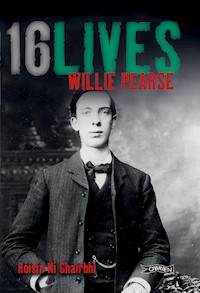
Willie Pearse was a well-regarded sculptor who ran the family stone-carving business, but he was also a dynamic activist whose life offers fresh insights into political and cultural life before 1916. History has placed him in the shadow of his brother Patrick, but whether it was nationalism, education or the cultural revival, Willie shared in these activities as an equal. Being Patrick's right-hand man in the weeks preceding the Rising, he played an important role in making it happen. His gentle character and wide circle of friends meant that his execution on 4 May 1916 shocked even those who had little sympathy with the rebels and helped turn public opinion in their favour. In this book, using new sources, Róisin Ní Ghairbhi shows conclusively that, far from being dominated by his brother, Willie Pearse was always decidedly his own man.
Das E-Book können Sie in Legimi-Apps oder einer beliebigen App lesen, die das folgende Format unterstützen:
Veröffentlichungsjahr: 2015
Ähnliche



















The 16LIVES Series
JAMES CONNOLLY Lorcan Collins
MICHAEL MALLIN Brian Hughes
JOSEPH PLUNKETT Honor O Brolchain
EDWARD DALY Helen Litton
SEÁN HEUSTON John Gibney
ROGER CASEMENT Angus Mitchell
SEÁN MACDIARMADA Brian Feeney
THOMAS CLARKE Helen Litton
ÉAMONN CEANNT Mary Gallagher
THOMAS MACDONAGH Shane Kenna
WILLIE PEARSE Róisín Ní Ghairbhí
CON COLBERT John O’Callaghan
JOHN MACBRIDE Donal Fallon
MICHAEL O’HANRAHAN Conor Kostick
THOMAS KENT Meda Ryan
PATRICK PEARSE Ruán O’Donnell
DEDICATION
Do mo mhuintir agus do mo chairde.
ACKNOWLEDGEMENTS
Thanks to the series editors: to Dr. Rúan O’Donnell for his trust in asking me to write this book and Lorcan Collins for his generous good-humoured support. Míle buíochas to everyone at St. Patrick’s College, Drumcondra, especially my colleagues in Roinn na Gaeilge, for their ongoing collegial support. Thanks to Brian Crowley at the Pearse Museum/Kilmainhnam Gaol Museum and OPW for generously sharing his unrivalled knowledge of the Pearse family and for alerting me at an early stage to many important sources. I was also greatly helped by Brian’s important research on Willie’s father, James Pearse. A special thanks to Professor John Turpin who wrote to the author with expert guidance on possible sources for investigating various aspects of the art world frequented by Willie and who also provided kind advice at the final stages.
I would like the acknowledge the gracious help of staff in the following libraries and archives: Leabharlann Uí Chriagáin, St. Patrick’s College, Trinity College, James Joyce Library UCD and UCD archives, the Allen Library, Special Collections at the Boole Library (UCC), Public Record Office, Kew, Bibliothèque Nationale de France, Archives Nationales de France, National Art Library South Kensington, NIVAL at the National College of Art and Design, Irish Capuchin Provincial Archives, the Archives of the Passionist Community at Mount Argus, and especially The National Library of Ireland. The Bureau of Military History witness statements, an online initiative of the Military Archives and National Archives, and the biography database at www.ainm.ie were invaluable sources of information. The author was also facilitated by the Letters of 1916 Project at Trinity and the Hansard House of Commons debates at www.parliament.uk.
Thanks to Willie Pearse’s grandnephew Noel Scarlett and his son Ciarán for hospitality and generous sharing of information about James Pearse and other members of the family, and to Tony Pearse for sharing information about the Pearse relatives in England including a family tree. I would like to acknowledge help given by Alf and Fionnuala Mac Lochlainn on a previous occasion which also proved helpful for this book.
Thanks to Seán Tadhg Ó Gairbhí for reading an early draft and for his expert advice. The extended Ó Gairbhí, Griffin and Lee families provided practical help that allowed me to devote time to the book.
The O’Brien Press have been wonderfully supportive. In the final stages Jonathan Rossney gave invaluable guidance; thanks also to Helen Carr, Kunak McGann, Nicola Reddy and Michael O’Brien.
My interest in the Revival period was sparked by many marvellous teachers, including Hilda Bean Uí Reachtaire, Professor Gearoid Ó Tuathaigh, Dr. Lionel Pilkington and an tOllamh Gearóid Denvir. Many people suggested sources of information or helped in other ways at various times including Dara Ó Conaola, Deirdre Nic Mhathúna, Pádraig Ó Snodaigh, Lorraine Peavoy, Angus Mitchell, Órla Nic Aodha, Ted Garvey, Brian Ó Conchubhair, Micheál Mac Craith, Julian de Spáinn, Therese Uí Ghairbhí and Emer Ní Dhomhnaill. Discussion of the St. Enda’s plays draws partly on research completed in collaboration with my colleague Dr. Eugene Mc Nulty for an edition of Patrick Pearse’s plays. The participants in a subsequent conference also influenced my reading of the theatre world Willie moved in. Though I do not share all of the conclusions reached by Ruth Dudley Edwards in relation to Willie Pearse, her book on Patrick provided vital initial guidance.
Thanks to all my friends for their interest and ongoing support. And finally to my parents, Máire agus Seán, my brothers Seán Tadhg, Domhnall and Cillian, my ever-patient husband Aidan Lee and our two small daughters, Sadhbh Áine and Nóra: míle míle buíochas for your patience, love, support and inspiration.
16LIVES Timeline
1845–51. The Great Hunger in Ireland. One million people die and over the next decades millions more emigrate.
1858, March 17. The Irish Republican Brotherhood, or Fenians, are formed with the express intention of overthrowing British rule in Ireland by whatever means necessary.
1867, February and March. Fenian Uprising.
1870, May. Home Rule movement founded by Isaac Butt, who had previously campaigned for amnesty for Fenian prisoners.
1879–81. The Land War. Violent agrarian agitation against English landlords.
1884, November 1. The Gaelic Athletic Association founded – immediately infiltrated by the Irish Republican Brotherhood (IRB).
1893, July 31. Gaelic League founded by Douglas Hyde and Eoin MacNeill. The Gaelic Revival, a period of Irish Nationalism, pride in the language, history, culture and sport.
1900, September.Cumann na nGaedheal (Irish Council) founded by Arthur Griffith.
1905–07.Cumann na nGaedheal, the Dungannon Clubs and the National Council are amalgamated to form Sinn Féin (We Ourselves).
1909, August. Countess Markievicz and Bulmer Hobson organise nationalist youths into Na Fianna Éireann (Warriors of Ireland) a kind of boy scout brigade.
1912, April. Asquith introduces the Third Home Rule Bill to the British Parliament. Passed by the Commons and rejected by the Lords, the Bill would have to become law due to the Parliament Act. Home Rule expected to be introduced for Ireland by autumn 1914.
1913, January. Sir Edward Carson and James Craig set up Ulster Volunteer Force (UVF) with the intention of defending Ulster against Home Rule.
1913. Jim Larkin, founder of the Irish Transport and General Workers’ Union (ITGWU) calls for a workers’ strike for better pay and conditions.
1913, August 31. Jim Larkin speaks at a banned rally on Sackville (O’Connell) Street; Bloody Sunday.
1913, November 23. James Connolly, Jack White and Jim Larkin establish the Irish Citizen Army (ICA) in order to protect strikers.
1913, November 25. The Irish Volunteers are founded in Dublin to ‘secure the rights and liberties common to all the people of Ireland’.
1914, March 20. Resignations of British officers force British government not to use British Army to enforce Home Rule, an event known as the ‘Curragh Mutiny’.
1914, April 2. In Dublin, Agnes O’Farrelly, Mary MacSwiney, Countess Constance Markievicz and others establish Cumann na mBan as a women’s volunteer force dedicated to establishing Irish freedom and assisting the Irish Volunteers.
1914, April 24. A shipment of 35,000 rifles and five million rounds of ammunition is landed at Larne for the UVF.
1914, July 26. Irish Volunteers unload a shipment of 900 rifles and 45,000 rounds of ammunition shipped from Germany aboard Erskine Childers’ yacht, the Asgard. British troops fire on crowd on Bachelor’s Walk, Dublin. Three citizens are killed.
1914, August 4. Britain declares war on Germany. Home Rule for Ireland shelved for the duration of the First World War.
1914, September 9. Meeting held at Gaelic League headquarters between IRB and other extreme republicans. Initial decision made to stage an uprising while Britain is at war.
1914, September. 170,000 leave the Volunteers and form the National Volunteers or Redmondites. Only 11,000 remain as the Irish Volunteers under Eoin MacNeill.
1915, May–September. Military Council of the IRB is formed.
1915, August 1. Pearse gives fiery oration at the funeral of Jeremiah O’Donovan Rossa.
1916, January 19–22. James Connolly joins the IRB Military Council, thus ensuring that the ICA shall be involved in the Rising. Rising date confirmed for Easter.
1916, April 20, 4.15pm.The Aud arrives at Tralee Bay, laden with 20,000 German rifles for the Rising. Captain Karl Spindler waits in vain for a signal from shore.
1916, April 21, 2.15am. Roger Casement and his two companions go ashore from U-19 and land on Banna Strand in Kerry. Casement is arrested at McKenna’s Fort.
6.30pm.The Aud is captured by the British navy and forced to sail towards Cork harbour.
1916, 22 April, 9.30am.The Aud is scuttled by her captain off Daunt Rock.
10pm. Eoin MacNeill as chief-of-staff of the Irish Volunteers issues the countermanding order in Dublin to try to stop the Rising.
1916, April 23, 9am, Easter Sunday. The Military Council of the Irish Republican Brotherhood (IRB) meets to discuss the situation, since MacNeill has placed an advertisement in a Sunday newspaper halting all Volunteer operations. The Rising is put on hold for twenty-four hours. Hundreds of copies of The Proclamation of the Irish Republic are printed in Liberty Hall.
1916, April 24, 12 noon, Easter Monday. The Rising begins in Dublin.
16LIVES - Series Introduction
This book is part of a series called 16 LIVES, conceived with the objective of recording for posterity the lives of the sixteen men who were executed after the 1916 Easter Rising. Who were these people and what drove them to commit themselves to violent revolution?
The rank and file as well as the leadership were all from diverse backgrounds. Some were privileged and some had no material wealth. Some were highly educated writers, poets or teachers and others had little formal schooling. Their common desire, to set Ireland on the road to national freedom, united them under the one banner of the army of the Irish Republic. They occupied key buildings in Dublin and around Ireland for one week before they were forced to surrender. The leaders were singled out for harsh treatment and all sixteen men were executed for their role in the Rising.
Meticulously researched yet written in an accessible fashion, the 16 LIVES biographies can be read as individual volumes but together they make a highly collectible series.
Lorcan Collins & Dr Ruán O’Donnell,
16 Lives Series Editors
CONTENTS
Introduction
Chapter 1: 1881-1897 Childhood
Chapter 2: 1897-1905 The School of Art
Chapter 3: 1905-1908 An Exciting Place To Be
Chapter 4: 1907-1909 Distinguished Company
Chapter 5: 1909-1911 Changing Times
Chapter 6: 1911-1913 ‘That Terrible Beautiful Voice’
Chapter 7: 1913-1914 The Irish Volunteers
Chapter 8: 1914-1916 ‘Difficult Things’
Chapter 9: January to April 1916 ‘He Was No Pacifist’
Chapter 10: 24 April to 1 May 1916 ‘We Are Still Here’
Chapter 11: May 1916 ‘So True a Brother’
Chapter 12: ‘Rich In Ordinary Plenty’
Notes
Sources
Select Bibliography
Index
Introduction
‘Yet William Pearse has been sometimes pronounced a victim of circumstance rather than a victim of destiny or a victim of conviction. It has been taken for granted too readily that he followed his brother [...] but there the matter ends. The matter neither ends nor begins there.’1
Willie Pearse led a rich and varied life in the years before his execution by firing squad on 4 May 1916. He helped run the family stone-carving firm and was a language activist, a sculptor, an actor, the chairman of a Students’ Union, and a teacher before becoming a revolutionary. Yet if Willie is mentioned at all it is usually in relation to his brother Patrick, whose key role in the 1916 Rising made him one of the best-known and most contested figures in Irish history. Willie is seen as having played only a minor role in the Rising as his brother’s right-hand man; his execution was particularly controversial and has in some ways become the defining moment of his life. Often portrayed as having drifted into revolution in Patrick’s trail, and dying, if not for his brother, then under his influence, Willie has become an afterthought; a shy, gentle shadow of his dynamic sibling.2
In addition to the common perception that Willie’s story was a peripheral one, a lack of obvious source material may also have been an obstacle for potential biographers. Although there have been a number of short biographical accounts of the younger Pearse brother, his story has never been documented or discussed in detail.3 Almost a century after his death, this is the first attempt at a substantial biography of Willie Pearse.
Ironically, it is perhaps the relative neglect of Willie and his achievements that offers the most compelling invitation to investigate his life. Willie Pearse’s life is not overshadowed by the hagiography or moralising that has so often skewed discussion of the motivations and achievements of Patrick and his fellow signatories to the 1916 Proclamation.
A detailed examination of Willie’s life can allow us to revisit an exciting and turbulent period of Irish history from a different angle, on a more intimate canvas. Willie’s cultural and political journey is in itself a fascinating one, more nuanced than is commonly acknowledged. An exploration of his life also takes us on a path less trodden into the rich cultural world of Dublin at the beginning of the twentieth century. Such an examination offers a fresh perspective on the artistic and political movements of Willie’s time, and on some of the major and minor players in a crucial period of Irish history. Professor John Turpin has noted the (relative) critical neglect of the influence of the art world on aspects of Irish nationalism. It is hoped that this book will encourage others to examine this topic further, to reflect on the responses of art and artists to the Gaelic Revival, and to revisit other lesser known strands of cultural life in the pre-revolutionary period.4 It may also provide impetus for a comprehensive assessment of Willie’s sculptural work.
Chapter One
1881-1897
Childhood
William James Pearse was born on 15 November 1881 in a room over his father James’s stone-carving business at 27 Great Brunswick Street in the centre of Dublin. William, whose name was quickly shortened to Willie, was Margaret and James Pearse’s third child: their other children were three-year-old Margaret and two-year-old Patrick. James, who was considerably older than his wife, also had two children from a previous marriage, sixteen-year-old Mary Emily and fourteen-year-old James Vincent. On the night before Willie’s birth, his parents had given Patrick a wooden rocking horse called Dobbin. James had toiled at the horse for weeks, modelling it in the evenings when his stone-carving work was finished. If the gift was an attempt to assure young Patrick that his parents’ love for him would be undiminished by the arrival of a younger brother, they needn’t have worried. In later years, Patrick would recall his delight on the arrival of his chubby little brother. ‘What greater thing happened to me than the coming of that comrade?’ wrote Patrick. ‘Willy and I have been true brothers.’1 But the excitement surrounding Willie’s birth was very quickly followed by a family crisis, as Margaret Pearse became seriously ill following complications related to her second son’s birth; she nearly died, and the infant was sent away to be cared for by her uncle Christy Brady and his wife. Thus Willie Pearse spent the very first part of his life on a farm outside Dublin city, where he was fed on cow’s milk until his mother recovered sufficiently for him to return to the city and her care. Patrick then declared that as soon as he was big enough, his new brother should have an equal claim to his wooden horse.
Meanwhile, there was political turmoil in Dublin to mirror the drama surrounding Willie’s birth. The bitter and at times violent struggle over the rights of tenant farmers in Ireland had radicalised some leading Irish nationalists, and in October 1881 the leader of the Home Rule League, Charles Stewart Parnell, was incarcerated in Kilmainham Gaol along with nationalist leaders William O’Brien, John Dillon, Willie Redmond and the radical Land Leaguer and republican Michael Davitt. In the preceding years, crop failure had caused distress to many Irish farmers and tenants, and the ensuing hardship, combined with the often excessive rents and a lack of rights regarding economic security, had sparked militant agrarian agitation in some places and even a small-scale famine. The salient issues of the ‘Land War’ of the 1880s – land redistribution and tenant rights – would eventually be resolved through the introduction of a series of Land Acts that went some way to assuaging the farming tenants’ grievances, but the struggle for Home Rule in Ireland would take far longer to play out. In June 1886, when Willie was only four years old, a bill called the Government of Ireland Act, more commonly known since as the First Home Rule Bill, would be defeated in the House of Commons, and in 1893 a second bill would be stymied by the House of Lords. At the time of Willie’s birth, the two great organisations of what would later become known as the Gaelic Revival, the Gaelic Athletic Association (GAA) and the Gaelic League, which respectively sought to revive traditional Irish sports and the Irish language, had not yet been founded. While he was still a child, the Irish Parliamentary Party, which replaced the Home Rule League, was split due to a scandal involving Parnell’s affair with a married woman.
Both James and Margaret’s sympathies were with Parnell, though their backgrounds were, at a first glance at least, strikingly different. Born on 8 December 1839, James was an Englishman, and the Pearse family were recorded in the 1841 census as living in London in a shared house in Bloomsbury. James’s father, also called James, was a composition maker (a craftsman who made picture frames and decorative ornamental mouldings). The son of a tailor, his religion was recalled as being ‘to honour his wife and lovingly to fashion beautiful things out of wood which no one would buy’.2 Although still in his early twenties at the time of the census, James Snr was already father to three young sons, William, James, and Henry. Willie’s paternal grandmother, Mary Ann, was recalled as a devout Unitarian, ‘ruling her husband and her three boys calmly and gently, obeyed and reverenced by them all’.3 Life for the family was not easy, and as a result of her husband’s meagre income Mary Ann often struggled to make ends meet. In these early London years the family lived close to the British Museum in Russell Square, and as Victorian society encouraged the intellectual enlightenment of working men, the museum was open to all. Therefore, modest though their circumstances were, the Pearses had plenty of opportunities to appreciate art and sculpture of the highest quality. It is an interesting coincidence that the Pugins – Augustus Charles (who died in 1832) and his architect son Augustus Welby Pugin, leading exponents of the Victorian Gothic style of architecture that would later inspire James – had also lived in the area (although the elder Pugin had died and the younger moved away by the time of young James’s birth).
Workmen tended to live wherever jobs were most plentiful, and when Willie’s father was young the family moved to Birmingham. James did not speak often of his parents or of his life in England, but when he did his children loved to hear stories of his childhood and the home which, although it had only two rooms and a garret, was a place of happy memories for him. According to family folklore, William, the eldest son, for whom Willie was named, worked in a gun factory and, at only eight years of age, James went to work in a chain factory. Henry became a picture-frame maker. However, the 1851 census, taken while the Pearse family lived in Birmingham, designates both James and his brother Henry, aged eleven and ten, as ‘scholars’. Perhaps James later exaggerated the young age at which he went to work in the chain factory, or maybe the reference to education was a statement of defiance in a household where culture and learning were prized. In any case, young James inherited his own father’s creative impulses and rebelled against the grind of factory life. He left his next job, at a printers, after his employer’s son struck him. Showing the independence of spirit that he would pass on to his own children, he also left the Sunday school whose reading class had been a source of formal education after his teacher told the pupils not to ask questions. For a boy born into such humble circumstances, a life of drudgery might have seemed inevitable, but James’s ambition led him to study drawing at a local art school in Birmingham. He then became an apprentice to a sculptor and, for a time at least, dreamt that he might become a great artist himself. In the end, he was attracted by the revival in Gothic decoration pioneered by the Pugins and still in vogue in church decorating, and decided to become a professional stone carver. The boom in church building in both Ireland and England at the time meant that there was ample work for someone skilled in making ecclesiastical images.
Sometime around the end of the 1850s or the beginning of the 1860s, James Pearse, by then a professional carver, moved to Dublin to become a foreman for the firm of Charles Harrison of 178 Great Brunswick Street (now Pearse Street). Following Catholic emancipation and the cultural upheaval caused by the Great Famine of the 1840s, the Catholic Church in Ireland was undergoing a resurgence. There was a consequent increase in the building and decoration of new churches, which meant that commissions were plentiful for an ambitious young carver. Although working regularly in Ireland in the early 1860s, James Pearse had not left Birmingham completely; he appears on census records there in 1861, and on 28 April 1863 he married eighteen-year-old Emily Susannah Fox in St Thomas’s Church, Birmingham. In 1864 James began a three-year contract as one of the principal sculptors for the newly constituted firm of Earley & Powells at No 1 Camden Street, Dublin, a business with links to the Hardmans, a company based in Birmingham responsible for church decoration in the Gothic style in both England and Ireland and closely associated with the very influential Pugin.4 It was an auspicious time for James Pearse to be involved with Earley & Powells. Such was the rate of church building and restoration at this time that the trade newspaper The Irish Builder carried a column in each of its issues dealing specifically with the construction and decoration work being carried out by the various denominations in Ireland. Its pages also allow us to glimpse the milieu that James now operated in. While much of the content was practical information for builders and architects, there was a very definite sense that tradesmen and artisans were viewed as craftsmen and even artists. Various scholarly essays dealt with aspects of the Gothic style as well as the influence of local scenery on architecture, and the tone and content of the paper reflected its readers’ desire to educate and better themselves.
Patrick would later recall with, one would imagine, a little relish, that his father had made carvings of princesses with robes and crowns for the ‘throne room’ in the House of Lords.5 The Hardman connection was the reason James had occasion to undertake this work: they were contractors for its decoration, with Pugin being the interior designer. James’s carving work for the ‘throne room’ (in reality the Queen’s robing room) in the House of Lords was completed in Dublin, then sent to London in 1867, the year of a Fenian uprising in Ireland. The Irish Republican Brotherhood (IRB), known also as the Fenians, sought the overthrow of British rule in Ireland and the establishment of an Irish republic by military action. Although the 1867 ‘rising’ was really no more than a series of skirmishes, the subsequent clampdown and imprisonment of activists, often in appalling conditions, and the songs and poems composed about the events, helped to maintain the tradition of militant nationalism; one of those imprisoned, Jeremiah O’Donovan Rossa, would much later be the subject of a famous graveside oration by Patrick.
James and Emily Pearse, like many city-dwelling people of their era, rented their accommodation and moved frequently. A daughter, Mary Emily, was born on New Year’s Eve 1864 in Portobello in Dublin. On 19 December 1866 a son, James Vincent, was born, with the address this time given as 3 Bloomfield Place. Sometime after James Vincent’s birth, the entire family converted to Catholicism, and there was yet another move, this time to Harold’s Cross. When a daughter, Agnes Maud, was born there on 30 November 1869, she was baptised Catholic. In a letter written at James’s request, Fr Pius Devine, Rector of the Passionist Congregration in nearby Mount Argus, would later testify to the impression that James had made on him as a prospective convert. Fr Devine attested to the Englishman’s ‘sensible objections and difficulties’ while under instruction and ‘the clearheaded manner’ in which he found answers to his questions.6 Fr Devine had also promised to bring whatever work he could James’s way; the Passionists did indeed provide commissions for James, and the family would maintain a lifelong connection with the congregation. Whatever the reasons for James’s conversion, or the sincerity of his new convictions, it was a prudent move for a man whose livelihood depended mostly on commissions for church decoration in a country with a largely Catholic population. Meanwhile, another daughter, Catherine, was born to the Pearses in 1871: this child was also baptised a Catholic but, like Agnes Maud, she did not survive infancy. Patrick would later state that James and Emily had an unhappy marriage and that one of their children, of whom James was very fond, died because she had been neglected by her mother. It is not clear if James’s second family were even aware that there had been two infants who died, not one.
In 1875 James’s mother, Mary Ann, died. She had never visited her son in his adopted city, but as James’s work had often taken him to England he had spent extended periods with his own family. He was distressed at his mother’s death, writing in a draft for a poem of her ‘tender and patient heart’ and of how his own heart must burst.7 The following year, James’s wife, Emily, died on 26 July of a spinal infection, aged only thirty, meaning that in the space of seven years, James had lost two infant children, his wife, and his mother. At some stage – it is not clear exactly when – he met Margaret Brady, who was working in a paper shop he frequented. He was clearly smitten by her, recalling in a letter to Margaret herself his own friend’s impression of her as a suitable match: ‘a grand-looking young woman, dark hair and dark eyes, no nonsense about her, plump and soft, she seems homely yet bright and full of life.’8 Given that his first marriage was described as unhappy, James’s enthusiasm is perhaps understandable. In any case, he certainly did not waste time grieving. Indeed, there was a certain haste about the new romance, a fact evidenced by Patrick’s deliberate vagueness about its timing when he wrote of how his parents met in his unpublished autobiographical writings. Emily died in July 1876 and by the following Christmas, Margaret, who had yet to meet James’s children, was already addressing her new friend as ‘my dearest Mr Pearse’. By the following 18 January, any lingering pretence of formality was gone; Margaret was now ‘my own darling’, and Mr Pearse had become ‘Jim’.9
Though both of Willie’s parents grew up in large cities, there was a striking contrast in the cultural and social factors that had formed their identities. Born in 1857, with her birthplace given as Clarence Street in Dublin city, and educated by the Sisters of St Vincent de Paul, Margaret Brady was Irish Catholic, and the Bradys had strong ties to the countryside and to Gaelic culture. At the height of the Great Famine, Margaret’s father, Patrick Brady, had come to Dublin from Nobber in County Meath along with his siblings and their father Walter. Willie’s mother remembered her grandfather as ‘a tall old man who wore knee breeches and a silk hat and who spoke Irish’.10 Though Willie’s maternal relatives came from Leinster farming stock, their background was atypical. During Willie’s grandfather’s youth, the area around Nobber was the last bastion of Gaelic culture in Meath and preserved a rich oral and manuscript tradition. The scholar Henry Morris/Énrí Ó Muirgheasa drew attention to the exceptional nature of the Irish-language community of North Meath when he wrote:
Even when the last great rout came on the spoken tongue, the poets of Meath continued to sing, and the scribes to write their songs … This is the peculiar glory of the Meath-Oriel district that the literary knowledge of the language accompanied the spoken tongue down to its grave. In most other places the literary knowledge and cultivation of Irish had disappeared many generations before the spoken tongue died out.11
Having left North Meath as young adults, Willie’s grandfather and his siblings would have had personal exposure to this rich pre-Famine culture.12 The same North Meath area also had a strong republican tradition, and the Bradys were republicans by more than inclination. Walter’s father, another Walter Brady (Willie’s great-great-grandfather) had fought in the 1798 rebellion, while one of his brothers was hanged for his participation in the same rebellion and yet another brother was buried in the Croppies’ Grave in Tara. (Willie’s maternal grand-uncle, James Savage, also fought in the American Civil War.) Given his republican relatives, it is unsurprising that Patrick Brady (who was recalled as never having said a bad word about anyone) followed radical politics with interest: he was a follower of the radical separatist involved in the Young Ireland rebellion of 1848, John Blake Dillon, and while James Pearse carved statues for the Queen’s robing room in 1867, Patrick Brady was supporting the Fenians.13 He himself had a small farm on the outskirts of Dublin and would be badly impacted upon by the poor harvest of ’79, but luckily his business interests in the city were more successful.
On 24 October 1877, James and Margaret were married in the Church of St Agatha near the North Strand, and moved into rented rooms above James’s workshop at 27 Great Brunswick Street. The children were born in quick succession: Margaret in 1878, Patrick in 1879, Willie in 1881, and, lastly, Mary Brigid in 1884. Space was restricted, as other rooms were let out to subtenants, and for some time the family slept in one room. Though their home was in ‘town’, with Trinity College nearby, the young Pearses maintained a strong connection to country life through the Bradys. They visited their farms with their mother; Uncle Christy and grandfather Patrick had horses and cows, while Aunt Margaret had chickens. Willie, along with his brother Patrick, ‘loved all helpless creatures, and though naturally quiet and gentle they were filled with righteous indignation, often with great anger, at even the semblance of cruelty to an animal’.14
Aunt Margaret (in fact their grand-aunt) brought with her the songs and lore of her Gaelic childhood and nationalist background. She told stories of the Fenians, 1798, and Robert Emmet, and sang ‘Déirín Dé’ (‘Dán an Chodlata’), the haunting Gaelic lullaby about the rhythms of country life. She was a regular visitor until she died when Willie was entering his teens. At a time when Irish was not part of the national school curriculum, the children’s relationship with Aunt Margaret meant they had a personally felt sense of cultural continuity with what would later be summed up in Daniel Corkery’s famous phrase ‘the hidden Ireland’. Nonetheless, even though her influence on Patrick was profound, it is debatable whether Margaret left a similar impression on his brother. Willie would later take part with some enthusiasm in various aspects of the Gaelic Revival but, unlike Patrick and many of his peers in the art scene, he never drew directly on Gaelic sources in his own creative work. However, the militant republican themes of the songs and stories of Aunt Margaret would find echoes in political activities undertaken by Willie in his later years.
The seriousness with which Willie’s father, James Pearse, approached his sculptural work is reflected in his book collection, which included richly illustrated antiquarian volumes about European art and sculpture as well as contemporary journals on architecture and art. This artistic backdrop meant that the home Willie grew up in was in many respects an unusual one. Although visitors to the family home were few, those who came were often artist friends of James’s who were passing through Dublin. We don’t know if Willie eaves-dropped on his father’s conversations on art with these friends, but it seems likely he was privy to their discussions as the family accommodation was compact, particularly in Great Brunswick Street. In any case, the rhythmic sound of the carving in his father’s workshop below their accommodation would have been a constant reminder of his creative endeavours. Though he never fulfilled his dream of becoming a famous sculptor, James Pearse achieved considerable success as a businessman. The slogan on the stationery for his business, Labor omnia vincit (Labour Conquers All), could be seen as his personal manifesto. It summed up the manner in which he had overcome the poverty of his childhood to achieve a comfortable existence and a richer cultural life.
In his professional career James was not afraid to try new enterprises, and in 1877 he had struck out alone in business as an ecclesiastical and architectural sculptor. A few years later he formed a partnership with his foreman Edmund Sharp that lasted until around 1888, when both Sharp and Pearse decided to work independently. The firm of Pearse & Sharp was awarded a first-class award at the 1882 Dublin Exhibition, and they secured prestigious commissions, including that of the sculptural group ‘Éire go Bragh’ for the National Bank on College Green. The various firms James was associated with worked on commissions for churches throughout Ireland, including carving work for St Joseph’s Church in Berkeley Street in Dublin, the High Altar for St Aidan’s Cathedral in Enniscorthy, and the pulpit and communion railing for the Star of the Sea Church in Sandymount. Though he was often dependent on designs made by others, there is no doubt that there was some merit to Patrick’s boast that, ‘If ever in an Irish church you find, amid a wilderness of bad sculpture, something good and true and lovingly finished, you may be sure it was by my father or one of his pupils.’15
As Patrick remembers him, their father was an introspective figure who would sit for long periods in gloomy silence and then unexpectedly come to life with a perfectly timed comic intervention to leave his family shaking in laughter at the dinner table:
By some old convention or instinct we never made any noise once his big dusty figure had come into the room. He was big, with broad shoulders that were a little round; he was very silent, and spoke only once or twice during the course of a meal, breaking some reverie to say something kind to my mother or something funny to one of us; otherwise whether we were by ourselves or one of our rare visitors was there, [he was] sitting a little abstracted, always a little lonely we thought, a little sorrowful at times indeed, but [occasionally] he would in order to please my mother rouse himself to exercise the rare social gift that he had, and then my mother’s face would flush with pleasure and we would laugh in pure happiness or join shyly in the conversation.16
Usually undemonstrative and reserved, James would occasionally embrace his children, but he always made a point of kissing them goodnight, and in letters he asked Margaret to embrace the ‘kiddies’ for him. The extended family of granduncles and grand-aunts provided a network of Brady relatives for Willie and his siblings to socialise with. Though Margaret Brady’s sister Catherine and her husband, John Kelly, died young, the Pearses remained close to their children, Mary Kate and John Kelly, and to their other cousin Mary Kate Brady, who was Willie’s age.
Grandfather James Pearse visited Dublin when Willie was very young, and was recalled by Patrick as a ‘little white bearded man, quizzical and original, who spent all his time making bird-cages of rare woods, and carving them exquisitely; he left us about twenty of them when he went back to England’.17 Their grandfather seems to have been much loved by his middle son: notwithstanding his long absence in Ireland, James cried when his father died. Uncles William (Bill) and Henry (Harry) also visited Dublin, and the family maintained connections with other relatives in England and later with cousins in Canada.
James sometimes needed to be away on business, and it seems Willie missed his father at these times; in one letter, written after Willie had injured his arm during some mishap, Margaret wrote: ‘Willy’s arm is just all right. He calls his dada still’, the brief comment a hint of a close relationship between father and son.18 James missed Margaret on these occasions, writing long letters and always eager for news of ‘the kiddies’.19 He was not afraid to voice his affection and joked in an intimate way with his young wife in his correspondence home.




