


Erhalten Sie Zugang zu diesem und mehr als 300000 Büchern ab EUR 5,99 monatlich.
- Herausgeber: The Lilliput Press
- Kategorie: Sachliteratur, Reportagen, Biografien
- Sprache: Englisch
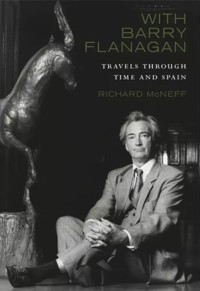
With Barry Flanagan is a vivid account of a friendship that evolved into a working relationship when Richard McNeff became 'spontaneous fixer' (Flanagan's description) of the sculptor's show held in June 1992 at the Museum of Contemporary Art on Ibiza, where they were both living. McNeff was to gain a privileged insight into the sculptor's singular personality and eccentric working methods, learning to decipher his memorably surreal turns of phrase and to parry his fascinating, if at times unsettling, pranksteresque quirks. In September 1992 Flanagan and McNeff took the show to Majorca, resulting in a lively visit to the celebrated Spanish artist Miquel Barcelo. The following year McNeff was involved in Flanagan's print-making venture in Barcelona and in his Madrid retrospective. Flanagan rescued him from a rough landing in England in 1994 by commissioning a tour of stone quarries there.Subsequently McNeff ran into a fourteen-year-old profoundly deaf girl who turned out to be his unknown daughter. She had a talent for art and the generous sculptor was instrumental in helping with her studies. Late in 2008 Barry was diagnosed with motor neurone disease. By June 2009 he was wheelchair-bound. Two months later he died, and McNeff read the lesson at his funeral. Fleshed out with biographical detail, much of it supplied by the sculptor himself, this touching memoir is the first retrospective of a major Welsh-born artist. Photographs of him as well as of his drawings and sculpture fully complement the text. With Barry Flanagan captures the spirit of this remarkable Merlinesque figure in a moving portrait that reveals a true original.
Sie lesen das E-Book in den Legimi-Apps auf:
Seitenzahl: 269
Veröffentlichungsjahr: 2012
Das E-Book (TTS) können Sie hören im Abo „Legimi Premium” in Legimi-Apps auf:
Ähnliche


















.
Self Portrait, 1981, Charcoal and watercolour on paper, 15” x 10 1/2” / 38.1cm x 26.7cm
WITH BARRY FLANAGAN
TRAVELS THROUGH TIME AND SPAIN
Richard McNeff
The Lilliput Press | Dublin
.
For Mandana
FromThe Rubáiyát of Omar Khayyám
Ubu sketch, 1974, 3 7/16” x 5 1/4” / 8.8cm x 13.4cm
ACKNOWLEDGMENTS
This book would not have been published without the help and input of Jo Melvin (the Estate of Barry Flanagan) and Vivienne Guinness, and I would like to thank the following for their encouragement: Enrique Juncosa, Oengus MacNamara, Sarah Munn, Robert Nurden, Tony Peake, Elena Ruiz Sastre, Jessica Sturgess, Kevin Whitney; and at the foundry, Henry Abercrombie (‘Ab’), Jerry Hughes and Mark Jones. I thank Antonio Colinas for permission to use his poem ‘Head of the Goddess in my Hands’ (‘Cabeza de la diosa entre mis manos’) and Helga Watson Todd for permission to reproduce ‘Games’, a poem by her late husband Martin Watson Todd. I thank Miquel Barceló for allowing the use of his portrait of Barry Flanagan. Thanks also to Djinn von Noorden for her assistance with the editing and Antony Farrell at The Lilliput Press.
PHOTO CREDITS
The Estate of Barry Flanagan courtesy Plubronze Limited
Hugh Gordon
Mark Jones
Vivienne Guinness
Gaudier Deblonde
Kevin Scanlan
Hugh Lane City Gallery
Andre Morin
.
Some time ago There was a 2 man show
with Marcel ... And it has always bothered
me that Ibiza Museum was considered not
worthy to be notified in the stream of events.
It was curated by Richard McNeff
& to know about it would be a propper [sic] thing.
(Email from Barry Flanagan to Galerie Lelong, Paris,
25 November 2008)
PREFACE
What follows is an account of time spent with Barry Flanagan from 1987, when we first met, to 2009 when he sadly passed away. This account focuses especially on the exhibition he put on at the Museum of Contemporary Art of Ibiza in 1992, which we then took to Palma, Mallorca, as well as describing his interests in Madrid, Barcelona and England. Most of these doings have been bypassed in the standard chronologies. This work has been undertaken in order to rectify this, and to give an insight into a remarkable man and artist.
1
Halfanhourafter leaving Palma, the mountains of the west coast of Mallorca rose before us. Barry was at the wheel of the hire car, staring fixedly at the steepening road ahead, which was lined on either side by ever-taller hills. Still embarrassed by the nervousness the traffic of the unfamiliar city had induced in me and by my reluctance to drive, I now offered to take the wheel whenever Barry wished.
‘I’d rather stick with it if you don’t mind,’ the sculptor responded.
We carried on ascending through a landscape that was now mountainous and exhilarating. I could not understand why Barry was applying all his concentration to the unfolding road and ignoring such spectacular views. In the end I asked him.
‘I find being dwarfed by mountains unsettling,’ he explained.
‘The opposite of vertigo,’ I suggested, and then one of us coined the word ‘invertigo’ to describe this.
It was the first time that morning we had laughed. Thinking about it later, however, the words tallied with something Monica, the sculptor’s mother, had told me. Barry had been born in 1941, a year after his father Bill’s employer, Warner Brothers, had arranged the evacuation of his two older brothers and elder sister to North America.
‘If you want to understand Barry,’ Monica had said, ‘you have to realize he was the centre of attention until he was five. Then suddenly Patsy, Mike and John came back and grabbed all the limelight. He never got over it.’
This was a key to Barry’s nature: a keen resentment of being dwarfed by mountains, older siblings or anything or anybody else for that matter. This led him to raise himself through work and deed, until he became a sort of giant. Allied to this was his hatred of being ignored, patronized or taken for granted. Any one of these transgressed the ‘civility’ he was so fond of citing and could provoke the storm he was to warn me at my peril to avoid.
*
I first saw Barry at a wedding reception at Es Figueral on the north coast of Ibiza in 1987, the year he moved to the island. I was there because Kika, my partner, had been invited by Renate, Barry’s partner. Barry was wearing a shabby blue-grey denim suit and a cap, which resembled those worn by ticket inspectors on East European trains. He had an alert fine-featured face, hair just starting to silver at the back and sides, and a face speckled with freckles. Kika told me he was an artist and I assumed he must be another skint bohemian drawn to the island by its congenial climate, tolerant locals and, in those pre-Euro days, hospitable prices. It was only later I heard on the bush telegraph that Barry was actually a figure with an international reputation, an artist-star in our meteor-filled sky. He had met Renate in London, running into her in Cork Street when she was an art student. They had had a son together, Alfred, and then moved to Ibiza where Renate’s parents had been living for several years. Annabelle, their daughter, was born on Ibiza. Barry delivered her himself.
I did not talk with Barry that day but registered him as a vague figure on the fringe of things, much how I felt myself. A little while later he came to a reading some friends and I were giving in a laundrette in San Juan. He spoke to me afterwards and seemed quite animated by the passages from a work in progress I had read to the audience. I found it difficult to understand what he was saying. Nevertheless, the fact he had liked what he heard may explain my next encounter with him, a few days before Christmas, when two bottles appeared on Kika’s table at the Royalty, the main café in Santa Eulalia. Their origin was a mystery: Kika had gone to the ladies and found them waiting for her on her return. The consensus was that Barry was the source. His generosity, particularly in the provision of food and drink, was already passing into legend. One bottle was of Hennessy Cognac, the other a fine Russian vodka. We took them home and drank most of their contents in the company of two friends.
Kika, c.1990, Pen on paper, 11 10/16” x 8 1/4” / 29.5cm x 21cm
Kika was tall and slender, sometimes worryingly so. She was a great beauty, fêted in the carousel of Ibiza nightlife, until one winter she was flung off and went on the slide. She had the soul of a clown and sometimes dressed as one. One day when she was sick, I met Barry in town and he came back with me to the house to visit her. He had a small sketchbook with him and sat down by the bed and immediately began drawing her profile. He was using a pen and as was usual for him the nib hardly ever left the sheet of paper as he traced her straight nose and prominent lips with an uninterrupted line. His shoulders were hunched as he worked and the furious concentration that possessed him made me wonder if there was something shamanic in this act: it was as though by sketching he hoped to draw out her pain. When he had finished, he tore the sheet out and gave it to her.
At this time I was renting a house about a mile along the coast from Santa Eulalia at a place called Niu Blau. A creek separated the house from a snug, pine-shaded beach where there was a restaurant, whose owner, Juanito, was my landlord. The house had three tiny rooms, a kitchen and a shower. A path came up from the creek and made a right angle, running past the house and then alongside the forest in front of it. At night the only sound was the sea, the ebb and flow of waves that lulled you to sleep. There was a porch outside and a small garden I had made of geraniums, roses and jasmine, which was divided by a path of pebbles gathered from the beach. The geraniums blossomed through the year.
Niu Blau meant the Blue Nest in Ibicenco, and had been the name given to his studio by Rigoberto Soler, an artist who painted there in the 1930s. One Sunday we had a visit from Barry and Renate. It was a windy day, and leaving the ladies in the house, the sculptor and I went for a stroll up along the path to the headland. There was a crumbling wall of reddish stone to one side behind which lived Mariano, the old fisherman, in a house that was formerly a boat shed. Further up, in a splendidly located but simple house, whose erection would be forbidden today by the Law of Coasts, dwelt an affable if slightly cantankerous American, who was one of the founding fathers of the foreign community on Ibiza and had run a school on the island in the 1960s. We visited neither of them but instead observed the way strong gusts from the choppy sea were bending the trees along the coast.
‘You know what’s happening, don’t you?‘ said Barry.
The sea was rough, the wind was high, that much I was aware of.
‘The wind is baffled by the pines.’
Barry explained this in a stilted way that did not seem to invite reply. This, coupled with a growing awe I felt for him, made me silent, a state difficult for me as I am by nature garrulous, uncomfortable with pauses and duty-bound to break them. Barry was wearing a green corduroy jacket, baggy tweed trousers and a collarless striped shirt. There was jerkiness to his movements and at one point he turned and took in the salty air through flared nostrils, looking very much the hare as he did so. I was intrigued by him and by his visit, wondering if it had been inspired by anything more than Renate and Kika’s friendship.
It had.
‘I have a commission for you,’ Barry declared when the four of us were back in the tiny sitting room. We were drinking the last of the Hennessy (I was too abashed to ask if it had come from him). ‘I wish you to produce a piece of writing. The subject matter and deadline are entirely of your choosing.’
I was at that time working on an historical novel, which had been triggered by a remark I had come across in a book by a Spanish writer about the Balearic islands. According to L. Pericot Garcia, the Romans had looked on Ibiza as the setting for a ‘sweet and honeyed life’, orla dolce vitaas we call it today. Just as now, so in the first century AD there had been a raffish, hedonistic community composed of rich expatriates, criminals and artists.
In order to supply background, I used to go to the small municipal library in Ibiza town and research the history of the island in antiquity, drawing mainly from the work of a priest and antiquarian called Isidor Macabich. I read accounts of how the Greeks who fought at Troy had been shipwrecked on the beaches of Ibiza and lived out their days entirely naked, perfecting their sling-throwing skills. The Phoenicians had populated the island, establishing the city of Ibiza in 654bc, and the island’s name probably derived from a war god called Bes. It seemed a simple matter to put my research notes together, type them into something resembling a coherent text, and call this ‘The Island of Bes’. The next time Kika saw Renate in town she mentioned that the commission was ready. The following Sunday Barry showed up at the house with Flan, the flame-haired daughter of his first marriage, in tow. I handed him the piece, which I had typed out on my old Olivetti. It consisted of five A4 sheets of double-spaced text. Barry perused it with great concentration for a few minutes. Then he turned to me and, with a sharp, not particularly friendly expression on his face, asked me what I wanted for it.
I knew commission meant money, and the word was the key to most of Barry’s dealings. I had made almost nothing from a writing career that up to that time had spanned twenty years; indeed, if you factored in postage and ink, the balance was firmly in the red. On the other hand, life on Ibiza then was cheap and time-friendly, and the money1 I made from teaching added up to just enough to pay the rent, run an old banger, dawdle in the sun drinking coffee and eat numerousmenus del día. It seemed churlish to cadge money for something that had been a pleasure, not a chore.
‘I want you to have it,‘ I grandly declared. ‘We are fellow artists and money should not be an issue.’
‘So you don’t want anything,‘ said Barry by way of confirmation, in a tone that implied he was not as happy as I expected with this arrangement.
I thought no more about it until I ran into him in Pomelo’s, a bar frequented by expats beside the new market in Santa Eulalia. He was drinking whisky and water from a tall glass at the bar. I went and joined him, noticing the liver spots dotted across his hand as he swirled the liquid round in the glass. I ordered acarajillofor myself (a small black coffee with brandy).
‘I am sorry you saw fit to refuse my commission,’ he announced. He then reached into the inner pocket of his jacket, drew out a brown leather wallet and extracted two pristine ten-thousand peseta1 notes of the new blue variety. ‘Robin, however, has shown me the courtesy of accepting it. Would you be so good as to give this to him?’
I was too stung to say anything. Feeling foolish, I took the money and did indeed deliver it to Robin, who was living in a house not far from my own between the Es Canar and San Carlos roads. Apart from being aspiring writers, Robin and I had a lot in common, having first bumped into each other in the underground scene centred round the psychedelic heartlands of Portobello Road and the Roundhouse, Chalk Farm, in the late 1960s. It was quite common for me to come across people I had known from that time on Ibiza or meet others linked to it. Along with Goa and Amsterdam, the island was still one of the key bastions of the hippies’ last stand, a Bermuda Triangle in which dreams and ideals were vanishing by the planeload.
Robin knew Barry had commissioned me as well. We were in a race, but I had never heard the starting gun.
‘Barry likes games,’ Robin said. ‘He’s playing one with you. Don’t you see what he’s trying to tell you?’
I had some inkling. ‘To be a bit more businesslike,’ I ventured, ‘and forget all this wishy-washy, brother-artist stuff.’
‘Precisely,’ said Robin.
‘I could stomach that, but giving me the dosh to give to you is really rubbing my nose in it.’
‘It will make your nose harder,’ said Robin.
Some time later another interpretation of Barry’s action suggested itself. Through not playing by his rules, I had robbed him of control and this was something he did not like. Before moving to Ibiza he had lost his driving licence for a while and been forced to employ a driver. He had the car modified, however, so the horn was moved to the passenger side. He had no compunction about using it and did so frequently, sometimes in traffic jams, narrowly avoiding a fight with the occupant of the car in front on one occasion. It was his way of staying in charge. Barry gave his driver one of his most remarkable bronzes,Vessel, In Memoriam(1981). The driver did not know what to do with it and gave it to his mother. Barry frequently gave work away on the spur of the moment, often to people like drivers or pub-keepers who had little notion of their artistic or financial worth. This reinforces the likelihood that his reaction to my gift was about control, not the need for artists to behave like businessmen.
Foxy, 1989, Pencil on paper, 30 1/16” x 21 7/8” / 76.2cm x 55.5cm
Notwithstanding this insight nor the conversation I had had with Robin, my resentment did not fade and when a day or so later I saw Barry get out of his car outside the Cruz del Sur building in Santa Eulalia, where he kept a flat, I decided to accost him. He seemed surprised to see me and gave me a half smile.
‘I thought you should know that I gave the money to Robin.’
‘Good.’ He nodded as though this was a perfectly acceptable state of affairs.
‘How could you take advantage of my goodwill like that?’ I demanded.
He leaned his head to one side and his eyes narrowed as though appraising me for a bust.
‘The shape of your heads is different!’ he declared, as though that explained everything.
There were a couple of postscripts. One concerned an artist’s model called Eileen Fox, universally known as Foxy, who had moved to Ibiza a few years before. A short dark woman with liberal mounds of flesh, Foxy had modelled for Francis Bacon as well as Barry and had been a well-known character around Soho, celebrated in a rather scurrilous anecdote by Jeffrey Bernard concerning firemen and a hose for which she frequently considered suing him. Foxy and I shared a birthday and had thrown a few memorable parties together. She had also supplied Kika and me with the first house we had together in an urbanization near Santa Gertrudis by simply passing on the keys she had received from the Ibicenco landlord and presenting us as de facto tenants. She sat for Barry again and from this he produced a work in crayon on paper calledOld Woman in Soho(1989), in which Foxy’s elephantine proportions seem to anticipate those of the model in Lucien Freud’s more celebrated 1995 painting,Benefits Supervisor Sleeping. Foxy also inspired a small rounded fertility-like object in clay based on the Venus of Willendorf, a Palaeolithic statuette with huge breasts and abdomen found in Lower Austria.2 Barry called his creationBes. In my piece, of course, Bes had been a god but this was a minor detail.
The second postscript began in the Virgin Megastore, then at the end of Oxford Street, while I was visiting London that summer. I noticed an anthology of transgressive writing with the famous photograph of Aldous Huxley parting a thin curtain that symbolized the doors of perception on the cover. The book was calledRapid Eyeand was a compendium of writings that had appeared in a magazine of the same name, chiefly work by counter-cultural writers such as William Burroughs and Alexander Trocchi. Vaguely resentful that my own alternative scribbling had never appeared in such tomes, I opened the anthology and found my name misspelled at the top of the page. This was above a story called ‘Sybarite Among the Shadows’, which had first appeared inInternational Times(also known asIT),the underground newspaper, in 1977. The story described a meeting between Aldous Huxley and Aleister Crowley in Nazi Berlin, in which they took mescaline together. Derived from a questionable anecdote in a book on ritual magic, it has enjoyed an interesting shelf life since publication, being pirated and published in Russian as well as quoted as irrefutable fact in books of the history as conspiracy variety.
Foxy, 1989, Pencil on paper, 21 7/8” x 30 1/16” / 55.5cm x 76.2cm
I arranged to meet the publisher and editor in Brighton. They were apologetic but had tried to contact me when they had first republished the story in the original magazine. They seemed vaguely miffed that I expected some money, pointing out that William Burroughs had supplied his piece for no more than a bottle of red wine. I had learned my lesson, however, and was hard-nosed and businesslike, extracting two hundred pounds in the process.
A few months later I had a letter from the editor, the late Simon Dwyer. They were producing a new anthology and wanted to include another story I had published in theITdays, a variation of the Faust myth called ‘The Devil’s Slander’. On offer was fifty pounds. I wrote back that this seemed a bit below the benchmark. By way of reply Simon Dwyer criticized my pretensions and said he would not be publishing my piece, adding that J.G. Ballard, Colin Wilson and, of course, Bill Burroughs had all fallen over themselves to accept the sum I had spurned. With my nose quite out of joint, I shared this news with Barry fully expecting him to come down on my side. This, after all, was the man who had reputedly priced work at his art-school shows in West End guineas when his peers were asking for shillings; this,the stickler for pecuniary recognition who had practically built the lucre-paved road that Damien Hirst and Tracey Emin were gleefully to waltz down. Instead, Barry was angry.
‘They took your flag and stuck it in the map,’ he hissed. ‘Then you had to go and break the pole.’
2
After theincident with the commission, Barry and I continued to circle one another like two wary birds. I would come across him in m&m’s, a bar near the new marina in Santa Eulalia run by two amiable Americans called Mario and Marty, who in terms of relative stature could plausibly be compared to Laurel and Hardy. Barry invariably drank scotch in a tall glass and would invite me to have the same, though usually I preferred a Spanish brandy such as Veterano. Then we would talk or rather I would listen.
This was not due to any desire on his part to dominate the conversation; it was more the fact he was speaking in a language I did not properly understand. The words were English but they were strung together in an odd order and peppered with old favourites such as ‘homage’ and ‘civility’. His discourse was also sprinkled with allusions to things and people I was ignorant of, though this did not seem to bother him in the slightest. Added to this were speech patterns that ranged from a whisper to sharp stilted statements emitted in exaggerated barks. At times I felt like a student persevering with a demanding but fascinating lecturer. Even attempts to descend to a more pedestrian level by enquiring after his health or about the work being carried out on his house were countered by deeply arcane information concerning Buckminster Fuller or Alfred Munsell’s system of categorizing colour, often conveyed with a half smile as though a confidence was being shared. Any effort, on the other hand, to join in the game and throw in a pun or surreal witticism, endeavours that a couple of Veteranos could only abet, invariably met with, ‘Tip top this morning, thank you,’ or a ‘Must do something about the driveway.’
Barry seemed to spend a great deal of time in bars and there were several to choose from in Santa Eulalia: he was quite catholic in his tastes and might be found with a flute of champagne at Sandy’s (a haunt of aristocrats and visiting actors, a little like an annexe of the Chelsea Arts Club) or swilling scotch with the steak-and-kidney pudding expats at the Harbour Bar. The heart of the town in those days, a heart that was to be surgically removed a few years later and with it a part of Santa Eulalia’s charm, was the Kiosko. This, as the name suggests, was a kiosk-like building located at the top of the Paseo, which ran down to the promenade. The owner was a cigar-chomping man with a thick moustache and deep shadows under his eyes, who served the local absinthe and very largesol y sombras(sun and shade), a hellish mixture of anis and brandy. There were a few tables and chairs outside. There you would sometimes glimpse a gaunt man with the angular features of a bird reciting such gems as ‘Ode to the Dutch Herring’ to an appreciative circle of regulars. This was the poet Martin Watson Todd who became a close friend of Barry’s. Martin loved Blake and Rumi but above all Diogenes, who ran through the streets of Athens one night, shining his torch into every face, desperate to find an honest man.
I had two incarnations on the island. The first was from 1976 to 1979 when I ran an international school in Santa Eulalia. In those days Martin and his wife Helga had an art gallery called Mensajero in the town. Martin’s relationship with the gallery, however, as well as his marriage, came to an end. When I returned to the island in 1985, I spotted him in a bar foreigners seldom frequented. I went and joined him, a little shocked by the change in the prosperous figure I had known. He asked me if I was still writing. When I replied that I was, he said, ‘You’ll dry up.’
Yet there was warmth and wit in Martin especially when he was writing or reading out his poems. This made the loss of the notebooks that contained them, in the spring of 1988, a heavy blow. Martin kept these notebooks in a bamboo case, which was left in the boot of a hire car when it was returned to the airport. The car had been rented in Barry’s name and the sculptor was mortified. The poet himself became increasingly reclusive, contracted tuberculosis and died in early February 1989. A year or so later the bamboo case turned up and Helga asked me to type out and edit the poems with a view to producing a book. I gave her a copy of the typescript and took one round to Barry.
Ibiza studio exteriorc.1995
The Flanagan house was about half a kilometre off the road between Santa Eulalia and San Carlos. It was a large, relatively new rectangular affair painted a shade of beige. In many ways it was a work in progress as extensions were added and alterations made almost continually throughout Barry’s tenure. At one point he sold it only to buy it back a couple of years later. The new owner had the same first name as me and I was sometimes congratulated on my luck as people concluded, probably correctly, that Barry had only regained his property by paying a large premium.
There was a driveway to one side overlooked by the kitchen area on the ground floor, in which Barry installed a green Aga. Thick green carpeting then carried you to a large living area that took up most of the centre of the house. A stage-like platform to one side of this might at any one time support a cello, guitars, mannequins or armatures. A fireplace lay at the other end with a wall alongside that Barry used as a notebook, scribbling his thoughts in pencil on the flaky surface. Sometimes, when I visited, I would read any new jottings, which frequently acted as a barometer of his mood. Near this, French windows gave onto a garden that at that time was an untended expanse of weed and scrub. To the left of this was a work area consisting of a print room with etching and silkscreen materials, a kiln for ceramics, and a mould-making room shelved out with plaster, rubber, wax and scrim. Barry had everything he needed to make moulds and armatures, though any serious casting had to be done in London. Lying about outside would be armatures of prototype hares, ceramics and the triangular works he was making in mild steel. This area, like the house itself, was frequently in a terrible mess, strewn with wire, sand and various found objects that vied with each other to be integrated into a piece of sculpture. It was difficult to believe anything of form or beauty could emerge from there, though of course it did.
I gave Barry the typescript of Martin’s poems and he began reading it, making appreciative little yelps as he did so. With no fire lit, the living area felt cold and a little damp, with wire and torn-up paper strewn across the floor and dust covering the sofa we sat on. After a while Barry led me into the room to the side of the living area, which was empty except for a woman’s torso that had been cast in bronze and a small, round, almost featureless head with some wooden architectural blocks all jumbled together in no particular order. Barry tried different ways of assembling them, with my assistance, placing the blocks on their sides and then upright with the torso and head aligned in various positions. Finally an arrangement by which the blocks were placed in a row with the torso and head on top appeared to satisfy him. It gave the assembly an air of mystery or religion, like votive offerings for a rite. ‘Tabernacle,’ he said. The torso and head with the blocks beneath them looked like something that would be carried so I proposed, ‘Ark,’ and then, ‘Jubilee.’
Ibiza studio with component parts forWith the Head of the Goddess in my Hands
As usual Barry did not seem to register the suggestions. We piled into the white Volkswagen van he was driving at that time and went to a bar on the San Carlos road. As we sipped our drinks, he took out his chequebook and fountain pen and I realized he was going to reward me for my editing work. He seemed confused by the amount so, having learnt from the commission incident not to look a gift horse in the mouth, I looked round to see if there was something in the bar that might provide a clue. The shelves behind the bar were lined with lighters. I suggested he count those. I do not think there were as many as a hundred but that was what he wrote, ‘a hundred thousand pesetas’, in brown ink adorned with the loops and elongated forms he favoured for the first letter of words. On the stub he wrote ‘Richard communion Martin’.
Another friend of both Martin’s and Barry’s was a Dutchman called Leon Dupont. Leon was the former owner of a well-known bookshop on the Singel Canal in Amsterdam and decided to publish Martin’s poems. They were printed in Amsterdam in the form of a small white A6 paperback. The cover bore a photo of a stone propped up in a field; this was the memorial Barry had made for Martin. The stone was thin and slab-like and had an oddly shaped triangular projection on its top left side. It bore a spiral at its centre, the symbol of Barry’s hero, the eccentric French writer Alfred Jarry (1873-1907), around which Barry had carved the words ‘the pleasance of the poet’. ‘Pleasance’ means a place laid out as a pleasure garden or promenade and is also an archaic form of ‘pleasure’. The book appeared in March 1992. Poems from it were recited in memorial gatherings held for Martin on Ibiza and in London.
Barry produced a couple more stones with writing on them at this time. On one he carved the word ‘Music’, under this ‘Pop’ and under this ‘Complaint’, on the other ‘Books Babble’. It was perhaps big headed but I could not help feeling there was a connection between these and my own activities, as when I was not deafening people on the guitar I was moaning about how little time I had to scribble.




