


12,99 €
Mehr erfahren.
- Herausgeber: Allen & Unwin
- Kategorie: Sachliteratur, Reportagen, Biografien
- Sprache: Englisch
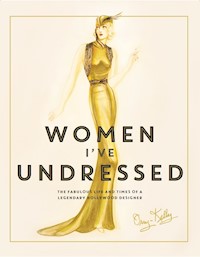
Orry-Kelly created magic on screen, from Casablanca and The Maltese Falcon to Some Like It Hot. He won three Oscars for costume design. He dressed all the biggest stars, from Bette Davis to Marilyn Monroe. Yet few know who Orry-Kelly really was - until now. Discovered in a pillowcase, Orry-Kelly's long-lost memoirs reveal a wildly talented and cheeky rascal who lived a big life, on and off the set. From his childhood in Kiama to revelling in Sydney's underworld nightlife as a naïve young artist and chasing his dreams of acting in New York, his early life is a wild and exciting ride. Sharing digs in New York with another aspiring actor, Cary Grant, and partying hard in between auditions, he ekes out a living painting murals for speakeasies before graduating to designing stage sets and costumes. When he finally arrives in Hollywood, it's clear his adventures have only just begun. Fearless, funny and outspoken, Orry-Kelly lived life to the full. In Women I've Undressed, he shares a wickedly delicious slice of it.
Das E-Book können Sie in Legimi-Apps oder einer beliebigen App lesen, die das folgende Format unterstützen:
Veröffentlichungsjahr: 2017
Ähnliche



















CONTENTS
FOREWORD BY CATHERINE MARTIN
INTRODUCTIONIf there’s no such thing as Santa . . .
CHAPTER 1I sat fascinated at a world I’d never known existed
CHAPTER 2It was as if I had suddenly broken off my leash
CHAPTER 3‘You should only be ashamed of bein’ ashamed’
CHAPTER 4She slipped me fivers under the table just to go dancing
CHAPTER 5Parties, like chocolates, should be well mixed and well assorted
CHAPTER 6After a few more rounds the right people were doing the wrong things
CHAPTER 7‘So, you’re Kelly the dress designer?’
CHAPTER 8‘I’m the most wicked woman alive’
CHAPTER 9She became known as the best-dressed woman on the screen
CHAPTER 10‘That kangaroo hide of yours is tougher than any two agents’
CHAPTER 11‘Kelly, I’ve been a devil this last week, haven’t I?’
CHAPTER 12I gathered my few loose ends, untangled a few threads . . .
CHAPTER 13‘No matter what anyone may say, Orry is a very moral boy’
CHAPTER 14‘It’s the finish that counts, kid’
CHAPTER 15‘Don’t forget, Kelly, use lots of nice little clean four-letter words’
CHAPTER 16Like murder and morphine, fashion has become front page news
CHAPTER 17You wouldn’t want to have angry bosoms, would you?
CHAPTER 18‘It was such a good party. Everyone wasn’t rich’
CHAPTER 19‘The great trick is not to let your public get wise to your tricks’
CHAPTER 20There’s never been any in-between with me
EPILOGUEBetween life and death there is a big funhouse
AFTERWORD BY GILLIAN ARMSTRONG
GLOSSARY
ORRY-KELLY FILMOGRAPHY
SOURCES AND ACKNOWLEDGMENTS
ABOUT THE AUTHOR
THANK YOU
FOREWORD
CATHERINE MARTIN
ORRY-KELLY HAD AN inexhaustible appetite for life and experience. He was a romantic at heart, who as a child defied the xenophobia of Australian small-town life by building worlds beyond its borders using only a toy theatre and his red ‘Lady’s Companion’, containing spools of coloured silk, as vehicles for escape.
Orry-Kelly’s imagination and capacity to transcend his own provincial experience gave him the skills to create costumes that would support some of the most extraordinary and demanding actresses of his day. This underlying sensitivity to life and all of its complexities would give him the ability to translate story into clothes.
That is not to say he denied his country roots; as a child he was able to sustain his rich imaginary life and his invisible companion Bijou, while also being completely aware that there was no Santa Claus. This ability to call a spade a spade won him many admirers in the dressing room. Actresses felt secure in the notion that the romance of his personality was always combined with the sharpness of his eye to ensure they always looked their best.
One of Orry-Kelly’s most enduring collaborations was with the indomitable Bette Davis. As a child I religiously watched the black-and-white Saturday matinee films. My favourites always included films starring Bette Davis. In reacquainting myself with Orry-Kelly’s vast career, I was struck by the costumes he designed for Bette’s portrayal of Charlotte Vale, the heroine of Now, Voyager. The parallels between Nicole Kidman’s blue-and-white travelling suit and matching white fedora from the film Australia are only too evident. Charlotte Vale’s heroic female journey left a lasting psychological imprint on me, and I am sure Orry-Kelly’s character-illuminating costumes were an intrinsic part of this imprinting.
Orry-Kelly had an appreciation for high and low culture. He had the dexterity of personality that allowed him to mingle, party and work with the gangland toughs of Prohibition-era New York and, in contrast, both real European and faux Hollywood royalty. Orry-Kelly drew on these multiple friendships in his work, allowing him to dress everyone from the working girl to the most aristocratic of ladies.
Orry-Kelly loved people, both their good and bad points, and drew upon this extraordinary landscape of human character to find indelible inspiration for film. As a designer he always took his work seriously, but never himself. He had a wicked sense of humour and saw the funny side of almost every situation. This self-deprecating humour is well illustrated in the joke he plays on himself in his own memoir when failing to mention his three Oscar wins – not even in passing.
I find it incredibly meaningful and touching that at his funeral his pallbearers included an amazing cast of Hollywood luminaries – Tony Curtis, Cary Grant, Billy Wilder and George Cukor. His eulogy was read by Jack Warner and his three little gold men went to Jack’s wife, Ann, Orry’s long-time friend and confidante.
He had touched them, not only with the breadth of his work, but also as a friend and as a miraculous character who was able to reach the hearts of so many with his personality, rambunctious spirit and love of the romance of the creative world that could always be just a little bit better than reality.
My favourite films as a child always starred Bette Davis, and Orry-Kelly’s designs for Bette in Now, Voyager clearly inspired me when I was designing Nicole Kidman’s wardrobe for Australia.
INTRODUCTION
If there’s no such thing as Santa, I’ll have the red Lady’s Companion.
I WAS SIX YEARS OLD the Christmas my mother took me to Major’s Emporium in the tiny town of Kiama on the south coast of Australia. In her no-nonsense British manner she said, ‘You’re a big boy. It’s time to know there’s no such thing as Santa Claus. How about that set of carpenter’s tools?’
Upon a hand-painted card, in the middle of the window, were printed the words: ‘A Lady’s Companion’. Underneath were two plush boxes – one red, one green – containing many spools of coloured silks. Mother caught me eyeing them and moved me towards a football. But I backed away and announced, ‘If there’s no such thing as Santa Claus, I’ll have the red Lady’s Companion.’
From then on my needle was threaded.
‘And it’s been threaded ever since,’ Fanny Brice told me one afternoon as we sat discussing this book. ‘When you write about me,’ she continued, ‘I want you to tell the truth. Don’t hedge around, be brutally frank. I’ve never done anything in my life I’m ashamed of’ – she paused, and gave a sly wink – ‘but go easy on me, kid!’
‘When it comes to me,’ I told her, ‘I don’t know how anyone’s going to get a straight storyline.’
She laughed. ‘Wasn’t it Gracie Allen – of all people – who christened you “Circles Kelly”?’
It was. But Fanny herself would say, when I’d start telling a story, ‘Hang on to your hats, kids, here we go again, Orry’s talking in circles’.
How right dear Fanny was. My life, like my mind, has never been organised. I run on different currents: my mind AC and my tongue DC. I have never learned to think before I speak. Most Australians are exceedingly thrifty with words, relying more on inflection, but in my youth I found it difficult to soften the H when I was told I must say ‘an hotel’, and yet I didn’t want to drop my H’s like the cockney ‘help’.
I am not particularly literary. The biggest dunce in my class, there was no one worse in English. At arithmetic I was ‘less worse’, but I shone in art.
During my life I’ve been split up by agents in more ways than one, so a split infinitive at this stage of the game isn’t going to hurt. I find punctuation complicated. It’s full of commas, parentheses, dots and dashes. Who cares if I put a dash instead of a full stop. I put a dash in my name when Warner Brothers engaged me. Mr William Koenig, head of production, said, ‘Kelly is too common a name. How do you spell it in French?’ I told him Koenigs, Cohens and Kellys remain as is.
Koenig said, ‘Fancy it up.’
I hyphenated it.
Through the years, I’ve received hundreds of letters asking about the hyphen in my name. I’ve even been asked, ‘Are you one or are you two?’
This book is not meant as a complete autobiography, but the prospect of writing even part of my life seems formidable.
Up until a week before she died, Miss Ethel Barrymore read and re-read chapter after chapter. She insisted I write myself; there must be no ghosts. When I told her I felt I needed professional help with the form, she replied, ‘You create your own form when you design a dress, don’t you, Kelly? Then form your own pattern with the book.’ And so I have. I’d like to write simply, without any frills, for my dressmaking world has had enough of those – but then again, certain cities remind me of dresses.
In my fitting room the conversation is not always so fitting. It’s full of naked emotions. I see the pretty, not-so-pretty and the ‘ugs’. It’s those ugly ones with crepe-paper armpits, shrivelled elbows like boiled chicken wings, and knotty knees that spray the fitting room with ‘spite-wick’. Disappointed and disillusioned with their careers and their husbands’ impotencies, they fuss with ribbons and bows, while thinking of their young beaux-on-the-side.
The fitter rips, pins and pin-pricks. There’s much ‘oohing’ and ‘aahing’. Then re-fitting, unzipping and stripping.
Red necked and bottomed, stripped of everything, the ‘ugs’ rip into the seamy side. Often they have asked me, ‘Is that blonde with the multiple top and sway-back bottom really a blonde? Now tell me the naked truth, Orry.’
But Hollywood dislikes naked truths. Truth is rarely served at their dinner parties. When it is, it’s so sugar-coated it belongs with the dessert that lacks the squeeze of lemon – that slight tart taste my mother said belonged to any well-prepared sweet. Seldom does Hollywood dish out a wholesome straightforward truth along with the bloody rare roast beef.
This book deals with famous people I have known and dressed. And some I’ve undressed, draping them in the sheerest chiffon, a fabric the French call ninon. It’s when these beauties face the three-way mirror in my fitting room, ‘ninon over none-on’, unmasked, that they let their hair down!
It’s their story I want to tell.
When I mentioned that I was writing my life story to writer and producer Sid Skolsky, the man who in a 1934 column gave the nickname ‘Oscar’ to Katharine Hepburn’s first Academy Award. Sid said: ‘Don’t call it Women I’ve Dressed – make it Women I’ve Undressed.’ And so it is.
CHAPTER ONE
I sat fascinated at a world I’d never known existed.
MY MOTHER TOLD ME that when I was young that everyone and everything was just a thing, I was forever talking about ‘Bijou’. My parents paid little attention. There was a Bijou Theatre they went to, and they thought perhaps that was what I had in mind. But as I grew older, being an only child, I would wander off by myself down to the beach and scuff the water with flat stones. It was then I knew that Bijou was my dog, my friend and my invisible companion. He’s been with me ever since.
As I grew older I learned to make the stones skip far out into the Pacific – then I’d whisper, ‘Look, Bijou, that one went all the way to America.’
Bijou was a great comfort to me when my father’s voice awakened me at night; I could hear it plainly upstairs in my bed. Then I’d hear Mother say, ‘If you would drink like a Purdue you would drink like a gent, but you drink like a Kelly.’
My father would shout again, ‘What’s wrong with the Kellys? My grandfather was architect to the Duke of Atholl . . .’ And on and on it went, far into the night.
Orry was my given name. I was born in 1897. My father was a Manxman, from the Isle of Man, and I was named for a Danish king who had conquered the island centuries ago.
In the seaport town of Kiama, where I lived, I was considered ‘bush’ – the term used for those born in the country. I didn’t have a poor childhood. I had a nurse. Socially, we didn’t belong in the top drawer of the highboy with the dress shirts, but neither did we fit in with the socks in the lower drawer; we belonged somewhere in the middle, for we were in ‘trade’. The sign over my father’s shop read: ‘WILLIAM KELLY, Merchant Tailor’, and at home I remember much talk of importing worsteds, flannels, serges and tweeds.
My mother was a Purdue, and for this reason I was allowed to attend Miss Ingall’s private school, where little boys and girls were taught manners, given lessons in ballroom etiquette and shown the steps of the polka. In dancing class I liked best the shiny dancing pumps with their flat bows.
Among my earliest recollections, I remember running home from school, bawling my eyes out, my classmates shouting after me: ‘You’re bankrupt, you’re bankrupt, your old man’s bankrupt!’ I didn’t know what the word meant, but I was sure it was something awful. And my mother thought so too. With the help of her brother-in-law, a contractor, Mother was able to build some income property on her Purdue-owned land. To economise, I was sent to a publicly supported school. It took years, but eventually Mother paid off every penny of my father’s debts.
My father didn’t drink so much after the bankruptcy, but he retreated from the annoyances of life by immersing himself in the culture of carnations. He won many blue ribbons at the horticultural shows with his unique ‘Ringer’ – a hybrid he developed – a white carnation, its petals edged with violet. He also hybridised another prize carnation – a shocker in shocking pink, which he named ‘Orry Kelly’.
When I was seven, my mother took me to Her Majesty’s Theatre in Sydney to my first pantomime, Dick Whittington and His Cat. The part of Dick was played by a beautiful lady with a long quill in her cap. She wore a leather jerkin, high-laced suede boots, and carried a swag across her shoulder. At her side was a black cat. There was a demon king, and a devil who came up from a trapdoor with a flash of lightning. I liked best the transformation scene: Beginning with an exterior of the palace, a series of scrims lighted up. The audience was taken through a series of long corridors, finally reaching the Throne Room. When the panto ended and the house lights went up, I sat as in a dream. Mother had trouble making me budge.
The following Christmas I got a miniature stage set. Not liking the scenery, I set about designing my own. Between the proscenium arch I glued two curtains – one red, the other gold. I made reflectors for the footlights out of tinfoil from cigarette boxes. From the same boxes I collected coloured photos of London’s famed musical comedy performers, the Gaiety Girls.
Our rambling two-storey house had extra rooms built on downstairs, and there was a small section with no roof where wonderful ferns were planted. We had a huge garden, which took up about three house plots; among the flowerbeds were many fruit trees, a grape arbour and a small fish pond.
Dressed to impress in the front row (second from right) at the Kiama Church of England Sunday School concert in 1905.
I played with my toy theatre-land in the pigeon loft of a two-storey building behind the house. Saturdays I spent most of the day making additional figures out of cardboard. I dressed the Queen in a long red robe made out of some velvet scraps I’d nicked from Mother’s sewing room, but I found coloured crinkled paper much more to my liking because, with a little glue, the costumes could be fastened more easily to the painted cut-outs. My Lady’s Companion wasn’t much use since the scissors wouldn’t cut, and I couldn’t thread the needles, but the coloured silk was useful. I used tiny candles to light up the stage windows in the transformation scene.
One Saturday, right after lunch, I had almost finished the transformation scene when along came Father in his striped pants and swallow-tail coat. He had been gardening. He said something to me about a boy, seven years old, playing with dolls. He broke the cardboard figures and kicked the Lady’s Companion to smithereens. Taking me outside, he put a huge wheelbarrow in my hands and ordered me to go to the Point and fetch manure for his garden.
About five miles outside Kiama lived the wealthy Fuller family. Early settlers, their huge tracts of land included their own railway station. The oldest son, George, had been sent home to Oxford to finish his education. He was one of Sydney’s leading barristers.
I knew that on Saturdays the Fuller family drove to Kiama in their phaetons and broughams, and played tennis at a private court that was located on the point jutting out from our house. The coachman usually drove the young daughters, who went to my dancing class, in their dog cart. By the tennis courts was a section where horses grazed, and it was to this pasture my father had ordered me. I was afraid the girls would see me with my wheelbarrow full of manure.
It took most of the afternoon to load up. The trip home was long. I kept dodging behind trees, hiding from people driving in their traps and sulkies. I was almost home when I caught sight of the Fuller girls approaching in their dog cart. In my excitement, pushing my heavy load on the run towards a nearby fig tree, my wheelbarrow overturned. And so did I. I heard shrieks of laughter from the girls as they passed. I rolled over, away from the roadside, and cried with humiliation. When I arrived home I looked terrible, and smelled worse.
At the far end of the Point, below the lighthouse, my father had built wonderful natural swimming baths surrounded by irregular lava rock. It was named for him. This was my favourite playground.
My father was a great diver and champion plunger, and was once given a gold medal for diving into the shark-infested harbour to plug a hole in a cargo ship. One summer I had saved a boy who was caught in a rip-tide, and for this was presented a bronze medal. In no time at all the medallion turned dark brown, much like an Australian penny. The engraved inscription meant nothing to me, so I threw it away. I thought they should have given me a gold one like my father’s.
After my first taste of the theatre at seven years old. I was hooked. When the house lights went up, I sat as if in a dream.
After incidents such as that, my cobbers would decide I was fair dinkum or a good sport. Other times I would let my mates down on a Saturday afternoon by going off to paint a seascape with my teacher, Walter Cocks. Again, I was the odd one.
The poorer kids earned sixpence by riding the mail to Jamberoo, about five miles away. I had no pony. I offered to carry the heavy leather bag of mail for nothing. They often were short of saddles at the livery stables, but no matter, I’d ride bareback; cantering over the hills was great fun – until the cheeky kids beat me up for scabbing.
I was really the last hope on the football team. Although I had no strength in my arms, I could run with the best of them. I also played cricket, until a cricket ball broke my nose.
Mother made me study piano. I could play the melody but had little control over my left hand. After rapping my knuckles for six years Mother said, ‘You’ll never get anywhere in life without bass.’ That ended the piano lessons. At the age of twelve I started to study painting professionally. Endless years of school followed.
When I turned seventeen and still couldn’t pass my exams, Mother decided to send me to Sydney for additional studies. She said, ‘You must matriculate – pass your banker’s exams. You will mix with gentler people and, who knows, one day you may end up as Manager.’ I realised that Mother was not without a bit of snobbery in her make-up.
With my schoolmates’ farewells and shouts of ‘coo-wee’ ringing in my ears, I was sent to live with my Aunt Em in Parramatta, my mother’s birthplace, about three-quarters of an hour’s train ride to the technical college in Sydney.
The Grand Opera House was close by the Sydney railway station. The pantomime had been running for several months, and I found myself hanging around the stage door. With this new pastime I was increasingly late getting home to Aunt Em.
One night, just about dusk, while I was watching the show people entering the stage door, a beautiful red-headed girl passed me on the street. She turned and smiled. I decided she must be an actress, for it was obvious she hadn’t been able to remove all the make-up around her eyes. This was my chance to meet and talk to a real Sydney actress! I followed her. At the corner she crossed the street and walked towards Surry Hills, a cheap section of town. She waited for me by an alley and seemed rather vague when I asked her about the theatre. Before I knew it, we were in a dark doorway. There was some talk of money. I was physically excited. Luckily I had bought a season train ticket, because she took four shillings – all I had in my pocket. She also took my virginity.
She took four shillings . . .
She also took my virginity.
Somehow, I got through my school examinations and went to work in the Bank of New South Wales. But my mind was never on my desk. I loved the theatre. During lunch hour I would dash uptown to audition for shows going into rehearsal.
When I turned eighteen, I desperately wanted to enlist, but the Army accepted no one under twenty-one without parents’ consent. But within a year the war ended. Lloyd George assured us there would be a just and honest peace, a phrase which became very popular. There was dancing in the streets of Sydney.
We were launched on a decade of frivolity. Tango Teas were given at the Tivoli Theatre on off-matinee days, and the rich racy set paid top prices for the privilege of dancing on the stage while tea was served in the mezzanine. Jazz bands and wailing saxophones encouraged the younger set to throw away their iron girdles when they danced the foxtrot. Overnight, music became barbaric, its call: freedom of movement. The restricting underpinnings gave way to simple slips, camisoles and lace panties.
During the war the Aussies fraternised with the ‘mademoiselles from Armentières’, as the song said. They returned home to find the girls they left behind wearing flesh-coloured hosiery – before they left, only black lisle, mouse grey, white and pale pink stockings were worn.
The Haymarket branch of the Bank of New South Wales was near the railway station. For over a year I simply went by train to work and returned to my aunt’s in Parramatta. I saw little of Sydney. Then, one day, my audition paid off. I was engaged as a straight man with one line in the bawdy revue Stiffy and Moe.
Thanking my aunt for her kindness, I packed up and moved to Sydney. I found diggings on Hunter Street, in the moist heart of the city with four pubs to every block. I was growing up – I added a couple of years to my age. Sydney took on a new look and so did I.
In my imagination it seemed that Sydney as a whole wore a large over-stuffed Victorian dress. Like most cities, the railway station, the introduction to the traveller, was surrounded by slums. Sydney had one square squalid mile.
Stately Macquarie Street, dignified Potts Point, and other fashionable harbour frontages that were built later, had an Edwardian look. Like their owners, the buildings had a feeling of quality. There was none of the gingerbread and folderol. The people who lived in them wore their clothes well and stood erect, their proud heads held high, with a surety of tilt to their chins. Descendants of the early settlers, they sought adventure in the New World of ‘Down Under’.
Macquarie Street was Sydney’s Mayfair; the lines of the houses were as clean and simple as the lines of the Georgian silver used in the fashionable town flats above the shining offices of professional men whose offices were on the ground floors. Here were located doctors, barristers and solicitors, pioneers’ sons who had been sent home to Oxford and Cambridge for their degrees.
But the hard core of Sydney, the details of its arcades and gingerbread buildings, resembled the heavy Battenburg laces and passementerie trimmings of Good Old Queen Victoria.
Extending from its huge leg-o’-mutton sleeves, like bent elbows, were narrow crooked streets named Bourke, Palmer and Leichhardt. From its frayed skirt and dusty petticoats, other streets, like bandy legs, stretched out to toe the foot of Woolloomooloo. Sitting in the lap of this over-decorated creation was the shining harbour.
The city might have been overdressed, but it had a respectable heart – right in the middle of the shopping district was a park with a kiosk where shoppers lunched and children played. On its left stood Queen’s Square, and to the right stood the huge St Mary’s Cathedral, a block long. Through the iron gates was the Domain, a spreading park covered with a patchwork quilt of flowerbeds. Below the cathedral was Sydney’s toughest section – Woolloomooloo.
Overnight, music became barbaric, its call: freedom of movement. Restricting underpinnings gave way to slips, camisoles and lace panties . . .
Just above the Loo were a series of clay-faced houses, their black sooty chimneys handcuffed together, pointing to the sky. They were built by parolees, the defiant ones. Themselves doomed, they seemed to have purposely planned a way out for their children. At night the streets ended in shadows, making it impossible for the law to track down criminals who darted through a maze of passageways and alleys.
By full moon there was a certain charm, but when the morning sun undressed this voluptuous creature and exposed her tattered and frayed underpinnings, you found this section of Sydney wore dirty drawers. This was the violent part of the town where people lived violently. This was the home of the Sydney underworld.
It was in this section, on Bourke Street, that Alice O’Grady ran her sly grog, a place one could drink on the sly, no matter the time of day. Australian law called for pubs to open at 6 am and close at 6 pm.
I had made the acquaintance of another actor, named Ralph, slightly older than I, and it was to Alice O’Grady’s he suggested we go for a beer, or a ‘pig’s ear’, as he called it. I was excited the moment we got on the tram. Passing Macquarie Street, Ralph, pointing to the streetwalkers strolling in and out of the shadows, said, ‘There go the Two-Guinea Girls, you’ll be seeing them at Alice’s after midnight.’ I wanted to ask what he meant by ‘two-guinea’, but I was afraid he’d think me ‘bush’.
The tram rattled and bumped down to the foot of the Loo. I saw figures in doorways darkened by verandahs laced with iron grill work. About halfway up to Kings Cross we got off at Bourke Street. Ralph said we had a two-block walk up the incline to the sly grog.
In the first block, a man darted out through a hole in a tin fence and disappeared up an alley. In the second block, tired-looking prostitutes stood in every other doorway, with one foot on the pavement and the other foot on the stoop behind them. One such trull called out to us: ‘Hello, ducks, ’ows about comin’ in for a go?’ We hurried past. Ralph explained that by British law, which still governed Australia at the time, the girls were protected and could not be prosecuted if they kept one foot on their own property. I looked on either side of the street: The sallow-faced houses in this slum looked all alike, except now and then a china or iron cat chained to the doorway indicated that the establishment was a ‘cathouse’. The yellowy moon made the painted china cats look just as bilious as the flabby, bulbous-busted prostitutes. I was greatly relieved when Ralph and I were let into the quiet-looking house by big, wholesome Alice O’Grady herself.
She didn’t look as though she belonged in this smoky atmosphere, for she wore no paint and her skin had the sheen of respectability in contrast to the ladies of the ‘ensemble’ in her front parlour.
We sat down, Ralph ordered a brandy and I had beer. Certain things in one’s past are crystal clear, others hazy. The midnight faces at Alice O’Grady’s seem like ghosts of my past.
The gas wall-brackets cast a yellow glow on the women’s sensuous faces, making them look like papier-mâché masks. Ralph nodded towards some men, their faces like visors, with slits for eyes and cruel sagging mouths. ‘They are the Two-Guinea Girls’ bludgers.’ He saw me frown. ‘They are also known as pimps.’
By half past midnight there was no place to sit; the so-called Gaiety Girls had arrived. They swept back and forth, laughing, hugging, kissing their bludgers. Bottoms were patted by some and kicked by others, for there were those whose passion was to be beaten. They all had one thing in common – all of them would give their men their earnings, or it would be taken from them.
After a while Alice came by and said a few words to Ralph, who followed her up the stairs. He stopped long enough to tell me there was no charge for our drinks. A flashily dressed little man with a yellow diamond stickpin in his tie and another diamond on his pinkie was taking some bets. He was chewing on a cigar bigger than himself. His eyes followed Ralph and Alice going up the stairway. He mumbled out of the side of his mouth, ‘Alice’s got it bad for the young actor.’ Then I put two and two together.
I looked around the small room: heavy burgundy drapes were drawn over the windows, partially hiding starched white lace curtains held back by two large velvet butterflies. Little Tich played the pianola. Named after the famous English music hall star, Little Tich, who had six fingers on each hand, this Little Tich had six toes on each foot, Ralph told me. With the white and black keys of the pianola jumping up and down, blue cigarette smoke curling slowly to the ceiling and the raucous laughter of the painted hussies, jockeys and bludgers, who took turns shouting for the house – all this gave me the feeling of a three-ring circus.
The gas lights at Alice O’Grady’s sly grog cast a yellow glow on the women’s sensuous face, making them look like papier-mâché masks.
I sat fascinated at a world I’d never known existed.
That night, as I watched the strange figures in the smoky room, I heard names like Rosie Boot, Lena the Fox, The Odd One, Spanish Nell, Port Wine Pansy, The Cameo, Minna the Toad, Terrible Tilly, Rose Rooney and Gentleman George.
My actor friend came downstairs. He said Big Alice O’Grady wasn’t feeling too good. He had called a cab. As we went out, the famous Rosie Boot went in.
In the country, when I was seventeen, I had to be home by 10 pm on the few nights I was allowed out.
When I got back to town we bought cold pork sandwiches at one of the few late spots and went to Ralph’s apartment. With more beers, I asked questions until daybreak. Ralph, of course, knew all the lowdown. He told me: Alice’s husband, Tibby O’Grady, had been Sydney’s best known pickpocket until he left for the Old Country and the Wembley Exhibition, with its bigger crowds and purses to be snatched.
Rosie Boot had the melancholy blood of a third-generation whore. Her mumma had followed an officer of an old-line British regiment to India and, as Rosie herself often said, ‘Between the heat and one thing and another, I came along.’ Rosie was only sixteen when her mumma told her the way of life and put her on the town – it was as simple as that. As far as Rosie was concerned, that’s what was expected of her. The name Rose was taken from an English scent, ‘Old Rose’. Rosie used to brag that the family name went back three generations; Grandma Rose was now called ‘very Old Rose’, Mumma was ‘Old Rose’, and when Rosie took the boat for Sydney she decided to take the name of her favourite Gaiety Girl, Rosie Boote. She didn’t think she was doing anything wrong and, besides, she felt it was so far away, no one would know the difference. Still, she gave her last name the boot and kicked off the E, spelling it ‘Boot’.
Rose pink was Rosie’s favourite colour. Her hats, clothes, umbrellas and bags were pink, even to the uppers of her black patent leather shoes. When Rosie first landed in Sydney, in 1903, her face had a wonderful rosy glow. At the end of the First World War, her bloom no longer blooming, Rosie Boot ‘hit the pave’. She conceived the idea of using stately Macquarie Street as her beat. This lady of ideas decided to organise a club; she got hold of Minna the Toad.
Minna was a fetcher and carrier, a doormat for the madams, or anyone, where there was a quid to be made. She met all the boats arriving at Circular Quay. ‘The Toad’ was always on the lookout for a pretty new face among the trulls who hoped the hot weather of Sydney would be much more to their liking than the hot water they had gotten into back home. Rosie and Minna gathered the prettiest English hussies for their club, which they called The Gaiety Girls.
The girls realised that it paid Rosie well to pose as a Gaiety Girl who had grown tired of the theatre. Following suit, they too took the names of famous Gaiety Girls. One blonde impertinently took the name of lovely Gertie Millar. Another called herself after the beautiful Miss Lily Elsie. Two look-alikes were known as Phyllis and Zena Dare. Others called themselves Miss Gabrielle Ray, Marie Lloyd and Connie Ediss.
A pee-pot elegant puss became known as The Duchess of Teck, after the Dowager Queen Mary. And, to add the royal touch, she wore an ermine choker and muff.
This put them in the two-guinea class, for Macquarie Street’s professional men started their fees at two guineas. Hence the girls became known as the Two-Guinea Girls.
Macquarie Street was usually deserted by five o’clock in the afternoon. At dusk the street had a calm, relaxed air of seclusion – that is, until the lights were lit and a succession of hansom cabs carrying the laced-mutton ladies of the evening somewhat altered the serenity of the scene. With a slight stretch of the imagination, when not ruffled and on their best behaviour, they could well have been ladies of the ensemble of Mr Cochran’s chorus at the Gaiety Theatre in London’s West End.
The boys from the bush had heard fantastic tales of the Macquarie Street girls. The moment they hit the city, their first purchase was often a piece of the much-talked-of two-guinea ‘Gaiety Girls’. Sydney’s fanciest floozies played up the fact that they were imports, but the two guineas were only the starting point, a down payment.
A black satin dress was the basic part of the black-and-white ensemble which Rosie had decreed. Their hats were varied – some wore swathed turbans that veiled their eyebrows, others had white aigrettes or pale bird-of-paradise feathers jutting up from the crown and white fox furs slung over one shoulder, the head always biting the tail. They wore enormous corsages of white camellias, white double violets, and bouvardia backed with maidenhair fern. It was an age of elegance and even the prostitutes were elegant. They looked like Aubrey Beardsley drawings. Apart from the beaded bags they swung, the short black kid gloves, they usually wore a tiny black cross on a fine gold chain around their necks. Yet none were on good terms with their Maker. Their motto was ‘The Lord helps those who help themselves,’ and they had many keepers. Profoundly honest Rosie, unlike the other girls, never wore a cross.
It was an eerie effect when a motor car or a passing taxi flashed and lit up their dead white faces plastered with Java rice powder. Others needed little light to make their Gaiety Blue-shaded belladonna eyes gleam – belladonna was a dangerous substance used to dilate and make the pupils flash – as their bloodthirsty lips parted with professional smiles.
There would be a low whistle from the cop on Rosie’s payroll when a small theatre party came out from their town flat onto the street to hail a hansom cab. The trulls, looking like black-and-white abstractions, would fade and disappear into iron and charcoal recesses, forming weird shadows. The proud street would revert to its calm and dignified look, as if out of respect or reverence for the proximity of Government House and His Majesty’s representative.
The moment the cab turned the corner, the cop would give the all-clear signal and, just as a theatre scrim is lighted from behind, stately Macquarie Street became alive. From the dark recesses, like black-and-white frogs, with sexual abandon the painted lizzies leaped out at their prey. The whole street buzzed with activity; men of all types appeared, usually in the thirty-to-fifty bracket. They had whiskers, pot bellies and wore bowler hats. Sheer black stockings were adjusted, garters snapped and white thighs were exposed. Imitation diamond earrings, bracelets, brooches and shoe buckles sparkled and shone.
This section of the city wore dirty drawers.
This was the home of Sydney’s underworld.
There was a stretch in the pavement where new pipes had been installed and irregular streaks of still-wet tar dribbled and ran over the sidewalks, giving a Rouault lead-glass effect. The streetlights beat down on the black-and-white harlots, the oily surface reflecting their voluptuous bodies as they sucked in their stomachs, while their navel buttons beat out a rhythm to their shimmying nipples.
Hacks were called. The girls and their tired businessmen bundled in and started jogging towards the Loo. I am not so sure how pleased His Excellency Lachlan Macquarie Esquire, Captain General and Governor-in-Chief of His Majesty’s Territory of New South Wales and its Dependencies, etcetera, would have been had he lived to see what happened to his beautiful street.
Yet you couldn’t blame Rosie Boot for choosing his street. Directly opposite their beat was Government House; there were no walls surrounding the apple-green lawns and its floral sash of flowerbeds. The perfume of the night-blooming flowers and honeysuckle that drifted across the way gave momentary relief from the soiled shirts, dirty dickies, stale singlets and stinking socks of their quick trips and tricks to the foot of Darlinghurst and the Loo, where the animalism of the older Adams with the younger Eves often went far beyond the normal sexual habit.
Miss Boot had decided the girls would hit the pavement about eight o’clock in the evening. As she said: ‘A businessman should have time to let his dinner settle before taking his pleasure with the ladies of the evening.’ The girls worked four hours – until midnight – and they drank and played until four in the morning.
Midnight, Macquarie Street, facing Queen’s Square, was deserted. The average businessman, by now about to fall apart, made his weary way home after a long day at the office and a longer night on Macquarie Street. Climbing their steep stairs, taking off everything but their earrings half a dozen times, the Gaiety Girls, too, had just about fallen apart.
By early morning, the heavy enamel they plastered on their faces had been clogged and caked with sporadic pattings of Java rice powder. They looked like wild mysterious plumed birds of the Australian bush, standing under the lamp posts, tossing their tall feathered hats back and forth, impatiently waiting for a hansom cab to take them to Alice O’Grady’s sly grog, where they would meet and turn over their earnings to their bludgers.
I was wide awake by now. I asked about others I had seen. Ralph, who had been drinking brandy, seemed just as fascinated telling me all about them:
Lena the Fox, then in her sixties, didn’t need the late hours to give her face the effect of a crinkling and crackling mask. She had grey-green skin, and several of her chins were hiked up with the aid of a couple of wide dog collars. Her shifty, tiny blackcurrant eyes were set far back into her skull, and perched on top of her badly dyed hair was a veiled grey crown-like toque, trimmed with Parma violets. In fact, she copied every detail of the Dowager Queen Mary’s dress, even to the unbecoming two-tone shoes and conventional grey gloves. Her grey coat was a work of art, particularly the sleeves; anything could, and did, disappear into them, from a piece of jewellery to an ermine tippet. Even the grey fur which bordered the short cape on her grey coat had that British elegant lived-with look. Had I known earlier in the evening that Lena was Australia’s number one shoplifter, I would have been more appreciative of her dress.
The Odd One, like Rosie Boot, was third generation and born into her profession. While she knew what was expected of her, she loathed it. Her grandma’s experiences, the terrible evils of transportation to Botany Bay, were forever fresh in her mind. There was no fancy man in her life. Usually she sat alone in Alice’s sly grog. Although her moods were strange and unpredictable, the other girls paid little attention, because there was something hopelessly pathetic about her.
From the dark recesses of Macquarie Street, the painted lizzies leaped out at their prey . . . black stockings were adjusted, garters snapped and white thighs exposed.
Spanish Nell acquired this name after she had lost her looks. In her youth the dark-complexioned Nell had been likened to a blood-red dahlia. When this once wonderful skin became a mass of purple veins, forming rivers and tributaries all over her face, she was anything but attractive. She became an abortionist. Nell was a nightly patron at the sly grog. When Alice would cry out, ‘Nell, it’s for you!’ she’d run to the phone, listen a moment, hang up, grab her banjo case filled with Epsom salts, permanganate of potash and other appurtenances, and away she’d fly on a ‘case’. It was this instant response to the call of duty that had won her the full title: ‘Spanish Nell, the Flying Angel’.
Terrible Tilly was the most notorious and ruthless cockney that ever sailed through Sydney Heads. And she slashed many a head with the old-fashioned razor she carried in her black patent leather bag. In fact, it was for slashing an innocent victim’s throat that Tilly was deported back to London. But she got back to Australia. How? No one knows!
She was about twenty-six years old. Beneath her floppy horsehair hat the horsy Tilly glued a peroxide cowlick on her puce-pink cheeks. Her mouth was a scarlet gash. It was obvious she wore nothing underneath her sheer skin-coloured sleeveless beaded dresses. Her powerful arms shone with three or four ornate diamond bracelets. Being a southpaw, Tilly wore an expanding green-eyed diamond lizard around the muscle of her left arm. Black patent spike-heeled shoes completed her ‘night and day’ ensemble. Her get-up was as bold as herself. Tilly lived far away from Bourke Street in another slum section called Surry Hills, adjoining the railway station. Big Alice O’Grady was one of the few who defied Tilly.
Tilly was not a prostitute – the prostitutes had bludgers. She turned the tables. Two punch-drunk ex-pugs robbed and helped her rob; and she, in turn, gave them pin money for her favours.
She allowed no strumpets in her territory. Tilly used the entire square block of Anthony Hordern’s department store near the railway station as her beat. Approaching a rich squatter or wool buyer, fresh from the train, she would pretend to be a prostitute. ‘I’ve got me own car,’ she’d say, nodding to the big convertible parked at the kerb. One of her fancy men would be dressed as a chauffeur, the other hidden in the back. The moment her ‘customer’ got in, he was blackjacked, robbed, taken on a short trip to Surry Hills and dumped in an alley. Then Tilly and her fancy men went back for another ‘prospect’. She became rich, and her many exploits were often common gossip in Sydney’s underworld and in the pages of Truth.
Rose Rooney was known as the ‘Queen of Diamonds’ and was a sort of henna-haired edition of Mae West. She shone from head to foot; in fact, even the heels of her shoes were solidly studded with real diamonds. She wore two diamond combs in her hair and dazzling, dangling earrings which almost reached the elaborate necklace at her throat. Her arms were covered with bracelets and her fingers sported diamonds of all shapes and sizes – marquise, pear-shaped, clusters and double clusters – some a little yellow, but still the real McCoy.
Terrible Tilly slashed many a head with the old-fashioned razor she carried in her black patent leather bag.
At the beginning of the twenties, the newspaper used few photographs, but Sydney’s Truth never missed printing a shot of Rose Rooney on Cup Day at the races. The Governor-General and his Lady always appeared in their box just before the second race. When the band struck up ‘God Save the Queen’, that was Rose’s cue to parade directly in front of the Governor-General’s box, in some outrageous creation. Rose was usually accompanied by two of her barmaids – nobody else would accompany her. She was ablaze with diamonds. Her huge black velvet hat with white aigrettes swept high in the air; the black velvet dress slashed to the knee to show off her real diamond garter. Her train spread out and trailed behind her on the lawn as her white-gloved hand clutched a Tosca diamond-studded staff.
Port Wine Pansy was the best and the richest of the peddlers. She was a flower vendor who sold ‘seconds’. In fact, her flowers wilted before her customers could get out of the theatre. It was rumoured she owned half a block of slum houses. In her sixties, she had never changed the Victorian style of her dress: Her large hat had once featured a tulle butterfly, but now only the wide frame remained and some rain-soaked tulle hung down like cobwebs, partially hiding her face. The threadbare patches and rags of her cloak – her outer prop – trailed along in the dust, almost hiding her spotless white cotton stockings and broken-down elastic-sided boots.
At her side was a pale urchin of a girl, Cammie, dressed like Eliza Doolittle, who sold flowers from Pansy’s basket. Next to port wine, Pansy liked the theatre and sat in her usual front row centre seat way up in ‘the gods’, as we Aussies called the top balcony. Shaw’s Pygmalion was her favourite play. She was an avid first-nighter and a walking theatrical encyclopedia.
Like Port Wine Pansy, I spent many magic hours at Her Majesty’s Theatre, decked out in all her finery here for a visit by the Prince of Wales.
Occasionally, when she dropped by Alice’s sly grog for a port, hanging up her hat and discarding her mass of threadbare rags, she looked like Whistler’s Mother. The clothes under her props were immaculate and she had a well-scrubbed look about her. In a quiet voice, touched with a good English accent, she told tales of early players. She went as far back as Italy’s leading actress, Madame Ristori, who opened in Medea. Pansy told of the seething crowd that burst through when Bernhardt – ‘Sinuous Sarah’, as she termed her – opened in Camille in 1891. After she had seen American stage actress Mrs Brown-Potter she referred to her as ‘Minor Bernhardt’.
After prosperity descended on Australia with the gold rush, as Pansy put it, ‘in the full flush of inflation, Robert Brough, Dion Boucicault and Irene Vanbrugh arrived from Britain with their companies.’
Woolloomooloo-born comic opera star Miss Nellie Stewart had more farewell appearances as Sweet Nell of Old Drury than Dame Nellie Melba. ‘But at least,’ said Pansy, ‘Nellie Stewart showed up for hers – Melba was always refunding money.’
She told of English comedic and light-opera star Marie Tempest and her husband, the actor Graham Brown, and Australia’s own golden-voiced Gladys Moncrieff. Another Australian, Miss Minnie Everett, formed ballets and trained choruses, out of which came such stars as Madge Elliott and Cyril Ritchard. Patronisingly, Pansy said, ‘In between there were cheapjacks, often Americans with their variety shows.’
The London Gaiety Company made the longest journey in theatrical history, all around the Cape of Good Hope, to give the world premiere of Cinder Ellen in Melbourne. Pansy went home to Melbourne for this event, which proved to be the biggest thrill of her life. She said that Fred Leslie, Nellie Farron and Sylvia Grey had rehearsed the show on the long voyage. ‘The Aussies went mad,’ continued Pansy, ‘and Leslie was sued for five hundred pounds when he punched an Aussie for making a disparaging remark about King Edward VII.’
The Cameo, like Topsy, just sprang up. She was brought up by an aunt who lived at The Rocks. When Cammie asked what her surname was, her aunt said, ‘Your name is Cammie, just think of a cameo – that’s you.’ And she was a cameo, even in the boy’s knickers and checked cap she usually wore. Cammie earned money by running messages, buying sweepstake tickets for the harlots, and at times ‘calling cops’ for Alice O’Grady.
Minnie the Toad, with her ‘never-ending nether-end’, was a disagreeable, sallow-faced, hawk-nosed procurer. Her business was putting her nose in other people’s business, providing they were important. Her magenta heart-attack mouth sagged with the disappointments of life – particularly in her love life. But there were those who said that Minna was kind. ‘Anyone who has such a big, angry fuselage as The Toad ought to be kind’ was a favourite remark of Gentleman George.
There were so many throat slashings that Darlinghurst became known as Razorhurst.
Gentleman George was Sydney’s number one pickpocket, a title he’d held since Alice O’Grady’s husband, Tibby, had left her for the Old Country and a bigger purse.
He cut quite a figure in his too-light grey suit, white silk shirt with a two-inch rounded unattached collar, gold pin under the knot of his black tie, black patent leather shoes with grey suede uppers and mother-of-pearl buttons, and his ever-present field glasses which he slung over his shoulder. In the spring he always sported a large bachelor’s button in his lapel. He had an enormous amount of reserve strength across the back of his neck and shoulders from his many street brawls. To top it all, he was a double for Wallace Reid, the silent movie star.
His principal weapons were dash and daring. He was tricky, cunning and brutally frank. There was no end to his chicanery if it meant getting what he wanted. Of course, all these qualities were below the surface, for he looked, behaved and spoke like a gentleman.
The underworld knew this well-dressed pickpocket as Gee Gee – an Australian term used for racehorses. When he wasn’t at the gee-gees, he was usually busy at the tram stop at Darlinghurst, an intersection known as Kings Cross. Some called it ‘Kings Bloody Cross’. In fact, there were so many throat slashings in that area that Darlinghurst was referred to as ‘Razorhurst’. Another favourite tram stop was Bathurst Street corner, known to the pros as ‘The Street of Great Expectations’. There was a Dickensian flavour about the old curiosity shoppes, pawn brokers and Mrs Woolf’s second-hand clothing store. Standing around, hamming it up, old stock actors used the phrase: ‘Here comes a sheep in Mrs Woolf’s clothing!’
Gee Gee actually had little interest in this local colour, or in the small German band playing on the corner. It was the wool man, the rich squatter or anyone sporting a gold chain across his vest that caught his undivided attention.
Gee Gee had a certain humour along with his stealing. So quick and expert was he that he could clip a gold watch from a man’s chain, duck into a pawn shop, return and attach the pawn ticket back on the chain, without being detected. The bland, almost childlike expression in his big blue eyes made him the last person anyone would suspect of thievery – but these same blissfully serene eyes could also ice up the moment he spotted the law.
Another trick he used for disposing of his stolen watches was to take them around to a pub, or public house keeper, or anyone who might be on the lookout for a bargain. He might accept five pounds for a twenty-pound timepiece, while he casually suggested that since the watch was ‘hot’ it should be hidden for six months. The watch would then be put away under the flooring, or in some other safe place, but when the buyer retrieved the stolen property, it would often be verdigris green – Gee Gee, at the last moment, had switched a brass watch for the expensive one!
Gentleman George, unlike the other bludgers who went to Alice’s at midnight to collect from their tarts, had not only one, but three girls – a blonde, a brunette and a redhead – who gave him their earnings, out of which they got their expenses and pin money. This was the reason some other trulls referred to him as The Stallion.
It was eight o’clock when I left Ralph. I then did what I was often to do in my youth: I went to a barber, was shaved, with hot towels and then ice-cold ones. And, after a shower and change of clothes, I was ready for another twenty-four hours of fun . . .
CHAPTER TWO
It was as if I had suddenly broken off my leash.
I’D HAD MY FIRST taste of Sydney’s underworld life that night at Alice O’Grady’s sly grog. You would have thought my first trip, treading on the dangerous quicksand of the underworld, would have sufficed. But no, it was as if I had suddenly broken off my leash. Fascinated with the Loo and with Bourke Street’s Fauvism, I went panting back for more. With these new, strange acquaintances I began hearing a brand new lingo: Hows-yer-doin’ matie orright? Good-o, then you can shout me to a beer. Ye won’t, eh? Then yer a stinkeroo, abso-bloody-lutely. Yer may be smart orright, yer not as smart as yer think yer are, but . . .
The King’s English may have stumped me at school, but these new expressions were a cinch.
Meanwhile, the theatre world of Sydney was flourishing and our revue was a hit. Sydneysiders were flocking to see Charlie Chaplin in The Kid and Mary Pickford in Pollyanna. Irish tenor John McCormack had concluded successful concerts at the Town Hall, and musical comedy star Maude Fane was playing nightly in a long run of A Night Out. Every night, after the show, she was seeing a great deal of young Robert Peel – in fact, too much, for her husband had been in South Africa for the past year, producing shows. As Maude’s show progressed she added a small muff to her ensemble and began to carry it throughout the play. As the months increased, so did the size of the muffs, and by the time she had to quit the show the muffs were gargantuan. At this time Bobby Peel was called home; his father was dying. He became Sir Robert Peel.
The theatre world of Sydney was flourishing and our revue was a hit.
Maude’s baby arrived not long after her husband’s return. They were divorced. A little later, Sir Robert Peel made the actress and comedienne Beatrice Lillie Lady Peel.
‘Didya read what Johnny Norton said in Truth?’ That phrase rang in my ears the first time I heard it, and forty years later I can still hear it.
Although Norton had been dead four years when I became a Sydneysider, no one spoke of it. John Norton ran a weekly yellow rag, the first of the tabloids, called Truth. It appealed to the Larrikin, the rowdy – or, for that matter, all the fun-loving, pugnacious youth who mimicked his alliterations and Nortonese manner of speech. Gentleman George’s hero was Johnny Norton. He kept clippings about Norton in his wallet. Gee Gee copied Norton’s way of using alliterations, and sprinkled his speech with such phrases as: ‘the bulbous-breasted, broad-buttocked, bare-legged bouncing beauties’.
Like the conceited, cocky, concupiscent young curs I began running around with, I couldn’t wait for the Sunday edition.
Adultery, according to British law, being the only means of divorce, all the details and positions of the prone bodies were minutely described. Many nice families also couldn’t wait for Truth to come out each Sunday; but instead of having it delivered on the lawn with The Sydney Morning Herald and The Sun, it was dropped by the back door.
Wanting to get all of the bush out of my system, I began talking Nortonese.
By then I knew and was on good terms with Rosie Boot. I began meeting others – a newspaper reporter, brother of a famous Australian athlete, who often dropped by Alice O’Grady’s sly grog for beers and a laugh. This particular evening, as I was sitting drinking with Rosie and the newspaperman, the Gaiety Girls had trooped in and were just settling down to their drinks. We heard a sharp knock on the door. Now, all Alice’s customers knocked with a code; this loud rap meant trouble – and it was!
Cautiously, Alice listened, then, recognising the voice, opened up. In bounced Miss Gertie Millar, her half-unbuttoned blouse showing her bosoms bouncing like a couple of jellies capsized out of a mould. She eventually quietened down long enough to tell Alice that Cammie had told her the cops were in the next block with their Black Maria. I thought, this is it! I wanted excitement and I was about to get it.




