


Erhalten Sie Zugang zu diesem und mehr als 300000 Büchern ab EUR 5,99 monatlich.
- Herausgeber: THP Ireland
- Kategorie: Sachliteratur, Reportagen, Biografien
- Sprache: Englisch
1950s Ireland was the age of De Valera and John Charles McQuaid. It was the age before television, Vatican II, and home central heating. A time when motor cars and public telephones had wind-up handles, when boys wore short trousers and girls wore ribbons, when nuns wore white bonnets and priests wore black hats in church. To the young people of today, the 1950s seem like another age. But for those who played, learned and worked at this time, this era feels like just yesterday. This delightful collection of memories will appeal to all who grew up in 1950s Ireland and will jog memories about all aspects of life as it was.
Sie lesen das E-Book in den Legimi-Apps auf:
Seitenzahl: 222
Veröffentlichungsjahr: 2018
Das E-Book (TTS) können Sie hören im Abo „Legimi Premium” in Legimi-Apps auf:
Ähnliche
















This work is dedicated to allthe children of 1950s Ireland.
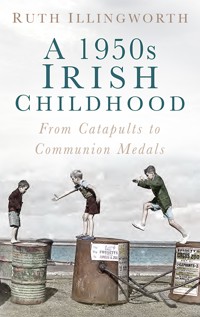
Front cover: Two boys at the O’Brien-SheridanTraveller Camp, May 1954. (National Libraryof Ireland, Wiltshire Collection)
First published 2018
The History Press Ireland50 City QuayDublin 2Irelandwww.thehistorypress.ie
© Ruth Illingworth, 2018
The right of Ruth Illingworth to be identified as the Author of this work has been asserted in accordance with the Copyright, Designs and Patents Act 1988.
All rights reserved. No part of this book may be reprinted or reproduced or utilised in any form or by any electronic, mechanical or other means, now known or hereafter invented, including photocopying and recording, or in any information storage or retrieval system, without the permission in writing from the Publishers.
British Library Cataloguing in Publication Data.A catalogue record for this book is available from the British Library.
ISBN 978 0 7509 8673 1
Typesetting and origination by The History PressPrinted and bound in Great Britain by TJ International LtdeBook converted by Geethik Technologies
Contents
Introduction
Acknowledgements
Timeline of the 1950s in Ireland
1 Infancy
2 Primary School
3 Secondary School
4 Toys and Games
5 Comics, Cinemas and Circuses
6 Religion
7 The World of Work
8 The Outsiders
Bibliography
Introduction
Ireland in the 1950s was a very different country compared to the republic of today. In some ways it was closer to the Ireland of the Victorian era than to the twenty-first century. The children of the 1950s lived in a country that was still largely rural, deeply religious and poor. It was a country in which horse-drawn traps were still a common mode of transport in rural areas well into the decade, in which there were more cyclists than motorists, and many homes had no electric light or running water.
At the start of the decade, Ireland had been an independent state for just over a generation, and had become a republic and left the British Commonwealth only a year before. There was a strong sense of nationalism throughout the country and a sense of pride at the achievements of those who had fought for Irish independence between 1916 and 1921. The children of the 1950s were taught to revere the 1916 rebels, particularly the rebel leader Patrick Pearse, the poet and teacher, who was seen as a role model for the youth of Ireland. The continuing partition of the country was seen as a historical wrong and illegitimate. There was little understanding of the viewpoint of the Protestant Unionist majority in Northern Ireland. In the early part of the 1950s, the Irish government and opposition parties ran an international campaign against partition, and politicians called for Irish re-unification from election platforms. In the middle of the decade, the IRA began a military campaign, known as the Border Campaign, which would continue until 1962. Some teenagers would be drawn into that campaign having been exposed to extreme nationalist ideology in school and in the wider community.
The decade was one of political instability. There were three general elections in just six years and a succession of weak coalition or one-party minority administrations. Although there was a proliferation of small parties – such as Clann Na Poblachta, Clann Na Talmhan and Labour – the political scene remained dominated by the two major parties that had emerged after the civil war of 1922–23: Fianna Fáil and Fine Gael. The political parties were generally centrist and conservative. There was little support among the electorate for radical socialist or nationalist or free market ideologies. The country was strongly democratic, with lively political debate and high voter turnout at elections. The Civil Service was politically impartial and, if conservative in outlook, was reasonably efficient. Corruption did exist in the political world, but was not a major problem.
Ireland in the 1950s was in many ways an authoritarian and illiberal society. Corporal punishment was widely used in schools and by parents. Extraordinarily large numbers of people were detained in institutions of one kind or another – particularly asylums and mother and baby homes. Probably more people were detained in institutions per head of population in Ireland than in any other European state outside the Soviet Union. It was disturbingly easy to get a person signed into an asylum or an industrial school – much less easy to get them out. Homosexuality was illegal and – while there were exceptions such as the theatre practitioners Hilton Edwards and his partner Micheál Mac Liammóir, who were quite open about their relationship – the majority of gay men and women led secretive lives in fear of the law.
There was censorship of books and newspapers. In 1957 a theatre director, Alan Simpson, was arrested after a condom allegedly appeared on a stage during a performance of the Tennessee Williams play, The Rose Tattoo. Girls who got pregnant outside wedlock were regarded as deeply sinful and were often bundled away to England or sent into a mother and baby home so that they would not bring shame on their families. They were often forced to give their children up for adoption.
Women across society in the 1950s were, in many ways, second-class citizens. They were paid less than men and, if married, were barred from many professions, including teaching, nursing and the Civil Service. Contraception was illegal, as was divorce. The careers to which girls could aspire were limited. There was a strong belief across society that a mother’s place was in the home with her children. The high level of emigration among young women and teenage girls was sometimes due to their desire to live in societies where they would be better paid and have more rights and opportunities.
However, 1950s Ireland was in many ways a very stable society. There were strong trade unions and many strikes, but – the IRA campaign apart – very little political violence. The crime rate was low, even in the impoverished city areas where, in later times, drug abuse would lead to a huge increase in crime and anti-social behaviour. Murder was rare and so were assaults. People felt safe leaving their doors open in town and country. However, it should be noted that rape and ‘domestic violence’ did take place, though they may not have been reported, and vandalism was a problem in many areas. Serious crimes against children took place in many institutions. While drugs such as heroin and cocaine were almost non-existent, alcohol abuse was a major problem.
A growing problem during the decade was road safety. Although there were far fewer cars and a million and a half fewer people, the death toll on Irish roads was higher in the 1950s than today. Drink-driving was one factor in this high level of accidents, as well as the poor quality of roads.
The 1950s was a decade in which religion permeated Irish society to an extraordinary extent. In some ways, the country was almost a theocratic state. The Roman Catholic Church ran the majority of schools, as well as many hospitals and a large network of mother and baby homes, industrial schools and other institutions. Politicians were deferential to the Catholic hierarchy, and priests and nuns were held in huge respect by the majority of people. The Church enjoyed a level of respect and adulation in Ireland similar to that enjoyed by the Queen and the Royal Family in 1950s Britain. Children of the time were raised in households in which family prayers were the norm and attended schools where religion was not merely a subject but a central component of the education system. Children in their thousands attended and took part in large-scale religious events such as Corpus Christi processions. For many children and adults, religious faith brought colour into their drab lives and gave them meaning and comfort. For others, however, it brought pain, trauma and rejection.
The power of the Church was immense. When the bishops objected to a welfare bill aimed at providing free medical services for mothers and children, the Mother and Child Scheme, in 1951, many government ministers withdrew support from the health minister and he resigned. A subsequent health bill was drafted in a way that met the concerns of the Church. The 1952 act legalising adoption in Ireland was also drawn up in consultation with the Church. Indeed, throughout the 1950s, the State and the courts gave rulings that helped the Catholic Church to control children. In 1950, the Supreme Court ruled that in certain circumstances, the written promise that the non-Catholic partner in a ‘mixed’ marriage was obliged to make – that the children of the marriage would be raised as Catholics – was legally enforceable by Irish law. The Adoption Act stipulated that adoptive parents must be of the same faith as the child they were adopting. While Desmond Doyle was able to retrieve his children from the church-run orphanages to which they had been sent after their mother had left home, the courts and government ministers still made it almost impossible for such children to be freed from these homes.
Ireland at the time was far from the multi-cultural society it has now become. There were few immigrants and virtually everyone was white and Christian. Relations between Roman Catholics and Protestants were reasonably good, but the two communities tended to keep their distance from each other. Catholics were forbidden to enter Protestant churches and Protestants feared that their children might marry Catholics and be lost to the Protestant community. However, although the Constitution recognised the ‘special position of the Catholic Church’, there was no discrimination against those of minority faiths and the 1950s saw Protestants hold high positions in the government and Civil Service, and a member of the small Jewish community serve two terms as Lord Mayor of Dublin.
During the 1950s, the health and general quality of life for the majority of Irish people improved greatly. Reforming politicians such as health minister Noël Browne and doctors such as Dorothy Stopford Price waged a successful campaign against TB, which had been one of the worst killer diseases in early twentieth-century Ireland. By 1959, tuberculosis had been largely eradicated from the country.
Antibiotics and other new drugs also helped combat other killers of children such as diphtheria, scarlet fever and polio. Infant and maternal mortality, which had been disturbingly high at the start of the 1950s, was also greatly reduced. Large-scale house-building programmes ensured that many of the children of the era grew up in homes with running water, proper heating and other amenities that improved their health. Rural electrification also contributed to improving the lives of the Irish people. Begun in 1947, the rural electrification scheme was one of the most important programmes of technological modernisation in Irish history. It gave considerable employment and brought large parts of the country into the twentieth century. For a great many Irish people who lived through the 1950s, the coming of electric light to their village or farm was an event that they would never forget. While there were many areas where poverty remained a real problem, the general living standards of Irish people did improve throughout the decade – although at a much slower rate than in the rest of Europe.
Access to education was also something that gradually improved for the children of 1950s Ireland – although free second-level schooling was something that Ireland would not have until the late 1960s. There were major debates throughout the 1950s on what needed to be done to improve educational standards and ensure that children emerged from school equipped for what one commentator described as ‘the struggle of life’. The school leaving age remained at 14 throughout the decade, despite many calls to have it raised, and university education remained the preserve of a privileged minority. Each year, however, the numbers staying on in full- or part-time education after primary schooling increased, and more secondary and vocational schools opened. An extensive school building and rebuilding programme also ensured that the majority of the children of the nation were being educated in modern classrooms with proper heating and sanitation by the decade’s end.
The 1950s was a dark time in the economic history of the modern Irish nation. Unemployment was high and economic growth slow, while regular balance-of-payments problems meant that there were cutbacks in government expenditure in areas such as improving infrastructure. Protectionist economic policies intended to protect local industries held back development. Trade unions often operated closed shops and other restrictive practices, which made it hard for young people to find employment in certain trades.
The economic boom that began across Western Europe in the early 1950s left Ireland almost untouched. With little prospect of work at home, the youth of Ireland began to emigrate in numbers not seen since the 1880s. In 1957, the emigration rate was almost as high as the birth rate. The census figures for 1956 and 1961 showed a population in decline – despite the large families that were common at the time. By the end of the 1950s, the population had dropped below 3 million. There were many who felt that the country had no real future at all. However, a corner had already been turned. Under the guidance of civil servants such as T.K. Whittaker and political leaders like Sean Lemass, who became Taoiseach in 1959, economic policies began to change. Protectionism was abandoned and Ireland began to open up to foreign investment and to look to a future in Europe’s emerging common market. Those in school in the late 1950s would have a better chance of finding work in their own country than their older siblings.
The country was opening up in other ways too. It joined the Council of Europe and was one of the first nations to ratify the European Convention on Human Rights. In 1955, Ireland was admitted to the United Nations. In 1958, Irish soldiers were deployed on UN peace-monitoring duties for the first time. Many of the boys who grew up in 1950s Ireland would serve with the UN in Cyprus and the Congo in the 1960s.
Agriculture was very important in 1950s Ireland. The political ideology of Ireland since independence had favoured the idea of the country as a nation of farmers. Industry was seen by many politicians as somewhat ‘un-Irish’. Well into the 1950s, education ministers placed great emphasis on educating young people for a life in agriculture – though few school leavers wanted to work on farms.
Ireland in the 1950s was still, to a great extent, a country of small farms and small towns. Even in Dublin, farms were to be found within a short distance of the city centre, and Dubliners were accustomed to seeing cattle from the farms of the Midlands being driven through the streets to the markets. Many of the farms were run by bachelors. Although families in both rural and urban Ireland tended to be very large, with twelve or more children not uncommon, the country also had one of the lowest marriage rates in the world and one of the highest ages of marriage as well. This low marriage rate was often linked to issues concerning the inheritance of family farms.
Despite the poor economic state of the nation and an often oppressive church, Ireland in the 1950s had a strong cultural life. Up and down the country, amateur drama and musical societies flourished. The Tostál festivals held annually between 1953 and 1957 involved thousands of people, including many children, in productions of plays, music and other cultural activities intended to promote Ireland to tourists and celebrate the nation’s rich heritage. The 1950s saw the birth of significant festivals that remain popular to this day, such as the Wexford Opera Festival, the Dublin Theatre festival and the Athlone All-Ireland Drama Festival. The Irish traditional music organisation, Comhaltas Ceoltoiri Éireann, began in 1951. Increasing numbers of schools gave their pupils the opportunity to learn music, art and drama. National children’s art competitions and choir and dance festivals for schoolchildren became commonplace.
Cinema thrived during the 1950s, with children, teenagers and adults often going ‘to the pictures’ a couple of times a week. Television remained a rarity until the end of the 1950s, with a national TV service not beginning until the end of 1961, but radio was popular – especially, for the young, Radio Luxembourg. Rock and roll reached Ireland between 1955 and 1956, and, here as elsewhere, a teenage culture emerged. Across Ireland, skiffle groups were formed, and this led to the start of the showband era, with people flocking to their nearest community hall to dance to the music of bands that formed in towns across Ireland.
In the area of sport, too, large numbers went weekly to watch Gaelic football and hurling, soccer and rugby. In an age in which there were still relatively few cars, people walked and cycled a great deal and thought nothing of travelling 10 miles or more to a dance or a match. In fact, although heavy smoking was the norm for most Irish people over the age of about 15 at that time, it could be argued that many of them were in some respects healthier than the Irish of the 2010s, because they got more exercise. Obesity was not a major health worry in 1950s Ireland.
The children who grew up in Ireland in the 1950s lived in a world in which they could play on the streets with little fear of being knocked down by cars. Health and safety was not a concern, and they were encouraged to go outside to play and explore. There were no smartphones or iPads, no television or computer games. In some ways it was, perhaps, a more innocent society, in which children remained children for longer than nowadays. But there was a darker side to that society. There were children in 1950s Ireland who were, to all intents and purposes, slaves who worked long hours in industrial schools, laundries and reformatories as cheap labour for religious orders and the State. The rosary beads carried by so many of the devout in Dublin in those years of fervent religious practice were often made by young girls in places such as the Goldenbridge orphanage. The laundry for government departments was done by teenage girls and young women in the Magdalene Laundries in places such as Sean McDermott Street.
In remote parts of rural Ireland such as Letterfrack, children endured a regime of brutality in institutions run by religious orders on behalf of the state. Ireland was by no means unique in the 1950s in treating vulnerable children with such cruelty. Many other countries had similar regimes, but the way in which so many Irish children were deprived of their constitutional rights was a shameful episode in the nation’s history.
The 1950s is a decade often recalled with nostalgia in countries such as Britain and the United States. There does not appear to be such nostalgia in Ireland – probably because of the memory of poverty, authoritarianism and a sense that the country had lost its way during those difficult times. Not everything about 1950s Ireland was bad or unhappy, however. This book tells the story of childhood in that decade – home life, schooling, entertainment, religion and other aspects of life – in an era so very different from the society in which today’s Irish children, the grandchildren of the children of the 1950s, are growing up.
Acknowledgements
I wish to express my deep gratitude to all those people who shared their memories of being a child in 1950s Ireland with me.
I also wish to thank the staffs of the National Library of Ireland, Dublin City Libraries, Westmeath County Library, the Mullingar Cathedral Archives, The Cork Examiner and Mr Gearoid O’Brien for their help in providing photographs and other material. I also want to thank Sgt Roger Nicholson, Mullingar Garda Station, for allowing me to study a school’s attendance records book for Co. Westmeath.
Thanks to Joan Greene and Joe Gallagher at Lir Business Centre, Mullingar, for their help typing up the manuscript.
Thanks also to Alex Waite, Ronan Colgan, Jessicca Gofton and Caitlin Kirkman at The History Press.
Timeline of the 1950s in Ireland
1950
Dogma of the Assumption of the Virgin Mary proclaimed by Pope Pius XII on 1 November. Ceremonies are held across Ireland to mark the event.
A Supreme Court ruling in what is known as the Tilson Case states that, in certain circumstances, the promise made by the non-Catholic partner in a marriage to have the children of the marriage raised in the Roman Catholic faith may be legally binding.
Although adoption is not legal in Ireland, a significant number of babies and toddlers are given to American couples for adoption in 1950 and in 1951. Ireland gains a reputation in the USA as a place where couples wishing to adopt may find babies. The babies come from mother and baby homes and other institutions.
1951
Mother and Child Scheme put forward by health minister Noël Browne. The scheme proposes free healthcare for all new mothers and for all children under 16. The Scheme is opposed by the Roman Catholic Church, the Irish Medical Organisation and some of Dr Browne’s colleagues. He resigns from government and the coalition government collapses.
1952
Adoption Act legalises adoption in Ireland. Children aged between six months and 7 years may be adopted if they are orphans or illegitimate. Adoptive parents must be of the same religion as the child’s mother. Overseas adoption allowed only if the child is illegitimate.
Youth organisation Macra na Tuaithe (now Foróige) set up ‘to allow young people to involve themselves consciously and actively in their development and in the development of society.’
1953
The Health Act introduces free healthcare for babies up to six weeks old and mothers.
The first An Tostál (pageant) cultural festival is held. Children and teenagers play a major role in many of the events. The Tostál will take place again in 1954, 1955 and 1956.
1954
Infant mortality drops to the lowest rate ever recorded in Ireland.
Marian Year dedicated to honouring the Virgin Mary. Ceremonies take place across Ireland, many involving children and teenagers.
A general election takes place. Fianna Fáil lose power to a coalition government headed by Fine Gael. John Costello returns as Taoiseach.
1955
Ireland joins the United Nations.
The Supreme Court rules that the children of Dublin father Desmond Doyle should be returned to him. The children had been placed in orphanages and industrial schools after their mother left the family and moved to England. The Children Act of 1941 decreed that a deserted father could not have custody of his children and care of them unless the mother gave her written consent. The ruling in the Doyle case led to the Act being amended.
A German newspaper reports that around 1,000 children have been removed from Ireland over the last three years for adoption.
Rock and roll reaches Ireland. Concerns are raised about violent comics from America.
1956
Polio outbreak in Cork affects many children. Special day of prayer and blessing held for children in July.
Census shows a fall in the population. Unemployment and emigration increase.
Senator Owen Sheehy-Skeffington introduces a bill in the Senate seeking the abolition of corporal punishment in schools for girls.
The Irish Society for the Prevention of Cruelty to Children comes into existence, replacing the British-run National Society for the Prevention of Cruelty to Children.
Crumlin Children’s Hospital opens in Dublin.
The IRA begins a military campaign against Northern Ireland. Known as the Border Campaign, it will last until 1962. The Catholic bishops warn young people not to get involved with the IRA or other illegal societies.
Children and teenagers are among a number of Hungarian refugees brought to Ireland after the Soviet invasion of Hungary.
Concerns about the illegal adoption of children are raised in the Dáil by Deputy Maureen O’Carroll.
1957
Emigration accelerates as the economy remains in a poor state. Net emigration almost equals the birth rate. Children and teenagers are among those leaving the country.
The Fethard-on-Sea boycott begins. A Protestant woman living in the Co. Wexford village of Fethard moves back to Belfast, bringing her children with her so that they will not be brought up as Catholics. Believing that local Protestants helped her to leave, Roman Catholics begin a boycott of Protestant shops and businesses. The boycott is defended by Catholic bishops but is condemned by Taoiseach Eamon De Valera and other Catholics. One Catholic bishop claims that an attempt is being made to ‘steal’ Catholic children from their faith.
Two IRA volunteers, Sean South and Fergal O’Hanlon, are killed during an attack on a police station in Northern Ireland. Their funerals, in Limerick and Co. Monaghan, are attended by thousands of people, including many children and teenagers.
The third general election in six years leads to the return to power of Fianna Fáil.
The 1941 Children Act is amended to allow children placed in care because a parent has deserted the home to be returned to the remaining parent. However, it remains almost impossible for parents to retrieve their children.
The Soviet Sputnik space probe is seen over Ireland, emitting a beeping signal heard by radio operators around the world.
1958
The ban on married women working as teachers is lifted.
Dr T.K. Whittaker becomes secretary of the Department of Finance. The Irish government begins to move towards a new economic policy of ending protectionism and encouraging industrialisation and multi-national investment in Ireland.
Thousands of Irish children and teenagers take part in an international pilgrimage to Lourdes to mark the centenary of the Marian vision there.
The Dublin-born Manchester United player Liam ‘Billy’ Whelan is killed in the Munich air disaster. Pupils from his old school in Dublin are among the thousands who line the streets to pay tribute as the funeral cortège passes through the city.
The Salk polio vaccine is administered in Ireland for the first time following a polio outbreak in the Midlands.
More than ninety new schools are opened during the academic year 1958–59.
1959
Sean Lemass becomes Taoiseach. The government programme of modernising and opening up the Irish economy accelerates.
Women are recruited into the Gardaí for the first time.
Ulster Television begins broadcasting from Belfast. With TV signals from the UK now being picked up along the east coast of Ireland and the Border region, the number of televisions in Ireland begins to increase.




