


7,99 €
Mehr erfahren.
- Herausgeber: tredition
- Kategorie: Sachliteratur, Reportagen, Biografien
- Sprache: Englisch
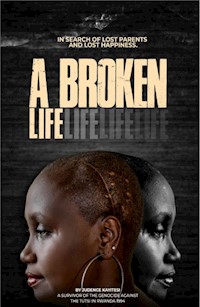
In 1994, the genocide against the Tutsi was taking place in the small central African country Rwanda: Approximately 1 million Tutsi were killed within 100 days, mostly in a bestial way. Judence, a Tutsi 11 years old at the time, experienced this bloody massacre and luckily survived. Only now, after many years, she can talk about the events of that time and come to terms with her past. She courageously goes public with this book and describes in moving words her experiences, which touched her deeply, influenced and shaped her future life. For her to come to terms with the events, there can only be the path of understanding and forgiveness. However, "I cannot forgive as if nothing had happened. That is not possible. I therefore leave it behind me", is her emphatic message. The book ends with an appeal to all genocide survivors to continue documenting the story of the genocide against the Tutsi so that it will be a lesson for future generations.
Das E-Book können Sie in Legimi-Apps oder einer beliebigen App lesen, die das folgende Format unterstützen:
Seitenzahl: 103
Veröffentlichungsjahr: 2021
Ähnliche


















Translated from German into English by Thomas Mazimpaka
IMPRESSUM
© 2021 Judence Kayitesi
Author: Judence Kayitesi
Cover Design: Jean Claude Birindwa
Translation: Thomas Mazimpaka
Publisher & Print: tredition GmbH, Halenreie 40-44, 22359 Hamburg
978-3-347-30883-1 (Paperback)
978-3-347-30884-8 (Hardcover)
978-3-347-30885-5 (e-Book)
The work including its parts is protected by copyright. Any use is not permitted without the consent of the publisher and the author. This applies in particular to electronic or other duplication, translation, distribution and making available to the public.
Bibliographic information from the German National Library:
The German National Library lists this publication in the German National Bibliography; detailed bibliographic data are available on the Internet at http://dnb.d-nb.de.
In loving memory of
my father Callixte Kabarari and
my mom Genevieve Mugorewabera,
my sister Jeanette Uwamahoro,
my brother Phocas Baganizi and
all other innocent people who were killed in 1994’s
genocide against Tutsi in Rwanda.
This book is also dedicated to
my children,
my brothers
and my aunt,
who are still alive.
Table of contents
My childhood
My school time
Country information Rwanda
The 1994 genocide against the Tutsi
What happened in Rwanda
How my family was killed
After the genocide
My marriage
My life in Germany since 2010
My visit to Rwanda - Return to Museke
Forget and forgive
The consequences of the genocide
How I came up with the idea of writing a book.
To all survivors of Rwandan genocide against Tutsi
Acknowledgement
Foreword
Abroken life. The mature young woman, the mother that Judence Kayitesi has become, still titles her book “A broken life”. It reminds me brutally of another testimony of a child survivor, who is described in the very beautiful book by Hélène Dumas, “Sans ciel ni terre, Paroles orphelines du génocide des Tutsi”, and who says “même quand je ris, je mens”.- “even when I laugh, I’m lying”.
Children who survived, indeed, but who lost everything. Their childhood, their parents, their homes, their hills, their innocence, their dreams. Now grown up, they suffer the daily life that has been imposed on them, life with the enormous emotional emptiness of parents who can never be replaced, but also with the social emptiness left by the betrayal of neighbours, educators, childhood friends who have become their executioners or informers of their hiding places, and the total material emptiness, without a roof over their heads, without a minimum income to guarantee a decent life.
But, fortunately, thanks to an enormous survival instinct, a benevolent encounter along their road strewn with so many pitfalls, they decide, as Judence Kayitesi describes in her book, to live, indeed to live fully, and not only to survive.
Judence Kayitesi was 11 years old at the time of the genocide perpetrated against the Tutsi in Rwanda. Her father, her mother, a brother and a sister were killed, and many, many family members. She survived, despite the machete blow to her head that left her dumb for years. She searched for her parents for a long time, not wanting to accept that they had been killed, that they were no longer there. In her mind and her child's heart, parents must always be there for their children.
The physical search for parents turns into a psychological one, when she realises that of course they are no longer there, especially when she gives birth and does not see her mother coming to assist and pamper her as any mother does, when her daughter gives birth. Judence Kayitesi describes very well all the life choices she had to make, not because they were the best, but simply because she had to live.
Today, with her life story on paper, it is as if she is giving birth to another child, but this time she is giving birth to herself. She lives. She revisits and confronts her past, her trauma, her search for love, the emptiness and the total loss of all her bearings.
She has taken the reins of her life. It was hard, it took a long time but she is there. She also knows that it’s not over, there will be many more struggles, but she knows that she is heading in the right direction.
She calls for forgiveness, even without necessarily forgetting. She has understood that it is forgiveness that frees the victims of the genocide from the invisible chains of the executioners that continue to tie them down, even years later.
Esther Mujawayo
My childhood
My name is Judence Kayitesi and I am a Tutsi. I come from the village of Museke in Rwanda. It belongs to Cyuga, in former Rutongo commune and is about 40 kilometres from Kigali, the capital city of the country. After the genocide, many place names were changed. Rutongo is now called Gasabo, and Cyuga is now called Jali.
Museke is a very small village. I don't know how many people lived there or live there today, but there are not many. At that time, in the early 90s, we had no electricity in the village and no running water in the house. So we had to fetch water from the well. For us, however, this was quite normal.
People used to go to bed early, we always had fresh vegetables and very healthy food. There was no telephone in the whole village, yet one didn't need it either. We didn't know it any other way and didn't miss anything.
My family, which means my father's family, lived in Museke. All of them had been living there for a very long time. My grand-grandparents had already lived in that village.
They lived right next door to us. My father's name was Callixte Kabarari. He was born in 1953 and was the eldest of the siblings in his family. There were five children in total, two boys and three girls. My father and his brother were neighbours, all of them perished during the genocide.
My father's brother and one of his sisters. This is one of the few photos that exist of my father's family.
My mother's name was Genevieve Mugorewabera. She came from another village in the Rutongo region, from Kabuye. As a child, at around nine years old, I could walk there alone. So it must have been very close. There was no other option than to walk at that time.
My mother was born in 1954, and she had many brothers and sisters. Jean Claude Mulinda was the eldest brother and Godberthe Mugorewindinda, the eldest sister. These two had a different mother from my mother, so they were her half brother and sister because their mother had died and my grandfather had married my grandmother.
I only found this out after the genocide, and I had always wondered why the siblings didn't look alike. My mother, for example, had a much darker skin.
My grandmother bore the following children: Genereuse Mugorewintore, who was the first, then came my mother Genevieve Mugorewabera (Mugore meaning: woman; Wabera meaning: of the white people). Next was brother Innocent Niyibizi, then sister Marie Gorethe.
My mother. There is only this one photo left.
Ukwishaka and last was brother Vincent Niyonzima. My uncle Innocent married Claude's wife after his death. The two fell in love and got married. My eldest uncle Jean Claude Mulinda died before the genocide. He was ill, had problems with his stomach. He left behind his young wife and three children.
My maternal grandparents (sitting in the front row) and family members: the girl in the front left, Marie Louise Musanabwiza, survived. To her right is Mazuru. The three children on the left are Deogratias Ngunzo and on the right next to my grandfather, Helena Nyirahabima, and behind on the right, Denise Umutoni who are the children of my uncle Innocent and his wife (back row on the left with the baby in her arms). The man to her right is my uncle Innocent, her second husband.
My uncle Claude Mulinda and his wife who later married my uncle Innocent
I remember that when I was a child, they used to talk about it. Innocent had two more children with her, but all the children were killed during the genocide, and only Claude's eldest daughter survived.
In Rwanda, daughters were not given land by their parents, because it was assumed that they would move to their husband's family after marriage. This was a common practice in Rwanda at that time.
If a family had a farm, for example, then the sons were each given part of the land, and they could live from the yields and build a house there. They could build it wherever they wanted, either near their parents or further away. It was a patriarchal society. But this law was changed after the genocide. Today, even daughters inherit as much of their parents' property as sons.
Our house was very close to my grandparents' house. We all got along very well and my uncle's house was also almost right next door. He was not yet married, but he had a fiancée. Both of them were killed during the genocide.
My parents got married in 1978. I was not my parents' first child. They were expecting a child before me. However, in the sixth month, my mother suffered a miscarriage. It would have been a girl, and my parents were very sad. I was then born next in 1983 and my parents were very happy about it.
They gave me the name Judence Kayitesi. In Rwanda, every name has a meaning. Kayitesi means something like: Let yourself be pampered. This was my parents' way of expressing their great joy of my birth. They made a promise to take loving care of me.
My brother Valens Kabarari was born in 1985, Phocas Baganizi was born in 1987 and Jeanette Uwaramaharo in 1989. These last two perished during the genocide along with my parents. My younger brother Didas Kanamugire was born in 1993. He survived as a baby.
My father took care of the farming and the construction of our house. After his stomach operation, he had stopped working in an electricity company and focused on being a farmer. My mother stayed at home and helped my father and I helped him too.
We hardly needed money, we had everything we needed and always enough to eat. My parents only bought sugar, rice and things that the farm did not produce. Vegetables were never bought. We had bananas, potatoes and beans, also papayas, avocados, pineapples and many more fruits.
In the village, there were a few very small shops selling things that were absolutely necessary for everyday life. Of course, there were no toys. We made our own things to play with. Later, in Europe, I saw little spinning tops that the children had bought in the shop. We built something like that ourselves, out of a small piece of wood and a piece of rope.
Every Friday was market day. Many traders came and offered their goods. There were also clothes or other useful things. But if you wanted meat, for example, you had to order it in advance. They would slaughter animals especially for that reason.
I can still remember our house well. We owned a farm, which, as the story goes, my family had originally received from the king, due to distant kinship. Rwanda was a kingdom for centuries until the 1961 referendum.
The farm and all its land belonged to us. The farm was big enough to grow enough fruits and also have space for residential houses. My grandparents had their own house, we had ours and my father's brother also owned his house.
Our house had several rooms. We girls slept in one, the boys in the other. Of course, the parents also had their own bedroom. Next to it, there were several storage rooms. We had enough space. Usually, houses in Rwanda had only one floor. In the countryside, storey houses were not common.
Due to his health problems, my father could not do all the work alone, and some people came and worked for him. We grew bananas, potatoes and beans. My father paid for the others' help with beans and sometimes with drinks, but not with money.




