


Erhalten Sie Zugang zu diesem und mehr als 300000 Büchern ab EUR 5,99 monatlich.
- Herausgeber: The Lilliput Press
- Kategorie: Sachliteratur, Reportagen, Biografien
- Sprache: Englisch
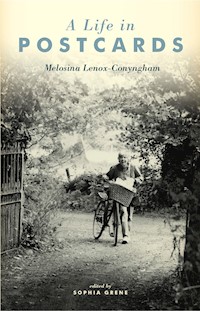
Many people will remember Melosina's voice from 'Sunday Miscellany', where these pieces were first broadcast, or have read them in 'Irishwoman's Diary' in The Irish Times. Fewer may have discovered her intriguing short stories, most of them published here for the first time. Though all of her writing conveys her distinctive slant on things, relatively few of her essays were directly concerned with her personal life. Several of these are collected here, including a moving account of her first experience of the cancer from which she eventually died in 2011. Growing up as a tea-planter's daughter in Sri Lanka (then Ceylon), evacuated with her mother to Africa during the war, Melosina Lenox-Conyngham acquired early on a taste for travel and an interest in the curiosities of life. Certainly these qualities are well illustrated in this collection. Her many years as Secretary to the Butler Society gave her expertise at rallying the clan as well as a special interest in key figures from Kilkenny local history. Vignettes of Irish social life take us to houses that have never been sold or fill readers in on the strange eventful history of a portrait of the Duchess of Devonshire. Some of the most intriguing of the essays cover her travels to remote parts of the globe, to Yemen, the home of the legendary Queen of Sheba, to Nagaland in the far north-east of India, or to Timbuktu in Mali. But even if it is only a visit to a restaurant in Barcelona where food is served entirely in the dark, or an artistic centre high in the Pyrennees, the amused gaze of the writer brings the experience vividly to life. Edited by her niece Sophia Grene, the volume is divided into several sections each of which is introduced by members of the family or friends who round out the sense of the writer's life. This anthology of Melosina Lenox-Conygham's writings, so rich in her delightful sense of humour, her ironic and quizzical pleasure in the world around her, has something for everyone to enjoy.
Sie lesen das E-Book in den Legimi-Apps auf:
Seitenzahl: 268
Veröffentlichungsjahr: 2015
Das E-Book (TTS) können Sie hören im Abo „Legimi Premium” in Legimi-Apps auf:
Ähnliche


















THE LILLIPUT PRESS
DUBLIN
Note on the Text
Most of the essays, which are here collected for the first time, were broadcast on Sunday Miscellany (to which Melosina Lenox-Conyngham was a regular contributor from the mid 1980s) or appeared in The Irish Times either in ‘An Irishwoman’s Diary’ or in the travel section of the magazine from 2004 to 2011, the year of her death. They have been lightly edited to remove anomalies and repetitions, while preserving their distinctive tone as the occasional pieces they were.
INTRODUCTION
Remembering Melo
A postcard with an unfamiliar stamp was usually covered in the familiar, flamboyantly spiky handwriting, often just a few words taking up all the space to tell you that the food in Baku was disgusting or that cycling round the Netherlands was harder than it looked.
Throughout her life, Melo gallantly flung herself at adventure like a knight of King Arthur’s Round Table going in search of a quest purely in order to return and tell the admiring stay-at-homes about it. Even less challenging trips, such as walks up the Nore Valley, would somehow turn into adventures – although Inca, her dog in later life, frequently made that inevitable as she wreaked havoc among local livestock.
Melo’s reports from these forays, as well as of her daily life in Kilkenny, were often similar in effect to her postcards: one was given a snapshot of an exciting moment, usually with some humour attached, and over time one built up a picture of her travels and her life, without ever getting a comprehensive narrative; a story-arc in the jargon of a television series.
Her undeniable courage was shot through with a surprising timidity, a wholly unjustified lack of self-confidence about certain things. Although fearless about accosting total strangers in a way most people would find terrifying, she was nervous of swimming in the sea. Although confident she knew precisely how to improve the manners and behaviour of a young niece or nephew, she was diffident about her writing and refrained from taking it seriously until her middle years.
As readers of this book will discover, this was a huge pity. Melo’s writing is fluent and distinctive, evoking her voice with great fidelity for anyone who knew her. The format that suited her best was very like the postcard: the brief column for a newspaper or radio show, often telling a personal story but equally frequently framing some well-researched history in an anecdotal form, making us feel her subject.
Although born in Ceylon (now Sri Lanka) in 1941 andbrought up in County Louth, Melo was firmly rooted in the Kilkenny countryside where she was based for most of her adult life. Lavistown Cottage, known as ‘Bunnikins’ to the family after a children’s china pattern, was always welcoming, if freezing cold. Her uncle, the essayist Hubert Butler, lived a few miles away in Maidenhall, the house where he and Melo’s mother grew up, until his death in 1990. It was Hubert who set up the Butler Society, a genealogical society devoted to the history and present state of the Butler family, from Kilkenny Castle, ancient seat of the Butlers, to German von Butlars, not actually relations but still interested in the family.
Her combination of generosity, familial affection, curiosity and intrepidity was useful, nay vital, to her as secretary of the Butler Society. For much of the year, this role was purely an administrative one, but once every three years it took over her life, and often that of at least one other family member, as she organized the Butler Rally.
I was commandeered as helper on a couple of occasions. The first, the Butler Rally to Birr and Portumna, led to my initial attempt at journalism in a report forThe Journal of the Butler Society. Those interested in the details of the event can read for themselves in their back issues of that publication –III:2 (1988–9); I recall only the dismal weather, the toy museum at Birr Castle, and Melo’s constant orders. These were sometimes errands, but more often commands to make sure that somebody was okay, that an elderly Butler could make it up the steps, or that quiet Butlers (they do exist) were getting their fair share of sandwiches at lunch.
Although my fourteen-year-old self muttered rebelliously at times, particularly when Melo ordered me to go and ‘be nice to the grizzly girl’ who was a little bit older and a lot cooler than I was, and was only grizzly because of being stuck with such an uncool day out that my niceness could in no way alleviate, I enjoyed feeling useful and competent, something that no other adult made me feel at that time.
This was one of Melo’s gifts: although not conventionally ‘good with children’, her ability to set them tasks within their powers but that clearly needed doing was a great strength.
As aunt to grown-ups, her impact was different. She was alwaysinterested in and impressed by one’s achievements, although she did prefer one to do things that made good dinner-party stories. For me, this acted as a spur to live a more interesting life, always secure in the knowledge that even if I did have a very dull nine-to-five job, it would be made to sound bizarre and adventurous when filtered through Melo’s anecdotal delivery.
This was no attempt at living vicariously through nephews and nieces, however. Melo lived up to her own standards of adventure, from trips to Yemen, to the Anglo-Irish New Age weekend with Sister Imelda, dancing on the lawn to greet the sunrise. It was a joy and a privilege to have Melo as an aunt. We miss her.
Most of the essays in this book were written for theRTÉradio programmeSunday Miscellanyor forThe Irish Times, where they appeared in the ‘Irishwoman’s Diary’ column or the magazine. To give the book coherence, I have organized the material into thematic sections with individual introductions by friends and relations. I am most grateful to all those who contributed to bringing together this rich and varied anthology of her work. I owe a special debt of gratitude to the committee of the Butler Society for financial support for the book and in particular to John Kirwan who was always such a good friend to Melo.
Sophia Grene
2013
I
CHILDHOOD
A Niece’s View
LUCINDA LENOX-CONYNGHAM
Melo was an Aunt with a capital A – when she wrote about her own aunts, they too were Aunts with a capital A – and Aunts featured in many of her writings about her childhood. This was, of course, partly due to the fact that many of her school holidays were spent in Ireland with her Aunt Laura in County Cork, as it was not always either possible or feasible to travel back to Ceylon (Sri Lanka).
Her other Aunts, Peggy, Noreen and Cicely, all seemed to have been both inspiring and somewhat terrifying at times. The Aunt was a very important influence in her upbringing and perhaps this is why Auntie Melo therefore felt, quite rightly, that she had an important role to play in the lives of her nieces and nephews.
The Aunt had extremely strict ideas about the upbringing of children, which she endeavoured to pass on to us. This was not always a great success as our generation was not quite so good at being seen and not heard as hers had been, certainly not as well behaved as Melo would have liked.
Trying to ensure we had impeccable table manners, extensive vocabulary and were extremely well read was just a part of her mission. She did her absolute best to encourage us to lead interesting lives and was very keen for us to have adventures. The few times in my life I have been in real or at least perceived danger, the biggest consolation was knowing just how delighted Melo was going to be when I told her all about it. This was a strong motivating force behind my survival. We didn’t exactly have to sing for our supper, but we were certainly expected to come up with a good tale or two if we wanted to find favour with this particular Aunt. Likewise, she always felt it her duty to come up with a good story in return, which is quite possibly why she wrote so much.
Reading these extracts from her writings about her childhood takes me back to my own. I remember sitting open-mouthed with wonder as my Aunt told stories of elephants, hummingbirds, tea planters, coolies and what seemed an extraordinarily exotic world.A whole new vocabulary had to be learned just to understand what the Aunt was talking about. It seemed to be a magical existence and very far from the endless rain and chilblains that dominated my early years. Just as in her writing, the stories she told made these places come alive. Kandy, Wattegodde, the Hill School and Colombo are all places I have never been to yet feel I could accurately describe thanks to Melo’s vivid descriptions. She had a great gift for writing exactly as she spoke.
She had many stories to tell of her time at boarding school, which sounded impossibly harsh. The way she described it made it seem like a place designed to make young girls miserable and where the judgment of the other girls seemed to be especially cruel. In fact, there were very few redeeming factors at all in this educational establishment. It made my own boarding school more bearable by comparison.
I couldn’t imagine what it would be like to only see one’s parents every two years, although by the time I was a teenager this idea became more attractive. Her stories of this period in her life portray a very different era where social etiquette and doing and saying the right thing was of the utmost importance. I find them a fascinating insight into the education of women in the middle of the last century. Hers was perhaps the last generation educated to be ‘wives’ rather than to have a career, yet there was a sense that they needed to do something useful for a few years so that they’d acquire skills other than flower arranging and cookery.
Melo was simultaneously a fairly old-fashioned and extremely modernwoman. She was an excellent example of an independent woman who not only worked for her living but also travelled to extraordinary places. She made this appear absolutely normal, and gave me the sense that the world was a place to discover and explore. She often travelled by herself, and made friends and met interesting characters wherever she went. Postcards were dispatched from all the far-flung places she visited. The last postcard I received from her came from Naga Land where she had gone to visit the headhunters. I will never know why my elderly Aunt decided to travel to a remote region of India but I was most proud of her spirit of adventure. She found great joy in investigating new places and meeting new people and even more so in telling the story of her discoveries.An Aunt who went to places other people would find hard to locate on an atlas was a great source of inspiration.
On her last visit to Barcelona where I live, she asked to be taken to the trendiest new restaurant in town. This happened to be a restaurant where you ate in the pitch-dark and where the waiters were all blind. Melo was already composing the story she wished to write and was keen that I translate for her so she could discover who our fellow diners were. As I couldn’t even see the other customers, this was an almost impossible task but once again proved the extent of Melo’s curiosity about people in general.
For me, my Aunt’s writings on her childhood are highly personal glimpses into another era and an evocative portrayal of her life. I hope other readers enjoy them as much as I do.
‘Never let the facts get in the way of a good story!’
1. By the Sea
Only once when I was a child were we taken for a traditional holiday by the sea. We were back on leave from Ceylon and spent a month with our cousins in a rented wooden bungalow on the cliff above the pier at Rosslare. (Last time I looked, the house was still there, though somewhat nearer the cliff edge.) We brought our ponies and bicycles with us. We should have had a glorious time just like the Famous Five in Enid Blyton’s books: roaming the countryside and discovering the secret hidey holes of smugglers, when not swimming out to save people from drowning. As it was, it rained most of the time, icy winds blew damp sand in our faces whenever we went on the beach and the sea was so cold and forbidding that we refused to bathe. The ponies could never be caught and often escaped from their field, so the gangs of diamond thieves and international spies went about their business unhindered while we tried to extract the ponies from the neighbouring gardens unseen.
My happiest memory from that holiday is of being taken to a fit-up theatre. It was in a long low shed with a stage at one end. The aged green curtains opened in little jumps and starts to reveal the lady who had sold us our tickets as the Gangster’s Moll in the opening melodrama and the Virgin Mary in the main production, which wasOur Lady of Fatima. In this, her face or rather her teeth, because they were her most prominent feature, appeared miraculously through the branches of the painted tree on the back cloth.
Another evening we were brought to the circus. My younger sister Eleanor was about four, and her interest in acrobats and dogs jumping through hoops soon waned. She insisted loudly and clearly that she wished to leave the tent.As she had an undisputed reputation for screaming louder and longer than even a banshee if she did not immediately get what she wanted, the Aunt in charge hastily removed her. They were strolling outside when Eleanor’s eye was caught by what might be a new penny that had rolled through some railings. She pushed her head between the bars in order to examine the treasure more closely and found that after all it was only an old beer-bottle cap. Then she found she could not get her head out.
The Aunt pulled and twisted in vain, as did the lion tamer, who had been having a smoke nearby between shows. People collected to give advice – it was proposed that the Strong Man should show off his muscles by wrenching the bars apart, but his wife was very against this as she said ‘the back was at him’. One spectator recounted to the enthralled audience how the very same thing had happened to her brother’s child and since that time his head wobbled like a tennis ball on a string.
By now Eleanor’s plight had become a greater attraction than the circus itself and it was suggested that the priest should be sent for, and the local fire brigade. It was at this moment, the show over, that my brother and I came out of the big top licking ice-cream cones. When we realized that our sister was centre of a large crowd, we were deeply embarrassed and tried to slink away, but she had caught sight of us and her cries, which up till then had had a frightened pathetic note, changed to yells of utter fury; she gave a little flip of the head that released her from the bars, and screeched, why didn’t she have an ice cream too, she wanted oneNOW!
2. Cork and County Club
Until I was eighteen, my only experience of life in the big smoke was Thursday in Cork – and though there were no doubt parts of Cork where rough and tumble took place, it was not in the Cork and County Club where we would lunch with our uncle and aunt in the ladies’ dining room. Though men could enter the ladies’ part of the club, no woman was allowed to enter the male precincts in the front of the club. Our door was in a back lane otherwise used for dustbins. The ladies’ lobby was panelled in varnished pitch pine with uneven terrazzo tiles on the floor. On the gentlemen’s side, it may have been merry jokes and riotous behavior, but it was not like that on the ladies’ side. The windows were frosted glass and the dining-room walls decorated with pictures of heaving seascapes. The few scattered couples would acknowledge our presence with a discreet nod and then continue murmuring to each other in low voices over their cutlets.
After she had finished her messages, the Aunt, my brother and I had tea in the ladies’ drawing room where we readVogueandThe Spherein front of a fire. The only lively moment was if one of the members had taken the Aunt’s parcels home by mistake.
The Cork and County Club opened in 1829 in a building on the South Mall designed by the Paine brothers. It had originally been The County Club until it united with The Cork Club. They may have regretted this when, at the end of the nineteenth century, a committee member from the city accused another member of cheating at cards – poker, to be precise. The fact that the accuser, Richard Piggot Beamish (owner of the well-known brewery), did not play cards and had not witnessed the game, and that the accused, Joseph Pike, was a longstanding friend and neighbour, did not deter Mr Beamish from reading out the hearsay evidence at a meeting of the committee. Joseph Pike, chairman of the Cork Steamship Company, sued for libel. Beamish pleaded that as senior committee member of the club, he had to conduct an investigation. The jury generously returned a verdict for both plaintiff and defendant. They said the plaintiff did not cheat, but that the defendant did not mean any harm when he accused him of it. Though Pike’s reputation remained unblemished, it was perhaps rather odd that his mama should have presented the judge in the case with a handsome residence in Douglas shortly after its conclusion.
A very much more serious event happened on the night of 17 July 1920 when masked raiders pushed passed the doorman and ran into the smoking room, where they fired several shots at Colonel Gerald Smyth, who was sitting down with four other men. He leapt to his feet and got as far as the hallway before dropping dead. Colonel Smyth was a much-decorated officer during the 1914–18 war when he had been six times seriously wounded and lost his left arm while rescuing an injuredNCO. Earlier in the year, he had been made theRICdivisional commissioner for Munster and as such, a month before in Listowel, he had made a speech in which he was quoted as having incited the members of theRICto make reprisals on the local populace. He later denied this, saying he had been misquoted in theFreeman’s Journal.
Such was the unpopularity of Gerald Smyth that only half the number of jurors needed for the inquest could be persuaded to attend and no engine driver would bring a train with his body back to his home in Banbridge. In Banbridge, after his funeral, there was a furious reaction; £40,000 worth of damage was done to Catholic buildings in the town by rioters and Catholics could not be employed in the factories unless they signed a document to say that they would not support Sinn Féin.
The Cork and County Club closed in 1989 – I never did see the gentlemen’s part of the club. Oh, how I wish I had made a stand for women’s lib by pushing through the green baize door to see the delights and comforts beyond.
3. Curiosities
Curiosities, as children, we arrived in Ireland from the fabled East, determined to impress our poor little stay-in-the-mud cousins. Vividly, we described Sri Lankan leopards that with one bound sprang through the nursery window and arrived, snarling, at the bottom of the bed to be fended off with pillows. We told of snakes that curled round the branches of the trees under which we walked and how elephants trumpeted at dawn around the bungalow – a bit of an exaggeration.
At last, goaded into desperation for the honour of Ireland, Cousin James said that on the farm there were carnivorous plants and, what’s more, if we walked in the Marlow, we could see butterworts with our own eyes. We grew silent and not at all keen to don our wellies for an encounter with a flower hungry for its lunch. Slowly, we followed my uncle down to the boggy field near the river. We were cautious as we climbed over the gate.
I was the first to see an elegant blue flower on the end of a long stalk the size and colour of a large viola. My fears diminished, for who could suspect this beautiful blossom of any malicious purpose? But this was just a delusion, as butterworts proved to be every bit as deadly (though only to very small insects) and rather more fascinating than our apocryphal snakes and leopards. The butterwort plant is a rosette of yellowy-green glistening leaves that exudes a glue to entrap an insect.As the victim struggles, the edges of the leaves curl around to make escape impossible. The prisoner is dissolved by enzymes into digestible components, which are absorbed through the leaf.
The sundew is another species of insectivore that grows on Irish bogs. The spoon-shaped leaves have hair-like tentacles, each of which has a tiny droplet of what looks like dew, hence the name, but is really a sticky corrosive. When an insect is ensnared, the other tentacles bend towards the victim, further trapping it.
At its centre in Lullymore, Rathangan, Co. Kildare, the Irish Peatland Conservation Council has an insect chamber of horrors with the largest carnivorous plant collection in Ireland. Besides the native butterworts, sundews, and the bladderworts that float in water vacuuming up water fleas, there are numerous kinds of showy pitcher plants.An innocent insect, out on the spree, smells delicious nectar, not realizing that it is spiked with narcotics that will cause it to miss its footing and fall to the bottom of a pitcher to drown in the pool of digestive juices. There is also a Canadian pitcher plant that was introduced a hundred years ago to a bog in Longford where it has naturalized. One plant was found to contain the remnants of two hundred and five victims.
Oh, how much safer to be a child in the jungles of the East than to be an insect in the bogs of Ireland.
4. Church in Carrigadrohid
Meadowsweet, willow herb and the dark-purple flowers of deadly nightshade are specks of colour in the rank grass among the graves – brambles stretching long tentacles in from the hedge are seizing the land as their own. The line of ugly evergreen cyprus trees by the gate looks mean and alien. On the far wall the ash and its seedlings are marshalling an invasion force in untidy ranks. I tread cautiously through the clumps of nettles from headstone to headstone, pulling aside the growth that hides the lettering. Ted, beloved husband; Richard DSO, Faithful and True; Eileen, daughter of … these names were of the people who had gathered for morning service every Sunday. This extension to the graveyard had not been here. I look over the wall and below in the valley on the other side of the road is a BVM – Our Lady – standing in a little sentry box presiding over a garden decorated with stones like a badly mixed cake. It too looks unkempt, the blue paint of her dress flaked away – the plastic flowers that lie at her feet have faded into dull pinks and greens.
On a hill outside a village, two Church of Ireland churches stand near each other. The one on the right has a square tower that was added to the original old church with money from the Fund of the First Fruits in the early part of the nineteenth century. For a long time I thought that this tower had been a cornucopia with bananas, pineapples, cherries and grapes tumbling over the edge of the parapet – and was sadly disappointed when I found out that it is a quotation from St Matthew’s Gospel 7:16: ‘By their fruits ye shall know them’, and the fund was garnered from the income of a clergyman for his first year in a living and applied to the building and repairing of Church of Ireland churches and glebes. Around 1845 an incomprehensible decision was taken to abandon the old church and build a new one across the road. Now the old church stands amongst briars, the roof has long gone and the walls are in danger of collapse but the tower with its pinnacles is still there.
The new church is a small, solid building put up during the Famine, I hope to give employment through those terrible years. There is no tower, only an arch for the bell. Did it toll for the morning service? I can’t remember. Who would have pulled the rope? None of the congregation surely, because if so I would certainly have been volunteered. Perhaps the clergyman, but surely he was always hurrying from the service in Macroom. It could not have been the verger, Molly Buckley, for she was attending Mass in the chapel in the middle of the village. In spite of the two churches above the village, the Protestants kept a low profile so perhaps the call to prayer was not sounded over the hills and valleys.
‘Oh for a thousand tongues to sing,’ we implored the Almighty, for the congregation never exceeded fifteen. Besides my uncle and aunt and me, there was a lady with a brown beret pulled over her ears and a drip on the end of her nose, three colonels and their wives, the colonels having retired to the riverbank to spend the evenings of their lives, rod in hand, while their wives gardened. Then there were the Miss McMullens whose reputation was enhanced in my eyes by their owning a half-rabbit, half-cat – I know it is not possible, but that is what they said it was and that is what it looked like. In the back pew was Commander Wilsden who came to church on a bicycle and from whom we bought eggs; the colonels’ wives patronized him because he had been in the navy and was too poor to be interested in fishing. Even in summer there was the smell of mildew, mice and bats in the church. In winter it was intensely cold, the little electric-fire bars hung high up on the walls doing nothing to dispel the clammy chill. The walls were pink, but the paint was flaking off and the mould stains made interesting designs of green and black on the plaster. There were a few dull monuments to departed clergymen of unsurpassed goodness; the windows had no saints or angels in them and the east window was a pattern of intertwining vine leaves with a red border, so that the only pleasure to be had was when the sun, which seemed to shine so seldom when we went to church, shone through either a red or a blue panel and reflected on the face of the clergyman, turning his nose blue or red as the case might be.
My Aunts had very strict ideas about how I should be dressed for church: ‘Your good tweed coat and skirt’, tight leather gloves in which I had to squash my swollen chilblained fingers, and a hat. The first Christmas I spent there I was given a turquoise velvet beret so I had no need to wear my brown felt school hat. At first I wore socks, white ones that drooped sadly over my sensible shoes and drove Aunt Laura mad so that she bought me nylon stockings and a suspender belt, but the stockings wrinkled round my matchstick-like legs and the seam at the back used to creep about my calves.
The music was supplied by Aunt Laura who played the organ. The colonels would have liked the rousing hymns that they used to hear across the barracks square, but Aunt Laura knew what God liked and God liked traditional Irish tunes better thanHymns Ancient & Modern. She took no notice when they begged for more familiar melodies. ‘Such nonsense, they don’t know one note from another!’ she said later over the roast lamb.
To my acute embarrassment and fury, every holiday there was a children’s service solely for me as I was the only person under fifty.
5. From Fork to Plate
I am no stranger to locally grown food for when I was young and my parents were abroad, my brother, sister and I spent our holidays with different Aunts and every vegetable that we ate was produced in their various gardens.
The Aunts, though very different in personality, were all knowledgeable and enthusiastic gardeners who had a deep aversion to idle hands when there was work to be done. ‘No frowsting indoors on a glorious morning like this!’ was the trumpet call over breakfast. We were sent out into the good fresh air where the temperature was only too often sub-zero and the rain lashed down, but any hesitation in putting on our macs and rubber boots was treated with scorn and we would be told that we were not made of sugar and driven forth into the storm.




