


1,99 €
Mehr erfahren.
- Herausgeber: Publisher s13381
- Kategorie: Geisteswissenschaft
- Sprache: Englisch
Adriaen van Utrecht and Frans Snyders are considered to be the leading inventors of the Flemish painting still-life genre. The two artists emphasize abundance by depicting a variety of objects, fruits, flowers, and dead nature, often with live animals. Van Utrecht also painted many colorful still-lifes. He was a regular associate of leading artists in Antwerp who were students or assistants of Peter Paul Rubens, such as Jacob Jordan, David Tenners Jr., Erasmus Quellin II, Gerard Segers, Theodore Rombouts, Abraham van Dilbeck, and Thomas Villebery Bossier.
Das E-Book können Sie in Legimi-Apps oder einer beliebigen App lesen, die das folgende Format unterstützen:
Veröffentlichungsjahr: 2019
Ähnliche
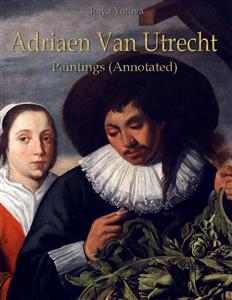
Adriaen Van Utrecht
Paintings (Annotated)
Annotated by Raya Yotova
––––––––
First Edition
*****
Copyright © 2018 Annotated by Raya Yotova
Table of Contents
Title Page
Copyright Page
Foreword
Paintings
Foreword
Adriaen van Utrecht and Frans Snyders are considered to be the leading inventors of the Flemish painting still-life genre. The two artists emphasize abundance by depicting a variety of objects, fruits, flowers, and dead nature, often with live animals. Van Utrecht also painted many colorful still-lifes. He was a regular associate of leading artists in Antwerp who were students or assistants of Peter Paul Rubens, such as Jacob Jordan, David Tenners Jr., Erasmus Quellin II, Gerard Segers, Theodore Rombouts, Abraham van Dilbeck, and Thomas Villebery Bossier.
Adriaen van Utrecht was born in Antwerp, becoming a student of Herman de Nate, an artist, and art dealer, who has an extensive collection of arts. After finishing his apprenticeship with de Neyt, he travels to France, Germany, and Italy where he works for local Royal courts. He returned to Antwerp in 1625 after his father's death in the previous year and became a free master of the local St. Luke Guild. In 1629 he married Constance van Nülland, the 17-year-old daughter of the artist and poet Willem van Nüland II. The couple had 13 children. Constance became an artist and poet at his discretion. She has shared the work of her husband's studio and may have painted partial or entire copies and variants of her husband's work in the style of her husband's style.
He was a famous painter and received many paid commissions from the Kings and Royalty persons. He could afford to live in the spacious dwellings of Meir in Antwerp, the most prestigious place in the city. His condition has declined in the late 1940s, probably due to ill health and the time he died in Antwerp in 1652, has lost his wealth. He trained at least seven students.
He was mostly a painter of still life. The range of still-life themes he held was extensive and included scenes of fish, meat and vegetable stalls, kitchen scenes, often involving figures or live animals, adding a descriptive element, game demonstrations combined with carpets or hunting trophies, still-life from fish, fruits and vegetables.
Van Utrecht also draws scenes with live animals, usually including birds, such as chickens, turkeys, ducks, and peacocks. Frans Snyders influence his early work. Van Utrecht did not prefer bright colors like Frans Snyders but preferred a warm clay tone, especially gray-green, and intense color effects. The latter is probably due to his knowledge of Italian painting and, in particular, the works of the followers of Caravaggio.




