


0,49 €
Niedrigster Preis in 30 Tagen: 1,99 €
Niedrigster Preis in 30 Tagen: 1,99 €
Mehr erfahren.
- Herausgeber: DigiCat
- Kategorie: Poesie und Drama
- Sprache: Englisch
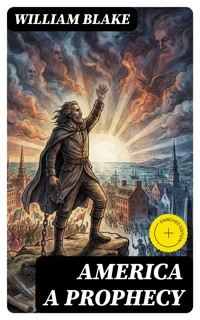
In "America: A Prophecy," William Blake intricately weaves a complex narrative that critiques the sociopolitical landscape of late 18th-century America and Europe. The poem employs a unique blend of prophetic verse and vivid imagery characterized by Blake's innovative use of symbols and motifs. As a continuation of his earlier works, it encapsulates themes of revolution, freedom, and the dichotomy between innocence and experience, set against the backdrop of the American Revolution. Notably, Blake's intricate illustrations enhance the text's layered meanings, making it a profound exploration of both American identity and spiritual awakening. William Blake (1757-1827), a poet, painter, and printmaker, lived during a time of immense social change. His career was deeply influenced by his strong dissent against the industrial revolution and the moral and political injustices of his era. Blake's radical views on politics, religion, and art led him to embrace a visionary approach that sought to reconcile the spiritual and material worlds. "America: A Prophecy" is rooted in his deep belief in the transformative power of imagination and his critiques of oppression and tyranny. For readers seeking to delve into the intersection of art, politics, and philosophy, "America: A Prophecy" stands as a compelling examination of revolutionary ideals shaped by Blake's profound vision. This text is essential for understanding the early dialogues surrounding personal freedoms and societal structures, offering insights that remain relevant in contemporary discussions of liberty and identity. In this enriched edition, we have carefully created added value for your reading experience: - A succinct Introduction situates the work's timeless appeal and themes. - The Synopsis outlines the central plot, highlighting key developments without spoiling critical twists. - A detailed Historical Context immerses you in the era's events and influences that shaped the writing. - An Author Biography reveals milestones in the author's life, illuminating the personal insights behind the text. - A thorough Analysis dissects symbols, motifs, and character arcs to unearth underlying meanings. - Reflection questions prompt you to engage personally with the work's messages, connecting them to modern life. - Hand‐picked Memorable Quotes shine a spotlight on moments of literary brilliance. - Interactive footnotes clarify unusual references, historical allusions, and archaic phrases for an effortless, more informed read.
Das E-Book können Sie in Legimi-Apps oder einer beliebigen App lesen, die das folgende Format unterstützen:
Veröffentlichungsjahr: 2022
Ähnliche





America A Prophecy
Table of Contents
Introduction
A fire-born impulse strains against a cold architecture of command, and the world seems to teeter between awakening and restraint. William Blake’s America a Prophecy announces itself through this tension, turning history into a living drama of energies rather than a ledger of events. Its pages do not simply describe the age of revolutions; they embody it, pressing language and image into acts of defiance. The book’s illuminated surfaces ask the reader to feel upheaval as a visual and rhythmic force. In doing so, Blake offers an audacious vision of liberty’s birth pangs that remains urgent, unruly, and strangely intimate.
America a Prophecy holds classic status because it redefined what a poem could be. Blake fused lyric, epic, and oracle into a single current, while his relief-etched plates knitted text and illustration into one expressive field. The result is a compact, blazing artifact where myth mediates history and history troubles myth. That formal daring has kept the work alive across centuries, inviting readers to reconsider how poetry can speak politically without surrendering its imaginative autonomy. Its reputation grows not only from its beauty but from its refusal to separate vision from critique, or private reverie from public tumult.
The book was composed and printed in London in 1793, during a period of acute political anxiety in Britain as debates about the American and French Revolutions stirred hopes and fears. Blake, a poet, engraver, and printer, used his own method of illuminated printing to create an integrated verbal-visual manuscript. America a Prophecy inaugurates what is often called the Continental Prophecies, later joined by Europe a Prophecy and The Song of Los. It takes as its premise the upheavals surrounding the American struggle for independence, reimagined through Blake’s symbolic cosmos, where historical surfaces open onto deeper conflicts of spirit and power.
Rather than offer a literal chronicle, Blake stages a visionary counter-history. Figures of constraint and figures of insurgent energy contend over a newly forming world, while landscapes shift between the earthly and the apocalyptic. The poem’s present tense of revelation resists tidy summary, inviting readers to navigate a sequence of plates that work like scenes in a visionary theater. This approach keeps the focus on forces rather than episodes, ensuring that the narrative operates as an imaginative key to political change rather than an illustrated textbook of events. The result is an emblematic drama of transformation, not a documentary record.
The enduring themes are clear and elemental: liberation and bondage, imagination and law, youth and age, beginning and ending. Blake interprets revolution as a spiritual phenomenon as much as a civic one, an ignition of human powers that often meets the ossified weight of custom. His prophetic mode insists that politics is inseparable from the fate of the human form and the health of perception. Such themes allow the poem to exceed its immediate occasion. The American setting becomes the site where universal questions about authority, conscience, and renewal are tested, questioned, and reconfigured in a visionary register.
America a Prophecy has influenced writers and artists who sought to merge visionary intensity with cultural critique. Nineteenth-century admirers such as Dante Gabriel Rossetti and Algernon Charles Swinburne helped secure Blake’s reputation, while W. B. Yeats’s engagement with Blake’s symbolism deepened modern appreciations of the prophetic books. In the twentieth century, Allen Ginsberg drew inspiration from Blake’s audacious fusion of personal revelation and public address. More broadly, the poem’s hybrid form encouraged later poets and visual creators to imagine new relations between text and image, rhetoric and song, critique and dream.
Blake’s illuminated technique is integral to the work’s meaning. The etched words and figures share a single copper-plate field, so the poem seems to grow like vines around its own utterance. Hand-coloring, applied differently across copies, gives each impression a particular atmosphere, underscoring the work’s living quality. Ornamental borders surge and knotted forms press toward the text, creating a counterpoint between reading and seeing. This marriage of media enacts the poem’s claims: liberation is not only argued but figured and felt. To encounter the book is to witness a method—art and craft—conspiring to free imagination from mechanical habit.
Because of its layered design, the poem invites a mode of reading that is attentive, recursive, and participatory. The plates do not advance linearly so much as spiral through motifs that gather force with each recurrence. Readers benefit from lingering over a single page, tracing how visual gestures modulate tone, and then stepping back to perceive larger arcs of conflict and release. The work rewards patience: it is short in extent yet vast in implication. Rather than anticipate a definitive map, the reader should expect a field of correspondences whose patterns reveal themselves through repeated engagement.
Blake’s historical moment matters. The 1790s in Britain were marked by surveillance and suspicion, and questions about dissent and loyalty weighed heavily in public life. America a Prophecy bears the imprint of that climate, even as it turns to the American theater of revolution as a lens. Blake’s sympathetic attention to struggles for liberty does not flatten complexities; it recognizes both the exhilaration of revolt and the dangers of new orthodoxies. The poem’s perspective thus remains double: it celebrates the stirring of human energies while scrutinizing the forms of power that arise in the wake of victory or fear.
At the level of language, Blake’s style is ceremonial yet urgent, forging a diction capable of prophecy without abandoning the tactile world. His lines carry a choral intensity that moves between denunciation and benediction, between storm and dawn. The compression is remarkable: images stand like emblems, and each plate condenses a crisis. Rather than providing argumentative essays, the poem radiates judgments as if from a furnace. This art of concentrated utterance has been crucial to its afterlife, allowing readers in different eras to find their own historical reflections within its visionary fires.
Approaching this illuminated manuscript today means treating it as both poetry and object. Reading is enhanced by awareness of Blake’s manual labor: writing, engraving, printing, and coloring fused into one practice. The plates are not decorations appended after the fact; they are structural participants in meaning. To honor that unity, one might read slowly, plate by plate, attending to how a curve, a posture, or a burst of color reframes a stanza. Such attention will reveal the coherence of Blake’s imaginative system without requiring specialized knowledge in advance, only patience and curiosity.
The book’s contemporary relevance is unmistakable. Debates about authority, rights, surveillance, protest, and the uses and abuses of tradition are with us still. America a Prophecy provides a vocabulary—mythic yet incisive—for thinking about how change begins and how it can harden into new constraint. It exemplifies a multimedia poetics whose daring anticipates today’s hybrid arts, and it models an ethical imagination that refuses cynicism. For these reasons, Blake’s illuminated vision remains a living classic: a work that renews itself whenever readers seek a language adequate to crisis, hope, and the unfinished labor of freedom.
Synopsis
William Blake’s America A Prophecy, first issued in 1793 as an illuminated book, fuses poetry and image to reimagine the American Revolution as a drama of spiritual and political awakening. Created in Blake’s relief-etched format and hand-colored in select copies, it belongs to his Continental Prophecies, where historical convulsions become mythic events. Rather than recounting battles in a documentary manner, the work presents a visionary history: figures of law, rebellion, and nationhood appear as archetypes contending for the future. The poem’s setting spans the Atlantic world, and the plates’ entwined text and designs emphasize that imagination itself is the stage on which revolution unfolds.
A brief prelude establishes the poem’s prophetic atmosphere. Night, sea, and storm frame an awakening, as voices and shapes rise with foreboding intensity. The tone is charged but indeterminate, announcing the imminent arrival of forces not yet named. This opening orients readers toward the symbolic register that will follow: events will be experienced as signs rather than chronicles, and the geography of the New World will double as an inward landscape. The prelude thus primes the sequence for an encounter between suppression and desire, and for the emergence of a figure whose energy will catalyze the narrative to come.
The prophecy begins with an imperial presence overshadowing the Atlantic: Albion’s Angel, an emblem of Britain’s authority and its union of church and state. This figure speaks from aloof heights, enjoining obedience and sanctifying the bonds of empire. The voice of command sets the poem’s central antagonism in motion, invoking legality, piety, and order as defenses against change. Blake casts this authoritarian posture as both political and metaphysical, extending its reach from colonial policy to a cosmic assertion of dominion. Against this posture, murmurs of refusal stir in the colonies, where a counterforce prepares to answer imperial decree with visionary defiance.
Into this tension steps Orc, Blake’s emblem of youthful, insurgent energy, personified as fire and dawn. Rising from constraint, Orc embodies the ardor that seeks to overturn outworn forms. His appearance signals a rupture: bonds slacken, watchfires flare, and the language of renewal spreads from city to wilderness. Blake treats these movements as transformations of spirit before they are maneuvers of armies. Orc’s flame is double-edged—creative and destructive—burning away enclosure while risking excess. The poem traces how this force travels, quickening the colonies with a sense of possibility that exceeds any single policy or proclamation.
Opposing this eruption is Urizen, Blake’s archetype of constraining reason, anxious to codify and limit. He weaves nets of law and doctrine, projecting a vision of stability that aims to halt upheaval by freezing desire. In this struggle, institutions, decrees, and ceremonies become instruments of cosmic restraint. Urizen’s order is not caricatured as mere villainy; it is shown as a powerful, persistent framework that has organized worlds. Yet its strength depends on denying the very energies that give life its forward motion. The poem dramatizes the stalemate: how can a new form be born without simply restoring the old in another guise?
Historical names appear alongside Blake’s mythic beings, fusing visionary and political registers. Figures such as Washington, Franklin, and Paine surface as emblematic presences rather than characters in a conventional narrative, their public roles reframed within a broader spiritual ferment. Declarations, assemblies, and clashes are suggested in heightened imagery rather than literal reportage. By interleaving statesmen with angels and titans, Blake argues that political transformation is inseparable from transformations of imagination and will. The revolution becomes, in this telling, both an earthly contest and a change in the human form—an expansion of what minds and communities permit themselves to conceive.
The illuminated designs intensify this reading. Bodies strain against chains; flames curl through margins; figures look upward or break from constricting forms. The images do not simply depict scenes mentioned in the text; they rhyme with its cadences, echoing the alternation of confinement and release that structures the poem. Color and contour communicate heat, urgency, and the volatility of awakening. Through these plates, the book’s argument becomes sensuous: liberty is not an abstract proposition but an embodied experience, felt in muscle and vision. The artwork underscores that reading the prophecy is also a seeing—an immersion in the textures of change.
As the contest between restraint and insurgent energy deepens, the poem widens its horizon beyond America. Prophecies hint that upheaval may travel across oceans, unsettling thrones and customs elsewhere. At the same time, Blake registers the risks that attend victory: whether rebellion can avoid installing new mechanisms of control under revitalized names. The narrative sustains this tension, alternating between promise and admonition. It holds open questions about law, faith, and the role of reason, refusing a simple opposition while insisting that life without imaginative freedom becomes a prison whose bars are forged from habit and fear.
America A Prophecy closes without a conventional resolution, offering instead an enduring vision of struggle and renewal. Its broader message is that political revolutions matter most when they awaken inner capacities and refuse the tyranny of fixed forms. By transfiguring history into myth, Blake seeks not to escape reality but to reveal the forces that shape it—desire, fear, authority, hope. The book remains significant for its synthesis of poetry and art, its critique of coercive systems, and its insistence that liberation is an ongoing process. It invites readers to test whether the fires of change can illumine without consuming.
Historical Context
America a Prophecy was conceived and printed in London in 1793, amid the late eighteenth-century Atlantic world. Britain was a global imperial power under a constitutional monarchy headed by George III, supported by Parliament, the established Church of England, and a commercial economy driven by finance and trade. London was a hub of printing, dissent, and surveillance, where artisans, merchants, and officials lived in uneasy proximity. Across the ocean, the new United States had recently secured independence and begun experimenting with republican institutions. This transatlantic setting—imperial administration, colonial resistance, and the circulation of ideas—frames the poem’s prophetic vision and its challenge to authority.
William Blake was trained as an engraver, apprenticed 1772–79 to James Basire, and later studied briefly at the Royal Academy Schools. By 1790 he had established a small workshop with his wife, Catherine Blake, at 13 Hercules Buildings, Lambeth. There he developed his “illuminated printing,” a relief-etching process that enabled him to print text and image from the same copper plate and then hand-color impressions. This artisanal autonomy allowed Blake to bypass conventional publishers, design his own iconography, and issue small, highly personal editions. America a Prophecy emerged from this Lambeth studio, where material craft, visual invention, and radical politics could be fused.
The poem looks back to the American War of Independence (1775–1783), a conflict sparked by disputes over taxation, representation, and imperial authority. Colonial protests against measures such as the Stamp Act (1765), Townshend duties (1767), and the Coercive Acts (1774) culminated in armed resistance, the Declaration of Independence (1776), and eventual British recognition of American sovereignty in the Treaty of Paris (1783). These events were widely debated in Britain, dividing opinion between imperial loyalists and sympathizers with republican liberty. Blake’s work absorbs this history, transforming it into a visionary drama that reads rebellion not only as an event but as a moral and spiritual upheaval.
In the 1790s Britain witnessed a contentious print debate about rights and revolution. Edmund Burke’s Reflections on the Revolution in France (1790) defended inherited institutions, provoking replies such as Thomas Paine’s Rights of Man (1791–1792) and Mary Wollstonecraft’s A Vindication of the Rights of Men (1790). The dissenting minister Richard Price had already praised American independence and welcomed French reform in his 1789 sermon, igniting controversy. Blake, who engraved for progressive publisher Joseph Johnson and illustrated Wollstonecraft’s Original Stories from Real Life (1791), worked within this radicalizing print culture. America a Prophecy aligns with these arguments by casting liberty and authority as antagonistic principles.
The French Revolution, beginning in 1789, reshaped political expectations across Europe. Many British observers initially greeted it with hope, before the escalation of violence and war altered perceptions. In early 1793 Britain entered war against revolutionary France, and William Pitt’s government intensified domestic surveillance and repression. Suspensions of habeas corpus, prosecutions for sedition, and later the “Two Acts” of 1795 curtailed radical association and speech. America a Prophecy appeared at the cusp of this crackdown. By turning to myth and symbol, Blake articulated revolutionary energies while avoiding explicit partisan polemic, a strategy responsive to the legal risks facing printers, booksellers, and writers.
Blake framed his political critique in the language of prophecy, drawing on biblical apocalypse and the English visionary tradition. The Book of Revelation’s imagery of judgment, chains, and new creation had long informed Protestant dissent, which often interpreted contemporary crises as signs of moral renewal. Blake also admired John Milton and absorbed, then rejected, the visionary system of Emanuel Swedenborg, forging his own mythic lexicon. In America a Prophecy he adapts sacred rhetoric to secular events, treating revolution as an epochal, spiritual phenomenon. This prophetic mode granted authority to an artisan-poet and invited readers to discern history’s meaning, not merely recount its facts.
Rather than narrate battles or statesmen, Blake deploys a symbolic cast that he developed across several works. Figures such as Urizen, associated with restrictive law and abstract reason, and Orc, associated with youthful energy and revolt, embody historical forces rather than individual leaders. By staging their conflict amid references to the American struggle, Blake critiques empire as a system of mental and institutional constraint, and revolution as a release of imaginative and political possibility. This mythopoetic approach allowed him to interpret transatlantic events as part of a larger cycle of oppression and emancipation, resonating with readers alert to the period’s upheavals.
The late eighteenth-century Atlantic economy rested heavily on enslaved labor in the Caribbean and Americas. British ships carried a significant portion of the transatlantic slave trade, even as opposition grew. The Society for Effecting the Abolition of the Slave Trade formed in 1787; the Somerset case (1772) had earlier challenged slavery’s legality in England; and the Haitian Revolution began in 1791, confronting slavery with armed insurrection. Blake contributed anti-slavery images as an engraver in the 1790s and addressed coercion and sexual domination in works like Visions of the Daughters of Albion (1793). America a Prophecy registers the era’s contradictions, juxtaposing proclamations of liberty with bondage’s persistence.
Concurrently, Britain’s Industrial Revolution accelerated social change. Water- and steam-powered machinery transformed textiles; enclosure consolidated land; and growing cities concentrated labor under new disciplines. Artisans faced heightened competition and precarious employment, while philosophical defenses of mechanistic order expanded. Blake repeatedly opposed what he saw as the reduction of life to measurement and utility, famously attacking “dark Satanic Mills” in later verse. Although America a Prophecy centers on political revolution, it shares the broader critique of rationalized control and uniformity. By figuring oppressive power as a mentality as well as a regime, Blake linked imperial domination to industrial and legal forms of dehumanization.
Printing practices shaped what could be said and how. While prepublication licensing had lapsed by 1695, prosecutions for seditious libel and blasphemy remained potent deterrents. Taxes on newspapers and paper raised costs; spies monitored clubs and booksellers; the London Corresponding Society, founded in 1792, drew particular attention. Blake’s relief etching operated partly outside the trade’s normal bottlenecks: he wrote his texts backward onto copper, etched and printed them himself, and sold hand-colored copies privately. This autonomy limited circulation but heightened control over content. America a Prophecy thus exemplifies how technical innovation and artisanal independence enabled dissenting expression amid legal and commercial constraints.
Eighteenth-century Britain teemed with images. Shop windows, satirical prints, and allegorical frontispieces taught readers to decode emblems of Liberty, Britannia, and Tyranny. Artists such as William Hogarth and James Gillray popularized moral and political satire, while the Royal Academy promoted classical norms of taste. Blake both absorbed and resisted these conventions. His plates for America a Prophecy use intertwined figures, flames, chains, and radiant skies to compress argument into emblem, fusing poetry with design. Such visual rhetoric connected his work to public iconography yet pursued a different end: not caricature of parties, but revelation of underlying structures that generated conflict.
The 1790s were economically volatile. War with France strained public finances; naval mobilization and trade disruptions altered employment patterns; and poor harvests in 1794–1795 caused sharp rises in grain prices, triggering food riots in several regions. Urban workers and artisans bore the brunt of inflation and scarcity. These pressures fed fears of disorder and heightened calls for reform. In this climate, images of chains and conflagration spoke not only to colonial grievances but to domestic anxieties about subsistence, authority, and justice. America a Prophecy channels such tensions, envisioning a purgative crisis that would expose the moral basis—or bankruptcy—of Britain’s imperial and social order.
Transatlantic networks carried books, letters, and scientific instruments alongside commodities. Enlightenment inquiry encouraged new interpretations of nature, society, and rights. American leaders such as Benjamin Franklin and Thomas Jefferson symbolized practical reason yoked to political experiment; the United States Constitution (ratified 1788) and Bill of Rights (1791) codified a republican settlement, even as slavery persisted. British reformers cited these developments as precedents, while loyalists warned of chaos. Blake’s prophetic critique neither simply endorsed Enlightenment rationalism nor rejected it. America a Prophecy refracts the age’s rational ideals through visionary fire, asserting that liberation requires transformation of imagination and law together, not institutional tinkering alone.
The Church of England remained the established church, its clergy integrated with national governance. Protestant Dissenters enjoyed toleration after 1689 but faced civil disabilities under the Test and Corporation Acts until their repeal decades later. This semi-marginal status fostered robust debate about conscience, education, and civil rights. Evangelical and Methodist revivals reshaped religion from below, while millenarian speculation accompanied political turmoil. Blake, raised in a dissenting milieu, attacked priestcraft and moral law when divorced from visionary charity. America a Prophecy partakes of this dissenting critique, challenging sacralized authority—whether ecclesiastical or civil—and positing a spiritual revolution as the ground of political change.
Debates over rights extended to women. Wollstonecraft’s A Vindication of the Rights of Woman (1792) pressed claims for education and civic equality, provoking wide response. In practice, domestic ideology continued to assign public authority to men and moral guardianship to women. Blake’s wife, Catherine, learned to assist with printing and hand-coloring, collaborating on the production of illuminated books. Her contributions exemplify the household labor sustaining radical print. America a Prophecy belongs to this domestic mode of manufacture, where political art emerged from shared craft, even as broader culture argued over the meaning of consent, dependence, and the gendered dimensions of liberty.
As an illuminated book, America a Prophecy combined copperplate impressions with watercolor and pen embellishment, each copy varying in coloring and sequence. The work formed part of Blake’s “Continental Prophecies” alongside Europe a Prophecy (1794) and The Song of Los (1795), projects that mapped political convulsions onto visionary geography. Printed in small numbers in 1793 and later, the book circulated among acquaintances and sympathetic collectors rather than the mass market. Its hybrid form confounded cataloging and conventional criticism, yet preserved an integral fusion of text and image. The material singularity of each impression underlined the work’s claim to imaginative, rather than institutional, authority.
Seen within its moment, America a Prophecy mirrors and critiques the age that produced it. It responds to the American and French Revolutions, British imperial anxiety, abolitionist agitation, religious dissent, and industrial change by staging a contest between constrictive law and creative liberation. Neither documentary history nor simple allegory, the book uses prophetic myth and visual emblem to diagnose the psychic and institutional causes of oppression. Printed in 1793, as war and repression intensified, it transforms contemporary events into a larger drama of emancipation. In doing so, Blake’s illuminated prophecy becomes a lens through which the eighteenth century’s promises and failures are judged.
Author Biography
William Blake (1757–1827) was an English poet, printmaker, and painter whose hybrid practice joined word and image in unprecedented ways. Working in the decades surrounding the French and American Revolutions and the rise of British Romanticism, he forged a visionary countertradition that challenged prevailing aesthetics, religion, and politics. He is best known for his illuminated books—works he wrote, designed, etched, printed, and often hand-colored—alongside a body of remarkable drawings, watercolors, and engravings. Little recognized in his lifetime beyond small circles of patrons and friends, Blake is now regarded as a foundational figure in modern conceptions of imagination, artistic autonomy, and prophetic poetics.
Blake’s early formation combined artisanal training and academic study. As a teenager he apprenticed to the engraver James Basire, learning line engraving and drawing Gothic monuments, which strengthened his interest in medieval design. He later attended the Royal Academy Schools in London, where he admired Michelangelo and Raphael while resisting the doctrines associated with Joshua Reynolds. The Bible and John Milton were central literary touchstones; he also engaged critically with the writings of Emanuel Swedenborg. Throughout his life Blake reported visionary experiences that informed his art, yet he pursued them with the discipline of a professional designer, draughtsman, and printmaker.
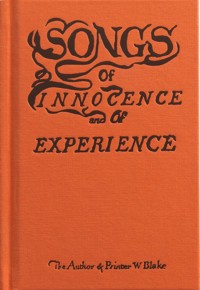
Blake’s first book, Poetical Sketches (1783), announced his ambitions as a poet. In the late 1780s he developed relief etching—often called illuminated printing—allowing text and image to be etched on the same copper plate and printed together. This technique enabled his distinctive small editions, hand-inked and frequently colored. Songs of Innocence (1789) and, later, Songs of Experience (1794) exemplify this union of lyric poetry and pictorial design, presenting paired perspectives on childhood, social authority, and spiritual vision. The production process was demanding and collaborative; Catherine Blake, his lifelong partner in the presswork, assisted with printing and the application of color.
The 1790s also produced Blake’s boldly experimental and politically charged works. The Marriage of Heaven and Hell mingled satire, aphorism, and relief-etched “Proverbs of Hell” to critique conventional morality and systematic philosophy. In mythopoeic books such as The Book of Thel, Visions of the Daughters of Albion, America a Prophecy, Europe a Prophecy, and The First Book of Urizen, he devised a symbolic universe exploring liberty, repression, and the dynamics of creativity. These books engaged the era’s revolutionary debates while refusing straightforward allegory. Circulating in tiny numbers, they attracted select admirers but stood outside mainstream publishing and the period’s commercial engraving trade.
Around 1800 Blake accepted the patronage of the writer William Hayley and moved to Felpham on the Sussex coast, an interlude that brought steady work but creative frustrations. After a confrontation with a soldier, he was charged with sedition and later acquitted; by 1803 he had returned to London. There he pursued large prophetic epics, including Milton a Poem and Jerusalem The Emanation of the Giant Albion, and continued work on the vast, unfinished manuscript often called The Four Zoas. These ambitious projects deepened his personal mythology but reached few readers, and financial pressures frequently steered him toward commissioned illustration.
Alongside his illuminated books, Blake sustained a career as a designer and engraver for others. He produced illustrations for Edward Young’s Night Thoughts in the 1790s and later contributed designs to Robert Blair’s The Grave. In his final decade, with support from the painter John Linnell, he created a celebrated series of engravings to the Book of Job (published 1826), widely admired for technical control and interpretive depth. He also executed a cycle of watercolors and plates after Dante’s Divine Comedy, left unfinished at his death. During these years he influenced younger artists—later dubbed “the Ancients,” notably Samuel Palmer—through example and informal guidance.
Blake died in London in 1827, largely unheralded by the institutions of his day. His reputation expanded markedly in the later nineteenth century, aided by Alexander Gilchrist’s Life of William Blake and the enthusiasm of the Pre-Raphaelites. In the twentieth century poets, critics, and artists further consolidated his standing, reading him as a central, if singular, figure within Romanticism. His illuminated books, prophetic epics, and late engravings remain touchstones for discussions of imagination, dissent, and the interplay of text and image. Blake’s influence extends across literature, visual art, and music, where his inventions continue to inspire interdisciplinary experimentation.
America A Prophecy (Illuminated Manuscript with the Original Illustrations of William Blake)
Preludium
The shadowy daughter of Urthona stood before red Orc[1q].
When fourteen suns had faintly journey’d o’er his dark abode;
His food she brought in iron baskets, his drink in cups of iron;
Crown’d with a helmet & dark hair the nameless female stood[2q];
A quiver with its burning stores, a bow like that of night,
When pestilence is shot from heaven; no other arms she need:
Invulnerable tho’ naked, save where clouds roll round her loins[3q],
Their awful folds in the dark air; silent she stood as night;
For never from her iron tongue could voice or sound arise;
But dumb till that dread day when Orc assay’d his fierce embrace.
Dark virgin; said the hairy youth, thy father stern abhorr’d;
Rivets my tenfold chains while still on high my spirit soars;
Sometimes an eagle screaming in the sky, sometimes a lion,
Stalking upon the mountains, & sometimes a whale I lash
The raging fathomless abyss, anon a serpent folding
Around the pillars of Urthona, and round thy dark limbs,
On the Canadian wilds I fold, feeble my spirit folds.
For chaind beneath I rend these caverns; when thou bringest food
I howl my joy! and my red eyes seek to behold thy face
In vain! these clouds roll to & fro, & hide thee from my sight.
Silent as despairing love, and strong as jealousy,
The hairy shoulders rend the links, free are the wrists of fire;
Round the terrific loins he siez’d the panting struggling womb;
It joy’d: she put aside her clouds & smiled her firstborn smile;
As when a black cloud shews its light’nings to the silent deep.
Soon as she saw the terrible boy then burst the virgin cry.
I know thee, I have found thee, & I will not let thee go;
Thou art the image of God who dwells in darkness of Africa;
And thou art fall’n to give me life in regions of dark death.
On my American plains I feel the struggling afflictions
Endur’d by roots that writhe their arms into the nether deep:
I see a serpent in Canada, who courts me to his love;
In Mexico an Eagle, and a Lion in Peru;
I see a Whale in the South-sea, drinking my soul away.
O what limb rending pains I feel. thy fire & my frost
Mingle in howling pains, in furrows by thy lightnings rent;
This is eternal death; and this the torment long foretold.
The stern Bard ceas’d, asham’d of his own song; enrag’d he swung
His harp aloft sounding, then dash’d its shining frame against
A ruin’d pillar in glittring fragments; silent he turn’d away,
And wander’d down the vales of Kent in sick & drear lamentings.




