


6,99 €
Mehr erfahren.
- Herausgeber: Open Book Publishers
- Kategorie: Sachliteratur, Reportagen, Biografien
- Sprache: Englisch
This book is an anthology with a difference. It presents a distinctive variety of Anglo-Norman works, beginning in the twelfth century and ending in the nineteenth, covering a broad range of genres and writers, introduced in a lively and thought-provoking way. Facing-page translations, into accessible and engaging modern English, are provided throughout, bringing these texts to life for a contemporary audience.The collection offers a selection of fascinating passages, and whole texts, many of which are not anthologised or translated anywhere else. It explores little-known byways of Arthurian legend and stories of real-life crime and punishment; women’s voices tell history, write letters, berate pagans; advice is offered on how to win friends and influence people, how to cure people’s ailments and how to keep clear of the law; and stories from the Bible are retold with commentary, together with guidance on prayer and confession.Each text is introduced and elucidated with notes and full references, and the material is divided into three main sections: Story (a variety of narrative forms), Miscellany (including letters, law and medicine, and other non-fiction), and Religious (saints' lives, sermons, Bible commentary, and prayers). Passages in one genre have been chosen so as to reflect themes or stories that appear in another, so that the book can be enjoyed as a collection or used as a resource to dip into for selected texts.This anthology is essential reading for students and scholars of Anglo-Norman and medieval literature and culture. Wide-ranging and fully referenced, it can be used as a springboard for further study or relished in its own right by readers interested to discover Anglo-Norman literature that was written to amuse, instruct, entertain, or admonish medieval audiences.
Das E-Book können Sie in Legimi-Apps oder einer beliebigen App lesen, die das folgende Format unterstützen:
Veröffentlichungsjahr: 2018
Ähnliche


















AN ANGLO-NORMAN READER
An Anglo-Norman Reader
Jane Bliss
https://www.openbookpublishers.com
© 2018 Jane Bliss
The text of this book is licensed under a Creative Commons Attribution-NonCommercial 4.0 International license (CC BY-NC 4.0). This license allows you to share, copy, distribute and transmit the work for non-commercial purposes; to remix, transform and build upon the material providing attribution is made to the author (but not in any way that suggests that she endorses you or your use of the work). Attribution should include the following information:
Jane Bliss, An Anglo-Norman Reader. Cambridge, UK: Open Book Publishers, 2018. https://doi.org/10.11647/OBP.0110
In order to access detailed and updated information on the license, please visit https://www.openbookpublishers.com/product/589#copyright
Further details about CC BY licenses are available at http://creativecommons.org/licenses/by-nc/4.0/
All external links were active at the time of publication unless otherwise stated and have been archived via the Internet Archive Wayback Machine at https://archive.org/web
Digital material and resources associated with this volume are available at https://www.openbookpublishers.com/product/589#resources
Every effort has been made to identify and contact copyright holders and any omission or error will be corrected if notification is made to the publisher.
California State University Northridge has provided support for the publication of this volume.
ISBN Paperback: 978-1-78374-313-1
ISBN Hardback: 978-1-78374-314-8
ISBN Digital (PDF): 978-1-78374-315-5
ISBN Digital ebook (epub): 978-1-78374-316-2
ISBN Digital ebook (mobi): 978-1-78374-317-9
DOI: 10.11647/OBP.0110
Cover Design by Heidi Coburn.
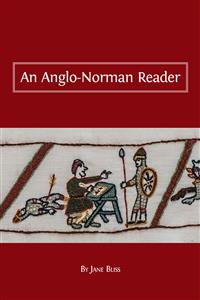
Front cover image by Bill Black (2012): Wace, in Alderney Bayeux Tapestry Finale.
Back cover image by Danny Chapman (2017): Ormer Shells.
Cover images are licensed under a Creative Commons Attribution 4.0 International license (CC BY 4.0): https://creativecommons.org/licenses/by/4.0/
All paper used by Open Book Publishers is SFI (Sustainable Forestry Initiative), PEFC (Programme for the Endorsement of Forest Certification Schemes) and Forest Stewardship Council(r)(FSC(r) certified.
Printed in the United Kingdom, United States, and Australia by Lightning Source for Open Book Publishers (Cambridge, UK)
Contents
Acknowledgements & Notes
Copyright Acknowledgements
Note for Ebook Editions
Abbreviations
Bible Books
Introduction
Selection of Texts
Principal Themes and Topics
Treatment of Texts
Story
History
Wace’s Roman de Rou
Description of England
The French Chronicle of London
Des Grantz Geanz
Romance
Roman de Thèbes (Amphiarax)
Protheselaus
Le Roman deFergus
Le Roman du reisYder
The Anglo-Norman Folie Tristan
Short Stories
TristanRossignol
Two Fabliaux
LeRoi d’Angleterre et le Jongleur d’Ely
An Anglo-Norman Miscellany
Satirical, Social, and Moral
Le Roman des Franceis, by André de Coutances
L’Apprise de Nurture
Grammar and Glosses
LaManiere de Langage
Letters
Maud Mortimer’s letters to the King
Christine de Pisan’s letter to Isabelle of Bavaria
Doctors, Lawyers, and Writers
A MedicalCompendium
Legal Texts
‘En autre ovre’ (Prologues)
Religious Writings
Biblical and Apocryphal
Proverbes de Salemon (chapter 7)
TheCreation, by Herman de Valenciennes
Hagiography
La Vie d’Edouard le Confesseur, by a Nun of Barking
La Vie SeinteAudree, by Marie
The Life of St. Catherine, by Clemence
Homiletic
Maurice de Sully: Credo and Pater Noster
Sermon onJoshua
Rossignos
Eight Deadly Sins, attributed to Robert Grosseteste
Nicole Bozon, from Contes Moralisés, 128: Bad Company
Appendix
‘Et pis y avait quat’e: enne histouaire de ma graond’mé’, an adventure story
Bibliography
Primary Texts
Secondary Texts
Indexes
Manuscripts
Bible References
General Index
Acknowledgements & Notes
Thanks are due to the following colleagues and friends:
Matthew Albanese, Laura Ashe, Katie Attwood, Ian Bass, Catherine Batt, Bill and Pauline Black, Marina Bowder, Glyn Burgess, Daron Burrows, Emma Cavell, Danny Chapman, Victoria Condie, Graham Edwards, Sarah Foot, Linda Gowans, Douglas Gray†, Huw Grange, Miranda Griffin, Richard Howard, David Howlett, Eliza Hoyer-Millar, Tony Hunt, Paul Hyams, Andy King, Carolyne Larrington, Jude Mackley, Quentin Miller, Ben Parsons, Stephen Pink, Jackie and Ed Pritchard, Gillian Rogers, Royston Raymond, Samantha Rayner, Kate Russell, Lynda Sayce, Ian Short, Ilona Soane-Sands, Eric Stanley, Justin Stover, Richard Trachsler, Judith Weiss. I am very grateful to the many anonymous readers of my book, who have submitted helpful and enthusiastic reports, and to the editors at Open Book.
In addition, my thanks are due yet again to Henrietta Leyser, who has always been so generous with ideas and advice for me; and to the librarians who have helped me to track untrackable material. Further, I am proud to honour the memory of another two remarkable women: Dominica Legge, and my old friend and colleague Elfrieda Dubois. Elfrieda often told me how she used to meet Legge in the Bibliothèque Nationale, who would hale her off for cups of coffee and amuse her endlessly with talk about Anglo-Norman ‘because’, said Elfrieda, ‘nobody else would listen!’ Lastly, I cannot sufficiently express my gratitude to Quentin for help and love and everything. This book is dedicated to them, and to the Oxford Anglo-Norman Reading Group.
Copyright Acknowledgements
I wish to thank the following people and publishers who have granted me permission to use their work. This book contains a large number of different texts, therefore my list must be set out as economically as possible. All the passages reproduced in this book are listed in my Bibliography in addition to being cited in footnotes, so it can easily be seen which passage is taken from which published work. Each publisher (or editor, in the case of previously-unpublished texts) is stated clearly in the principal citation of each text, normally in the introduction to it.
I am also very grateful to colleagues, and relevant institutions, for help and advice in my efforts to trace copyright-holders.
First, I thank the Anglo-Norman Text Society for their generous permission to use more than a dozen extracts, of varying length; each is identified in its place, as stated above.1 I thank the British Library for permission to transcribe and use three pages, kindly provided by them, from three different manuscripts: the first introduces my second Part (An Anglo-Norman Miscellany), the second passage is appended to A Medical Compendium, and the third is appended to the Credo and Pater Noster.
Next, in alphabetical order, I would like to thank the following:
Alderney Bayeux Tapestry FinaleEmma Cavell, for the first of Maud Mortimer’s LettersHonoré Champion (Paris), for an extract from Le Roman des FranceisTony Hunt, for two substantial texts: the Credo and Pater Noster, and the Sins attributed to Robert GrossetesteLivre de Poche (Paris), for an extract from Le Roman de ThèbesPMLA, for permission to use the Apprise de Nurture, reprinted by permission of the Modern Language Association of America from Anglo-Norman Books of Courtesy and Nurture, PMLA 44 (1929), pp. 432–7Royston Raymond, for the story printed in my AppendixSelden Society, for permission to use part of the legal text Placita CoroneWilliam Allen, for permission to use an extract from the Roman de FergusNote for Ebook Editions
Readers of the ebook editions may need to adjust font or window size to ensure that text and translation appear on alternate pages.
Notes
1 Several of these are available to search (page by page) on the Anglo-Norman Hub.
Introduction
© 2018 Jane Bliss, CC BY-NC 4.0 https://doi.org/10.11647/OBP.0110.01
This book is a new departure in Anthologies, a Reader with a difference. It presents a variety of Anglo-Norman pieces, some less well-known, specially chosen to cover a wide range of literature that would have appealed to a wide range of people who could read or at least understand French. It provides facing-page translations throughout, unlike many anthologies and readers. It presents passages, and a number of whole texts, in a variety of genres. The selections are arranged generically: the book is given a distinctive overall shape by its beginning with the writer Wace, born in the Channel Islands in the twelfth century,1 through many named and unnamed writers and their work, through to another writer born in the Channel Islands in the nineteenth. Its aim is to help students at undergraduate and early post-graduate level, and general readers, to discover and enjoy some of the literature of the British Isles written in Insular French to amuse, instruct, entertain, or admonish medieval audiences.2
This volume cannot provide a full overview of all texts, literary and non-literary, used across several centuries in medieval Britain.3 But it is intended to provide an engaging and thought-provoking introduction to some of the material available to medieval readers. An Anglo-Norman Reader offers a wealth of fascinating pieces, many not anthologized or translated anywhere else. There are little-known byways of Arthurian legend, crime and punishment in real life; women’s voices tell history, write letters, berate pagans; advice is offered on how to win friends and influence people, how to cure people’s ailments and how to keep clear of the law; stories from the Bible are retold with commentary, together with guidance on prayer and confession. Authors range from the well-known to the lesser-known and anonymous, readers include clerical and lay, men and women, aristocratic and ordinary. My title is designed to focus on the importance of readership: its double meaning includes the word ‘reader’ used in modern times for a kind of anthology, and ‘reader’ as the person who enjoyed, used, read, and listened to the literature available to them in a medieval Anglo-Norman world. Needless to say, no single medieval reader can be envisaged as sole audience, any more than can any single modern reader of this book; I envisage a variety of people in either case.
The sudden wealth of literature produced in French, after the Norman Conquest in the eleventh century, has been variously explained: French became the dominant vernacular as the new ‘English’ settled in and began building their culture. A good proportion of literature produced during this time reflects an interest in history, but in fact the earliest literature of many genres in French was produced in this country.4 Middle English as a literary language developed later. It is not my purpose to provide a history of the use of French in Britain, but this Introduction can at least explain the genesis of the present book. Students of Middle English and Old English have recourse to wide-ranging anthologies of the literature: A Book of Middle English; Early Middle English Verse and Prose; and A Guide to Old English;5 there are likewise anthologies for students of medieval French.6 But a course of Anglo-Norman literature, in Oxford recently, involved studying half a dozen long texts in their entirety during a single term; no Anthology or Reader was available. A Reader would have been a useful and enjoyable supplement, to provide an overview of a wider linguistic world closely entwined with that of English. Ruth Dean’s call for more workers in the ‘fair field’ of Anglo-Norman is still an inspiration sixty years after its publication;7 together with the sheer enjoyment of the ‘fair world’ of wider medieval studies, it inspires this book.
Those with some experience of medieval French will have no difficulty going directly to editions of the texts, many available from the Anglo-Norman Text Society. However, my experience as a reader and teacher has warned me that students unfamiliar with any kind of medieval French find the thought of Anglo-Norman daunting.8 Hence this book. Anglo-Norman is the name by which this language has been commonly known. ‘The French of England’ has recently become popular as an alternative, but appears to ignore other parts of what is now the United Kingdom. ‘Insular French’ covers the whole of the British Isles, including the Channel Islands where my book begins and ends. The Introduction to AND gives this language the alternative name of Anglo-French. ‘The French of Britain’ might be a new and better name. However, for simplicity I prefer to remain in line with (for example) the Anglo-Norman Text Society, and use this term more frequently than any other. The exact range of what may be called ‘Anglo-Norman’ is a matter for some discussion which would be out of place in a book for comparative beginners.9 The language was used throughout a kingdom that, until the early thirteenth century, included parts of what is now France. For example, historians and language scholars disagree about whether Wace, a writer born in the Channel Islands but writing in Continental France about British history, is really Anglo-Norman in its narrowest sense. I take a relatively wide view: I follow Dean’s range, which includes Wace and other writers considered marginal. Merrilees argues that no simple definition of Anglo-Norman literature can be given, pointing out that writers (and readers, I would add) of medieval times would be unlikely to perceive any distinctions that modern writers might make in their definitions.10 ‘There is no more tiresome error in the history of thought than to try and sort our ancestors on to this or that side of a distinction which was not in their minds at all. You are asking a question to which no answer exists’.11 I extend Dean’s range here and there, with explanation of my reasons for doing so; any collection of this kind is bound to reflect personal preferences.
There has been an upsurge of interest in Anglo-Norman in recent decades, and it is no longer the Cinderella among medieval literatures that it used to be. No student of Anglo-Norman can be without one or more of the following key text-books: Pope, From Latin to Modern French; Legge, Background; and her Cloisters; Short, Manual of Anglo-Norman; Dean and Boulton, Anglo-Norman Literature.12 Several important anthologies have recently been published, partly or entirely devoted to Anglo-Norman texts. Douglas Gray wished to do for Anglo-Norman and Anglo-Latin what Bennett and Smithers did for Middle English; the result was his wide-ranging anthology entitled From the Norman Conquest to the Black Death. His book attempts to illustrate the richness and variety of the period’s literary material as fully as possible, therefore his original plan to provide texts facing his translations had to be abandoned. The Idea of the Vernacular, an anthology of Middle English literary theory in the period 1280–1520, includes a small proportion of material from French or Anglo-Norman sources.13 Carolyne Larrington mentions the women, of Barking and elsewhere, who wrote saints’ lives in Anglo-Norman, although she cites only one of the former and does not print the passage in question.14 Laura Ashe’s collection for Penguin Classics includes some Anglo-Norman pieces, but none are facing-page translated and most are already anthologized elsewhere.15 However, since 1990 a splendid volume of Anglo-Norman Lyrics has been available.16
Religious writing has been well served not least by Tony Hunt in his anthology of previously unedited texts with facing-page translations;17 Maureen Boulton has published a selection of such texts, mostly on the Passion.18 Four of the Anglo-Norman verse Saints’ Lives are translated by Russell;19 and a glance at the website of FRETS (publisher of Hunt’s and Boulton’s books, above) will show that more are on the way.20 These volumes help to fill a perceived gap in such Anglo-Norman religious writing as is currently available. In Dean’s catalogue, however, religious literature accounts for five of the fourteen headings; page-ranges show that just over half her book is filled by this group.21 Merrilees points out that in the Anglo-Norman corpus more serious works outnumber the purely entertaining.22 Much of this material is in fact very lively and entertaining indeed. It is important to remember that churchmen (including some women, for example nuns) wrote biblical, hagiographical, and homiletic works, to educate their ignorant flock and also to meet readers’ enthusiastic demand for such literature. In fact many such enthusiastic ‘readers’ needed others to read to them, because they could not read for themselves; ‘literature’ is not only for the literate classes. Another anthology of interest has recently been published: Vernacular Literary Theory, ed. Wogan-Browne et al. This is a study book, dealing with prologues and other texts in which authors discuss their work; it is not a Reader in the sense that the present book is intended to be.
There is good reason, after taking into account the collections listed above, to include a number of broadly religious pieces in my collection. This is intended not only to reflect the range offered by Dean, but also to help counter any secularizing tendency especially among historians. The central importance of acknowledging the weight attached to religious thought in all periods, but above all in the Middle Ages, has recently been argued by Sarah Foot.23 In making this selection of texts I consciously reflect a recent trend in historical and literary study: a ‘religious turn’, where writers argue for the importance of religion in understanding cultures and societies from different places and periods.24
Lecco’s two books published in Italy, a History and an Anthology, together offer a range of literary texts with facing-page translations.25 However, they are not widely available in this country,26 and in any case are useful only for readers fluent in Italian.27 The works Lecco chose to include are among the better-known Anglo-Norman texts; I range somewhat farther afield. With the intention of filling some of the gaps left by anthologists, I have chosen texts that may be less familiar, although I do not aim deliberately at the obscure. Certain key works have been extremely well served by editors, translators, teachers, critics, and commentators; they have been studied by historians and Arthurians, feminists, and Romanists who judge some of these classic texts to be part of the heritage of Continental French literature.28 There is no need for me to include any of theLais of Marie, or extracts from Wace’s well-known Roman de Brut, to name two of the most obvious candidates. However, Wace’s Roman de Rou is less well known; Lecco offers some hundred lines (8011–116), in which the famous Taillefer episode (in the Battle of Hastings) occurs. Scholars have mined the Rou for accounts of the Norman Conquest, but there is plenty more of this romance to choose from dealing with the legendary history of these islands. Another consideration, which would encourage any anthologist to branch out, is that Plain Texts from the Anglo-Norman Text Society are published without a glossary, so that reproducing passages from them with translations in this book could be useful for unpractised readers. Further explanation of my reasons for the present selection are set out later in this Introduction.
My extracts are arranged more or less generically, approximately as in Dean’s Catalogue. This indispensable volume is the first port of call for anybody wishing to discover Anglo-Norman Literature,29 and so I have used it as a template. This in spite of the fact that my extracts may not by themselves represent the genre of the text as a whole (for example, I choose a historical passage from Audree and an extended descriptive passage from Roman deThèbes). In the case of texts not in Dean (Roman de Thèbes, and Roman d’Yder, for example),30 I have placed them where they would be had she included them; legal texts, however, are placed in the Miscellaneous section of my book which includes texts to do with social history. I cannot attempt to fill every heading of Dean’s, nor to provide a number of texts in any way proportional to the number of texts in sections of her book.31 I have branched out by including a few pieces that are arguably, if marginally, Anglo-Norman. These reflect the fact that some texts although written in Continental France were in fact widely read, copied, and used in Britain; others deal with Insular subject-matter, even if not written in this country. This stretches the definition of Insular French, but allows a generous range of riches to interest a medieval audience. The result could risk becoming a rag-bag of passages taken at random or at least according to fancy (as some medieval manuscripts quite clearly were); I have therefore grouped the pieces into three main Parts, based on Dean’s broadest categories.32 I have also attempted to make internal correspondences and connections. My inclusion of a few medical and legal pieces aims to provide interesting non-literary context for the various branches of literature represented. Then, passages in one genre have been chosen so as to reflect themes or stories that appear in another, for example: a passage about Edward the Confessor in the Roman de Rou balances an interpolation in the Nun of Barking’s Vie which, although a miracle, is also a piece of legendary history; historical passages in Audree compare with ‘historical’ passages in my Chapter 1; the prologue to a life of Saint Clement is comparable to the self-introduction by the historian Wace and the epilogue to Maniere; Saint Katherine’s story of the Creation is comparable to that found in texts such as Herman’s Creation. Although I follow Dean, the selections are deliberately eclectic. Daron Burrows chooses a florilegium of texts for his translation class,33 mixing forms and registers, tones and dialects, so as to give some idea of the wealth of different types offered by medieval French literature. He also points to the juxtaposition within manuscripts of courtly and comic, religious and obscene; accepting such diversity is part of learning to grasp the alterity of medieval culture.
I begin with Wace’s Roman de Rou; a memory of Wace’s father talking about the Norman invasion forms a short epigraph. The Conquest conventionally marks the beginning of the Anglo-Norman period, although French was known and used in England before this time: Edward the Confessor was brought up in Normandy, and there were French speakers at his court, to give only one example. I continue with a passage about Edward, before moving on to other historical texts. After revisiting the Channel Islands briefly around the beginning of the Hundred Years War, and continuing with my parts 2 and 3, the book ends with an Alderney man’s memory of his grandmother telling stories.34 To this day the Channel Islands are subject to the Duke of Normandy and not to Queen Elizabeth II, although these titles refer to one and the same person. Literature (whatever its geography) looks forward to imagined futures, and backwards to a past that may never have existed … or in which civilizations talked about themselves in other languages. Principally the latter are Old English, Greek (both classical and biblical), Hebrew (the Old Testament), and so on; Latin is ubiquitous in the medieval period, not least because of most people’s wide knowledge of the Bible.35 All such points of interest, as well as references to other literature, are signalled in the notes to each text.
Selection of Texts
The literature of our England is practically illimitable … But we make very little use of [it].36
Some explanation was given, earlier this Introduction, of what is not included in this book and why; here is a further brief overview of reasons for including what I have put into it. I do not wish to replicate what other anthologies have successfully done; I have built my selections according to identifiable gaps among such material, casting my net as widely as I could.
Dean introduces her Guide thus: ‘… to provide, in catalogue form, a listing of extant Anglo-Norman texts and their manuscripts for students of medieval culture, including those with particular interests in Anglo-Norman’ (p. ix). The centre, as it were, of Anglo-Norman literature has been well defined and is nowadays being well explored (and debated) by scholars and students alike. Dean envisages the Anglo-Norman ‘canon’, however this is defined or circumscribed, within its wider culture; I have gathered texts which originate farther away from that centre, and even on the boundaries, referring to literatures of a wider culture as well as creating cross-references within my collection.37 I have chosen texts from this wider culture, bearing in mind that any cross-section of medieval readers would have been exposed to any number of texts of different kinds; but my choice of Dean as an organizing principle is because Dean’s catalogue is readily accessible in libraries, shelved with other publications of ANTS. Legge’s work is still extremely useful as a general introduction to Anglo-Norman, and I cite her freely throughout.38 Because any criteria for the selection of texts was going to be problematic, I have chosen according to what I thought twenty-first century readers would find interesting and amusing. Anybody’s choice is necessarily subjective, and even the grouping of texts generically is a matter of personal judgement. This book is a compendious yet necessarily limited tour of Anglo-Norman literature in its broadest sense.39 It includes works that are certainly Insular, and a few that are arguably not; but these latter were unquestionably used, if not written, in Britain. It tries to include works that are less well known, avoiding those texts, especially the romances, that are already widely known and anthologized.40 I have generally chosen pieces that have not been translated elsewhere, although some have been; the former are included either because I think they ought to be better known or, in the case of the latter, because the existing translations are relatively inaccesssible.41 I have used Dean’s catalogue as a template for arranging the pieces generically, and to give some idea of the proportion of fiction to what we would now call non-fiction (sermons and so on), because Dean is accessible and compendious; but I have included some pieces not in Dean. These find a place in my book either because the matter of the text is Insular (for example, a romance set in Britain) or, more contentiously, because the piece might not count as ‘literature.’42
A book of this size cannot begin to offer a full overview of all possible uses of French in this country, but it ought to recognize if only briefly that French was not merely the literary language of the educated reading classes. Having said that, I must reiterate the fact that much religious literature was made for the uneducated classes: written and read by priests and other literate people, it was ultimately aimed at those illiterates who needed instruction, preferably of an entertaining sort so that they would pay attention to it. By literate, I here mean those who could read their own vernacular; some could also write it. Elsewhere ‘literate’ is more narrowly used to mean those who could read and write Latin. To reflect other uses of French across this period, I have added some legal texts, and some medical receipts, as a small reminder of social reality. They need not stand out as oddities in a book of this kind, because they can be grouped into a section that includes other utilitarian pieces such as letters. It should also be remembered that texts such as prayers, even lyric poems (generically very different from prayers, letters, and recipes), were also intended for use in the sense that people did not read them only for pleasure.43 However, any attempt to group texts into ‘for use’ and ‘for pleasure’ would be much more problematic than grouping them according to genre, however roughly. Most of the texts chosen are from earlier rather than later times, during those centuries when Anglo-Norman was the dominant vernacular: in this earlier period literature was truly flourishing.
But there are a number of texts drawn from a somewhat later medieval period, so as to give as wide a spread as possible. The latest of all is from the twentieth century, from an island that is part of this country by historical accident.44 The Channel Islands, called ‘les Îles Anglo-Normandes’ in French, are part of the British Isles and so it can be argued their French is likewise ‘Anglo-Norman’; this alone warrants inclusion of their language in a wide-ranging anthology such as mine. The vanishing patois of Alderney is the closest, of all the islands’ patois, to the French of Cap de la Hague, because it is geographically the closest of them all to the French coast. It has been used among fishermen of the two regions, not to mention smugglers and privateers, over generations. Further justification for including a story in modern patois is given in the Appendix, below.
In addition to this general Introduction, each selection is prefaced by a short introduction raising points of special interest that pertain to it; footnotes signal unusual words and phrases, and so forth. Readers wishing for further and more specialized information are advised to consult the editors’ own introductions to each text, as well as standard textbooks such as Short’s Manual and others mentioned above.
This book is intended to be a general introduction to a range of interesting texts, literature in its widest possible sense made for a wide range of audiences (such as I hope my own will be); it is not a full-scale introduction to the history or philology of Anglo-Norman.45 My aim is two-fold: to encourage readers to look up the editions of any or all of the texts in this book and read them in full, and to encourage them to follow my references to other works in (or on) Anglo-Norman and beyond.
The next section of this introduction broadly groups some of the most notable points otherwise discussed, within my chapters, in footnotes. The final section, below, describes my treatment of the texts chosen.
Principal Themes and Topics
There are a number of broad themes or topics running through this book. Because they are common across medieval literature, an overview of the most notable is set out here. They include references to many famous figures (mostly fictional), ideas of the marvellous, the love (and otherwise) of women, the typical (often beautiful) settings for stories, and the significant objects that tend to occur across not only stories but also non-fictional texts. Although my passages are arranged generically into chapters, themes and topics are no respecters of genre, and they lead through and across the texts presented below.46 A glance at the Table of Contents will easily locate titles within chapters of this book.
First, there are the great figures of medieval literature, such as King Arthur and his knights (including Tristan). The story of Arthur begins with the Latin book by Geoffrey of Monmouth (the Historia Regum Britanniae),47 which was translated or rather adapted into French by Wace.48 The present book begins with Wace’s Roman de Rou, but it is not long before we find a mention of Arthur’s world: a reference to Hengist and Horsa comes early in the second piece, the Description of England. This is the point in legendary history where Merlin the enchanter, our first Arthurian figure, appears.49 It is not until the romance of Fergus that we find Arthur and his knights in the flesh, among the heroes; in Yder some of them are anti-heroes, especially Kay and Arthur himself. A version of some of Arthur’s adventures is found in the Roman des Franceis, a satire aimed at the French, who are shown to have a completely wrong idea of what happened in those days: the author puts the record straight.
Tristan was originally the hero of stories and romances that developed independently of the Arthur legends,50 but in later cycles (for example in Malory) he becomes a member of the Round Table.51 In Fergus, Tristan is mentioned as the slayer of a dragon that was not as big as the one that will be slain by Fergus.52 Thus Tristan appears by repute; such intertextual reference shows that stories about him were current and his name known to audiences, otherwise Guillaume (the author) would not have put him in. I have chosen Tristan pieces in which Arthur is never mentioned; Tristan is even more famous as a lover than as a knight. Among the great themes of romance is of course the interesting subject of love; knights and ladies meditate upon it, discuss it, suffer it.53 However, there is only one mention of ‘fin’ amur’, or what has come to be known as ‘courtly love’, in the romances I have included.54 One other mention is in a rather surprising place: theProverbes of Sanson, a commentary on the Old Testament Book of Proverbs. However, early medieval use of this term was first, exclusively, a matter of divine love and not human or fleshly love.55
The marvels of romance include unexpected meanings: ‘merveille’ can be something catastrophic! Some might be a matter of taste: a blood-stained head on your host’s table, set before a lady, is not everybody’s idea of a marvel.56 This use of ‘marvel’ to mean horror or catastrophe is not uncommon in medieval literature,57 and even in the literature of today: one of Stevenson’s protagonists uses both this and ‘ferly,’58 speaking a Scots dialect in the nineteenth century (the story is set in the eighteenth). Here, ‘wonders’ are the judgement of God, and ‘ferlies’ are frightful uncanny sea-devils.59 Eric Stanley has pointed out, in a paper delivered to the Oxford Medieval Graduate Conference, that ‘wundor’ in Old English can likewise have a distinctly negative meaning; examples include a passage from Beowulf, in which ‘wundordeað’ means agonized death.60
Treatment of women, in both senses (by contemporary society, and by writers working within that society), is conflicting and often contentious. On the one hand, we are regaled with accounts of women’s beauty and virtue; on the other, we are shown their wickedness and vice. Names of ladies famously loyal and loving, as in the Donei des Amanz, may be found in other texts labelled as wicked women who destroy their lovers. For example, Helen loved Paris enough to elope with him, but she caused his death; Dido loved and helped Aeneas, but she tried to turn him from his destiny. Ysolt is notoriously unfaithful to her royal husband, yet remains a romance heroine; other wives delude and cuckold their husbands in the fabliaux, and are held up as a mirror of bad behaviour. It is a medieval truism that Eve, the first wicked woman, is balanced and redeemed by the Virgin Mary, the ultimate good woman.61 A passage of typical anti-women satire is found in the Apprise, where a young man is warned about how to behave towards these tricksy creatures: they are two-faced, and will bitch about you behind your back,62 but at the same time good behaviour towards them is necessary if you wish to be considered well-bred and good-mannered. Female audiences must have been very familiar with this tiresomely ambiguous situation. Christine de Pisan was well aware of the difficult position she was in as a writer, given contemporary attitudes; she cleverly used historical women as examples of good behaviour when attempting to get her point across in a letter to the queen. The ladies of romance must necessarily fall between two extremes, being neither Eve nor Mary, and some are more nuanced than such polarities might lead us to expect: the heroine of Yder is ‘good’ but quite feisty and independent;63 the young lady in the Protheselaus story is ‘bad’ but entirely sympathetic.
A setting for poems and stories may often be a garden, with flowers and birds and beasts.64Dream-visions typically open with a scene of this kind; the locus amoenus topic is very common, not only in dream-vision poetry.65 The rare beauty of fresh flowers and fruit, in a world without hothouses or refrigerators, can barely be imagined. However, objects found in a romantic garden can also appear in many other sorts of text. Flowers and fruit are identified as remedies for human ills (in medical treatises); an apple may be simply food (in Des Grantz Geanz), or an occasion of sin, in the story of the Fall.66 A plant cures the hero Yder (we are not told what it is); a prayer is prescribed when gathering the herb Centaury, in the MedicalCompendium.67 Other foods are suggested by the sacrificed animals and trapped birds in the Proverbes. Birds are found not only in gardens but in Bestiaries (for example, the eagle’s beak is crooked and so he cannot say the Pater Noster); a moulting hawk is a simile for an ill-mannered young man in the Apprise, a healthy one helps Tristan to catch food.68 A beast fable does duty as a moral tale, towards the end of this book; real dogs appear in LaManiere de Langage, and a supernatural hound in the Alderney story.69 The snake or serpent is familiar as the tempter in the story of the Fall.70 A swallow appears frequently in medieval story, often as a metaphor: for example the swiftness of the wicked dwarf as he leaps to catch the fleeing Ysolt in TristanRossignol.71 It is not inconceivable that ‘arundel’ refers to a famous horse: Bevis of Hampton’s was named Swallow. The earliest Bevis romance may be from the late twelfth century,72 and the Donei (in which Rossignol is found) may be thirteenth-century, because of its reference to Amadas and Ydoine. Swallow was also the name of Hereward’s horse.73 Even if the Donei author does not mention the famous Arthur in this passage, there is no reason to suppose s/he did not know other romances. There are two ‘swallows’ in Fergus: a horse, and one of the heroine’s ladies.74 The most romantic of birds is the nightingale, because of its song; Tristan knows how to imitate it, and John of Howden uses it as a metaphor for his work of devotion: ‘as the nightingale makes one melody out of many notes, so this book makes a concordance out of diverse materials.’75 Human musicians in the present book include the trumpeters of Jericho, and Tristan the harper; other instruments are heard, such as the ‘rote.’76 It is not entirely certain what the latter was; editors’ notes and reference books yield inconclusive results.77 The word was used for different instruments by writers across languages and centuries: it is a generic term, and different forms developed (all sources consulted give more than one definition). Therefore no single instrument can be definitely meant, in every case even in this book, when a ‘rote’ is mentioned.78
It is a fascinating habit of medieval literature, to repeat certain themes and ideas in completely different genres. The fact that a magical spring full of precious stones can appear in a romance, a dream-vision, and a parody of Utopia,79 points to important thematic relationships among different genres. In a Middle English treatise of instruction in good behaviour, written by a knight for his daughters, the ‘mirrour of auncient stories’ is held up as a rich source of moral precepts rather than as a place to find exciting adventures of love and chivalry.80 Perhaps the contrast between homily and romance was not as great as we might think.
Certain objects or events, literal or metaphorical, turn up over and over again. Not all examples of food, fighting, animals, sins, and so forth can possibly be indexed fully. Feasting takes place in romances, but is also the subject of lessons in proper deportment. Heroes and villains ride horses and carry swords, sometimes special ones; a murderer’s sword in a legal case is specifically described as being from Cologne. Among the multitudinous beasts, real or imaginary, dogs alone comprise a long list: Tristan has one as a pet and one for hunting, Albina and her sisters used to have hunting dogs, there are two ‘real’ dogs in Maniere, Cerberus greets Amphiarax in Hell, mastiffs guard a lady in Protheselaus, kindness to dogs and other creatures is recommended in the Apprise, a dog that has been kicked is one of Christine de Pisan’s metaphors, dogs are carrion-eaters in Joshua, dogs are allegorical hounds of the Devil in Bozon, a dog is thought to be a werewolf in the Channel Islands. A similar list might be compiled for apples, for serpents, or for pieces of armour.
Medieval stories, like stories universally, often refer outside themselves to other historical or legendary figures. These may be inset mini-narratives, referring to an identifiable historical time or event, or simply an evocation that conjures up a picture or story not fully explained, adding authority to the main narrative. The medieval audience would recognize such references, and be reminded of the stories thus alluded to; they would have heard or read them elsewhere. Intertextual references below include mention of the Sibyl in Clemence’s Catherine, of the Tristan legend in Fergus, and of Egypt and its wickedness in the Proverbes.81 Classical references abound, as might be expected: ladies in the Donei include Dido and Helen, a Caesar finds Hippocrates’ book of medicine, the mother of Alexander is invoked by Christine de Pisan. Greeks are represented by the heroes of Thebes, but Greece is also the birthplace of Albina and her sisters. Hippocrates himself, the supposed author of the Compendium, anachronistically appears to quote the later Galen. Medicine itself is not restricted to the textbook: romance knights and ladies, or wandering herbalists, are able to treat sickness or wounds.82 A knight, really an angel in disguise, appears in a life of Saint Cuthbert to treat the holy man’s troublesome gout.83 Further, some divine attributes are explicitly claimed as medicine (‘treacle’, or antidote) against sin.84 As for the history narrated by medieval texts, it is not only in chronicles that we find it. Anglo-Saxon historical events (including a king who might be Alfred) are found in the Description, and in the life of Saint Audrey. A story of Augustine’s companion Mellit is a flashback in the life of Edward, a pre-Conquest king; an Old English king is evoked in the Roman des Franceis; Vikings are remembered in a modern adventure story.
Part of the joy of reading the old romances, and sermons too, is when as well as marvels we find material things such as weights and measures now lost: pounds and ounces, leagues and rods, marks and pence. Proverbs may turn up sounding as modern as if we heard them in the street today, although many of the proverbs in the present book are those found in the Old Testament.85 Vices and other allegorical figures enter the scene looking like human, if stereotyped, characters; when these appear to act of their own free will, I capitalize them as Personifications. This is not unlike the way some descriptions of visual art seem to get up off the page and start having their own adventures.86 However, one of the most interesting things is the appearance of stories in different genres, being used for different purposes. A moral tale with analogues all over the medieval story-hoard appears in the romance Protheselaus, a beast fable appears in a moral tale, to give only two examples. The story of (for example) the Fall, which everybody would have known from childhood, is narrated and glossed in numerous different ways.
As will be seen, I offer a large number of genres in this book, sometimes presented cross-generically (as with the beast fable in a moral tale, and so on). But my only examples of the dream-vision setting are the openings of Donei des Amanz, and of Rossignos; there are no ‘chansons de geste’, or lyrics. This is merely because not everything can be covered in a single volume. However, a wide range of authorial manners can be seen: compare the way Wace introduces himself, with that of the author of Clement. Some authors name themselves, and the Marie who wrote Audree is one; others, such as the Nun of Barking, refuse to do so. Female authorship is represented in this book by three saints’ lives, in addition to three letters written by women; the final story (Appendix) was transmitted to us by an identifiable ‘raconteuse’. I have not attempted to focus especially on women’s writing, merely to remind readers that more women may have been writers than is generally assumed. We have no way of knowing how many anonymous authors were women; it is possible some female writers preferred anonymity out of low self-esteem, or perhaps out of prudence. It has been remarked, however, that anonymity could allow a text to circulate free of the expectations that an attribution might generate.87 The Nun of Barking (whose self-esteem is anything but low) tells us explicitly she wishes to remain anonymous, incidentally disclosing that she is female; there may well be other female-authored texts without such information, and we should not be too quick to assume that anonymous texts are male-authored.88 Sometimes the manuscript page on which writers might be expected to explain (or name) themselves is missing; such pages are typically at the beginning or end, and get lost over the years. The passages in question may be opening dedications or concluding prayers; either may include information about the writer. Beginning with Wace’s introduction, there follow a number of self-conscious comments or explanations by various writers in this book. These may be flattering remarks aimed at a (hoped-for) patron, prayers for the writers themselves, conciliatory addresses to an audience or indeed meditation upon who the audience may be.
Tricks of narration include addresses to the audience, which cannot always be taken at face value (as with expressions of modesty); sometimes these are calls for attention (as at the beginning of DesGrantz Geanz), and sometimes they are assurances of a story’s truth. Some writers claim the wonders they are describing cannot be described, all the time describing as vividly as they know how. This topos is known as ‘inexpressibility’. A not dissimilar claim, called occupatio, is when writers announce that because a story is too long they will shorten it; this is often a prelude to some considerable expansion. Another favourite topos is the claim that something is ‘still there to this day’ to prove the veracity of their account. This topos, very common in medieval narration, and persisting into modern times, has been studied by (for example) Andrew King and Jacqueline Simpson.89 The opening scene of Charles Dickens’ Barnaby Rudge contains an example of the ‘still-there’ topos exploited to good effect: a mounting-block, still to be seen outside the inn, is claimed as proof positive of the truth of a story about Queen Elizabeth I, whereupon ‘the doubters never failed to be put down by a large majority.’ It is not surprising to find self-conscious references to the language in which the text is being written: many of these texts mention how they have turned the book in question into ‘romanz’90 because that way more people will be able to read and understand it. It is particularly apt at the end of LaManiere de Langage, which is intended as a language guide. In Anglo-Norman texts, Latin breaks in frequently, and not only when the Bible is being cited directly.91 Middle English also breaks in: there is an English couplet (a proverb) in Bozon’s Conte,92 English names can be learned from the Description, I have added a couple of prayers in Middle English to the Anglo-Norman Credo and Pater Noster for comparison.93 Prayers also appear in places deemed to be appropriate: Pater Noster is to be said when gathering a herb for medicine, and De Profundis is found in Maniere. Narration itself is a chameleon: in the Folie Tristan a whole romance can be reconstructed from the hero’s own specular account of the lovers’ past adventures. The story of Mellit and the Fisherman is a flashback in the life of Edouard and has nothing really to do with the main story: the Nun likes it, so she decides to include it! The story of Audrey is prefaced by a version of English history lived by her predecessors; stories of battling gods interfere (hardly too strong a word) with the account of battles in long-ago Thebes.
Medieval audiences are quite frequently addressed as ‘my lords’, but it is widely recognized that we cannot assume this address indicates an audience of (noble) men. The word ‘Seignurs’ in such a context is more likely to mean ‘Ladies and Gentlemen’, or simply a ‘Hello, all!’ to attract listeners’ attention. I have indexed references to ‘audience’ throughout the book, so readers can follow them up and study them if they wish. The address to ‘Seygnours’, for example, in the story of the Roi et Jongleur cannot be taken to mean an audience of lords; although we can’t be sure who they were, they were in all probability a mixed group of readers and listeners.94 A wandering minstrel in search of adventure is the very stuff of romance; the writer is drawing the audience in.
Prayers were a routine part of everybody’s everyday life in the Middle Ages.95 Bible knowledge included familiarity with the various orders of angels. It is to be noted, however, that only Archangels have names. Nobody is visited by a Throne or a Dominion; if an unnamed angel appears we must assume it is one of the ordinary Angels unless (as with the angel who visits Mary) it is one whose name is already too well known to need repeating. There are traditionally nine orders of angels; there was a tenth, but this was the company that fell into Hell with Lucifer.96 Every writer (in any language) was able to cite Bible passages from memory, although inaccuracies in wording were common and incidentally did not matter very much. Sometimes writers tell us which Bible book they are citing; more often a vague reference to ‘The Evangelist’, ‘The Prophet’, or ‘Solomon’ gives the reader an idea where to look: any medieval audience would know most of these references through repeated exposure in church, for example. Some classical authors were effectively ‘Christianized’, and cited as freely as if they were Fathers of the Church: Aristotle is a common example. Ovid’s popular work was ‘moralized’ by being given Christian interpretation, and figures such as the Sibyl were deemed to be Christians ‘avant la lettre’. It has often been noted that searching a database for citations from (for example) Aristotle is usually pointless: for one thing, the citation may not be from Aristotle at all, and in any case the wording may have been altered so much that keywords cannot be guessed reliably. It may be remarked that if the Liber Eliensis had not come down to us we might take Marie’s statement at face value, that she is drawing from Bede in her Audree. Many writers used florilegia, collections of useful citations, and these even if they can be tracked down often contain incorrect information.97 When the writer’s intention was to explain and comment on the Scriptures, precise citation was less important than spiritual understanding and the good of readers’ or hearers’ souls. For example, Maurice de Sully makes a point of explaining, in his Credo and Pater Noster (below), that if we don’t understand a prayer properly we may be doing more harm than good when we say it.
The increase in lay piety just mentioned was part and parcel of the growing importance of regular confession among all parishioners; this was administered by the parish priest, who needed guidance on how to ask the proper questions. Guides to Confession, lists of Vices and Virtues, and the like (often elegantly written and full of lively examples) began to abound. Not every priest could be relied upon to know Latin, so such guides were written in French and later in English. The various figures of Vices and Virtues became part of a daily language, and found their way into many genres of literature. An example is the discussion of Jealousy in the romance of Yder, and in TristanRossignol.98 Other common figures, sometimes personifications, are Sloth and Covetousness. Sometimes the priest asks the penitent whether s/he has indulged in any form of black art, using enchantment or sorcery to attract a lover, or to peep into the future.99 Such things were taken extremely seriously, and they turn up in lists of sins; they turn up in romances, unsurprisingly. TheMirror of Justices, a legal history book, gives an account of Sorcery in the chapter on ‘Laesa Majestas.’100
The result of confession would normally be a penance, enjoined by the priest as part of the cleansing process. Penance could involve anything from the recital of a certain number of set prayers to a full-blown pilgrimage to some important shrine. Very serious sins might lead to excommunication, which means the sinner was barred from all sacraments of the Church. Visiting a saint’s tomb or other sacred shrine, and praying there, might earn indulgence: pardon for a proportion of one’s sins that could also result in a reduction of the time to be spent in Purgatory.101Gilte Legende contains a list of churches in Rome together with the period of remission, that is, so many days or years of pardon. One church is so holy that only God can number the indulgences pertaining to it: ‘if men knewe the indulgence þat be graunted þer thaye wolde do moche evylle ….’102 In the Knight of the Tower’s book, sinful ladies even use pilgrimage as an excuse.103 The trope is not uncommon: ‘Et ont entreprins d’aler au voyage pour ce qu’elles ne pevent pas bien faire a leurs guises en leurs maisons.’104
Pilgrimage is a useful trope in literature: a hero may disguise himself as a pilgrim (or minstrel, or leper) in order to remain unknown;105 this happens in many romances. The garb is not merely a disguise for romance heroes: a divine messenger is sometimes encountered in the guise of a palmer or pilgrim.106 More prosaically, a pilgrimage is a useful reason for a journey, and is a way of getting a character from one place to another — or out of the way altogether, as in the fabliaux, below. The wicked lady in Proverbes also has a conveniently absent husband. ‘Sometimes a pilgrimage seemed nothing but an excuse for a lively and pleasant holiday ….’107 Further, pilgrimage as a metaphor for human life was a medieval commonplace.108 The canonical hours, that is the daily routine of Holy Office, also became part of general vocabulary naturally occurring in narrative texts, as well as a way of structuring private devotion.109 Mention of an ‘hour’, as a way of saying what time of day it is, is common across all kinds of literature: Amphiarax is swallowed up soon after the hour of None (in ancient Thebes), the hero says it’s time for Vespers in Yder, Frollo sleeps until Tierce in the Roman des Franceis.
Treatment of Texts
Authors are only read properly when they are translated, or one can compare the original text with its translation, or compare different versions in more than one language.110
The quotation above, from Calvino’s Letters, is a valuable thought to keep in mind for a book such as this. I have chosen to present all the material facing its translation, to aid comparison and study.111 I have made some comparisons among different versions, where it is possible to do so, although a book of this size is not the place for a collection of parallel texts. The pointers I have included (necessarily few but as representative as possible), to other texts and contexts, are designed to allow readers to look further for themselves.
Although the book is intended as an aid to reading Insular French, I have erred on the side of freedom, rather than rendering the originals word for word; I have attempted to catch the flavour of the texts, which could sound rather wooden or heavy if translated too literally. The facing-page format allows readers to look across and follow the process closely.
Readers will notice that the style and spelling of the extracts themselves often differ very substantially, from one text to another and sometimes even within the text itself. Many of these traits are editorial and reflect differing editorial conventions. However, copyright permission requires me to reproduce the edited text as closely as possible; therefore I copy them as they appear on the page, altering lightly where necessary for clarity or sense only, indicating where I have done so. Many of these traits are scribal, others are authorial. The language also varied across the centuries, developing and changing over time; and it is possible that some variations are regional.112 Editors sometimes correct or ‘modernize’ spelling; the use of diacritics may vary from one editor to another. These are sometimes to disambiguate,113 or to adjust the number of syllables (especially in verse);114 an acute accent can be added in prose (where the syllable count does not matter) to differentiate between ‘apele’ and apelé’ (for example), where one means ‘call’ and the other ‘called’. Not all editions distinguish between i and j,115 or u and v;116 some editors separate words not separated in the MS (or vice versa). Another practice that varies with editorial style is whether to show contractions by use of an apostrophe. These are some of the elements to be noticed, and it would be undesirable to try and standardize all the passages in this book even were I permitted to do so. There is no space here to discuss either scribal or editorial practices in greater detail, but a valuable article by Masters is a good starting point for those wishing to investigate the questions and controversies involved.117
All translations are mine.118 I have consulted previously-published translations of some texts, but without copying them; I have taken advice from contributors (Emma Cavell, Tony Hunt, and Royston Raymond), but have not copied their own versions. I have not translated later Middle English, or non-medieval French; in all cases the passages are very short and easy to read.
As a general rule, I translate ‘doublets’ (pairs of words appearing to have the same meaning) as they stand, as faithfully as possible. We cannot be sure whether writers intended extra meaning to be conveyed by such apparent repetitions, so I prefer to respect them. Sometimes doublets are used to clarify meaning, in the case of francophone readers being unfamiliar with English or vice versa;119 or, a pair of near-synonyms may also be used to create emphasis: somebody desiring ‘freedom and liberty’ may be described as desiring great freedom or absolute liberty.
Some translators normalize ‘wandering tenses’, where a narrative may switch from past to present and back apparently at random. Although reproducing tense-switches exactly can sometimes make for awkward prose in English, I prefer to follow them approximately, to give a flavour of what the original may have sounded like.120 As with more modern narrative, tense-switching may add a feeling of immediacy and in fact pass unnoticed unless a reader is looking for it.
Finally there is the question of ‘tu’ and ‘vous’, where some writers waver between forms even within a single speech to the same person; ‘thou’ forms are so unfamiliar in modern English that I use them sparingly without, however, ruling them out altogether. I have indexed the most notable cases, but since each raises a different question or discussion they cannot all be covered in this Introduction. It is not easy to pin down any reason for this mixture of forms: Justin Stover tells me there was sometimes a departure from strict first and second person forms (that is, there was a ‘royal we’ for first person singular, and a ‘polite’ plural ‘you’ for second person singular) in Latin as early as the fourth century. The editor of Thèbes




