


8,49 €
Mehr erfahren.
- Herausgeber: The History Press
- Kategorie: Sachliteratur, Reportagen, Biografien
- Sprache: Englisch
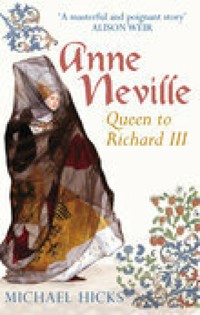
Anne Neville was queen to England's most notorious king, Richard III. She was immortalised by Shakespeare for the remarkable nature of her marriage, a union which brought together a sorrowing widow with her husband's murderer. Anne's misfortune did not end there. In addition to killing her first husband, Richard also helped kill her father, father-in-law and brother-in-law, imprisoned her mother, and was suspected of poisoning Anne herself. Dying before the age of thirty, Anne Neville packed into her short life incident enough for many adventurous careers, but was often, apparently, the passive instrument of others' evil intentions. This fascinating new biography seeks to tell the story of Anne's life in her own right, and uncovers the real wife of Richard III by charting the remarkable twists and turns of her fraught and ultimately tragic life.
Das E-Book können Sie in Legimi-Apps oder einer beliebigen App lesen, die das folgende Format unterstützen:
Veröffentlichungsjahr: 2011
Ähnliche


















England’s Forgotten Queens
edited by ALISON WEIR
Series Editor
Alison. Weir has published ten books: Britain’s Royal Families, The Six Wives of Henry VIII, The Princes in the Tower, Children of England, Elizabeth the Queen, Eleanor of Aquitaine, Henry VIII: King & Court, Mary Queen of Scots & the Murder of Lord Darnley and Lancaster & York: The War of the Roses and Isabella, She-Wolf of France, Queen of England. She is at present researching for a book on Katherine Swynford and John of Gaunt. Alison Weir’s chief areas of specialism are the Tudor and medieval monarchies. She has researched every English queen from Matilda of Flanders, wife of William the Conqueror, to Elizabeth I, and is committed to promoting the studies of these important women, many of whom have been unjustly sidelined by historians.
Published
Arlene Okerlund, Elizabeth Wydeville: The Slandered Queen Michael Hicks, Anne Neville: Queen to Richard III
Commissioned
Patricia Dark, Matilda: England’s Warrior Queen
MICHAEL HICKS
In memory of my parents G.E.H. and W.M.H.
First published in 2007
The History Press The Mill, Brimscombe Port Stroud, Gloucestershire, GL5 2QGwww.thehistorypress.co.uk
This ebook edition first published in 2011
All rights reserved © Michael Hicks, 2007, 2011
The right of Michael Hicks, to be identified as the Author of this work has been asserted in accordance with the Copyrights, Designs and Patents Act 1988.
This ebook is copyright material and must not be copied, reproduced, transferred, distributed, leased, licensed or publicly performed or used in any way except as specifically permitted in writing by the publishers, as allowed under the terms and conditions under which it was purchased or as strictly permitted by applicable copyright law. Any unauthorised distribution or use of this text may be a direct infringement of the author’s and publisher’s rights, and those responsible may be liable in law accordingly.
EPUB ISBN 978 0 7524 6887 7MOBI ISBN 978 0 7524 6888 4
Original typesetting by The History Press
Contents
Foreword
Preface
1 Why Study Anne Neville?
2 Who Was Anne Neville?
3 Her Father’s Daughter 1469–71
4 Between Princes 1471–5
5 Her Husband’s Wife 1475–83
6 Her King’s Consort 1483–5
7 Past Her Sell-By Date
8 Epilogue
Abbreviations
Notes
Select Bibliography
Foreword
Michael Hicks’ excellent reputation as a leading expert on late medieval England has long been established. Now he returns to the fifteenth century, with a fascinating and authoritative study of Anne Neville, daughter of Warwick the Kingmaker and queen consort of Richard III, the first full-length biography of this much-neglected woman, which has been years in preparation and will undoubtedly be the standard life for a long time to come.
Unlike other queens of the period, Anne’s existence is poorly documented, but from the few fragments of information that have come down to us, Professor Hicks has crafted an intriguing, lively and often poignant story, rich in detail and based on wide-ranging research and an unparalleled and extensive knowledge of the period. This is no romantic tale – unlike the only previous account of Anne Neville, which was written by Agnes Strickland in the 1850s in her Lives of the Queens of England – but a realistic and convincing portrayal that offers new insights into the controversies that overshadowed Anne’s existence, and accords her her proper place in the world in which she lived. For Anne Neville was a very important personage in her own time, and her life was closely entwined with the history of England itself.
Most compelling of all is Professor Hicks’ depiction of Anne’s marriage to the controversial and enigmatic Richard, Duke of Gloucester, later Richard III, a union fraught with difficulties, and which was to end in tragedy. Discarding all the popular theories that have gained currency in recent years, he presents a masterful and tantalising assessment of the relations between the two, and reveals startling new evidence that touches the very essence of their marriage.
When writing a medieval biography, it is often difficult to gain an impression of what one’s subject was actually like, yet despite Professor Hicks’ entirely justified protestations that there is much that we can never know about Anne Neville, this absorbing biography has nevertheless left me with a strong impression of a real flesh-and-blood woman, and I have no doubt that it will appeal not only to scholars of the period, but also to the legions of people who are interested in Richard III and his times. I am privileged to be associated with such a book.
Alison Weir
Preface
Anne Neville is the most obscure of England’s postconquest queens and, many would argue, deservedly so. I did not select her as one of the four out of twelve late medieval queens for a biography in my Who’s Who in Late Medieval England in 1991. Even amongst Joanna Laynesmith’s prize-winning Last Medieval Queens, much less was said of her than about Margaret of Anjou, Elizabeth Wydeville or Elizabeth of York. My previous books on Anne’s father, Warwick the Kingmaker, her husband, Richard III, her brothers-in-law, False Fleeting Perjur’d Clarence and Edward IV, and her nephew, Edward V, who interacted with Anne at many points, demonstrated conclusively the absence of any unexploited caches of records and the sparseness of information available today. So did my brief life of her for the Oxford Dictionary of National Biography. As Richard III is much the most popular of late medieval English kings, however, there is much more demand for a biography of Anne than the other queens. When Jonathan Reeve, once again, proposed a book on Anne Neville, I said, with regret, that it was impossible. ‘That’ (I paraphrase) ‘is what you said last time over Edward V’ was his response. And so I agreed to write this book. Preparing a synopsis revealed some possibilities in the topic. Writing it has revealed much more. Revisiting such topics as the contractfor Anne’s first marriage, Richard’s proposal to marry his niece and the Warwick inheritance dispute from another angle has enabled more to be extracted from the sources, more implications to be recognised and explored, and our understanding of the era, the principal characters, and their interactions to be enriched. That is one advantage of biography and, for me, the main point of the genre. Although not necessarily capturing the essence of these topics, this biography does bring together everything that is known about Anne, casts light both on her successive predicaments and on her times, and does significantly advance historical understanding of some of the key individuals, issues, and events. Thank you very much, Jonathan, once again.
Anne received a girl’s education, grew up into a lady, married twice, was widowed, became a princess, duchess and queen, and spent her whole life in the grip of the Wars of the Roses, so this book draws repeatedly on historians of each of these separate fields. Her study is a by-product of those of her father Warwick the Kingmaker, brother-in-law Clarence, and husband Richard III. The life of Richard III (and hence his consort)is not merely an area of controversy but a co-operative enterprise, in which extra bits of information and perceptions are being constantly added by many interested parties. Hence the prominence of references to The Ricardian, journal of the Richard III Society, which has been constantly consulted, even though relatively few such items have demanded a place in the bibliographical essay. Like all other operators in this field, I gratefully acknowledge my debt first to Alan Sutton and more recently to the Society and the Richard III and Yorkist Trust, which have made so many sources available in modern editions. The contributions of Peter Hammond, Anne Sutton, and Livia Visser-Fuchs cannot easily be overstated. Just in the nick of time, Peter Hammond and Geoffrey Wheeler kindly drew my attention to Peter D. Clarke’s important article on ‘English Royal Marriages and the Papal Penitentiary in the Fifteenth Century’in English Historical Review cxx (2005). This article proves both that Anne Neville did have a dispensation to marry Richard III and, unwittingly, that this dispensation was inadequate – and thus that their marriage (as I had already deduced) was never valid. I gratefully acknowledge the guidance and stimulus of the late Charles Ross, who first introduced me to the Wars of the Roses, and the influence among so many others of Ralph Griffiths, Rosemary Horrox and Tony Pollard. Researching and writing books inevitably takes place out of term and out of what ought to be family time: I gratefully acknowledge the forbearance of my wife and my now adult children.
All quotations have been rendered into modern English and all places of publication are London unless otherwise stated.
University of Winchester, September 2005
CHAPTER ONE
Why Study Anne Neville?
SHAKESPEARE’S LADY ANNE
Was ever woman in this humour wooed?
Was ever woman in this humour won?1
The woman was Anne Neville, the wooer Richard Duke of Gloucester, and the occasion the funeral in 1471 of Anne’s father-in-law King Henry VI, whom Richard had slain. The immediate sequels were Anne’s second marriage to Richard, later to become Richard III. Hence in due course Anne was to accede as Richard’s queen. Through Richard’s speech and throughout this whole celebrated scene, Shakespeare made his Lady Anne into one of the best known figures in history, albeit – like the Princes in the Tower – seldom remembered by name. Sir Laurence Olivier and Claire Bloom brought them to millions through play and film and are still doing so today.
Richard’s speech encapsulates the paradox at the centre of Anne’s life that Shakespeare exploited to the full. It immediately follows after the opening soliloquy, in which Duke Richard reveals what a malicious and dissembling villain he was and that the throne of England was his object. Richard boasts despicably that he had already slain both of the key Lancastrians, King Henry VI (1422–61, Anne’s father-in-law) and his son Prince Edward of Lancaster (d.1471, Anne’s husband), and also Richard, Earl of Warwick, the Kingmaker (d.1471, Anne’s father). Richard states his intention to eliminate his own elder brother George, Duke of Clarence (d.1478). He looks forward hopefully to the natural death of his own eldest brother, King Edward IV (1461–83). Since Anne Neville was the daughter of Warwick, the wife (now widow) of Edward of Lancaster, and the daughter-in-law of Henry VI, Richard admitted that she had every reason to hate him, quite apart from the twisted body that in a politically incorrect age disadvantaged him in courtship. Shakespeare did not bring into his play any of the material issues that we know about today, issues which counted for more at the time, and may well have explained Richard’s actions. Instead he dealt solely – and perhaps anachronistically – in terms of the romantic love that we take for granted today, a presumption that makes it hard for us (and harder for his intended audience) to imagine a more improbable match-making. Moreover, it was a courtship conducted over the corpse of Henry VI, the strongest possible reminder of Richard’s crimes, whose funeral cortège, led by Lady Anne, Duke Richard had intercepted and arbitrarily interrupted.
Lady Anne preceded the corpse, lamenting eloquently the deaths of her loved ones and bursting out into curses against he – Richard – who was responsible.
O, cursed be the hand that made these holes! Cursed the heart that had the heart to do it! Cursed the blood that let this blood from hence!
Let the curses fall from the father onto his son and onto his wife! Let any son born to the murderer be premature, physically crippled and affright his mother, and be a source of unhappiness to him! May the murderer’s wife suffer more sorrow than did Lady Anne herself at the death of Edward of Lancaster! If ever uttered, such curses, of course, should have fallen on Lady Anne herself. They did not, for Lady Anne was no prophet – Richard’s son was not to be crippled and Richard’s wife did not outlive him – but certainly Shakespeare’s Lady Anne at this point perceived Richard to be every bit as villainous as he actually proved to be. Her mood, obviously, was unpromising for any suitor, least of all her husband’s murderer. There follows one of Shakespeare’s most brilliant and witty exchanges of repartee between the duke and the widow. Lady Anne’s reaction to Richard’s murder of King Henry was a mixture of shock, loathing and contempt, in which she upbraided him for his ‘heinous deeds’, ‘homicide’, ‘butcheries’, and ‘foul deformity’, stated that he knew ‘no law of God’ and was thus inferior to the irrational beasts, and denounced him as ‘a hedgehog’, ‘fiend’, a ‘fouler toad’ and ‘even foul devil’. In a keen exchange of wits, Richard deflected her insults or excused them, landed a succession of skilful compliments and put his case, to which, eventually, the lady succumbed. (Shakespeare portrays Lady Anne throughout as a mature woman: doubtless he was quite unaware that she was only a susceptible fourteen).
Lady Anne was the trophy of what was a truly virtuoso display, as Richard admitted to himself.
Was ever woman in such a humour wooed? Was ever woman in such a humour won? I’ll have her; but I will not keep her long.
Shakespeare of course knew what was to follow twelve years later: a time span made to appear much shorter by his play.
What? I, that kill’d her husband and her father, To take her in her heart’s extremest hate, With curses in her mouth, tears in her eyes, The bleeding witness of her hatred by, Having God, her conscience, and these bars against me, And I no friends to back my suit at all, But the plain devil and dissembling looks? And yet to win her, – all the world to nothing! Ha!
It is the medieval equivalent of the modern goal-scorer’s punch to the sky. It was ‘not so much for love, as for another secret close intent’, undisclosed, that Shakespeare’s Richard married Shakespeare’s Lady Anne.
For Lady Anne had sex appeal. Richard lauds ‘your beauty’ and ‘sweet bosom’ and eagerly anticipates joint occupancy of her bedchamber and her bed: Lady Anne was no virgin. Addressing her as his ‘sweet saint’, ‘heavenly face’, and ‘divine perfection of a woman’, Richard certainly presents her in the most attractive light, which her passion, intelligence and wit, and articulacy strongly reinforces. Yet she was too easily persuaded – for the harsh facts were, after all, facts. She was out-argued and lost out to the stronger personality and reveals, surely, a frailty both of purpose and of morality: provided, of course, that the events and their contexts were as Shakespeare portrayed them.2
So, too, Lady Anne accepted Richard’s accession. As devoted a subject to the young Edward V as his own mother and grandmother, she (now Duchess of Gloucester) is on her way to visit the young boy in the Tower when her way is barred by order of the king – a king who proved to be not Edward V, but her husband Richard III. Evidently Anne had not been consulted. She was not complicit at all in Richard’s crime, the illegal usurpation of the crown. Nor indeed did she carry much weight in her husband’s illicit regime. She was not able even as the king’s wife to secure access to the princes. Receiving a summons to be crowned, she exclaimed:
Despiteful tidings. O unpleasing news!
She was remorseful and regretful that she had ever married him. Though disapproving of the usurpation, she feebly succumbed despite her sharp misgivings.
Anointed let me be with deadly venom And die ere men can say ‘God save the queen’.3
That was indeed prophetic! For Queen Anne quickly fell mortally sick, which Richard eagerly anticipated, so that he could marry his niece Elizabeth of York, sister of the by-now murdered Princes in the Tower.
I must be married to my brother’s daughter, Or else my kingdom stands on brittle glass; - Murder her brothers and then marry her! Uncertain way of gain! But I am in So far in blood that sin will pluck on sin; Tear falling pity dwells not in this way.
In a repeat exchange of crisp repartee, Richard persuaded the initially hostile Elizabeth, queen to Edward IV and mother to the princes and Princess Elizabeth, to put to her his case.4 To Shakespeare’s thinking, therefore, Anne died irrelevant, a passive instrument who had served her purpose and had passed her sell-by date, just as much Richard’s victim as were his brother of Clarence, his nephews the princes, or his cousin of Buckingham. The victory over Richard in 1485 at Bosworth of Henry VII was Anne’s posthumous victory too.
The wooing scene is wholly Shakespeare’s invention. There is nothing about the courtship in the History of Richard III of Sir Thomas More or the English History of Polydore Vergil, which are Shakespeare’s ultimate sources of information. The playwright seized on the remarkable paradox that Richard III, whom Hall’s Chronicle presented as Edward of Lancaster’s murderer,5 was to marry his widow. Richard certainly fought in the army that slew Warwick and today appears quite probably to have participated in the deaths of Henry VI, Edward of Lancaster, and indeed Clarence. Yet there was nothing discreditable or blameworthy about such actions. Always he was a secondary player, a follower rather than an initiator, authorised and justified by the command of King Edward IV, who alone was answerable before God for such actions. If Richard killed Warwick and Edward of Lancaster in battle or afterwards, his conduct was acceptable at the time and indeed legitimate in terms of the laws of war and military honour. All four were traitors against his king, therefore deserving of death, to which both Henry VI and Clarence had been sentenced by parliament.6 Henry VI was actually buried at Chertsey Abbey in Surrey, not at Westminster Abbey where Shakespeare locates his funeral, perhaps summarily and certainly without the publicity and pomp normal for the burials of kings. Nor did the battles and funeral in 1471, and the wooing and marriage around 1472, coincide with the deaths of Clarence in 1478 and King Edward IV in 1483, historically seven and a dozen years later. Shakespeare had, for dramatic reasons, compressed these events. Such telescoping rendered the sequence of events dramatically manageable and heightened the intensity of the drama. Also, incidentally and unintentionally, it juxtaposed the beginning and ending of Anne’s second marriage, and thus highlighted the paradox at the heart of her life.
Like any other writer of his age, Shakespeare was convinced of the wrongfulness of Richard III’s seizure of the crown and of his destruction of the princes. King Richard was a usurper, a tyrant, and a murderer. How then could Anne possibly have believed his claims and gone along with them? Since she did, she had to be presented as a passive victim, albeit adding to the prophecies of destruction that lie ahead. Here imagination, not evidence, reigns. The descent of the play to destruction proceeds too rapidly helter-skelter to allow Anne’s death, Richard’s incestuous plans for his niece, or even the murder of the princes, for all of which he possessed good sources, to be presented on stage. The build-up to the crown presented other villainies in such detail that explicit treatment of those that followed was not required. Shakespeare may also have been understandably reluctant to make too much of a mercifully unfulfilled matrimonial project for the ancestress of the ruling royal house, Elizabeth of York, and the arch-villain himself.
Though incorrect in detail and sometimes indeed depicting what can never have happened, Shakespeare certainly did capture the family character of the Wars of the Roses. Then, as now, most murders occur within the family: besides fratricide, most homicides, regicides, and infanticides were perpetrated by relations of the victim. In such a context, Shakespeare was right to perceive the necessity for co-existence, co-operation and even intermarriage amongst former foes, between those wronged and their wrongdoers, all of which Anne Neville’s career so poignantly and repeatedly illustrates.
Shakespeare forged Richard III into one of the theatre’s greatest villains and into one of the worst of history’s kings. Essentially that was what he had extracted from his sources. Sir Thomas More was not at all unusual in perceiving Richard as unnatural, his unnatural life and violent death foreshadowed by an unnatural birth, his inner vice betokened by his twisted body. Most of these elements appeared twenty years before in the History of John Rows, who had known Richard at first hand. For More, Shakespeare and their age, physical disability was not mere misfortune to the sufferer, but an indication of the distorted character that lay within. Richard was a usurper, a tyrant, a murderer of innocents comparable to the biblical King Herod, and a monster. Anne, therefore, was the wife of this usurper, tyrant, murderer and monster, shared her bed with this cripple and her private life with this villain, tyrant and monster. What this meant in practice even Shakespeare could not conceive. He depicted a Lady Anne who had entered into her marriage with Richard with her eyes open, but was seduced by his charm and way with words, and who came bitterly to regret their liaison. Thus he presents Anne Neville as just another of Richard’s victims. This was the ‘tradition [that] declares she abhorred’ Richard’s crimes that was still current in the 1840s.7
Actually, Shakespeare knew only the half of it. He offers us no access to the rest of Anne’s life, much of which is as impenetrable to us as it was to him. Anne Neville (1456–85) was the consort of one of the most short-lived of English medieval kings. She had reigned for only twenty-one months: less than any English queen since the Norman Conquest. Her only son, whilst still a child, predeceased her. Her kingly husband was to lose his throne. Defeated and disgraced, notorious in his own lifetime as a usurper, tyrant, and slayer of the princes,8 for half a millennium Richard has been numbered amongst the most wicked of medieval kings, into whose character and motivation no further exploration or perception was required. If Queen Anne was his victim or his instrument, we cannot perceive it in the evidence we have. If she was his partner or accomplice, it can only be by inference, for actually she is quite obscure. We know as little about her as any of our medieval queens and much less than most of them. If Perkin Warbeck and Edward V are dubious candidates for biography, why should historians bother with a consort who appears to have done nothing independently or of note and is frankly unknown?
Yet Anne was engaged in great events – the Wars of the Roses of 1455–85 – and lived out her whole life amongst them. Both a victim and a victor, she was an important participant, who had her own decisions to make and whose status gave her behaviour a special significance. That we can seldom divine her conduct does not reduce its significance. Her interactions with such key actors as her father and husbands really mattered. Even a ‘pawn in politics’ deserves attention.‘Tacit acceptance’ of Richard’s crimes was a decision. Even passivity, acquiescence, or deference to the men in her life is revealing. For Anne should not be perceived just as an individual. She also represents a type of person and progressed through a series of roles or stereotypes during the twenty-eight short years of her life. There are models to which she conformed and from which she diverged, and these offer us access both to Anne herself and to her time. Moreover, her life illustrates not just well-worn topics such as the critical importance of lineage, inheritance, marriage and gender stereotypes within her era, but also others, less often examined, which underpinned, conditioned and perhaps determined public opinion and hence on occasion had an impact on political events.
As far as we know, Anne did not have her portrait painted. Certainly none survives, unlike those of her husband, Edward IV’s queen Elizabeth Wydeville, and all subsequent queens. There are several stylised images of Anne Neville, in the Beauchamp Pageant, Rows Rolls, and Salisbury Roll as a queen, or in a lost stained glass window at Skipton-in-Craven (Yorks.),9 but these are not realistic or representative of reality and probably tell us little if anything of her actual physical appearance. Was she tall, short, fat or thin? All we do know is that she was like her niece Elizabeth of York in build and complexion and that they probably fitted the same clothes:10 that Queen Anne, at twenty-eight, after at least one pregnancy, was of similar height, build, and measurements as a girl of eighteen. Later in life, after several pregnancies, Elizabeth of York appears somewhat stolid in her portrait, which depicts her aged thirtyseven – the date of her death – or less. Elizabeth is portrayed at Canterbury Cathedral in glass with flowing golden tresses. That was a contemporary ideal that was applied to both ladies and to Elizabeth’s own mother in illuminations, but which may nevertheless be telling us the truth. It is best therefore to imagine Anne Neville as an English rose – a slim blonde, so Laynesmith suggests,11 – and probably unremarkable.
Anne has no monument. Her tomb at Westminster Abbey is marked only by a modern brass and archaeology would be required to detect it.12 We do not know how King Richard intended to mark her resting place; nor indeed can we know whether Westminster was actually destined to remain her resting place, rather than – for instance – York Minster, where, it has been speculated, Richard hoped to be interred himself. After her death – or, at least, by five months after her death, when her husband was destroyed – there was nobody who cared enough about her memory to commission even a modest tomb. They may have been afraid of associating themselves too closely with the disgraced usurper. Henry VII himself, who did provide honourable interment after an interval for King Richard, failed to do the same for Queen Anne. Because Richard III left no heir to continue his memory, no cause to be continued, and attracted no historian in a position to speak out for him, so Anne, too, has been forgotten. Glimpses of her are provided by the Crowland Continuator and by the cantarist John Rows, but neither can be said to have known her in person – as opposed to her rank and pedigree – and what they have recorded for us can be counted in a few sentences.13 Yet there was much more than this to Anne and more, fortunately, can be recaptured and reconstituted.
We can never know Anne Neville the individual as well as, for instance, Margery Kempe or Margaret Paston, whose autobiography and correspondence survive, or even Alice Bryene or Margaret Hungerford, whose household accounts or pious dispositions expose much about their everyday life or inner thoughts. Yet historians cannot confine themselves to the best documented individuals in the past. That would be elitist and sexist, would rule all but a tiny handful of unrepresentative individuals out of historical study, and would render history impoverished and limited indeed. Anne is capable of being studied. Moreover she is worth studying. And finally, because of who she was and especially because of who her husband was, many historians and many ordinary people today want to know about her – to know whatever there is to be known. That is the justification for this book.
WOMAN, LADY AND QUEEN
Anne, of course, was a woman. Historians used to suppose that there could be no history of women, especially medieval women, and certainly none that was worth the recounting. Initially, perhaps, this was because historians (especially male historians) had no wish to write about members of the other sex. They subscribed to the presumption that history was about politics, in which women have traditionally played little part. Women’s failure to participate in what really mattered in the past meant that women themselves were unhistorical and unworthy of the historian’s attention. It is certainly true that there is relatively little evidence relating to women in the conventional historical sources that deal with high politics. Women were, of course, everywhere in the past, as numerous if not more numerous than the men, sharing their upbringings, their adult lives, social and economic activities, their households and their beds, conceiving, bearing and bringing up each future generation. Women’s presence en masse cannot be denied. And new generations of historians, not necessarily themselves women, have decided that these other aspects of the past and women themselves are as worthy of research as the most eminent of politicians. Moreover, they have demonstrated triumphantly that if one wishes to know about women, then the appropriate sources and techniques to do so can be found. There are now relative riches published in this field.14 Anne Neville played many roles in her short life and can be perceived in all these contexts.
Of course women do pose further problems to the historian that relate to their inferior status and restricted opportunities. In a patriarchal society which was becoming more patriarchal, according to Goldberg and as enjoined by St Paul, women were inferior and rightly subordinate to men.15 No matter how active and strong in character, first as spinsters and then as wives, they were obscured in the sources by their menfolk, who made the formal decisions for them, held their property, and represented them in politics. It was only as widows that women could create their own records and emerge into the light. We do know about many late medieval widows, aristocratic or burgher. Yet widows are hardly representative. Some widows admittedly were young, but most were not, and their study by definition cannot reveal them as spinsters, wives, nor during their reproductive years. Besides, it is only certain aspects of their lives, in particular their piety, that are usually illuminated. Even the best known widows are obscure. They suffer the disadvantages of all the subjects of medieval biography, that we lack the revealing sources of later eras, and that we cannot really grapple with their personalities. Yet women can be categorised as recognisable types, whose characteristics can be deduced rather than observed. Anne, as we shall see, passes through several such types.




