


Erhalten Sie Zugang zu diesem und mehr als 300000 Büchern ab EUR 5,99 monatlich.
- Herausgeber: Bookmundo
- Kategorie: Sachliteratur, Reportagen, Biografien
- Sprache: Englisch
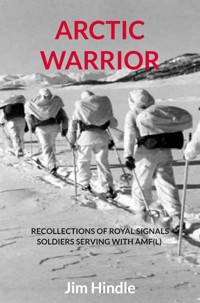
The years from 1960 until 1980 were probably the height of the 'Cold War' between the USSR and the Western nations, divided by Churchill's famous 'Iron Curtain'. The threat to world peace felt real and the West, in the form of NATO, needed a high-profile quick reaction force to address this threat to any NATO country with a common border with the USSR. The result was the formation, in 1960 of a new Force, the Allied Command Europe (ACE) Multinational Force, Land or AMF(L). In 1967, the Royal Corps of Signals added its first permanent unit to this force and this commitment continued until the disbandment of AMF(L) in 2002. Becoming an Arctic Warrior required each man to undertake specialist survival and winter warfare training in order to be able to fight effectively in extreme and inhospitable conditions. This book is a collection of individual soldiers experiences of serving with this force along the common borders with the USSR, predominantly in Arctic Norway, Turkey and Greece.
Sie lesen das E-Book in den Legimi-Apps auf:
Seitenzahl: 555
Veröffentlichungsjahr: 2023
Das E-Book (TTS) können Sie hören im Abo „Legimi Premium” in Legimi-Apps auf:
Ähnliche



















Arctic Warrior
Jim Hindle
Author: Jim Hindle
Coverdesign: Jim Hindle
ISBN: 9789403707044
© Jim Hindle
Introduction
The years from 1960 until 1980 were probably the height of the ‘Cold War’ between the USSR and the Western nations, divided by Churchill’s famous ‘Iron Curtain’. The threat to world peace felt real and the West, in the form of NATO, needed a high-profile quick reaction force to address this threat to any NATO country with a common border with the USSR. The result was the formation, in 1960 of a new Force, the Allied Command Europe (ACE) Multinational Force, Land or AMF(L). In 1967, the Royal Corps of Signals added its first permanent unit to this force and this commitment continued until the disbandment of AMF(L) in 2002.
AMF(L) was intended as a multinational, brigade-sized quick reaction force that could be quickly despatched to any part of ACE's command area - from North Norway, to Germany, to eastern Turkey and Greece to demonstrate the solidarity of the alliance and its ability to resist all forms of aggression from the USSR against any member state. The AMF(L) formation consisted of a Headquarters at Heidelberg, Germany, with combat, combat support and combat service support units assigned to it by several NATO nations. For over four decades AMF(L) supported a wide variety of NATO exercises including frequent deployments to Norway, Turkey, Greece, Denmark and other areas. The most specialist theatre of operations was the frozen arctic waste of Northern Norway, with its common border with the USSR. To survive and fight in this hostile environment, British forces required specialist training in arctic warfare and survival. In 1967 we didn’t have these skills and relied heavily on training provided by Norwegian Army Liaison Officers. All British AMF(L) units were rotated through this winter warfare and survival training in Norway at the start of each year. This was known as Exercise Hardfall. Training was usually based in the area of Voss. In the early years Tvildemoen camp and Bømoen camp were used as bases for training. As the size of the contingent grew over the next few years other accommodation had to be found outside Voss and small hotels and hostels were occupied by single units. Exercise Hardfall was repeated annually until the final years of AMF(L). Soldiers gaining these winter warfare and survival skills became known as ‘Arctic Warriors’ and were widely regarded as specialist troops in this area. Deployments also took place to the NATO Southern flanks of Turkey and Greece with occasional deployments to Germany and Denmark.
This book is principally a collection of individual experiences and recollections of Royal Corps of Signals soldiers who served with AMF(L) over this period, rather than a formal work on AMF(L), and should be read in this context. The main Units involved with AMF(L) were 30 Signal Regiment, 244 Signal Squadron (AS) and 249 Signal Squadron AMF(L).
Producing this book has been a collaboration and I would like to thank Mick Fitzpatrick for allowing me access to the material on his 249 Signal Squadron website, The Wire Magazine and the Royal Signals Journal for allowing me to include articles from both publications and the contributions from those who served with AMF(L) units throughout the period. The views expressed are of the individuals themselves, in their own words, reflecting their personal experiences, which may not reflect official military views at the time.
From the 1960’s to the late 1980’s, most photographs were taken on small, affordable, plastic Instamatic or ‘cassette’ style cameras where the camera came with the film pre-loaded in its own cassette, which you then loaded into your camera. There was little scope for making adjustment to exposures with these simple cameras which were mainly of the ‘point and shoot’ variety. The picture definition quality varied quite a lot. The majority of photos in this book were taken in extreme climates, in operational conditions, by non-professional photographers. Additionally, at that time, photographs tended to be printed out, put into an album or box, and would gradually deteriorate over time. Many of the photographs in this book have been scanned and have lost some of their definition in the process. Photographs with Wire articles are black and white and have been scanned from the online magazine.
The book follows the timeline of AMF(L). Hopefully, this should show how the role, equipment and training methods developed and changed over the years. I hope you enjoy this insight into what was a unique way of service in the Royal Corps of Signals.
The Early Days 1967 to 1976
1967 to 1974 - Jim Hindle - Battalion Signal Troop AMF(L)
Blandford Camp ‘Swan Lines’ in the 1960’s
My first posting in the summer of 1967, after recruit and trade training in Catterick, was to 30th Signal Regiment in Blandford Forum. I travelled by train on a Sunday from Manchester to Salisbury on the ‘Milk’ train, which seemed to stop at every station along the way. In those days duty rail travel was by the most cost effective (cheapest!) route, regardless of how long it took. Going via London or the fastest route was not an option then. I struggled with all my kit, packed into a large army suitcase and army kit bag, from the rail station to the bus station in Salisbury and caught a bus to Blandford Forum, eating my stale, curled up British Rail cheese sandwich. The driver knew where I was going by my kit so dropped me off at a place known as ‘Engineers Corner’ on the way into Blandford Forum. I had to walk the couple of miles alongside fields to the Regimental Lines, known as ‘Swan Lines’. It was a dark evening and I could just make out the dim lights from the guardroom as I approached. The camp consisted of old wooden Spider blocks spaced along a central road running through the small camp. During WW1 it was a training base for the Royal Navy Division, and it was here thatpoet Rupert Brooke, penned his renowned poem ‘The Soldier’. It was also used as a US Army Hospital after D Day in WW2 and had changed little since. It was a depressing, cold and uninviting place.
Typical barrack room in a Spider
After a week in transit, I was allocated to a newly formed Troop and issued with 1958 Pattern Webbing which was a big improvement on the old 1937 pattern – no more ‘blancoing’! I moved out of transit accommodation and into the spider leg that the troop occupied. All the troop, except for a couple of married pads, lived in this sixteen-man room which meant that you were with them twenty-four hours a day. You soon got to know everyone, what their likes and dislikes were, what their good and bad habits were. We bonded very quickly into a tight team and socialised together most of the time. Another benefit of living in a sixteen-man room is that there is always someone to talk to, to annoy or do something with. I remember one guy who joined the troop for a short while straight from Netley. Netley hospital was not far from Southampton and provided military psychological services at that time. He maintained that he was sane and had a ‘certificate’ from Netley to prove it! One night shortly after his arrival we were all woken up abruptly. In the dark, you could just make him out, standing on a 6ft GS table, wearing an army blanket and reciting Shakespeare’s Richard the Third at the top of his voice. We never saw him again after the following day.
The Troop was just forming in 1967 and its role was to provide RCP, Echelon and Liaison Officer communications to the UK Infantry battalion in the multinational force, Allied Command Europe Mobile Force (Land) (AMF(L)). The Troop Cpl was ‘Scouse’ Connor and the Troop Sgt was Fred Mackay, replaced later by Dave Coultish. Both were good men and didn’t take any hassle from the ‘newbies’ in the Troop. At this time, the troop had no vehicles or equipment, so we spent each day in tracksuits road running and undergoing fitness training and practising trade skills in preparation for winter warfare training in Norway in the coming February.
In February 1968 it was time for us to leave for Norway on Exercise Hardfall 2. Luckily, by this time we had been issued with our arctic clothing, which was a combination of UK, Norwegian and Canadian kit. You can see some of this kit in a later Chapter. This was to be my first time flying and my first time out of the UK! We flew from RAF Lyneham on a RAF Argosy cargo plane to Bergen. The Argosy had two tail fins and a main cargo section, where we sat along the sides in net seating. We then travelled by train to Voss, which was an up-market ski resort. The train route took us up over the Norwegian mountains and was a beautiful journey. As we fell-in outside the train station the view was like a picture postcard. It was early evening and there was a thick layer of snow everywhere which sparkled in the glow of the street lighting. You could see your breath crystalize on contact with the cold night air. We were dressed in our full arctic uniform and carrying our Bergen’s on our backs containing all our kit.
RAF Argosy Transport Plane 1968
To the curious looks of the people of Voss, we marched from the station, through Voss town and on to Tvildemoen Camp, around two miles outside Voss, where we were to be based for the next three weeks. During this time, we were to be trained in infantry tactics and survival techniques in a hostile winter environment.
Without vehicles, we moved everywhere on snowshoes pulling Pulks, which are a style of military toboggan for carrying equipment cross country on snow. It wasn’t until the following year that we were issued our standard NATO Planks (ski’s) and started to learn to ski.
In camp we lived in Norwegian bell tents which had a wood burner stove in the centre to keep the tent warm. During the night we had to take shifts on Fire Watch and keep the fire going until morning. There were few facilities in the camp. Mobile showers visited once a week and a small NAAFI had been set up in one of the buildings which also doubled up as a cookhouse for meals.
Living in Norwegian Tents
On my first visit to the cookhouse I thought that I recognised the cook behind the serving counter. It turned out that we had both been in the same year in the same senior school. What a small world! When we were out training, we slept in lightweight Norwegian tents and cooked on 2 burner stoves fuelled by naphthalene, a liquid fuel with a very low freezing point. For water we would melt down snow using the pressure cooker. It takes a lot of snow to make enough water for six men, so we used our fresh water sparingly.
The famous ‘Tennant Girls’. It certainly gave us something to concentrate on at the NAAFI and on board the LSL’s, having our two can daily ration!
The pressure cooker was a great piece of kit which saved lots of time and effort. We had to learn new techniques. Selecting an overnight camp place, pulling our pulk to the site, sending someone back to obliterate our tracks using branches cut from a fir tree, marking out the tent base by holding out a ski pole and turning 360 degrees to mark out a circle then shovelling out all the snow down to the hard ground or hard ice. Three men would put up the tent while others marked out a perimeter security track and mark out the naphthalene store and ‘yellow ice’ area with ski sticks so that we could find them if it snowed. The ‘yellow ice’ area was where you went to the toilet. Hence the phrase – ‘never eat yellow ice!!’. Then it was down to sorting kit out in the tent. Blowing up the airbeds and lighting the stove. Melting snow and getting a meal on the stove was next while the first person went ‘on stag’ patrolling around the perimeter track, looking for any signs of footprints coming into the area. Stags lasted an hour outside followed by an hour on fire watch inside, watching the stove during the night. We got into the routine of washing and shaving at night using limited water. Then it was into our sleeping bags, putting your damp socks into your bag with you and your DMS boots between the two bags to stop them from freezing up. At this time, we were issued with standard rations, either 24-hour packs or 4-man packs.
We were also issued an ‘Arctic Supplement’ which consisted of sachets of muesli, packets of nuts and raisins, extra sugar, Dextrose tablets and chocolate bars. The idea was that you would use these to graze on through the day to help keep your calorie intake up. Some of us brought blocks of Kendal Mint cake with us as we were used to eating that when tabbing in the Lake District. During the night the guy on fire watch would melt snow to make hot water for our flasks so that we could have a hot drink next day without having to unpack the cooker and other kit.
Cpl’s Bob Geddes and Ray Cripps checking out the Voss slopes 1968
In the morning it would be an early rise to eat and then pack up everything back into our bergens and pulk ready for the off. One thing that we did learn is that it is very difficult to move tactically pulling a pulk in the open! We also learned very quickly to use the layer system to keep cool and stop overheating, especially when pulling the pulk. Our Norwegian officer also showed us how to dig safe snow holes and build igloo’s so that we could stay out overnight without tentage. The digging was hot work and we found that we had to dig several snow holes before we got our technique right, leaving enough depth of snow to prevent the roof from caving in. Constructing the ‘cold trap’ was also critical so that you didn’t lose warm air. You also had to make sure that there was ventilation so that you didn’t run out of air during the night. We did this by pushing a ski pole through a hole in the roof and would have to move it around every hour or so to keep the vent open. This also showed others where your snowhole was and stopped further snowfall from blocking the vent.
Our two-week infantry training culminated with us carrying out a full night attack, on snowshoes, carrying all kit and weapons. We were glad when that was over but also felt confident in our ability to survive and fight in the Arctic winter. This training became known as Exercise Hardfall.
Battalion Troop digging snow holes - Andy Baron at the front, Dave Parry digging
The following is an article that I wrote for ‘The Wire’ in 1968:
AMF (L) Signal Troop - a report on Winter Warfare Training Norway (Hindle, 1968)
Members of the Regiment do not always head for the tropics, as the following article, written by Signalman Hindle shows: Last November saw the resurrection of AMF(L) Signal Troop, here at Blandford, as part of 2 Squadron. The Troop provides rear-link and liaison communications for 1st Bn Somerset and Cornwall Light Infantry (SCLI) (the present UK AMF(L) Battalion) and has the Northern flank of NATO as its major stamping ground. Initial training, mainly concentrated on getting the Troop fit, ready for the winter warfare exercises, whilst Sergeant Mackey and two Corporals attended a winter warfare course run by 1 SCLI. In January, the Troop was fitted out with its winter warfare clothing, most of which had just arrived from Canada and Norway. Then members of the Troop went on an internal refresher driving course for three weeks, whilst the remainder continued with fitness and trade training. During the last three weeks of February the whole Troop went on Exercise "Hard Fall II” in Norway. The exercise was for sub-unit training in winter warfare and was held at Voss which is some 50 miles inland from Bergen. The Troop Commander, Lieutenant Byrom, was fortunate enough to have been in Norway for the three weeks prior to the Troop's arrival and so training began immediately. Lieutenant Bengstom, of the Royal Norwegian Army, was assigned to the Troop as its instructor, and was virtually in command for the first two weeks of training. This initial training was mainly on basic Infantry subjects and we began by learning to pack sledges, erect tent, use the cooking equipment and walk on snowshoes (we found we had muscles we never knew we had). This part of the training culminated in a five-day exercise, which included all that had been practised previously, plus field-firing and night-patrolling in temperatures of down to -30 C. Thanks to 1 SCLI lending the Troop radios and vehicles, the last week was spent on a communications exercise in which each vehicle travelled 400 miles on snow or ice-covered roads. The views were always marvellous; communications somewhat difficult, and all agreed that both snow chains and studded tyres were needed. Only one vehicle went off the road (unfortunately being driven at the time by our only 'professional' driver, our ED, Lance Corporal Cummins), and everyone had cameras out to witness a 3-ton FFR Landrover being rescued by a passing dried fish lorry. Weekends in Voss were spent on the civilian ski-slopes under the watchful eye of Lieutenant Bengstom. Voss is a large civilian ski centre and has its fair share of off-duty attractions and, despite the limitations of having to wear uniform, a few of the Troop found pleasant "extra mural" activities, who they then proceeded to entertain in the NAAFI at duty-free prices. All good things come to an end, however, and we soon found ourselves back in Blandford.
Accommodation at Bømoen camp
The Troop took part in Exercise Hardfall each year thereafter and progressed to using winterised Landover's and BV202E Snow cats, which were all subsequently used in Norway and the Arctic and deployment onto NATO exercises. We tended to use Bømoen Camp as our base but would spend much of our time up on the Hardanger patrolling on skis, living in snow holes, in igloos or driving our snowcats. One piece of information that sticks in my mind is that there are 104 grease nipples on a BV202, which had to be greased every morning using a grease gun!
I remember freezing hands and grease going everywhere. Driving a Volvo cross country was enjoyable when you got used to some of the angles of lean. The sight of virgin snow and the scenery all around you was breath-taking at times and you were relatively warm and comfortable in the cab. The troubles usually started when you came to a halt. Getting out of the cab in the earlier Volvo’s took some time. You had to raise the fold up roof door, stand up onto the seat and climb out. The natural instinct was to just jump down. It was then that you realised the benefit of wide tracks which sat on top of the snow. You quickly found yourself up to your chest in deep snow, eye to eye with the tracks, and had to clamber around to get yourself out and onto more solid snow. Seeing someone do this usually brightened up the crew’s day.
Battalion Troop 1969 - L-R Jim Hindle, Geordie Foster, Don McLennan, Ched Chick, Tony Astle, Bob Geddes, Dave Raybold (kneeling), Phil Pearce, Ray Cripps, John Kelloway, Pete Cole
Up on the Hardanger, Tony Astle, Dave Parry, Jim Hindle, Ric our civvy mate
Traversing on mountain tracks was fraught with danger. At times, especially when it was snowing, you could hardly make out the edges of the tracks and had to make an educated guess. Quite often this would result in you sliding over the edge of the track. Where it was steep, you could end up sliding down the mountainside. I remember this happening one day when the whole of the Volvo slipped off the track and slid down the mountainside. Luckily, we were still in the tree line and eventually came to a stop against a couple of fir trees. I was a bit shaken when I looked down at the drop below and gingerly got out of the drivers cab and down into the deep snow. It took us a few hours to recover the Volvo. Using steel tow wires from the other vehicles, along with the ‘D’ clamps and a pulley around a tree, we were able to slowly drag the Volvo back up to the track and get on our way again.
One of the Troop roles was to provide two Liaison Officer detachments to flanking infantry units from other nations. Each detachment consisted of three troop members who lived alongside these units and integrated with them during the deployments. These were interesting days as we learned a lot about how the other military contingents worked. The Alpini are the Italian Army's specialist mountain infantry. They were classily dressed in ski pants, mountain boots, great fitting jacket and a flamboyant hat with a great feather in it. They were outstanding skiers and looked stylish in whatever kit they were wearing! The Alpini distinguished themselves in combat during World War I and World War II and were well respected mountain troops.
Everyone was keen to get onto the US detachment as that meant better food which was usually fresh, field showers and cigarettes from their ration packs. At their Battalion Headquarters you would usually find a full ‘Chuck’ wagon which seemed to be permanently open for food and coffee. The Belgian ration packs included a pack of 20 Gaulouise cigarettes and a small bottle of brandy, but very little that you could eat! Strangely, our English tea was a very tradable item with the other nationalities as was our main ration meals of chicken curry, steak pudding or ‘babies heads’ as we called them, and apple dumplings. We couldn’t give our tins of Spam away to anyone, not even the Americans!
Jim Hindle and Bo Ridley waiting to load onto the LSL at Marchwood
Italian 'Alpini' Mountain Troops in the early 70’s
We also took part in full AMF(L) deployment exercises in the Arctic circle, both in winter and summer, and usually deployed by Landing Ship Logistic (LSL) Sir Galahad, Sir Lancelot, Sir Tristram or Sir Percival. These were usually three to five-day voyages from Marchwood, complete with all our vehicles and equipment. Sailing by LSL was an experience never to be forgotten. We would drive our vehicles down to Marchwood and await loading. This could often be a long wait! Once cleared to load, we would drive our vehicles into the cavernous hold of the ship, park nose to tail with the other vehicles and then set about shackling our vehicles to the deck to stop them moving about in rough seas.
LSL Sir Galahad (sadly lost in the Falklands War)
By this stage you would be covered in rust and grease from the chains and shackles and have to take your weapons and personal kit off your vehicle as you wouldn’t be allowed back onto the vehicle deck until the boat docked. You were allocated to large dormitories below the water line. These windowless dormitories had lines of bunks three high along each wall with around three feet between each row. You had around two feet from the top of one bunk to the bottom of the one above which meant there was little space to do anything on your bunk other than sleep or read. You also had to stow your kit in the dormitory somehow. Packed like sardines, we had to make ourselves as comfortable as we could. Each morning we had to prepare for ‘Captains Rounds’. This involved cleaning the dormitory, gangways, and galley, including dusting all the myriad of pipework that passed through the ship. Cleaning the ‘Heads’ also had to be done, clearing up other people’s sick wasn’t the nicest job. After breakfast, we would all have to go on deck to our ‘Muster Stations’, wearing lifejackets, while the captain, or a Ships Officer did his rounds.
Typical dormitory below the water line.
This usually took a couple of hours. Standing at our muster stations I can vividly remember the smell of the diesel smoke from the ship’s engines mixed with the smell of paint, disinfectant, and ozone. Along with the motion of the ship, this smell made quite a few people queasy. Once the inspection was over, those not feeling too well retreated to their bunks for the rest of the day while the rest played cards, read books, or chatted. The Galley opened around 11am to serve tea from tea urns. The tea was already made up so there was no choice! You would then take your mug out onto the deck to drink as there was little space in the galley to sit down. Meals were served in rotation due to the limited size of the Galley which could seat around fifty people per sitting. The crew of the ship were mostly from the Far East and for the duration of the voyage we were on basic ration entitlement. The food didn’t really stir up your appetite. Boiled white cabbage, boiled potatoes and dubious stew or tough meat was the usual fare of the day, all swimming in water from the vegetables. The greasy breakfast was a sight to behold and sent many a man rushing to the deck to be sick. Experienced travellers would bring extra treats to eat in the dormitory as well as food accumulated from ration packs over time. A lot of people were unable to eat due to being seasick and there was a constant flow of people to the ‘Heads’. In the evenings you could buy a ration of two cans of ‘Tennents’ beer per person. Not everyone felt up to this but those who did could go to the Galley to buy their ration and could watch a film on the overhead TV monitors, providing you could find somewhere to sit. The problem was that with the movement of the ship, the rattling of equipment due to the vibration of the engines and the noise from the wind meant that you couldn’t really hear the soundtrack to the film. We just put up with that in preference to going back down into the bowels of the ship listening to people being sick!
On some voyages the Troop would have to provide ship to shore radio communications for the military contingent on board. This meant that I could spend my time in the ships radio room. The radio room was located directly behind the bridge of the ship and I had access to the antennas via the ladder from the bridge wing. Above the bridge you had to climb the radio masts to get to your antenna which in rough seas was a bit challenging. Standing on the highest part of the ship was invigorating! You had great views of the surrounding seas and had a bird-eye view of the waves breaking on the bow of the ship. The Captain or Duty Officer on the Bridge were usually good to us. They didn’t often have ‘Pongos’ up on the Bridge so they would tell us what they were doing with the ship, what they could see on the radar etc. This place was also my escape from the tedium of Captains Rounds each morning. I would always set up the radio schedules to ensure that we needed to man the radios in the mornings. Sitting in the Radio Room was very pleasant. You could make a brew when you liked and relax at your radio station. When the sea was a little rough you certainly felt the movement of the ship a lot more, being so high up. It wasn’t a place for those who got seasick very easily, so I never had much competition for the job.
Good view of the Bridge and Antenna masts on the LSL
Inside the Arctic Circle in Northern Norway in winter meant almost twenty-four-hour darkness and in summer, almost twenty-four hours daylight. Both extremes took some adjusting to. In winter, map reading was difficult in the darkness as it was difficult to make out features that you could see on the map, especially in heavy snow conditions. In both winter and summer your senses had to adjust to living in almost permanent darkness or daylight. You had to be strict about your sleep patterns otherwise your body clock became badly disrupted. The infantry has long adopted ‘stand to’ at dawn and dusk when deployed in the field. This is to ensure that your defences are manned in the event of an enemy attack at that time.
Early days skijoring
Being with the infantry, we still had to ‘stand to’ at dawn and dusk regardless of the fact that it was either dark or light. This helped to maintain a rhythm of routine in the day rather than for any tactical purposes. ‘Stand to’ in a snow trench, at six in the morning in mid-winter in the arctic, with temperatures being around -20c to -30c was not too popular as you can imagine. Watching the Aurora Borealis, or Northern Lights did provide a distraction while you were trying to keep warm, waiting for the RSM to do his rounds and stand you down.
Battalion Troop 1971: L-R (-), Tony Astle, Chris Woof, Sandy McLean, Ian Ireland, Slick Sharpe, Jim Hindle
In February 1969, ‘A’ Company the Coldstream Guards, were to go to Alberta in Canada for six weeks to train with the Canadian Army. Our Troop provided a radio detachment to provide rear link communications back to the Coldstream’s home base of Tidworth in the UK. The detachment chosen consisted of Cpl Cyril Soaris, Andy McBain and myself. We flew from Brize Norton out to Edmonton Alberta, via Nova Scotia, by Hercules transport aircraft and then by road down to CFB Wainwright in Alberta, which was a Canadian Forces Training Camp on the vast Alberta prairie. Shortly after our arrival we deployed out on a full field exercise with the Coldstream Guards and Princess Patricia’s Canadian Light Infantry. The training area was vast and wild. We were in the middle of an extreme Canadian winter and temperatures dropped at times to well below -40c. The snow was shimmering powder which didn’t melt or thaw. Your nostrils and eyebrows froze up with ice very quickly and your cheeks and nose froze very quickly if you didn’t pay attention. Luckily, we were arctic trained so knew how to look after ourselves in those kinds of temperatures. We had a ‘buddy-buddy’ system where you each checked each other every four or five minutes for signs of frostbite on exposed areas of the skin. At the end of the training period, we were taken on a visit to Banff to see the Indian Fort Museum which was a great experience. The views over the Rockies were a sight to be seen. We also went on a visit to Edmonton where we were given a tour of the city by members of the Canadian Legion and were treated very well, especially as we were in full No 2 dress uniform. We were entertained in the Canadian Legion Club in Edmonton and were very well looked after.
In the summer of 1969 AMF(L) deployed on a full NATO exercise to Denmark. Again, this was to practise defending a NATO country against an aggressor. This was a summer exercise, so we took our Landrovers by sea to Denmark. On this exercise I was on a detachment providing communications for a Danish Liaison Officer. This helped a lot travelling around Denmark as he obviously knew where he wanted to go and didn’t have any language problems. This was when I first tasted Danish pastries. He would go to a local town each morning and find a baker to buy pastries from. I’m not sure that he took the exercise very seriously. On completion of the exercise the Troop had some down time in Copenhagen, where we stayed overnight in a Danish Army barracks. We spent a couple of days touring around Copenhagen and Tivoli Gardens. As we were in No 2 Dress, we were a little conspicuous and had to be on our best behaviour. We were well looked after by the other Danish soldiers during our stay.
In November 1969, AMF(L) Force Radio Troop of 80 men was formed under the Command of Captain Ian Crouch. It was to serve HQ AMF(L) using the latest SSB Radios and Winterised 3/4 Ton Land Rovers. In April 1970, AMF(L) Force Radio Troop and AMF(L) Battalion Signal Troop amalgamated to form 3 Squadron 30 Signal Regiment, under the Command of Captain Ian Crouch.
Battalion Troop Norway 1972: R-L Jim Hindle, Dave Parry, Tony Astle, Stretch Stenner, Andy Baron, Taff Ormond, Colin Bland, Dave Leggett, Tom Wilkinson
Colin Bland joined Battalion Troop as a Staff Sergeant (YofS) Troop OC in 1970. Colin came to us from 22 SAS and he soon had us developing our fitness and soldiering skills nearer to the standard that he had been used to. We would spend a lot of our time running and tabbing out on Salisbury Plain, living in bashers and doing lots of map reading and climbing a lot of hills! Each year, in preparation for the Winter deployment to Norway, Colin would take the Troop for ten days in Wales followed by ten days in The Lakes training on the hills and mountains ready for Norway. We would do this in early January and sleep out under a basher, which was a simple poncho sheet hung over a central rope. We would carry all our kit in our Bergens and would feed ourselves with the standard army ration packs using hexamine cookers. In Wales we focused on the Welsh 3000 Competition route which started from the top of Snowden and covered all the peaks over 3,000 feet. This involved a lot of climbing up from sea level then back down again before climbing up the next peak. The route would usually be Snowden summit down the Knife Edge down to Crib Gogh then running down the scree slopes to sea level at Llanberis. Climb up to Elidir Fawr and onto Y Garn then to Glyder Fawr and Glyder Fach then over the Tryfan mountain and down Devil’s Kitchen to the road below at sea level. We would do this several times during our stay, sometimes in reverse. Coming down Devil’s Kitchen at night was an experience never forgotten. I can also remember putting up my basher at the top of Snowdon on one visit, surrounded by freezing fog which lasted until we eventually decided to move off at 5.30am. It took a while to pack up and get warmed up ready for the run down the Knife Edge that morning.
In Wales we used a small farmers field in Llanberis Pass as our base when we were not out on the mountains. Colin Bland made sure that we had all the luxuries; sleeping in our bashers; drinking water from the stream and cooking our 24-hour rations on a Hexamine cooker. Once we had completed our training in Wales, we would drive up to the Lake District where we used a small basic campsite at Little Langdale as our base. From here we would climb up Bow fell, onto Skafell Pike, over Great End and onto Glaramara and then down Borrowdale Fells to Seathwaite. Again, we would carry all our kit and rations and sleep out under our basher at nights, cooking our rations on a hexamine cooker. The plus side of this part of the trip was that we occasionally got the opportunity to visit the walkers and climbers bar at the ‘Old Dungeon Gill’ hotel for a beer and a warm around the fire on the nights that we were in Little Langdale.
Over the years that we did this training we often formed part of Search and Rescue parties that were assembled to search for walkers or climbers who had gone missing. We were well equipped and trained and fit for this role but were amazed at the lack of equipment and preparedness of some of the people that we searched for. People don’t realise that North Wales and the Lake District in winter are hostile environments that need treating with respect.
Jim Hindle and Ian Ireland in Little Langdale in the Lake District – Another ‘balmy’ day on the mountains ahead
In the autumn of 1970, Bn Troop members joined Force Troop detachments to support their deployment. We deployed by ferry and road to Mertzig in Germany to stay with the German infantry for a couple of weeks. I remember us watching a squad of German conscripts tackling their assault course. They just wandered along, smoking, and chatting and wandered around the obstacles that they didn’t fancy doing. It was then that we noticed that some were wearing hairnets. Apparently if you had long hair (this was the 70’s) you could keep it as long as you wore a hairnet. Can’t understand why this didn’t catch on in the British Army! I remember well the food that we were given in the German cookhouse, weak black tea without milk or sugar, horse meat, sauerkraut, boiled potatoes and for breakfast, cooked meat and bread. Most of us filled up with bratwurst and schnitzel from the local ‘Imbiss’ when we were hungry or broke into our compo rations. Other vehicles and equipment sailed from the UK to Istanbul by LSL. After a couple of weeks in Mertzig we flew to Istanbul with the US Air Force from Mannheim in Germany for a full AMF(L) deployment exercise to the Turkish border area with Bulgaria. The transport aircraft were massive load carriers. We drove our Landrovers and trailers into the cavernous fuselage, lashed down and made ourselves comfortable in the netting seats fixed along the side of the aircraft. This was a noisy, cold, and uncomfortable flight and we were glad to touch down in Istanbul.
Once we had landed, we were rushed off the aircraft and deployed straight out into the field to a holding area as Istanbul had been classed as a Cholera infected area. Our job on this deployment was to show the presence of a NATO force on the Turkish border with Bulgaria, then a Warsaw Pact country. Driving up to the holding area was a bit precarious. It was getting dark and we were all a little tired. What didn’t help was the fact that there was no street lighting and most of the other traffic didn’t have any lights on.
I was amazed to see horses and carts trotting along the road with the driver nonchalantly hanging over the side, holding the reins loosely. He didn’t bat an eyelid as we overtook him. One of our vehicles, which arrived later that night, rounded a bend and ran into the back of a horse and cart killing the horse and injuring the driver. When the Turkish Police arrived, the driver was found guilty and fined on the spot! It was all a bit surreal really.
Holding area next to the water melon field
When we first arrived in the ‘holding up’ area we were told that the adjacent fields were full of water melon and that we were to keep clear. Well, who wouldn’t fancy a nice bit of cold melon as the sun is going down! If this hadn’t been mentioned we probably wouldn’t have noticed but suffice to say there were lots of gaps in the lines of melons the following morning.
During the exercise I decided to park my detachment in a small square overnight and bedded down beside our vehicle. We were up early and stripped down to have a wash and shave only to find us surrounded by the villagers and kids watching us in silence. I was obviously too young and naive to understand how offensive this must have seemed to them.
On 5th June 1970 Princess Anne visited Blandford Camp. Part of her visit included her reviewing detachments from 264 (SAS) Signal Squadron, 216 Parachute Signal Squadron and an AMF(L) detachment. I was nominated to display a Snowcat along with a selection of our arctic equipment under snow camouflage nets. At the end of her visit Princess Anne was to drive my Snowcat a short distance. When she was ready, I helped her up the specially made steps so that she could climb into the cockpit of the Snowcat. She drove for around fifty meters and then I helped her out and down the steps. I was to meet her again some years later and she remembered the experience.
Fovant Badges
One ‘non-operational’ job that the Troop was given was to go down and help clean up the Fovant Badges. This involved weeding out the chalk badges, trimming the outlines and refilling with chalk. When the WW1 broke out, there was a need to find accommodation for the New Army. Thousands of men from all parts of Britain and overseas lived for a while in the area, passed on to the Western Front and returning from it. Many never returned but gave their lives on the battlefields in France. Others died of their wounds in the hospital or from disease. Rows of silent War Graves in Fovant and other nearby churchyards are testimony to their presence. In remembrance of their colleagues, many of the regiments carved replicas of their cap badges into the hillside. Many of these no longer survive, but by the end of WW1 there were some twenty discernible badges. During WWII, the badges became overgrown to disguise landmarks, which might assist enemy aircraft. Weather and time, as well as the effects of grazing cattle, caused decay. It was in the period of 1948-51 that the two Wiltshire regimental badges were cut and in 1970 the Royal Signals badge was added.
Over my time in Battalion Signal Troop, I worked closely with three infantry regiments. The Somerset and Cornwall Light Infantry, The 2nd Bn Coldstream Guards and the Royal Scots (First of Foot). Living and working alongside the infantry really opened my eyes. They were close knit units who didn’t like outsiders and were fiercely proud of their regiments and traditions. The Royal Scots were very physical and aggressive soldiers, recruiting primarily from Glasgow. I remember my first day visiting the Signal Platoon where I was met by the Platoon Colour Sergeant, a big broad man with a broken nose and hands like shovels. Before I got chance to speak, he pinned me against the wall with my feet off the ground and said, “If ye cause any trouble I’ll shak ‘ands wi ye windpipe”. Needless to say, I towed the line! They were hard men who would fight at the drop of a hat and wouldn’t back down to anyone. They were useful to have around when you went out into town! Learning to hold your own with these soldiers taught me a lot.
When I first visited the Coldstream Guards in their barracks in Tidworth, to meet the Signals Platoon, I had to park by the Guardroom as the daily guard mount was underway. I was amazed at how many people were involved. The guard, the Guard Commander and 2i/c Reliefs, the Orderly Sergeant, the Corporal in Waiting, the Orderly Officer and a Drummer-Bugler. The guard mounted to the beat of the drum and bugle calls without any commands. It was a spectacle to see. Behind the guard I could see a soldier dressed in full No2 dress, standing by his bed with all his kit laid out and his personal locker at the side, doors open displaying all his kit! Apparently, he had been picked up on the morning Platoon room inspection for a dirty bedspace and was to ‘Show Bedspace’ on that evenings ‘Show Parade’ during the Guard Mount. It was certainly different to what I had been used to. I quite liked serving with the Guards as you could hear anyone of importance coming well before they could see what you were up to. The noise of their crunching boots travelled quite a distance and their orders were ‘barked’ rather than spoken.
Working directly with the infantry meant that I had to extend my military vocabulary quite quickly. Staff Sergeants in the infantry are called Colour Sergeants and woe betide if you got it wrong. With the Guards, a Lance Sergeant wearing three stripes was equivalent to a corporal, but you had to call him Sergeant! A Corporal wore two stripes but was the equivalent to a Lance Corporal, which didn’t please some of the corporals in the Troop. This was a result of Queen Victoria not wanting to see soldiers wearing one stripe in her Guards Regiments. Again, with the Guards, if you got picked up for anything on a parade or inspection you ‘lost your name’. that meant that your name had been taken down for disciplinary action.
When we were deployed to Battalion Headquarters on exercise, we lived shoulder to shoulder with the HQ Defence Platoon. With the Royal Scots this consisted of the Pipes and Drums Platoon or P&D Pl. There were a lot of characters in the P&D and we had many a laugh with them. Even on exercise, they took their ‘chanters’ with them to practice and it was quite entertaining to listen to them. The drummers carried their drum sticks everywhere and would drum on anything that they could find to the constant irritation of everyone and the annoyance of the RSM! With the Guards, I came across guardsman trained as ‘Tailor’ who would sit cross legged on a bench working by hand on uniforms and could just about tailor anything!
By 1974 I was a Class 1 Radio Telegraphist, Class 3 Data Telegraphist, Crypto trained and held the rank of Corporal. My time in AMF(L) had made me into an experienced, confident, and competent soldier and had given me the inner confidence that comes from surviving in hazardous conditions and meeting physical challenges. I later qualified as a Yeoman of Signals and went on to complete twenty-seven years’ service in the UK, BAOR, Hong Kong and Belize, with time spent in Canada, Brunei, and Nepal, retiring as a Captain. Some of my fondest memories are of my time and experiences in AMF(L) and I’m still in touch with friends that I served alongside.
1968 to 1969 - Phil Pearce - Battalion Signal Troop AMF(L)
After three great years in Minden, I found myself posted back to the UK. Blandford was not too far from Bristol so hopefully able to get home at weekends and see the girlfriend. AMF(L) troop, 30 Signal Regiment was at that time part of 1 Squadron, but I had no idea what the role of the troop was or where we would be deployed.
I found myself part of a small troop, 19 in all, 14 chiefs and 5 Indians. The troop OC was Lt Baines who I had briefly known from 1 Division Signal Regiment in Verden. At that time he had been a corporal Technician, so seeing him in the new position was strange. The troop Sgt, Dave Coultish, was an NCO I remembered from my time at Denbury with the Junior Leaders Regiment Royal Signals. He was a SNCO who worked you hard but you had a lot of play time after. As this was in the October of 1968, the troop had not long returned from an exercise in Thetford with the Somerset and Cornwall Light Infantry (SCLI) and was in the process of winding down before Christmas. This was our last exercise with the SCLI as they handed over to 2nd Bn Coldstream Guards.
The troop was made up of a number of small detachments, based in Landrover FFR, quarter ton and three quarter ton models fitted with C11 R210 HF sets and C42 VHF sets and I found out that the role was to supply comms to the British infanty battalion of AMF(L), which at that time was the 2nd battalion of the Coldstream Guards, based in Tidworth, so we were often on route to them checking out winter warfare kit including white smocks, Mukluks boots, Army planks (ski’s) and snow shoes.
I was a Det Commander and had three members as a crew. If I remember correctly the det consisted of Myself, Jim Hindle and Dave Raybold. Others in the troop at that time, that I can remember were Ray Cripps and John Kelloway who came from Exeter and were both techs, Ched Chick and Bob Geddes. Most days consisted of kit maintenance of one sort or another with not really a lot to do at that time of the year, except of course the customary guard duties.
After the Christmas break it was full speed ahead checking kit and preparing for Ex Hardfall in the late February of 1969. Frequent trips to the Guards in Tidworth to pick up ski’s, winter kit and checking details etc ready for the off. We were, if I remember correctly, due to entrain at Luggershall to go by train to Newcastle and then board the troop ship Sir Galahad (later sunk in the Falklands) for Norway.
The trip North was to say the least very rough, wet and windy with much puking taking place below deck. On the second day at sea we had to go to muster stations, our’s being in the Bow and with the rough weather it wasn’t long before we were all soaking through. I recall the CO of the Coldstream’s complaining to the Captain of the ship that he was taking too long to do his rounds and that troops were suffering from the cold and wet and that a number had to be taken to the sick bay for treatment.
We duly arrived in the port of Bergan in Norway and then by train to Voss, which was to be the troops main base, but a detachment did go to Bardufos further north.
Twildamoen camp was quite small and my memories are mainly of a very icy path up to the tents which caused many a slip, tumble and laugh. Every night we had one person on fire guard in the tent and the hot drink you made on the stove when you had your turn on-stag. Days were taken up with ski practise of one sort or another with cross country trips around the area and the Norwegian Officers instructing us in winter survival, including the cold snow bath to cool down after the trip out, followed of course by a sauna on return to camp.
On one training exercise we went with the Coldstreams up the local mountain and did a 20km cross country ski complete with packs, rifles and kit. Lots of laughs and knackered guys as many had never skied before. To get back down the mountain we had to ski down a steep slope about quarter of a mile to the ski lifts. What a sight it must have been to see all these Coldstream Guardsmen not being able to stop and just falling over at the bottom, with the locals and tourist’s laughing and saying ‘Gee British Ski troops’ (if only they knew the truth).
Battalion Signal Troop 1969 L-R Jim Hindle, Pete Cole, Geordie Foster, Ched Chick, John Kelloway, Bob Geddes, Phil Pearce, Dave Raybold, Ray Cripps, Don McLennan
The return trip to UK was on another LSL but we returned via Marchwood near Southampton. When all our kit had been returned to Tidworth the Troop went out on a Radio Exercise to various locations across the South of England. My detachment was to be based in Cornwall, just in time for the May 1st Helston Floral dance. We managed to talk a farmer into letting us use his barn on a farm outside the town, but I do remember that all three of us had a bottle each of Bacardi which, after getting some coca cola, we drank from our kidney mugs and it seemed to go down very smooth and fast.
During our time in Blandford we had many laughs. Wednesday was ‘pay day’ and the regular three card brag game in the centre barrack room, with much money changing hands. I managed a few games for the rugby team but once I bought a car most weekends were spent off home to Bristol.
John Kelloway had an old Triumph Herald car which was used to take us into Blandford for the pub, otherwise it was a few mile walk down to Blandford Forum and an uphill walk back. He always told us to mind the hole in the floor in the passenger footwell “don’t put your feet through”! I remember him returning one Monday morning with a big dent and damage to his car. He had run into a deer on the way home….. opps.
L-R Rio McMahon, Jim Hindle, Ken Staniland, Phil Pearce - note the tans after the weeks in Cornwall
Summer 1969 came together with the summer exercise which was in Denmark. Having been there a number of times when in Verden with 1 Division Signal Regiment, I was looking forward to it.
We sailed this time from Marchwood and up the English Channel and then through the Keil canal to Denmark, which was a smooth trip and interesting. A lot of the time, the exercise was mainly non tactical so cam netting made a good bed when off duty. The exercise covered an area I had been to before and our job was to provide comms for the Danish Liason Officer. This was quite a nice job and we spent a lot of time touring around Denmark. After the exercise we went to a tented camp the other side from Copenhagen and were put up in 180 lb tents. The second night were had a very bad storm which required us to put the guy ropes onto the tow hitch of our land rovers to keep the tent up. The morning brought more problem in the shape of our troop Sgt who, because he kept getting duties from the RSM, picked on certain members who stayed in camp and one member, no names, pulled a bayonet on the guy and told him in no uncertain terms he had done more than his fair share and go pick on someone else. Nothing further was said. We had a few trips to different places while there and had many a laugh.
The return was not by ship this time but by Hercules into Brize Norton where we were turned over by the Customs, as usual, and many a bloke lost extra fags or drink. One Customs officer took delight in telling us to take our rolled sleeping bags off our bergens and throw them on the floor. As this was a popular place to carry your illicit bottle of spirits there was soon the sound of smashing and the smell of spilt whisky and brandy! In our vehicle, we had spent ages masking taping packets of cigarettes to the underside of the radio table in the back of the landrover. While we were waiting for the Customs Officer to get to us I quickly checked the back of the landrover, only to see that the masking tape holding the packs up had come loose and all the cigarettes were on full view. There wasn’t time to do anything as the Customs officer had arrived. For some reason he didn’t check the back of the landrover at all – our lucky day.
The following brochure and ski route map will give you a taste of what the ski slopes of Voss were like in 1969.
By this time we had been advised that a new Force Radio Troop was being formed. Both troops were moved into 3 Squadron under the new OC, Capt Dickinson. The OC was not allowing guys to go on course or training lest he lost them on return to postings, so with a sad heart I departed for Civi street in October 1969. If I knew then what I know now I would not have left. Certa Cito
1972 To 1976 - Ian (Larry) Little - 244 Signal Squadron (AS)
I was posted to 244 Signal Squadron in August 1972 from the Army Apprentices College in Harrogate. At that time, I was a Signalman, trained as a Radio Telegraphist. Throughout my time in the Corps, spanning 25 years, I was known as Larry, but our civilian population could not understand Larry from Ian so it was easier just to revert back to Ian, though any time I meet any military colleagues I would be called Larry.
There were two of us arrived at the same time, and were good friends at Harrogate. We both ended up in the same Troop so helped each other. Echo troop were a mixed bunch, some Para trained,others not. It had the most interesting role within the Squadron as there was so much variety in deployments supporting many other units in Air Support.
When we first arrived at RAF Benson there was not enough accommodation and around twenty of us were actually accommodated in a single block in RAF Abingdon. Getting to work involved getting on a Double Decker bus, after breakfast in Abingdon to RAF Benson. We would have an early evening meal in Benson so that we could get the bus back to Abingdon. There were personnel from all the different troops in the squadron based in Abingdon which led to a bit of a “skive” being played. It was “sheet exchange” every Monday in Abingdon so one member from each Troop would not bother going to Benson that day and change everyone’s sheet. This ended up with four or five guys having nothing to do all day but to go on the piss in Abingdon. The social life was pretty good as some of the more senior corporals played darts for the Barley Mow pub and the locals, in the main, thought we were great. After about four months they managed to clear a block for us in Benson which put paid to any “Skives” – but it was much better to integrate with the rest of the Squadron guys.
The OC Squadron was a Major Phil Spooner, former Special AirService, who chased us from our arrival right up until a year later when my good friend Geordie Knox and I got into a bit of bother and had to be disciplined by Major Spooner. He gave us a choice - we could either spend Christmas in jail or go to “P” Company. As it was only mid October it seemed to be a very harsh sentence but we had to call his bluff and both of us headed off to “P” Company which, thankfully, we both passed and spookily found ourselves back in RAF Abingdon for a month on the All Arms Parachute Course which was great as we knew so many people on the Station.
In June 1973 I deployed to Greece as part of the BASO team in Support of 19 Bde, who had an AMF(L) role at the time. They used to have the title 19 Airportable Brigade and they supported AMF(L) at times during this period.
BASO (Brigade Air Support Operations) provided the comminications between the Army unit we were in support of and whichever RAF Squadrons were being exercised. This could be either fast jets or helicopters under the guide of the MAOTs (Mobile Air Operations Teams) which were the forward element of 244 Signal Squadron. The BASO team sent the request to the MAOT’s to task the aircraft or the helicopters. There would be an RAF Liason Officer, which could range from a Wing Commander (Lt Col) down to a Flying Officer (Lieutenant), so these guys would be trained in the methodology of how a request for Air Support got turned into an aircraft or helicopter delivering on the request. 244 would operate HF/VHF/UHF radio’s and provide the BASO with the ability to talk directly to the pilots if necessary.
We flew to Thessaloniki Airport in RAF Hercules with the Land Rovers airportabalised, but the vehicles had to return via LSL which was good in one way as making Land rovers and equipment airportable was a mammoth task. We always had to go via the Air Mounting Centre in South Cerney to be checked, checked and checkedagain before we were allowed anywhere near an aircraft so we were quite happy not to have to do this. My detachment was a ¾ Ton FFR Land Rover and Trailer fitted with C15 HF Radio, C49 VHF Radio and A43 UHF Radio.
As this was my first time out of the UK I was like a fish out of water. Of course, the weather was scorching and we were in tents, apart from when we managed to get in the same area as the Americans when there was an abundance of air conditioning and ice cold cokes for which we paid a nominal sum for and just helped ourselves from the number of ice cold “bins” that the Coke’s were placed in.




