


1,99 €
Mehr erfahren.
- Herausgeber: Publisher s13381
- Kategorie: Geisteswissenschaft
- Sprache: Englisch
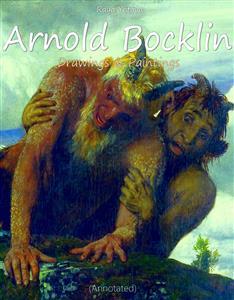
Arnold Bocklin (1827 – 1901) was a symbolist artist influenced by Romanticism movement. Bocklin’s works are Symbolist by style with mythological themes frequently relating with the painters Pre-Raphaelites. He portrays fantastical heroes from mythology standing next to classical Greek or Roman building architecture, frequently exposing a fixation toward fatality, raising one world of eccentric, daydream land. He is most famous for his 5 variants of the painting named “Isle of the Dead”, which to a certain extent suggests the English Cemetery in Florence, near to his mansion and where his litle baby had been buried. A first prototype of the picture was ordered by one widow who desired an artwork with a daydream impression. His painting is one of the most complete appearances of all that was hated about the end of 19th century.
Das E-Book können Sie in Legimi-Apps oder einer beliebigen App lesen, die das folgende Format unterstützen:
Veröffentlichungsjahr: 2018
Ähnliche



Arnold Bocklin
Drawings & Paintings (Annotated)
Foreword by Raya Yotova
––––––––
First Edition
*****
Copyright © 2018 Foreword by Raya Yotova
Table of Contents
Title Page
Copyright Page
Foreword
Paintings & Drawings
Foreword
Arnold Bocklin (1827 – 1901) was a symbolist artist influenced by Romanticism movement. Bocklin’s works are Symbolist by style with mythological themes frequently relating with the painters Pre-Raphaelites. He portrays fantastical heroes from mythology standing next to classical Greek or Roman building architecture, frequently exposing a fixation toward fatality, raising one world of eccentric, daydream land.
He is most famous for his 5 variants of the painting named “Isle of the Dead”, which to a certain extent suggests the English Cemetery in Florence, near to his mansion and where his litle baby had been buried. A first prototype of the picture was ordered by one widow who desired an artwork with a daydream impression. His painting is one of the most complete appearances of all that was hated about the end of 19th century.
Arnold Bocklin was born at Basel, Swisserland with father, who was from an old family unit of Schaffhausen, and mother, who was a citizen of the Basel. His father was engaged in the silk trade business.
Bocklin learned arts at the Dusseldorf Academy under painter Schirmer, and here he befriended with Ludwig Feuerbach. Schirmer, who identified in his young student a painter of outstanding future, sent him to Antwerp and Brussels, where he copied the masterpieces of old masters. After that time, Arnold went to Paris, where he painted at the Louvre museum, and worked on a number of landscape paintings.
Arnold Bocklin moved to Rome in 1850 where he married Angela Pascucci three years later. The ancient Town was a strong motivation to Bocklin’s way of thinking. These impressive images brought symbolic and legendary figures into his canvases.
After few years Bocklin returned to Munich, and stayed there for 4 years. From this time are Bocklin’s paintings Heroic Landscape (or Diana Hunting), Sappho and Nymph and Satyr. These paintings, which were much contraversely discussed frm critics, alongside with blessing from Lenbach, earned to Arnold Bocklin work as professor at the Academy Weimar. Bocklin held this possition for 2 years, working on the paintings Portrait of Lenbach, Venus and Love and a Saint Catherine.
He returned to Rome for 4 years, and here changed his painting style with favour for aggressive color manner paintings like Villa on the Seashore, Portrait of Mme Bocklin, An Anchorite in the Wilderness and a Roman Tavern.
After Bocklin returned to Basel, he finished his frescoes in the town gallery, and painted many portraits, including The Magdalene with Christ and Anacreon's Muse.
Bocklin’s self-portrait named Portrait of Myself, with Death playing a violin (1873), was created after his come back once more to Munich, where he exhibited some of his new paintings. The next decade of the century he was leaving Munich and painting and residing at Italy, Florence.
Arnold Bocklin died in Florence and was buried there.
Paintings & Drawings
Moonlit Landscape, 1849, Oil on canvas, 24.5 x 32.5cm *
Forest Landscape, 1850, Watercolor over pencil on paper, 33.6 × 49.6 cm




