


0,00 €
Mehr erfahren.
- Herausgeber: Aero Books
- Kategorie: Sachliteratur, Reportagen, Biografien
- Sprache: Englisch
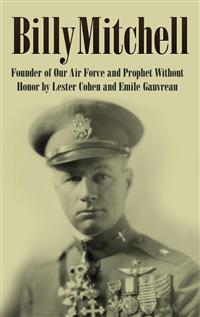
As early as 1920, US Army General Billy Mitchell began sounding alarm bells about an inevitable Japanese invasion from sea-based aircraft. Through the press and in person he lobbied naval brass about America's woefully unprepared defensive air power but his talk of dogfights over the Pacific with superior planes was laughed at and dismissed by all. Mitchell's vision of a US 'Air Arm' would have meant massive, costly upgrades to the nation's dated flying machines owned by private firms holding patents on aircraft machinery. Old guard soldiers, like John J. Pershing, dismissed as delusional ravings Mitchell's belief that a battleship could be destroyed by a bomber. Mitchell's outspoken press conferences about an airplane trust supported by corrupt government officials led to his court-martial for insubordination in 1925. He died in 1936, a man ahead of his times – and hated for it.
Das E-Book können Sie in Legimi-Apps oder einer beliebigen App lesen, die das folgende Format unterstützen:
Veröffentlichungsjahr: 2019
Ähnliche


















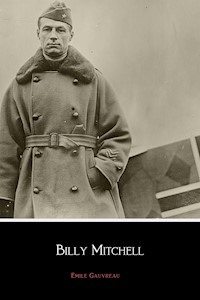
Billy Mitchell
Emile Gauvreau
Published by Aero Books, 2019.
Copyright
Billy Mitchell by Emile Gauvreau and Lester Cohen.
Published by Aero Books, 2019. All rights reserved.
ISBN: 978-0-359-90984-1.
Table of Contents
Title Page
Copyright Page
1 - Introduction: Blackout at “Little Venice”
2 - The Creator of the Blitz
3 - “Flaming Coffins” and Battleships
4 - The Ostfriesland and Mr. Katsuda
5 - Old Admiral Tubaguts
6 - Alaska
7 - The Ordeal begins
8 - Exile
9 - The Torch and the Fagots
10 - The Nine Morrow Men
11 - MacArthur Turns His Face
12 - Mufti
13 - A Citizen in Action
14 - A Prophet Talks for the Record
15 - The Old Inventor’s Warning
16 - Wings of the Morning
Further Reading: Bullets and Bolos: Fifteen Years in the Philippine Islands
1 - Introduction: Blackout at “Little Venice”
ON AN EVENING IN JUNE 1942, two men sat at a table in a corner of a little Italian restaurant in West Thirteenth Street, New York. One of them, formerly a well-known newspaperman, since then an official investigator for the Committee on Patents of the House of Representatives, was Emile Gauvreau, co-author of this book.
The other, a rugged, ageless, solid-looking man with a lined, patient face, sparse gray hair and searching brown eyes was James V. Martin, the aircraft inventor, once an officer in the Merchant Marine, and later the father of half the basic patents for things that fly.
This was a special occasion. Recently a parade had been held to welcome to New York a handful of the Allied Nations’ flying heroes, including young Donald Mason, whose report, “Sighted Sub Sank Same,” has already become a classic of the war. Tonight, there was to be a practice blackout, when the great electric-lighted city with its “white way” and sky-signs would become merely a spot of blacker darkness.
The two men sat at a special table, too, the table at which the late General “Billy” Mitchell used to dine, for the Little Venice had been his favorite restaurant.
At this very table, seven and eight years before, he had night after night gathered a circle of friends about him and spoken to them urgently of the future and what must inevitably happen to America—war with Japan; the invasion of Alaska; the seizure of the Philippines—unless the heads of the Army and Navy awoke to the meaning of air-power and to what was going on in Japan and Germany.
Both the inventor and the investigator had been intimately associated with Mitchell, the gallant crusader, during the years that saw the General’s desperate, single-minded, and almost single-handed, fight to awaken his sleeping countrymen to the peril which he foresaw so plainly, and which has since his death come so inevitably upon us and the rest of the world.
James V. Martin’s fate, indeed, though not so dramatic or so tragic as General Mitchell’s, was linked with it in disaster. Originator and owner of at least twenty-five basic devices, which are incorporated in all modern airplanes, Mitchell had seen his inventions taken from him by the Air Trust under the cover of government control, and had then been ruined and persecuted because of his refusal to manufacture the dangerous and inefficient DH planes, known to the aviators who flew them (and were burned to death in them) as “flaming coffins.”
While Martin sat, quickly puffing on his blackened briar pipe and listening to his companion, while Leo, the head waiter, dialing for music, tuned in on a raucous radio voice which announced, “...making over 300 ships sunk in the Atlantic since Pearl Harbor.”
“Turn it off, for God’s sake, Leo,” Martin broke in. “I hate to think of those poor devils. Here I am, an old sailor, and I can’t help them!”
Leo switched the radio into silence and came for their order.
“I see you’re back in General Billy Mitchell’s corner,” said Leo. “Everything he told us right here has come true; battleships sunk by air bombs, big cities like Cologne destroyed from the air, France gone, the Philippines gone, just as he said seven years ago, sitting right at this table.”
Vannini, the proprietor of Little Venice, came over from his bar to shake hands with the two well-remembered guests.
“Well,” he greeted them, “here you are again, sitting at General Mitchell’s table, and a blackout coming in a few minutes. I’ve just been talking to the chef, and telling him he and all his help will have to sit in the dark, with all the food cooking, and he said, ‘If they’d only made General Mitchell air-boss down in Washington, we’d have plenty of light. There wouldn’t have been any need for a blackout.”
Even as he spoke, waiters began reluctantly clicking out the lights. One by one the diners stopped talking to listen, and became shadows. Even in the kitchen the clatter of pans and crockery subsided. The waiters stood about the diners’ tables uncertainly, silhouettes in the gloom.
At General Mitchell’s table, meanwhile, in a blackness lighted only by the occasional flare of a match applied to a pipe or a cigarette, his two friends spoke together in subdued voices about their dead hero, recalling the early days of aviation, the General’s inspired conviction that the future of America’s defense lay in the air, his uncannily accurate prophecies, his unconquerable determination to bring the truth to the American people, and, finally, the Gethsemane through which he passed in his defeat.
And so it happened, by the irony of fate, that there, in the dark of the blackout, which would never have been necessary if Billy Mitchell had been listened to, was born this book which tells the story of his crusade.
It is an inspiring story, the story of a man with a vision, who, almost alone, set himself to fight the forces of bureaucratic inertia, of the pompous self-satisfied ignorance of officialdom, and, worst and most dangerous of all, the sinister predatory greed of international Big Business.
Like many another dauntless pioneer of human thought, Mitchell was laughed at, flouted, disgraced and... killed; but his ideas are marching on, his spirit is with us, his crusade is at last coming home to the hearts and minds of his countrymen, and day by day a brighter radiance shines upon his name.
Mitchell's court-martial, 1925.
2 - The Creator of the Blitz
––––––––
THIS BLACKOUT, James Martin said, groping for a saucer to knock out the glowing ashes of his pipe, this blackout seems to bring everything back. I feel like talking about him in this darkness. It has come upon us because we denied him. He was trying to pull us out into the light. It’s like unrolling a scroll of prophecy to read what he said...
He had the brave, violent nature that has always made history. The instrument he gave his life to, he knew would be used to kill, but he wanted us to have more of them than any other nation in order to save ourselves.
He knew the plane when it was nothing but an engine in a kite. But it was a new thing. That’s what interested him. Billy Mitchell was a great American because he never forgot that the United States was ‘a new thing’ when it was invented. This country is a great invention, a history of inventions, and the blood of inventors has been its seed.
The imaginative are always laughed at and persecuted if they can see things that other people can’t see. Most of us who have a great faith in something new think we could be martyrs for it, but when we come to act... well, that’s a different story. Billy Mitchell devoted his life to an idea because he knew it was right. He might as well have died in flames and tortures for his belief. And he was done to death in this country, the Nation of Inventions.
I can go pretty far back about Billy Mitchell. I can’t help believing after my experience with him that all things are ordained by fate. Men with a passionate belief in the same thing are bound to meet. He was born under the star that makes people ‘firsts.’ These people attract other people.
When he was in a hut in Alaska, working out the problem of stringing telegraph wire down the Yukon for 3,000 miles to Prince William Sound, I was a navigator taking some of the biggest ships up to the Arctic that ever went up there. While I was piloting ships through the Bering Strait and the approaches to the Aleutian Islands I was thinking of airplanes. I had a feeling that they would finally make ships go stale. I was young and I didn’t want to be stuck with a has-been proposition; and while I was thinking of airplanes, off Alaska, looking at the sky at night, Billy Mitchell was in Alaska, working on kites and thinking about the same thing.
Way up there, where the air is clean and cold, maybe thoughts meet. Vital thoughts meet anyhow. I feel sure. Well I quit the sea and met Augustus Herring. He taught the Wright Brothers the use of current surfaces, which give us the characteristics of lift and enable the airplane to fly. He was to die practically in my arms of starvation, but that’s another story. I remember one day when he told me, ‘Well, Jimmie, I guess I’ve taught you all I know. From now on you’re on your own.’
I’ll admit I was a bit disheartened when Sam Langley cracked up after the government had given him $50,000 to prove that he could fly. It broke his heart, really. But it was only nine days later that the Wright brothers got off the ground at Kitty Hawk. I was so excited about it I couldn’t sleep. I didn’t think the papers had paid enough attention to it. There were a few little items about it days after it had happened.
And there was another fellow who couldn’t sleep as the result of the first mechanical flight, and that was Billy Mitchell. He got Orville Wright to teach him how to fly. He was a captain in the Signal Corps then, and he made so much noise about flying machines that when the first few military planes were developed, they were turned over to him because the Army knew nothing about them. He continued to whoop it up until Congress appropriated $13,000,000 for the organization of the First Aero Squadron. That’s how Billy Mitchell came to be the father of our Air Force!
Well, by that time I had found a barn on Long Island where I could begin to work out some of my own notions, a new kind of wing, the tractor biplane, ring cowling for air-cooled motors. That sort of thing. I was one of the aircraft pioneers. There were a number of us. We read every book that had been written about flying. I guess I must have fathered about fifty inventions. We went through some tough times trying to make both ends meet, but we were learning.
We had no established principles of design for flying machines. The barn was the hangar, the barnyard the runway and we had to be our own test pilots. There were no aircraft factories. If we spilled and cracked our ribs, we taped them up, and if we cracked an airplane wing, we taped that up, too. About every week, I guess, I ran down to Washington to file a new patent. Most people thought such ideas were of no value and called our machines ‘fool killers.’
Then I read that Billy Mitchell had been put in charge of military planes. The idea came to me that if I could construct a plane that could carry a couple of bombs, that would be a military plane. In other words, I had an idea for a bomber, way back then. I kept designing the thing. Obviously, bombs would increase weight, which would cut down speed, but finally I thought I had it. Then began my peregrinations through the halls of Washington.
Nobody cared much about my notions. Flying patents were a dime a dozen. I interviewed clerks and cavalrymen and Indian fighters, until finally somebody let me get to Mitchell. I wonder why it was that I had to put up a fight to reach his door? Why is it always this way in Washington when an inventor goes down there with an idea?
But when they finally let me in to see Mitchell, I knew I had found my man. You didn’t have to beat around the bush with him. His eyes would snap when you mentioned something new. He knew right off that I was a man of the sea, that I had paced decks, been through storms. Perhaps he sensed the storms we were to face together. He was an important man, a snappy looking captain, a distinguished graduate of the Army School of the Line, graduate of the Staff College, instructor in the Staff College. Some people had told me: ‘If you can see him, you’ll get somewhere. He’s going to be a member of the General Staff.’
Mitchell and his open-cockpit biplane fighter, the Thomas-Morse MB-3
––––––––
HE WAS RUBBING HIS joints from a crack-up down the Potomac when they let me in his office. He was laughing about it, a bit ruefully. After office hours he was perfecting his flying. I liked him at once because he admitted freely that he had made a miscalculation in landing.
People saw him crash, and laughed, he said, and it made him feel like a goddamned fool. He didn’t blame it on the plane, which god knows, in those days, could have been blamed for everything. He said he had learned the greatest lesson of his life by taking a header. I told him about my own flops, and we were friends in two minutes.
‘What have you got up your sleeve, Jim?’ he asked me. He called me Jim just like that.
And I said: ‘Captain, I think I’ve got a military plane. I think I’ve invented something that can drop bombs.’
His lean face grew taut and his eyes seemed to eat up every line on my blueprints which showed where the bombs could be suspended right under the pilot and released by some sort of a faucet arrangement. A pretty crude thing, I’ll admit. I had the faucet in my pocket to show him how it worked.
‘Do you get the idea, Captain?’ I asked him.
He looked up at me with those eyes that seemed to burn through your skull.
‘Jim,’ he said, with that queer twist of his mouth, ‘I’m way ahead of you!’
I felt right off that this man ought to be a general, a general of the skies; he understood, he got the feel and gist of the air, its limitlessness, its own world. His sea-gray eyes were shot with repressed eagerness when he looked at me.
I remember it was getting dark. He looked out the window at the lights coming up in the street and he turned about, with that quick, restless movement after he had thought something out.
‘Listen,’ he said, ‘we’ve got things to talk about. Do you eat?’
‘Not a helluva lot these days,’ I said, and he burst into a laugh and clapped me on the back.
‘Come on,’ he said, ‘let’s go to dinner,’ and that’s how I happened to tell him about all of my inventions.
I had an idea for a flying boat, and he stopped eating while I described it. I was talking through mouthfuls because I was hungry. That was the best dinner I had ever had up to that time. You know how inventors live. But let’s not go into that.
‘You mean an amphibian?’ Mitchell asked.
‘Yes, exactly,’ I said. ‘I got the idea up in Alaska on my last trip. Something might happen up there someday, and we might save the territory with armed flying-boats.’
‘Say!’ he exclaimed, ‘Say, what do you know about Alaska?’ and I told him.
He was in such a state of excitement that he pushed his dinner aside. His eyes gleamed.
‘While you were prowling about on your boat,’ he said, ‘I was up there too. We were thinking about the same thing, both of us. Why!’ his enthusiasm shone in his face. ‘Do you know what I did up there? I invented a tandem kite that took me off the ground. That’s how I came to fly! Go ahead,’ he said, ‘keep talking. We’re sitting on the same cloud. My God! Equal understanding. Have I been looking for that!’
Well, you know the kind of evening. Once in a lifetime, you meet a person like that, and he takes you off the earth. When I got back to my hotel, I had to wake up the clerk to take me up in the elevator. That’s how late it was. And I sat on the bed, just thinking.
Mitchell told me to bring my friends down to Washington. All inventors, they were. He thought it was his duty to see men like that, to become familiar with what they were doing, to recommend the adoption of their achievements. Billy actually got some of my stuff into the War Department for consideration.
By this time, I was making money in air exhibitions and somehow, with my friends, we got my first factory going, down in Garden City, Long Island. I picked the spot because the first airfield in the country was located there.
When the winter of 1915 came around, and you know what was ahead of us then, I knew what was going to happen before a lot of people did, because Billy Mitchell telegraphed me to come down to Washington in a hell of a hurry. He told me to get all the backing I could and expand my factory. He said we were going to be pulled into the war before it was over. That’s how far ahead the man could see things.
‘We’ll need planes,’ he said. ‘Do you know how many planes we’ve got now? Thirty-five in the whole damned Army. We’ve got to get busy. And I want somebody I can trust to help me get them out!’
It took me some time to get the backing. Two years went by, and while I was turning out some machines of a type which had been approved by the First Aero Squadron, Billy wired me again. I used to see him quite regularly. This time the message gave me a jolt and I went down to Washington hell-bent. I had to drive through a snowstorm to get to him; it was long before the Spring of 1917. Mitchell was pacing his office in a major’s uniform.
‘I’ve tried to keep you posted,’ he said, ‘because your services are going to be of infinite value to our government. We’re going to need planes, Jimmy,’ and he drew me into a corner of his office, ‘we’re going to war, but you’ve got to keep this news locked up in your chest. We’ll need you. I’m leaving in a few days, secretly, for Europe. I’m supposed to be going on leave to Spain.
Those people who say that Woodrow Wilson first shakes his fist at Germany and then only shakes his finger afterwards are going to be knocked out of their beds. He sent for a number of us last week to find out how many planes we had. I told him. Do you know how many planes we have now in our whole fighting force?’
‘About five hundred, anyhow,’ I guessed.
‘Five hundred, hell,’ he laughed grimly. ‘We’ve got exactly fifty-five planes. Two aviation fields and fifty-five serviceable planes. The National Advisory Committee on Aeronautics has advised the President that fifty-one of them are obsolete and the other four obsolescent. That’s what we’ve got to start with. The President is going to call for five hundred million dollars at least to build planes. This is your opportunity. I know what you can do. Get busy. I’ll see some people for you. We won’t be able to turn planes out fast enough. I’ll keep in touch with you by cable. I’m going to run the air show over there or I’ll miss my guess. Goodbye and good luck.’
As a newspaperman, you know what happened after that. The most horrible scandal in our history. If it had happened in any other country at war, the responsible parties would have been lined up and shot.
We appropriated $1,650,000,000 for aircraft and all Billy Mitchell got out of it as commander of our air forces in France was 196 planes. I don’t have to tell you anything about that. I remember your headlines during the first investigation.
But Mitchell, in France, begging for planes, knew nothing about it.
Papers reaching him said the sky would be filled with planes. I remember a headline quoting Brigadier General George O. Squier, chief signal officer of the Army:
Blow to Be Struck at German War Machine With 100,000 Planes
The poor, ignorant fool. All this while the money was being squandered. Even Pershing, who was no airman, God knows, was cabling his protests.
But Mitchell got planes. We had to buy them from the British and the French, 1,300 machines to fight their battles.
With what was left of his 196 machines Mitchell led the strongest aviation force ever assembled up to that time; about 1,400 planes. It was his idea. And if the truth is ever told, that broke Germany’s back. That started the ‘push.’
You can imagine him over there, brooding about planes. He told me about it when he got back: going down to the docks at Bordeaux, watching ships unloading, soldiers coming off, horses, mules, cannon, caissons, but no planes. Stevedores in blue denim, sweating under their load, Red Cross nurses coming down the plank, ambulances lowered by cranes, more mules, but no planes.
And finally, a year after he had been expecting them, those 196 machines arrived in a heartbreaking trickle; two, three, or six at a time and when they were put together, you know what they were: FLAMING COFFINS! That’s how I got into the picture. I had the facilities to make planes then. Good ones. But that $1,650,000,000 had been raked in by a monopoly made up mostly of automobile manufacturers and smart politicians. They’d grabbed an old English plane design known as the De Haviland 4, with the tank right in back of the pilot. They could make them cheap. Our men were killed on the training fields by the dozens every week. In France, all the Germans had to do was to shoot into the gas tank and our pilots were burned alive before the machines crashed. The monopoly wanted me to make those terrible things. I knew what they were, and I turned a $10,000,000 job down.
But Mitchell had to take those ‘flaming coffins’ and order his men up in them. He flew them himself. He was the first American officer to fly over the battle lines. Do you remember the last time he was here he was talking about Noyon?
That’s where his men were turned into flying torches for the first time and where he decided to do the air reconnoitering work himself. He was made a colonel for that. Then came the Allied crisis. You won’t find this in any history books of the first World War. The French Army was breaking up. French soldiers, tired out, had become skeptical. They were wondering why certain industrial plants in France were never bombed by the Germans and why certain German industrial plants were never bombed by the French. Mutiny and rebellion developed in the French trenches, and in some regiments, officers had to shoot one man out of every ten. ‘Disciplinary shootings,’ they were called. That’s why the war had to be ended. The Germans knew there was going to be a desperate drive and they brought up great concentrations of aircraft, the best of its day. That’s how Mitchell got his 1,300 planes from the Allies. It was his own strategy. General Pétain himself turned over to him a French air division of 600 planes. The Italians had 200, or about that. General Trenchard of the British was glad to serve under Mitchell. He came through with 700 planes. By that time our own planes amounted to almost nothing.
Now the whole thing was up to Mitchell. That’s how he became slated for brigadier general. By this time his flights had captured public imagination. You remember the headlines:
Solo Flight Helps End War
But behind all this was Mitchell, the strategist extraordinary.
St. Mihiel was an armed German peninsula cutting into the American lines. Mitchell decided to hit it from both sides. He arranged his aviation in a V about the salient. When one branch of the V smashed at the salient, absorbing the enemy fire, he let go at the rear of the enemy with the other side of the V. The salient was wiped out in the first example of mass air strategy in history.
At Chateau Thierry, Mitchell used to say, he was greatly outnumbered. The Germans would make a feint at him, first in one direction, then from the other. They wanted him to spread his air force out in all directions, in order that they might nip it off, piece by piece. He called in his bombardment planes from all sectors and concentrated them at the German center at Fère-en-Tardenois. That was an important place for the Germans. He knew, if he kept raining enough hell on it, they would have to bring up nearly all of their pursuit groups.
And that was precisely what happened. He threw his pursuit aviation at theirs. This accomplished three decisive results.
It lightened German air pressure on American ground troops, it afforded American observation the opportunity to go aloft. And vastly more important, by pitting pursuit against pursuit, and with good fighting, Mitchell began to achieve a numerical balance: the Germans no longer had superiority in the air.
Study the Argonne from the point of view of military aviation.
A great concentration of troops and troop trains behind the American lines. Some of these trains didn’t move for thirteen hours.
The Germans knew about the jam and brought up attack aviation. Pershing knew that if they could strike from the air the American Army would be in a critical position. He knew because Mitchell had told him. It was an air problem that Mitchell reveled in. He sat up all night figuring it out.
Early on the next morning he struck first, blasting German centers of concentration, Romagne, Grandpré. The Germans, he figured, would throw everything they had into these sectors to defend them. Otherwise their ground forces would be compromised. And that’s what the Germans did.
Again, pursuit pinched off pursuit, Mitchell’s forces now gaining a numerical advantage. As this advantage became greater, Mitchell could use more planes against retreating German columns, motor trains, railroad concentrations and military emplacements. This was what we now know as blitzing. Mitchell had created it. With complete mastery of the air, our flying forces could screen the movements of the ground forces. At last, as Mitchell often said, he knew exactly what the enemy was doing. He let fly with everything he had.
The ground troops followed up. And our Army went ahead, blasting its way into the German lines. The air decision had given our forces complete initiative. The war was practically over. Reluctantly, now, we’re beginning to admit all this in our period of slow transition from ground and sea war to the War of the Air. It may sound of course, as though Billy Mitchell won the last war. That is exactly what I think he did. He was the Napoleon of the Air. He believed in the air-blitz because he believed what his eyes could see.
And what we couldn’t see, as time went on, the Germans did see. Our generals could not believe in it, because they could not believe what their own eyes had seen. That will be the verdict of history, and in a way the kindest thing that can be said.
If they did see it, if they did understand it, then why were they caught off base, why did they attempt to minimize the importance of air power? And, so, in essence, usher in the Second World War? Someday after this war is over, and it will be won by those with the greatest air power, Mitchell’s importance in military history will be recognized. We insisted on minimizing what was done in the air in our World War histories. We remembered individual flyers, great heroes like Eddie Rickenbacker, Jim McConnell, Elliott Cowdin, Lieut. William Thaw, Raoul Lufberry, and all the German planes they shot down, but we closed our eyes to the ‘Air Blitz’ we had invented.
We returned to our drill parades, our tactics of trench fighting and let the Germans take over everything we had shown them in the first great air battles in history, and in which we licked them.
We never studied the World War from the air viewpoint. That’s why our side is taking an awful pasting at the present time.
As I have said already, all this may sound as though Mitchell won the war single-handed. Well, suppose he had been unable to get the mastery of the air over the Germans. Our own planes were useless. The German planes were getting better week by week. But Mitchell developed a new kind of war, and ancient warfare curled up forever when he finally got his planes.
What he wrote in the sky will remain. What others did under him on the ground will seem of less and less importance as the years go on—until it is almost forgotten. The fact that we crucified the greatest military prophet we ever had ought to teach us an awful lesson! But, sometimes, I wonder!
––––––––
Brigadier General William L. Mitchell
General John Joseph “Black Jack” Pershing
3 - “Flaming Coffins” and Battleships
HIS FRIENDS WERE STRUCK by a marked change that had come over General Billy Mitchell when he returned from France in 1919. It was not a new haste, a greater impatience, but the quality of being centered on an overpowering idea. It had added a new firmness to him; that rare something which enables a man to regard difficulties but as evils to be surmounted.
Perhaps he already foresaw that the years ahead in his path were to be strewn with obstacles to divert his course, that his conclusions, his strongest convictions would be constantly exposed to ingenious ridicule.
He had discovered a great truth, but it had made no impression on the Allied air leaders with whom he had conferred in France and England after the armistice. He was determined to make America understand it. Years later he was to put it into a book which was not to be appreciated until a quarter of a century after its publication, and by a horror-stricken, rocking world. His truth was a gospel he was to repeat until his last breath:
“If a nation ambitious for universal conquest gets off to a flying start in a war of the future it may be able to control the whole world more easily than a nation has controlled a continent in the past.”
But the decorations he had received from President Wilson, the British, the French, the Italians, the citations from General Pershing, all the medals, “enough to sink a cruiser,” as he put it, had not been presented to him as the greatest military prophet since the Battle of Formigny where the Constable of France, de Richemont, gained an impossible victory over the English in 1450, but as a daring flyer leading other heroic flyers staking their lives on an untried instrument.
Only two nations in the world, Germany and Japan, were to recognize the fact that Mitchell’s air strategy had revolutionized modern warfare; two nations which were to pounce upon his ideas and use them in a leap for world conquest while his own country laughed. He knew already, and determined to tell the people, what was later to be accepted as a fact and so well expressed by the scientist Roger Burlingame in his Engines of Democracy:
“Almost the entire ancient art of warfare has been upset by aeronautics. Secret passing of troops has become impossible except when observation planes can be annihilated. Since the arrival of the air arm the new technique of camouflage has become a necessity. New tricks of propaganda from the air have aided in demoralizing reserve forces and breaking civilian morale.
Machine gunners, infantrymen and spies may be landed by parachute in any part of the enemy country. Bridges, railheads, roads, communications, trenches may be destroyed without the operation of ground forces.
Troops may be ‘strafed’ by low-flying machine-gunners. Civilian populations must be evacuated from towns. The cost of such attacks and of the effort to disperse populations in danger of them is out of all proportion to the cost of maintaining the air arm. The result is a revision of wartime economy as well as a change in field maneuvers.”




