


4,99 €
Mehr erfahren.
- Herausgeber: The Lilliput Press
- Kategorie: Sachliteratur, Reportagen, Biografien
- Sprache: Englisch
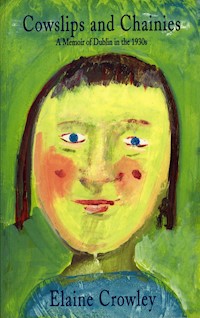
Cowslips and Chainies is a poignant memoir of childhood in 1930s and early '40s Dublin. Best-selling novelist Elaine Crowley's account of tenement life is by turns hilarious and intensely sad. Her beloved, consumptive father – generous, handsome and fickle – works at the local undertakers. Her proud, resourceful mother, struggling with privation, alternates slaps with kisses in a turbulent relationship with young Nella. Through the eyes of a natural storyteller, we enjoy scenes from a receding past vividly enacted: the teeming life of the Iveagh Market; the street-games and domestic strife; the stratagems for survival among pawnbrokers and money-lenders. We share in Crowley's wide-eyed witness of a pre-school plot to murder the neighbour's toddler, the excitement of the 1932 Eucharistic Congress, the trauma of leaving the Liberties for a Corporation house on the city fringe, attempts at sex education thwarted by nuns, her first job in the sewing factory at the age of fourteen, an outing to foil her father's 'carryings on', and his moving death from TB in the early part of 1942. Cowslips and Chainies is infused with wonder and particularity, and conveys an overwhelming love of place and persons. It is a classic of Irish autobiography.
Das E-Book können Sie in Legimi-Apps oder einer beliebigen App lesen, die das folgende Format unterstützen:
Veröffentlichungsjahr: 1996
Ähnliche


















COWSLIPS AND CHAINIES
‘A charming memoir of life in the inner city … rich in neighbourliness, humour, love and laughter.’ — IrishIndependent
‘… a true classic of Irish autobiography … the writing is superb and marked by brilliant dialogue. … The book’s closing section is crammed with moments which this reader will never forget: the child sent to the hospital for cod-liver oil; the slow decline and death of her father. … CowslipsandChainies is a unique record of a world of new estates, old illnesses and common dreams. It is a fine, moving book.’ — Dermot Bolger, TheSundayTribune
‘… the urban revenge for Alice Taylor …’
— Gay Byrne
COWSLIPS AND CHAINIES
Elaine Crowley
THE LILLIPUT PRESS
Contents
PraiseTitle PageONETWOTHREEFOURFIVESIXSEVENEIGHTNINETENELEVENTWELVETHIRTEENFOURTEENFIFTEENSIXTEENSEVENTEENEIGHTEENNINETEENCopyright
ONE
A motorway is to be built on the street where I lived. The street to which I was brought home from the hospital where I was born. The house in which I lived is knocked down to the ground floor. The windows of the shop over which we had our accommodation are covered with sheets of corrugated iron. There are gaps where they meet. I can see in. See the piles of rubble, shards of planks that was the floor on which I played, plaster and layers of wallpaper, stained, faded, rotting, clinging to the bricks. Wallpaper my mother would have bought as ‘end of line’, at a knock-down price. Wallpaper that long ago came untrimmed. So that the inch-wide plain margins on each roll had to be cut away. Sometimes I was allowed to do this while my mother made flour and water paste. The margins fell in long, long curly streamers with which I festooned my head, transforming the straight-fringed brown bob into a mass of ringlets, and imagined I was Shirley Temple.
Amongst the rubble I spy a grate, rusted and pitted. I claim it as ours—it might have belonged to the other tenant who lived in the house. But, no, it’s ours. I convince myself of that. Around it grow chickweed, groundsel and mauve convolvulus whose tendrils are entwined in the grate’s bars.
Peering through the chink in the corrugated sheets I see my mother kneeling before the grate. Sheets of newspaper cover the lino. On them are laid soft cloths, black leading brushes and—in an orange and black striped paper package which has a picture of a zebra on its front—the polish.
I watch my mother open the cake of polish, spit on it, dip in a cloth, work it over the surface, and then, with her strong, square hands begin applying the polish. Laying down the cloth in favour of the smallest brush which will reach the corners and crevices of the grate, she sits back on her hunkers while waiting for the polish to dry, humming, talking aloud. Reminding herself of messages she has to do. Casting a glance at the window to judge if the weather will hold. Will the clothes dry. Will the baby sleep for another hour.
The polish dries. She wields the bigger brush and continues talking, now to me. She says, ‘My father used to keep birds. Cages of them in the yard. Linnets, larks and canaries. I used to gather the chickweed and groundsel for them. Groundsel’s the grand thing for feeding birds.’ A dull gleam is coming to the grate’s bars.
I saw a yard full of birds. I saw yellow canaries and heard the birds singing.
‘Where did he get the birds?’ I ask.
‘In the Bird Market in Bride Street. Though sometimes he caught them. It’s easy to catch birds. All you have to do is put salt on their tails.’
Her knuckles rasped on a bar, the skin breaking. She dropped the brush and sucked the blood from the broken skin.
‘Mammy, can we do it, can we, Mammy?’
‘Do what?’ she asked, her voice full of irritation.
‘Go down to the yard. I’ll get the salt and we’ll catch the birds. Can we, please Mammy?’
‘Will you stop moidering me. Go on away and play. Go down and see if the baby’s alright.’
The birds had flown like her thoughts. They were somewhere else now. Wondering if my father would come home late. Would St Jude answer her prayers. Would her ambitions be fulfilled.
My mother had two ambitions. To be on the pig’s back and to have a private house. Now and then the arrival of American dollars from relations fulfilled for a while her first ambition. With the windfall, small debts to the corner shop were cleared. Articles of clothing, wedding presents, whatever she had pawned and was now in danger of running out of pledges would be released. Another source of unexpected income came from the numerous actions against Dublin Corporation when she fell off her high-heels on a broken path or got a touch of food poisoning from bad food, which, after the shopkeeper’s refusal to refund her money, she took to the City Analyst. And great was her joy when her debts were cleared and a small sum was left over for her indulgence in antiques.
She had, she said, the eye for recognizing old beautiful things, and from her foraging in the second-hand markets she would return with her finds. Unwrapping and displaying exquisite wax-faced dolls, minus one or two limbs; miniature pewter tea-sets; hand-painted plates, once broken but repaired with metal stitches; pairs of horses she believed to be bronze, rearing on their inflexible reins. The plates were dusted, washed and put on shelves; the pair of horses on the mantlepiece; the doll promised to me, once it was mended; the pewter tea-set displayed on the sideboard. And if they were in season, the bags of soft fruit she had bought during her sojourn in the markets, which along with the antiques also sold old clothes, fish and soft fruits, were shared between me and my brother.
Her second ambition, she admitted, might take a long time to realize. Unless someone died and left her a fortune or she won the Irish Sweepstakes, for which she never in any case bought a ticket, a private house was aiming very high. Being practical as well as permanently hopeful, she put her name down for a Corporation place. But as she often said, ‘There’s families of ten and twelve children all over the city of Dublin being reared in one room and me with a fine airy room and only three children. It’ll be years before I come anywhere near the top of the list. And if it wasn’t for the hall door always open and anyone from the street free to use the lavatory, I’d stay where I am. Corporation schemes would never be my first choice.’
She also had great faith and so had enlisted the patron saint of hopeless causes, St Jude, to put in a word for her. ‘And in any case,’ she’d say when the dollars were spent, the amount from the small action gone, the pair of horses discovered to be gunmetal and not bronze, the doll gone to the dolls’ hospital where it would remain an undischarged patient until the next windfall, ‘Haven’t I the future to look forward to. One day, please God, you’ll all be grown up and earning, and then with your father’s money as well, I’ll have my own little house and be on the pig’s back for the rest of my life.’
The room we lived in was over a shop that sold only salt. Salt that was delivered in enormous blocks before being crushed down and packed into cardboard boxes and sold to small shopkeepers who sold it on for a penny a packet. The room was large with two sash windows. There were alcoves on each side of the fireplace. In one there was a gas stove and in the other, behind a cretonne curtain, our clothes hung from nails. There was a double bed and a single one in which I slept with my brother. The baby’s pram was also used as her cot. Our food was prepared and eaten from a long, narrow mahogany table with a bockaddy* leg which had to be propped with a wedge of cardboard. ‘But,’ my mother frequently proclaimed, ‘it’s a beautiful piece of wood. Look at the colour of it. None of your deal there’.
Her preference for the old table, the green plush horse-hair-stuffed chairs and enormous oak sideboard wasn’t all a matter of taste. My father had refused to sign for anything on ‘the weekly’. My mother argued that everyone had homes like palaces for five shillings a week. But my father was adamant—nothing on instalments.
‘Feck him,’ my mother’s sister said when she heard of his refusal. ‘If he won’t provide you with a home get one behind his back. I know a fella that’ll let on to be your husband. For five shillings he’d put his name to anything.’
So down to the Cavendish went my mother and the forger, and ordered the best cork-inlaid linoleum in a red Turkish pattern, a double bed, a modern sideboard and two leatherette armchairs. She said not a word to my father about the transaction, convinced that once the items were delivered he’d be so overwhelmed by their beauty and the transformation of the room nothing would be forthcoming except showers of praise. I was spellbound by the new furniture. Its brightness and newness. The smell of it. The smoothness of the oilcloth when I ran my hand along the roll, the coolness of it against my cheek. With the bed came a gift of two plump feather pillows in black and white ticking, soft and downy, yielding to the lightest pressure of my hands.
My mother called a boy from the street to help her take the old bed down to the yard and hoosh the spring onto the shed roof.
‘It’ll be out of the way there and I’ll tie a line from one end to the drainpipe,’ she said and gave the boy a shilling for his help. Singing at the top of her voice she came back to the room to arrange the furniture. She moved everything to one end of the room and laid the first roll of linoleum, reversed the process and laid the other, assembled the bed, laid the table for tea and waited for my father to come home and shower her with praise.
Instead there was murder. My father shouting. My mother closing down the window so that the neighbours couldn’t hear the row. Shouting in her turn. Telling him if he had provided her with a decent home there would have been no need for any deception. He threatened to have the furniture repossessed, refused his tea and went out. My mother went round the room, shifting delft and plates of food distractedly and talking to herself and answering my questions by telling me to shut up and not be driving her mad. A van came to collect the furniture.
‘What about the bed and the oilcloth?’ my mother asked the van driver.
‘It sez here a sideboard and two chairs, that’s all,’ the man said. From behind the lace hangings she watched him load the van and knew that everyone else in the street was watching too.
‘The dirty louser,’ she kept saying. ‘My own husband to do a thing like that on me. To make a show of me. I’ll never forgive him, never.’
‘To deprive you of the few sticks! That shows what he’s made of,’ her sister said when she discovered what had happened. By this time my mother and father had made it up. Their quarrels, though often bitter, seldom lasted long. And when they were friends she wouldn’t hear a word against him. ‘He did what was right. Bloody robbers, that’s what them places are. Selling matchwood and charging you through the nose for it. He’s getting a loan on Saturday and will buy me my wants.’ My aunt persisted in criticizing my father. She and my mother had a row and each vowed never to darken the other’s door again. That evening my mother confided to my father that it was all that wan’s fault. If it hadn’t been for her advice she would never have gone to the furniture shop. And in future she’d tell her less of her business. The oilcloth and the bed were never repossessed nor payment demanded. ‘I could have told you that,’ my aunt said, her quarrel with my mother made up. ‘In the interest of hygiene they never take back beds. Sure they could have been pissed on or infected with bugs. And as for the oilcloth, once it’s been laid it’s never the same again. So you got something out of it. The new sideboard’s nice. A lovely bit of oak and the carving’s beautiful.’
‘Wait’ll I show you. Look at the way the drawers open. Lions’ heads and you put your hand under their mouths.’ My mother demonstrated proudly.
‘All the same it’s a bit on the big side for the room I’d say.’ My mother said nothing but after her sister went told me that jealousy was all that ailed that wan. Mad jealous of the sideboard that was an antique. I didn’t know what jealousy meant. But I knew my aunt was gorgeous and that I loved her. She laughed a lot and wore gold earrings and always answered my questions. And sometimes she wore a black leather coat, boots and helmet when she rode on the back of her husband’s motorbike. And she promised that when I was a big girl I could ride on the bike. For a long time after the second lot of furniture was bought my mother was in constant good humour. Every day she polished the sideboard and enthused about the carving. The room smelled of Mansion Polish and the oak gleamed. While she polished she sang and I listened enthralled to her beautiful voice, memorizing the words, occasionally venturing to sing with her. A venture quickly quashed: ‘You’ll never make a singer. Listen and maybe you’ll learn to carry an air,’ she said and continued her song.
Along with the second-hand furniture, she had bought two large pictures in ornate gilt frames, one of ‘Our Lady of Good Counsel’ which hung above the double bed and one of ‘Bubbles’ for over mine. His green velvet suit was exactly the colour I would have liked for a dress. And his hair was beautiful. For days after the pictures came I would spit on my finger and try unsuccessfully to wind my straight heavy brown hair into little curls.
We now had three pictures in the room. The third, which had always been there, was of a woman in a long white dress which fell in folds on her bare feet. In her long dark hair she wore a wreath of flowers and held up high a branch of blossom. She was the most enchanting person I had ever seen and I believed for many years that the picture was of my mother when she was young. My mother said my father was a picture. I didn’t understand that. She also sometimes said he was a whore-master and had a fancy woman. I didn’t understand that either. But as I wasn’t supposed to be listening to the conversation between her and my aunt I couldn’t ask for an explanation. ‘Don’t be listening to what I’m talking about,’ she frequently warned me, but as there was nowhere else to go, for I wasn’t yet allowed down into the street, I listened. Sometimes I forgot her warning and not only listened but asked questions to which her reply was, ‘You be quiet. You’re far too knowing for your age.’
My father, on the nights he stayed in, seldom spoke of things I didn’t understand and when he did, he never minded my questions. He taught me poems, repeating the words until I knew them by heart. Sometimes I dreamed I was Lucy Grey lost in the snow, or the Skipper’s daughter lashed to the mast of the Hesperus. I’d waken from my nightmares crying. He’d lift me from the bed, and safe in his arms I didn’t mind my mother scolding, while she mixed cocoa and sugar for my drink, that he had me ruined.
My father worked for an undertaker. He earned two pounds ten shillings a week and sometimes made half as much again in tips. ‘The poor’, he said, ‘are the best tippers.’
‘God help them,’ my mother would say. ‘Gone mad with the society money. The only time in their lives when they have the handling of a few shillings.’
Like the rent-man, the society-man called every week. There were policies on my mother’s and father’s lives at fourpence each and policies on the childrens’ for a penny a week. It was as important to pay the insurance as it was to pay the rent. Eviction was dreaded and so was a pauper’s funeral. The dead must be given a good send-off. Several of my mother’s neighbours didn’t agree with this. One, I remember, often argued with her. ‘I don’t give a shite what they do with me when I’m dead. And one thing’s sure and certain, I’m paying out no society money so that when I’m stretched stiff from the navel up and down the neighbours can say, “Look at the coffin. Solid oak. And look at the handles! God isn’t she getting a great send-off.” I’d like me job.’
‘That’s all very well,’ my mother would reply, ‘but who’ll pay for your funeral? Who’ll bury you? Answer me that.’
‘If they don’t bury me for pride, they’ll bury me for stink,’ the neighbour would say, and laugh loudly.
My father drove a hearse. Sometimes with two horses, sometimes, if there was a lot of society money, there were four horses. Black horses with plumes and a black velvet cloth covering their backs. The hearse driver wore a livery, a double-breasted black coat and a velour top-hat. I loved brushing my father’s hat. First one way so that the surface gleamed like satin and then against the grain so that the shine disappeared and the surface was rough.
Glass shades filled with plaster flowers, doves and crosses were the wreaths bought by the majority of people for the deceased. They were piled on the coffins and later on the graves. My mother was contemptuous of them. When she sent a wreath she bought fresh flowers and with wire and ribbon made her own. Chrysanthemums, bronze and yellow, come to mind, so her friends must have died when it was autumn. Yet all these years afterwards I still associate the smell of chrysanthemums with death.
On Sunday mornings my father took me with him to stable his horses. Dressed in my best and holding his hand we’d set off for the undertaker’s yard in Denzille Street. Through William’s Place past the back entrance of the Meath Hospital, through York Street where women sat on the steps of the tenement houses breastfeeding their babies, talking, laughing and shouting to their barefooted children playing in the road. Then out of the poverty-ridden street and onto the Green where all was sunshine and the women were pretty and wore beautiful clothes and from the gratings of the Shelbourne rose smells of delicious food. On through other streets where no women sat on the steps and the letter-boxes and knockers gleamed like gold.
‘We’re nearly there now,’ my father would say as we turned into Lincoln Place. And we’d stop to look into the window where a poster showed pictures of tortured animals and my father explained that some doctors did cruel things for the sake of curing sick people. He didn’t think that was any excuse and he had signed a petition against vivisection.
The yard smelled of hay and horses. Pigeons perched on the roofs of out-buildings waiting until I stood still before flying down to peck hayseeds from between the cobbles. For a while I’d watch my father mucking out. Afterwards I’d feed Dolly and Peggy the penny-bars of Savoy chocolate I’d bought for them. Then begin my exploring. Into the harness room touching bellybands and bits, carriage lamps and halters. Moving onto the shed where the broughams and landaus were, and the brake, which sometimes on a summer’s day my father drove to our street, filled with children and took them for a ride. In the carriage shed the hearses and mourning coaches were polished and ready for the funerals on Monday morning. And beside them the box-shaped, windowless coffin-cart used for delivering the coffins to the home of the dead person and for burying the Jews.
I left exploring the coffin-shop until last, always hoping that by the time I reached there my father’s whistle would signal that he had finished stabling and was ready to leave. I didn’t want to go in and yet could not resist doing so. In I went, one part of my mind praying for the summons to go, and another side of me wanting to walk through the oak shavings. I loved the way they crunched beneath my feet like the fallen leaves in the park, and the smell of wood. There were always a few coffins finished, lined with white satin, and pillows to match, and the coffins’ lids had writing on the brass plates.
If the weather was fine we went to the zoo. I bought peanuts from the dealers to feed the monkeys. My father showed me how to squeeze the ends of the nuts’ shells. They split enough for me to wear them as earrings. On other Sundays we went to the Botanical Gardens. I didn’t like them very much. They were too warm and the plants too big. I liked the National Art Gallery but not as much as the Natural History Museum. All the stuffed animals and the enormous Irish elk.
Lately, before setting off on our trips, we went to the cigarette shop across the road from the undertaker’s yard. There was a girl serving—her name was Kathleen. She had black hair, short and straight and very shiny, and a fringe like mine. She gave me bars of chocolate, Fry’s Cream and packets of Half-Time-Jimmy which had a picture of boys playing football on the wrapper. On the way home my father warned me to say nothing about the chocolate, otherwise my mother would fight with him for ruining my appetite.
* From the Irish word bacach, a person with a short leg.
TWO
‘You can go down and play but don’t go away from the door,’ my mother instructed me the first time I was allowed into the street on my own. ‘And don’t go near the road,’ she called after me. The road was the only danger she could envisage, for the road wasn’t the street. The street was the people who lived there. She knew every one of them and they knew I was her little girl.
Sand lorries, on their way to and from the quarries in Rathfarnham, came down the road at great speed. An occasional motor car passed by. But mostly the traffic was horse-drawn. Big shire-horses pulled the Guinness drays to the public-houses. Coalmen and milkmen and Kennedy’s and Johnston, Mooney and O’Brien bakers’ vans delivered trays of steaming hot loaves and turnovers to the small shops. Funerals drove past on their way to Mount Jerome, going there at a modest pace, racing on the return journey.
Unless I went onto the road I was in no danger. Except those I imagined and was unable to communicate. Afraid of the dwarf who waddled past in her button boots. Her head and face were enormous, coarse hair sprouted profusely from her chin. She was so deformed, I’d heard my mother say, because she was born on the night of the big wind. And I imagined her as a new baby being rolled along the ground before the fierce wind, becoming more crumpled and misshapen the way newspapers did in the gutters. Afraid of the hunch-backed woman riding an ass and cart, collecting slops for her pigs. She had small pink-rimmed eyes that resembled those of the pigs she kept. They stared at my fat legs. And I remembered how my mother said pigs were scavengers and would eat anything.
I could acknowledge my terror of the cows on their way to the slaughterhouse. Everyone was frightened of the fear-crazed animals. It was alright to comment on their wild staring eyes and lowered heads as they ran from side to side of the street, attempting to evade the blows rained on their backs by the drovers’ blackthorn sticks and seek sanctuary from the fate they instinctively knew awaited them. I sat on the step and watched the world go by. Listened to the grown-ups talking, threatening to kill, murder, split or dye someone’s eye. Sometimes threats were directed to me by an older child. But I soon learned that mostly it was all talk. The only one who raised a hand to you was your mother or father and God help anyone else who attempted to.
Passing women going for their messages, clutching a purse in one hand and a marketing bag in the other, gave me pennies or ha’pennies, smiled and told me I was getting a big girl. They were concerned for my comfort and safety and behaviour, urging me to go in if it began to rain, telling me not to go near the road, nor climb the railings or dirty my dress. Occasionally one might tell me off, and I’d tell my mother. ‘Mrs so-and-so told me not to bounce my ball near her door.’
‘I hope she didn’t have to speak to you twice and that you didn’t answer back,’ was the standard reply if she liked the woman. If on the other hand my mother considered her ‘a cranky oul’ get’ or a newcomer—a newcomer being anyone who hadn’t been born in the street and her mother and father before her—she’d say, ‘It wasn’t today or yesterday the Foxes came into the street. Your feet are treading the stones I trod as a child. You play where you like. And wait till the next time I see that oul’ wan.’
I was given permission to move away from the doorstep to play by degrees. I made friends, especially with Hannah, and formed likes and dislikes. One day Hannah and I sat on the curb making heaps of the summer dust that collected in the gutter, and planning to murder John Joe. John Joe was three and a half and I hated him. He was small for his age and had a pale face. The front of his trousers was always wet and he kept kicking over our carefully made mounds of dust.
‘After we murder him, we’ll chop him up in bits,’ I explained to Hannah and she agreed with me.
A big dray went past on its way to Fitz’s. Great dollops of steaming manure fell onto the road and the bluebottles appeared as if by magic. John Joe was forgotten as Hannah and I found two sticks and up-ended the shiny brown balls from which pieces of undigested bran poked. The disturbed flies went away. A passing woman shouted, ‘Get off the road this minute before I tell your mother.’
‘Let’s go and watch the barrels,’ I suggested.
Hannah said, ‘All right,’ and we followed the dray to the pub. John Joe started whingeing to come with us but I wouldn’t let him. The grating was up and the men in aprons were already lowering the barrels into the cellar. It was very dark down there. Thick dust, like dirty grey wool, and sweet papers, clung to the sides of the walls. The smell of last night’s porter was everywhere.
‘Mind outta the way youse. Do you want to be kilt? Go on away and play,’ one of the men in the apron roared. We moved off for new adventures.
‘Let’s go down the alley,’ I said. The alley was a narrow lane which ran along the back of our side of the street. The shopkeepers threw their rubbish there. Sometimes there were damaged apples and oranges only slightly mouldy. And once I had found half-a-crown and my mother was delighted.
‘I’ll get into trouble if I go in the alley again,’ Hannah said.
‘Aw, come on. Only for a few minutes. Sure your mammy won’t know,’ I coaxed.
‘No. I can’t. Me mammy says I stink of fish when I’ve been in the alley.’
‘We’ll, I’m going. And if you tell I’ll scrawb your eyes out.’ I ran off and left her.
The alley was cool and dark. Battered dustbins overflowed and it smelled of fruit and rotten fish. I poked about looking for something or anything. A half empty vinegar bottle lay on its side amongst a patch of stinging nettles. I picked it up, pulled out the cork and drank it. I loved the sharp taste. My mother said you shouldn’t drink vinegar, it dried up your blood. I didn’t care. I drained the bottle and flung it over the wall.
Half way down the alley was a hill, a very small one. I climbed up and sat on the top. Pee-the-beds grew there and, nestling amongst the yellow flowers and ginny joe seed heads—that you could tell the time with by how many breaths it took to blow away the seeds—was a dead fish. The skin was coarse and dry. I turned it over with my foot. The underside was moist. I poked a stick through, breaking the skin, and saw thick white maggots wriggling. It looked like a moving rice pudding.
Hannah had changed her mind. I could see her now, timidly walking down the lane, stepping over the rotting vegetables. I hooked the stick inside the fish and flung it towards her. Clumps of maggots flew through the air. The fish missed her, hit the wall and landed on her white runners. She started to cry. ‘I’ll tell my mammy so I will. I won’t play with you any more.’ She ran sobbing through the alley.
On top of my hill I danced and chanted, ‘Cry baby. Cry baby.’ I was sorry when she went, and stopped singing. But after dinner we would make it up. I’d send someone to ask if she was ‘spin spout, or black out’. If she said ‘spin spout’ we were friends. But if the answer was ‘black out’, I’d have to try again.
I climbed down the hill and started for home. I walked along the curb, my eyes down looking for treasure. Two seagull feathers lay on the tarry road. I dashed into the road and picked them up. Now I could play Indians after dinner. As I neared the hall door, John Joe sidled up. I stuck the feathers in my hair and did a war dance. He stared at me, his eyes vacant, pale and bulging like gooseberries. I stuck my tongue out and raced up the stairs. My mother was at the gas-stove cooking the dinner. ‘Where have you been? And what’s that you’ve got in your hair?’ she asked looking around. ‘I’ve been calling you for your dinner. I’ve never met such a child in my life. You’re never where you should be. Where were you?’ She didn’t expect an answer so I kept quiet. I went to the window to watch for my father who would be home in a minute. I moved the lace hangings to get a better view.
‘What’s that you have in your hair? Take it out immediately.’
‘Only two feathers. I was playing Indians.’
‘I’ll give you Indians. Take them out I said.’
I raised my hand and pulled the feathers. They fell forward over my face, the quills bending, but the ends remained firmly stuck in my hair. ‘Will you take them things out of your hair? You’ve been down that alley. Look at the cut of you. And wash your hands, they’re like pigs’ paws. Take them out. How many more times do I have to tell you?’ she shouted.
I tried again, pulling hard, wincing at the pain in my scalp. My mother crossed the room, looked at my hair and hit me a stinging slap. ‘Sweet Jesus, look at your hair! It’s full of tar!’ A smell of burning filled the room. The drained potatoes, left over the flame to dry, had caught. She ran back to the cooker removing the pot and still giving out about my hair. ‘What am I going to do with you. I’ll kill you, so I will.’ She got the big scissors and came towards me, cut the feathers out of my hair, snapped them and threw them into the fire. ‘Let me see you putting anything in your hair again and see what you’ll get.’
Clouds of blue smoke began to fill the room. The frying-pan had over-heated and the smell of burning fat was everywhere. ‘Now look what you’ve been the cause of, and your father walking in the door,’ she said and slapped me again. The more I cried the more she hit me. I cried louder, hoping my father was coming and would hear me. ‘Stop that crying,’ she shouted. ‘Stop it, d’ye hear me?’ Then with a final slap she pushed me away, saying, ‘Now you’ve got something to cry for.’ She didn’t look a bit like the woman in the picture. Her face was all creased and red and her eyes glared. ‘I hate you. I hate you. I wish you were dead,’ I said again and again to myself.
‘That’s him now,’ my mother said. ‘Stop that crying before he comes in.’ I cried louder. My father would be on my side. He loved me the best.
He opened the door and the blue haze escaped on to the landing. ‘Jesus Christ Almighty! What’s been happening?’ he asked her.
‘What’s been happening is that that one came in with her hair full of tar and feathers. Look at it! Look at the state of it!’ She banged the iron pot on the stove trying to dislodge the burnt potatoes. ‘It’s all your fault,’ she continued. ‘You have her ruined. She’s a self-willed little bitch.’
‘Leave her alone. She’s only a child. You’re always on at her.’ I sidled up to him, rubbing my face into his sleeve, forcing out the sobs. His coat smelled lovely. He ran his hand over my hair.
‘Sit down and leave your father alone,’ my mother said. ‘You’ve caused enough trouble for one day.’
My father had the top potatoes which hadn’t scorched. I liked the burnt bits and my mother, as usual, had a portion of dinner on a saucer. After dinner I asked, ‘Mammy, can I go out and play, can I?’ She had wet a pot of tea and put it on to draw.
‘No you can’t,’ she said. ‘Wait and have a cup of tea.’ Her anger all gone now. She cut bread and buttered it, talking to my father at the same time. I ate bread and jam and waited for the tea to cool. My father gave her five shillings, and me tuppence, from tips he had made.
‘Now can I go?’ She was engrossed in what my father was telling her, looking happy, smiling at him.
‘Yes, go on and don’t go away from the front,’ she called after me. I shouted back my agreement and raced down into the sunlit street—the slaps, the tears, tar and feathers all forgotten. John Joe was sitting on the curb by the shore dropping stones into the water. I sat beside him pushing him up a bit so I could throw stones into the grate too.
‘Have you seen Hannah?’ I asked. He shook his head. Sometimes he answered you, sometimes he didn’t. ‘Will you go down to her house for me?’ He looked sullen and shook his head again. I shoved him and he started to cry. I ran away then shouting, ‘John Joe Durkin is no good. Chop him up for firewood.’ I wandered down the street looking into shop windows, deciding how to spend my tuppence. I bought a gelatine doll and a balloon on a bamboo stick with red feathers on the mouthpiece. When I came back there was still no sign of Hannah. She must have got into trouble over her runners. If she didn’t come soon I’d be stuck with John Joe for the rest of the day. I sat beside him and started to blow up my balloon. I blew hard and the red rubber swelled, the colour changed, paled, and the balloon grew into a rose-pink ball. I took it out of my mouth. The air rushed from it with a squeaking sound. I turned away from him and started to blow again. John Joe clapped his hands as the balloon grew bigger and bigger.
‘Me have it. Me have it,’ he chanted, pulling at my arm. I jerked it to dislodge him. The balloon shot out of my mouth and sailed into the middle of the road, squeaking as it went. It landed and did a lot of little hops as the air escaped. John Joe, with a squeal of delight, ran after it and straight into the path of a speeding lorry. His body was lifted up and thrown towards the grating. He fell with his head hitting the curb, and his blood, the same colour as the red balloon, ran along the gutter and down into the drain. All the people came running from everywhere. Mrs Durkin came running down the street screaming. I ran away around the corner and into the alley. I climbed the hill and lay down in the grass that grew near the top wall. I kept seeing the blood going down the drain. John Joe was dead and Hannah would tell everyone I had murdered him. My mother would kill me. I still had the doll. One of its legs dangled loosely on the elastic thread. I pulled it off and threw it away.
I lay for a long time. It seemed a long time anyway. It began to get dark. My mother would be looking for me now, calling me. She might think I was dead and be sorry for me. I was very hungry and wanted my tea. I pulled some stalks of grass and chewed them. But I couldn’t go home. I could never go home again. I would have to stay here all night. They would put me in prison.




