


Erhalten Sie Zugang zu diesem und mehr als 300000 Büchern ab EUR 5,99 monatlich.
- Herausgeber: The History Press
- Kategorie: Sachliteratur, Reportagen, Biografien
- Sprache: Englisch
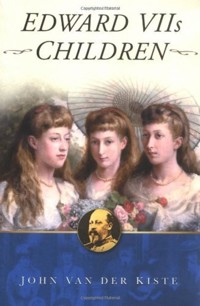
King Edward VII and Queen Alexandra had six children. Of the five who reached maturity, only one, the future King George V, has received much attention from biographers. The eldest son, Albert Victor, Duke of Clarence, a backward youth and a subject of scandal, died before he was thirty. The three princesses, Louise, Princess Royal and Duchess of Fife, the lifelong spinster Victoria, and Maud, Queen of Norway, were never well-known to the British public during their lifetime. In this detailed and fascinating account, John Van der Kiste has drawn upon previously unpublished correspondence from the Royal Archives, Windsor, to reveal for the first time the part this hitherto neglected group of characters played in supporting the royal family and crown during a period of transition from the Victorian age to the uncertain twentieth century.
Sie lesen das E-Book in den Legimi-Apps auf:
Seitenzahl: 373
Veröffentlichungsjahr: 1980
Das E-Book (TTS) können Sie hören im Abo „Legimi Premium” in Legimi-Apps auf:
Ähnliche







ALSO BY JOHN VAN DER KISTE
Published by Sutton Publishing unless stated otherwise
Frederick III: German Emperor 1888 (1981)
Queen Victoria’s Family: A Select Bibliography (Clover, 1982)
Dearest Affie: Alfred, Duke of Edinburgh, Queen Victoria’s
Second Son, 1844–1900 [with Bee Jordaan] (1984)
Queen Victoria’s Children (1986; large print edition, ISIS, 1987)
Windsor and Habsburg: The British and Austrian Reigning Houses 1848–1922 (1987)
George V’s Children (1991)
Princess Victoria Melita: Grand Duchess Cyril of Russia, 1876–1936 (1991)
George III’s Children (1992)
Crowns in a Changing World: The British and European Monarchies 1901–36 (1993)
Kings of the Hellenes: The Greek Kings 1863–1974 (1994)
Childhood at Court 1819–1914 (1995)
Northern Crowns: The Kings of Modern Scandinavia (1996)
King George II and Queen Caroline (1997)
The Romanovs 1818–1959: Alexander II of Russia and his Family (1998)
Kaiser Wilhelm II: Germany’s Last Emperor (1999)
The Georgian Princesses (2000)
Gilbert & Sullivan’s Christmas (2000)
Dearest Vicky, Darling Fritz: Queen Victoria’s Eldest Daughter and the German Emperor (2001)
Royal Visits in Devon and Cornwall (Halsgrove, 2002)
Once a Grand Duchess: Xenia, Sister of Nicholas II
[with Coryne Hall] (2002)
William and Mary (2003)
EDWARD VII’s CHILDREN
JOHN VANDER KISTE
First published in 1989
This new revised paperback edition first published in 2004 by Sutton Publishing Limited
The History Press The Mill, Brimscombe Port Stroud, Gloucestershire, GL5 2QGwww.thehistorypress.co.uk
This ebook edition first published in 2013
All rights reserved
© John Van der Kiste, 1989, 2004, 2013
The right of John Van der Kiste to be identified as the Author of this work has been asserted in accordance with the Copyrights, Designs and Patents Act 1988.
This ebook is copyright material and must not be copied, reproduced, transferred, distributed, leased, licensed or publicly performed or used in any way except as specifically permitted in writing by the publishers, as allowed under the terms and conditions under which it was purchased or as strictly permitted by applicable copyright law. Any unauthorised distribution or use of this text may be a direct infringement of the author’s and publisher’s rights, and those responsible may be liable in law accordingly.
EPUB ISBN 978 0 7524 9517 0
Original typesetting by The History Press
Contents
Foreword
Prologue
GRANDCHILDREN OF THE QUEEN 1864–1901
1 The Wales Nursery
2 ‘Such Ill-bred, Ill-trained Children’
3 ‘The “One” Wish of Louise Herself ’
4 ‘Poor Dear Eddy’
5 ‘The Frogs in the Pond’
6 ‘The Brightest of the Princesses’
CHILDREN OF THE KING 1901–10
7 ‘A Regiment, not a Family’
8 ‘A Revolutionary Throne’
THE KING AND HIS SISTERS 1910–38
9 ‘Our Awful Shipwreck’
10 ‘How Appalling This War is’
11 ‘Things Will be Very Different Here Now’
12 ‘The People “Love” to See a Happy Family Life’
Genealogical Tables
King Edward VII’s Children and Grandchildren
Reference Notes
Bibliography
Foreword
At first glance, it is hardly surprising that the children of King Edward VII and Queen Alexandra, with the exception of King George V, have been paid scant attention by biographers. John Gore’s ‘personal memoir’ of the latter,* undertaken at the request of King George VI and Queen Mary and published in 1941, was complemented by a similarly-commissioned work from Harold Nicolson ‘chronicling his public life and attitude towards the successive political issues of his reign,’ which appeared in 1952. These have been added to by Kenneth Rose’s equally indispensable biography of the King, based on a wealth of material made available more recently and published in 1983; and to a lesser extent by Roger Fulford’s concise character study in Hanover to Windsor, as well as Denis Judd’s profusely illustrated volume in the Lives of the Kings and Queens of England series edited by Antonia Fraser.
Of the remaining four who lived to maturity, only one – Prince Albert Victor, Duke of Clarence and Avondale – has been the subject of individual studies by Michael Harrison published in 1972, and by Theo Aronson in 1994. His brief life has been dealt with admirably in biographies of Queen Mary by James Pope-Hennessy (author of the officially-commissioned volume), Anne Edwards and David Duff, and with varying degrees of (in)accuracy and sensationalism in a host of ‘Jack the Ripper’ books, more of interest to the student of criminology or devotee of lurid detective fiction.
King Edward VII’s daughters had only a slight impact on public life in Britain, and hardly merit biographies to themselves beyond the chapters in part-biographies such as those of all the Princesses Royal by Geoffrey Wakeford and Helen Cathcart. All the same, their lives are of interest, not least Princess Maud, who unexpectedly became Queen of Norway nine years after her marriage to her cousin Prince Charles of Denmark. Only passing mention is made of her in the two accounts of her husband King Haakon VII’s life published in English, by Maurice Michael and Tim Greve. Her letters to Queen Mary, now in the Royal Archives, Windsor, most of which are published here for the first time, paint an interesting picture of life in a neutral European country during the Great War, 1914–18; they also reveal her shrewd observation of family matters from afar, particularly during and after the abdication crisis of 1936. Additional previously unpublished correspondence from her sisters Louise, Princess Royal and Duchess of Fife, and Princess Victoria of Wales, has helped to throw new light on members of the royal family from the latter days of Queen Victoria’s reign through the turbulent first four decades of the twentieth century.
I wish to acknowledge the gracious permission of Her Majesty The Queen to publish certain material to which she owns the copyright.
I am indebted to the following copyright holders for permission to quote from published works: Constable & Co Ltd (King George V, by Harold Nicolson; Queen Alexandra, by Georgina Battiscombe); John Murray (Publishers) Ltd (King Edward the Seventh, by Philip Magnus: King George V, by John Gore); Unwin Hyman Ltd (Dearest Mama and Your dear letter, both edited by Roger Fulford); and George Weidenfeld & Nicolson (King George V, by Kenneth Rose).
Every effort has been made to trace and acknowledge all copyright owners, and apologies are offered to authors and publishers whose rights may have been inadvertently infringed.
My thanks for constant help, encouragement and advice during the writing of this book are due to Wing Commander Guy and Nancy Van der Kiste; Theo Aronson; Bee Jordaan; Mrs R. Prior, of the Sussex Commemorative Ware Centre; The Hon. Giles St Aubyn; and Shirley Stapley.
John Van der Kiste
* This, and all other works referred to in the Foreword, is cited in full in the Bibliography.
Prologue
As the year 1863 dawned, London society looked forward to the wedding of Albert Edward, Prince of Wales, to Princess Alexandra of Denmark. Gloom had enveloped court and country since the Prince Consort’s death in December 1861, and at last there was reason to rejoice. The marriage was to take place on 10 March, the first wedding of a Prince of Wales since the ill-starred union of Prince George to Princess Caroline of Brunswick in 1795. It was widely expected that St Paul’s or Westminster Abbey would be the chosen venue for the ceremony.
However, still in deepest mourning for her husband, Queen Victoria refused to consider the idea of a wedding involving any state procession in which she would have to be seen ‘alone’ by her subjects – in other words, without Prince Albert at her side. She, therefore, decided that the ceremony should take place in the comparative seclusion of St George’s Chapel, Windsor Castle, which had room for less than one thousand.
Punch gave vent to the national feeling of disappointment. It commented acidly that the heir’s nuptials were to be held in an obscure Berkshire village, noted only for an old castle with no sanitary arrangements; already it was suspected that the castle’s poor drainage facilities had contributed to the Prince Consort’s fatal illness. The only announcement, it suggested, should be inserted in the marriage columns of The Times, and worded thus:
On the 10th inst., at Windsor, by Dr Longley, assisted by Dr Thomson, Albert Edward England K.G. to Alexandra Denmark. No cards.
Prince Albert Edward (‘Bertie’) was born on 9 November 1841, the second child of Queen Victoria and Prince Albert. It was ironic that although his three younger brothers, all inherited, in some measure, the gifts of scholarship and temperament that their parents wished for him, he was singularly lacking in this respect. Alfred (‘Affie’) showed a remarkable aptitude for geography, scientific subjects, and anything mechanical or practical. Arthur was an even-tempered boy who soon became (and remained) his mother’s favourite, while the delicate Leopold was a precocious reader whose love of fine arts and literature belied his tender years.
Bertie, however, was the one born to inherit his mother’s throne. It was therefore vital – at least, as far as his father and the pedantic unofficial family adviser, Baron Christian von Stockmar, were concerned – that he should be subjected to an intense educational regime. Bertie, as Queen Victoria perceptively recognized, was her ‘caricature’. He took after her in his Hanoverian zest for life, aversion to studying, and hasty temper. She regretted that in no way did he resemble his beloved and intellectual father.
Moreover, it was his misfortune to be overshadowed throughout childhood by his brilliant elder sister Victoria (‘Vicky’), Princess Royal. She was exceptionally bright and eager to learn; only a particularly clever boy could have held his own against her. She was as ready to tease him for his stammer and lack of concentration as their parents were to praise her and scold him for his shortcomings. His childish tantrums were a disruptive influence in the nursery. When told to do something he would scream violently, stamp his feet and throw things around until he was exhausted. Only his governess Lady Lyttelton was quick to appreciate his positive qualities – his charm, eagerness to please, and readiness to tell the truth. (Vicky’s ‘slyness’ and tendency to lie were readily forgiven by her indulgent father.) Lady Lyttelton saw that he preferred, and would always learn more from, people rather than books. Nonetheless, he was certainly not unintelligent; he could speak three languages by the age of six. Fortunately his natural capacity for affection was never soured. Though he was always a little in awe of Vicky and her brilliant intellect, they remained devoted to each other throughout their lives. When he was five, Queen Victoria commented that she was ‘much touched by Bertie asking me to do his little Sunday lesson with him sometimes.’
At the age of seven and a half, he was handed over into the care of a tutor, Henry Birch, former assistant master at Eton. Six days a week his timetable was divided into five hourly or half-hour periods. Lessons were never discontinued for more than a few days at a time, but family birthdays were always holidays, and the routine was relaxed when the court moved between Windsor and London. Though Bertie resented his demanding regime, he became greatly attached to Birch, who saw – unlike Stockmar and Prince Albert – the boy’s excellent memory and ‘very singular powers of observation.’ When Bertie was ten, Birch resigned to take holy orders, and was succeeded by Frederick Waymouth Gibbs.
On his seventeenth birthday Bertie was gazetted as an honorary colonel and made a Knight of the Garter. He was granted his own establishment at White Lodge, Richmond Park, but his freedom was curtailed by three elderly equerries and a governor, Colonel Robert Bruce. He also received a long and ponderous memorandum written by his father, warning him among other things that life was ‘composed of duties, and in the due, punctual and cheerful performance of them the true Christian, true soldier and true gentleman is recognized.’1
Princess Alexandra (‘Alix’) was the second child and eldest daughter of Prince Christian of Schleswig-Holstein-Sonderburg-Glucksburg and Princess Louise of Hesse-Cassel, niece of King Christian VIII of Denmark. Prince Christian had represented the King as the bearer of congratulations from Denmark to Queen Victoria on her accession to the English throne in 1837 and again a year later at her coronation. There were rumours at the time that he might be a candidate for the hand of the young spinster Queen.
Princess Alexandra, her three brothers and two sisters, were all born and brought up at the Yellow Palace (a more humble abode than its name might suggest) in Copenhagen. Princess Louise was a great-granddaughter of Frederick, Landgrave of Hesse-Cassel, son of King George II of England, and her children were thus fourth cousins to Queen Victoria’s brood of nine.
Like many European princes, Prince Christian was not of royal pedigree, and in nineteenth-century Denmark there was not the gulf between monarch and subject that existed elsewhere on the continent. The king ruled and lived like an old-fashioned country squire, able to walk through the streets of Copenhagen without causing a stir, and giving audiences to his subjects with the minimum of formality.
By the standards of the family into which Princess Alexandra was destined to marry, the Danish aristocracy was comparatively poor. Prince Christian received no civil list or allowance until he was nominated heir to the childless King Frederick VII in 1852, only a meagre salary as a captain in the Danish guards, which was augmented by occasional sums from the King and from his father-in-law. The children were clothed simply, the girls wore plain cotton dresses which were inexpensive to launder and difficult to spoil, and when they were old enough they helped their mother with dressmaking. Servants were a luxury the family could ill-afford, so the youngsters dusted their own rooms, and when guests were entertained they waited at table.
Prince Christian was a devoted husband and father, but devoid of cultural interests, having had a meagre education. Princess Louise was the more dominant personality, and not only did she make most of her children’s clothes but also taught them general knowledge, foreign languages, music and drawing. They also had English nurses, and were thus familiar with the language from their earliest years. Prince Christian took responsibility for their physical education in hand; they revelled in gymnastics and outdoor sports, especially riding.
Although lacking money, the family was a united one. All the children remained devoted to each other throughout their lives. Summers were generally spent at Schloss Rumpenheim, near Frankfurt, or Bernstorff, a hunting lodge about five miles from Copenhagen, which was granted to Prince Christian as an additional residence when he was nominated as heir. It was surrounded by a large wooded park which provided a veritable playground paradise for them all. A healthy, extroverted crowd, the Danish royal family would in years to come be renowned for its love of rough-and-tumble frolics and practical jokes. Even when they were middle-aged, no family reunion at Bernstorff was complete without the odd pillow-fight, or without the springs of a sofa having to be renewed. Guests would complain, or make the excuse, that it was impossible to write letters because of the high-spirited noise.
Only one photograph and one painting of Princess Alexandra as a child survive; both show her at the age of eleven. Likewise there are few accounts of her early life as an individual. Such as there are suggest that she was the prettiest of the sisters, extremely unpunctual, rather a tomboy, and yet wise with a sense of tact beyond her tender years.
Shortly before Bertie’s seventeenth birthday, Queen Victoria and Prince Albert became increasingly concerned with choosing their son a suitable wife, enlisting Vicky (now married to ‘Fritz’, Prince Frederick William of Prussia) to scour the pages of the Almanach de Gotha. Between them they decided that the right princess would need good looks, health, education, character, intellect, and a good disposition. Bertie would not look at anyone who was too plain, and his future wife would have to be fairly strong-willed, otherwise her lot would certainly not be a happy one.
Since the Elector of Hanover had ascended the British throne as King George I in 1714, it had been traditional for the monarch to choose marital partners for his or her offspring from Germany. Stockmar backed the Queen and her husband in their quest for a German daughter-in-law, but to their disappointment all the eligible princesses were too young, too delicate, too dowdy – or Roman Catholics.
The only one who could not be faulted on these grounds was Princess Alexandra of Denmark, but political considerations made a Danish bride inadvisable. There was tension between the Scandinavian kingdom and the German confederation over the future administration of the Duchies of Schleswig and Holstein, and the British royal family was unequivocally on Germany’s side. Besides, Princess Christian’s relations had a reputation for immorality. Queen Victoria regarded her as beyond reproach, but not her mother and sisters – nor King Frederick VII himself. She and Prince Albert had striven hard to banish the moral shortcomings that had tarnished the Hanoverian dynasty and Coburg family, and they had no desire to see any tainted Glucksburg or Hesse-Cassel blood undo their work.
Yet she had reckoned without the influence of her Cambridge cousins. Princess Mary Adelaide of Cambridge had known Alexandra since the latter’s childhood, and had played with her as a girl at Rumpenheim family reunions. She and Admiral van Dickum, Danish minister in London, were secretly trying to solve the problem for Her Majesty by pressing for an Anglo-Danish marriage.
However, it was not their influence that prevailed, but rather that of Vicky’s lady-in-waiting, Lady Paget. Shortly after her wedding to the British minister in Copenhagen in October 1860 she was invited to dine at Windsor, and this gave her an opportunity to report on the charm of Princess Alexandra. Despite their initial misgivings, Queen Victoria and the Prince Consort wrote to Vicky asking her to find out more. While admitting that, as a Prussian, she would not wish her brother to marry a Danish princess, she could say nothing but good of Alexandra. Albert was likewise instantly captivated; after seeing her photograph, this most reserved of princes proclaimed that he would ‘marry her at once.’
By the following spring, other candidates for Alexandra’s hand were believed to be in the field. Foremost among them was the Tsarevich Nicholas. Vicky thought ‘it would be dreadful if this pearl were to go to the horrid Russians.’ Bertie was told of the plans being tentatively made, and reacted with restrained enthusiasm. Everyone involved had taken it for granted that a princess of such modest means would be thrilled by the prospect of becoming the Princess of Wales, but in her more impatient moods Queen Victoria secretly feared that Alexandra might not accept her son.
Not surprisingly, Bertie wanted to meet his proposed bride. It was arranged that he would spend several weeks that summer in camp at the Curragh near Dublin with the Grenadier Guards. He could therefore visit German army manoeuvres in the Rhineland later, and then stay with Vicky at Baden, close to Rumpenheim, where the Danish princess would be staying. With a little subterfuge, a ‘chance encounter’ could be arranged without attracting the attention of Princess Alexandra’s other potential suitors.
In September 1861, Alexandra and her parents set out from Rumpenheim for Speyer. She was still in ignorance about the plans concerning her. The first intimation she had that something special was happening was when she was instructed to wear her best clothes. As the three of them were admiring the cathedral, they chanced to meet the Crown Prince and Princess of Prussia and the Prince of Wales. The latter and Princess Alexandra were introduced, and though he had perhaps been told so much about her beauty that he was bound to be slightly disappointed when confronted by the reality, there was no denying that she was a lively and charming companion. They were left to wander round the cathedral together, observed at a discreet distance by the adults. Later that day, all six of them travelled together to Heidelburg, spent the night in the same hotel, and the young couple exchanged signed photographs before parting.
Much to the dismay of his parents, Bertie appeared to dread the idea of marriage and fatherhood, thus bringing an admonition from his anxious father not to indulge in ‘a general vague apprehension that you might someday meet someone else you like better,’ and thereby lose ‘positive and present advantages for the hope of future chances which may never occur.’2
In November, the Prince Consort was informed by Stockmar of ‘a subject which has caused me the greatest pain I have yet felt in this life.’ It was rumoured throughout Europe that the Prince of Wales had indulged in a liaison with an actress while at the Curragh that summer. Enquiries revealed that this scarcely unexpected turn of events was true. Already feeling the strain from overwork and a succession of family deaths (notably that of his mother-in-law the Duchess of Kent, whose passing in March had left the Queen stricken with grief, and two Coburg cousins in Portugal), Prince Albert took this news badly. Suffering from the initial symptoms of what proved to be typhoid fever, he paid a visit to his son who was studying at Cambridge. They had a long frank talk, in which Bertie asked for the ‘intimacies’ to be kept from his mother. A few days later, Albert took to his bed at Windsor, and on 14 December he died at the age of forty-two.
Queen Victoria had not yet recovered from the shock of her mother’s death, and this second bereavement within nine months brought her close to losing her reason. She was convinced that Bertie’s ‘fall’ had broken his father’s heart, and much as she pitied him, ‘I never can or shall look at him without a shudder.’ Where his marriage prospects were concerned, she feared that Princess Alexandra’s parents would no longer accept him for their son. Princess Christian was indeed upset, not so much by the Prince of Wales’s dalliance as by the belief that he was bitterly detested by his mother. If Queen Victoria really hated her son, she feared, she was bound to dislike his wife as well.
However, the Queen was determined to see her wayward son and heir married as soon as possible. A betrothal between him and the Danish princess had been one of her ‘beloved angel’s’ dearest wishes; it was therefore her responsibility to see it fulfilled, especially as Tsar Alexander II of Russia was apparently looking at her closely as a potential daughter-in-law as well.
In September, Queen Victoria went to stay with King Leopold of the Belgians at his palace in Laeken, ostensibly to visit Coburg as a personal pilgrimage to her husband’s childhood home, but really to meet Prince and Princess Christian and their two elder daughters. The Queen was immediately impressed with Alix, whom she found ‘lovely’, with ‘such a beautiful refined profile, and quite ladylike manner.’ After a long conversation with her parents, the Queen left for Coburg, while the Danish family went to Ostend. Bertie joined them there later that week, and next day they went to Laeken. Everyone, suggested King Leopold, should take a stroll in the gardens, and the young couple should be allowed to lag behind. Accordingly, Bertie proposed and Alix accepted him.
That afternoon he wrote Queen Victoria a long, ‘touching and very happy’ letter, expressing his delight at being betrothed and his unbounded love for Alix. Fervently, he hoped that ‘it may be for her happiness and that I may do my duty towards her.’ At the same time, he wished that ‘our happiness may throw a ray of light on your once so happy and now so desolate home. You may be sure that we shall both strive to be a comfort to you.’3
Bertie was dispatched on a Mediterranean cruise with Vicky and Fritz, while Queen Victoria demanded the presence of her future daughter-in-law at Osborne and Windsor. Prince and Princess Christian protested in vain at their daughter being sent to England ‘on approval’. For Alix it was an unnerving prospect, but she coped admirably with the experience. Queen Victoria quickly warmed to this attractive, unsophisticated yet serious girl. Though not a great reader, Alix brought a small collection of books with her, all well-worn copies of religious works heavily underlined with her own comments in pencil. When the Queen asked why she always appeared at breakfast in a jacket, Alix explained that it was such an economical garment; any skirt could be worn with it, and she owned very few dresses as she had to make them herself.
Alix was soon accepted by the Queen’s other children. She formed a strong bond with Affie, who had half-hoped that his elder brother might lose interest in her, so that he could marry her himself. He mischievously persuaded her that it was polite to ask Mama every afternoon if she had enjoyed her forty winks.
As much as the Queen admired her, she still informed Alix that she must put her country and family behind her, and not attempt to influence her husband in any political questions that might arise.
Fêted enthusiastically by the people of Copenhagen, Princess Alexandra left her old home at the end of February 1863. She crossed the North Sea and sailed up the Thames on board the royal yacht Victoria & Albert, receiving the Mayor of Margate, his deputation and his address of welcome on a scroll with becoming dignity. After their backs were turned, she was seen to hit her brother Prince William with it, both laughing helplessly at the solemnity of the occasion. Yet despite her youthful high spirits, she was astonished by the thousands of people who welcomed her as the yacht drew alongside the pier at Gravesend. When the Prince of Wales stepped onto the deck to give her a hearty embrace, the crowds applauded ecstatically.
Early on the morning of 10 March, Queen Victoria took the bride and groom to the mausoleum at Frogmore where her husband’s remains had been interred three months previously. They stood before the tomb as she joined their hands together, informing them solemnly that ‘He gives you his blessing.’
Still in deepest mourning, her black dress relieved only by the Garter star and blue ribbon, the Queen attended the wedding in St George’s Chapel more as an observer than a participant, watching from the Royal Closet above the chancel. Vicky had spoken excitedly of her delight at the ceremony, only to be chided by her mother who asked how she could possibly rejoice, ‘when at every step you will miss that blessed guardian angel?’ Ladies of the royal family and household were instructed to wear half-mourning of white, grey, mauve or purple, but the other guests were permitted to wear such colour and jewellery as they wished. Although Duke Ernest of Saxe-Coburg Gotha, the Prince Consort’s elder brother, had initially opposed the match and described it as a ‘thunderclap for Germany,’ he entered graciously into the spirit of the occasion, sharing with Fritz their duty of supporting the groom.
As for the latter, in his general’s uniform with the mantle and decorations of the Garter, he was noticeably pale and nervous. The bride wore a dress of white satin trimmed with Honiton lace and orange blossom. Their responses to the Archbishop of Canterbury were so muted that they could only be heard by those close to them. Nonetheless, Lord Clarendon remarked that the Prince ‘looked very like a gentleman and more considerable than he is wont to do.’ To Charles Dickens, the bride appeared as ‘not simply a timid shrinking girl, but one with character distinctive of her own, prepared to act a part greatly.’4
The couple spent a week’s honeymoon at Osborne, moving into their London residence, Marlborough House, on their return to the mainland. Easter was spent at their Norfolk estate, Sandringham, and in the spring both threw themselves wholeheartedly into society life. The Prince of Wales made his first public speech on 2 May at the Royal Academy of Arts annual banquet, and his wife held her first drawing-room at St James’s Palace a fortnight later. On 7 June they paid a state visit to the City of London, and the Freedom of the City was conferred on the Prince. After a banquet and ball, the Princess opened the dancing with the Lord Mayor. ‘Her manner,’ commented The Spectator, ‘so English in other respects, was un-Englishly cordial.’
For society, this new era had dawned not a moment too soon. With his marriage to Queen Victoria, Prince Albert had brought a staid influence to bear on social events at which royalty was present. Since his death, and his widow’s protracted mourning, these had virtually ceased. Now this Prince and Princess who looked, in Disraeli’s elegant words, ‘like a couple in a fairy-tale,’ brought back a long-departed joie de vivre.
Queen Victoria’s gratitude for this favourable effect ‘his sweet wife’ had had on her son and heir was shortlived. She was accurate in her judgement that Alix ‘quite understands Bertie and shows plenty of character,’ even though she was certainly not clever. By June, she was complaining that they would both ‘soon be nothing but two puppets running about for show all day and night.’ Already she feared that the Princess’s health was not up to the demands that her position and her husband were making of her. She was beginning to look sallow, overtired, and – most serious of all – at drawing-rooms, people noticed that she seemed hard of hearing. She had inherited from her mother a tendency to deafness, which was to increase with each ensuing illness and eventually become total.
The Prince and Princess of Wales were giving the monarchy a higher profile that proved popular with London society. The Prince Consort’s earnestness of purpose and his widow’s seclusion had been ill-received in many quarters, and Queen Victoria could not but be jealous of her son’s and daughter-in-law’s success in an area where she and her husband had failed. Yet she was seriously concerned for their health. Though Bertie insisted that he was anxious to take care of his wife, his mother deplored their ‘going out every night till she will become a skeleton, and hopes there cannot be!’5
By midsummer, Alix was expecting a child. Her marriage and impending motherhood were not the only dramatic events for the Danish royal family that year. In June her second brother William was elected King of the Hellenes, taking the style of King George I, and in November their father succeeded to the throne of Denmark as King Christian IX. He immediately laid claim to the Duchies of Schleswig and Holstein, while Duke Frederick of Augustenburg, son of Queen Victoria’s half-sister Feodora and a friend of Fritz from college days, proclaimed himself head of their government on King Frederick’s death. In this he was supported by Queen Victoria, Vicky, and Fritz.
‘The duchies belong to Papa,’ Alix declared defiantly, and Bertie sided wholeheartedly with her. Family harmony at Windsor was shattered when Vicky, Fritz and Feodora (who were all staying in England at the time) joined them. Alix was five months pregnant, and she revealed a steely side to her character which nobody had yet seen. Goaded almost beyond endurance by quarrels, Queen Victoria took her uncle King Leopold’s advice and forbade any further mention of Schleswig and Holstein in her presence.
Alix expected her child to be born in March or April 1864, and as there was still much decorating to be done at Sandringham, she and Bertie spent Christmas at Frogmore House in Windsor Park, the former home of the Duchess of Kent. There was a severe frost, which made for excellent skating on Frogmore Lake. Alix enjoyed skating herself, but as her condition made participation inadvisable she had to content herself with watching her husband and their friends from the comfort of a sledge-chair on the ice each afternoon.
On 8 January, although she had been suffering some twinges of pain, she was determined not to be left indoors. The party returned to the house at dusk. Only then did her lady-in-waiting Lady Macclesfield, herself the mother of thirteen children, realise that the time had almost come. Nothing was ready, so she had to go to the local draper for some flannel.
Bertie did all he could to encourage his wife, and at nine o’clock that evening she gave birth to a son. Despite weighing only three and a half pounds, he appeared to be strong and well.
Grandchildren of the Queen 1864–1901
1
The Wales Nursery
When the baby prince was three days old, Queen Victoria reported to Vicky that he was ‘quite healthy and very thriving. It [sic] has a very pretty, well-shaped, round head, with very good features, a nice forehead, a very marked nose, beautiful little ears and pretty little hands.’1 As he was second in line to the throne, she maintained that the only names possible for him were Albert Victor, after herself and her late husband. Much as the Prince and Princess of Wales respected her decision, they felt that the choice should have come from them and not from her. Bertie was sufficiently moved to complain that six-year-old Beatrice had told Lady Macclesfield that Mama had settled the issue herself.
The first few weeks of Prince Albert Victor’s life, or ‘Prince All-but-on-the-ice’, as he was irreverently dubbed by contemporary wags, were overshadowed by the threat of war in Europe. There was little doubt that his mother’s anxiety concerning the plight of Denmark had contributed to his early arrival.
On 16 January, Prussia sent the Danish government an ultimatum to evacuate the duchies within twenty-four hours. The latter refused, and on 1 February a combined Prusso-Austrian force crossed the frontier into Schleswig. On behalf of the British government, Foreign Secretary, Lord John Russell announced that there was no question of going to war single-handed. Much to the Princess of Wales’s distress and her husband’s anger, ‘thinking everyone wishes to crush Denmark,’ the great powers were not prepared to intervene in order to rescue King Christian and his domains from inevitable defeat. Within a few weeks, Schleswig was in German hands, apart from the stronghold of Dybboel.
Denmark’s waning fortunes overshadowed the christening of Prince Albert Victor Christian Edward at Windsor in March. He roared throughout the ceremony, his mother looked thin and unhappy, and at luncheon afterwards the Prussian Ambassador, Count Bernstorff, declined to drink King Christian’s health. Though the war grieved Queen Victoria, her German sympathies were not dented one iota by Alix’s unhappiness. She could only remark, how terrible it was ‘to have the poor boy [Bertie] on the wrong side.’ If only he had married ‘a good German and not a Dane.’2 She was honest enough to admit that her daughter-in-law’s parentage had been a barrier to their intimacy, though as time would prove, this was only temporary.
None of this reflected on the infant prince. Despite her oft-expressed aversion to the frog-like physical characteristics of tiny babies, at the age of ten weeks he was pronounced by his grandmother to have a pretty little mouth, ‘a well-shaped head and a great look of dear Alix … a very pretty, but rather a fidgety baby.’3
In July 1864 Denmark was forced to relinquish her sovereignty over the Duchies of Schleswig and Holstein. King Christian IX had reigned for a mere eight months before losing more than half his kingdom. This humiliation made Alix more determined than ever to return to her parents for a holiday, something she had longed to do anyway in order to show off her son, and to introduce her husband to Copenhagen. Fearing political repercussions, Queen Victoria wanted to forbid the visit, but her ministers raised no objection. In the end, she gave her permission as long as her son and daughter-in-law promised to remain incognito, did not allow political discussions in their presence, included Germany in their itinerary before returning, and sent the baby prince back to Balmoral on their departure from Denmark.
This last condition was not made out of mere possessiveness, for the queen had her doubts that Bertie and Alix were fully aware of their parental responsibilities. On seeing the baby at Abergeldie that September, she was shocked at his frail appearance.
When he met his daughter’s family at Elsinore, King Christian declared that it was the happiest day he had known since his country was invaded. The Princess of Wales was equally delighted to be ‘at home again,’ though her husband was soon bored. He found their rooms at the Danish palaces uncomfortable, the food monotonous, and the evenings of small-talk and games of loo unbearably tedious. When a member of the household dared to tell him in exasperation that there was nowhere on earth more boring than Fredensborg Palace, the Prince of Wales pretended to be furious. ‘How dare you say that!’ he retorted, adding after a pause, ‘I remember, of course, you have not been to Bernstorff yet.’
After frequent requests for his return, Eddy was sent home on the royal yacht in the care of Lord and Lady Spencer. It was with a heavy heart that Bertie allowed his infant son back across the North Sea, writing to Queen Victoria that Alix hated being compelled for the first time to part with ‘her little treasure’ against the doctors’ advice.
Queen Victoria continued to watch her grandson’s progress with interest and affection – all the more so as her other grandchildren, the sons and daughters of Vicky, now Crown Princess of Prussia, and Alice, married to Prince Louis of Hesse, lived in Germany and she saw them only rarely. To Vicky, she wrote (27 January 1865) that Eddy was:
a perfect bijou – very fairy-like but quite healthy, very wise-looking and good. He lets all the family carry him and play with him – and Alix likes him to be accustomed to it. He is very placid, almost melancholy-looking sometimes. What is not pretty is his very narrow chest (rather pigeon-breasted) which is like Alix’s build and that of her family and unlike you all with your fine chests. He is decisively like her; everyone is struck by it.4
By now it was evident that there would soon be a second child in the Wales’s nursery. Like his elder brother, he was impatient to make his entrance into the world. On 2 June 1865 the Princess of Wales appeared at an afternoon concert, but at the last moment she excused herself from attending a dinner-party at Marlborough House that evening. At one-thirty next morning she gave birth to a second son. Queen Victoria was roused from her sleep a couple of hours later with the arrival of two telegrams from Bertie; one to say that Alix had been taken ill, and one to announce the baby’s arrival.
The Queen was most put out at being unable to attend her daughter-in-law’s second confinement as well as the first. ‘It seems that it is not to be that I am to be present at the birth of your children, which I am very sorry for,’5 she complained to her son. Queen Louise struck a happier note with her message of congratulation, though in writing to her son-in-law she could not omit her own element of feminine solidarity: ‘How proud you must be, two boys, don’t you grow more attached to Alix at every present thus brought to you in pain and anguish?’6
Remembering their experiences with the eldest child, Bertie and Alix had chosen names for their second son well in advance. Writing to his mother on 11 June, the Prince of Wales said that they had agreed for some time that if they had another boy he should be called George, ‘as we like the name and it is an English one.’ The second name, he added, would be Frederick, as used regularly by his wife’s Danish forebears.
To Queen Victoria, however, this was not good enough; ‘George only came in with the Hanoverian family.’ (She had conveniently overlooked the name of England’s patron saint.) Though she had hoped for ‘some fine old name,’ she approved half-heartedly of Frederick, and hoped they would call him so; ‘however, if the dear child grows up good and wise, I shall not mind what his name is.’7
George Frederick Ernest Albert was christened at St George’s chapel, Windsor, on 7 July. Thereafter, within the family, he was always known as ‘Georgy’.
The pride in which Bertie and Alix held their two elder children was tempered somewhat by the shadow of the Queen, and her insistence on a major say in their upbringing. As early as 11 March 1864 she had made plain, to King Leopold, that ‘Bertie should understand what a strong right I have to interfere in the management of the child or children; that he should never do anything about the child without consulting me.’8 The Prince knew that it was useless to protest, but Alix resented her mother-in-law’s domination. When Georgy was a few months old, Queen Victoria lamented that the two women could never be as intimate as she had hoped; ‘she shows me no confidence whatsoever especially about the children.’ Such expressions were invariably exaggerated, as Vicky, usually the recipient of her mother’s complaints, always recognized.
Though by now widowed for four years, the Queen was still jealous of her son’s married bliss, and of his and Alix’s popularity in society; the latter, she insisted was making her ‘haughty and frivolous’. It was clear that Eddy and Georgy would not receive an upbringing even remotely like that to which Bertie and his brothers and sisters had been subjected under the eagle eye of Prince Albert and Stockmar. Indeed, this was the last thing that the Prince of Wales wanted. He had vowed that no children of his would be condemned to a Stockmar regime.
Lord Melbourne’s warning to Queen Victoria on behalf of her eldest son not to be ‘over solicitous about education,’ as ‘it may mould and direct the character, but it rarely alters it,’ went unheeded at the time. Yet the son whom the late Prime Minister had had in mind endorsed such philosophy without hesitation. His childhood memories, unlike those of the Princess of Wales in her comparatively humble yet carefree parents’ home at Copenhagen, were not the happiest. It was no wonder that they resented Mama’s watchful eye and continual fault-finding. Up to the day of her death both were always in awe of Queen Victoria. Bertie readily, if reluctantly, appreciated that as sovereign she had a ‘right to interfere’ in the formative years of two children so close to the throne, but Alix did not. This undoubtedly explained her occasional ‘want of softness and warmth’ which her mother-in-law deprecated at the time.
Such criticisms were generally made in moods of mild exasperation which soon passed. Yet it was in no small measure due to Vicky, the inveterate family peacemaker, that resentment was ironed out before it had time to take root. Could Mama not make an effort to see more of Alix on her own, she suggested in her letters from Germany; it would please her and Bertie so much, for she was so devoted to her, even though ‘she knows and fears she bores you.’ The advice was taken at once, and Queen Victoria invited Alix to Windsor for luncheon followed by a walk and drive alone. ‘Nothing could be nicer or dearer than she is,’ she wrote to Vicky afterwards.
By now Alix was pregnant for the third time; her condition prevented her from accompanying Bertie to St Petersburg for the wedding of her sister Dagmar to the Tsarevich, later Tsar Alexander III of Russia. It would have been better for his reputation and popularity if she had been able to go too, for reports soon reached English society, and his family, that he was paying too much attention to Russian beauties while away.




