


Erhalten Sie Zugang zu diesem und mehr als 300000 Büchern ab EUR 5,99 monatlich.
- Herausgeber: Originals
- Kategorie: Sachliteratur, Reportagen, Biografien
- Sprache: Englisch
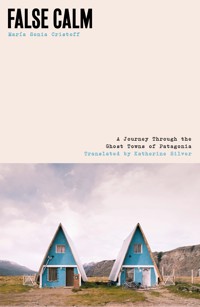
Part reportage, part personal essay, part travelogue, False Calm finds Argentinian author María Sonia Cristoff writing against romantic portrayals of Patagonia as she journeys from one small town to the next. Cristoff returns home to chronicle the ghost towns left behind by the oil boom. She explores Patagonia's complicated legacy through the lost stories of its people and the desolate places they inhabit. In one town, a man struggles to maintain one of just two remaining stores because buses refuse to stop as scheduled; in another, the television in each household plays the same channel; elsewhere, she speaks with an amateur pilot who assembles model aeroplanes to keep himself company. Everywhere, Cristoff blends superstition, myth and firsthand accounts to conjure the reality of a Patagonia that unveils a startlingly lucid netherworld.
Sie lesen das E-Book in den Legimi-Apps auf:
Seitenzahl: 352
Veröffentlichungsjahr: 2025
Das E-Book (TTS) können Sie hören im Abo „Legimi Premium” in Legimi-Apps auf:
Ähnliche


















i
‘It has a magical quality, an intimate journey, so humane, one that opens the imagination and reminds us of who we have been and what we have, and have lost.’ Philippe Sands
‘A bold, beautiful book.’ New York Times
‘An artful, atmospheric, thought-provoking depiction of life between silence and open space.’ Los Angeles Review of Books
‘Unique, imaginative and unnerving.’ Kirkusii
iii
FALSE CALM
María Sonia Cristoff
A Journey Through the Ghost Towns of Patagonia
Translated byKatherine Silver
Contents
1
My father was born in the middle of Patagonia, but everybody around him spoke Bulgarian. My grandfather avoided the kind of job in the oil industry that awaited most of his fellow immigrants by purchasing an enclave of his own next to the Chubut River, in an area where the Welsh community had settled, and, on the pretext of becoming a farmer, he set himself the task of reconstructing his very own Bulgaria. With time, he managed to create perfectly designed clones of the animals, the rhythm of the harvests and the rains, the yogurt my grandmother made, the magazines written in the Cyrillic alphabet, and the Bulgarian friends who came to visit him from time to time. Whenever my father left the enclave to play soccer with friends from the neighbouring farms, he knew that the rules were to kick the ball hard and speak that other language that his 2blond friends were speaking: from the time he was very young, he managed quite well in the Welsh of the playing field. Then he’d return home, where they spoke rarely or in Bulgarian. One day, when my grandparents figured he must have been about six years old, they brought him to the nearby village, Gaiman, and deposited him on a school bench. From there, by closely observing his surroundings, my father realised that most, he would almost say all, were speaking a third language. It didn’t sound anything like the ones he knew, and it was called castellano, Spanish.
In his blind obstinacy, my grandfather had joined the project of reconstructing one’s homeland in Patagonia, as so many others had attempted to do before him, from entrepreneurs such as Antoine de Tounens – who had wanted to create the Kingdom of Araucanía and Patagonia in the Andes region – to Iuliu Popper – who minted his own coins and wrote his own laws in his colony in Tierra del Fuego – to, some would say, the ancestors of the Welsh kids my father played soccer with. But my grandfather’s Little Bulgaria could not stop the infiltration of one of Patagonia’s most distinctive characteristics: isolation. As a child, I saw this isolation as positive, as had so many European explorers in Patagonia: for them it had meant the possibility of extending their domains, for me the possibility of being in a place where routine did not hold sway. Daily schedules, meals, and scents were different there than in my daily life in the nearby city, and nobody ever asked me how I was doing in school. It was only later, as 3a teenager, that the isolation began to feel to me as it did to the Argentine nation builders of the nineteenth century, as something negative. For them, it contained the threat of the unconquerable, of the territory that refused to be integrated into the fledgling nation; for me, it had turned into the very thing that was keeping me away from the country where things were happening, from the people I wanted to meet, the books I wanted to read. It was a characteristic that made Patagonia a space disrupted by a kind of nightmarish logic, where I could walk and walk but still remain in the same place. Although Argentine planners had failed to carry out many of their projects for the South, they had been successful at propagating the idea that life in Argentina passed through Buenos Aires. So, at the beginning of the eighties, I left.
I returned two decades later, when I no longer saw things one way or the other, and with time I have reached the conclusion that, in addition to my personal history, isolation is present in everything I have found written about Patagonia. Everything, I repeat, though I don’t think this is the place to make lists. I returned to write an account of this eminently Patagonian characteristic. I wanted to see the shapes it takes today; I wanted to locate it at its furthest extremes, which is why I started to look for towns that for one reason or another – not solely based on census data – could be called ghost towns. At first I picked them with scrupulous care, then I went to the places and stayed. I had at my disposal an infinite number of hours to roam 4around towns whose perimeters can be walked in a single hour. I sat on street corners and watched the dogs amble by. I wholly surrendered to the daze generated by the excess of light or wind or silence. There were days I felt like I was in a scene from a science fiction movie into which I had been sucked by some powerful and not wholly defined force. I saw things, many things: ghostly does not imply empty. Sitting there, almost without asking any questions or moving a muscle, without making any effort whatsoever, I turned into a kind of lightning rod, a receiving antenna. The stories came to me, the atmosphere used me as a ventriloquist. Thus arose the double-edged voice that narrates what follows: I was constantly trying to maintain control, but I must acknowledge that there were moments when the atmosphere spoke through me.
one
The photograph must be no more than five years old. Everybody in it finished primary school in the mid-sixties, so they are all between the ages of forty and fifty. There’s a woman on the right with short hair and one white lock, à la Susan Sontag, who is flanked by two skinnier, more submissive-looking women. The central importance of the apocryphal Sontag is obvious, though I wonder if her authority had already been established in adolescence, or if, suddenly, on that night of the reunion, the other two had found themselves attracted to the unexpected and still incomprehensible magnetism exuded by someone they’d always felt sorry for. Most of the people who were reunited that night – according to the woman who took the picture out of a shoebox lined with fabric – hadn’t seen one another for years. Almost all of them were the 6children of the more privileged workers in the oil industry, and as adolescents they had gone away to study or find more suitable matches. There is a row of men perched on chairs and looking straight at the camera, each with a glass in his hand. The glasses are made of plastic. The man in the middle of the row, the owner of the photograph tells me, is the one who organised the reunion. He spent about a year tracking them down one by one. Like a detective, like an avenger. He found some of them abroad: in Spain, Germany, even the United States. Quique, the man who organised everything, never moved away from here, from Cañadón Seco. And maybe that’s why he got the idea; he saw that theatre, which was sometimes used to show movies and other times wasn’t used for anything, and he thought, why not use it as a time machine to travel back into the past. Quique is skinny, and he looks like someone who’s gone through life with a small but constant malaise that he has never stopped to think about. In the photo, he’s smiling at the camera, like everyone else in that row. The reunion must have taken place in the summer: most of the men are wearing lumberjack shirts. The women’s attire, in contrast, shows painstaking care: each woman devoted as much thought to her dress as she did to the one for her wedding, and to the one she would have worn to the first big family funeral, if she’d had time. They look relaxed in the photo, as if they’d already gone through that inevitable moment at any class reunion when everybody is sitting around a big table and feels obliged to give an account of what they’ve done with their lives. Despite the evasions – the 7long-windedness, the innuendos, the changes of subject, the feigned deafness, the wallets opening to reveal pictures of children and/or spouses – someone would have surely admitted a failure, and most would have inferred everybody else’s failures, someone would have been surprised by a revelation with sexual or economic implications, others would have been in charge of remembering those who’d died, others those who hadn’t come. Everyone would have made an effort, especially that night, to show themselves off in the best possible light. Their eyes also made clear that by that point in the evening they’d already drunk a lot of the red wine that can be seen through the white plastic glasses. The photograph seems to have been taken at precisely the right moment – a labile, furtive moment – during that interval between settling accounts and saying goodbye, that swath of time that leaves room only to recall the best kind of connection that had ever existed among those present. And there, precisely at that instant of the green flash, someone had taken that photo.
It was not until later, a while later, when the owner of the photo asked for it back so she could put it away in the lined shoebox, that I saw, near the bottom, something I had previously missed, the face of someone who definitely didn’t belong, someone who wasn’t participating in either the reunion or the general rejoicing, who wasn’t sharing hugs and whose eyes didn’t look like he’d drunk too much. There he was, an impassive figure, his black hair combed back and his black eyes staring into the camera. He was 8at the bottom of the frame but in the middle of the scene. I stared back at him for a while, and at some point it seemed to me that all the others were, in fact, surrounding him; that he was a kind of deity in his hermitage who knew exactly what was going on while all the others, minor figures in his constellation, were waylaid by sentimentality. When I sensed that it was me rather than the lens he was staring at, I put the photograph away in the shoebox. The woman told me that was León, from the store, who had also left Cañadón after high school but had later returned.
There are two stores in Cañadón Seco. One is called Multirrubro, and it has a device that whistles every time a customer opens the door, the way some men whistle when they see a woman walk by. The device, however, is less sexist – the first day I went to that store, I walked in and was followed by the whistle, which sounded again exactly the same way a few minutes later when two men in overalls entered – and more effective: it brings the owner out of her kitchen and everybody can buy their chewing gum, their cigarettes, their can of beer. The other store is León’s, and until two years ago it was on the same block as the second restaurant in town, which has since closed, and on the same block where the town’s main bar used to be, but it has also closed. To get to León’s store, you have to make your way around two German shepherds lying on the sidewalk like idle Cerberuses, finally vanquished. Inside, León looks exactly as he does in the photograph: immutable, staring, his black hair combed back, surrounded by 9figures in his hermitage. In this case the figures are not his high school classmates but merchandise arrayed on dusty shelves: a bottle of Mary Stuart cologne, another cologne called Siete Brujas, a green melamine sugar jar whose colour has faded in the sun, a plastic doll in a bag that at some point must have been transparent, two combs with pointy handles, a salt-and-pepper shaker on a fake silver tray, three jars of dried-up nail polish, a Ludo Matic box game, an apparatus for drying socks that turns every time the wind blows through the door. These are the remnants, what’s left over from the large store his father opened in 1953, when there were as many as two or three hundred customers a day, almost all employees of YPF, the Argentine petroleum refining company, created in 1922, a crucial part of the development of the national sovereignty in Patagonia. Now, on his very best days, he barely has ten. The objects have ceased to be merely mass-produced consumer goods and have become unique items, active parts of a protective constellation in the centre of which is León, who now turns to look at me, just like in the photograph.
To think, I returned for a week and stayed forever, he tells me.
He sometimes speaks, but even then he doesn’t gesture or move any of his facial muscles. His right hand barely slides up to his mouth to smoke: one quick and imperceptible motion, always the same. He makes a couple of random comments in a tone that is either sullen or reticent, at first I can’t tell. After each sentence, he goes silent for a while 10and stares at the door. With one of these utterances he tells me that he sells tickets for the buses that travel across the northern part of Santa Cruz, from one end to the other, but that the buses stop when they want. Sometimes they’re late and then why should they stop here at all, where at most a couple of vagrants will board. That’s why he tries to stay alert, especially for the five minutes of the day when Cañadón should be a stop. It’s really awful when he has to refund tickets because the bus didn’t stop. Not only for the people who missed the bus but also because sometimes that’s fifty per cent of his sales for the day. For example, now, in about twenty minutes, one should come. I, too, look outside, and the only thing I see are the Cerberuses. He tells me that the long wooden bench that runs the length of the store is there for people who are waiting for the bus and that I can sit there even though I’m not going anywhere. I accept, and then we talk while we both look out the door, freed from having to look at each other.
To think, I returned for a week and stayed forever, he tells me.
A teenager comes in carrying a guitar in a case and sits down on the same bench as me. It’s almost time, and we have to be even more alert. The three of us stare out the door. He plays in a band in Comodoro some weekends. If the bus doesn’t stop, the other members of the band manage without him: there’s a drummer, a bass player, and a guy who has a voice that melts your heart, so nobody complains if there’s no guitar. On days the bus doesn’t stop, 11he just goes around the corner here to some friends’ house, and plays the guitar for everyone as long as he’s the only one who doesn’t have to pay for beer. León doesn’t vouch for anything the boy says, not even when he mentions the bus and its unpredictability. I’m about to ask if the dogs bark when the bus comes but something tells me that the most prudent thing to do is adhere to the policy of silence shared by León and the dogs.
There’s always something terrifying, I think, about the breakdown of physical composure, which is why an epileptic attack or the private game of making faces in front of a mirror meets with so much resistance; or why it’s so compelling, which is why we don’t want to miss the precise moment Banner transforms into The Hulk. León exhibits aspects of such a breakdown when we see the bus appear. He rushes out from behind the counter like a cyclone, stands in the middle of the street, and waves down the driver with the same exaggerated movements used by airport runway workers signalling to pilots from far away. Then he enters the store and helps the boy load his guitar, a practical gesture that has something maternal about it. When he returns, he stands again behind the counter, surrounded by his figures, his cigarette in his hand and his black hair combed back, like a dignitary from the Highlands of Peru.
To think, I returned for a week and stayed forever, he tells me.
12In addition to the wooden bench and the figures on the dusty shelves, the store has a candy and snacks display. I pick out a package of cookies, as if to pay for my seat on the bench. They are crunchy, fresh. I look at the chewing gum, the chocolates: all those colourful wrappings, all intact. The candies, I suppose, are León’s connection with the era he lives in, his way of being logged in to the contemporary. Of the five siblings, he’s the only one who stayed in their father’s store. All the others left. In fact, the sister he loves most, the one who always looked out for him, went to Spain, to Madrid. He never would have kept the store if his father hadn’t objected to him studying architecture, but that’s how things are. He agreed to pay for his studies in Córdoba on the condition that he study economics. He tried, nobody can say he didn’t try, but his mind simply shut down, it refused. He was there for twenty years, in Córdoba, back and forth between trying and giving up, trying and giving up. He spent the seventies there. His father said that all the guerrillas studied architecture. He never saw any of them, in any case. Not guerrillas or friends or classmates: nobody. Only that woman he was so much in love with, who left him, just like that, from one day to the next. There was that woman and there was alcohol, more and more alcohol. And there were his attempts to study, more and more sporadic, needless to say. It was then, during that period, that his father got sick, and he came to see him for a week. After all those years living in Córdoba without ever coming back, not even for a visit, and he came. Everybody said that his father most likely 13wouldn’t pull through, so he made the effort. His siblings, mostly his siblings, insisted on how important it was to see him before he died. He’d practically never talked to him, not in twenty years, he told them, but they reassured him that it didn’t matter, not under the circumstances, that being absent at a time like that would be a heavy burden to carry around for the rest of his life. So he came for a week and stayed forever. It was something, when he arrived, to see Cañadón after such a long time. Almost like an apparition, he’d say.
A kid, or rather, a little boy, a chubby little boy, enters the store wearing a backpack and a school uniform, and continues walking into the kitchen. From the bench where I’m sitting I can see, through the gaps in the green plastic curtain, a Formica table, three chairs, and one of those refrigerators that has a handle like a gearshift. León follows him in. Then I hear some noises: the refrigerator door opening, water coming out of the tap, glasses or cups being placed on the table or the counter, a chair being pushed. Neither one utters a word. I start reading the biography of Malraux I have in my backpack. How can anybody, León says to me when he returns, use so many pages to tell the story of someone’s life. He, his life, could be summed up in one page, even better, in one sentence. Honestly, he’d like to know what the book’s about, but it’s been years since he’s read anything. His wife, on the other hand, she reads all the time. Then he looks out the window – must 14be time for the supposed next bus – and I go back to my book. Why, I wonder, do I always end up choosing the heaviest book I come across in the few days before I go on a trip? Why do I have to be here, in the middle of this place about which so many people have written, reading the life of a French writer whose closest connection to Patagonia is a fleeting lover he shared with Saint-Exupéry? It’s getting dark and I can barely see what I’m reading. There are electric light bulbs hanging from the ceiling of the shop, but they haven’t been turned on. I close the book and see the Frenchman’s black eyes drilling into me from the cover. I glance over to the counter and see that León is looking at me. By any chance, he asks me, do I know how to cure schizophrenia.
It was diagnosed years ago, León tells me. By a local doctor, from Caleta. No, he didn’t get a second opinion because he doesn’t need one. Whether waking up with anxiety in your chest that takes over and doesn’t leave you alone all day long and makes you drag yourself through life is called schizophrenia or not, the fact is, he doesn’t really care. And anyway he has no doubts about the anxiety in his chest. Nobody needs to give him a diagnosis for that. What he wants to know is how to cure it, plain and simple, how to cure it. León accompanies the question with little hops in place behind the counter, like someone who is waiting for a bus on a cold night: one of those slight movements we hope will help us recover some kind of well-being. I look at the figures on the shelves and see that they 15remain unperturbed. I should be able to tell him something, he repeats, there’s no way I don’t have something to say about it. He knew it from the start, as soon as I walked through the door that morning. That I was someone who was going to be able to give him an answer.
The chubby boy comes back, and he says that it’s already dark out and he didn’t take him to padel. I figure the boy must be about eight years old, and the town gym, where he plays, is about five blocks away. The numbers don’t add up. Everything depends, León tells me. Sometimes I can take him, sometimes I can’t. He and his wife take turns, but apparently her work is totally unpredictable. She does the books for a metallurgy company, but it’s not a steady job. They call her when they have a lot of receipts they haven’t filed, paperwork they haven’t finished, things that need to be organised. Twice a week: sometimes more, sometimes less. But they always tell her at the last moment, so it’s difficult to plan anything in advance. The thing is that if she’s not here, he can’t leave the store on its own. So on those days, the boy misses paddle tennis, like he’ll miss so many other things in life, he might as well get used to it. What choice does he have: in the end he’s trading a sports practice for an important lesson, so the boy comes out on top. León has learnt from life: he learnt to survive when that woman left him, he learnt to quit drinking, to stay in Cañadón forever, to accept the idea that he was going to die here, even if he and the two Cerberuses are the only ones left. But he can’t get used to the schizophrenia, it 16does him in. He can, he triumphs over it each and every morning. All that heaviness, all that bitterness. It takes all his energy, and more, just to get out of bed. Now León has turned on a little lamp, the one near the cash register, and I manage to see the same impassive face from before.
Despite the fact that the group was very united and we managed to make the best of things, something was missing; at our meetings we’d always talk about home … memories of the old folks, friends from childhood, girlfriends waiting for us … we’d get so nostalgic! … so sad and melancholic! But then around ’47 or ’48 there was a guy with a lot of guts who looked for a way to make life more tolerable in such solitude; that was Shorty Baguinay. One day he shows up with the news that he’s going to get married and bring his wife to come live in Cañadón Seco. Despite our friendly teasing, he did just that, he went and talked to everybody until the company gave him permission … He travelled to Córdoba, and returned with his wife proudly by his side … I don’t know what the poor woman thought of these hamlets … but truth is, we were all a little jealous of his decision to build a future, start a family. Then it spread! … Puerta came next, he got married, too, and settled near Baguinay’s house. The neighbourhood kept growing, so they decided to give it a name. They called it Salsipuedes – get out if you can.
Memoirsofone of the first settlers in Cañadón Seco,quoted byCarlosReinosoinhisbookTiempo de crecer [Time to Grow]
The door to the store opens forcefully, the way doors open in bad movies to reveal a female character with knitted 17brows and blazing, imprecating eyes, except in this case the character is different. Angélica greets me graciously and places some full plastic bags on the ground. Those people at the office today, they swamped her: thousands of papers, bills, problems; she just finished. At this hour. She carries the bags into the kitchen. I can hear the opening and closing of cupboard doors, the refrigerator. Based on the sounds I can guess that the movements are swift, automatic. In between, she shouts things out: she was collecting signatures for that tuberculosis thing again today; despite what they think, they’re not going to shut her up so fast. They’re not going to come to her with their excuses. The dignitary from the Highlands of Peru moves the corners of his mouth into something similar to the smile that helps more fortunate spouses listen to the other’s litanies. Angélica returns and stands halfway between the kitchen and the store, the strips of the plastic curtain sticking to her body, as if she were dressed for carnival or heavy sex, and she asks me – in a way that automatically excludes the possibility of saying no – if I want to stay to eat. I look at her and think that her parents probably had the same experience as John Huston: choosing the name Angélica for their daughter with the hope that this creature would have a direct line to the peace of the celestial spheres, and instead found themselves with a woman who was down-to-earth and knew the will of the flesh.
She had tuberculosis for about six months straight. And you know how it is with those diseases: one day they’re 18gone and then they show up again when you least expect it. As far as she’s concerned, it’s always there, lying in wait. Like herpes, she says, you might think it’s gone because the skin is smooth, but the bug is still there, it’s just dormant; always, when you’re going about your business, talking, living your life, the bug is there, dug in, well fed, a witness to each and every one of our actions. And there are thousands here just like her, all over the place. But they want to shut her up, they claim the rates have come down, that hers is an isolated case. They’re the ones who are isolated, those officials, sitting in their offices, they don’t see and don’t want to see what’s going on. She knows several neighbours who’ve been infected, and they’re starting an association, an organisation to prevent the disease from spreading. She’s written a thousand things about it. But as long as they don’t admit that the disease exists, nobody will have to take responsibility for doing what should be done, that’s why she’s doing whatever she can. But anyway, here, where there are more dogs than people, who’s going to take the trouble to think about citizens and their rights. They barely even admit that there are people. Angélica coughs – a dry, decisive cough, almost like a bark – and takes a sip of wine. León is drinking water, and his endemic muteness increases when his wife is nearby. What with everything she has to do, in addition she has to take charge of that. This Marguerite Gautier of the year two thousand has traded sighs for curses: further proof of the curative powers of blasphemy.
19Angélica reads and reads, nonstop, whenever she has any free time. She just finished WhenNietzscheWept, by Irvin Yalom. Fascinating, never read anything like it; it deals in depth with the subject of madness. She, she tells me, is totally fascinated by the subject. She’d lend it to me if she hadn’t already lent it to a friend, that is, if she hadn’t made the mistake of lending it to a friend who doesn’t live here and now who knows when she’ll get it back. You’d have to know what kind of house she grew up in to understand her fascination with madness, but that doesn’t matter. It fascinates her, and she thinks it would fascinate her independent of her family history: that’s what her analyst says. And the teacher of her literary workshop leader, the one in Caleta Olivia, tells her that all her stories are always so grim, why does she always go back to the same subject. She recommends that she expand her horizons, think up different endings, read other things. But she doesn’t see the point, what for. In the end, great writers always have their obsessions, their idées fixes. You can read or even hear – now that he appears on television – a sentence by Ernesto Sábato, and you know it’s him. And why’s that? Not because he repeats himself but because that’s his world. And her world is the world of madness, period. Sometimes she writes about other things, but only if requested. For example, a while ago she wrote a story for a friend who lives in Cañuelas – there was a contest to describe the city and her friend wanted to enter it. She won first prize with that story. And she’d never been to Cañuelas; her friend described it to her over the phone. But that’s not her 20real passion, she just did that as a favour for a friend. Her passion is to describe exactly what’s there, beyond madness. Because it’s a different world, there are different laws there. And, also, she really wants to know what we mean when we talk about madness, because there are so many kinds and such subtle differences, concepts. The number of times someone is called crazy simply because they take their time to look at things more closely, because they have a more refined sensibility than everybody else. That’s what interests her, most of all: that zone where the two extremes meet, the supposedly sane and the other. Her teacher, to get her away from her subject, brought her a story by an Italian author, she doesn’t remember his name right now, that has a description of a device that measures beauty. It’s true, she’s right about that, it’s exactly what she would like to do, except with madness: have a meter that would decipher the codes, measure the levels. Because there, in that universe that everyone thinks is deranged, there’s a lot of truth. And there are still some truths she simply can’t grasp.
two
The last thing he expected to find when he came back here, to Santa Cruz, was an aeroplane. Really, the very last. It’s not that he came here to get away from aeroplanes, but almost. He was obsessed with them his entire childhood. There were two things he was excited about back then: the moment an aeroplane lifted off the ground, and the moment the priest, in the church in Córdoba, raised the host and said, Through-Him-and-with-Him-and-in-Him-be-all-honour-and-glory-unto-Thee-O-God-Father-Almighty. He himself never saw Christ, but he did always watch the aeroplanes fly past from the window of his house, which was near the Colegio Militar de Aviación. Especially at night. When everybody else went to bed, he’d stand at the window, enthralled, certain that if he went to sleep he wouldn’t dream anything better. This was at the beginning of the 22forties, and since the thirties there’d been a school for pilots in Córdoba; whenever the priest raised the host, his eyes sparkled and he thought that it was God’s will for him to be born in exactly the right place. There were even times, during those nights in Córdoba, when the roar of an aeroplane sounded to him like a sign from God, a coded message. He’d open the window to get a better view, even if it was winter, and he’d grab onto the iron bars his father had installed on the outside to keep out who-knows-what danger. He’d hear the roar of the aeroplanes inside the bars, inside his hands. He didn’t feel anything else, not the cold or his tiredness or his mother’s occasional shout telling him, enough already, you have to go to school in the morning, stop this nonsense. It was on one of those nights that he clearly heard God’s voice. The voice said something about aeroplanes, but he couldn’t make it out very well. Something about faith, about destiny, about sacrifice, but he wasn’t sure exactly what.
Later, years later, he made what was for him the Great Sacrifice. At fifteen, when he had to pick a specialty at technical school, he chose automobile instead of aeroplane mechanics. There are a lot more cars than aeroplanes, he told himself with a cool head, and this would guarantee he’d have steady work his whole life. You have to have integrity to do something like that: a sense of opportunity and responsibility. He’s convinced of that, that not just anybody makes that kind of decision. Anybody who really understands the extent of his love for aeroplanes would 23agree with him. And that’s why he always had a job here, with YPF. First in the machine shop, where he worked as a welder and blacksmith; then out in the fields, with the oil pumps and the crankshafts. He retired from his job as chief of production maintenance. Been with the company his whole life. And his wife, too; she worked in administration. Until they got married, of course. Then she started taking care of the house and their child. Their children, he should say, but sometimes it slips out, he just can’t say it. It’s hard for him, to be honest, that whole subject. He came here when he was young, to Cañadón Seco, at the beginning of the sixties. The town was just being built, and the company was its backbone, what gave it its shape. Everybody was friends with everybody else, or at least good colleagues. That gave him strength all those nights when he didn’t hear the roar of the aeroplanes, only the wind, when he’d ask himself why him, who’d been born in precisely the right place, why had he ended up in this wasteland. His wife, who at that point wasn’t so fat or so grumpy or so bitter or so religious, helped him settle down. And, of course, his son, who was good for as long as he lasted. Those things helped him set down permanent roots in this place. The pay was good, they gave him a house, health care, and the company took care of everything: they’d send in a repairman if something broke in the house, a bus for his wife if she wanted to go to the beauty salon in Caleta Olivia. It arranged his life, looked after him. All of this made him feel more and more attached to the place, until he no longer had anything but memories left from Córdoba: not the 24accent and not any plans to return. He’d say that he wants to die here if it weren’t so hard for him to talk about death.
He has to admit, though, that his day of glory was the day he found the Piper. Because, really, he had everything – a secure job, a son, a wife, coworkers, barbecues, neighbours who treated him with respect – but something, in some corner of his brain, every once in a while reminded him what he’d sacrificed. It’s not that it worried him or depressed him, it simply appeared to him. Sometimes in a dream, other times when he’d be standing and staring at some spot on the meseta, which surrounds the town; out there, among the scrawny bushes, in the middle of that yellowish chalky colour that wears out your eyes, a piece of metal in the shape of an aeroplane would appear, creating some contrast for the eyes, giving him something firm, a presence, something solid in all that desert, in all that oil. Something familiar, something of his own. Because with time he got used to this, but you’ve got to understand what it’s like to leave that clean air, that gentle climate of Córdoba to come out here. Aeroplanes, for him, were the closest thing to his childhood.
Francisco insists on going bit by bit. Before death comes the discovery of the Piper. It was a summer day, he can still remember the sun shining down strongly on the tin shed that appeared right in front of them in the middle of the fields. That sun out there, so intense, with nothing to mitigate it, forces you to squint. They’d gone to an oil 25field near Caleta to fix some parts on a broken pump. There were five of them. They were driving in one of those pickups the company gave them, a Chevrolet, if he remembers correctly. Someone, not him, was telling them for the third time about the fish he’d caught during his vacation in the mountains, near Esquel, when they suddenly saw, right by that road where they didn’t think they’d find anything, the abandoned shed. They stopped to take a look: it seemed to be in good shape, everything closed up. They broke the padlock without much effort or many tools and found inside, just as peaceful as can be, a ’46 model Piper. A Piper PA-12. Undamaged. The others were surprised. Francisco wasn’t.
At that time, at the end of the sixties, there had been flights in Patagonia for only a short time. Aeroposta Argentina ran commercial flights, and anybody who could bought their own small planes. Air travel began to be an ally of the people of Patagonia in their struggle against the spectre of ‘the forgotten land’. The sky was on their side. Transportation and telegraphs were the two obsessions of the first white people who settled in the South: they needed them to export, to survive, to escape. Curiously enough, today, more than thirty years later, things haven’t changed very much. Moving around Patagonia is difficult, expensive, uncomfortable, erratic.
It’s possible that one of his coworkers who was with him that day told his family while they were having dinner, 26about how that afternoon they’d come across that old shed on their way back from the fields, and maybe somebody responded. Francisco, on the other hand, didn’t sleep that night. Not at all, not for a second. The aeroplanes he’d seen as a child from his window in Córdoba and those he’d seen like mirages in the Patagonian desert: all of them now took the shape of the Piper PA-12 stored in an abandoned shed somewhere out in the country. He closed his eyes and saw it from afar but also from close up: the compass, the vertical speed indicator, the control panel. The aeroplane got assembled and disassembled in front of his eyes without him being able to do anything, neither turn away nor participate. It was as if that one image of the Piper there, so peaceful, so calmly expectant, had opened the floodgates that his Great Sacrifice and his move to the South had shut, he’d thought, forever. After a while, after midnight, other images combined with the parts of the aeroplane: his numb hand opening slowly, etched with deep lines, after having gripped the freezing bars; the physical effort his father had made to install those bars; the wheels at the moment they retract, indicating that the aeroplane is no longer a creature of the earth; his mother’s face in the morning; the scribbles on the blackboard that grew blurry from loss of sleep. And many other things that didn’t take the form of images: smells, random sentences, a sensation he had thought was lost forever. If they say that before you die your whole life passes before you in a single moment, then the Piper had been that for him, like that moment before death. 27
The next day he arrived at the YPF




