


1,99 €
Mehr erfahren.
- Herausgeber: Publisher s13381
- Kategorie: Geisteswissenschaft
- Sprache: Englisch
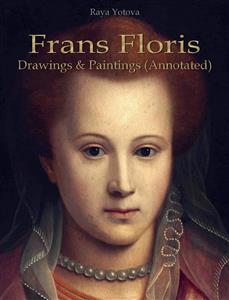
Frans Floris was a Flemish artist from Antwerp, a representative of the Northern Renaissance, and especially the movement in called Romanism. He comes from an old artistic family and his brothers have also been prominent artists. The ancestors of the artist were from Brussels, and they were known to have been involved in building and stoning in the 14th and 15th centuries. Frans Floris, who was native to Antwerpen, unlike most local artists, did not receive his initial education in the local guild from any of the guild artists. His first teacher is the famous painter Lambert Lombard. It is possible that Lombard was a visiting artist in Antwerp or even a member of the local St. Luke Guild, but this is not certain. Either way, he was Floris's first teacher, who followed him to Liege where he worked at his studio. Lombard encouraged his young student to study the art of Italian Renaissance painters, and in the 1530s Floris traveled through the Italian city-states, glorified by his fine art, namely Florence, Mantua, and Genoa. Anyway, in 1538, Floris, then 31, returned to Antwerp, where he was accepted as a member of the artist's guild of the city named St. Luke. There followed a new journey to Italy for several years where the Flemish artist studied in detail the work of Michelangelo and Raphael, as well as the classical art and sculpture in Rome. Floris returned to his native Antwerp around 1545-6 and immediately set up his own studio where he began to prepare pupils based on what he had learned in Italy. He quickly managed to gain a high reputation in the city and even his fellow citizens began to call him "the Flemish Rafaello".
Das E-Book können Sie in Legimi-Apps oder einer beliebigen App lesen, die das folgende Format unterstützen:
Veröffentlichungsjahr: 2018
Ähnliche




Frans Floris
Drawings & Paintings (Annotated)
Annotated by Raya Yotova
––––––––
First Edition
*****
Copyright © 2018 Annotated by Raya Yotova
Table of Contents
Title Page
Copyright Page
Foreword
Paintings and Drawings
Foreword
Frans Floris was a Flemish artist from Antwerp, a representative of the Northern Renaissance, and especially the movement in called Romanism.
He comes from an old artistic family and his brothers have also been prominent artists. The ancestors of the artist were from Brussels, and they were known to have been involved in building and stoning in the 14th and 15th centuries.
Frans Floris, who was native to Antwerpen, unlike most local artists, did not receive his initial education in the local guild from any of the guild artists. His first teacher is the famous painter Lambert Lombard. It is possible that Lombard was a visiting artist in Antwerp or even a member of the local St. Luke Guild, but this is not certain. Either way, he was Floris's first teacher, who followed him to Liege where he worked at his studio.
Lombard encouraged his young student to study the art of Italian Renaissance painters, and in the 1530s Floris traveled through the Italian city-states, glorified by his fine art, namely Florence, Mantua, and Genoa. Anyway, in 1538, Floris, then 31, returned to Antwerp, where he was accepted as a member of the artist's guild of the city named St. Luke.
There followed a new journey to Italy for several years where the Flemish artist studied in detail the work of Michelangelo and Raphael, as well as the classical art and sculpture in Rome.
Floris returned to his native Antwerp around 1545-6 and immediately set up his own studio where he began to prepare pupils based on what he had learned in Italy.
He quickly managed to gain a high reputation in the city and even his fellow citizens began to call him "the Flemish Rafaello".
In addition to been an artist with perfect technique and a sense of color, Frances Floris was a person with an extraordinarily broad and in-depth knowledge for his epoch. He quickly entered the circle of educated humanists in the city and into the circles of rich and famous citizens. He could not complain about the lack of expensive orders for the church and the homes of rulers and rich merchants. His working capacity was proverbial, and productivity was consistent with this employability. He had many students and followers, perhaps over 100, some of whom continued his traditions of fine arts and became great names in the history of Flemish art.
The drama of this exceptionally gifted artist has taken place in the times of so-called "the iconostasis" of the Calvinists who began to destroy the church decoration. The elderly artist could not bear how his paintings were thrown out of church altars and burnt in the times called Beeldenstorm. Several years after the onset of these events he suffered severely and died shortly afterward.
Paintings and Drawings
Christ Driving the Money Changers from the Temple
1530-70, Pen and brown ink, 15.7 x 19.9 cm




