


1,99 €
Mehr erfahren.
- Herausgeber: Publisher s13381
- Kategorie: Geisteswissenschaft
- Sprache: Englisch
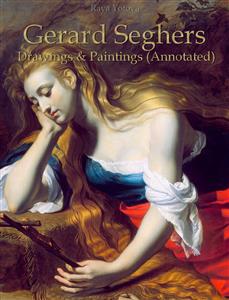
Seghers is best known for his monumental genre paintings and great religious and figurative works. He has completed many altars for churches in the South of Holland. Most of his pictures were performed in a horizontal format. Stylistically and thematically, Seghers has initially been strongly influenced by Caravaggio and in particular by the work of Bartolomeo Manfredi, the follower of Caravaggio. Caravaggism, both in history and in great genre paintings, continues to mark the work of Seghers after returning to Antwerp. Unlike Caravaggio, he preferred a more idealized attitude toward his subjects. The impact of Caravaggism can be seen in his dependence on chiaroscuro, close plans and exaggerated expression of dramatic effect. He often uses figures like repoussoirs to hide the source of light (usually candles). Favorite themes are music scenes and card games. Seghers was mostly interested in portraying flesh and blood, preferably at a time of crisis, which allowed the artist to paint his sitters' different facial expressions. The masked candle he used increased the expression and added a spiritual dimension. He and his studio produced many copies of his versions of this theme.
Das E-Book können Sie in Legimi-Apps oder einer beliebigen App lesen, die das folgende Format unterstützen:
Veröffentlichungsjahr: 2019
Ähnliche


Gerard Seghers
Drawings & Paintings (Annotated)
Annotated by Raya Yotova
––––––––
First Edition
*****
Copyright © 2018 Annotated by Raya Yotova
Table of Contents
Title Page
Copyright Page
Foreword
Paintings and Drawings
Foreword
Gerard Seghers was native from Antwerp where his father was tavern-owner. As a boy, Gerard’s father listed him as an apprentice to learn under the famous painter Caspar de Crayer.
Gerard Seghers was registered a master in the Antwerp Guild of St. Luke when he was too young, maybe an 18th year old.
Soon after that, Gerard has gone from the Netherlands for a voyage to Rome in Italy where he served for art collector from Antwerp named Goetkint. Simultaneously he exploited the case for additional learning as an artist and painting replicas after famous Italian masterpieces.
He tripped to Rome where meted the disciples of Caravaggio. One of them, Bartolomeo Manfredi, had an essential force on his early paintings. After Rome, Gerard tripped to Spain where he was in the Royal court Spanish King of Philip III. The painter was subordinate of Peter Rubens in the ornamentation of the Antwerp’s church of Saint Borromeus.
Here in Antwerp he was doing well as an artist and seller of paintings and was smart to find the money for a home on the stylish Meir.
Gerard Seghers was supported by several church orders, as well as the Jesuits, who ordered church decorations from him. The artist was occupied by the town establishment of Ghent and Antwerp as one of the numerous painters working for the new Spanish ruler of the Southern Netherlands after 1635. His designs in Ghent decorations were founded on a plan by Peter Paul Rubens. He was provided with work as court artist to the Spanish ruler of the Southern Netherlands in 1637. His paintings established a keen marketplace out of the country, mainly in Spain, because of the well-built supporting relations amid Flanders and Spain and also as his special relationships with significant persons.
Seghers was a member of the Chamber of Rhetoric called Violieren after his return to Antwerp in 1620. He also joined the Romanists Guild. The Romanists Guild was a society of artists who acted in Antwerp from the 16th to the 18th century. The condition for membership was that the member had visited Rome. In 1637 the Romanists Guild selected Seghers as his head. When he died in 1651, he was a wealthy man who owned a comfortable house and an extensive collection of artworks.
Seghers is best known for his monumental genre paintings and great religious and figurative works. He has completed many altars for churches in the South of Holland. Most of his pictures were performed in a horizontal format.
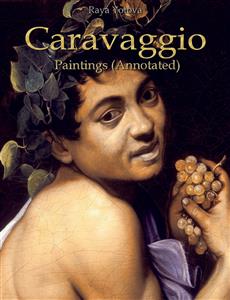
Stylistically and thematically, Seghers has initially been strongly influenced by Caravaggio and in particular by the work of Bartolomeo Manfredi, the follower of Caravaggio. Caravaggism, both in history and in great genre paintings, continues to mark the work of Seghers after returning to Antwerp. Unlike Caravaggio, he preferred a more idealized attitude toward his subjects. The impact of Caravaggism can be seen in his dependence on chiaroscuro, close plans and exaggerated expression of dramatic effect. He often uses figures like repoussoirs to hide the source of light (usually candles). Favorite themes are music scenes and card games.
Seghers was mostly interested in portraying flesh and blood, preferably at a time of crisis, which allowed the artist to paint his sitters' different facial expressions. The masked candle he used increased the expression and added a spiritual dimension. He and his studio produced many copies of his versions of this theme.




