


1,99 €
Mehr erfahren.
- Herausgeber: Publisher s13381
- Kategorie: Geisteswissenschaft
- Sprache: Englisch
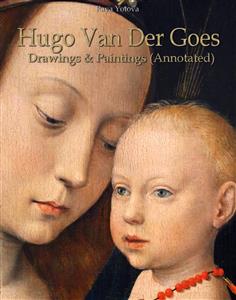
Hugo van der Goes is a famous and very original Flemish artist of altars and portraits. The artist has made many fundamental innovations in the painting of the epoch through his method of monumental painting, an individual palette of colours and as well with his specific portrait style. His masterpiece, Portinari Triptych in Florence, has a great influence on the development of realism during the Italian Renaissance.
Das E-Book können Sie in Legimi-Apps oder einer beliebigen App lesen, die das folgende Format unterstützen:
Veröffentlichungsjahr: 2018
Ähnliche
Hugo Van Der Goes
Drawings & Paintings (Annotated)
Annotated by Raya Yotova
––––––––
First Edition
*****
Copyright © 2018 Annotated by Raya Yotova
Table of Contents
Title Page
Copyright Page
Foreword
Paintings and Drawings
Foreword
Hugo van der Goes is a famous and very original Flemish artist of altars and portraits. The artist has made many fundamental innovations in the painting of the epoch through his method of monumental painting, an individual palette of colours and as well with his specific portrait style. His masterpiece, Portinari Triptych in Florence, has a great influence on the development of realism during the Italian Renaissance.
He soon became a master craftsman in Ghent's art guild, but probably studied somewhere else before he achieved his membership in the guild of his hometown.
In the early 1470s, van der Goes was already the most famous artist in Ghent. Soon he secured large orders for the work of the Burgundy royal court, the Church, wealthy Netherlands’ citizens from the class of the bourgeois as well from Italian traders living in the Netherlands.
When he was at the top of his career as an artist, the most unexpectedly closed his studio in Ghent and became a monk in Rood Klooster's monastery. In the monastery, the painter continued to paint, but gradually began to lose his mind and became mentally unstable. He made an attempt at suicide. After that, he failed to recover and soon died in the monastery. Four centuries later, Vincent van Gogh, in a letter to his brother Theo van Gogh, likened himself to van Goes.
He was the author of many church altars and portraits, but not all of them are certainly identified as his works of art. Art historians define him as one of the most original and innovative Flemish artists of his era. However, they find it difficult to cope with the development of his style, because very few of his paintings are dated and signed. In fact, The Portinari Altarpiece is the only well-identified his work.
However, most art-historians find that his style is similar to the so-called illusionism of another Flemish artist, Van Eyck. This early Flemish style is characterized by birth and rich colours and a far-off perspective in which objects seem to disappear and melt. This is demonstrated in very bright Monforte Altarpiece and in the middle part of Portinari.
In his later works, the artist gradually abandoned his earlier style and began to paint more realistically. He did this with less colour and dynamic movement of human figures. All these features of his later paintings grew with time and reached almost grotesque in his latest works. Art historians explain this with the gradual mental illness of the artist in the last years of his life. Besides altars and completed oil paintings, the artist has bequeathed many drawings and preparatory sketches with pencil and ink.




