


Erhalten Sie Zugang zu diesem und mehr als 300000 Büchern ab EUR 5,99 monatlich.
- Herausgeber: Gill Books
- Kategorie: Ratgeber
- Sprache: Englisch
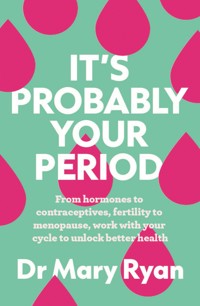
Understand your cycle. Transform your health. If you've ever wondered why your periods feel unpredictable, painful or overwhelming, this book is for you. From the science behind your cycle to practical advice for managing symptoms and problems, renowned endocrinologist Dr Mary Ryan covers it all: what a healthy period looks like, how hormones affect your body and mind, and why nutrition, exercise and stress matter. She tackles problems like endometriosis, fibroids, PCOS and PMS, as well as fertility, mood and the transition to perimenopause. Packed with expert insights and actionable strategies, this is your essential guide to understanding your body and taking control of your hormonal health, so you can feel your best at every stage of life. Praise for It's Probably Your Hormones 'Of all of the people who could give us advice, you're one of the most worthy' CLAIRE BYRNE 'Her passion for women's self-worth shines through on every page' MARY McCARTHY, THE SUNDAY TIMES
Sie lesen das E-Book in den Legimi-Apps auf:
Seitenzahl: 354
Veröffentlichungsjahr: 2026
Das E-Book (TTS) können Sie hören im Abo „Legimi Premium” in Legimi-Apps auf:
Ähnliche



















I want to dedicate this book to my daughter, Úna, and my two sons, Micheál and Seán. My late husband Eamon would have been so proud that we are empowering the next generation.
This book is also a tribute to my wonderful late father Seán and my mother Úna, both of whom instilled in me a great love of reading and learning during my most formative years. I also want to dedicate it to all the amazing women who have suffered from bad period health. This book is the start of normalising discussion of period health for future generations.
Contents
Cover
Title Page
Dedication
A Note from the Author
Introduction
CHAPTER ONEIreland and periods
CHAPTER TWOThe biology of bleeding
CHAPTER THREEEmbracing the menarche
CHAPTER FOURMapping the menstrual cycle
CHAPTER FIVEGetting the period blues
CHAPTER SIXHeavy, painful, irregular and no-show periods
CHAPTER SEVENRecognising other menstrual red flags
CHAPTER EIGHTDecoding fertility
CHAPTER NINEWell-being and your period
CHAPTER TENPerimenopause
Conclusion
Endnotes
Index
Acknowledgements
Copyright
About the Author
About Gill Books
A note from the author
In the interest of confidentiality, names and identifying details have been changed throughout this book.
Introduction
Menstruation is more than a monthly phase – it’s nearly a decade of our lives. On average, women spend around 3,500 days menstruating, amounting to a remarkable 10 years in total.1 It’s also a fact, although harder to substantiate, that not enough conversations about periods are being had at every level in our community. Periods are the essence of evolution: they lead to egg production in females and are every bit as important as sperm production in young adolescent males.
Theoretically, we’ve come a long way when it comes to women’s health. The discussion about perimenopause and menopause – for so long brushed under the rug and glossed over – is testimony to that. It’s being increasingly recognised that ‘the change’, as it was previously referred to, impacts some women significantly, and for those women, it is important to be seen and heard, and to have their symptoms acknowledged. This is very welcome.
However, in the greater scheme of things, there is so much more work to be done in relation to women’s health – I am reminded of the Iarnród Éireann slogan from 2002: ‘We’re not there yet, but we’re getting there.’ Yes, some advancement has been made, but we have so much further to go until there is equality for women in healthcare.
There are some very concerning facts that everyone should be alarmed about. For example:
In the past, women were excluded from drug trials due to the (unfounded) fear that their hormones would interfere with the study. Consequently, the dosages for many drugs that are still on the market today are based on the results of trials on male bodies.
As per research from 2015, there were five times more scientific studies on erectile dysfunction than on premenstrual syndrome (PMS), despite approximately 75 per cent of women experiencing PMS.
2
It is estimated that just over half of all men between the ages of 40 and 70 will experience some form of erectile dysfunction.
When funding is matched to the burden of disease, conditions that primarily impact women – such as anorexia, migraines and endometriosis – only receive a fraction of the funding awarded to diseases that predominantly affect men, and this needs to change. If we really believe in gender equality, we have to provide equal funding to both sexes in all areas in society.
Based on research from the World Economic Forum, women’s health gap totals 75 million years of life lost due to early death or poor health every year.
3
Recent studies have also highlighted the importance of addressing menstrual health in educational settings. The impact of menstrual health extends far beyond personal comfort – it affects academic performance and social participation. When proper support and resources are available, women and girls are better equipped to manage their menstrual health effectively, leading to improved outcomes in all areas of their lives.
We don’t need to look to global statistics to be reminded that this lack of emphasis on women’s health is endemic in Ireland, too. According to the Irish Independent, the Dáil was recently told that women in Ireland can wait up to nine years to be diagnosed with what can be a debilitating condition, endometriosis. Think we really have come a long way? In 2020 there was furore over a Tampax advertisement that explained how to use their tampons with the tagline ‘Not just the tip, up to the grip!’ The Advertising Standards Authority received 84 complaints, with some viewers complaining that it was ‘suggestive’ and ‘contained sexual innuendo’. This led to the ad being banned in Ireland, which was quite unfortunate since it had been created in response to a finding that 42 per cent of women who use applicator tampons don’t insert them correctly. Heaven forbid that an ad might teach them how to use them!
I am a consultant endocrinologist and senior lecturer who has dedicated her life to advocating for women’s health. Throughout my medical career, I have worked with numerous women in clinics and classrooms, and through media appearances, and I understand that health knowledge transforms a woman’s entire experience. Women develop improved questioning abilities when they understand their health better. They obtain superior medical care because of their enhanced ability to ask questions. They are also able to choose better healthcare options for themselves and their family members.
Although I’ve had the idea for this book for several years, I only started working on it after numerous discussions with patients, journalists and women from different backgrounds. These all led to the same question: ‘Why did no one explain this to me earlier?’ Women experience a persistent feeling of being uninformed about how their body functions when it comes to periods, hormones, perimenopause and fertility. This book aims to transform this situation by providing essential knowledge to women about their bodies.
I understand the experience of having unanswerable questions about my health. The language and self-assurance needed to discuss menstrual and hormonal health were not available to me when I started my medical career. The last 10 years have brought a noticeable transformation in how people approach these topics. Women now demonstrate increased curiosity about health-related matters; they seek (and need) accurate and straightforward answers instead of confusing statements. Periods are most commonly experienced by girls and women. However, not everyone who menstruates identifies as female. In this book, I have used the terms ‘women’ or ‘girls’ for ease of reading.
Women’s health needs have evolved from forbidden topics to fundamental requirements for their wellness. The clinical environment shows evidence of this transformation. The patients who used to hide their symptoms now enter my practice and self-advocate, and I find this deeply motivating.
With this book, I aim to extend the ongoing dialogue about women’s health. I hope it provides a helpful and caring resource to help you understand your menstrual cycle, because knowing what happens in your body gives you control. The book honours the small yet powerful women’s health revolution that is currently unfolding across Ireland. The healthcare sector in our country now has an expanding network of doctors, nurses, physiotherapists and dietitians who actively work to bridge the health disparities affecting women. The act of reading this book makes you part of the growing movement that seeks to transform women’s healthcare. Your support helps create a new healthcare perspective that benefits you and all the women in your life.
The information in these pages should empower you and not overwhelm you. Your menstrual cycle should be recognised as a fundamental health indicator that reveals your complete physical condition. The purpose of periods extends beyond reproduction; periods serve as indicators of body health, hormonal balance and overall physical equilibrium. The book should give you the strength to express yourself clearly during medical appointments and family gatherings and with your children while understanding that there are numerous women who share your experience. The worldwide dialogue about women’s health continues to expand in power with each passing day. We need to continue this work, so that no woman faces a situation where she needs to ask, ‘Why didn’t anyone tell me this sooner?’
CHAPTER ONE
Ireland and periods
Overcoming stigma and choosing menstrual health
Menstruation through the ages
Based on skeletal and dental evidence, it appears that females in the Palaeolithic era – roughly 3.3 million to 11,700 BCE – may have reached menarche earlier than many modern populations, with estimates suggesting onset between the ages of 7 and 13. This earlier onset of menstruation may have been an evolutionary adaptation to high mortality rates, enabling women to reproduce at a younger age. Factors such as genetic variations, different growth patterns and nutrient-rich foraging diets likely also played a role.
How did prehistoric women manage their periods? We can’t say for sure. We do have some knowledge about the more modern epochs, but menstruation has long been a taboo subject, and there are very few written accounts of period management. In ancient Egypt, women used reusable loincloths and an early form of tampon fashioned from papyrus and grass. Lore has it that the Vikings used absorbent bog moss to soak up the blood, but there is no documented evidence of this. In the 5th century BCE, Hippocrates, the father of medicine, wrote that Greek women would wrap lint around wood, or use homemade rags to catch the blood.
Using whatever was easy and to hand meant that many women in older times probably turned to cloths, and according to Sharra Vostral, a menstruation and menstrual product historian at Purdue University, Indiana, in the US, this is where the phrase ‘on the rag’ originates.1
In ancient Greece, menstrual blood was used in festivals, where it was spread on the ground to increase fertility; and ancient Egyptian medical texts state that menstrual blood could be used in ointments for health treatments. On the other hand, the first Latin encyclopaedia from 73 CE states: ‘To taste it drives dogs mad and infects their bites with an incurable poison.’
Period shaming reinforces the idea that women are ‘dirty’ during menstruation, and we can see that this practice stretches far back in time. Going back to the Bible once again: in Leviticus, chapter 15, it is written that anything a menstruating woman lies or sits on will become unclean, as will anything touched by her; in addition, a non-menstruating person touching the menstrual blood or anything touched by the menstruating woman will also become unclean. Roman author Pliny the Elder, writing around 70 CE, noted that bees ‘will forsake their hives if touched by a monstrous woman’. Or consider the following, from 12th-century lawyer Paucapalea: ‘Women are not allowed to visit a church during menstruation or after the birth of a child. For a woman is an animal that menstruates. Through touching her blood, fruits will fail to get ripe. Mustard degenerates, grass dries up and trees lose their fruit before time. Iron gets rusted and the air becomes dark. When dogs eat it, they acquire rabies.’ We can also look to the Qur’an for more demonising of periods: ‘Separate yourself from women during this monthly period, do not approach them until they are clean.’ All of this goes to show that women have had centuries of being told they are unclean, and that menstruation is something to hide. It also shows that for too long men have been writing the rules that guide us. It is time for women to sit at all high tables in power and write their own rules. We have been too obedient for far too long.
Moving towards the Middle Ages, certain stigmas about periods were intensified and institutionalised through Christian doctrine. Menstrual blood was often linked to sin, impurity or weakness. The prevailing medical concept in medieval Europe was the humoral theory, or the belief that the body contained four humours: blood, phlegm, yellow bile and black bile. If there was an imbalance of humours, then the body became unwell. The practice of bloodletting was common, as it was thought to restore the body’s balance. Menstruating suggested that the body was unwell and needed to rid itself of this excess blood – ergo, menstruating women were diseased. A person who was having a period was thought to make other people sick, and menstruating women could even kill crops, according to the thinking at the time. It also gave rise to the notion that women were weaker, because they could not keep their humours under control.
In the Middle Ages, rags were commonly used, with the absorbent linen a favourite; bog moss was also employed. However, it was not uncommon for women to bleed freely into their undergarments. Period pains seem to have been recognised, since medieval documents contain remedies to ease them, as well as to curb excess bleeding. One suggested solution for a heavy flow? Wearing a powder made of dried toad around the waist. Nutmeg was thought to be a fragrant masker of the smell of menstrual blood. Another interesting fact about this era is that life expectancy began to increase, which led to more frequent childbearing, and women having fewer and lighter periods.
It’s not until the late 19th century that we see any real advancement in period management for women. This is when period products were developed. In 1896, Johnson & Johnson released its ‘Sanitary Napkins for Ladies’, which are thought to be the first disposable pads, made from cotton and gauze and worn with a belt. They weren’t a huge success – partly because their cost was prohibitive for many women, and also because the stigma surrounding menstruation was so great that women were reluctant to be seen purchasing these items.
Pads became popular after World War I, when nurses noticed how well bandages absorbed blood. In the 1940s, tampons became mass-produced, and the brand Tampax brought insertable menstrual products to a larger population, once a manual applicator had been developed. Concurrently, science was making more inroads into understanding the menstrual cycle, and the effects of premenstrual syndrome, or PMS.
An Irish problem
Periods in Ireland have traditionally been shrouded in secrecy. Is this surprising? No. Not in a country where the contraceptive pill was illegal until 1980; where the bar on married women working in the civil service was lifted only in 1973; and where women continued to be ‘churched’ (a purification ceremony performed after giving birth) until the 1960s, after which time the Catholic Church officially dropped the practice.
Ireland’s record for its treatment of women does not bear scrutiny. Health-system failings, Magdalene laundries, domestic abuse … historically, and even in the present day, women in this country have been treated poorly by both the state and religious bodies. Ireland was, until recently, a conservative place. Matters like bodily functions – periods, for example – and sexuality were not discussed. That, however, is changing.
Periods were a taboo topic, but this attitude was by no means unique to Ireland. This perfectly natural process has been regarded as something to be feared, and occasionally reviled, for as long as women have been having periods. A case in point: in the Bible, Eve disobeyed God and was punished with the curse of painful childbirth, which later also came to encapsulate menstruation.
But it is nice to think that in earlier times, in Ireland, attitudes to menstruation were not so biased. In Irish folklore, Meadhbh was a warrior queen who ruled over Connacht and a central figure in Táin Bó Cúailnge (The Cattle Raid of Cooley). She is also a current-day feminist icon. The name Meadhbh, or Maeve, means ‘she who intoxicates’ and also ‘mead’, and it was said that the warrior queen gave this red wine to her consorts, the mead representing menstrual blood, which was considered ‘the wine of women’s wisdom’. Meadhbh’s menstrual blood also physically altered the earth: when her blood flowed down onto the ground, it created the Mucklaghs in Roscommon.
CASE STUDY: MAURA
Maura, one of my patients for a very long time, is in her 80s. She told me that, when she got her period as a teenager, she couldn’t talk about it to anyone, not even her mother. She would hide her towels under the shopping and would be most embarrassed if anyone found them. She also recalled how once, at mass, she had a large flow that went down her legs and onto her cream trousers. She was mortified and refused to go out of doors for weeks afterwards because of the embarrassment. Maura marvels at how things have changed for her granddaughter and how we are now at a place where periods are more openly discussed.
What’s changed in Ireland?
Despite living in what we might consider enlightened times, the stigma surrounding periods still exists. Research from 2004 found that shame about menstruation is so deeply rooted that female college students interviewed could not find one positive aspect of menstruation.2 In 2018, Plan International, which works to engage young people on issues of global justice, conducted research into Ireland’s toxic trio of period injustice: lack of menstrual education, shame/stigma around periods, and the unaffordability of menstrual products. Among the 1,100 girls between the ages of 12 and 19 surveyed, 55 per cent were embarrassed by their periods, and 50 per cent did not find school useful for information about menstruation.3
Public discourse about periods
Over the past few years, I’ve been heartened to see a real shift in how we talk about menstruation in Ireland. When I first started out in medicine, periods were rarely mentioned in clinics, the media or public discourse. Women believed they should handle the issue on their own, and they would receive their period information through hushed conversations. As a result, many lacked essential knowledge to support their health needs. One striking example of that silence comes from a debate in the Oireachtas in 2019, where a member stated that the word ‘menstruation’ had been mentioned just 27 times in the assembly in the previous 100 years.4 The monthly biological process that affects half of the population has been largely unacknowledged by our national parliament. The number stayed in my mind because it demonstrated how women’s health issues had remained hidden from public view for so many years.
Since then, we’ve started to see signs of change. A quick search of the Oireachtas record today shows that the topic of menstruation is coming up more frequently in debates and discussions. The available data shows limited numbers, but the low growth rate shows substantial progress. It signals that menstruation – and, more broadly, women’s health – is starting to take its rightful place in our national conversation.
That shift is happening in the media, too. In recent years, the media industry has focused on multiple subjects, including period poverty, school-based menstrual education and the impact of hormonal health on sports and the workplace. Medical professionals no longer view these issues as specialised subjects, but as essential health matters and equality concerns. I have observed this change in my own work environment. Women and girls enter my clinic today with increased self-assurance, keen to ask questions and dispute outdated beliefs. The public dialogue about these issues generates optimism, and women can exchange their individual stories while fighting to receive suitable medical treatment and support.
We still have a long way to go, of course. Open discussions about menstruation have led to major social changes because of our shared development. And that’s what this book is about – continuing that conversation, breaking down the silence and ensuring that every woman and girl has the knowledge and confidence she needs to understand her body and her health. Menstrual health affects everyone in the community because it is a public health concern. And by speaking about it openly in the Dáil, in the media and in our homes, we are creating a culture where women’s health is finally taken seriously.
The impact of social media
When I began my medical practice, people used to rely on their GP, biology textbooks and occasional discussions with family members or friends to obtain information about their health. However, the way women learn about their bodies has undergone a remarkable transformation since the advent of social media, which now serves as an important information source. Social media platforms like Instagram and TikTok, together with podcasts, have succeeded where traditional medical institutions and mainstream media have failed: in addressing and reducing the taboos about women’s health. These digital spaces enable women to experience visibility and understanding. Women can freely exchange their personal stories with others who face similar situations, while obtaining knowledge that enables them to communicate more effectively with their medical providers. Young women and teenagers find great power in seeing themselves reflected in the media, because it proves that their experiences matter, and they have support.
However, the availability of information through social media platforms presents both advantages and disadvantages to users. The online space contains two types of content creators promoting different approaches to women’s health: there are medical experts who deliver valuable, reliable, evidence-based information, and then there are unqualified influencers who promote deceptive remedies such as ‘hormone-balancing teas’ and restrictive diets for period-pain relief and cycle regulation. The remedies found online range from useless to dangerous, because they may cause patients to miss essential medical diagnoses for endometriosis, PCOS (polycystic ovary syndrome) and thyroid disorders. Patients who visit my clinic bring online research findings that include both correct and incorrect, or unverified, information.
Social media serves as an initial curiosity trigger, but you should never rely on it for making medical decisions. When you encounter information online that interests you, take note of it before discussing it with your doctor. The social media revolution creates an opportunity to eliminate the historical knowledge deficit that has affected women’s health throughout many generations. Digital platforms have initiated essential dialogues that women needed to have and provided them with the tools to defend their own healthcare needs. However, people need to handle social media content with care by identifying trustworthy sources and doubting strong statements while understanding their individual health needs. The healthcare community should use social media platforms to distribute accurate medical information while maintaining evidence-based practices for treating patients. The combination of accurate information with open dialogue creates the foundation for genuine transformation.
The language of periods
It can be quite illuminating to look at the various names and euphemisms for menstruation. Many of them are negative, showing what society thinks about periods. For example:
Having the curse
Surfing the crimson tide
On the blob
Shark week
Dirty red.
Euphemisms, although generally not as overtly negative, contribute to the notion that menstruation must be concealed and not talked about. So we have:
Aunty Flo
My time of the month
In my flowers
Moon time
Lady business.
The period vocabulary used in other countries has a similar amount of negativity and euphemism. In Germany, it’s ‘strawberry week’, in Denmark, there are ‘communists in the fun house’, while in France, ‘the little clown’s nose is bleeding’.
The Irish language and periods
The Irish language can be empowering when it comes to talking about periods. Author Manchán Magan in his book Thirty-Two Words for Field shows us how our ancestors used to honour these natural cycles through their language. In an interview with The Irish Times,5 Magan said that the Irish language contains two poetic terms to describe menstrual blood: bláthscaoileadh, meaning ‘bloom release’, and bláthdhortadh, which translates as ‘bloom shedding’. An t-ádh dearg translates as ‘the red luck’, which presents menstruation as a fortunate condition, and one full of potential. These words express the natural processes of life, rhythm and renewal, instead of feelings of embarrassment. Magan’s 2023 exhibition ‘Focail na mBan’ collected Irish words for vaginas, vulvas and menstrual cycles, illustrating them with powerful feminine artwork.6 The Irish language has two words for vagina: gibhis, which means ‘crack’, ‘cleft’ or ‘cavity’, and gabhal mná, which translates as ‘woman’s fork’ as a casual term for the female groin area. Bléin mná refers to a ‘woman’s groin’ or ‘crotch’, and grabhaid functions as another term for vulva. The expression téigh do ghrabaide agus téigh chun na tine (‘go to the fire and warm your vulva’) is quite brilliant.
These words express our bodies in a direct and playful manner while maintaining an earthy and unapologetic nature. Their existence indicates that menstrual stigma developed as a social construct. The inclusion of cultural empowerment tools – such as words for release, renewal and vitality – should be part of menstrual education beyond biological knowledge. Language creates the foundation for cultural development. The expansion of menstrual vocabulary through words like bláthscaoileadh and an t-ádh dearg will create a society that views menstruation as a powerful life cycle instead of something to hide. I want girls and women to develop this kind of self-assurance. These words need to enter our daily discussions, whether they take place in schools, medical facilities or personal living spaces.
Does the language we use about periods matter? Yes, it does. Whether conveying menstruation as painful and unpleasant, or using softer words to describe it, language consolidates the stigma and negatively impacts on women and their relationship with their bodies.
How we communicate this natural function is important. ‘Period’ is a straightforward, commonly understood term for menstruation, derived from the Greek words peri (‘around’) and hodos (‘way’ or ‘path’). It first came into use in the 1800s and still does the job today. But we shouldn’t be afraid to use words like ‘menstruation’ and ‘menstrual blood’, either.
It is also vital that we do not talk about menstrual hygiene – again, this feeds into the idea that periods are dirty. It is far more empowering to talk instead about ‘menstrual health’. Similarly, let’s not refer to pads as ‘sanitary towels’ – women do not need to be ‘sanitised’. Periods are a very necessary part of evolution and should be celebrated instead of being stigmatised as they were for centuries.
Period poverty
You may have noticed that in some bars and restaurants, period products are increasingly being put out for customers in the toilet, free of charge. This is a small but welcome step in waging the war on period poverty – when someone doesn’t have access to the products they need during a period, such as tampons or pain relievers, because they can’t afford them or have difficulty accessing them for social or cultural reasons. In Ireland, the groups most affected by period poverty include those in low-income families, people who are homeless and people who are in Direct Provision.
Period poverty affects women all over the world, even in relatively affluent countries such as Ireland. In 2022, Scotland became the first country to make period products free for all. In Ireland, tampons, pads and other menstrual products such as cups, pants and sponges have been zero-rated for VAT purposes since 2023.
According to a discussion paper on period poverty published by the government in 2021, most women and girls will have 12–13 periods per year, with some using up to 22 tampons or towels per cycle.7 This means that the annual costs of period products for individual women, including pain relief, can be estimated at a minimum of €121. This is a huge expenditure for someone who is struggling financially.
Several initiatives are now in place to eradicate period poverty in Ireland. In 2022, the HSE National Social Inclusion Office began the Period Dignity scheme, which aims to reduce period stigma, increase education and distribute free period products. In 2021, Lidl Ireland became the first major retailer in the world to offer free period products in stores nationwide, in partnership with Homeless Period Ireland and the Simon Communities of Ireland. This programme allows a person to claim a dedicated coupon for a free box of menstrual pads or tampons each month, per customer. Other Irish companies have also gotten on board by partnering with Positive Period Ireland, which is campaigning to end period poverty in our country. For example, Riley, a subscription service delivering monthly supplies of period products to customers’ doors, donates its organic and eco-friendly products to homeless outreach centres, Direct Provision centres and women’s refuges throughout Ireland.
Period poverty must end, and this could be achieved in Ireland by making period products available for free in public spaces and schools, as well as increasing menstrual education and awareness.
Menstrual health policies in the workplace
In 2023, Spain became the first European country to implement ‘period leave’, where employees have the right to take three days of leave per month if they experience severe menstrual pain; this can be extended to five days in some cases.
We are nowhere near introducing something like that here, but menstrual policies in the workplace have, by and large, improved, even if they’re not written into law. Depending on the company, menstrual policies might include:
Supplying free menstrual products
Allowing additional comfort breaks
Offering flexible work arrangements
Offering one day’s paid leave
Offering access to rest facilities.
There is a lot more positive discussion about periods, and it is a much healthier conversation.
Male perceptions of menstruation
Discussions about menstruation tend to ignore the essential role that men and boys play in creating social attitudes and future cultural standards. A survey of 4,127 boys and young men from four countries – Brazil, Indonesia, the Netherlands and Uganda – reveals that 37 per cent of boys maintain that menstruation should remain hidden from public view.8
A qualitative study conducted in the Barcelona area, and published in PLOS One in early 2025, looked deeply into men’s perspectives on menstrual health. The study found that most participants had received little to no formal education about menstruation; instead, their understanding often came through sex-affective partners or vague, clinical school lessons. Many men described menstruation as unpleasant or a burden, with emotional connotations still tied to stereotypes or old myths.9
The existing mindset perpetuates feelings of shame, which prevents open conversations about this topic. The exclusion of men from discussions about menstruation creates the most significant loss for all of society. The notion that periods should remain hidden develops in boys during childhood, leading them to maintain this belief into adulthood, and thus creating social problems that make menstruating people hide their discomfort and embarrassment. The normalisation of menstruation requires all organisations – including schools, families, sports teams and media – to teach this knowledge to people of all genders. Men’s silence about menstruation produces actual negative effects that harm health understanding, social equality and human dignity.
Boys should receive proper education about menstruation; they should learn about its significance and the proper ways to assist people who experience it. Menstruation exists as a universal human experience that surpasses its classification as a women’s matter. It is also very important for boys and men to understand periods later on, when they become intimate with their partners, as most women do not like intimacy when they are menstruating. A lot of female patients have found that this can be quite awkward: their male partners thought they were rejecting them because they had no idea of what a period is and how sex can be uncomfortable when you have a womb full of blood. All of this education of boys and men can only help improve sexual and intimate relationships between men and women.
Period positivity and menstrual health advocacy
The movement for period positivity and menstrual health advocacy focuses on promoting menstrual health, addressing period poverty and eliminating stigma around menstruation. It involves raising awareness, advocating for policies that ensure access to affordable and safe menstrual products, and providing education about menstrual health. It also works to bring back dignity and access while dismantling obstacles that prevent people from fully engaging in education, employment and sports activities.
Period positivity and sport
A research study conducted by Sport Ireland with teenage girls revealed that menstruation creates a major obstacle for female athletes during puberty, leading to sport dropout. The Period Positive Poster Pack from Sport Ireland represents a vital step towards changing this. The initiative became available in March 2025 as part of the Women in Sport Week through the Her Moves campaign. The poster pack contains seven educational posters that teenage girls helped create to teach athletes and their support network about menstrual cycles and sports participation. The posters use phrases like ‘Know the flow’ and ‘Get with the flow’ to initiate discussions about menstruation. Sport Ireland director Nora Stapleton stated the need to establish open discussions about menstruation in sports activities. The posters have reached a wide distribution network because Sport Ireland sent thousands of packs to national governing bodies, Local Sports Partnerships and educational institutions for use in their community and sporting facilities.
A poster released as part of the Her Moves campaign.
The lack of discussion about menstruation in sports creates actual negative effects for athletes. The June 2023 episode of The Hard Shoulder on Newstalk featured sports broadcaster and former camogie player Anna Geary, who shared how athletes rarely discuss their periods with teammates despite their menstrual cycles directly impacting their athletic performance and health.
Femtech: transforming women’s lives
A technological revolution that improves women’s healthcare services, femtech is a term that covers the digital solutions – including apps, devices and services – used to bridge knowledge gaps while enabling women to monitor their bodies and fight for improved healthcare services. The health technology sector dedicated to women’s needs continues to expand rapidly, now reaching over $50 billion in global value and showing no signs of slowing down.
These digital technologies enable women to monitor their symptoms in real time, which leads to better doctor–patient discussions. They reveal hidden patterns that people might otherwise miss between sleep, mood, pain and bleeding. However, the quality and accuracy of femtech products vary because not all of them receive medical device regulatory approval.
Clue is one of the world’s leading apps for tracking menstrual cycles. Users can enter their menstrual-cycle data, and record their symptoms, moods, exercise and sexual activity. The combined data from millions of users on the app has enabled researchers to conduct vital studies that disproved popular beliefs about menstrual synchronisation and lunar-cycle effects. Other companies include Elvie, which offers a breast pump and pelvic-floor trainer, and Aavia, which provides hormonal tracking for perimenopause symptoms.
Ireland is increasingly becoming an important centre of femtech innovation, with multiple startups emerging as part of the growing number of businesses in this sector. The Health Innovation Hub Ireland (HIHI) launched the Femtech @ HIHI programme to support businesses that focus on reproductive health, fertility, menopause, maternal care and additional women’s health needs.
According to industry trackers, 29 femtech companies operate in Ireland, including Atlantic Therapeutics, which focuses on pelvic-floor and bladder health; FitrWoman, which offers exercise guidance based on menstrual cycles; Coroflo, which makes breastfeeding monitors; and Mindful IVF, which provides fertility meditation support.10 The innovative Irish Joii system,11 meanwhile, uses an app-connected device to measure menstrual blood loss and clotting patterns, which can help healthcare providers detect potential fibroids, endometriosis or bleeding disorders, and obtain scientific data for medical consultations.
A generation of younger Irish women are benefiting from femtech because of their strong engagement with digital tools. The healthcare system should view femtech as something that can help women gain confidence, understand their bodies more and learn to self-advocate for themselves across the board, whether that’s about menstrual health, fertility support or perimenopause management.
How do you see your period?
After reading this chapter, I’d like you to evaluate your personal connection with periods. Do you use specific words to describe your period when you speak about it in public and when you are alone? People commonly view their periods as unpleasant, unclean and something to hide from others, and the majority of women choose to stay silent about their menstrual experiences. Women throughout history have received negative attitudes, silence and shame from their social environments. The medical field, religious institutions and the advertising industry have worked together to create a widespread belief that menstruation represents something unclean that needs to be hidden. The historical treatment of menstruation continues to influence how people view and express their thoughts about this natural bodily process.
Language plays an essential role in shaping our perceptions. Our casual use of words like ‘gross’ to describe periods perpetuates outdated beliefs that menstruation should be a source of embarrassment. The use of direct terms such as ‘menstruation’, ‘period’ and the Irish term bláthscaoileadh (‘bloom release’) helps to normalise and celebrate this essential life process. Our voices become more powerful when we discuss menstruation without using words that create shame.
Consider how the opinions of others have influenced your personal perspective about menstruation. Did your family members discuss menstruation freely or did they keep it a secret? Did the educational system provide you with essential information about menstruation, or did it fail to clarify things for you? How do people in your social circle, including friends, partners and colleagues, respond to the topic when you bring it up?
Thankfully, in this country, we are seeing signs of transformation in the approach to menstruation. The Oireachtas record, media outlets, Sport Ireland’s Period Positive initiative and Irish workplaces now feature menstruation more frequently. Young women use social media platforms to express themselves while sharing their personal stories and fighting for truthful discussions. The previous complete period-related silence has started to fade away.
CHAPTER TWO
The biology of bleeding
Human menstruation is one of those biological processes that, upon reflection, can feel a bit perplexing. On average, women experience menstruation for about five days each month, expelling blood and uterine tissue as by-products of the reproductive cycle. It’s a regular and seemingly wasteful process that might seem inconvenient or even a bit extravagant in the broader scope of biology. Menstruation is extremely rare in the animal kingdom, experienced by only about 84 known species. Of these, just around 1.6 per cent are placental mammals, a group that includes humans and most other mammals that carry their offspring in the uterus and nourish them via a placenta. Other than humans, animals such as bats, elephant shrews and chimpanzees also menstruate, but they are the exception, not the rule.
Why do we, as humans, bleed every month? And what purpose does it serve from an evolutionary perspective? It’s important to look at questions like these, because knowledge is power. Granted, learning more about periods is not going to change the fact that women bleed on average every 28 days, but learning (and talking) about periods helps raise awareness and break down the many stigmas that surround menstruation and that negatively impact on overall menstrual health. It is hard to believe that even though 1.8 billion adolescent girls and women have a period every month (and this has gone on for aeons), there is still little research into this very necessary event. As women, we need to learn from this and not allow the grass to ever grow under our feet again. We need to demand research into important life events that affect us, and seek change and therefore self-respect, appreciation and equality.
Why have we evolved to get periods?
There are several theories as to why this is the case. One school of thought is that menstruation has a cleansing function, and that it occurs to flush out any infection-laden sperm that females might encounter during sex.1 By and large, this theory doesn’t hold water, since it’s been found that women are more susceptible to diseases like gonorrhoea and chlamydia when they have their period, and not less. Also, the iron in blood can be a breeding ground for Staphylococcus aureus, which can cause toxic shock syndrome (see page 81).
Another theory from evolutionary biologists centres on the belief that the uterus only accepts high-quality embryos, eliminating any defective ones via menstruation – but there is no strong evidence that the uterus has the ability to screen embryos.
An alternative theory suggests that menstruation is linked to shutting off the blood supply to the placenta if pregnancy doesn’t occur. A developing foetus is reliant on the mother for oxygen and nutrition, and a quarter of a mother’s blood supply is diverted to the developing baby via the placenta. When the baby is ready to be born, the body turns off this supply and the amount of progesterone produced by the placenta decreases; this stops blood flow to the placenta by constricting the uterine blood vessels, so that the baby and the placenta can be delivered without the mother having a potentially fatal blood loss. If, however, pregnancy hasn’t occurred, the amount of progesterone drops, the uterine blood vessels are constricted, and the lining of the uterus is shed.
The most compelling theory is that periods are a by-product of an evolutionary advantage tied to the process of reproduction itself. It may seem counterintuitive, but shedding the uterine (or endometrial) lining every month may actually be more energy-efficient than keeping it ready and waiting for a possible pregnancy. The evolutionary logic behind this is that it’s better for the body to start fresh each month, rather than keeping the uterus in a constant state of readiness. In addition, we shed skin and hair, and there is a constant renewal of cells in our bodies called autophagy. Autophagy is the process our cells use to ‘clean house’. When cells are low on oxygen or nutrients, they break down and recycle the parts they no longer need or that aren’t working properly. This process also helps to get rid of old or damaged cell structures, keeping the cell healthy and balanced. Recent studies show that autophagy plays an indispensable role in the physiological and pathophysiological processes relating to the endometrial lining, including the cycle of menstruation.2




