


1,99 €
Mehr erfahren.
- Herausgeber: Publisher s13381
- Kategorie: Geisteswissenschaft
- Sprache: Englisch
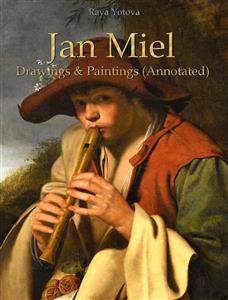
Jan Miel was almost certainly natural from Flemish town Beveren-Waas. Miel’s premature learning took place in Antwerp. His visit to Rome for near 20 years is recorded. There Miel became an associate of the so-called “Bentvueghels”, a group of mostly Dutch and Flemish painters. In Italian capital, Jan Miel as well was connected to the group of genre artists which were led by the Pieter van Laer. They were named to as 'Bamboccianti' and they are painting as a rule small-sized works, oil paintings or woodcut prints, of the daily Roman’s existence of the poor classes. Miel was a prominent figure in the growth of this new art practice in the city. He was the first Flemish painter to be declared a member to the Accademia di San Luca, a high-status alliance of famous painters in Italy. From 1658 Jan Miel moved from Rome to Turin and lived until his death time he there. In Turin, Miel was employed of Charles Emanuel II, the Duke of Savoy for his court artist. His first works demonstrated his attention to poor people connected in their everyday labor or at free time. Typical themes were cart players, country dances, frauds, cobblers, traveling musicians and comedians, etc.
Das E-Book können Sie in Legimi-Apps oder einer beliebigen App lesen, die das folgende Format unterstützen:
Veröffentlichungsjahr: 2018
Ähnliche



Jan Miel
Drawings & Paintings (Annotated)
Annotated by Raya Yotova
––––––––
First Edition
*****
Copyright © 2018 Annotated by Raya Yotova
Table of Contents
Title Page
Copyright Page
Foreword
Paintings and Drawings
Foreword
Jan Miel was almost certainly natural from Flemish town Beveren-Waas. Miel’s premature learning took place in Antwerp. His visit to Rome for near 20 years is recorded. There Miel became an associate of the so-called “Bentvueghels”, a group of mostly Dutch and Flemish painters.
In Italian capital, Jan Miel as well was connected to the group of genre artists which were led by the Pieter van Laer. They were named to as 'Bamboccianti' and they are painting as a rule small-sized works, oil paintings or woodcut prints, of the daily Roman’s existence of the poor classes. Miel was a prominent figure in the growth of this new art practice in the city.
He was the first Flemish painter to be declared a member to the Accademia di San Luca, a high-status alliance of famous painters in Italy. From 1658 Jan Miel moved from Rome to Turin and lived until his death time he there. In Turin, Miel was employed of Charles Emanuel II, the Duke of Savoy for his court artist.
His first works demonstrated his attention to poor people connected in their everyday labor or at free time. Typical themes were cart players, country dances, frauds, cobblers, traveling musicians and comedians, etc.
During the middle of the 17th century, Miel began to enlarge the extent of “bambocciate” conception of his work by giving low interest to the nearby landscape surrendering and as an alternative emphasizing the carnival sides of town and countryside lifestyle. These paintings were frequently employed as a replica by the Bamboccianti painters in the next years for the period of the near the beginning 18th century.
He in practice was a pioneer to make his mainly innovative giving to genre art throughout his works of carnival themes.
Jan Miel frequently worked together with collaborating painters as was the routine at the epoch.
In the mature years of his life t began to work on religious paintings for Church executed this pieces s in a large size design. He as well at the same time painted small-sized canvases with sacred themes. His work at all turned to classicism and realism.
At that period of his life, Miel painted many paintings with historical themes and showed a tendency of the classical approach. He as well starts to learn and reproduced the paintings of Annibale Carracci, Pieter van Laer and most of all of Raphael. He was, in addition, brilliant graphics and wood engraver.




