


1,99 €
Mehr erfahren.
- Herausgeber: Publisher s13381
- Kategorie: Geisteswissenschaft
- Sprache: Englisch
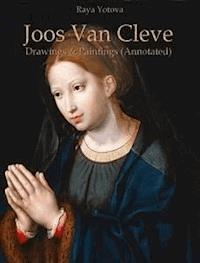
This book with Foreword written by Raya Yotova contains reproductions of drawings and paintings by Joos Van Cleve. Joos Van Cleve (1485 – 1541) is famous for connecting conventional Netherlands’ art methods with style of more fashionable Renaissance painting techniques. A prominent associate and member of the Guild of Saint Luke of Antwerp, Joos Van Cleve is acknowledged typically for his religious painting and royalty portraiture. Since he was a proficient master of art technique his work exposes understanding to colors and an exclusive compactness of composition. Van Cleve was one of the foremost to initiate wide landscape scenes in the surroundings of his works, which would become an accepted style of 16-th century northern Renaissance art.
Das E-Book können Sie in Legimi-Apps oder einer beliebigen App lesen, die das folgende Format unterstützen:
Veröffentlichungsjahr: 2018
Ähnliche
Joos Van Cleve
Drawings & Paintings (Annotated)
Foreword by Raya Yotova
––––––––
First Edition
*****
Copyright © 2018 Foreword by Raya Yotova
Table of Contents
Title Page
Copyright Page
Foreword
Paintings and Drawings
Foreword
This book with Foreword written by Raya Yotova contains reproductions of drawings and paintings by Joos Van Cleve.
Joos Van Cleve (1485 – 1541) is famous for connecting conventional Netherlands’ art methods with style of more fashionable Renaissance painting techniques.
A prominent associate and member of the Guild of Saint Luke of Antwerp, Joos Van Cleve is acknowledged typically for his religious painting and royalty portraiture. Since he was a proficient master of art technique his work exposes understanding to colors and an exclusive compactness of composition. Van Cleve was one of the foremost to initiate wide landscape scenes in the surroundings of his works, which would become an accepted style of 16-th century northern Renaissance art.
Joos Van Cleve was the father of Cornelis van Cleve who as well became a prominent artist.
Joos Van Cleve proficiency as a master of portraiture was extremely considered as displayed by an order to the courtyard of King Francis I of France. There the artist pictured the king family and the court members. Van Cleve’s portrait of Henry VIII is of similar format to portrait of Francis I and the arrangement and set of clothes in every one of portraits are comparable. Several art historians have argued this fact as confirmation that the two paintings were accessory portraits pictured to honor the summit of the kings. Other art columnists have suggested another view that the painter founded the portrait of Henry VIII on the portrait of Francis I with no seeing the English ruler. He can have expected that this sign might be paid him English royal payments in prospect.
The artist painted numerous images of the Holy Family, the Virgin and Child, and the Virgin and Child with St Anne, which were extremely admired. Several of the original paintings have been missing, but the form can be recovered throughout the various replica paintings created by his studio and imitators. There survive many analogous adaptations of the masterpiece of the Virgin and Child. The original painting is filled of charisma and kindness and was fashionable in his epoch additionally as with afterward collectors of his art. The depiction demonstrates the Virgin with a luminous red veil, lined with fur and richly embroidered with pearls the length of the outside edge.
Characteristic of Northern Renaissance painting of this period are the gemstone-like colors and the details of the Virgin’s set of clothes and brocade pillow in the foreground.
The vista of the Jan van Eyck's Holy Family is settled in a home interior and the Virgin is simply painted at half-length. Another modify in the work is the adding of Joseph. The wine and fruits on the center are an allusion to Christ's his future sacrifice.
The influence of Bruges is evident in many of Van Cleve’s premature paintings, for example as Adam and Eve and The Death of the Virgin. The second mentioned painting demonstrates the shared influence of a number of painters: emotionality of Hugo van der Goes, and iconographic images from Jan van Eyck and Robert Campin. Like the painter Quentin Matsys, Van Cleve echoed topics and methods of Leonardo da Vinci, for instance the use of “sfumato” in some of his paintings.
Paintings and Drawings
Portrait of Maximilian I (1459-1519), 1508-09, Oil on canvas, 28.5 × 22.3 cm




