


7,19 €
Mehr erfahren.
- Herausgeber: Muswell Press
- Kategorie: Sachliteratur, Reportagen, Biografien
- Sprache: Englisch
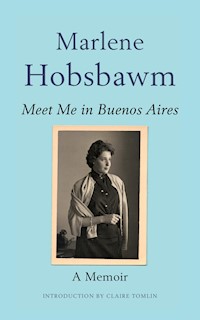
An intensely personal and revealing biography of life with one of the 20th Century's most influential intellectuals. A rich and fascinating life ,from pre-war Vienna via an émigré childhood in the UK and on to Italy, the Congo and the US. At the time of his death Eric Hobsbawm was the most famous historian in the world. He not only wrote history but was witness to it, from Communist uprising in Europe to revolution in Cuba where he was Che Guevara's interpreter. He was instrumental in the birth of New Labour and was also a Jazz journalist for the New Statesman. In later years he became a Companion of Honour. This is the story of his family life. Marlene Hobsbawm grew up in a comfortable middle class Jewish home in Vienna but that life was shattered by the rise of Nazism. Age five she fled the country with her family and settled in the UK. A talented linguist, Marlene worked post-war for the UN in Italy helping to rebuild the country then on to the war-torn Congo. Returning to the UK she met Eric Hobsbawm. This is the story of their rollercoster life together much of it spent under the scrutiny of M15.
Das E-Book können Sie in Legimi-Apps oder einer beliebigen App lesen, die das folgende Format unterstützen:
Veröffentlichungsjahr: 2019
Ähnliche


















MEET ME IN BUENOS AIRES
A Memoir
Marlene Hobsbawm
For the joyful grandchildren: Roman, Anoushka, Wolfgang, Milo, Eve, Rachael and Maxim.
Contents
Prologue
Becoming a singleton after fifty years of marriage was an adventure of its own. And starting the endeavour of writing a memoir at eighty-five was quite optimistic, as my vocabulary and memory are diminishing.
I didn’t set out to write a memoir: it was a project that unfolded slowly. Once the Cambridge historian Sir Richard Evans expressed his interest in writing my husband Eric’s biography, I naturally became very involved. This seven-year undertaking stirred up memories of my own life – from times before, with and after Eric. Once I began, I found myself compelled to continue, but above all, I wanted my grandchildren to know about my life.
Not being a historian, I was more interested in remembering life from another angle – piecing together a record of family, friendship, travel and an unwavering love between two unlikely individuals.
Introduction
The Hobsbawms – Eric and Marlene – always seemed to me an example of a perfect couple, mutually devoted and at the same time welcoming friends to their house with extraordinary generosity. Invitations to dinners came regularly, to Sunday lunches, to visit them in their cottage in Wales, to celebrate at memorable parties. With Marlene and Eric you always enjoyed yourselves – good talk, good jokes, good arguments, good friends, good food, good wine. And Marlene was cook and organiser, while also teaching music, raising the children and dealing with every sort of practical problem thrown up by family life and marriage to a hard-working and celebrated husband.
I knew Eric by reputation when I was an undergraduate at Cambridge, and my friend Neal Ascherson was taught by him and spoke of him with admiration. While researching my first book in the early 1970s, I therefore consulted Eric on some historical points. My subject was Mary Wollstonecraft, who proclaimed the rights of women in the 1790s, and my impression was that he was not exactly a feminist, while being more kind and helpful in his response than I could have hoped, as indeed he was whenever I asked for advice or help. He also wrote the occasional review for me when I worked on the New Statesman in the mid-seventies, and this was when I went to their house in Hampstead for the first time and met Marlene. I thought she was amazing – and we formed a friendship that has strengthened ever since: forty-five years, I make it.
I realise now how little I knew of her early life, although we were almost the same age and both had continental origins – I French, she Viennese. I understood she had been brought to England as a small child when her father, a successful businessman, saw how dangerous Hitler was. I once asked her about learning a second language and she gave me a charming account of how she had refused to speak a word of English for a long time – I suppose it was a form of protest at being uprooted – but that one day her mother, listening outside the room where she was playing alone, heard her addressing her dolls in perfectly good English. The stubborn, clever child predicted the versatile and charming woman.
Reading her memoir I realise that she and I shared the experience of being sent off to boarding schools we did not always like – she ran away, I fell ill – and that as young women we were both exploring Paris at about the same time, studying French history, reading Gide and Colette, entranced by Les Enfants du Paradis, Prévert, Charles Trenet, and the streets, bridges, parks and paintings in the galleries.
We both also went through the then almost obligatory ritual for young women of learning secretarial skills. After that she, with immense dash, took herself to Italy and found jobs in Rome and Capri, lived a life of utmost sophistication, and moved on to work in the Congo for a year. Adventurous, brave and loyal, she made friends wherever she went, and kept them.
She was twenty-nine when she met and married Eric. He was already known as a scholar, teacher and historian whose books became instant classics, and was greatly in demand as a speaker all over the world. Marlene often travelled with him while also bringing up their son and daughter and establishing a home life that gave him time and space to work. ‘In my head I’m a continental woman,’ she writes: I think this means she knows how to combine domestic and intellectual life and make it look easy.
But it is not easy. Marlene gave Eric the support he needed to achieve greatness while always remaining a strong and decisive person in her own right. In effect, she taught him by her strength to respect feminism. Her memoir, starting from the sadness of exile and war in childhood, reveals her on every page as enterprising, courageous and warm-hearted – and is a delight to read.
Claire Tomalin
July 2019
Chapter 1
Vienna Beginnings
I was born in Vienna in 1932, the third and youngest child of Louise (Lilly) and Theodore (Theo) Schwarz. My older brothers were Victor Hugo (Vicky), who was five years old and Walter, two years old. On the whole, Mother brought us up mostly as die Kinder – the children – and I liked being lumped together like this even when not keeping up. I felt safe and happy. We had a nanny and a maid, and lived in the leafy suburb of Döbling.
My father, a middle child of ten children, came from Innsbruck. He was lively and not the type to stay put in the Tyrol. As a young man he enterprisingly got himself a job in the luxury hotel business in Paris, where he completely fell for the city, the French, and the cosmopolitan life around him. Later on, he became a businessman in the textile industry. He must have had a flair for it, as we lived well. I believe he had a good reputation and he enjoyed his work, especially travelling and making contacts all over Europe. He spoke several languages and was very interested in politics. Mother had to save all the English newspapers for him when he went away on his business trips. His mother, Grandma Rosa, was our only living grandparent. She regularly came to visit us in Vienna and we had holidays in her house in Igls, up in the hills above Innsbruck. She had a reputation for being difficult, but my mother liked and respected her.
My mother Lilly was born in Vienna, the youngest of five, and was such a late arrival that her siblings were already aged eighteen, seventeen, sixteen, and eleven. Her nearest sister Emmy was responsible for most of her upbringing. Mother remembered a school friend saying, ‘You don’t have to do what she says – she is only your sister.’ Lilly did not have a career and was twenty-one when she married my father. Their roles were pretty clear: Father was the teacher and Mother the pupil. Jumping ahead twenty-five years, my own marriage followed a not entirely dissimilar pattern.
My nursery school was located in the basement of our building, which must have felt cosy, and it was run by my mother’s niece. I remember going down long steps willingly and coming back up again. I was about three years old.
During this time, which seems like idyllic family life, my parents had many anxieties, as they were planning to leave Austria for good. My father believed the things that Adolf Hitler was saying in his speeches and he realised the dangers so close in Germany, unlike many of our Viennese friends and family, who never believed Hitler would carry out his plans. My brothers were being prepared for this dramatic change, especially my elder brother Vicky. But nothing was said to me. I was considered too young and was to be protected. My mother and brothers were already having English lessons. My brother Walter (who became a journalist) has written his own memoir The Ideal Occupation1, which depicts this early part of our lives extremely well and in more detail.
1 Walter Schwarz, The Ideal Occupation (Brighton: Revel Barker Publishing, 2011), pp. 6–30.
Chapter 2
Wartime Children: The Émigré Child and my Education
We arrived in London as émigrés when I was five. Our home was a flat in a large mansion block in Hammersmith. During the day, the dark, empty garages in the basement were where the children of the flats used to play, and we all joined them. One day, during that horrible game of hide-and-seek (while both my protective brothers were at school), I became very scared when it was my turn to find the other children. Even though I had known so well in advance that I couldn’t find them on my own, I just couldn’t say it and began sobbing instead. That rather traumatic experience stayed with me, and I got into the habit of often preparing and forestalling to stave off disaster. ‘Marlene, why are you worrying about that now?’ people say. The answer would be: I believe in the power of worry. It works.
I was sent to a Froebel nursery school2 and refused to speak for the whole year I was there. The teachers said I seemed settled and spent my time mainly playing in the sandpit. But I had become a self-imposed mute. Maybe it was a fear of not speaking English well enough (I think I was confused about being a German-speaking child at home), or it could have been stubbornness, or maybe I was upset at not being a proper English girl like the others. Being unprepared meant everything came as a shock, and I think it was the beginning of the University of Life for me.
In I938, a year later, we left London to live in Manchester, where I was enrolled in the junior school of Manchester High School for Girls. However, with the outbreak of war in 1939, all children were evacuated; Vicky was sent to Blackpool and Walter and I to Uttoxeter in Staffordshire. I can see the huge room full of children sitting on the floor with gas-mask cases and belongings. We were supposed to go to our families in pairs, and I was expecting to be with Walter, when suddenly a lady announced that there was a family who would only take one child and ‘would anybody volunteer’. My heart sank because I knew my brother Walter’s hand would shoot up, and indeed it did. I don’t remember any goodbye. And so we were all dispersed. Only Mother and Father were together.
My foster family lived in a small, modest house and another child my age also lodged there. My recollection is that everything seemed brown, both inside and out. I began to lie like a trooper, telling them all sorts of imaginary tales about my real family in Manchester. I invented a baby brother and told them a lot about ‘him’. Even though I knew my parents were coming to visit very soon, when I would be unmasked to one and all, I still couldn’t stop. ‘Should I get nappies?’ asked my foster mother, ‘Oh yes,’ I said, ‘Definitely.’ Later my mother told me she just couldn’t make me out, and I could not explain. Life was incomprehensible to me. I found that praying did no good whatsoever, but instead my rosier fantasies consoled me. And they still do, but now I keep them to myself. Psychology must have been unknown to my folks at that time, despite us being a typical Freudian nuclear family from Vienna.
We could attend a nearby school on alternate days to the local children. I can remember an open shelter outside, but of the inside I remember nothing. I was in a trance. Walter went to his foster family at the end of the same village but we never coincided. One day, on my own, I walked to the large mansion he was staying in (with a Rolls-Royce in the garage) and rang the bell. A servant came to the gate with a very big dog and I asked to speak to my brother. I was told to wait right there. Walter soon appeared and said, ‘What do you want?’ and I was suddenly struck dumb, answering, ‘I don’t know.’ In my head I had prepared to ask, ‘Tell me again exactly why we are here.’ He just replied, ‘If you don’t want anything I will continue what I was doing,’ or something along those lines.
Luckily we were not evacuated for long. There was a military miscalculation (not unknown in wartime) and when the Blitz started in earnest – when the bombs really fell – we were all back again in our own homes in the big cities, ready targets for the whistling bombs.
But the Blitz was a good time for me because of the nightlife in the bunks in our well-kitted-out cellar. We were all of us together, and that is the only thing I wanted. We ate delicious food that Mother had prepared during the day and it all seemed very jolly to me, not to mention my lovely new red boiler-jumpsuit (only to be worn during air raids). The long raids provided another advantage. Children under a certain age, like me, did not have to go to school the following day and I spent my time with the women in the house: my mother, our Irish cleaner and one of my father’s sisters, Tante Hedi, who used to shriek, ‘The veesling bombs!’ when she heard a noise. I also played with some of the children of the large Irish family across the road. But I knew my mother was worried about me. She wanted the best for me and so did my father. One of the children in our continental circle of friends, an only child of about ten called George, was apparently happily settled in an English Quaker boarding school in Wigton, Cumberland. It had a good reputation and was known as Brookfield.
Alas, my parents, thinking that an English boarding school was synonymous with the best in life and where I would make many English friends, thought it would be a good idea for me. But it was the worst idea ever.
I was nine when I was sent to the Friends’ School, Brookfield. It must have been around this time that I began to switch off from even trying to understand what was going on in my world, which had once again been turned upside down. What the heck was WAR, anyway? Had there been television I probably would have fared better. None of it made sense to me. It was beyond me to figure it out. I turned myself from out to in and became a very un-inquisitive child. I continued with my vague notion that grown-up minds are different and I had better think for myself.
The boarding school was situated in the beautiful Cumbrian countryside and I remember lovely long walks on Sunday, to and from church. But I was very unhappy to be there in spite of it being an interesting school. All letters home had to be shown to our teachers first. But during the holidays I told my parents about desperately wanting to leave and come home. My father said he would find an alternative and meanwhile I should give some letters to the day children to post for me. He sent me stamps, which I managed to hide safely, so I could write freely – I can see one of my letters now: I carn’t bare it (sic). And father wrote back to be patient, but I wasn’t.
I say I was ‘unhappy’, but of course children carry on with their lives in unhappiness. I have some letters of mine, which seem quite typical of any boarding-school girl writing home about her activities and most likely I stood in the queue for my skipping-rope turn just like everyone else. But then came the drama.
Towards the end of my second year at Brookfield, I ran away. Not only that, but my worst crime was that I went with a much younger girl! We got very far, reaching the train station, when they grabbed us. In any case the strategy I had in my head would have been doomed: it was to get off the train at any station and ask the way to the nearest police station. I knew my address in Manchester and was convinced that we would be helped – ‘That is surely what policemen are for!’ I had prepared to say to the police that if they helped me get home, my parents would definitely reimburse the fare. What panic there must have been at the school had we succeeded even a bit. There was an uproar and my parents were immediately summoned; finally they grasped my situation. I think a dog or a cat might have made a better fist of getting back home than I did.
Running away from boarding school brought about the end of my dramas. I returned to the junior school of Manchester High School for Girls as before. My mother later told me that once I was back there and wearing the familiar red-checked dress and panama hat, and living at home, they seemed to have no more trouble with me. Maybe all my difficulties had finally been expelled. I sometimes think my generation of émigré children, who actually lived through this experience, felt better in some ways than the next generation, who could only wonder at the relayed stories of another past in another country. Some parents didn’t want to talk about the past at all. My brother Walter, on the other hand, always rejoiced and felt blessed and lucky about being in England, and had nothing but praise for the foresight of our dad, who had the wisdom to get us away in comfort and ease when it was still possible to do so.
Vicky was ten when he came to England, and integrating was different for him. He must have had much deeper memories of Austria than Walter or me. He had the sunniest disposition and was used to being adored by his teachers in Vienna. He and Walter were sent to Colet Court Preparatory School for St Paul’s in Hammersmith, and I sometimes imagine how he might have felt on his first day there in the playground. ‘WHAT did you say your name was? SCHWARZ?!’ All conjecture on my part, but maybe around that time a tiny seed was sown which grew with his desire to be like an Englishman and above all, a gentleman. When he became an adult he decided to change his name to Victor Black (by deed poll), as when applying for jobs he was advised against a German name.
2 Friedrich Froebel (1782–1852) established the first kindergartens (and coined the term), using a play-based learning system.
Chapter 3
Secondary School: Teens and Young Adults at Home
I am writing this story of our teenage years now in my ninth decade and as the proud grandmother of five grandchildren who are now around the same age as Vicky, Walter and I were then. It’s difficult to compare the lives of these sophisticated Londoners who spend their time on smartphones and other screens, and are connected to the adult world 24/7, with us provincial children in wartime, living at half the pace. I can only hope for their future in a world more dangerous even than ours. Back to 1943, we are still at war and I am eleven, with a Lancashire accent. I went through to the senior school and at sixteen I passed my School Certificate (now GCSE). I can’t honestly say I remember any particularly inspiring teachers or even any subjects with enormous enthusiasm but I suppose ‘literature’ as it was then called would be the strongest candidate. But even so I came away knowing no poetry or familiar books, except Silas Marner, which was permanently on the syllabus. I loathed more than anything in the world having to play hockey in the mud on Thursdays. I considered it barbaric. In the freezing cold our legs turned red, blue or purple. But a school medical found that I had a congenital heart murmur (hurray!) and so mercifully I was released from that immediately. My friends were very jealous.
My best friend was Leila Yael, who was the cleverest girl in the school, and although she eventually moved to Argentina, we have remained lifelong friends. Both of us named our first-born babies Andy. I was never short of friends but having two handsome brothers (who many girls already liked the look of) might have a part in this. Much later on, in my twenties, I was closer to Leila’s sister Yvonne, who lived in Europe. Now as grannies, we all three correspond and meet, and any differences are trivial.
My brothers, who had been to ‘South’ prep school, were now already at Manchester Grammar School, which was not very far away from our Manchester High School for Girls. I think the interaction of the two schools and their pupils was similar to today. But maybe more money was spent, as I remember in addition to school concerts and sports, proper dances were also organised. I looked forward to them with both trepidation and anticipation. Again, having two brothers was a great advantage. I think one of Walter’s friends had a crush on me, but I liked a quite different boy. In any case, we were all totally preoccupied with the impression we ourselves were making. Some children were already dating, and the girls would ask each other, ‘Did you go all the way?’




