


1,99 €
Mehr erfahren.
- Herausgeber: Publisher s13381
- Kategorie: Geisteswissenschaft
- Sprache: Englisch
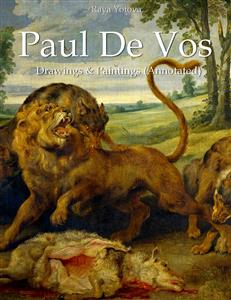
De Vos was a prolific artist who has created a large number of works in the areas of large-size paintings on canvas, drawings and oil sketches. He often signed his works but never dated them. His theme is varied and includes scenes of hunting with dogs, dogs, and cats that ride and bird concerts. He specializes in monumental animal scenes, especially in hunting scenes for aristocratic patrons who are strongly influenced by Frans Snyders. In the past, many of his works have been linked to Snyders. De Vos managed to develop his style that highlights the sharp movement, the terrible aspects of hunting, using warmer colors and a broader brush then the Snyders brush. He also extends the iconographic tradition with scenes of fighting cats and horses attacked by wolves. As is usually the case with artists in Antwerp from the 17th century, De Vos often collaborated with other artists. He worked with Rubens, Anthony van Dyck, and Jan Wildens. De Vos usually contributed to the animals or the still-life in the compositions of these artists, and they only added landscapes to his creations. His co-operation with Rubens consisted mainly of hunting scenes. In their cooperation with Rubens, Snyders and de Vos often worked on drawings by Peter Poul Rubens, while in other cases they were given the freedom to develop their own ideas. The expressive style and motifs of Rubens' animal paintings had a significant influence on both Snyders and De Vos. De Vos introduces new themes in the iconographic tradition in his scenes of fighting cats and horses attacked by wolves.
Das E-Book können Sie in Legimi-Apps oder einer beliebigen App lesen, die das folgende Format unterstützen:
Veröffentlichungsjahr: 2019
Ähnliche
Paul De Vos
Drawings & Paintings (Annotated)
Annotated by Raya Yotova
––––––––
First Edition
*****
Copyright © 2019 Annotated by Raya Yotova
Table of Contents
Title Page
Copyright Page
Foreword
Paintings and Drawings
Foreword
Paul de Vos was born in Hulst near Antwerp. His father moved to Antwerp in 1596. Paul de Vos became a disciple of Denijs van Hove in Antwerp and continued his studies with little-known artist David Remeeus, with whom also trained his elder brother Cornelis. He later learned at another painter, Eduard Snayers. Paul De Vos became a master and joined the St. Luke guild in late age.
He married Isabella Waerbeek, a notary's daughter, and the couple had many children. Rubens was the godfather of one of his sons. His family has prospered and managed to make significant real estate investments in Antwerp.
Paul de Vos enjoyed the patronage of influential aristocrats in Spain. He worked on the decorations for Spanish Royal residences, Buen Retiro and Torre de la Parada.
De Vos was a prolific artist who has created a large number of works in the areas of large-size paintings on canvas, drawings and oil sketches. He often signed his works but never dated them. His theme is varied and includes scenes of hunting with dogs, dogs, and cats that ride and bird concerts. He specializes in monumental animal scenes, especially in hunting scenes for aristocratic patrons who are strongly influenced by Frans Snyders. In the past, many of his works have been linked to Snyders.
De Vos managed to develop his style that highlights the sharp movement, the terrible aspects of hunting, using warmer colors and a broader brush then the Snyders brush. He also extends the iconographic tradition with scenes of fighting cats and horses attacked by wolves.
As is usually the case with artists in Antwerp from the 17th century, De Vos often collaborated with other artists.
He worked with Rubens, Anthony van Dyck, and Jan Wildens. De Vos usually contributed to the animals or the still-life in the compositions of these artists, and they only added landscapes to his creations. His co-operation with Rubens consisted mainly of hunting scenes. In their cooperation with Rubens, Snyders and de Vos often worked on drawings by Peter Poul Rubens, while in other cases they were given the freedom to develop their own ideas. The expressive style and motifs of Rubens' animal paintings had a significant influence on both Snyders and De Vos. De Vos introduces new themes in the iconographic tradition in his scenes of fighting cats and horses attacked by wolves.
Paintings and Drawings
Stag Hunt, 1610-53, Oil on canvas, 212 x 349 cm




