


1,99 €
Mehr erfahren.
- Herausgeber: Publisher s13381
- Kategorie: Geisteswissenschaft
- Sprache: Englisch
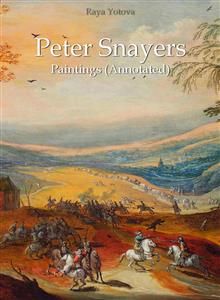
Peter Snayers was a Flemish artist, known for his panoramic battle scenes, images of cavalry skirmishes, raids over villages, convoys and hunting scenes. He established his status mainly through his topographic war scenes, giving a bird's eye view of the battlefield. He also painted great-scale landscapes and portraits of the aristocracy. He was a regular associate of local landscape artists and Rubens. He became early a master in the Antwerp Guild and soon moved to Brussels where he worked for the court of the Spanish rulers. He was the chief military painter of the royal court in Brussels and the appointed court painter with the rank of Colonel. Snayers joined the guild of artists in Brussels and became a citizen of Brussels at the same time. After Isabella's death in 1633, he became an artist of the next two governors. For them, he painted scenes of victorious battles in the sixteenth-century tapestry tradition. He also painted portraits of the nobility in Brussels and great-scale landscapes. He also worked for other prominent patrons and the open market. The emphasis in his career was the commission for 22 war paintings by General Ottavio Piccolomini. While working in Brussels, he regularly visits his hometown of Antwerp, but never returned to live there. In a few cases, he worked with artists in Antwerp like Peter Paul Rubens.
Das E-Book können Sie in Legimi-Apps oder einer beliebigen App lesen, die das folgende Format unterstützen:
Veröffentlichungsjahr: 2019
Ähnliche
Peter Snayers
Paintings (Annotated)
Annotated by Raya Yotova
––––––––
First Edition
*****
Copyright © 2018 Annotated by Raya Yotova
Table of Contents
Title Page
Copyright Page
Foreword
Paintings
Foreword
Peter Snayers was a Flemish artist, known for his panoramic battle scenes, images of cavalry skirmishes, raids over villages, convoys and hunting scenes. He established his status mainly through his topographic war scenes, giving a bird's eye view of the battlefield. He also painted great-scale landscapes and portraits of the aristocracy.
He was a regular associate of local landscape artists and Rubens.
He became early a master in the Antwerp Guild and soon moved to Brussels where he worked for the court of the Spanish rulers. He was the chief military painter of the royal court in Brussels and the appointed court painter with the rank of Colonel.
Snayers joined the guild of artists in Brussels and became a citizen of Brussels at the same time. After Isabella's death in 1633, he became an artist of the next two governors. For them, he painted scenes of victorious battles in the sixteenth-century tapestry tradition.
He also painted portraits of the nobility in Brussels and great-scale landscapes. He also worked for other prominent patrons and the open market. The emphasis in his career was the commission for 22 war paintings by General Ottavio Piccolomini. While working in Brussels, he regularly visits his hometown of Antwerp, but never returned to live there. In a few cases, he worked with artists in Antwerp like Peter Paul Rubens.
And during his Antwerp's, and during Brussels' period, he mingles with the elite of his time. He climbed the social ladder and sought to live in a way similar to that of the aristocrats. So he is an example of the aristocratization of successful 17th-century citizens. His students include Gilliam van Shor and Adam Frans Van der Meilen. The latter became a leading military artist and courtier artist of Louis XIV of France.
In addition to the military paintings, Peter Snayers creates various hunting scenes and several religious compositions. Finally, he completed several arrangements showing gendarmes and civil militia public demonstrations. Peter Snayers s created major historical battle scenes as well as smaller works depicting equestrians and scenes of soldiers at rest. His historical battle scenes show great attention to topographical accuracy. Often they exhibit a shallow foreground that sharply decreases to show a besieged city from a bird's point of view.




