


1,49 €
Mehr erfahren.
- Herausgeber: The History Press
- Kategorie: Sachliteratur, Reportagen, Biografien
- Sprache: Englisch
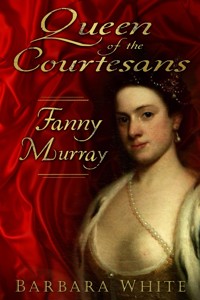
Fanny Murray was an incomparable Georgian beauty and the most desired courtesan of the 1750s. The daughter of an impoverished musician from Bath, she took London society by storm, not only as the most prized 'purchaseable beauty' of her day, but also as a fashion icon and muse to poets, writers and artists. She counted princes, aristocrats and politicians among her friends and lovers, but relished the company of rogues, fraudsters and ne'er-do-wells. Barbara White presents evidence to suggest that Fanny Murray participated spiritedly in the sexual antics of the notorious 'Monks of Medmenham', the most infamous of the Hell-fire Clubs. After she retired from prostitution, Fanny Murray reinvented herself, entering a pragmatic marriage with the Scottish actor David Ross. Surprisingly, her virtues as a devoted and faithful wife became almost proverbial. Even so, Murray could not escape her disreputable past. In 1763, a scurrilous poem dedicated to her caused a national scandal that ended in the infamous trial of the radical politician John Wilkes for obscene libel. Barbara White's portrait of Fanny Murray takes readers from the brothels of Covent Garden to sex romps at Medmenham Abbey, from refined drawing rooms in London to marital respectability in Edinburgh. This is an illuminating contribution to the scholarly understanding and popular appreciation of a complex and intriguing period of British history. Fanny Murray's triumph – against almost insuperable odds – is a remarkable story, as rich in the telling as it is enthralling.
Das E-Book können Sie in Legimi-Apps oder einer beliebigen App lesen, die das folgende Format unterstützen:
Veröffentlichungsjahr: 2014
Ähnliche


















In memory of my parents Thelma and David G White
Contents
Title
Dedication
A Note on the Text
Glossary of Terms
Acknowledgements
Introduction
1 ‘The Bath Goddess’
2 Rakes and Royals
3 London and the ‘Sisters of Carnality’
4 Poetic Lists and Whores’ Directories
5 Lovers and Keepers
6 The Height of Fashion
7 The Nuns of Medmenham
8 ‘A New Born Creature’
9 ‘Awake my Fanny’
10 ‘Auld Reekie’
11 The Final Years
12 Epilogue
Select Bibliography
Plates
Copyright
A Note on the Text
The spelling, punctuation and capitalisation of original documents has been retained to give the reader a sense of the colour of the period, although the long ‘s’ and other typographies have been modernised. American spelling has been anglicised. Quotations from An Essay on Woman have been taken from Arthur H. Cash’s reconstruction of the poem. Where appropriate, page references to The Memoirs of the Celebrated Miss Fanny M----- (1759) are given within the text.
Square brackets around an author’s name such as [John Oldmixon] denotes that the writer was the probable author even though his name does not appear on the title page. Square brackets around dates such as [1765] indicates that this is the most probable date of publication, even though it might not appear in the text.
Before 1752, according to the Julian or Old Style calendar, the New Year began on 25 March. Throughout this text, the Gregorian or New Style calendar has been adopted and the year taken to begin on 1 January.
The place of publication of books cited is London unless stated otherwise.
Pre-decimal Currency
Prices are given in the currency of the time, and the purchasing power calculator at http://www.measuringworth.comhas been used to estimate modern values.
One pound was made up of 20 shillings or 240 pence, so that there were 12 pence to a shilling. A crown was 5 shillings; and half a crown, 2 shillings and sixpence – this was written as 2s 6d. A guinea was 1 pound 1 shilling – £1 1s 0d; 2 guineas, 2 pounds 2 shillings and written as £2 2s 0d, and so on.
Glossary of Terms
Abbess, or Lady Abbess
the keeper of a high-class brothel.
Bagnio
a bathing house, but with a reputation for sexual intrigue.
Bawd
brothel-keeper.
Bawdy house
brothel.
Bon ton/haut ton
fashionable and highly fashionable society.
Demi-monde
a class of women of dubious reputation, including actresses and courtesans, who inhabited a world on the edge of respectable society.
Demi-rep
a woman of doubtful reputation including actresses and courtesans. Literally ‘half reputation’.
Dirty
disreputable.
Gallantry
sexual intrigue.
Fleet marriage
until Hardwicke’s Marriage Act (1753), this was a legally binding marriage which did not have to take place in church and which required neither banns nor licence.
High-keeping
the maintenance of a mistress in the greatest of luxury.
Keeper/protector
a man who keeps a mistress.
Nosegay
a posy of fragrant flowers often used to ward off evil smells.
Nunnery
a high-class brothel, run by an abbess.
Sponging/spunginghouse
a place of temporary confinement for debtors, normally run by the local bailiff.
Abbreviations
BCL
Bath Central Library.
Biographical Dictionary of Actors
Philip H. Highfill, Kalman A. Burnim, Edward A. Langhans (eds), A Biographical Dictionary of Actors, Actresses, Musicians, Dancers, Managers & other Stage Personnel in London, 1660–1800, 16 vols (Carbondale and Edwardville: Southern Illinois University Press, 1973–93).
BL
British Library, London.
BM
British Museum, London.
BRO
Bath Record Office.
LMA
London Metropolitan Archives.
NMM
Caird Library at the National Maritime Museum, London.
N&Q
Notes and Queries.
RCS
Library of the Royal College of Surgeons of England, London.
T&C
Town and Country Magazine.
WAC
City of Westminster Archive Centre.
Walpole Correspondence
Peter Cunningham (ed.), The Letters of Horace Walpole, Earl of Orford, 8 vols (Richard Bentley, 1857).
WNA
Woodhorn – Northumberland Archives.
Acknowledgements
Numerous individuals have been instrumental in offering advice and encouragement during the writing of this book and I would like to begin by thanking The History Press – in particular, Katharine Reeve, Gary Chapman and Stuart Biles for their belief in Fanny Murray, and for bringing this fascinating courtesan to the page. I am also grateful to Lindsey Smith for her patience and helpfulness in answering my many enquiries during the process of writing, and especially to my editors Mark Beynon and Rebecca Newton for their considerable support and advice.
I would also like to thank the staff of the following libraries and archive centres without whose kindly assistance, help and knowledge, this book would not have been possible – the Bodleian Library, the British Library, the Caird Library at the National Maritime Museum, the City of Westminster Archive Centre, the Department of Prints and Drawings at the British Museum, the Library of the Royal College of Surgeons, the London Metropolitan Archives, the National Art Library at the Victoria and Albert Museum, the National Library of Scotland, and Woodhorn Northumberland Archives. Thanks are especially due to Anne Buchanan, the local studies librarian at Bath Central Library, and also to Lucy Rutherford, the archivist at Bath Abbey; Jo Johnston, formerly archivist at Bath Preservation Trust; and Colin Johnston, the principal archivist, and the staff of Bath Record Office, all of whom were immensely helpful as I sought to confirm Fanny Murray’s connections with Bath.
I am also indebted to John Montagu, 12th Earl of Sandwich, for his patience in answering my questions regarding the minute book of the Divan Club (1744–46), known as Al Koran, and on Murray’s involvement with the club. I am equally grateful to Sir Edward Dashwood, Bt, for his clarification on the identity of the sitters for the oriental portraits at West Wycombe Park, and for his kind permission to reproduce his portrait of Fanny Murray. My thanks also go to Roderick D. Cannon and Keith Sanger who were especially helpful in sharing their considerable knowledge about eighteenth-century pibrochs as I tried to identify the addressee of the Scottish piping tune, ‘Salute to Miss Fanny Murray’.
Friends and colleagues have been overwhelmingly kind in their unflagging support and encouragement, and I would particularly like to thank Martine Brant, Barbara Cheney, Graham Davis, Ian Gregson, George O’ Har, Claire Pickard, and Neil Sammells for reading draft chapters – the book has profited greatly from their insightful comments and suggestions. In addition, Judi Stephenson, Michael Stewart and Martine Brant offered generous hospitality and joyful company on research trips to Buckinghamshire, Edinburgh, Oxford and Northumberland. I have also been fortunate to have a ‘sisterhood’ of my own to rival that of Fanny Murray (including some honorary females), all of whom have provided immense encouragement, quite often over welcome cups of coffee, lunches and dinners, and I would especially like to thank Judith Birch, June Breeze, Chris Brown, Helena and David Cook, Stephanie Fleet, Becky Gallagher, Jane Glaser, Peta Hall, Mary Hayward, Carol Jenkins, Penny Holroyd, Roy Johnson, Joyce McDonald, Elspeth Montagu, Chris Pelling, the Priory girls, Diana Rejiester, Janet Scott, Su Underwood and Joan Walker.
My greatest debt, however, is to Elaine Chalus and Ceri Sullivan for their unbounded generosity with both their time and scholarship in reading versions of the book in its entirety. They kept me focused on Murray when fascinating characters like Betsy Wemyss, the ‘one-eyed squinting Venus’ or the feisty Elizabeth Roach tempted me to digress, and our many lively conversations helped me enormously in my quest for the real Fanny Murray. Those errors and omissions that remain are my own.
The illustrations in this book represent the most comprehensive collection to date, of prints and portraits associated with Fanny Murray. I am indebted, therefore, to a number of institutions and individuals for their permission to reproduce these images and for their patience in answering my queries. My thanks to the Althorp Estates (and especially Sophie Slater), the Art Archive/Garrick Club (and especially Sally Paley and Cheryl Thomas), ‘Bath in Time’ at Bath Central Library, the Berkeley Castle Charitable Trust (and especially David Bowd-Exworth and Mr and Mrs Berkeley); the Bibliothèque Nationale de France, the British Library; the British Museum (and especially Christopher Sutherns), Sir Edward Dashwood Bt, the National Portrait Gallery, the National Trust, the Paul Mellon Centre for Studies in British Art (and especially Jenny Hill) and the Victoria and Albert Museum. I am also grateful to Jon Ryan, who assisted with images and especially to Dan Brown, the founder of ‘Bath in Time’ for his advice and expertise on reproducing images, and for his immense kindness in photographing mezzotints and engravings from my own collection for reproduction in this book.
Finally, I wish to express my gratitude to the late Dr Timothy C Curtis, an inspirational teacher and scholar, who first instilled in me a love of history and a deep admiration for those men and women, like Fanny Murray, who lived their lives on the edge.
Introduction
When first I took a distant view,
My fainting spirits quick withdrew;
My heart beat in a hurry.
But when I near approach’d her rays,
’Twas hard to bear the dazling [sic] blaze,
To gaze on Fanny Murray.1
Fanny Murray would not have approved of this biography. Even at the height of her power when she relied on publicity to oil the wheels of her fame and fortune, she recoiled from intrusions into her personal life. Yet it has only been by reading her surviving private letters, delving into the correspondence, memoirs and journals of her contemporaries – men like James Boswell (1740–95) and ‘the very prince of Gossips’ Horace Walpole (1717–97) – and by following her in the gossip columns of the day that new facts have emerged which allow her fascinating story to be told definitively.2
Hers was a classic tale of rags-to-riches that could be found in any of the prostitute narratives of the day.3 Born Frances Rudman, into an impoverished musician’s family in Bath in 1729, she rose to become a great beauty and premier courtesan of her day. At the height of her celebrity, she inhabited an elegant demi-monde of courtesans, actresses and mistresses whose lovers were drawn from elite society, from royal, aristocratic and political circles. In Murray’s case, her numerous amours included the Hon. John Spencer (1708–46), a member of one of the wealthiest aristocratic families in England; Richard ‘Beau’ Nash (1674–1761), the flamboyant master of ceremonies at Bath; and the rakish John Montagu (1718–92), 4th Earl of Sandwich, who rose to become First Lord of the Admiralty. Her lovers also included a fair number of fraudsters, rogues and ne’er-do-wells for whom Murray appears to have had a particular weakness. As with a number of other celebrated courtesans, Murray’s rags-to-riches story was not a straightforward upwardly mobile trajectory but rather one of fluctuating fortunes, of immense wealth one day and near penury the next. She was often plagued by debt and, after she withdrew from the sex trade around 1755 and had settled into marriage with the actor David Ross (1728–90), she returned, if not to rags, then at least to a kind of genteel frugality.
Murray did not conform to today’s idea of perfect beauty, being neither tall nor willowy like twenty-first-century top models and style icons. Indeed, she did not fully conform to the ideals of her own day, for Murray was short and slightly overweight. The anonymous author of the two-volume Memoirs of the Celebrated Miss Fanny M----- (1:8) (hereafter termed the Memoirs) described her as ‘but of the middle size, and though inclined to be plump, she had delicacy enough in her shape to make it agreeable’.4 Ross’s good friend, the journalist, editor and drama critic John Taylor (1757–1832), who described Murray in later life, was also struck by her petite build – she was, he remembered, ‘short, and by no means elegant’.5
In her prime, however, Murray was one of the perfections of the age, and her voluptuous figure drove men wild with desire. She was especially admired for her bosoms, ‘those fair hemispheres, those orbs of more than snowy whiteness, which seemed to pant for release from irksome robes’ (1:70). It was her face, however, that was her undoubted fortune, and her ‘apple-faced Beauty’ was described admiringly by the author of the Memoirs (1:6–7) as:
A perfect oval, with eyes that conversed love, and every other feature in agreeable symmetry. Her dimple cheek alone might have captivated, if a smile that gave it existence, did not display such other charms as shared the conquest. Her teeth regular, small and perfectly white, coral lips and chestnut hair, soon attracted the eyes of everyone.6
Queen of the Courtesans: Fanny Murray is the first full-length biography of Murray since the publication of the Memoirs in 1758. They followed Murray’s fortunes from her childhood in Bath to her retirement from prostitution, and concluded in 1756 just after she had embarked upon her twenty-two-year marriage to Ross. Understandably, subsequent attention has concentrated on Murray’s promiscuous heyday, as described in the Memoirs, rather than on her quieter marital life, and yet the years during which she proved a devoted wife are not without their own excitements and the occasional glittering moment. Her marital years also give fascinating insights into the way the media, and her once adoring public, responded to the former ‘toast of the town’ in her declining years. This biography explores Murray the courtesan and Murray the wife in equal measure. It also draws on a wide range of sources, including many that have not featured before in narratives of her life, in order to disentangle the real Murray from the apocryphal anecdotes and myth-making stories that have grown up around her.
Indeed, the first biography of Murray, which preceded the Memoirs by ten years, was a complete invention. ‘The Secret History, &c. of the Famous Miss F---y M----y’ appeared in 1748 in The Humours of Fleet-Street, a collection of biographies of ‘the most noted Ladies of Pleasure’.7 A second volume followed in June 1749.8The Humours of Fleet-Street took the form of twenty-four letters, written principally by a character named Captain Henry Rakewell to his friend, George Bellfield, and Murray’s eight-page biography appeared in the first volume as the fourth of thirteen letters. The letter was dated 20 December 1746, when Murray was 17, although she was portrayed as older in the narrative. Advertisements for the first volume, on sale at 2s, began to appear from mid-November. By the end of the month, and possibly to boost sales, a list of the more notorious ladies featured in the volume was also added, their names lightly disguised by a mixture of letters and dashes to avoid the possibility of libel action.9 Aside from Murray, these included the well-known brothel-keeper Jane Douglas (c. 1700–61) and the actress Margaret ‘Peg’ Woffington (1720–60). As Stella Tillyard has noted, and as Murray would learn to her cost, this simple device for obscuring names meant that ‘no slander or gossip was unprintable’.10
According to The Humours of Fleet-Street, rather than being the daughter of a musician in Bath, Murray was born into a well-connected family in the west of Scotland and became the toast of Edinburgh. Her biographer claimed that she was seduced at the age of 18 by ‘a young nobleman lately married’ and made pregnant by him. Disowned by her parents, Murray was then taken ‘into keeping’, as it was termed, by her seducer who infected her with venereal disease and abandoned her sometime after the birth of her child. The narrative made no further mention of the infant, charting instead Murray’s descent into private and then common prostitution.
According to her biographer, Murray finally ended up in a house of correction where she was indented for seven years to a merchant intent on placing her in service in Virginia. Murray escaped by means of an elaborate plan that centred on her seduction of the merchant as they travelled together to Glasgow to rendezvous with the boat bound for America. This biography of Murray only becomes at all plausible in the final paragraph, after her arrival in London, when the character Rakewell gave every appearance of actually having observed Murray ‘at all publick places with as much eclat as any of her profession’.
Murray maintained a stoical silence when The Humours of Fleet-Street appeared, as she did whenever she was reported in the press, and did nothing to confirm or deny its fictions. It was the same a decade later, when the Memoirs were published.
Historiographically, the Memoirs are key to any study of Murray, as they have formed the basis of all subsequent narratives of her life in the absence of anything more reliable or substantial. The first volume, which was advertised in the newspapers from the end of November 1758, was savaged in review.11 A writer for the Critical Review called it a ‘miserable catchpenny book’ and confidently predicted that ‘nobody will throw away their money upon this collection of absurdities’.12
In similar tones, a critic for the Monthly Review dismissed the Memoirs as ‘ill written, imperfect, and … little more than mere invention’. He also alerted his readers that ‘the author promise[d] to finish [the Memoirs] in another volume, provided the first part meets with success’.13 The first volume did well enough, seemingly, for an advertisement in the Whitehall Evening Post, dated 13 March 1759, to announce a sequel at ‘3s bound, sew’d 2s. 6d’.14
It was in the second volume that the anonymous author of the Memoirs (2:106–15) took revenge on his reviewers by imagining an episode between Mr L, an author, and ‘Mr G---s’s right hand’, a reference to Ralph Griffiths, the Nonconformist bookseller who had founded the Monthly Review in 1749. In the satirical conversation that followed (2:113–5), the Monthly Review was said to sell reviews to order, while the Critical Review was ridiculed for having ‘less judgment and impartiality, and greater scurrility than even the Monthly Review’. Despite being goaded in this fashion, the writer for the Critical Review was willing to concede ‘that the second volume [was] better than the first’, but insisted that its author ‘might have applied his talents to a better purpose’.15
Despite the reviewers’ criticisms, the Memoirs appear to have enjoyed popular appeal, and were still amusing readers some thirty-five years after their publication. In 1796, Ranger’s Repository printed a letter, ostensibly from a drunken ‘Lover of Fun’, who wrote to deliver a ‘Confusion to your books of Science, Philosophy, History and such d[amne]d dry stuff. – Give me the Adventures of a Buck, or the History of Fanny Murray and be hanged.’16
The inebriate’s enjoyment of the Memoirs is not surprising, for the narrative maintained a lively pace throughout and recounted its colourful version of Murray’s life in entertaining fashion. For added spice, the author of the Memoirs reproduced letters and papers that he claimed had once belonged to Murray and her associates. He also included imagined encounters with aristocratic rakes, pimps and prostitutes, and even the King of France.
Indeed, a quarter of both volumes is taken up by five first-person ‘autobiographies within a biography’ of characters, both real and imagined, who purportedly told their life stories to Murray. The first volume featured the autobiographies of a Mrs Stevens and Miss Charlotte S---, both fictional fallen women, the Covent Garden pimp Jack Harris (d. c. 1794), and the polygamist Captain Plaistow, while the lengthy account of the life and loves of the rake Robert ‘Beau’ Tracy (d. 1756) appeared at the beginning of the second volume.17
The fictional scenes and flights of fancy that characterise the Memoirs were very much part of the biography’s charm for those contemporary readers eager for gossip about Murray’s private life, no matter how inaccurate or far-fetched. Yet the Memoirs were more than ‘mere invention’, as suggested by the critic from the Monthly Review, and not every episode was a fabrication.18 In fact, the loose framework of Murray’s life that the Memoirs constructed for reader entertainment was largely accurate. As a consequence, the Memoirs are valuable in bridging some of the tantalising gaps in Murray’s narrative, and they are often the only source available to add flesh to the bare bones of claims and stories that circulated about her. If the broad brushstrokes are mostly accurate, it is only in the close detail, in the colourfully imagined scenes and conversations, that the reader must be en garde.
The same issues of verisimilitude arise with many of the other contemporary sources that are used to authenticate episodes from Murray’s life. For example, Murray sometimes featured in the immensely popular ‘tête-à-tête’ series that was published in the Town and CountryMagazine between 1769 and 1792. The ‘tête-à-têtes’ are a mine of salacious detail as, each month, the sex lives and previous amours of a well-known pair of lovers were served up for the prurient interest of magazine readers. As Cindy McCreery has shown, however, in her study of the genre, ‘tête-à-têtes were often only partly accurate, and occasionally completely inaccurate’ so that claims for Murray as the former love interest of a number of distinguished men are also to be treated circumspectly.19
Inaccuracies and embellishments have also been introduced into more recent accounts of Murray’s life, and repeated with such regularity that they too have become part of the Fanny Murray narrative. A case in point is an anecdote about a culinary tribute which is still credited to Murray even though it was originally intended for someone else.20 The anecdote, in which a young gallant drank champagne from the shoe of a ‘fille de joie’, was first retold in Ladies Fair and Frail (1909), Horace Bleackley’s engaging study of eighteenth-century courtesans. Suggesting that the shoe might have possibly belonged to Murray, Bleackley described how the gallant ordered it to be prepared for supper. The French chef duly shredded the fine damask upper part of the shoe ‘and tossed it up in a ragout, minced the sole, cut the wooden heel into very fine slices, fried them in butter, and placed them round the dish for garnish’.21 What Bleackley omitted to mention, as he transcribed this anecdote from either the Monthly Review (1754), or possibly the London Magazine (1754), was that the chef named his concoction, in honour of the young lady in question, ‘de soulier à la Murphy’.22 Either by an accident of mistranscription or by design, the anecdote, which has become part of the Fanny Murray myth, does not belong to her at all.
Recovering Murray’s past history is not only hindered by the unreliability of sources, but also by the fact that Murray left so few textual traces. Apart from a handful of letters to the Spencer family of Althorp, in Northamptonshire, Murray’s authentic voice is rarely and only faintly heard in any of the contemporary sources where she is mentioned. She did not engage personally with the press or keep herself in the public eye by penning letters to editors or by issuing rebuttals when false claims were made about her; nor did she place advertisements to promote herself in any of the newspapers.
By contrast, Kitty Fisher (c. 1739–67), Murray’s nearest rival from the next generation of courtesans, embraced publicity and deftly managed her own career by capitalising on every opportunity to market herself. Thus, when a fanciful memoir appeared in March 1759 entitled The Juvenile Adventures of Miss Kitty F----r, Fisher immediately took out an advertisement in the Public Advertiser to complain of her treatment in censorious terms that were guaranteed to boost both sales and her own status. Writing in the third person, Fisher described how she had been:
abused in public Papers, exposed in Print-shops, and to wind up the Whole, some Wretches mean, ignorant, and venal, would impose upon the Public, by daring to pretend to publish her Memoirs. She hopes to prevent the Success of their Endeavours, by thus publickly declaring that nothing of that Sort has the slightest Foundation in Truth.23
In addition to maintaining a low profile in the press, Murray also refused to trade on her famous name and scandalous past by writing her autobiography, and she had no hand in the Memoirs that appeared three years after she had settled into marital respectability. Other courtesans were not so reticent, especially when a lucrative income was at stake. Laura J. Rosenthal in Infamous Commerce, a study of eighteenth-century prostitution, has estimated that at least two or three dozen prostitute narratives were published during the eighteenth century.24 Constantia Phillips (1709–65), for example, was offered £1,000 for her Apology for the Conduct of Teresia Constantia Phillips, which was first published in instalments in 1748. She planned to earn more, however, by blackmailing former lovers, especially Lord Chesterfield, into buying annuities for her in exchange for being expunged from her narrative.25 Harriette Wilson (1786–1845) received £400 from the sale of her memoirs in 1825 but might have received several thousand pounds more following blackmail letters to over 200 of her former lovers.26 Arthur Wellesley, 1st Duke of Wellington was one who refused to pay up and is credited with the famous challenge to Wilson of ‘publish and be damned’.
The unreliability of contemporary sources, and the paucity of detailed accounts relating to Murray is not altogether surprising, since courtesans were often regarded as little more than footnotes to the lives of famous (and infamous) men, their literary significance restricted to the light they shed on the lovers with whom they had shared an intimacy. After all, courtesans only came to prominence as a result of ‘the accident of their promiscuous relations with a number of the wealthiest and most influential men of their day’.27 As a result, references to courtesans, even those who left behind memoirs, are often sparse and spread widely but thinly across a range of ephemeral writings – in newspapers, magazines, jest books and poetry collections, and in snippets of news buried in the private letters, diaries and memoirs of society gossips.
As a consequence, Murray is often only to be glimpsed fleetingly, and nearly always from a male perspective, in the writings of the day. Only her portraits, which were reproduced in their thousands for the print-shop market, permit a longer gaze, which can linger over her beauty and distil her essence. Taken together, however, these visual and literary evidences, garnered from a multiplicity of contemporary sources, unlock a life of fascinating contradiction – of love, marriage, immense wealth, refinement and marital reputation on the one hand, and sex, debauchery, grinding poverty, vulgarity, scandal and humiliation on the other.
Bleackley’s chapter-length study of Murray in Ladies Fair and Frail was the first serious biography of the beautiful courtesan since the Memoirs appeared in 1758. After her death in 1778 Murray had soon slipped from memory, and it was not until the 1850s that there were the first glimmerings of a revival of interest from a new generation of gentlemen admirers. In particular, contributors to Notes & Queries, among whom Bleackley was often an authoritative voice, were keen to reconstruct her life, to verify her anecdotes and establish the nature of her relationships with famous men of the eighteenth century.
These relationships were not always sexual. Murray’s connection with the radical politician, John Wilkes (1725–97), for example, stemmed from the furore that surrounded An Essay on Woman (published 1763), a blasphemous poem credited to Wilkes and addressed to Murray. Similarly, her connection with the rakish Sir Francis Dashwood (1708–81) was largely the result of her tangential involvement with two of his gentlemen’s clubs – the Divan Club and the Order of St Francis. The latter, which was founded by Dashwood, is now best remembered as the most scurrilous of the so-called hell-fire clubs.
As a result, Murray’s name appeared with increasing regularity during the last century in surveys, both scholarly and popular, of ‘the Wilkes affair’, hell-fire clubs and biographies of (often) scandalous eighteenth-century figures. In such studies, to borrow Philip Carter’s phrase, Murray was the subject of a ‘gentleman’s club school of biography’ and interest in her was largely limited to normally unsubstantiated asides and anecdotes that accentuated both her promiscuity and her beauty.28 Her name and the broad outline of her life, therefore, have long been familiar to those interested in the eighteenth-century demi-monde. Even so, it is surprising to find her making brief appearances in works such as Daphne du Maurier’s Mary Anne, a novel first published in 1954 and based on the life of du Maurier’s great-great-grandmother, the courtesan Mary Anne Clarke (1776–1852), who was once mistress to Frederick, Duke of York.29
Popular interest in Murray has increased noticeably since the beginning of the new millennium. Fanny Murray mugs are now offered for sale on a number of internet sites, and she acquired her own Wikipedia page in 2013. On a more serious note, there has been a surge of scholarly interest in libertine literature, the sexual life of Georgian England and the nature of celebrity that has made the world of the courtesan altogether more accessible.30 In addition, several biographies of notable courtesans, including Emma Hamilton (1765–1815), Mary Robinson (1757–1800), and Harriette Wilson, have also appeared and Whore Biographies, Julie Peakman’s eight-volume collection of often rare libertine narratives, including the Memoirs, is an especially valuable resource.31 Within this canon, however, interest in Murray is still largely limited to a retelling of her colourful life.32 Even so, some new and thought-provoking perspectives on Murray and particularly, on Murray as viewed through the Memoirs, have emerged.
For example, Rosenthal’s study of eighteenth-century prostitution placed Murray, as portrayed in the Memoirs, firmly within a commercial rather than a sexual context. Infamous Commerce charted the development of prostitution from the seventeenth-century’s emphasis on sex as gratification, to the eighteenth century, when sex became a commercial transaction, increasingly divorced from pleasure.33 This transformation from pleasure-seeking whore to businesslike prostitute, suggested Rosenthal, was reflected in the prostitute literature of the day, which focused on ‘class and economic concerns’ rather than the sexual activities of its promiscuous heroines.34
Thus, the Memoirs offered little help in pinpointing what it was that made Murray quite so irresistible sexually, yet they were assiduous in describing her shifting fortunes as a marketable commodity within the sex trade. Murray was described, therefore, as she experienced immense wealth and upward mobility but also such penury that she was arrested for debt and held in a sponging house (2:184). Within this context, Rosenthal viewed Murray as someone who was ‘not so different from anyone else working their way through an unpredictable commercial world’.35 Situating Murray within Mandevillian ideas on the necessity of private vice – of luxury, vanity and covetousness – to bring about economic prosperity, Rosenthal presented Murray as one who, by partial self-objectification and self-division (i.e. the separation of her own self from her business self), successfully reconciled vice with the rewards of the commercial marketplace.
Rather than a business context, Mary Peace, in her reading of the Memoirs (and also of TheUncommon Adventures of Miss Kitty F----r (1759)), placed Murray and Fisher within contemporary discourses on luxury and moral sense ideas, to regard them as sentimental figures and exemplars of natural virtue.36 Published at a time of national prosperity, when the tide of the Seven Years War turned in favour of Britain’s territorial interests, both texts, Peace considered, were ‘freighted with significance far beyond their immediate subject matter’.37 It was a significance born of the intense intellectual debate on the relationship between luxury and virtue that Britain’s increasing affluence had provoked. To the classically educated, noted Peace, Britain’s prosperity invited troubling comparisons with ancient Rome, a civilisation destroyed at the very height of its prosperity by the degenerative power of luxury. It was, argued Peace, the ‘prominence of this classical-republican history of the fall of Rome, in the contemporary cultural imagination, which place[d] stories about the lives of prostitutes centre stage in 1759’.38 In such a context Fisher and Murray became ‘textbook representations of the allure and dangers of luxury’.39
Yet, as Peace explained, neither the Memoirs nor TheUncommon Adventures portrayed their heroines as corrupted by luxury, or as avaricious and sexually rapacious. Rather, informed by theories of moral sense, most prominently expounded by the Scottish philosopher David Hume, both women were ‘framed as fundamentally sentimental figures: they have natural delicacy, good sense, good taste, and compassion, which act to curb the fatal excesses of luxury’.40 Arguing that moral sense philosophy was deeply embedded in the Memoirs, Peace drew particular attention to a telling description of Murray (2:190) where she was portrayed as naturally virtuous, and as:
one, whose natural disposition was not vicious, but who, having made a false step, found many obstacles to return into the path of virtue – who was neither avaricious, luxurious, or debauched, further than necessity obliged, but animated with sentiments that would have adorned a much more worthy and exalted station.
As a consequence, Peace considered both texts to be ‘consoling narratives for a luxurious society in the midst of war’; texts that offered reassurances that luxury, when tempered by moral sense, could promote national virtue.41 Indeed, as Peace pointed out, Murray’s self-improvements and her self-fashioning as a creature of refinement were ‘attendant upon a life of commerce and luxury’.42
Peace’s reading of the Memoirs as a text imbued with moral sense ideas was in concert with Rosenthal’s, who also viewed Murray, through the Memoirs, as a sentimental figure, one whose virtuous nature was not undermined by the immorality of her profession. Indeed, in what Rosenthal described as a ‘“tail-piece” of morality’, she noted how Murray’s virtue, despite her previously immoral life, was rewarded in the Memoirs by a marital happy ending.43 It could be argued, of course, that Murray’s marriage was simply art reflecting life. As this biography of Murray intends to show, however, these benign representations of her as a model of luxurious restraint and possessed of natural virtue, are at odds with a range of contemporary sources, outside the Memoirs, that depicted Murray in her heyday as the antithesis of the sentimental figure, as one marked by licentiousness and covetousness. It was only after Murray had retired from prostitution and was married to Ross that her qualities of benevolence, loyalty, stoicism and decency became more apparent.
Retrieving Murray’s real character from those sources that either mirror the Memoirs’ benevolent attitude toward her or present her in altogether less flattering terms is one of the challenges of this book. During her years as a courtesan, there must indeed have been a ‘peculier gaiety in her temper’ and ‘great felicity in her company’ (1:7) for Murray to have succeeded so spectacularly as the companion of pleasure-seeking men.44 Yet her geniality, and indeed the natural virtue that Peace distinguished, might have been superficial – no more than the simple ploy of a good businesswoman to keep customers happy and trade booming. This is suggested in an amusing it-narrative entitled ‘The Episode of the Petticoat’ after the eponymous narrator had come into the possession of one of Murray’s maids. Able to observe Murray at close quarters, the petticoat described her as:
good-natured and affable; in the Exercise of which Virtues she finds her Account; for as Miss lives on the Publick, it is her immediate Business to please her Company by Blandishment and Indulgence.45
There was, therefore, more to Murray the courtesan than the simple ‘sprightly wench’ that the nineteenth-century author Fitzgerald Molloy observed and the ‘gay, plump little thing’ of the writer Francis Askham’s imaginings.46 Another less attractive side to Murray existed behind her professional exterior as a ‘good-time girl’. It was well known, for example, that she was quick-tempered and that men quailed at her petulant outbursts. In a letter to John Russell, 4th Duke of Bedford (1710–71) his placeman Richard Rigby (1722–88) described the fallout from a row between the 23-year-old Murray and the diplomat and politician Thomas Robinson (1695–1770), afterward 1st Baron Grantham. It is unclear if Robinson was Murray’s lover at the time and the row no more than a lovers’ tiff, but the exchange was sufficiently heated to require an intermediary to placate matters: ‘Lord Waldegrave talks of going with me [Rigby], but he is appointed plenipotentiary between Fanny Murray and Mr Robinson, in a treaty of peace that I believe will engross too much of his time to allow of any absence.’47
As a result, sources outside the Memoirs have regularly painted Murray as an egotistical and impetuous courtesan. In 1809, for example, the biographer of du Maurier’s famous relative, Mary Anne Clarke, described Murray, Fisher and Lucy Cooper (d. 1772) as ‘abandoned prostitutes [who] were only distinguished by their selfish extravagance’.48More recently, writers have variously described Murray as ‘disreputable and grasping’, given to ‘outrageously obscene talk’ and as ‘one of the impulsive belles who knew no law but her own whim for the moment’.49 This was undoubtedly true, but this study has also discovered new material to show that, while she was avaricious as a courtesan, in private she was a deeply caring and generous individual who undertook the lifelong support of her father and siblings.
These contrasting aspects of her character – her jovial cordiality and seemingly innate virtue on the one hand and her fiery-tempered covetousness on the other – have divided opinion on the extent to which Murray should be regarded as a reluctant prostitute – one who was forced into the profession following her seduction, around 1742, by the aristocratic rake, John Spencer. For example, Rakewell in The Humours of Fleet-Street:
sincerely believe[d] she would abandon [prostitution], if there were any possibility of gaining some share of her former reputation, by the most hearty contrition and repentance: but that is impossible; and I am afraid she must continue what she is, while youth and health lasts, and then die miserable.50
In similar terms, Bleackley argued that Murray always hankered after domesticity, and would have been happier as ‘the blameless helpmate of some good citizen of Bath’, had Spencer not ruined her marital prospects.51 It is certainly true that she proved an exemplary wife to Ross throughout the years of their marriage. Yet, numerous anecdotes attest to her ardent enjoyment of venal pleasure and to her vigorous pursuit of the vast wealth that prostitution could bring. Indeed, it has been suggested that Murray was very grateful to Spencer for having first set her on her scandalous path to fame and fortune.52 It was her own drive and determination, however, that made Murray the most successful courtesan of her day.
Rosenthal’s two models – of the pleasure-seeking whore and the commercially minded prostitute who sacrificed pleasure to business – are indeed helpful, but what of courtesans like Murray who were neither whores nor prostitutes, and yet both? Several studies have sought to define their often indefinable qualities. Elite courtesans were the ‘it’ girls of the eighteenth century, who were known variously as impures, demi-reps (literally, women of half reputations), votaries of Venus, Thaïses (after the fourth-century Greek hetaerae, Thaïs) and Cyprians (after Aphrodite, the Greek goddess of love, said to have been born on Cyprus).
They were exceptional women, a breed apart, at times wild and unpredictable, but always captivating, alluring and somewhat elusive – women who could be bought, at a price, but never quite possessed. The anonymous author of A Congratulatory Epistle from a Reformed Rake [1758] placed courtesans second in his ten categories of whores to be found in London. Graded in descending order, he listed courtesans, whom he termed ‘Demi-reps’, just below ‘Women of Fashion, who intrigue’, but above ‘Good-natured Girls, Kept Mistresses [and] Ladies of Pleasure’.53 Such pedestrian attempts at classification, however, denied courtesans their essential uniqueness and luminosity. They were exquisite creatures, skilled at creating auras of exclusivity about themselves, and whose dazzling allure made even happily married men think twice about the nature of their domestic arrangements. Women, too, were captivated by courtesans and the world of luxurious high living, if not the assault on propriety, that they represented. As a consequence, women from all walks of life were often slavish in following the courtesans’ fashionable style and taste.
The courtesan was often beautiful, but not exclusively so, and, of course, she was sexy and well versed in the arts of pleasing men. It was, however, more than just her physical attributes and sexual prowess that made a courtesan irresistible. The truly elite courtesan was possessed of a quality of mind that made her bright and mesmerising, accomplished and witty; a fitting companion for elite men in their leisured, unbuttoned hours. Yet, surprisingly, neither Murray nor Fisher had reputations for wit or for having anything other than average intelligence. Ross’s friend, Taylor, noted how both women were generally regarded as intellectually inferior to their fellow courtesan, Cooper, whom Taylor judged to be ‘a woman of more understanding than her fair rivals’.54 This theme was reflected in ‘The Young Coquette’, a poem that appeared in Lloyd’s Evening Post in September 1758. Having been chided for her lack of wit, Fisher:
Flies to her Friend, and in a Pet,
Cries she, my Dear Miss Fanny,
The Grave will ne’er persuaded be,
That we have as much Wit as they,
Nay, scarce allow us any.55
The courtesan was also meticulous in presenting herself in public as an expensive and rarefied commodity, available exclusively to the select few who could afford her prices or the expense of taking her into protection. Only the wealthiest of men were able to provide the essential accoutrements of a courtesan in high-keeping – a lavish home complete with furnishings, servants and equipage, a box at the theatre, sumptuous clothes and jewels, and an almost limitless allowance.
Somewhat analogous to the aging millionaire who takes a trophy wife, men driven to possess such creatures were motivated by a desire for status as much as by lust. Within the realms of gallantry, taking the most expensive and coveted courtesan of the hour into keeping was a statement of a man’s wealth, taste and virility. As a consequence, men vied with each other to possess premier courtesans just as energetically as harems of courtesans set luxurious honeytraps to attract the wealthiest of protectors.
Despite her wealth, elegance and cultured bearing, the courtesan occupied a nebulous position in society. Her scandalous reputation and the threat to decency that she posed, prevented admittance into respectable, elite circles, yet her lovers were invariably drawn from this class. Indeed, as Peakman has noted, the successful courtesan often ‘maintained a similar social status and lifestyle to that of her clients’.56
Reputable women could not receive her in company yet they aped her fashion sense, and male admirers bought pin-ups of her in the form of mezzotints and engravings or tucked tiny portraits of her into their pocket watches to hold next to their hearts. There were other ambiguities too – the courtesan was both high-class prostitute and mistress, yet neither term fully embodied her. In common with high-class prostitutes, she exchanged sex for money, expensive gifts and substantial financial settlements, yet the courtesan was in the privileged position of being able to choose or reject lovers as the caprice took her.57 Moreover, the elite courtesan did more than simply sell sex: she offered sophisticated companionship within an elegant milieu and conferred kudos on those she accepted into her bed. Even as mistress to a wealthy protector, the courtesan was rarely monogamous, but conducted simultaneous sexual liaisons for profit with a number of clients. In so doing, she ensured her financial and emotional independence by keeping replacement protectors in the wings, lest the eyes of her present lover should begin to stray.
Kevin Jordan Bourque, in his re-evaluation of celebrity, has taken issue with those studies (and he would include Queen of the Courtesans: Fanny Murray) that seek to accentuate the unique and inimitable qualities of their subjects.58 Using Fisher as one of his case studies, Bourque has argued that rather than being exceptional and the product of ‘an intense manifestation of singularity’, celebrities were characterised by their ‘interchangeability, commutability and disposability’.59 Providing a wealth of supporting evidence, Bourque has demonstrated how ‘texts, images, anecdotes and poses’ of fading stars were recycled and repurposed to satisfy consumer demands for the latest celebrity figures, and claimed that celebrity depended upon ‘substitution rather than invention’.60
Thus, in a portrait entitled Miss Fanny Murray (1754), Murray’s head was copied by the engraver Richard Bennet (or Bennett) from a popular engraving after the artist Henry Robert Morland (c. 1716–97). Within a few years, however, when Murray was past her prime, the portrait was repurposed at least twice more – once as Miss Fanny Murray, the Fair and Reigning Toast, in her Primitive Innocence (c. 1764), by the Irish engraver James McArdell (c. 1728–65) and once as a portrait of Kitty Fisher.61 This theme of substitution was commented upon in St James’s Chronicle in 1761: ‘The Galleries of Hampton-Court and Windsor afford a fine Collection of Faces, and with a little retouching may serve for Beauties not yet born; and a Fanny Murray, or a Kitty Fisher of the present Age, were formerly, perhaps, a Nell Gwyn and a Jane Shore.’62
Bourque’s thesis is important, and this biography takes account of the way Murray’s image and ephemeral materials were recycled, reassigned and recirculated, while also allowing her considerably more than her mere fifteen minutes of Warholian fame. This study also argues that in her declining years, Murray found another kind of singularity which was not at all flattering – in a number of poems, epigrams and the occasional print, Murray became the butt of pointed derision as a faded has-been whose premier position had been usurped by younger and more beautiful successors.
Throughout her career, Murray had her fair share of luck, but she also showed remarkable resilience and, in particular, a steeliness of character that enabled her to escape the poverty she had known in Bath, survive the seamiest of London’s brothels and dominate the world of the courtesan. A courtesan’s primacy was often short-lived, lasting no longer than her looks, her novelty value or her ability to please. Yet Murray presided as the reigning toast of the town for eight years, during which time she lived her glamorous life in a blaze of publicity, fêted by an adoring public. Her staying power within the transient world of the courtesan was extraordinary, especially given the number of fresh-faced rivals who were a constant challenge to her primacy. As a result, she has earned her place among the handful of incomparable creatures whom the biographer Katie Hickman has described as ‘exceptional women: forces of nature, as rare and scintillating as their fabulous jewels’.63
Notes
1 Funnybus Oddibus, A Collection of Original Comic Songs and Others … [1765], pp.72–3. Song lxxxiii. ‘On Fanny Murray’.
2 Ronald Blythe (ed.), William Hazlitt: Selected Writings (Harmondsworth: Penguin Classics, 1985), p.418.
3 Laura J. Rosenthal, Infamous Commerce: Prostitution in Eighteenth-Century British Literature and Culture (& Ithaca: Cornell University Press, 2006), p.98.
4 This study refers throughout to Memoirs of the Celebrated Miss Fanny M-----, 2nd ed. (1759), vol. 1, and Memoirs of the Celebrated Miss Fanny M----- (1759), vol. 2. These editions are reproduced in Julie Peakman (ed.), Whore Biographies, 1700–1825, 8 vols (Pickering & Chatto, 2006–7), vol. 3. Peakman notes that a copy of the first edition, which was published in November 1758, is held in the library of the University of California, Los Angeles. See Peakman, Whore Biographies (2006), vol. 3, p.4. Another edition, entitled Memoirs of the Celebrated Miss Fanny Murray, Interspersed with the intrigues and amours of several eminent personages, was published in Dublin in 1759.
5 John Taylor, Records of My Life …, 2 vols (Edward Bull, 1832), vol. 1, p.363.
6The Vis-à-Vis of Berkley-Square: or, a Wheel off Mrs W-t-n’s Carriage … (1783), p.11 (footnote).
7The Humours of Fleet-Street: and the Strand; Being the Lives and Adventures of the Most Noted Ladies of Pleasure … By an Old Sportsman (1749), pp.17–25.
8The London Evening Post, 13–15 June 1749.
9 See, for example, The General Evening Post, 26–29 November 1748.
10 Stella Tillyard, ‘“Paths of Glory”: Fame and the Public in Eighteenth-Century London’, in Martin Postle (ed.), Joshua Reynolds: The Creation of Celebrity (Tate Publishing, 2005), p.63.
11 See, for example, ThePublic Advertiser, 30 November 1758, the date on which the first edition of the Memoirs was published.
12TheCritical Review: or, Annals of Literature (January 1759 issue), vol. 7, p.87.
13The Monthly Review: or, Literary Journal. By Several Hands (December 1758 issue), vol. 19, p.580.
14TheWhitehall Evening Post: or, London Intelligencer, 13–15 March 1759.
15Critical Review (March 1759 issue), vol. 7, p.288.
16Ranger’s Repository: or, Annual Packet, of Mirth, Whim and Humour for the year, 1796 … (1796), p.43.
17Memoirs, vol. 1 for Mrs Stevens, pp.21–36; Miss Charlotte S---, pp.116–25; Jack Harris, pp.125–37; Captain Plaistow, pp.170–88. Robert Tracy is discussed in vol. 2, pp.23–77.
18Monthly Review, vol. 19, p.580.
19 Cindy McCreery, ‘Keeping up with the Bon Ton: the ‘Tête-à-Tête’ series in the Town and CountryMagazine’, in Hannah Barker and Elaine Chalus (eds), Gender in Eighteenth-Century England: Roles, Representations and Responsibilities (& New York: Longman, 1997), p.213.
20 See, for example, Fergus Linnane, Madams, Bawds & Brothel-Keepers of London (Stroud: The History Press, 2009), p.130; Ronald Webber, Covent Garden: Mud-salad Market (J.M. Dent & Sons Ltd, 1969), pp.74–75.
21 Horace Bleackley, Ladies Fair and Frail: Sketches of the Demi-Monde during the Eighteenth Century (John Lane, The Bodley Head, 1909), p.14.
22The London Magazine: or, Gentleman’s Monthly Intelligencer … (June 1754 issue), vol. 23, p.270; Monthly Review (1754), vol. 10 (Appendix), pp.501–02.
23Public Advertiser, 24 March 1759. See also, N&Q, 3 Ser. VIII (29 July 1865), p.82; Stella Tillyard, A Royal Affair: George III and his Troublesome Siblings (Chatto & Windus, 2006), pp.47–49.
24 Rosenthal, Infamous Commerce, p.97.
25 Teresia Constantia Muilman, An Apology for the Conduct of Mrs Teresia Constantia Phillips…, 2nd ed., 3 vols [1748]. See also, Lawrence Stone, Uncertain Unions & Broken Lives: Marriage and Divorce in England 1660–1857 (Oxford & New York: Oxford University Press, 1995), pp.266–69.
26 Frances Wilson, The Courtesan’s Revenge: Harriette Wilson, the Woman who Blackmailed the King (Faber & Faber, 2003), p.224.
27N&Q, 10 Ser. XI (15 May 1909), p.398; Helena Wright, Sex and Society (George Allen & Unwin, 1968), p.26.
28 Philip Carter, ‘Beau Nash’, in H.C.G. Matthews and Brian Harrison (eds), Oxford Dictionary of National Biography …, 60 vols (Oxford: Oxford University Press, 2004), vol. 40, p.231.
29 Daphne du Maurier, Mary Anne, with an introduction by Lisa Hilton (Virago, 2003), p.97. Murray also featured in Malcolm Bosse, The Vast Memory of Love (New York: Ticknor & Fields, 1992), a novel about eighteenth-century London.




