


1,99 €
Mehr erfahren.
- Herausgeber: Publisher s13381
- Kategorie: Geisteswissenschaft
- Sprache: Englisch
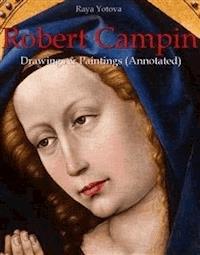
This book with Foreword written by Raya Yotova contains reproductions of drawings and paintings by Robert Campin. Robert Campin (1375 –1444), recognized with the Master of Flémalle or Master of the Merode Triptych, was the one of the supreme masters of Early Netherlandish art. He was very popular during his era, and as a result his life and work are comparatively fine recorded, but Campin usually did not sign his paintings. Three sacred boards, each supposed to be parts of triptychs, were from a monastery in Flémalle. He was a master painter in Tournai and became the most important artist for three decades for that town, nowadays in Belgium. Campin had achieved Netherlandish residency, and may have learned from Jan van Eyck. His prominence had increase sufficient that he led a advantageous own studio and kept his status and studio until his death. His premature paintings demonstrates the authority of the Gothic style of the Limbourg’s and Broederlam, but they show an extra realism, which he accomplished throughout innovative methods in oil painting. Campin was famous in his epoch, and educated Rogier van der Weyden and Jacques Daret.
Das E-Book können Sie in Legimi-Apps oder einer beliebigen App lesen, die das folgende Format unterstützen:
Veröffentlichungsjahr: 2018
Ähnliche
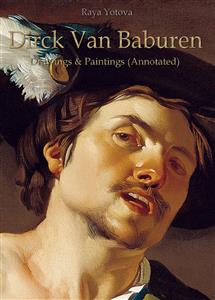
Robert Campin
Drawings & Paintings (Annotated)
Foreword by Raya Yotova
––––––––
First Edition
*****
Copyright © 2018 Foreword by Raya Yotova
Table of Contents
Title Page
Copyright Page
Foreword
Paintings and Drawings
Foreword
This book with Foreword written by Raya Yotova contains reproductions of drawings and paintings by Robert Campin.
Robert Campin (1375 –1444), recognized with the Master of Flémalle or Master of the Merode Triptych, was the one of the supreme masters of Early Netherlandish art. He was very popular during his era, and as a result his life and work are comparatively fine recorded, but Campin usually did not sign his paintings. Three sacred boards, each supposed to be parts of triptychs, were from a monastery in Flémalle.
He was a master painter in Tournai and became the most important artist for three decades for that town, nowadays in Belgium. Campin had achieved Netherlandish residency, and may have learned from Jan van Eyck. His prominence had increase sufficient that he led a advantageous own studio and kept his status and studio until his death. His premature paintings demonstrates the authority of the Gothic style of the Limbourg’s and Broederlam, but they show an extra realism, which he accomplished throughout innovative methods in oil painting. Campin was famous in his epoch, and educated Rogier van der Weyden and Jacques Daret.
Even though seriously obliged to Gothic style manuscript illumination manner, he demonstrated superior ability of observation from nature than any other artist previous to him. Campin was one of the pioneers to research with apply of Oil colors in combination with tempera, to accomplish the luminosity of color characteristic for this epoch. He worked with the new method to express well-built, smoothed images by forming luminosity and darkness in paintings of multipart viewpoints.
The central panel of The Entombment Triptych (1425) demonstrates his link to the polychrome carving of the epoch. After The Entombment Triptych, Campin created the Marriage of the Virgin and Nativity and worked on the Mérode Altarpiece triptych made to personal order.
The strict circle of the masterpieces from his own hand contains only the so called "Flémalle" boards, a 'Nativity at Dijon, a Crucified Thief (fragment of a Crucifixion), several portrait paintings and possibly the Seilern Triptych. All other best known masterpieces which typically were credited to Campin, are nowadays identified to his studio or to his followers, according to many art historians.
Paintings and Drawings
San Giovanni Battista, 1410, Oil on board




