


1,99 €
Mehr erfahren.
- Herausgeber: Publisher s13381
- Kategorie: Geisteswissenschaft
- Sprache: Englisch
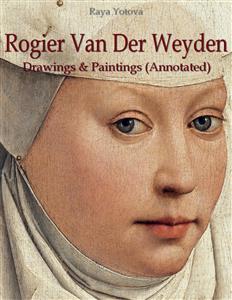
Rogier van der Weyden is known as one of the three Vlaamse Primitieven (early Flemish primitivists): the other two are Robert Campin and van Eyck. He achieved great success in the age in which he lived. His portraits and church paintings are sold all over Europe, particularly successful in Catholic Spain and Italy. His popularity as a master of fine arts continued to follow him nearly 200 years after his death until the middle of the 17th century. After that, however, he was forgotten for a long time and rediscovered until the end of the 19th century, to be placed on a pedestal along with the greatest masters of Flemish painting.
Das E-Book können Sie in Legimi-Apps oder einer beliebigen App lesen, die das folgende Format unterstützen:
Veröffentlichungsjahr: 2018
Ähnliche


Rogier Van Der Weyden
Drawings & Paintings (Annotated)
Annotated by Raya Yotova
––––––––
First Edition
*****
Copyright © 2018 Annotated by Raya Yotova
Table of Contents
Title Page
Copyright Page
Foreword
Paintings and Drawings
Foreword
Rogier van der Weyden is known as one of the three Vlaamse Primitieven (early Flemish primitivists): the other two are Robert Campin and van Eyck.
He achieved great success in the age in which he lived. His portraits and church paintings are sold all over Europe, particularly successful in Catholic Spain and Italy. His popularity as a master of fine arts continued to follow him nearly 200 years after his death until the middle of the 17th century. After that, however, he was forgotten for a long time and rediscovered until the end of the 19th century, to be placed on a pedestal along with the greatest masters of Flemish painting.
Researchers of his art writing that the most distinctive feature of his art is his sense of drama and his ability to portray on the canvas the emotional state of his sitters, even their most nuanced feelings and emotions. In addition to this, Rogier van der Weyden also possessed an amazingly good painting technique and a sense of color. He is known to art historians with expressiveness and realism in creating his images. Some of the artist's images are realistic to naturalism, but not photographic naturalism, but astonishingly modernistic and expressive. Typically, his models are painted in three-fourths, in close proximity, and with almost perfect perfectionist technique, concerned with the smallest detail. The artist preferred to work in the warm range of colors, but without being limited to it, he used a remarkably rich and varied palette.
As a rule, van der Weyden has idealized his portraits - he has always emphasized the positive traits of their faces, and has masked their asymmetric and disproportionate features. He depicted them idealized and more beautiful than they actually were. The artist has transferred this way of portraiture even in the canonical ecclesiastical painting of triptychs and church altars. He skillfully mixed life realism with the canonical demands of religious painting. His ecclesiastical art was very popular in Catholic European countries as long as he was alive and after his death continued to exert great influence in Spain, Italy, Germany, and his native Holland.
Unfortunately, over time, much of his altars and ecclesiastical painting have been lost or destroyed, much of them during the World War II bombing.
Paintings and Drawings
The Dream of Pope Sergius, 1430, Oil on canvas, 88.9 x 80 cm




