


Erhalten Sie Zugang zu diesem und mehr als 300000 Büchern ab EUR 5,99 monatlich.
- Herausgeber: The History Press
- Kategorie: Sachliteratur, Reportagen, Biografien
- Sprache: Englisch
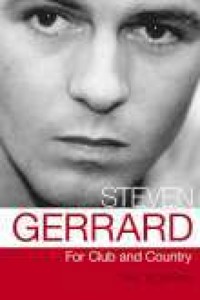
Skilful and aggressive, Gerrard has a knack of scoring spectacular goals for club and country. A boyhood Liverpool fan, growing up on Merseyside, Gerrard is living the dream of playing for his team. Having emerged through the club's youth academy he made his debut for the Reds in November 1998 at the age of eighteen. Now captain of Liverpool FC, Gerrard has led his team to glory in both the European Cup and FA Cup. A key player for England, he will always be remembered for his goal in the famous World Cup qualifying game against Germany in September 2001. This is unique insight into a man who remains one of Europe's top talents.
Sie lesen das E-Book in den Legimi-Apps auf:
Seitenzahl: 256
Veröffentlichungsjahr: 2006
Das E-Book (TTS) können Sie hören im Abo „Legimi Premium” in Legimi-Apps auf:
Ähnliche


















STEVEN
GERRARD
For Club and Country
STEVEN
GERRARD
For Club and Country
PHIL THOMPSON
Dedicated to Ellie Roe
Front cover image: Steven Gerrard at the press conference for the Euro 2004 qualifier against Slovakia. © Empics
Back cover image: Steven Gerrard celebrates his fantastic goal against Germany in England’s 5-1 victory in Munich, 2004. © Empics
First published 2006
The History Press
The Mill, Brimscombe Port
Stroud, Gloucestershire, GL5 2QG
www.thehistorypress.co.uk
This ebook edition first published in 2014
All rights reserved
© Phil Thompson, 2006, 2014
The right of Phil Thompson to be identified as the Author of this work has been asserted in accordance with the Copyright, Designs and Patents Act 1988.
This ebook is copyright material and must not be copied, reproduced, transferred, distributed, leased, licensed or publicly performed or used in any way except as specifically permitted in writing by the publishers, as allowed under the terms and conditions under which it was purchased or as strictly permitted by applicable copyright law. Any unauthorised distribution or use of this text may be a direct infringement of the author’s and publisher’s rights, and those responsible may be liable in law accordingly.
EPUB ISBN 978 0 7509 5983 4
Original typesetting by The History Press
Contents
Acknowledgements
Introduction
1
The Kid from the Bluebell
2
Young, Gifted and Red
3
The Brightest Star
4
Make Mine a Treble
5
Germany 1, Liverpool 5
6
World Cup Heartbreak
7
Kings of Cardiff
8
Captain of Liverpool
9
It Could Have Been Us
10
The Reds’ Turkish Delight
11
The Heart and Soul of Liverpool
Stevie G’s Golden Moments
Steven Gerrard’s England Record 2000-2005
Bibliography
Acknowledgements
Special thanks to James Howarth, Holly Bennion and all at Tempus Publishing; to Helen, Louise, Graham and Linda, and also to Anne Johnson.
Introduction
Liverpool were taking on European minnows FBK Kaunas, the champions of Lithuania, on a wet evening in August 2005. Kaunas were a neat and tidy team, but they had no penetration and the goal from them that would have made the match interesting looked extremely unlikely. Liverpool had won the away leg and were treating the game as a pre-season friendly. They were going through the motions and why shouldn’t they? What was the point in picking up injuries in what was nothing more than a warm-up game? Liverpool’s place in the final qualifying round for a Champions League spot looked assured. At half-time it was 0-0 and the game was dire.
In an attempt to make the second half more interesting, I placed a bet at the bookmakers inside Anfield that Steven Gerrard would score the first goal after the interval. My son-in-law looked sceptical. ‘Gerrard’s not even playing,’ he scoffed as he put his money on Luis Garcia to hit the net first. Steven Gerrard, or ‘Stevie G’ as they have christened him at Anfield, was on the bench. If the match remained as uninspiring as it had been in the first half, I reasoned, they would have to bring him on.
I’d read in the programme notes that Gerrard was hoping to add to his goals tally that evening. He’d already scored six in the Reds’ Champions League qualifiers against TNS and the away leg against Kaunas. Surely he’d had a word with Rafael Benitez to bring him on at some stage in the second period.
The opening stages of the second half were as bad as the first. Anfield had fallen into a slumber. Then, with about twenty minutes left, there was a murmur in the crowd that soon developed into rapturous applause. Steven Gerrard and Djibril Cissé were warming up on the touchline. Cissé is popular at Anfield, Steven Gerrard is idolised. It’s the same kind of affection they had for the legends of the past such as Roger Hunt, Kevin Keegan, Kenny Dalglish and Ian Rush. Now that he had signed a new contract that would keep him at the club until he was eligible for a free bus pass, Anfield could relax and display its undoubted love for the local hero who they had expected to desert them in the summer.
Steven Gerrard doesn’t do ‘going through the motions’ and instantly this became a totally different game. The impetus that Gerrard infused into his team had to be seen to be believed. A ball was knocked into Kaunas’s penalty area and the alert midfielder pounced and scored a scrappy goal. Scrappy or not, it didn’t matter. Their messiah had delivered and Anfield erupted. The Liverpool fans have a special affinity with Steven Gerrard. He’s practically one of them on the pitch. Cissé scored a second goal before the end and everyone trooped out of Anfield happy. I collected my winnings on the way out and took my son-in-law for a pint, courtesy of Stevie G!
Phil Thompson, 2006
one
The Kid from the Bluebell
Steven Gerrard was born at Whiston Hospital, Liverpool on 30 May 1980. He was brought up on the Bluebell Housing Estate situated in Huyton in the Knowsley district of Liverpool. Huyton (pronounced ‘Highton’) was one of a number of new housing estates created by local government reform in the 1960s and early 1970s. Thousands of working-class Liverpool citizens found themselves shipped out to the outskirts of their home city by the slum clearance programme, to take up residence in the newly built Corporation houses. They may now have become citizens of the newly created districts with posh-sounding names like Cantril Farm, Gateacre and Knowsley, but they were still proud, dyed-in-the-wool Liverpudlians at heart.
Huyton, like most districts of Merseyside, has over the years produced many excellent footballers. Before Gerrard’s arrival on the scene, the most notable was undoubtedly the tenacious midfield warrior Peter Reid, of Everton and England fame. Reid, like Gerrard, served his early football apprenticeship having a kickabout with his mates in the street, or in the nearby Britannic Park where local junior teams would play.
Apart from producing outstanding footballers, Huyton is notable for having had a Prime Minister as its local MP. Harold Wilson first became Member of Parliament for Huyton in 1950. He served the area for thirty-three years before his retirement from politics in 1983. Harold Wilson, like his present-day counterpart Tony Blair, was a confirmed football fan, although it was his boyhood heroes Huddersfield Town, not one of the Merseyside clubs, where the Yorkshire-born Wilson’s football allegiances lay.
Like most Liverpool kids, Steven Gerrard was inspired to develop thoughts of one day becoming a professional footballer by watching football on the television with his family. He once said in an interview that his boyhood hero was Liverpool’s Ronnie Whelan, who gave the Anfield club fantastic service as a midfield player during the 1980s and early 1990s. Although never a superstar in the Kenny Dalglish or John Barnes sense, Ronnie Whelan was an integral part of Liverpool’s success in the 1980s. It is perhaps typical of Steven Gerrard that, unlike most young Liverpool fans of the time, he chose to study the midfield performances of Whelan when most kids only had eyes for the dazzling skills of the likes of Dalglish, Barnes and Beardsley. Even at this early stage of his football development, Steven Gerrard had a dream of one day emulating Ronnie Whelan in the engine room of his beloved Reds, winning the tackles, setting up the chances and scoring the vital goals for the Anfield giants. ‘I often watched Ronnie Whelan play. He was the unsung hero in the Liverpool midfield,’ said Gerrard. ‘I admired the way he went about things. He made the game look easy. Every successful team needs a player like Ronnie Whelan in midfield.’
Although he was rather small for his age, Steven Gerrard impressed most onlookers right from the start of his junior football career. He played for his school team, St Michael’s Primary School in Huyton, and also for Whiston Juniors. Mike Tilling was a teacher at St Michael’s when Gerrard represented the school as a ten year old. Mr Tilling told the Liverpool Echo’s Tony Barnett that young Gerrard looked a certain star of the future: ‘I just couldn’t believe he was so good because he was one of the smallest boys in the class. I started him off as a striker and it seemed as if he had been playing for years. He was amazing.’
Playing for Whiston Juniors it was the same story – Steven Gerrard was a sensation. Assistant coach at Whiston, Peter Leonard, recalled, ‘There were seasons when he scored 100 goals – he was absolutely brilliant. I’m an Evertonian, but I keep telling everyone that we haven’t seen the best of Steven Gerrard yet.’
It was inevitable that Gerrard’s blossoming talent would come to the attention of one of Merseyside’s professional clubs and from the age of nine he began to train at Liverpool Football Club. Jim Aspinall, chief youth scout at Liverpool’s academy, was a spectator at one of Steven Gerrard’s school games and was immediately impressed by the ten year old’s ability. Aspinall recalled, ‘He covered every blade of grass; he was magnificent. I spoke to his dad after the game and he told me that Steven had already been invited to the Liverpool Centre of Excellence by Dave Shannon, one of our coaches. I told him that was okay so long as he was coming.’ Other teams that Gerrard played for as a youth were Liverpool side Denton and the Wirral’s Heygarth.
If Ronnie Whelan was Steven Gerrard’s biggest influence when it came to studying the skills and crafts needed to become a top footballer, his father Paul has undoubtedly been the biggest influence on his overall career. The great Bill Shankly once said, ‘It is mothers and fathers who produce footballers, not coaches.’ Although Gerrard was obviously given a fantastic start in his football apprenticeship by the staff at the Liverpool youth academy, he always cites his father Paul as the biggest influence on his career. In later years, when Gerrard needed help and advice on whether to remain at Anfield or join the Abramovich revolution at Chelsea, it was to his father and the rest of his family that he turned to. One thing is it extremely unlikely you will see, however, is Gerrard’s father doing a Ted Beckham and writing a book about his son.
Back in the early 1990s the question of whether to go or stay was the furthest thing from the young Steven Gerrard’s mind as he sat with his family watching his England heroes competing in the 1990 World Cup finals in Italy. Gerrard recalled, ‘I remember sitting at home with my mum and dad and my brother when Italia ’90 was on the telly. I was leaping around the house when the penalties were on. I thought about how it would be great to have been a part of that. How great it would be to make the kind of impact Paul Gascoigne did then.’
Steven Gerrard got over the disappointment of England being knocked out of the World Cup on penalties by continuing to hone his skills as a schoolboy footballer. At his secondary school, Cardinal Heenan RC High School in West Derby, Gerrard impressed his new sports teachers from the start. Eric Chadwick, P.E. teacher at the school, recalls, ‘He was very slim and small, totally different to how he is today. Steven’s skill came in his speed of thought and the fact that he was a yard quicker than every other boy. He was naturally gifted and brilliant at any sport. I remember him playing for the school in a Royal Mail Trophy final. He was amazing and won the game for us.’
Mr Chadwick remembered that the young Steven was so obsessed with the game that he would even go on scouting missions to check out future opponents, ‘One Saturday morning Steve went with his dad to watch Cardinal Heenan’s next opponents in a cup match. On Monday, Steve knocked on my office door to give me a detailed report on the team we were due to play. I knew then that this thirteen year old had something more than any of our other football-daft youngsters.’
Steven Gerrard’s lack of inches was a cause of concern for his football coaches during his early teenage years. It was obvious for all to see that he possessed outstanding football ability, but he began to develop niggling injury problems. His Cardinal Heenan coach, Eric Chadwick, told the Liverpool Echo that Gerrard failed to gain selection for the England Schoolboys team because of muscular injuries: ‘Steven was having all kinds of problems with injuries. Basically his muscles were outgrowing his bones and it meant he kept getting all kinds of strains and pulls.’ Although obviously disappointed to miss out on an invitation to join the National Centre of Excellence at Lilleshall, the young football prodigy got his head down and continued to display his awesome talent for his school and the Liverpool Schoolboys team.
At the age of sixteen Steven Gerrard was invited by Liverpool FC to join their Youth Academy. There then followed an amazing transformation in the size and physique of the Liverpool youngster that transformed the Bambilike teenager into a strapping young man. Tim Johnson was Gerrard’s coach for the Liverpool Schoolboys team and couldn’t believe the change in him. He recalled, ‘Young Stevie had the most amazing growth spurt. I was at the Liverpool Academy one day – this was eighteen months after Steven had finished playing for me. When I saw him I couldn’t believe it; the Bambi that had left me had changed into a bison. When I first met him as a thirteen year old he was a very quiet lad with these legs which went all the way up to his neck. I just couldn’t believe the change in him. I couldn’t take it in that it was the same Steven Gerrard.’
With the scrawny youngster now metamorphosised into a strapping sixteen year old, the time was now right for Steve Heighway and his youth academy team at Liverpool, which consisted of Frank Skelly, Dave Shannon and Hughie McAuley, to turn the incredibly gifted Gerrard into an outstanding footballer.
Steven Gerrard was now a YTS trainee at Anfield, along with future Liverpool stars David Thompson, Michael Owen and Jamie Carragher. Thompson, Owen and Carragher were older than Gerrard and were key members of the Liverpool Youth team that won the FA Youth Challenge Cup in 1996. Steven Gerrard did make several appearances in the cup run, but did not appear in the team that beat West Ham in the final. Liverpool, with goals from Newby and Larmour in the first leg and Owen and Quinn in the second, beat West Ham 4-1 on aggregate to take the trophy. At this stage all the talk at Anfield, when it came to up-and-coming talent, was about a kid named Michael Owen who might just be another Ian Rush.
two
Young, Gifted and Red
During the 1996/97 season Steven Gerrard was hoping to establish himself in the Under-17s academy team at Anfield and perhaps even make a reserve team appearance. He was still only sixteen years old when disaster struck. A serious foot injury severely curtailed his Liverpool ambitions and he was on the injured list for almost twelve months. When Gerrard recovered from this period of inactivity and regained his fitness he really began to make the academy staff at Anfield sit up and take notice.
Season 1997/98 will always be remembered for Michael Owen’s explosion onto the international stage. Owen’s incredible goal against Argentina at France ’98 will be talked about for as long as the game is played. Sitting at home in Huyton, watching his former Liverpool Youth team colleague take the world of football by storm, was Steven Gerrard. Now fully recovered from the injury that had put his career temporarily on hold, he was confident that one day he would also take part in the world’s greatest football tournament.
When the 1998/99 season began at Anfield hopes were high that the newly installed joint team manager, Gerard Houllier, would form a successful partnership with Roy Evans. Evans had been at Anfield, as a player and then a coach, since the Shankly era of the 1960s. Gerard Houllier had been a Liverpool fan since he had stood on the Kop on a cold September evening in 1969 and watched Shankly’s team demolish Dundalk 10-0 in a European Fairs Cup game. ‘I am a real Liverpool supporter,’ stated Houllier. ‘I am here because Roy Evans wanted me to come to Anfield and I agreed on the condition that he stayed on and we worked together.’ The Liverpool fans liked what they heard. Liverpool’s executive vice-chairman, Peter Robinson, who was also a veteran from the Shankly days, was the person who had enticed Houllier to Liverpool. Robinson told the press, ‘Gerard will bring to us coaching experience of the highest quality at both club and country level. He also possesses an unrivalled knowledge of technical excellence and innovation which has made him one of the most respected coaches in the world.’
Houllier had played a key role in bringing World Cup success to France at the 1998 tournament. Much of this success was due to the academy system which provided many of the French World Cup-winning squad. Houllier hoped that he could emulate at Anfield the academy that had proved so successful in his native country. With this in mind, talented youngsters at Anfield knew that if they proved themselves at academy and reserve team levels, then an opportunity to stake a claim for a first-team place was theirs for the taking. Steven Gerrard was fully aware of this and set about impressing Evans and Houllier as soon as the new season kicked off.
One person who had no doubts at all that Steven Gerrard would make a big impact at Anfield during the coming season was England’s new goalscoring sensation Michael Owen. Apart from the staff at the Liverpool academy and others in the know at Anfield, Gerrard was virtually unknown to the rest of Merseyside and the football world in general. However, when football’s new boy wonder, Michael Owen, informed Liverpool Echo readers that there was another kid at Anfield who was destined for England glory, football fans across Merseyside had to sit up and take notice. For most of them it was the first time they had even heard the name Steven Gerrard. With supreme optimism, Owen told Echo readers, ‘Steve will be our star man next year. I’m not just saying this, but he is absolutely brilliant. He has got everything it takes to become a top player. He’s big, strong, got speed, a good tackler and he knows a lot about the game. If I was a betting man I’d certainly put money on him becoming a full England international.’ Michael Owen’s prophetic words were to be borne out by events during a momentous 1998/99 season for Gerrard.
After impressing in Liverpool’s early-season Under-19 youth academy games, Steven Gerrard was selected for the England Under-18 international team to play against Italy. Also selected was Gerrard’s academy teammate, Stephen Wright. Steve Heishway, the director of Liverpool’s youth academy accompanied the five Liverpool youths to Italy to watch the game. Both Wright and Gerrard had excellent matches in the 4-2 victory, Gerrard scoring England’s fourth goal.
Frank Skelly, who works with Heighway at the academy, said that Gerrard was progressing nicely as a midfield player: ‘Steven had a good all-round game. He has improved at every level as he has gone along at the academy. He sometimes needs to control his aggression, but he is a very promising midfield player.’ As Frank Skelly noted, Steven Gerrard, like Michael Owen in his early days in the Liverpool academy team, was prone to the occasional flare-up. Like Owen, Gerrard began to control this side to his game as he matured as a player.
With the season barely a few months old, Steven Gerrard began to be selected for the Liverpool reserve team and did not look out of place. Gerrard had a particularly good game playing against a strong Manchester United reserve team at Old Trafford in October 1998. Reserve team coach Joe Corrigan was impressed by the youngsters who were given their chance against United. He said, ‘We were very pleased with the two young lads who came on in the second half, Steven Gerrard and Alan Navarro. Both have come through the Academy League into the reserve team and did really well.’
A few weeks later Steven Gerrard received his marching orders while playing against Everton in an Under-19s academy game for an ‘uncompromising tackle’. Gerrard was then Liverpool’s star performer for the reserves against Leeds United in a fixture that took place in November. The staff at Anfield now knew that the time was right to blood the Huyton youngster in the first team.
When the Liverpool squad travelled to Spain to take on Celta Vigo in the 24 November fixture in the UEFA Cup, Steven Gerrard, along with Stephen Wright, was selected to travel with the party. Wright actually made his first-team debut, coming on in the second half of the 3-1 defeat. Gerrard had to wait until the following Sunday’s Premiership fixture against Blackburn Rovers to make his Liverpool debut. The date was 29 November 1998 and he came on for Vegard Heggem in the final minutes of the 2-0 home victory against the Lancashire side. Steven Gerrard’s first full game for Liverpool at Anfield was against Celta Vigo in the return leg of their UEFA Cup tie. Gerrard had waited all his life for this moment, since he had first kicked a ball around the streets and parks of Huyton, and now it had arrived.
When Steven Gerrard ran out at Anfield on 8 December 1998 it began a chain of events that would lead to the midfielder emerging as the most popular player among the supporters since the heyday of Kenny Dalglish. Liverpool needed to defeat the Spanish side by two clear goals to stand any chance of progressing. Obviously nervous on the day of the match after he was informed at one o’clock that he would start the game, he phoned his friends and family to tell them the news that he was to make his home debut that evening. Before kick-off he was given a brief pep talk by Gerard Houllier and his new assistant Phil Thompson. Roy Evans had decided to call it a day a few weeks prior to the Celta Vigo games after realising that his role as joint Liverpool manager was not working out. The nervous youngster was basically told by Houllier and Thompson to go out and enjoy the occasion. It took Gerrard a little while to settle down but once he touched the ball a few times the pre-match nerves went away.
Liverpool lost the game 1-0 to a decent Spanish outfit who looked as if they would go far in the competition. Although he was disappointed to have made a losing start on his Anfield debut, Gerrard was pleased to find out after the game that he had been named the Carlsberg Man of the Match. He had shown the Anfield faithful and the Liverpool management that the big occasion did not faze him in the slightest.
Liverpool’s England star Paul Ince, the midfielder that Gerrard would ultimately replace in the Reds’ line-up, was impressed by Gerrard’s first few games in the Liverpool first team. He told the press, ‘It was good to see young Steven Gerrard making his Liverpool debut when he played the first hour at Spurs a few days before the Celta Vigo game. He showed some nice little touches and he’s definitely one for the future. White Hart Lane is not an easy place to play for your first game, but he did well.’
Steven Gerrard, in fact, could quite easily have been playing for Spurs against Liverpool on that December afternoon in 1998. Gerrard made his Under-17s Liverpool academy debut against the London side a couple of years prior to the 1998 fixture. The Spurs chairman Alan Sugar was so impressed with the Liverpool youngster that after the game he offered the Anfield club £2.5 million to take him to White Hart Lane there and then. The Liverpool staff were slightly taken aback, but lost little time in declining Sugar’s sensational offer.
After some impressive displays, Steven Gerrard was now a member of the Liverpool first-team squad and trained with the club’s top players at Melwood instead of at the academy. These were heady times for the Huyton teenager and he was determined to make the most of his opportunity. ‘The manager has given me my chance and I’m really pleased that it has come so early,’ remarked a delighted Gerrard. ‘I can’t pretend I expected to be in the first-team squad so soon, but I think the manager has been pleased with me. I don’t think I looked out of place in the first team. I have always dreamt of playing at Anfield. The great thing about Liverpool is that they might have millions to spend, but they do give youngsters a chance.’
It was during the pre-Christmas period of 1998 that Steven Gerrard picked up a medal as a member of the Liverpool team that defeated Burscough 2-1 in the Liverpool Senior Cup final. The team comprised youth academy and reserveteam players. In goal for Liverpool that evening was Tony Warner, who is now making a name for himself at Fulham. Gareth Roberts, Richie Partridge and Alan Navarro were also in the Liverpool side that won the trophy and all have gone on to make careers for themselves in professional football. Alan Navarro scored a fabulous goal for Liverpool to win the game and was expected to develop into an outstanding midfield player for the Reds. Interviewed in April 2000, the eighteen year old was still waiting for his Liverpool first-team breakthrough, but said that Steven Gerrard’s success was an inspiration to all the young players at Anfield: ‘Steven is an example to us all that if you are good enough then your chance will come along. He has done really well for himself and deservedly so, because he is a top-class player.’ Alan Navarro eventually left Liverpool to try his luck across the Mersey at Tranmere Rovers.
With Jamie Redknapp and Paul Ince established England internationals, it was never going to be easy for Steven Gerrard to carve out a permanent midfield place for himself in the first team at Anfield. As the 1998/99 season reached its conclusion, Gerrard was happy to be selected in any position that Liverpool wanted him to fill. ‘My aim between now and the end of the season is to play as many games as possible and to carry on improving and to steer clear of injuries,’ he told the local press in March 1999.
On the pitch the 1998/99 season was turning out to be a disaster for Liverpool. Celta Vigo had dumped them out of the UEFA Cup before Christmas and Spurs had progressed at their expense in the League Cup. In the FA Cup Manchester United had knocked the Reds out in the fourth round, so there was only respectability in the Premiership to aim for. Some football pundits were calling Houllier’s team the worst seen at Anfield since before Bill Shankly took over the club in 1959. Steven Gerrard may have been on a high, but his team looked to be in dire straits. The Reds were performing so badly in the Premiership that there was even talk of them considering the option of attempting to gain entry to the following season’s UEFA Cup through the Intertoto Cup route! Liverpool’s proud reputation as one of Europe’s finest looked to be in tatters.
To add to Houllier’s misery, local hero Steve McManaman was set to leave for Real Madrid as soon as the season ended. There was also the fact that McManaman’s England teammate Paul Ince now only occasionally showed glimpses of the outstanding ability that had once made him one of the Premiership’s most outstanding midfield stars.
Obviously Houllier would need time to get things right at Anfield. Ince might have been struggling to recapture his best form as Liverpool attempted to end the season on a positive note, but he still found time to express his delight at Gerrard’s invitation to join up with the full England squad for training. Ince told the press, ‘I was really pleased that young Steven Gerrard has been called up by Kevin Keegan to train with the England squad. I played alongside Steven for the reserves at Nottingham Forest the other day and he was fantastic. He looked to have everything you need to be a very good midfield player. The more games he plays for Liverpool the better he will become.’
Gerrard’s England invitation took him completely by surprise. He had had an outstanding game for Liverpool in their 3-2 defeat against Derby County early in March, but to get invited to train with Keegan’s first England squad after becoming the new national manager came out of the blue.
Steven Gerrard travelled to Bisham Abbey with his Anfield teammates Michael Owen, Jamie Redknapp, Robbie Fowler and Steve McManaman. Gerrard’s father, Paul, the man that the Liverpool star constantly names as the biggest influence on his career, was delighted, as were the rest of the Gerrard family back home in Huyton. Paul Gerrard told his son that this was a great opportunity and to spend as much time as possible studying the England regulars to try and glean as much as he could from watching some of the nation’s top players in training.
Gerrard was welcomed on his arrival at Bisham Abbey by Kevin Keegan and Howard Wilkinson, who knew the young midfielder from the England Under-18 side. Wilkinson told Gerrard to keep on doing the things that he did for Liverpool and he would be fine. At times Gerrard’s nerves got the better of him as he mixed with England’s finest for the first time.




