



6,99 €
Mehr erfahren.
- Herausgeber: tredition
- Kategorie: Geisteswissenschaft
- Sprache: Englisch
The Germans are a people with an eventful past. It is not easy for outsiders to understand how a highly developed and, on the whole, successful nation has developed in recent decades, especially since the Merkel era. From the perspective of a citizen who immigrated to Germany, this book reflects on how Germans deal with the crucial issues of today. The decline of an economy that had previously seemed so successful, an increase in violence and crime, imbalances in social and medical care, job losses coupled with an extremely high shortage of skilled workers: the dangers to which the German people are exposed as a result of geopolitical changes and the shift in power between the West and the rest of the world are a loss of prosperity, rising government debt and, at the same time, increasing militarism and a readiness for war. But German citizens are not taking to the streets. They seem to be resigning themselves to their fate, which the political elite is selling them as having no alternative. However, xenophobia, anti-Semitism, Islamophobia and violence are on the rise, more or less hidden from view. The parallels with developments at the beginning of the 20th century cannot be overlooked. Looking back on the turning point of the end of the German Empire, the First and Second World Wars, the post-war period and reunification, one particular phenomenon can be observed throughout: the subservience of the German people. This mentality of subservience led to followers, yes-men, accomplices and conformists obediently and unquestioningly following the actions and orders of the authorities. Even if they secretly complain about the authorities, they still come to terms with the situation and offer no resistance. Heinrich Mann aptly described this in his 1914 book ‘Der Untertan’ (The German Subject). And if you look closely today, you can see these same characters in a different guise, but with strikingly similar behaviour. This behaviour on the part of citizens is mirrored by a political and media elite who by no means do everything for the good of the people, but who very skilfully and in collusive cooperation pursue their own goals and, by conjuring up an alleged threat of war, impose extreme burdens on the citizens, their subjects. The lessons of history seem to have been forgotten again: from Bismarck to Wilhelm II to Hitler, two lost world wars, loss of homeland, identity, wealth, loss of state sovereignty. Our neighbours in Europe are reminded of times past, when war and destruction emanated from Germany and the citizens, the subjects, blindly ran to their doom. They wonder whether this history could repeat itself and whether they can still trust the Germans today.
Das E-Book können Sie in Legimi-Apps oder einer beliebigen App lesen, die das folgende Format unterstützen:
Seitenzahl: 246
Veröffentlichungsjahr: 2025
Ähnliche



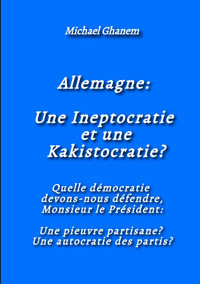



Table of contents
Dedication
Title
Copywright
About the author
1. Foreword
2. Stories and experiences with subjects
2.1 Location
2.2 The stories
3. A street without a soul as an example
3.1 Preliminary remark
3.2 The place of residence
3.3 The street without a soul
3.4 The residents of the street
3.5 Hardly any communication
3.6 Hardly any neighbourhood
3.7 Everyone for themselves
3.8 My home is my castle
3.9 My neighbour is 'my natural enemy'
3.10 A street without a soul – a reflection of German society?
3.11 The street of loneliness
3.12 A troubled street
3.13 A street full of do-gooders
3.14 A street of Pharisees?
3.15 Arrogance, stupidity and racism
3.16 A typical residential street?
3.17 Mobile phones and tablets dominate communication
3.18 The children only play in their own garden.
3.19 Residents without feelings?
3.20 Keeping up appearances is the highest duty.
3.21 Empty shells
4. Germany: The closed society
4.1 Preliminary remark
4.2 Foreigners only tolerated?
4.3 The German spirit will heal the world: a reality
4.4 Who likes German society – apart from the Germans themselves?
4.5 What has society learned from history? Nothing!
4.6 Dictatorship of the stupid and do-gooders
4.7 Neuralgic point: German identity
4.8 And yet a closed society!
4.9 And they're starting again!
4.10 A society of opportunists?
4.11 A society of subjects?
4.12 Germany of poets and thinkers: Quo vadis?
5. The manifestations of subservience among parts of the population
5.1 The good German
5.2 The liberal elites
5.3 Old and new Nazis
5.4 Conservative elites
5.5 The intolerant
5.6 The cowards
5.7 Informers
5.8 Subject mentality?
5.9 The pseudo-liberals
5.10 The saviours of the world
5.11 The pseudo-mondialists
5.12 The lazy thinkers
5.13 The US idiots
5.14 The warmongers
6. The determining factors of the spirit of subservience
6.1 Preliminary remark
6.2 Role of the churches
6.3 Prussianism
6.4 The authoritarian state
6.5 We have a constitutional state
6.6 The Holy Grail: the inviolability of the constitution?
6.7 "What do we care about the welfare of our neighbours?"
6.8 Just don't think critically!
6.9 How the political elites, the administration, the economy and the media are weaning us off thinking!
7. Hype and acclamation
8. We are the good guys, the others are the bad guys
8.1 Preliminary remark
8.2 We, the left-wing liberals, are the good guys
8.3 The others are evil and must be destroyed
8.4 Criticism of left-wing liberals is tantamount to anti-Semitism
8.5 The ideology of the Greens is like the dogma of a sect
8.6 Conclusion
9. Criticism of politics and the state: No, thank you!
9.1 Preliminary remark
9.2 The lateral thinkers: thinkers?
9.3 Conspiracy theorists and simple solutions
9.4 The arrogance of liberal society or contempt
9.5 The corrupt "up there"
9.6 Nazis and right-wing extremists: Quo vadis?
9.7 Social networks as accelerants?
9.8 Conclusion
10. The "left-wing green revolution" or the rise of the "failures and losers"
11. "Stupidity has ceased to be ashamed" – or is it on the internet?
12. Is German society divided?
13. Racism and anti-Semitism as part of society
13.1 Preliminary remark
13.2 Post-war racism
13.3 Anti-Semitism
13.4 Conclusion
14. The epochal turning point: the war in Ukraine and its effect on the population
15. The subject and questioning of incompetent and corrupt media: taboo?
15.1 Preliminary remark
15.2 Public media: arrogant and distant from the population
15.3 Private media: role of the economy
15.4 The left-liberal elite and its contempt for the general population
15.5 Criticism: blasphemy
15.6 The subject and contempt of the elites
15.7 The subject and the radicalisation of parts of society
15.8 Role of social media
16. Failure of the churches and decline of ethical values
16.1 Preliminary remark
16.2 Failure of the Churches
16.3 Loss of ethical values
16.4 Conclusion
17. The subject in the competition of crooks, or: Those who amount to nothing become politicians – The failure of democracy
17.1 Preliminary remark
17.2 When parties become sects
17.3 Who becomes a politician?
17.4 Lies, false promises, acting
17.5 When journalists lose their honour
17.6 The prostitute of the powerful
17.7 Competition among crooks
17.8 Market of fools
17.9 Failure of control instruments
17.10 Decline of liberal democracies
18. Demonstrating and striking: the intellectual divide
18.1 Preliminary remark
18.2 My freedom
18.3 Resistance
18.4 Berlin – a dictatorship?
18.5 Demonstrators: right-wing extremists?
18.6 Our truth is the only truth
19. Heinrich Mann is more relevant than ever!
19.1 Preliminary remark
19.2 The German Subject
19.3 Criticism
20. The German Subject in 2025
20.1 Preliminary remark
20.2 The different facets of the subject
20.3 Conclusion
21. Epilogue
Dedication
This book is dedicated to all those who sound the alarm and cry out in isolation, who care deeply about the well-being of our society. Every critical mind is lonely and belongs to a minority. However, today's minority may be tomorrow's majority.
This book is also dedicated above all to my wife Magdalene Kahlert as a token of gratitude for her critical and wise advice. She accompanies me in my life and is always a good advisor to me.
Bonn, December 2025
Title
Michael Ghanem
... Thoughts are free ...
The German Subject
2025
Are the Germans still to be trusted?
Copywright
© 2025 Michael Ghanem
Website: https://michael-ghanem.de/
Printing and distribution on behalf of the author:
tredition GmbH, Heinz-Beusen-Stieg 5, 22926 Ahrensburg, Germany
This work, including all parts thereof, is protected by copyright. The author is responsible for the content. Any use without his consent is prohibited. Publication and distribution are carried out on behalf of the author, who can be reached at: tredition GmbH, "Impressumservice" department, Heinz-Beusen-Stieg 5, 22926 Ahrensburg, Germany.Contact address in accordance with the EU Product Safety Regulation:
ISBN:
Softcover 978-3-384-78255-7
Hardcover 978-3-384-78256-4
E-Book 978-3-384-78257-1
About the author
Michael Ghanem
https://michael-ghanem.de/
https://die-gedanken-sind-frei.org/
Born in 1949, he grew up in France and graduated from an elite French university for industrial engineers. After moving to Germany, he completed his studies in economics, sociology, political science, philosophy and ethics.
Bonn, December 2025
In the field of philosophy, he was strongly influenced by the philosophy and teachings of Zarathustra, Socrates, Plato, Aristotle, Marcus Aurelius, Rabelais, Michel de Montaigne, Baruch de Spinoza, Thomas Aquinas, Ibn Khaldun, Niccolo Machiavelli, René Descartes, Blaise Pascal, Voltaire, Jean Jaques Rousseau, Immanuel Kant, Gottfried W. Leibniz, Auguste Comte, Arthur Schopenhauer, Pierre-Joseph Proudhon, Karl Marx, Henri Bergson, Karl Popper, Karl Jaspers, and Erich Fromm. The Frankfurt School, with its teachers Jürgen Habermas and Adorno, had a strong influence on him, as did Michael Schmidt-Salomon, Claude Levy-Strauss, the Dalai Lama, Luc Ferry, Peter Sloterdijk, Werner Lachmann, Amartya Sen, Oswald Nell-Brauning, and Niklas Luhmann.
In sociology, he is strongly influenced by the Cologne School with its teachers Rene König and Erwin K. Scheuch, as well as Gustave Lebon. In political science, he is also influenced by the Cologne School and the Cologne-Mannheim School.
In the field of economics, he has been strongly influenced by the post-Keynesians and behavioural economists. He is very critical of the teachings of Milton Friedman, the Chicago Boys, the Freiburg School and Friedrich A. Hayek. He feels a strong affinity with Joseph Stiglitz, Paul Krugman, James K. Galbraith, Daniel Kahneman, Thomas Piketty and the Club of Rome.
His professional career initially took him to an international organisation, where he worked for five years as a project controller for large water projects, mainly in Africa, and got to know a large number of countries and their leaders. He then worked for many years at a European organisation and in several international consulting firms as a consultant for the modernisation of a wide range of industries and companies.
He sees himself as a critic of today's globalisation and has been a strong advocate of water management issues since 1974.
These experiences have given him a deep understanding of geopolitical issues and enable him to assess current political developments, particularly against the backdrop of economic interdependencies.
Since his retirement, he has lived a secluded life in Bonn and works as a writer. In his publications, he focuses primarily on the pressing social, economic and political issues of today, as well as water management.
To date, he has published numerous works on politics, geopolitics, society and economics. He is the author of more than 100 books. In the field of politics, he focuses primarily on a critical examination of Germany. Other key topics include health, identity, racism, the environment, migration, water management, Africa, population development and alternative economic systems such as the anti-fragility economy. He has also published several short stories and fairy tales.
This is an excerpt from the publications that have appeared to date:
Non-fiction books on politics, economics and society
Geopolitics
"The Deep Fall of the West and the Bitter Tears of Europe, Part 1 - Introduction - A Critical Assessment of the West 1949-2025"
"The Deep Fall of the West and the Bitter Tears of Europe, Part 2: The Deep Fall of the Military, Building Blocks of Geopolitics, World Order in Transition, Potential for Conflict"
"The Deep Fall of the West and the Bitter Tears of Europe, Part 3: Building Blocks of Military Potential - The End of Hegemony"
"The Deep Fall of the West and the Bitter Tears of Europe, Part 4: Country Profiles - Multiple System Failures - Accidents of History - Water and World Hunger - Climate and Energy Meltdown - BRICS versus G7"
"The Deep Fall of the West and the Bitter Tears of Europe, Part 5: Problem Areas: Population Explosion, Migration, Integration, Poverty, Hunger, Raw Materials"
"The Deep Fall of the West and the Bitter Tears of Europe, Part 6: The Sins of the West, World Trade, Bazaar Economy, Corruption, Taboo Topics
Inflation, Deflation, National Debt"
"The Deep Fall of the West and the Bitter Tears of Europe, Part 7: Financial Markets and Money Markets in Transition, Financial Crises, The Crisis of the Dollar
Alternatives to the global monetary system, The deep fall of the Western financial system"
Africa between curse and blessing, part 1: Water
"Water as a global power – Part 1: Overview and assessment for 2021"
On the state of Germany
"Germany's Deep Fall, Volume 1A Health"
Germany's Deep Fall, Volume 1B Health
"2005–2021 Germany's Lost 16 Years – The Assessment of Angela Merkel and Her Successors"
"2005-2018 Germany's Lost 13 Years Part 1: Angela Merkel and Her Successors – An Interim Assessment"
"2005–2018 Germany's Lost 13 Years Part 2: Political System – Quo Vadis?"
"2005–2018 Germany's lost 13 years Part 3: Society – Assessment and outlook"
"2005-2018 Germany's lost 13 years Part 4: German economy – Quo vadis?"
"2005-2018 Germany's lost 13 years Part 5: Internal security – Quo vadis?"
"2005-2018 Germany's lost 13 years Part 6: Justice – Quo vadis?"
"2005-2018 Germany's Lost 13 Years Part 7: Health – Quo Vadis? Volume A"
"2005-2018 Germany's lost 13 years Part 7: Health – Quo vadis? Volume B"
"2005-2018 Germany's lost 13 years Part 7: Health – Quo vadis? Volume C"
"2005-2018 Germany's lost 13 years Part 8: Poverty, old age, care – Quo vadis?"
"2005-2018 Germany's Lost 13 Years Part 9: Building and Renting in Germany – No Thanks"
"2005-2018 Germany's Lost 13 Years Part 10: Education in Germany"
2005-2018 Germany's lost 13 years Part 11: The decline of the media
2005–2018: Germany's lost 13 years, part 12: Literature – Quo vadis – Part A
2005–2018 Germany's lost 13 years Part 13: Development policy – Quo vadis – Part A
German politics
"German identity – Quo vadis?
"German Identity and Homeland – Quo vadis?
"I know we can! An opportunity for Germany"
"The Germans – a cursed people?
"The Greens or The Feminist Club – 10 reasons NOT to vote for the Greens"
"AKK – No thanks!"
"An opportunity for democracy"
"Non-voters are also voters"
"Germany's Titanic – The Berlin Republic"
"In the stranglehold of the political parties, part 1"
"Lord, forgive them not! For they know what they do!"
"Symptoms of Germany's decline – Do we have to put up with this?"
"Is Germany built on sand?"
"Four million disenfranchised Germans"
Economy and finance
"Approaches to an anti-fragile economy"
"In the stranglehold of the financial sector, part 1"
"In the stranglehold of government debt, part 1"
"In the stranglehold of government debt, part 2"
Population, Migration, Integration
"In the stranglehold of migration and integration"
"In the stranglehold of the population bomb, poverty, nutrition, Part 1"
Racism
"In the stranglehold of racism, anti-Semitism, Islamophobia, right-wing extremism, fascism, Part 1"
"Theses on the equality of races"
"Balance sheet and decline and the fear of the white man, Part 1: Fundamentals"
Man and Society
"The Power of Words"
"The New Horsemen of the Apocalypse"
"Crises in the Time of Corona, Part 1"
"Corona 2021 – Waiting for Godot"
"Time – An Underrated World Power" Volume 1 of the series "People & Society"
"Take Courage – Stand Up"
Stories
"Adventure Germany Confessions about this country – Taking stock"
"A Little Prince and a Little Blue Siren"
"I often think ... of Rue du Docteur Gustave Rioblanc – Sunken Island of Tolerance"
"Tales of a shadow man"
"21 Days in a Clinic Full of Fools"
"Sayings and Wisdom"
"Leonidas the Great – I am a human being"
"50 years of living in Germany – A mistake? A destiny"
"A Street Without a Soul"
"The Devil's Pond – a fairy tale"
"The Legend of the House by the Lake"
"If I Were God"
"Love Means"
"Thank you, teacher"
"The Legend of the Spring"
"The Legend of Annette – Dream of an Unfulfilled Love"
"Peace and Freedom: I wanted to plant an olive tree - I wanted to plant an orange tree"
"The world is so beautiful"
"The Old Ship – A Tribute to Old Iron"
"If only you could read this, you brave little grande dame"
"I can never stop loving you. Fond memories of 50 years together"
"The forgotten strand of hair"
"The Lilac"
1. Foreword
Based on the description of the state of a middle-class street in a medium-sized town on the Rhine, the author has developed the story of the protagonist Anton and his experiences with the middle-class and lower-middle-class sections of German society. Anton's experiences are based on real stories; only the name is fictitious. These experiences and conclusions are based on several months of intensive discussion with "Anton".
From these stories and the protagonist's conclusions, the author has written a critical analysis of the state of society over the last 20 years, in particular the changes in German society with regard to the 16-year tenure of Angela Merkel and her successors as chancellor.
While researching and working on this book, it suddenly dawned on the author that Heinrich Mann had already done the same thing in 1906–1914 with "The Subject". The author therefore decided to follow Heinrich Mann's example and write a critical analysis of German society. However, he did not use satire, but attempted to present it as non-fiction. The aim of the book is not to discredit German society. On the contrary, the author attempts to analyse the main problems of German society, especially in the middle and upper middle classes. He is particularly concerned with the resulting transgressions such as violence, racism, anti-Semitism and hypocrisy, and the parallels to the epochal changes that were already hinted at in Heinrich Mann's book.
These changes are analogous to current developments in Germany and Europe in light of the coronavirus crisis, the war in Ukraine with all its consequences, and the resulting divisions in Europe and global conflicts between democracy and autocracy. There is a fear that liberal democracy will lose this war.
In view of a potentially costly war in Ukraine and the associated consequences, including the possibility of nuclear war, there is reason to fear that the whole of Europe will be drawn into this war – simply because of the US's involvement against Russia. This war does not actually belong to Europe; it is a conflict between the US and Russia.
At second glance, however, it is clear that a change of era is looming in which the global hegemony of the US is being called into question. This would also mean the decline of an independent Europe. Germany, which is ultimately a colony of the US, would be particularly affected by this.
Ultimately, the rise of the losers to power will become apparent, paving the way for an ineptocracy – a form of government in which the incompetent are elected by the unproductive, whereby the members of society who are least able to support themselves or even succeed are rewarded with goods and services confiscated from the most productive.
The parallels with 1914 are obvious, and the consequences would be the collapse of the system.
The author assures us that he has not used any information from his previous professional activities for this book, but has only used publicly available sources of information.
2. Stories and experiences with subjects
2.1 Location
The year is 2025: the following stories, which are strongly reminiscent of the behaviour of the "subjects", took place in a medium-sized town on the Rhine. The stories are based on reality and have only been marginally altered. The city is not suffering from economic losses and is even home to future-oriented companies. However, it played a significant role in Germany's Nazi dictatorship. One of the key figures of the Nazi regime spent an important part of his life there. However, anyone who believes that denazification brought about a real change in the nature of certain sections of the population will be disappointed.
We call the protagonist Anton. He had been living in one of the most prestigious streets in the city for several years. He met the author on a walk along the Rhine, they struck up a conversation and became friends. One day, Anton promised the author that he would tell him about his own experiences. He was of retirement age and was primarily concerned with economic and socio-political issues. He lived a relatively secluded life. These are the stories that Anton experienced.
2.1.1 A quiet street in a small paradise
The street where he lived was a relatively quiet street in a kind of villa district. He lived with his wife in a detached house. The street itself runs parallel to the Rhine, which can be reached in five minutes on foot. The street is mainly home to the middle class, the nouveau riche, the established and social upstarts. Their motto is: "My house is my castle." Communication and social ties between the residents are considered to be minimal. However, there were subtle power struggles between the various residents. The main reasons for this were boundary issues and garden design, but social envy also played a role. There was only a minority of non-Germans in the entire street.
2.1.2 Troubled times
The times were marked by considerable nervousness due to changes in Germany's political landscape and upheavals in world and geopolitics. These were turbulent times after a long period of economic stability. However, the country had not been prepared for significant changes during this period. In addition, the whole of Germany was in need of real restructuring, caused by Angela Merkel and her successors. The emergence of right-wing radicals, new and old Nazis, so-called lateral thinkers, left-wing extremism and the absolutism of the sole truth by a so-called green party contributed to a worsening of the social climate. The following stories and personalities must be considered in this context.
2.2 The stories
2.2.1 The Doctor's Wife
The widow of a Bundeswehr doctor lived next door to Anton. The house had been very well maintained, even though the woman was already very old. She was terminally ill and died soon afterwards. Suddenly, inheritance hunters appeared: well-to-do people from the Koblenz area who offered the house for sale through an estate agent. They were the prototypes of do-gooders. Anton later learned that the woman had a terminally ill son who had been in a clinic for years. He had refused to accept the inheritance and was also unable to do so. After some time, Anton learned that the house had been sold.
The appearance of the new owner
One day, Anton's doorbell rang. When he opened the door, he saw a man in his mid-50s to 60s with a receding hairline and a reddish face. He said to Anton, "I'm the new neighbour." He did not give his name or introduce himself properly. Anton later learned from his own wife that he was a Dr X. He did not say what his profession was, only that they would be moving in quickly . Even then, he gave the impression that he was somehow better than normal. Anton was irritated by this idea, especially when the man, whom he had only seen once, talked about his son's problems at a nearby secondary school and assumed, as a matter of course, that all the other pupils were bad and that the teachers always had something against his son. Anton was very irritated that the man, whom he did not know, spoke directly about family problems as if he were trying to ingratiate himself with a certain smile. Anton immediately had an uneasy feeling about the man.
"My wife and I"
The days passed and the new neighbour often came to Anton and used phrases such as: "My wife and I think you need to do something about this and that." Anton made it clear that he acted according to the principle of "live and let live" and rejected any change to the long-standing boundary. And every time, the discussion began with "My wife thinks". Anton was annoyed by the dishonest manner of this neighbour, who was trying to gain an advantage. Again and again, he began with "My wife and I". Once, the woman herself came and started talking about how radiation was negatively affecting the house, how the radiation from the existing digital radio was making people ill, and how this radiation was passing over the house and their property. Anton was so perplexed that he initially believed her and tried to clarify the matter with other neighbours, but to no avail. Using the pinprick strategy under the heading "My wife would like to", further specific changes to Anton's house were demanded.
"My son and my wife ..."
And again and again he rang the doorbell to talk about his son's problems and allegedly seek Anton's advice. This irritated Anton greatly. It slowly dawned on him that the new neighbour was very similar to the negative image of Germans abroad. Every time he started talking about his son and his wife, who was no longer seen. The son, his only child, made a strange impression on Anton. He sought conversation with o dults, but was rejected by the children on the street. His father tried to involve him in his own life and problems without allowing him to enjoy his childhood. He was literally crushed by his mother and father. However, neither his mother nor his father had given him the necessary foundations in terms of social skills. He was brought up with the principle of egoism, or selfishness, from birth. It is astonishing that the doctor's wife always tried to portray herself as a rich woman – as if this would impress Anton. Her pseudo-friendly demeanour concealed a certain social envy.
"We're moving in tomorrow..."
And every time Anton saw the doctor, he was told that he would be moving in tomorrow, in a week or in two weeks. He was told this weekly or monthly for almost six years, as if it were important to him. In the end, none of the residents believed that Dr X would move into the house. For Anton, however, this was secondary.
The renovation took eight years.
The doctor slowly began the renovation eight years ago, which meant that the workers came either after work or on Fridays and Saturdays, and sometimes even on Sundays. It was clear to everyone on the street that this was illegal work, but no one cared. Anton didn't care, because he was hoping for an end to the construction site, which was always noisy and dirty and caused him additional expenses. In addition, almost all the houses on the street had been renovated within a reasonable period of time and people finally wanted some peace and quiet. No consideration was given to the neighbours at any time – why should it be, after all, he is a doctor and therefore a member of the elite.
A construction waste container stood in his driveway for a whopping five years.
The container attracted rats and mice. Disposing of this container would have cost a maximum of €300. He left the container there, even though he knew that the mice and rats could also sneak into his neighbours' homes. But he didn't care, because the container was on his property. Anton and the other neighbours were annoyed by this disregard for their rights, but they didn't want any trouble with him.
Anton's behaviour, in which he always viewed his neighbours' interests with contempt and disparagement, led to growing resentment, and he began to compare him to the image of the ugly German.
Eight years of vacancy ...
It should also be noted that this house stood empty for over nine years. During this time, it was visited by thieves at least three times at night, which worried Anton, as it was easy to climb from Dr X's house onto his own property. Dr X probably wanted to show his neighbours that he was so well off financially that he could afford not to rent out or live in a house for eight years. Other neighbours thought he had bought the house for his 16-year-old son. Anton no longer cared, as he could no longer expect anything good from this neighbour and alleged member of the elite. For Anton and some other residents of the street, it was very tiring to be constantly confronted with construction site problems, either in the evenings or on weekends. However, the doctor did not care, because the principle of "me" was and is decisive.
I don't like your hedge.
Although the condition of his house was disastrous – both the façade and the windows were in a deplorable state – and his hedge always protruded over Anton's property without him bothering to trim it, he demanded that Anton cover and fence in the rubbish bins on his property. These had been there before he even bought the house. And then Anton was asked to remove the roses that his son had pricked himself on. The hedge looked bad and didn't suit his house. This shows Dr. X's mindset: he was convinced that he belonged to the elite who determined everything – independently of and without regard for the interests of others. It became increasingly clear to Anton that this Dr. personified the prejudices about Germans that he had been taught as a child.
The street as a garage
The street was located in an upscale residential neighbourhood of the city with very beautiful villas. The only house in a sorry state was that of Mr Doctor. He seemed to own five used cars and was trying to teach his son about motor vehicles. To this end, he parked scrap cars in his driveway so that he could show his son the individual screws and the function of the parts with the bonnet open – either there or on the pavement. In the process, old oil often leaked from the engine onto the pavement, causing environmental pollution. The doctor was aware of this and tried to wipe away the oil stain when he parked the car back on his private property, but this was not always successful. This also shows the doctor's disregard for his neighbours and the other residents of the street. All this took place behind the façade of the friendly man next door. The other residents of the street all followed the rules. If their car broke down, they called the ADAC or a garage to have the vehicle towed away. His behaviour when parking his cars angered the entire street, because he parked in such a way that no other vehicles could park. His inconsiderateness is legendary.
My wife doesn't like the colour of the water pipe on her property.
One spring day, when Anton's helpers were preparing the irrigation system on his property for the summer, Dr X intervened and asked one of the helpers to pass on a message to Anton. He should replace the colour of the water pipes, which are either anthracite or grey as standard, because his wife did not like the colour of these water pipes. The helpers were so taken aback that they called Anton directly. Anton laughed loudly, ordered them to continue with their work, and added that he was not married to Dr X's wife, after all. From that moment on, the relationship between Anton and Dr X was ruined. Anton, who actually lived by the ' ' principle of 'live and let live', could only feel contempt for Dr X from then on.
Dishonesty and arrogance as a principle.




