


12,99 €
Mehr erfahren.
- Herausgeber: John Wiley & Sons
- Kategorie: Geisteswissenschaft
- Sprache: Englisch
Translated by Lucinda Byatt
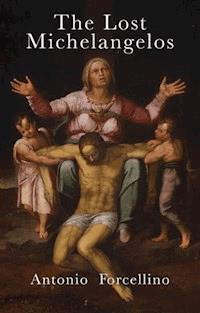
This book tells the remarkable story of a rare discovery: the uncovering of two lost paintings by the great Renaissance artist Michelangelo.
Like many stories of artistic loss, this one begins in a library in Italy, where Antonio Forcellino - a distinguished Michelangelo scholar and restorer - stumbled across some unpublished letters among the papers of Cardinal Ercole Gonzaga, son of Isabella d’Este and an extremely important figure in the Italian Renaissance. These letters comment on the paintings of Michelangelo in a way that is completely at odds with what was to become the dominant critical tradition of Michelangelo scholarship, an inconsistency that set Forcellino off on a journey that took him to Dubrovnik, Oxford, New York and Niagara Falls and culminated in the discovery of two magnificent paintings: Pieta with Mary and Two Angels, now in a private collection in America, and Cavalieri Crucifixion, now held by an educational institution in England. Through a combination of careful historical research, extensive restoration and meticulous radiographic analysis, Forcellino shows convincingly that these paintings can be traced back to the studio of Michelangelo.
This extraordinary story, brilliantly retold, calls into question the received view of Michelangelo’s work and fills in a missing piece in our understanding of one of the greatest artists of all time.
Sie lesen das E-Book in den Legimi-Apps auf:
Seitenzahl: 263
Veröffentlichungsjahr: 2014
Ähnliche















THE LOST MICHELANGELOS
THE LOST MICHELANGELOS
ANTONIO FORCELLINO
TRANSLATED BY LUCINDA BYATT
polity
First published in Italian as La Pietà perduta © RCS Libri S.p.A. 2010, Milano. This edition published by arrangement with Grandi & Associati.
This English edition © Polity Press, 2011
The right of Lucinda Byatt to be identified as translator of this work has been asserted in accordance with Section 77 of the Copyright, Designs and Patents Act 1988
Polity Press65 Bridge StreetCambridge CB2 1UR, UK
Polity Press350 Main StreetMalden, MA 02148, USA
All rights reserved. Except for the quotation of short passages for the purpose of criticism and review, no part of this publication may be reproduced, stored in a retrieval system, or transmitted, in any form or by any means, electronic, mechanical, photocopying, recording or otherwise, without the prior permission of the publisher.
ISBN-13: 978-0-7456-8182-5
A catalogue record for this book is available from the British Library.
The publisher has used its best endeavours to ensure that the URLs for external websites referred to in this book are correct and active at the time of going to press. However, the publisher has no responsibility for the websites and can make no guarantee that a site will remain live or that the content is or will remain appropriate.
Every effort has been made to trace all copyright holders, but if any have been inadvertently overlooked the publisher will be pleased to include any necessary credits in any subsequent reprint or edition.
For further information on Polity, visit our website: www.politybooks.com
To all restorers who never tire
CONTENTS
Introduction
Colour Plates
1 Niagara
2 Mantua, 11 June 1546
3 Separating Fact from Fiction
4 A Movable Panel Painting
5 Isabel Archer
6 The Meeting
7 The Wax Seals
8 On the Flight from New York
9 The Bishop of Montefalco
10 The Melancholic Exile
11 The Last Survivor
12 Ragusa, 1573
13 The Madonna’s Teeth
14 The Hidden Drawing
15 The Stone City
16 Tempestivo’s Funeral
17 The Island of Šipan
18 Oxford
19 Back to Buffalo
20 The Restoration
21 Pentimenti
Epilogue
INTRODUCTION
This book describes the events surrounding the search for, and perhaps the finding of, two major paintings by Michelangelo Buonarroti which, for over a century, were thought to have been two drawings. Like many other stories of vanished or lost paintings, this, too, started with the finding of some unpublished letters, read almost by chance in the Vatican Library among the papers of Cardinal Ercole Gonzaga – son of Isabella d’Este and a major figure in the Italian Renaissance. However, this finding then led to some more unusual settings for historical research, including the Niagara Falls, Oxford, Parma, the archives in Dubrovnik, and finally New York, where key parts of our European history now seem to have emigrated.
However, perhaps the most original aspect of the story is that it offers an insight into the lives of extraordinary figures like Michelangelo Buonarroti, Vittoria Colonna and Reginald Pole, and also brings us closer to a group of passionate reforming intellectuals, who challenged the censure of the Roman Inquisition for the sake of their utopian beliefs. Furthermore, precisely the two paintings we were looking for represented the most tangible and emotional expression of these beliefs. As if this were not enough, the story then took a new twist, to reveal the romantic and ill-fated loves of a group of women caught up in the rapid political changes of late nineteenth-century Europe.
In short, the story of the paintings boasts a plot that no fictional tale could hope to equal. This was the reason why I decided not to report the events in formal academic terms and to go further than is normally acceptable in such detached, dispassionate reports. I decided to include the excitement, the passion and the pure luck that underlie historical research – especially in a case like this, which not only concerns paintings of extraordinary value by none other than Michelangelo, but also uncovers individual stories, feelings and destinies. Moreover, I wanted to describe how the researcher must cope with all this while still steering a strictly methodological course.
Furthermore, the results of this research overturn established academic theories, theories that have been accepted as unassailable scientific constructions precisely because of the detachment of the methods used. I decided to challenge this detachment, and its alleged claim to guarantee knowledge, through the sincerity of an account that does not omit doubts and uncertainties. Indeed this account unashamedly admits the role played by chance, good luck – that irrational and uncontrollable helping hand without which no endeavour, even the most strictly scientific, would ever be successfully concluded. The decision to make room for what is normally left out of scientific reports, including the researcher’s own tentative viewpoint, is, on the one hand, beneficial in terms of broadening the content – and certainly it improves the narrative – but, on the other, it risks undermining the value of the research itself.
There are good reasons why specialists do not like talking about themselves or describing the paths that have led to their achievements. Above all, this threatens to make their work, and even their own personalities, seem more normal, more ordinary. It was a risk I was willing to take for two motives. The first was the excitement I had been fortunate enough to experience first-hand, and therefore I wanted to share this thrill and the accompanying emotions with a public outside the narrow field of specialists in my own discipline. The second, much more presumptuous reason was to use this frank, at times blunt, testimonial to start a debate on the mechanisms of subject specialisation, which often undermine rather than foster an expansion of knowledge.
This story is also one of unbelievable prejudice, which developed in academic circles from a mistaken reading of some documents that emerged from the Italian archives in the mid-nineteenth century. These documents consist of a few letters in which Vittoria Colonna comments on two paintings by Michelangelo using terms which are perfectly appropriate, but which do not conform to the critical tradition based on Vasari’s account. In consequence, according to this tradition, on this occasion Vittoria, an accomplished and eloquent poetess who carefully weighed every word, is thought to have confused ‘painting’ with ‘drawing’. Incredible as it may seem, this art historical tradition became so obsessed with this distinction that it even went so far as to deny the existence of the paintings. However, new documents, which have emerged in a different but equally relevant context, have given renewed impetus to the hypothesis that these paintings did indeed exist. In the meantime, the stubbornness with which art historians perpetrated this elementary mistake for nearly a century can only be explained by their excessive reliance on a self-referential approach.
This way of reinforcing prejudice through the ritualised use of academic writing and methods encouraged me – once I had reported these findings to a scientific meeting – to experiment with a new form of language and a new way of communicating, at least for a scholar. The approach is certainly not without pitfalls. Above all, it exposes the ordinariness of the author’s personality: by stripping away terminology and tested procedures, you also remove all protection against criticism, running the risk that the scientific results are subject to attack and accusations of oversimplification, if not exhibitionism. But it is a risk I am willing to take, because at this stage in my life a genuine account of the journey is worth far more than the scientific results to which the journey has led.
COLOUR PLATES
Michelangelo Buonarroti, Pietà for Vittoria Colonna, 1545–46, oil on panel, 64 x 48 cm. Private Collection. Christ’s face, chest and right arm have been altered by repainting during restoration. The dark background of the panel is entirely painted over, as are all the shadows.
Michelangelo Buonarroti (?), Crucifixion for Tommaso Cavalieri with the Madonna, St John and two mourning angels, oil on panel, 51.4 x 33.6 cm. Private Collection, Oxford. Formerly owned by Cavalieri family.
Marcello Venusti (?), Pietà (after Michelangelo Buonarroti), oil on panel, 56 x 40 cm. Galleria Borghese, Rome.
Marcello Venusti (?), Crucifixion with the Madonna, St John and two mourning angels (after Michelangelo Buonarroti), oil on panel, 51.6 x 33 cm. Galleria Doria Pamphilj, Rome. © Arti Doria Pamphilj srl.
Virtual rendering of the Pietà by Michelangelo which shows the painting without the repainted areas revealed in the reflectography and x-ray images.
Close-up of Christ’s face as it appears in the reflectography of Michelangelo’s Pietà. The darker marks caused by repainting have been eliminated to highlight the original underdrawing. During the nineteenth century restorers turned the foreshortened cheekbone into an eyelid after radically cleaning the shaded part.
Close-up of one of the red wax seals on the back of the Pietà panel.
Nicolas Beatrizet (?), Crucifixion (after Michelangelo Buonarroti), engraving, 41.3 x 26.7 cm. © 2011. Image copyright The Metropolitan Museum of Art/ Art Resource/ Scala, Florence.
Reflectography of the Pietà by Michelangelo showing the underdrawing and subsequent repaintings.
1
NIAGARA
A dense milky white mist rose behind the trees. As the sunset faded into darkness, the coloured neon lights grew brighter with every passing minute, especially on the other bank, the Canadian side. From the window on the twentieth floor of the hotel the enormous, flat horizon vanished into nothingness, conjuring up a vision of the endless forest stretching thousands of kilometres as far as the glaciers of Alaska. Inside the Seneca Casino, the atrium has twenty-metre-high walls of coloured marble, some with water flowing down them to create a discreet yet audible ripple, a foretaste of the thundering roar of the world’s largest and most famous waterfall. The hotel’s design is reminiscent of the Empire State Building in New York, but only in that ‘nouveau’ way that combines the European taste for gold and precious marble with that uniquely American penchant for massive intersecting straight lines, curves and superfluous embellishment. People were wandering across this space, which was as wide as an Italian piazza, without even glancing at the tomahawks and spears, or at the huge feathers hanging from the ceiling, in tribute to the Native Americans who inhabited this area until two hundred years ago. Seneca: it took me two days to understand why a casino beside the Niagara Falls, on the border between Canada and the United States, should be named after such a stern philosopher. In the end I discovered it was nothing to do with him; the name came rather from the Seneca tribe who used to live in this area around the Falls. The enormous hotel is built around a hangar as large as Piazza del Popolo and filled with bright lights, gaming tables and flashing slot machines. It is a world of childish wonder, designed to attract unhappy, probably lonely adults and inveigle them into procuring plastic tokens and glittering fiches to buy back the dreams they have lost along the way.
Unaccustomed to the scale of this spectacle, I found myself being lulled into a daze, but not without a niggling sense of unease. It was eleven at night local time, but for me it was five in the morning and I had not slept a wink. After leaving Rome at nine the previous morning, I had changed planes in New York for Buffalo and from there took a taxi to this astonishing world. For the first time, but also for the last, I was overwhelmed by doubt: had this all been an enormously expensive waste of time? Why had I come here, of all places, looking for Michelangelo? What could possibly link the Seneca Casino to that genius, Michelangelo Buonarroti? This name, which for twenty years has been part of my daily life, is linked to other, less neon-illuminated buildings, like the Basilica of San Pietro in Vincoli in Rome, where the scaffolding I used to work on was lit by clip-on spotlights; or to the Vatican Archives, where the light is always dim; or to the fragile paper sheets with their furious pencil scorings in the Casa Buonarroti in Florence. Or even to the ceiling of the Sistine Chapel, where the vastness of the scaffolding and the violent beauty of the iridescent colours seemed far removed from this unreal setting. On the stage of this brightly flashing theatre I could not even conjure up the artist who has become part of my every waking moment, as well as of my memories. Tiredness made me feel stupid and guilty. If I had not been so exhausted, I would have left immediately and caught the next flight back to Rome; but, as luck would have it, I only went upstairs to my room and fell asleep.
I woke before dawn. Outside the window, the faint light in the sky was almost absorbed by the enormous cloud of white mist hanging over the Falls. It was a beautiful sight, perhaps coloured by my love for artists like Edward Hopper and Winslow Homer; but the landscape could not have been more American and more sublime. Low, painted brick buildings lined the streets, which looked too wide because there was not yet much traffic this early in the morning. The road signs painted on the tarmac in clear colours had all the precision of an electric circuit.
This was my impression of Niagara Falls, together with the rather snobbish sensation that the Falls themselves were a typically ‘American’ attraction, whose fame owes more to size than to beauty, to a taste for what engenders awe rather than wonder. Standing in front of the window and looking at the distant orange sun rising above the forests and the Atlantic Ocean, I was happy that Niagara had unexpectedly become part of my destiny, part of the search for fragments of a story that could never be wholly reassembled because it is too big and too important; a story that is rewarding merely for the fact that it has come to light at all.
The man who had urged me to make this journey had been thoughtful enough to arrange a meeting at six in the morning. He of all people was well aware of the problems caused by jet lag, given that he had been a fighter jet pilot who had later transferred to civil aviation. He had written to me months earlier, not directly – at least to start with – but through a German professor he had met. After my books on Michelangelo had been published and translated into several foreign languages, I had become something of an authority in the field of Michelangelo studies, also because, apart from the fact that I was an art historian, my work as a restorer placed me in that special category of experts once called ‘connoisseurs’. By this, I mean those who not only study art as a theoretical subject, but also acquire practical knowledge, derived not from photos but from dealing intimately with the objects, every day. This was why the former pilot and the German professor had sent me an email with an attached photo. Indeed, they had gone further: the photo was not of a painting; it showed a detail of the underdrawing revealed by infrared reflectography – an imaging technique that penetrates the top layers of paint to reveal what is beneath, which may be an underdrawing or details covered by later painting. They were relying on the fact that a restorer, a specialist in artistic techniques, would have seen in that drawing things that would normally escape an art historian, given the latter’s lack of familiarity with painting methods. And they were right.
Anyone whose name becomes reasonably well known in a particular field is swamped by unsolicited requests for expert advice, judgements or comments on works of art. These are almost always works of no consequence because, generally speaking, the usual channels – namely an estimate, or an opinion from a reputable auction house when a work of art first emerges – operate quite well. Moreover, these requests are frustrating and often demanding, because internet makes access so easy. It is astonishing how many people convince themselves they own a Michelangelo or a Raphael, inherited from some old aunt or picked up from a dealer in the ill-founded belief that some dealers, even antiques dealers, have less of an eye than they do. I once visited a bank director who was convinced he owned a Crucifixion by Michelangelo. The illusion had even been encouraged by a well-known Roman curator whose insight I had no reason to doubt, but whose opinion was, in retrospect, perhaps intentionally misleading. Having accepted to see the Crucifixion and finding myself looking at a small late nineteenth-century painting in a blatantly pre-Raphaelite style, I felt so embarrassed that I had to fake sudden illness and make for the door without further explanation.
Since then, I had even stopped opening any emails that laid claim to miraculous finds. But this one from America was different, not least because it is not every day you get a chance to see an underdrawing using sophisticated imaging apparatus. The photo had me glued to the screen. It showed the bust of a Madonna fastened with a band on which there was a pin decorated with the head of an angel or cherubim with little wings sprouting from its shoulders, as is usual in the iconography of the Virgin Mary.
I immediately noticed the contrast between the head and the folds of the tunic. The folds had been copied from the dusty outlines of a preparatory drawing. In other words, when the contours of a drawing are pricked and then pounced with a bag full of charcoal dust, the dust passes through the holes, to form a row of tiny dots on the surface of the panel, which has been prepared with a layer of gesso and a protein binder. The artist then joins the dots by using a brush dipped in a watery paint solution and re-creates a copy of the drawing he intends to paint on the panel, as it was on paper. Of course, the strokes used to reinstate the drawing on the panel are more or less decisive and more or less confident depending on the artist’s talent. But, equally, the information transferred from a drawing onto the panel can tell us a lot about the artist’s skill. A confident artist will only reproduce the essential information, leaving the composition to be completed during the next phase. In the photo I was looking at, the underdrawing of Mary’s tunic seemed confident and essential, but what astounded me was the fluency of the cherubim’s portrait. The brushstrokes varied with such smoothness that it was evident the head had been drawn freehand, without an underdrawing. Even at this preparatory stage, it was extremely beautiful and particularly expressive. This alone was enough to justify answering the enquiry and asking the sender to send me a photo of the painting and any information about its history.
As I wrote, I tried to maintain a polite but disinterested tone; and I certainly never imagined that behind the computer screen, on the other side of the world, there was a former air force pilot who had dedicated the last ten years of his life to researching this painting, continuing a painstakingly documented family tradition that had lasted, without a break, for over a century. On the other hand, the pilot could certainly not have imagined that two years before, while sitting in the Vatican Library and leafing through a bundle of manuscript letters that I had already consulted four years earlier, I came across a brief but illuminating letter, which had initially escaped my attention. As I ran my eye across the ink characters, written as they had been – with a quill cut and scored with a razor-sharp blade four hundred years earlier – on the morning of 11 June 1546, my heart began to pound.
As always at moments of great excitement, I pushed back my chair and stood up. The Vatican Library gives all readers a wooden ruler with smoothly rounded edges to use as a marker on the precious manuscripts, so as not to damage the delicate rag paper manufactured laboriously in the paper mills of Fabriano or Bologna. That morning, I rested the ruler carefully on the bundle of letters. Noiselessly and trying to match my pace to the hushed tread of the theology scholars gathered around the sixteenth-century display cases containing manuscripts that were thousands of years old, I made my way into the small internal courtyard that joins the Archive to the Library.
Housed somewhat incongruously in the old nymphaeum built by Pope Sixtus V is a café where, among the ruined stucco work, the unscholarly appetites of those working in the reading rooms can be held in check by filled pizzas, a speciality of Rome. The small garden is surrounded by a brick wall on which you can still see the layer of ‘colla di carbone’, or mortar darkened with wood charcoal, applied between 1584 and 1590 by Cherubino Alberti. Smoking is permitted in the garden, even if the only ones who still do it are the cleaners. But that morning I had to smoke a couple of cigarettes before my heartbeat returned to normal. When I felt ready to copy the letter onto my laptop, I went back into the reading room.
2
MANTUA, 11 JUNE 1546
On the morning of 11 June 1546 Cardinal Ercole Gonzaga was sitting in his study in the palace at Mantua, going through his correspondence and writing the few lines that now lay before me in the Vatican Library. He was surrounded by the women, gods and men, handsome and happy, painted by Giulio Romano, but their presence did nothing to mitigate the heat of summer, which was all the more stifling because of the Po River nearby. Nor could these extraordinary frescos relieve the fatigue of a life devoted to the rule of his state and to what had become the turbulent rule of the Church.
As the son of Francesco II Gonzaga and Isabella d’Este, the most elegant woman in late fifteenth-century Italy, Ercole had grown up with an appreciation of art that had turned Mantua into one of Italy’s most refined princely courts. In keeping with common practice among Italy’s leading dynasties, he had been elevated to the cardinalate by Pope Clement VII in 1533 and had moved to Rome. However, after 1534, when Cardinal Alessandro Farnese was elected as Pope Paul III, the political climate became increasingly oppressive. In search of a principality for his son, Pierluigi Farnese, the pope had set his sights on the Duchy of Urbino, which was ruled by Ercole’s brother-in-law, Francesco Maria della Rovere. Ercole’s older brother, Federico, had succeeded to the Duchy of Mantua but had died shortly afterwards, in 1540. As a result, Ercole had taken his brother’s place and returned to Mantua shortly after the latter’s death. In his dual role as prince of a secular state and prince of the Church, Cardinal Gonzaga found himself dealing with one of the most acute episodes in Italian history: the crisis of the ‘Reformation’ within the Roman Church. Because the Duchy of Mantua lay on the crossroads between the Lutheran world and that of conservative Catholicism, and, moreover, because Mantua was traditionally allied to Emperor Charles V, Ercole became one of the most committed and influential men on this hotly contested Italian chessboard.
After a period of youthful high spirits during which he had fathered a daughter, the cardinal developed a deep and sincere faith, which very soon brought him into contact with a reforming group searching for a way out of the religious crisis, one that would reconcile Catholicism with the Lutherans’ theological demands, yet retain the primacy of Rome. While the Lutherans affirmed that true Christian redemption lay in the cultivation of a ‘living’ faith that linked the believer directly to God, without his trying to buy it through liturgical practices, the Church of Rome, whose temporal power was based precisely on the management of such practices, did not intend to watch as its power was undermined by the attacks of the reformed theology. The group of Catholic reformers, who were already known as the spirituali by contemporaries, shared the Lutherans’ conviction that salvation did not depend on good works, namely on conforming with ecclesiastical rites, but on a sincere faith in Christ and in the sacrifice he had made through his own death. However, the spirituali also attempted, at least in part, to redeem the value of good works, and hence the primacy of the Church of Rome, by arguing that a good Christian life, which also included the practice of some liturgies, could illuminate the profundity and sincerity of faith.
From 1541 the leader of this reforming group was the English cardinal, Reginald Pole, King Henry VIII’s cousin. Pole attracted into his orbit lay members of outstanding sensitivity, like Vittoria Colonna, a Roman noblewoman and a renowned poetess who had been married to the Marchese of Pescara. Other influential members of the group had close family ties with Cardinal Gonzaga: they included his sister, Eleonora Gonzaga, Duchess of Urbino, and his cousin’s wife, Renée of France, Duchess of Ferrara, one of the most restless figures of the century on account of her uncompromising religious opinions. Renée caused considerable trouble to Ercole by publicly professing beliefs regarded as scandalous by the official Church; she also offered hospitality to several heretics banned by the Church of Rome, and even allowed them to preach in the city churches. The various reforming currents in Italy were on a collision course and the boundaries between them were still very fluid, given that no council had yet proclaimed a universal truth recognised by theological dogma; by the mid-1540s, however, the council was imminent, and Ercole and his companions knew that they had already attracted suspicion and that the Roman Inquisition had them in its sights.
The situation had become explosive after 1542, when the preacher Bernardino Ochino, summoned to Rome by the Inquisition for the heretical content of those sermons that sent Ercole and his group into ecstasy, had escaped to Switzerland, thereby abandoning all pretence and openly siding with the Lutherans. In his sermons and writing, Ochino had always openly praised the redeeming role of Christ’s sacrifice, placing faith in this sacrifice before the observance of liturgical laws. Ochino’s apostasy caused trouble for all his friends: for Vittoria Colonna, for Renée and, above all, for Ercole, who had protected him and celebrated him as a spiritual leader. Moreover, according to informers in the Roman Curia, Cardinal Gonzaga himself had actually helped him to escape over the border. Certainly Gonzaga’s letters from this period reveal the caution of a man aware that he, too, might be hunted down and spied upon; and, above all, aware that the final outcome of the reform movement was still very uncertain. The letters dating from the summer of 1546 were particularly prudent. Six months earlier, in late 1545, the council had opened – not far from Mantua, in the small town of Trent, a convergence point between Germany and Italy. It was chaired by three papal delegates. The hopes of the reformers were pinned on one of those delegates, who was none other than Cardinal Reginald Pole. Gonzaga believed that a theological reconciliation would lead to a revival of the faith, while the Inquisition viewed it as a concession to Lutheran heresy.
From December 1545, therefore, the real battlefield in this religious conflict shifted to Trent. As on every battlefield, intelligence was crucial in revealing the web of alliances and the objectives of the various factions. Pole and the other two papal delegates, Cardinals Marcello Cervini and Giovanni Del Monte, sent daily reports to the Curia in Rome. Alongside this official information, as in every self-respecting war, there was an active network of informers and collateral intelligence, which offered the pope a much blunter but more truthful picture of the clash taking place. According to this intelligence, a very influential group of cardinals and bishops in the council were completely in tune with the Lutherans on theological grounds and were manoeuvring to approve a decree that, broadly speaking, would accept the Lutheran idea that salvation of the soul depended on the pre-eminent value of faith rather than on good works. This would have completely transformed the Church, moving it towards a more spiritual and less material realm. In the summer of 1546, this decree was at the very centre of the clash. If the council had accepted the pre-eminent value of faith for redemption, Catholics all over the world would have felt much less constrained to follow ecclesiastical liturgies, and even the celebration of mass would have been called into question.
According to secret intelligence, the members of this particular group were not limited to Cardinal Pole, whose pro-Lutheran stance had been known to the Inquisition for years. Among the first episodes that had raised suspicion was a devotional booklet referred to as Il beneficio di Cristo, which had been abridged by Pole’s circle of fellow spirituali in Viterbo and exalted the value of faith over and above works. Although the authors took the precaution of printing it anony mously in Venice, the book had rapidly become a best-seller, forcing the Inquisition to censure it and actively persecute its editors. At Trent, Pole was supported by Cristoforo Madruzzo, Bishop of Trent, and by Cardinal Giovanni Morone, Bishop of Modena, both of whom were already being monitored by the Inquisition. There was also a large group of bishops sympathetic to the reformers’ demands. Among these was the Bishop of Fano, Pietro Bertano, who had been appointed by Ercole Gonzaga and dispatched to Trent – not only to keep the cardinal informed of the daily affairs of the council, but to act as a spokesman for the requests that Gonzaga passed to him at private meetings and in cautiously worded letters. Bertano was very close to Pole in the struggle at Trent: his allegiance was reported by the secret informers and can also be seen in the dozens of letters he wrote to Gonzaga. In one of these, sandwiched between paragraphs on biblical canons and penitence, St Paul and papal authority, Bertano unexpectedly made an offer to Ercole Gonzaga on Cardinal Pole’s behalf.
On 12 May 1546, Bertano wrote to Gonzaga:
Monsignor Pole has heard you desire a Christ by Michelangelo and he has asked that I secretly enquire as to the truth of this wish. Indeed, given that he has one by the hand of the said artist, he would be pleased to send it to you, but it is in the form of a Pietà, although you can see the whole body. He says this would not be a great sacrifice because he could obtain another from the Marchesa of Pescara.
This letter reveals that Michelangelo too had a role to play in the battle at Trent: although a private gift, his art was deemed more capable of rallying the front-line reformers than any powerful secret weapon. Gonzaga’s reply came by immediate return, being written on 21 May and dispatched to Trent:




