


Erhalten Sie Zugang zu diesem und mehr als 300000 Büchern ab EUR 5,99 monatlich.
- Herausgeber: The History Press
- Kategorie: Sachliteratur, Reportagen, Biografien
- Sprache: Englisch
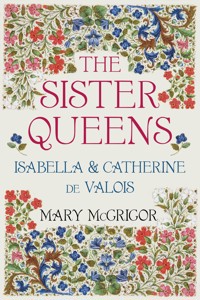
Isabella de Valois was 3 years old when, on a hot August day in 1392, her father suddenly went mad. Less than four years later, she was married by proxy to the English King Richard II and arrived in England with a French retinue and her doll's house. Richard's humiliating deposition and brutal murder by his cousin, the future Henry IV, forced Isabella's desperate return to France where she found her country fatally divided. Isabella's sister, Catherine de Valois, became the beautiful young bride of Henry V and is unique in history for being the daughter of a king, the wife of a king, the mother of a king and the grandmother of a king. Like her sister, Catherine was viewed as a bargaining chip in times of political turmoil, yet her passionate love affair with the young Owain Tudor established the entire Tudor dynasty and set in motion one of the most fascinating periods of British history. The Sister Queens is a gripping tale of love, exile and conflict in a time when even royal women had to fight for survival.
Sie lesen das E-Book in den Legimi-Apps auf:
Seitenzahl: 456
Veröffentlichungsjahr: 2016
Das E-Book (TTS) können Sie hören im Abo „Legimi Premium” in Legimi-Apps auf:
Ähnliche


















To Caroline, Sibylla and Sarah, with all my love.
Acknowledgements
My deepest thanks to all those who have so kindly helped me with this book: Adrian Gibbs, Deputy CEO of the Bridgeman Library; Sian Phillips, Account Manager of the Bridgeman; Maria Cristina Pîrvu of the Bibliothèque nationale, Paris; Elizabeth Taylor of the National Portrait Gallery; Caroline Robot for translation; Sybilla McGrigor; Sarah McGrigor; Sophie Bradshaw, Naomi Reynolds and Katie Beard of The History Press; Rachel Bellery of Historic Scotland; Gemma Wright for images of Leeds Castle.
Contents
Title
Dedication
Acknowledgements
Family Trees and Map
Part I – Isabella
1 The First Daughter
2 Childhood of Fear
3 Le Bal des Sauvages
4 A Journey of Diplomacy
5 The French Bride
6 A Poet is Born
7 The Little Queen
8 The Fatal Challenge
9 Lancaster’s Revenge
10 My God! A Wonderful Land is This!
11 The Only Chance of Safety
12 City of Anarchy
13 The Madness of King Charles
14 The Fairest Thing in Mortal Eyes
Part II – Catherine
1 Mortal Rivalry
2 A Challenge of War
3 The Cabochien Revolt
4 The Price of a Bride
5 Invasion
6 A Country Robbed of Rule
7 The Conqueror
8 A Princess Lovely to the Eye
9 The Royal Captives
10 The Treaty of Troyes
11 Summons for the Scottish King
12 The Hero of England’s Return
13 Return to France
14 Last Battle of the Soldier King
Part III – Rivals for Power
1 Jacqueline’s Story
2 Invasion of Hainault
3 The Poet King
4 Mother of the King
5 Rivals in the War for Power
6 Childhood of a King
7 Renewal of War in France
8 The Maid of Orléans
9 The Treachery of Burgundy
10 Betrayal
Part IV – Legacy
1 The Widower
2 The King’s Half-brothers
Envoi
Appendix 1
Appendix 2
Bibliography
Plates
Copyright
The Royal House of Valois
The House of Orléans
Family Tree Descendants of Edward III,King of England
France after the Treaty of Troyes, 1420
The Thrones of England and Franceduring the late thirteenth, fourteenth and fifteenth centuries
PART I
ISABELLA
1
The First Daughter
Paris 1389–93
I sabella was 3 years old when her father went mad.
Born in 1389, she was the third child and second daughter of King Charles VI of France and Isabeau of Bavaria, who herself was the eldest daughter of Duke Stephen III of Bavaria-Ingolstadt and Taddea Visconti of Milan. Paris was in a state of jubilation just previous to Isabella’s birth. Her father, on reaching 20, had just come of age: his uncles’ regency had ended, and he was the ruler of France.
Becoming king on the death of his father, Charles had been only 11 years old, so France had been ruled by his four uncles for eight years. On his father’s side they were John, Duke of Berry; Philip, Duke of Burgundy; and Louis I, Duke of Anjou, the latter, being the kindest and wisest, having supervised the upbringing of both Charles and his brother Louis from the time of their father’s death. On the distaff side was Louis II, Duke of Bourbon, the brother of Charles’s mother, Jane of Bourbon.
Only 17 in 1385, Charles had still been underage when he met Isabeau, sent on approval as a possible bride when she was just 16. Delighted with her appearance (she had the dark skin and hair of her Italian mother and likewise her vitality), with typical spontaneity, Charles married her within three days. Since then Isabeau had lost a baby son and had a daughter who was a sickly child.
The queen’s coronation and entry into her husband’s capital was postponed for four years until Charles attained his majority. It finally took place on Sunday, 22 August 1389. By then there was a joint cause for festivity, for five days previously in Melun (the fortress town some 25 miles south-east of Paris on a higher reach of the Seine) the king’s brother Louis, Duke of Touraine and Count of Valois and Beaumont, had married the beautiful Italian heiress Valentina Visconti, daughter of Gian Galeazzo, Duke of Milan. The king was devoted to his brother, with whom he had much in common – Louis was just as excitable, high spirited and addicted to pleasure as Charles. Soon, as the title became vacant, Charles would make him Duke of Orléans, granting him yet further estates.
Amongst the guests attending the ceremony was the King of England’s uncle, Lionel Duke of Clarence, who came as the representative of his nephew Richard II, who, too occupied with trying to control his unruly kingdom, was unable to attend. With Clarence came an ecclesiastic, a chronicler of the times – Jean Froissart, or Sir John Froissart as he was known to the English. Born in Valenciennes, a town on the River Scheldt in Hainault, a province near the border of northern France and Flanders (Belgium in the present day), he was now in his fifties. His father, believed to have been a painter of armorial bearings, had no doubt wished his son to follow his career, but John, ambitious and perhaps bored with his home life, had contrived in his early twenties to obtain employment with Philippa of Hainault – herself born in Valenciennes – who had been married there by proxy to Edward III of England in 1327. Perhaps because he was a compatriot, or simply because she perceived his talent, the queen had encouraged the young clerk in her household to become the poet and historiographer of the court. Queen Philippa was now long dead, but thanks to the fame of his Méliador, a long Arthurian romance, Froissart now enjoyed the patronage of the Duchess of Brabant and other high-born ladies who believed him to be a genius of the age. That he was indeed greatly venerated is proved by the fact that he was ranked equal to the great Italian poet Francesco Petrarch and to the English Geoffrey Chaucer, the latter, by then at the advanced age of 67, being said to have been present at Charles and Isabeau’s royal wedding.
On this occasion, even accustomed as he was to the great entertainments so beloved of medieval times, Froissart found that those following the wedding and the queen’s coronation so surpassed all that he had previously seen as to astonish him. ‘Never were such elaborate festivities seen in this realm,’ he wrote, describing all that had taken place: ‘There were so many people in Paris and round about that it was the most wonderful sight.’1
He goes on to describe how, in the town of Saint-Denis on the outskirts of Paris, an assembly of all the chief ladies of the nobility who were to accompany the queen and all the lords who were to escort the horse-drawn litters in which they sat, were gathered to form the procession which the frantically excited populace was waiting to see. ‘There were 12,000 citizens of Paris, all mounted and ranged in the fields on either side of the route, dressed in tunics of green and scarlet brocade.’2 First to appear was Jeanne the Queen Mother with her daughter, the Duchess of Orléans, borne in covered litters with an escort of barons. But they went no farther than the palace on the Île de la Cité, where they joined the king.
Then came the great moment when Queen Isabelle of France (as Froissart spells her name), set off with her ladies, headed by the wives of the king’s uncles, the Duchess of Burgundy and the Duchess of Berry, with numerous other titled women following in order of rank.
The older ladies had similar litters, ‘so richly ornamented that nothing could have been added’. Two of the younger ones, however, rode side-saddle (in those times, a contraption was used by which the lady, sitting sideways on the saddle, could rest both feet on a wooden platform below). One was Valentina Visconti, the new Duchess of Touraine. A tall and elegant girl of 19 mounted on a beautifully caparisoned palfrey, she was a joy to the public eye. The other was Jane of Boulogne, the 12-year-old second wife of the king’s eldest uncle, the Duke of Berry – who at 49 was totally smitten with his young bride. Those gathered to watch had a splendid view as all proceeded at no more than a walking pace.
Amongst them was the king, who, in typical fashion, had decided it would be more amusing to mingle amongst the crowd. Unrecognised, he was beaten about the shoulders by officials before making a hasty escape for the safety of the old royal palace of Saint Louis on the Île de la Cité.
Interestingly, on foot beside the queen’s litter was Louis, the king’s brother, at that time the Duke of Touraine, although three years later he would become the Duke of Orléans, when his name would be linked scandalously with that of the queen. Other lords walked before and behind. The queen’s litter was entirely open, as were those of most of the other ladies, whom the watchers cheered to distraction, marvelling at the dazzling display of jewellery and fine clothes.
At the outer gate of Saint-Denis (on the site of the modern Porte Saint-Denis) under a painted star-lit sky, children dressed as angels sang sweetly. Next there was a tableau of Our Lady holding in her arms a child playing with a windmill made from a large walnut. The upper part of the firmament was richly emblazoned with the arms of France and Bavaria, a golden sun set in its glory, which was the king’s badge in the tournament to come.
When they had watched the tableau, they went on to where the fountain of Saint-Denis flowed ‘with excellent claret and spiced wine’,3 and girls in gold caps sang tunefully as they held out golden cups and goblets offering drink to one and all.
Further on, in front of the Hospital of the Trinity, a wooden platform had been set up to bear actors portraying the battle with Saladin, Christians on one side, Saracens on the other. Above them a man, supposed to be the King of France, had the twelve peers of his kingdom around him, each wearing his own coat-armour.
As the queen in her litter passed under the inner gate of Saint-Denis, beneath a colourful sky where God sat in His Majesty, down came two angels, holding a golden crown richly studded with precious stones, which they placed very gently on her head as they sang in her honour. No magnificence was spared. Tableau followed tableau, wonderful contrivances of the artists and carpenters of the city which astounded the beholder’s eyes.
But it was not a Parisian but ‘a skilful man from Geneva’4 who produced the final climax. Having attached a rope between the top of the highest tower of Notre-Dame and the tallest house on the Pont Saint-Michel, he sat astride it, and then worked his way the along the rope, singing loudly as he went, a wax torch in each hand because it was growing dark. Seen from one end of Paris to the other and from 2 or 3 leagues outside, his performance seemed nothing but a miracle to the watching crowd.
In the square in front of the great cathedral of Notre-Dame, the Bishop of Paris was waiting to greet the queen. Escorted through the church to the high altar, she knelt in prayer before making a gift to the cathedral’s treasurer of four cloths of gold and the fair crown from the angels.
Crowned Queen of France by the Bishop of Paris, Isabeau returned with her ladies in their litters to the palace on the Île de la Cité, which was lit by 500 candles. The ladies, obviously exhausted, retired to their chambers, while the men, who must have included the king, ‘did not return to their lodgings until after the dancing was over’. The entertainment then continued with several days of feasting and jousting and gift giving, before all the lords and ladies returned to their own provinces having bid farewell to the king and queen, who thanked them warmly for joining them at the festivities.
Not one of that gay crowd of people, who had so greatly enjoyed the hospitality of the young king and queen, could possibly have guessed what lay before them in the next three years. Three months after her coronation, the queen gave birth to a daughter, named Isabella after herself. This time the child survived.
Notes
1 Thompson, P.E. (ed.), Contemporary Chronicles of The Hundred Years War: From the Works of Jean le Bel, Jean Froissat & Enguerrand de Monstrelet, translated and edited by P.E. Thompson, The Folio Society, London, 1966, p.205.
2 Ibid.
3 Ibid., p.206.
4 Ibid., p.209.
2
Childhood of Fear
T he French chronicler Jean Froissart, by then in his late fifties, gives a vivid account of what happened on another day, even hotter than that of the queen’s coronation – 5 August 1392.
There had been some minor trouble in Brittany. Olivier de Clisson, the Constable of France, had survived an assassination attempt by a man called Pierre de Craon, who had been given asylum by Jean, Duke of Brittany. An infuriated King Charles, ignoring the advice of his uncles (the dukes of Burgundy, Berry and Anjou), led an army to punish Brittany. They delayed for some three weeks at Le Mans, deliberating as to what action should be taken.
Four knights were sent to the Duke of Brittany with a request to release de Craon into the hands of the king, and returned with an unequivocal reply. Always impatient, Charles said he would wait no longer in Le Mans but would lead his army into Brittany to see which barons and knights would prove to be his enemies by supporting the Duke of Brittany. Behind this plan was Charles’s fixed intention to replace the Duke of Brittany with a governor who would rule the province until his own heirs were old enough to take control in his place.
The 5 August 1392 was a day of near-overwhelming heat. Always of a nervous disposition, King Charles was not feeling well; he was having giddy turns and running a temperature. It was noted that he just picked at a few morsels for breakfast, instead of wolfing chunks of cooked meat and washing them down with wine and ale like most of his companions. Once astride his horse, which he sat easily and well, as he headed his army he was conspicuous in a black velvet jerkin, which he wore over his armour, and a scarlet hood.
Froissart continues to give a first-hand description by a man who witnessed what then occurred:
I have been told that as he was riding into the forest of Le Mans … there suddenly emerged, from between two trees a man wearing neither hat nor shoes, and clad in a smock of homespun cloth; he was quite obviously deranged and taking in his hands the reins of the king’s horse he stopped him in his path and said: ‘Ride no further, king, turn back for you are betrayed.’
These words badly affected the king’s already weak mind and made his feverish state much worse, for he was seriously shaken by the incident.1
The man was still mumbling when the sergeant-at-arms leapt forward and struck the idiot’s hands such a blow that he dropped the reins and staggered backwards. No one quite knew what happened next but, as other riders pushed forward, the man slipped away into the trees, never to be seen again.
Although clearly much shaken, the king pulled himself together to resume the march through the forest. The temperature was rising as the sun climbed into the heavens, but in the woods the heat was less noticeable thanks to the shade of the trees. Then, coming out into the open, it struck with all its force.
Now they were riding into a plain where the sand in the soil had turned to dust. The army was formed into companies, the king almost on his own to avoid the worst of the dirt thrown up by the horse’s hooves. The heat was by then suffocating, the sand boiling to the touch. So also was the armour in which most of the soldiers were encased. Soon both men and horses were gasping for breath and dripping with sweat.
The king, who, his doctors protested, should never have gone out in the first place, was probably the worst affected, thanks to the fact that the velvet jerkin over his armour was black, a colour which draws heat. Behind him rode one of his pages wearing a fine Montauban helmet of steel, glittering in the rays of the sun. Then followed another page, proudly bearing a tall scarlet lance with silken pennants of the king’s colours, this being one of twelve such weapons specially forged in Toulouse with points of shining steel which had been given by the Lord de La Rivière, one of the courtiers, to the king.
The columns moved on across the plain, both men and horses tormented by heat, dust and flies. Some began to doze in their saddles when suddenly they jerked awake at the sound of a loud clang. The boy carrying the banner had fallen asleep, or else his horse had stumbled, sending the steel tip of his lance into the steel helmet of the page ahead. Immediately there was panic. The horses, already fractious, stampeded in all directions. The king, the strange man’s words still spinning through his mind, thinking doom had come upon him and that a great force was attacking, jerked his sword from its scabbard and turned on the pages, whom, failing to recognise them, he took to be his enemies. Thinking himself in the midst of a battle, he raised his sword and, shouting ‘Forward! Advance on these traitors’, laid about him in all directions.
Petrified, the pages fled, spurring their horses to safety beyond his deadly reach. Missing them, he made for his brother, Louis, Duke of Orléans, totally unaware of who he was. Orléans, glimpsing this wild apparition charging towards him, flashing sword above its head, eyes rolling red with both dust and madness, swung his horse round and fled, his brother chasing behind, screaming in mad pursuit.
Fortunately, hearing the pages’ shouting and seeing the horses bolting, the Duke of Burgundy realised instantly what was happening. Swinging round in his saddle, he shouted to those within hearing: ‘Holla there, disaster has befallen us! My lord the king is out of his mind! For God’s sake follow after and capture him!’ And then ‘Fly, nephew of Orléans, fly! Or the king will kill you.’
‘I can tell you the Duke of Orléans was not at all happy,’ wrote Froissart:
And he fled as fast as his horse could carry him. Knights and squires began shouting and following the direction he had gone. Those who were riding on the right and left wings of the party thought a wolf or a hare had started, until they found out that the king was out of his mind. However Louis of Orléans got away, by turning and counter-turning and with help from the others.
All the knights, squires and men-at-arms then formed a wide hedge around the king, and waited for him to exhaust himself: the more he charged about the weaker he became. When he came upon anyone, be it knight or squire, that person let himself fall under the blow. I never heard that anyone was killed in this sorry affair, but the king felled several of them, for no one offered resistance. [Other accounts claim that four men were killed]. Finally when he was worn out and his horse was exhausted and both were running with sweat from their exertions, a knight of Normandy, one Guillaume Martel, who was the king’s chamberlain and of whom he was very fond, came up and gripped him from behind, holding him tight with his sword arm inactive. The other knights came near and removed his sword, lifted him down from his horse and laid him on the ground and then took off his doublet to cool him. When his brother and three uncles came to see him he did not recognise them or show them any sign of friendship. His eyes rolled horribly in their sockets and he spoke to no one.2
Stunned by what had happened, nobody knew what to do. Then two of King Charles’s uncles, the dukes of Burgundy and Berry, decided after a brief exchange of words that the expedition into Brittany must be immediately postponed and that the only sensible, in fact the only feasible, thing to do was to return to Le Mans. With that they ordered men to use anything they could find – probably saddlecloths – as fans to cool the king down before laying him in a litter to carry back to the town.
Once there the doctors, who were immediately summoned, shook their heads in bewilderment as to what could have caused the attack of what is now believed to have been paranoid schizophrenia. Inevitably, both witchcraft and poison ran through people’s minds. Rumour became rampant, focusing on the king’s brother and uncles, who, as his nearest relations, were potential heirs to the throne in the event of his death.
Again it was Philip, Duke of Burgundy, who, though the youngest of the uncles, took command. Summoning the doctors, who explained to him that the king had been suffering from a kind of ‘malady’, as they put it, for some time. Burgundy then exonerated them of the blame laid upon them for allowing him to ride out on a day of such heat. He himself had seen Charles’s determination and was one of those who had tried to dissuade him from embarking on such an expedition, but his advice had been ignored. Once Charles’s mind was set on something, he was hell bent on carrying it out.
He then questioned them carefully about what Charles had taken, both in food and drink, before setting out that fateful morning. On the doctors’ reply that ‘it was so little that it was not worth mentioning’, he merely sat and mused. Burgundy sent for his nephew’s chief butler, Robert de Tanques, a squire from Picardy, who said that the last person to give him both food and drink had been Sir Helion de Lignac, who swore that both he and de Tanques had tasted the wine in front of the king. There was still some of the same wine in bottles, which both Burgundy and his brother the Duke of Berry could try. It was Berry who said that ‘the only poison and sorcery the king has suffered is that of bad advice … let us hold such matters over for another occasion.’3
From Le Mans, King Charles was sent to Creil, where, under the care of Master Guillaume de Harselly, then one of the leading doctors in France, renowned for both his wisdom and his parsimony, Charles gradually recovered. Froissart says that he returned to Paris in September but does not give the year. He does mention, however, that during his absence the Duchess of Burgundy, by all accounts a terrifying woman, had been installed in the Hôtel Saint-Pol in Paris, presumably to act as helper and guardian to the young Queen Isabeau and her family.
Isabella, now 3 years old, appeared to be a healthy child, as was Joan, her younger sister, born in 1391. Marie, the fourth daughter, born in 1393, must be the baby to whom Froissart refers when he writes that the queen gave birth to another child, whom he thought was a daughter, at about this time.4
King Charles continued to suffer from bouts of frantic delusions, at increasingly frequent intervals. Sometimes he thought he was made of glass. At others, he ran until he collapsed in exhaustion. So confused did he become when afflicted by the disease – at the time thought to be caused by magic – that he did not know his wife, saying ‘who is that woman, she gets in my view’ before ordering her to be taken from his room.
The only person the king could bear to have near him during his attacks of madness was his sister-in-law, Valentina Visconti, wife of his brother Louis, now Duke of Orléans. Her gentle presence soothed him. Needless to say, this caused friction with Isabeau, who did her best to ruin Valentina’s name, seething with jealousy that any other woman should have influence over her husband.
Isabeau did not hesitate to ensure her increased authority. Knowing that her liaison with her brother-in-law, Louis of Orléans, was a source of widespread scandal, she connived to circulate the rumour that Valentina was in an adulterous relationship with King Charles.
Meanwhile, the Duke and Duchess of Burgundy were greatly alarmed that Valentina’s influence over the king might strengthen that of her husband and enable him to win the power and the privileges they were scheming to win for themselves.
For a time, Isabeau moved to the Hôtel Babette, giving her enemies a chance to claim that she had abandoned her husband. The gap of two years between the births of Marie in 1393 and Michelle in 1395, suggests that it was then that the royal couple lived apart. Nonetheless, in his more lucid moments, Charles recognised her capability and his own incapacity, and allowed Isabeau to have a seat on the regency council, giving her far greater power than was usual for a queen. As guardian of their children, she had control of their son, the dauphin Louis, an arrangement which was to last until he reached the age of 13.
When the king did return to lucidity, the doctors advised strongly against his being burdened with too many affairs of state. Instead, they said he should have entertainment, anything to lift his mind from the depression which had been such a significant feature of his illness.
Notes
1 Thompson, P.E. (ed.), Contemporary Chronicles of The Hundred Years War, p.217.
2 Ibid., p.220.
3 Ibid., p.222.
4 Ibid., p.226.
3
Le Bal des Sauvages
D iversions were hard to invent. Yet, on the doctors’ orders, the king had to be entertained.
An opportunity came in January 1393, when a marriage was celebrated between a young knight of Vermandois and one of the queen’s ladies-in-waiting, both members of the royal household. King Charles, delighted, declared that the wedding festivities must be held in his own palace of Saint-Pol. The many guests invited included the highest in the land, amongst them the king’s brother the Duke of Orléans, his uncles the dukes of Berry and Normandy and their wives.
In the evening, the king hosted a supper for the assembled party, over which the queen was to preside. Everyone tried to be merry, encouraged by the sight of the king enjoying every minute, clearly himself once more. It was one of his distant relatives, a Norman knight called Hugonin de Guisay, who thought up an entertainment, in the form of a masked ball. But this would be a ball with a difference. Gone were the masks and dominoes. Instead, the guests would be savages, something never thought of before.
The preparations alone were hilarious. Six tight-fitting linen suits were made and then hidden in a room, where they were painted with tar on to which strips of flax were stuck to look like hair. Hugonin de Guisay supervised as the king, laughing with pleasure, was fitted into one of them. The Count of Joigny, a particularly handsome young man, was stuffed into another. Count Charles of Poitiers, son of the Count of Valentinois, into a third. Yvain, the bastard of Foix, wore the fourth; the son of the Lord of Nantouillet, the fifth; and the last one de Guisay put on himself. All were carefully sewn up so that they looked remarkably like savages, sprouting hair from the top of their heads to the soles of their feet.
The king, looking down at what he could see of himself and then at his companions, laughed aloud in joy, thrilled at taking part in such a game. Only Yvain de Foix foresaw possible danger, and begged Charles to give orders that no torch should be brought near them, the suits, covered in tar, being obviously inflammable. ‘By God, Yvain, that’s a sound warning,’ said the king, suddenly aware of the potential danger and instructing the servants that no one should follow after them. He then called in a sergeant-at-arms who was standing at the door and told him, ‘Go into the hall where the ladies are assembled and tell them it is the king’s order that all the torches should be placed to one side and that no one is to come close to the six savages who are about to enter.’ The sergeant did as he was told. The torchbearers were withdrawn to one of the walls and given the king’s orders that no one was to go near the dancers until the savages had left the hall.
All should have been safe … but the Duke of Orléans arrived late with some companions, four knights and six torchbearers, all of them – no doubt having been drinking – out to have some fun. With his eyes on the prettiest women, Orléans plunged into the dancing with great energy, totally unaware (or so he claimed afterwards) of what the high point of the evening’s entertainment was to be.
His brother, the king, came in first, gesticulating and grimacing like a primitive man, as he led the five others, for some reason tied together, in the dance. No one recognised any of them, so clever was their disguise. The king, totally delighted at such a wonderful ploy, was unable to resist the temptation of showing himself off to the ladies. Passing the queen, he stood in front of the Duchess of Berry, his youngest aunt, who tried to find out who he was by pestering him to give his name, telling him that he would not escape her until she knew who he was. The dancing had now stopped and while this interchange was taking place, Charles of Orléans, bored with the inactivity, impulsive as a young man of 21, seized a torch that his servant was carrying and held it close to one of the savages, peering into his half-covered face, to try to make out who it was.
Within seconds the flax was on fire. The tar holding it to the linen began to melt and the men in the tight-fitting suits, sewn on to their bodies, screamed as they felt themselves burn. Petrified, no one dared go near them until some knights, braver than others, tried to help them, tearing at their flaming, sizzling clothes. But they were sewn on so tightly that their hands were badly burned.
No one who heard it could ever forget the screaming. The little Princess Isabella, even if up in her nursery, must have heard it piercing the very stones of the building.
In the great hall the burning figures, writhing, yelling and sobbing in their torture, finally fell to the floor. Of the six ‘savages’, only two remained alive. One was Isabella’s father, the king, who dived under the wide skirts of his young aunt the Duchess of Berry. As he struggled to escape from her petticoats, she told him he must go at once to his wife who believed he was dead. On seeing him, Isabeau fainted and had to be carried from the room.
The other survivor was Nantouillet, who had remembered that there was a large tub of water in the buttery used for the washing up. His suit alight, he had dashed into the room, scattering the terrified servants, and plunged into the tub, sizzling and badly burned, but alive.
Not so fortunate were the rest, of whom two died on the spot. The bastard of Foix and the Count of Joigny were carried to their lodgings and, after two days of excruciating agony, were mercifully released by death.
4
A Journey of Diplomacy
England 1395
I n 1395, Sir John Froissart, the canon Treasurer of Chimay, decided to make a return visit to England, the country which, as a young man, he had become familiar with and grown to love. Born in Valenciennes in Hainault around 1335, he was nearly 60, considered old in those days. From his poem ‘L’espinette amoureuse’ (‘The Thorn Bush of Love’), thought to be largely autobiographical, he seems to have been educated in a mixed school, probably a religious house, where he enjoyed giving the girls presents and fighting with the boys. He also says that he liked ballades and rondeaux rather than lessons and must, even at a young age, have been interested in all that was happening in what was then known of the world.
The supposition that he had a religious education seems borne out by his being in minor orders by the age of 23. That he was also a writer is evident from his journey to London in 1326, when he took with him a manuscript describing the Battle of Poitiers and the events of subsequent years as a gift for Philippa of Hainault, King Edward III’s queen.
His present achieved its objective. Under her protection, he remained with the court for six years. He must have told her of his intention of writing a history of the times, for he was granted permission to travel to Scotland, where he met King David II, the grandson of Robert the Bruce. In England, he stayed at Berkeley Castle, where he heard at first hand the grim story of the death by torture with (supposedly) a red-hot poker of the king’s father, Edward II.
Returning to London, he had related his travels to Queen Philippa, who loved having a native of her homeland in the court, where French was the language of the nobility. King John of France, taken prisoner by Edward the Prince of Wales (dubbed the Black Prince because of the colour of his armour), and some of his fellow captives were also about the court on parole.
Froissart had loved every minute of the time he spent in England, where he wrote of the embassy of Chaucer and claimed to have met Petrarch. Back in France, he went with the Black Prince to Aquitaine and was actually in Bordeaux when Richard II was born there. Later, in Italy, he was present at the wedding of King Edward’s son, the Duke of Clarence, in 1386–9. Then, tragically for him, Queen Philippa died.
The king’s mistress, Alice Perrers, who had seduced him to the great grief of his wife before her death, had no time for Froissart. Described by Thomas Walsingham as ‘a shameless woman and wanton harlot … of base kindred … being neither beautiful nor fair, she knew how to cover these defects with her flattering tongue,’ she may have feared he would malign her should he be allowed to remain. Ostracised from England, he went back to Hainault to find a new patron to support his literary works.
In 1395 he wrote:
For my own part I had prepared a collection of all the treatises on love and morals that with God’s grace I had written over a period of thirty-four years: when these had been copied in a fair hand and illuminated, my desire to go and see King Richard of England was redoubled. Having provided myself with horses and other equipment, I crossed the sea from Calais and arrived at Dover on the twelfth day of July.
He was initially disappointed. In Dover itself he found that he knew no one and that even the inns he had once frequented had disappeared. Having stayed for a day to rest both himself and his horses, he rode on to Canterbury to see the splendid new tomb of the Black Prince, the Prince of Wales. There he was told that the king was just back from Ireland, where he had been for nine months. King Richard was due to arrive on a pilgrimage to the shrine of St Thomas of Canterbury.
While waiting patiently to see him, Froissart allowed his mind to wander back to the time, now twenty-eight years ago, when, on the night of Epiphany, 6 January 1367,1 he had sat with the other courtiers huddled over a fire which did little to heat the room, in the abbey of Bordeaux. Through the night they had crouched there, waiting for news, while Joan, the Princess of Wales, lay in labour in a room above. At last, at three o’clock in the morning on that freezing night, they had heard the thin wail of a newborn baby, before one of the princess’s ladies came in to say that the princess had been safely delivered of, what appeared to be, a healthy boy.
Froissart had then attended the christening of the red-haired child, which had taken place three days later in the great cathedral of Bordeaux. Gathered round the font were kings, princes and knights, most of them with only a few words of English. Known as Richard of Bordeaux, after the place of his birth, none could have guessed that they were watching the baptism of a child who, within the space of a decade, would be King of England. Subsequently, Froissart had seen Richard grow up, at first by the side of his older brother Edward of Angoulême, until that boy died suddenly when Richard was only 4.
Richard had been largely brought up by his mother, while his father, Edward, waged war in Spain. While he waited to see Richard at Canterbury, Froissart dwelt on his memories of the beauty of Joan’s face and form. How could anyone forget her? Joan the Fair Maid of Kent.
Joan’s attraction to the chronicler was increased rather than detracted by the scandals of her early life. She was the daughter of Edmund Woodstock, the 1st Earl of Kent, a son of King Edward I and his second wife the Princess Margaret of France. Following her father’s execution by Queen Isabella and her lover Roger Mortimer after Edward II’s death, she had largely been brought up at court by Edward III and his queen, Philippa of Hainault. Promiscuous, even as a child, Joan had secretly married Thomas Holland before being forced into a marriage with William Montacute, Earl of Salisbury, in whose house her former husband had held the post of seneschal. This second marriage had been annulled in 1349, when Joan had been ordered to return to her first husband by no less an authority than the Pope. In around 1373, Thomas had been created Lord Holland before becoming the Earl of Kent on the death of Joan’s brother.
After Holland died in 1360, Joan had made another secret marriage to Edward Prince of Wales, the man who had loved her since their childhood together at court. Again the Pope was appealed to and this time, despite their degree of consanguinity, had allowed the Archbishop of Canterbury to marry them at Windsor Castle in 1361. In the following year, when Prince Edward was invested as the Prince of Aquitaine, he and Joan had moved to Bordeaux, the main city of the principality, and would live there for the next nine years, during which time both their sons were born.
Edward the Black Prince had held Aquitaine through the conquest of his father, Edward III. The Treaty of Brétigny (later ratified as the Treaty of Calais) signed on 25 May 1360 between King John II, then a prisoner in English hands, and the victorious English king, had given Edward all of Aquitaine. Naturally this was much resented by King John’s son and successor, King Charles V, who, in revenge, had supported Henry of Trastamara, usurper of the throne of Castile, against the rightful claimant King Pedro of Spain. The Black Prince, seeing that it was to his advantage, had agreed to support Pedro and for this reason had sent, not only his own army, but mercenaries employed by his younger brother John of Gaunt, over the Pass of Roncesvalles into Spain. The English and French armies had met on 3 April 1367, at Nájera, mid-way between Burgos and Pamplona where the two sons of Edward III had won an overwhelming victory over the French.
Nájera, the greatest of the Black Prince’s victories, was also his last. Wracked with recurrent dysentery, he had returned to England a dying man. He was, though, a national hero. When his wife, the beautiful Joan had landed near Plymouth in 1371 with her 4-year-old son, who had inherited much of her good looks, they had been cheered all the way back to London to be met with a tremendous welcome as they arrived.
The Black Prince’s death by dysentery on 8 June 1376 had been swiftly followed by that of his father Edward III, King of England for over fifty years. On 25 June 1376, the last act of the Commons, what was known as the Good Parliament, had been to insist that Richard be brought to it in order ‘that they might see and honour him as the heir-apparent’.2 Less than a year later, on Midsummer’s Day 1377, Richard had succeeded his grandfather as King of England at the age of only 10.
How eagerly had Froissart then waited for news from across the Channel, ‘the Narrow Sea’, as then they called it, for news of what was taking place in England, with its king no more than a boy.
It was difficult to learn anything, for news of the old king’s death and his grandson’s succession was kept as long as possible from the French, who might otherwise have seized the chance to invade. Already the ships of France and Castile were patrolling the Channel, almost totally unopposed. French soldiers had landed on the Isle of Wight and overrun it. South coast ports were raided, the prior of Lewes was taken prisoner, while even nearer to London, Gravesend was sacked and burned. The trouble did not end there. In the north, the Scots took advantage of the confusion elsewhere and conducted raids across the border, pillaging all they could find. England seemed leaderless to the extent that Froissart had written in his memoirs that she ‘was losing all her great captains one by one’.3
In fact, what then happened was, that immediately following the young king’s coronation, a Great Council had been summoned to appoint a regency of eight men. It was headed by the Duke of Gaunt’s chancellor, the Bishop of Salisbury, and Edmund, Earl of March, who, married to Philippa, daughter of Gaunt’s elder brother Lionel, Duke of Clarence, was the father of Roger Mortimer, Earl of March, the heir presumptive to the throne.
From travellers, mostly merchants connected with the wool trade who reached Paris, Froissart now remembered hearing the dark rumours of the great unrest in England, which the Council of Regency appeared unable to control. All classes of people were affected, from the highest to the low. Many of the aristocracy who had made fortunes by raising their men to fight the French and winning wealth from both ransoms and plunder, disliked the government for ending this lucrative form of income, while the soldiers, finding themselves unpaid, were highly resentful of their lords. Disaffected parsons, railing at the wealth of the higher churchmen, while they themselves were poorly paid, disturbed the smooth running of the Church. Foremost amongst those who protested against what they saw as the heresy of the English Church, was John Wycliffe, a professor of theology at Oxford, one of the earliest opponents of papal authority over the clergy Froissart had heard rumours of a coming civil war. A poll tax imposed in 1371, demanding a shilling from every adult in the land, was proving to be more than people could stand. Froissart had therefore been unsurprised when word reached Paris in May that the men of Essex had risen against the government and a dangerous conflict had begun. How perilous the situation had been was only later revealed. The rebellion had spread to Kent and soon the whole of the south of England was in a state of turmoil, as the insurgents converged upon London in a terrifying threatening force.
The rebels had been led by a man from Maidstone called Wat Tyler, another was named Jack Straw and there was also a parson, John Ball, originally from York. Describing one of Ball’s sermons, presumably relayed to him by word of mouth, Froissart wrote how he incited his followers to rebel against the men who exploited them:
What have we deserved, or why should we be kept thus in servage? We be all come from one father and one mother, Adam and Eve; whereby can they say or shew that they be greater Lords than we be, saving by that they cause us to win and labour for that they dispend? They are clothed in velvet and camlet furred with grise, and we be vestured with poor cloth … they dwell in their houses, and we have pain and travail, rain and wind in the fields, and by that cometh of our labours they keep and maintain their estates; we be called their bondsmen, and without we do them readily their service, we be beaten; and we have no sovereign to whom we may complain … Let us go to the King, he is young, and shew him what servage we be in … and when the King seeth us, we shall have some remedy, either by fairness or otherwise.4
Richard had been at Windsor Castle when he was told that the rising had begun. Both he and his mother had then been hastily removed to the Tower of London, from whence he had had himself rowed down the River Thames to confront Wat Tyler, who was demanding to speak to him. Approaching, he and those with him had seen the protesters to be hostile, shouting words that were incomprehensible and putting arrows to their bows. Alarmed, Richard’s companions had told the oarsmen to turn round and row the king back to the Tower.
Thought to be impregnable, the Tower of London soon was under siege. The Alderman of London, Walter Sybyle, sympathised with the rebels and raised the drawbridge, allowing the insurgents to swarm into London to burn many buildings in the city, including John of Gaunt’s Savoy Palace. From the Tower, Richard could see the smoke and flames, as part of his capital was destroyed.
On the morning of Friday 14 June, he rode out of the Tower. With only a few armed men beside him he again went to meet Wat Tyler, this time in the fields of Mile End. On his approach, a spokesman had come forward with a petition demanding that what was described as villeinage should be abolished and that all feudal dues and services should be commuted for a rent of 4d per acre and that a general amnesty and pardon be declared. Surprisingly, the king agreed to their demands. No less than thirty clerks were promptly employed to write documents granting pardon and freedom bearing the king’s seal, to every village, manor and shire. In addition, Richard’s banner had been presented to every shire in warranty of his word.
It had seemed that everything was settled, but on returning to London, Richard had been met with the news that the Tower had fallen to the rebels. Thankfully his mother, Princess Joan, fainting with terror, had been taken to the royal office at the Wardrobe in Carter Lane. Young Henry Lancaster, Earl of Derby and son of John of Gaunt had escaped but the Archbishop of Canterbury Simon Sudbury, Chancellor of the Realm, and Sir John Hayes, the Treasurer, had been dragged to immediate execution on Tower Hill.
No one could guess better than Froissart at the grief and overwhelming anger at such bestial cruelty which had then inflamed Richard’s sensitive mind. Having first consoled his mother, he rode out by Ludgate and Fleet Street, fury forcing his spurs. Knowing what lay before them, he and his escort of knights were wearing corselets of steel. A meeting with Wat Tyler was arranged to take place at Smithfield, a market just beyond the New Gate of the city. Tyler very cockily rode over on a pony to where Richard the king, a boy of 14 but well grown for his age, sat erect astride his big horse.
‘Brother’, began Tyler, the familiarity of his address shocking to those within hearing, so Froissart had been told, ‘be of good cheer, for you now have 40,000 men at your back, and we shall all be good friends.’
Richard regarded him coldly before demanding to know why his followers refused to disperse. Tyler then became truculent, and replied that they would only do so when all their demands had been met. ‘What demands?’ Richard had asked. Whereupon, Tyler, rudely rinsing his mouth out in front of the king while saying he was quenching a great thirst, had announced that he knew no law but the law of Winchester, no lordship but the king’s disestablishment of the Church, the recognition of only one bishop, no serfage, no villeinage, and freedom and equality for all.
It was apparently at this point, or so Froissart was informed, that one of Richard’s escort, infuriated by Tyler’s rudeness to his sovereign, insulted Tyler to his face, bawling over the heads of those around him that he was the greatest thief in Kent. Tyler, mad with rage, had ordered his men to kill him for his insolence, whereupon the king had told a Major Walworth to arrest Tyler for contempt. Tyler lunged at Walworth with his dagger, but heard the point of it ring against the steel of his breastplate, as, in the same moment, Walworth struck him with his sword.
Wounded, Tyler had hauled at his pony’s mouth to pull it away, but lost his balance as it swung round. Falling from the saddle, his foot had caught in the stirrup, so that the terrified animal had dragged him across the marketplace, leaving a trail of blood. His men, all 40,000 of them as Tyler had claimed, had stood silent, horrified as their leader vanished in a scrimmage of men blocking him from their view.
It was then that Richard had ridden forward alone, erect in the saddle, even as Tyler’s men drew their bows. ‘Let me be your leader,’ he had yelled at them, his voice clear above the noise. Dumbfounded, bewildered, they followed him to the meadow known as Clerkenwell Fields, from where they then disbanded, muttering amongst themselves in amazement at the courage of the boy who, to the great majority of them, seemed so fit to be their king.
That had been fourteen years ago. Now Richard, for whom Froissart waited, was a man of 28.
Soon there assembled a band of lords and ladies and their daughters, none of whom Froissart knew. Nonetheless he introduced himself to Sir Thomas Percy, High Steward of England, who suggested that he should accompany the royal party to Leeds Castle in Kent. There, in the great fortress, which had been built in the reign of Henry I on an island in the River Len, and been a royal residence for over a century, Froissart waited by the door of the great hall of the castle, eager to catch sight of Richard, now in his late twenties, whom he had last seen when only a little boy. Straining his eyes against the distance, Froissart saw him approach at the head of a large retinue and his breath caught in his throat. He found Edmund, Duke of York, whom he had met in the house of King Edward and Queen Philippa many years before. York immediately recognised him and took him to his nephew, the king, who, after reading his letters of introduction, told Froissart that if he had been welcome in his grandfather’s house he was equally so in his.
He had recognised him immediately – he was so like his father, the Black Prince. He remembered how old Archbishop Sudbury had described him (he who had placed the crown on Richard’s head, before, as Chancellor of England, he had been so cruelly killed by rioting peasants). Sudbury had called him ‘the very image of his father and fair to look upon’.
Now, as he watched Richard swing from the saddle and a groom run forward to hold his horse, Froissart saw before him a man, 6ft tall and changed but still instantly recognisable as the red-haired boy with the eyes of his mother, the beautiful Joan, whom he had often seen close to, following her train in the royal court in Bordeaux.
Froissart had brought a book to give King Richard but, taking the advice of Sir Thomas Percy, did not present it to him immediately for Richard was embroiled in sending a private embassy to King Charles of France regarding his projected marriage with Isabella, the king’s eldest daughter, who was just 6 years old.
‘On the next day,’ continues the chronicler, ‘the king and his council, together with Duke Edmund,’ left for the royal palace of Eltham, halfway between London and Dartford. With them went Froissart, who took the opportunity, as they rode together, to ask Sir John de Grelly, captain of the garrison at Bouteville, about the king’s intention to remarry. Richard’s first wife, Anne of Bohemia, had been the eldest daughter of Charles IV, Holy Roman Emperor, the most powerful man in Europe. Richard had been devoted to her, and was so traumatised when she died of the plague at the Palace of Sheen, that he had had the building pulled down. Nor would he enter any of the rooms in the Palace of Westminster she had used. But, greatly as he mourned her, Anne had left no children, and Richard needed an heir.
‘Now according to my information’, Sir John Grelly told Froissart as they rode together, knee to knee:




