


Erhalten Sie Zugang zu diesem und mehr als 300000 Büchern ab EUR 5,99 monatlich.
- Herausgeber: The History Press
- Kategorie: Sachliteratur, Reportagen, Biografien
- Sprache: Englisch
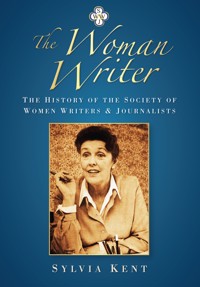
Since its creation in 1894 by Joseph Snell Wood, the Society of Women Writers & Journalists has attracted the company of many famous women writers, journalists, poets and playwrights. From its early days when at least 200 women applied to join, the Society has expanded to become a world-renowned body, with members both in the United Kingdom and abroad. To celebrate the centenary of the birth of the SWWJ's much-loved President of twenty-two years, Joyce Grenfell, the Society's archivist, Sylvia Kent, reveals the long and fascinating history of the Society. Not only is the evolution of the Society fully explored, but also the lives of many of its members have been thoroughly researched to paint a vivid picture of how the Society has gone from strength to strength. Accompanied by images of the Society's members, both past and present, this book will interest not only members of the SWWJ, but is a must-read for women writers everywhere.
Sie lesen das E-Book in den Legimi-Apps auf:
Seitenzahl: 210
Veröffentlichungsjahr: 2009
Das E-Book (TTS) können Sie hören im Abo „Legimi Premium” in Legimi-Apps auf:
Ähnliche

















The Woman Writer
THE HISTORY OF THE SOCIETY OF WOMEN WRITERS & JOURNALISTS
The Woman Writer
THE HISTORY OF THE SOCIETY OF WOMEN WRITERS & JOURNALISTS
SYLVIA KENT
Love to Peter, Sally and Jennifer for their support.
First published 2009
The History Press
The Mill, Brimscombe Port
Stroud, Gloucestershire, GL5 2QG
www.thehistorypress.co.uk
This ebook edition first published in 2013
All rights reserved
© Sylvia Kent, 2009, 2013
The right of Sylvia Kent to be identified as the Author of this work has been asserted in accordance with the Copyright, Designs and Patents Act 1988.
This ebook is copyright material and must not be copied, reproduced, transferred, distributed, leased, licensed or publicly performed or used in any way except as specifically permitted in writing by the publishers, as allowed under the terms and conditions under which it was purchased or as strictly permitted by applicable copyright law. Any unauthorised distribution or use of this text may be a direct infringement of the author’s and publisher’s rights, and those responsible may be liable in law accordingly.
EPUB ISBN 978 0 7509 5262 0
Original typesetting by The History Press
Contents
Acknowledgements
Introduction
one
Early Days
two
A New Century
three
Joyce Grenfell
four
The Woman Writer
five
Overseas Members
six
Country Forum
seven
Associations
eight
Broadcasting
nine
Diversity
ten
SWWJ Competitions
eleven
Drama
twelve
Poetry
thirteen
Periodicals
fourteen
The War Years
fifteen
Special Occasions
sixteen
Society Pioneers
seventeen
Notable Contributors
eighteen
A Changing World
Bibliography
Acknowledgements
My special thanks to Valerie Dunmore, Frances Clamp, Jean Bowden, Pat Alderman, Jean Morris and Jean Marian Stevens for their time and support. Thanks also to Dame Frances Campbell-Preston, Lady Susan Hussey, Janie Hampton, Verily Anderson and Elizabeth Hart. Appreciation to Nigel Roche, librarian at St Bride Library, London; the British Museum Library; the London Library; the Women’s Library; Chris Brewster of the Cater Museum; Stationers’ Hall archivist; the London Press Club; The Lady staff, the archivist at The Stage; Dr Carl Spadoni at McMaster University Library, Ontario; the archivist at Lucy Cavendish College, Cambridge University, and the archivist at Swanwick Summer School.
Every effort has been made to trace ownership of photographs and to check that the facts given in this book are correct. Unless otherwise stated, all illustrations come from the archives of the Society of Women Writers & Journalists. My apologies for any unwitting errors or omissions.
Introduction
Since its creation on 1 May 1894, the Society has attracted the company of many of the world’s most famous women writers, journalists, poets, playwrights and associated creative people involved in the wider world of literature, film, music, theatre and entertainment.
Sadly, space constraints do not allow inclusion of every member. However, as the Society is expanding year by year and with such a long and fascinating history, it was felt important for posterity that as much as possible be recorded in one place.
This is an important year in the annals of the Society. Although Centenary celebrations took place with great gusto in 1994, 2010 is special, as it marks the centenary of the birth of one of our most notable Presidents – Joyce Grenfell.
Joyce often said that she loved being our President. Although extremely busy with her successful career, she always found time for us. Her work in the theatre, film, radio, writing, television programmes, and the inevitable touring, was all-absorbing, yet she took time to write to us from all over the world and somehow managed to attend prize-giving celebrations, chair AGMs and write articles for The Woman Journalist.
At the start of these chronicles, Council would like to offer warmest appreciation to their Life President, President and Patrons who support the Society in every possible way.
•Baroness Williams of Crosby has been our Honorary Life President since May 2003. Society members welcomed her following the death of Lady Longford the previous year. Shirley Williams, as she is better known, has a strong family tie with the Society. Her mother, Vera Brittain, was the Vice-President and then Life President until her death in 1970. Baroness Williams entered Parliament in 1964, served in the Cabinet and has held numerous high political appointments. With an impressive list of honorary doctorates, she has held high academic positions, including Honorary Fellow of Somerville College, Oxford, from where she graduated in 1948.
SWWJ Life President Shirley Williams, Baroness Williams of Crosby.
Joyce Grenfell with theatrical friends. From left to right: Joyce Grenfell, Val Gielgud, Dame Sybil Thorndike, Rosalind Wade, Robert Harris, Mary Wimbush and Sir Lewis Casson. Country Members’ Day, 1966.
•Nina Bawden became President in 1980, following in the footsteps of Joyce Grenfell. Nina’s writing career spans more than fifty years, during which she produced more than twenty adult novels and seventeen books for children. All writers owe a debt to Nina and her colleagues on the Public Lending Rights team. She mentions the Society in her autobiography In My Own Time (Virago Press). This was chosen by P.D. James (Daily Mail), Jill Paton Walsh (The Sunday Express) and David Holloway The Daily Telegraph) as ‘Book of the Year’ and is a beautifully written account of her life.
•Lady Edna Healey has been our Patron since 1998. She read English at Oxford where she met her future husband, later Lord Denis Healey, moving to Keighley, Yorkshire, and Bromley, Kent, to teach during the Blitz. She has made two documentary films for Scottish Television and is the author of a number of best-selling biographies. Lady Healey has lectured extensively both in Britain and abroad and travelled widely with her husband. She enjoys helping local writers and has supported the Society in every way. She herself began writing at sixty and feels at this time of life people have both the energy and experience to make a serious contribution to contemporary writing.
•Lord Randolph Quirk became a Patron of the Society in 1995 and is a Fellow of University College London. As Professor of English Language and Literature, he is also a Trustee of the Wolfson Foundation. One of Lord Quirk’s favourite enterprises was the ‘London University Summer School of English’ which was immensely successful. He initially became involved with the Society during its Literacy Campaign in 1994 and has since supported every project involving children’s education. His loyal support is invaluable.
•Alexander Macmillan, the 2nd Earl of Stockton, became a Patron in our Centenary year in 1994. He inherited his title in 1986 on the death of his grandfather, Harold Macmillan, the former British Prime Minister. Lord Stockton has had a distinguished career in publishing and is President of the Macmillan Publishing Group. He has a long record of helping to further the cause of literacy and has always supported the Society in its educational endeavours. Lord Stockton has always taken a keen interest in the Society and we are delighted to have his valuable support.
•Sir Tim Rice joined us as a Patron in 1995 and is a good friend to the Society. His mother Joan was our much-loved Vice-Chairman during the early 1970s. Sir Tim is an Oscar-winning lyricist known worldwide for his versatile and prolific work. Together with Andrew Lloyd Webber, he broke box office records around the world with three of the greatest musicals of the twentieth century, Evita, Joseph and the Amazing Technicolor Dreamcoat and Jesus Christ Superstar. He first became involved as our Guest of Honour at the ninety-fifth anniversary in 1989 and has since attended many of our celebrations and special Summer Festivals.
Lady Healey and former Chairman Beryl Cross.
SWWJ Patron Sir Tim Rice and Honorary President Nina Bawden.
one
Early Days
Fleet Street in the 1890s
Although the Society of Women Journalists was created very much with women in mind, the concept was the brainchild of a man – a clever, enterprising newspaperman – Mr Joseph Snell Wood. The year was 1894 and this wealthy, charismatic forty-one-year-old was at the height of his career. Bustling Fleet Street was his domain, lit at dusk by gas lamps, where he dodged ‘growlers’ and horse-drawn hansom cabs, trying to make himself heard against the incessant thumping from huge newspaper presses deep in the basements of London’s national ‘dailies’ which competed with the clatter of horses’ hooves on the cobbles.
Mr Snell Wood knew the newspaper world well. He appears to have had an affable disposition. He was on good terms with everyone, from the cream of aristocracy to the copyboy in his own newspaper office. He had been the Managing Director of The Gentlewoman, a best-seller since the early 1890s, and he knew what would interest the upper-class woman. As Director of The Daily Graphic and The Bystander, employing several females on his staff, he seems to have been a fair-minded employer with good rapport and understanding of the difficulties that the ‘New Women’ – those females desiring a career in hitherto masculine jobs – were experiencing.
Clubland in the last quarter of Queen Victoria’s reign was part of the upper crust’s social life. Men’s clubs proliferated in the world of newspapers. There were certainly plenty of them around Fleet Street, along with chop houses such as the Cheshire Cheese, made famous a century earlier by Dr Samuel Johnson, restaurants and pubs, such as El Vino’s, and small beerhouses nestling around Paternoster Row.
The Society’s founder, Mr Joseph Snell Wood.
The Gentlewoman, owned by Mr Snell Wood, one of the most popular periodicals from its launch in 1890. This edition dates from the birth of the Society.
Upper-class women also had their clubs. These, though, were mainly of a social, religious or charitable nature. The Primrose League – the women’s Conservative organisation – was popular, along with several emerging political groups dedicated to obtaining votes for women. A few years after the Society was founded, Millicent Fawcett, sister of Elizabeth Garrett Anderson (the first woman doctor), formed the National Union of Women’s Suffrage Societies. This brought together, under a national umbrella, all the associations that had fought for votes for women.
Women with a predilection for writing presumably already knew of Frances Low’s association, formed in 1891, for both sexes, simply called the Writers’ Club. This talented woman came from a hard-working journalistic family. Her sister, Florence, was already working as a reporter and their brothers, Maurice and Sidney Low, were both known for their excellence in Fleet Street. Both received a knighthood in 1918 for their services to journalism. Their publication, Press Work for Women: A Textbook For the Young Woman Journalist in 1904, was obviously popular with women writers.
Frances had brought together the well-known socialite and journalist Lady Jeune and her friend Princess Helena (third daughter of Queen Victoria). The famous Mrs Arthur Stannard – better known as John Strange Winter – was also an enthusiastic advocate. She hired premises at Hastings House, Norfolk Street, just off the Strand. The club premises then moved to Granville House, Arundel Street, just around the corner.
The beautiful Lady Jeune brought a considerable number of her friends – men and women – to the Writers’ Club. These included Thomas Hardy, Madame Sarah Grand, Mrs Humphry Ward, and others who were well-known writers of the time. The Hastings House premises comprised a suite of rooms which included a large drawing room, furnished simply, with an adjacent ‘silence’ room for writing purposes, a comfortable dressing room and offices. Tea and luncheon were served there, perfect for the ‘At Home’ rituals that the leisured upper-classes seemed to enjoy at the time.
Although the Writers’ Club seems to have been successful as a social organisation, something along more professional lines for woman journalists was needed. This is where Mr Snell Wood came into the story. As a good friend of Lady Jeune, who was making a name for herself contributing to numerous periodicals during the early 1890s, Joseph warmed to the idea of a specialist writing society purely for professional women journalists. At the time they were unrepresented by unions. He felt they should have stronger protection of their rights and aims; assistance in finding work with publishers and agents; and also have the benefit of a solicitor, a private doctor, an oculist and (for some reason) a rhinologist, Dr Octavia Lewin. Eventually, when the positions were established, members enjoyed these free advantages during the following sixty years.
1 May 1894 was the day chosen by Mr Snell Wood to introduce his Society of Women Journalists to the world. There is no doubt that he was regarded as a publishing genius, interested both in the proprietary and in the practical management of the daily and weekly press. Entrepreneurial skills were inherently part of Mr Snell Wood’s character – this was obvious even from a young age. Born in 1853, he was an exceptional organiser. Before he was even thirty, he had created ‘The Olde English Fayre’ and the Shakespearean Show at the Royal Albert Hall. These highly original social adventures created huge public interest at the time, raising more than £10,000 for the Chelsea Hospital in the form of the Chelsea Arts Ball, which was held annually thereafter at the Royal Albert Hall until the 1950s.
Mr Snell Wood also raised £250,000 – a huge amount at the time – for other charitable enterprises, such as Queen Alexandra’s appeal for widows and orphans in the Boer War. He was a well-known and respected man in Court circles, being invited in 1901 to become a member of the Organising Committee for raising the Coronation Gift to King Edward VII. He continued his philanthropic work right up until his death in 1920. His granddaughter, Daphne Wood, always a friend of the Society, became a Vice-President in 1984 and attended the Centenary lunch in 1994. She died in January 2009.
Membership Increases
One of Mr Snell Wood’s colleagues was Mr Vavasour Earle, Manager of the London Shoe Company, a friendly man who had generously offered a suite of rooms to the newly-created Society. The address at 116 New Bond Street in London’s West End was perfect. Mr Earle arranged for the premises to be redecorated and made ready for the arrival of the ladies. Great excitement greeted the launch, which was mentioned in many of the daily newspapers and in Court Circulars.
During the first few months of the new Society’s life in the summer of 1894, 200 women applied to join, paying a subscription of 1 guinea (£60 in modern currency). These members included many from the already established Writers’ Club and from the Institute of Journalists which had been founded in 1882 and which boasted sixty-five paid-up female members at this time. A telegraphic address was raised for the Society and appropriately registered as ‘SCRIBENDO’. Now the Society was in business! Mr Snell Wood was delighted, and made the following pledge to them:
I give you my promise to act as your Honorary Organiser in the direction of its affairs, and not leave it till it has become something more than an ordinary success, and I will bear the preliminary expenses until it is regularly constituted and in working order. One of its chief aims is the cultivation of friendly relationship with employers, so that it may become a centre of information to which Editors and Publishers will apply when needing the services of clever and capable women writers and artists.
Victorian woman writers. There were numerous woman freelance writers at the time the Society began in 1894. Some worked for Mr Snell Wood on The Gentlewoman.
He was true to his word. For the first three years of the Society’s existence, he did just that – endorsing his promise to the letter, paying initial set-up costs, providing advice and generously helping with contacts and introductions. A well-known and influential man in Fleet Street, he opened many doors for members of his fledgling society. The members responded to Mr Snell Wood’s generosity by presenting him with a silver punch bowl.
The First Council
How we would love to see those first meeting minutes and correspondence, but so much of the Society’s earliest archives have been lost in fires, floods and during several wars. However, there is much interesting information in the few precious minute books and early copies of The Bureau Circular, the forerunner of The Woman Journalist, later The Woman Writer, magazines.
An unexpected source has come, surprisingly, from the Internet. Much information has been lodged in the form of university Women’s Studies courses around the world and these, added to private letters, diary extracts and long-standing members’ memories and anecdotes, have helped considerably in discovering a veritable treasure trove of history. We are able to glimpse just a little of the pioneering spirit of those earlier members.A General Council was appointed during that first year. Many of the leading woman writers of the time were invited to join, the majority being journalists.
Mrs Pearl Craigie, the American-born novelist whom Mr Snell Wood approached to become the Society’s first President. She was succeeded by Mrs Charlotte Eliza Humphry.
Fanny Strutt-Cavell in 1911, a member of the first SWWJ Council.
From the first official report dated 1895-96, we learn that Mrs Pearl Craigie (1867-1906) better known under her pseudonym, John Oliver Hobbes, was the Society’s first President. Mrs Craigie, an American-born writer, had become a household name in the years leading up to the 1890s. Charlotte Eliza Humphry (1851-1925) also joined and there were no less than twenty-five Vice-Presidents, including Marie Louise Belloc Lowndes (sister of Hilaire Belloc). Mrs Jack Johnson, who wrote under the pseudonym of Levana in The Gentlewoman, became the Society’s first Honorary Secretary.
Among the Vice-Presidents chosen by Mr Snell Wood were Mlle de Bovet, a leading writer at Figaro, Mrs Clarke of The Lady, Mrs Talbot Coke of Hearth and Home, Lady Colin Campbell of The World, Mrs Humphry of Truth Magazine, Miss Hamm of the Daily Mail and Express based in New York, Mrs Panton of The Gentlewoman and Mrs Elizabeth O’Connor, wife of one of the most powerful men in the late Victorian newspaper world, Thomas Power O’Connor MP, whose bust still dominates the corner of Fleet Street today. Not part of Council, but very much involved with the Society, was Lady Jeune, who had helped establish the Writers’ Club and was very much a celebrity as a novelist and much sought-after journalist. At the start of the twentieth century, twenty-six men, many of them distinguished Fleet Street editors, were listed as Honorary Members.
The first Annual Report of Council stated:
Your Council is more than grateful to report that the project set forth, in the Foundation Scheme in February 1894, has been realised even beyond what has been anticipated.
Suffragettes on the march in London, 1908.
Former President Madame Sara Grand (front row, centre) with writing colleagues.
Chairmen and Council members were elected annually during those formative years. Mrs Charlotte Eliza Humphry followed Pearl Craigie. She was well-known as ‘Madge’ of Truth Magazine.
Along with the changing officers of Council, four positions rarely altered. These were the Hon. Physician, the Hon. Oculist, the Hon. Rhinologist and probably the most important, from a writers’ professional point of view, the Hon. Solicitor, the last one being Mr Stanley Evans.
Three years after the Society of Women Journalists was formed, Lady Colin Campbell (1853-1911), one of the original Council members, wrote an interesting pamphlet that gives us an indication of the difficulties that female journalists were encountering at the end of the nineteenth century which, even today, seem strangely familiar:
As it seems that there is a good deal of ignorance and misapprehension existing with regard to the ends and aims of the Society of Women Journalists, I have been asked to set forth briefly the reason why it was called into existence, and the advantages which membership confers upon women journalists. This is above all, an age of combination. Aesop’s fable of the bundle of sticks has its wisdom illustrated daily on all sides; but until the year 1894, the large and increasing band of women writers on the daily and weekly press were simply units – often dissentious units I regret to say – to whom the power to be gained by association had never been revealed.
When the original rules of the Society were drawn up in the 1890s, the founder declared that politics and religion were best avoided in the running of the organisation, a difficult stance for the numerous members involved in writing for London newspapers. However, most appear to have adhered to his wishes, leaving political views at home. However, some of the pioneers had links with Parliament – in quite different ways.
During the last years of the nineteenth century, we know that several members were keen on taking up the Women’s Suffrage cause, yet incongruously, Council members rarely seemed to discuss national current affairs, let alone allow them to be minuted. Within the few Council minute books that are in the archive, we do know that Mrs Charlotte Despard had asked two members to put her up for election to the Society. The year was 1911 and Council members were aware of Mrs Despard’s notoriety from the days of the London Mud March when she had led the 3,000-strong parade of women from Hyde Park Corner in February 1907. She later became leader of the Women’s Freedom League. Needless to say, the Society must have allowed her entry as her name appeared in the membership book of 1913, which exists in the archives.
It is strange to read that although the Society President in 1908, Mrs Humphry Ward, was a keen advocate of women’s social and municipal work, she was a leader of the Anti-Suffrage movement. As thousands were working for the enfranchisement of women, she sincerely believed this to be wrong. It seems impossible that a woman of her intellect and interests wished to withhold the Parliamentary vote for women. When her year as President was completed, she was succeeded by Mrs J.R. Green (Alice Stopford Green) the wife of the historian, a passionate Irish nationalist. She moved from her London home in Kensington Square in 1918 and lived the rest of her life in Dublin.
two
A New Century
The Society was approaching its seventh birthday when Queen Victoria died on 22 January 1901. She had ruled her nation for almost sixty-four years, yet it seems strange that the status of women and the quality of elementary children’s education were abysmal. Throughout her far-flung empire, women generally had benefited in only a very small measure from having a woman in so prominent a position.
Early in 1901, greetings from Theodore Roosevelt, the President of the United States, were sent to King Edward VII of the United Kingdom, marking the first transatlantic radio transmission originating in the United States. So began Edwardian Britain, a decade which was described by Lord Hattersley as ‘a golden sunlit afternoon – personified by its genial and self-indulgent King’. The period between Queen Victoria’s death and the outbreak of the First World War appears to have been a remarkable watershed in British history. The Edwardians witnessed huge changes on every level in the world around them.
As the twentieth century opened, in every sphere of life – education, employment, marriage, finance, legal and political rights, inheritance, social status – women knew they had a long way to go before they could be said to be equal to men. The thorny topic of equal pay was uppermost in the minds of professional women – and unfortunately this continues a century later.
Although little is mentioned in the Society meeting minutes, we are able to catch up on world events through private letters, diaries and archival notes. Two national events were mentioned as affecting the social and financial side of the Society, both of which give interesting glimpses into the background of contemporary life and times. One was the sudden cancellation of a party owing to the postponement of Edward Vll’s Coronation. Another was the mention of the resignation of several members ‘who owing to the bad times occasioned by the war’, found they were unable to pay their subscriptions. This almost casual note brought the terrible effects of the Boer War closer to home.
Mr Snell Wood, as a leading Fleet Street newspaper editor, was on good terms with many of the leading politicians of the day and it was he who invited some to take an interest in the Society. Several did, and became Honorary Members and Patrons. Often their wives took membership and their names appear in the early journals. This was useful from a publicity viewpoint, as Society events were often mentioned in Westminster and Court Circle reports. The Cholmondeley Room in the House of Lords was used occasionally for special celebrations and meetings.




