


14,99 €
Mehr erfahren.
- Herausgeber: Plexus Publishing Ltd.
- Kategorie: Sachliteratur, Reportagen, Biografien
- Sprache: Englisch
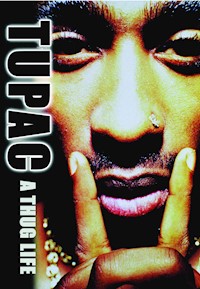
Tupac Shakur is not just a posthumous hip-hop icon. In the years since his September 1996 murder, he has attained a status that led some to coin him 'the Black Elvis'. More successful as a recording artist than at the active peak of his career, his posthumous albums continue to sell in massive quantities around the world. His cultural importance is reflected in a 'Tupac's not dead' myth - the first time a black performing artist has been mythologised on the level of a Presley or a James Dean. Crucial to the iconic appeal of Tupac is the mass of contradictions that define him: the macho gansta-rapper who eulogised the 'thug life'; the erudite young man who hoped for a political and spiritual awakening among his peers; the sexually insatiable star who served a prison term for sexual abuse of a young woman fan; the sensitive son of a politicised single mother, who recorded a sympathetic pain to women. A Thug Life explores all these contradictions, alongside every other aspect of Tupac's life and career. Compiling interviews, articles, reviews and essays on rap music's enduring icon, this extensively illustrated anthology is divided into five distinct sections, covering his early life, his music, film and the dark side of his life - the flirtations with gang culture, accusations of forcible sodomy and rape, his lucky escape from death after a 1994 shooting, and his accusations against former friend, the Notorious BIG, that fuelled the East-West Coast rap wars. The final section examines the murder of Tupac one September night in Las Vegas, and the conspiracy theories it fuelled. Interview transcripts are included of Death Row Records boss Suge Knight, talking of how Shakur died in his car, and Afeni Shakur, describing her legal action against the young gang member she blamed for her son's death - which was halted with the suspect's own shooting.
Das E-Book können Sie in Legimi-Apps oder einer beliebigen App lesen, die das folgende Format unterstützen:
Veröffentlichungsjahr: 2019
Ähnliche



















CONTENTS
Foreword by Kris Ex
Part One – Panther Baby
Bury Me Like a ‘G’ by Kevin Powell
An Interview with Tupac’s Mom by Davey D
The Music is the Message by Bronwyn Garrity
My Brother by Benjamin Meadows-Ingram
On the Line with . . . 2pac Shakur – The Lost Interview by Davey D
Asking for It by Michael Small
Part Two – Hit ’Em Up
Violence is Golden by Danzy Senza
Dreaming America by Daniel Smyth
Thug Life by June Joseph
Q&A with Tupac Shakur: ‘I Am Not a Gangster’ by Chuck Philips
Interview on The Westside Radioshow by Sway
Have Gun Will Travel by Ronin Ro
Part Three – A Black De Niro?
King of Stage by Joshua Rubin
Conversations with Tupac by Veronica Chambers
Juice review by Roger Ebert
Poetic Justice review by Roger Ebert
Above the Rim review by Chris Hicks
Got Your Back by Frank Alexander
Bullet review by Micah Robinson
Rebel for the Hell of It by Armond White
Gridlock’d review by Roger Ebert
Gang Related review by James Bernardinelli
Part Four – A Thug Death
The Living End by Frank Williams
All Eyes on Him by R. J. Smith
The Day After Tupac Shakur Died by Amy Linden
Easy Target: Why Tupac Should Be Heard Before He’s Buried by Mikal Gilmore
Rap Wars: Did the Violence Claim Another Life? by Dana Kennedy
The New Tupac Fans by Ruby Bailey
Deadly Business by Dana Kennedy
The Tupac Shakur Murder Investigation: One Year Later Still No Arrests by Bryan Robinson
Dead Poets Society by Cathy Scott
Who Killed Tupac Shakur? by Chuck Philips
Who Killed Tupac Shakur?: Epilogue by Chuck Philips
Dead Men Tell No Tales: Of Revelation and Speculation in the Los Angeles Times Biggie and Tupac Story by J. H. ‘Tommy’ Tompkins and Johnny Ray Huston
Interview with Suge Knight by P. Frank Williams
Biggie & Tupac (Remix): Nick Broomfield Imitates Life Imitating Art by Ernest Hardy
Part Five – Tupac Resurrected
Jackin’ Beats by Veronica Lodge
Who Stole Tupac’s Soul? by Allison Samuels
A Rose by Any Other Name: The Rose that Grew from Concrete Review by Theresa Micalef
For Heaven’s Sake by Soren Baker
Eternal Truths and Dead Pop Stars by Frank Ahrens
All Oddz on Me: Think You Know Who Killed Tupac? Wanna Bet? by Jordan Harper
Hood Scriptures by Kris Ex
Hip Hop Requiem: Mining Tupac Shakur’s Legacy by Neil Strauss
Tupac Resurrection by Rita Michel
Tupac’s Book Shelf by Mark Anthony Neal
The Tupac Uprising: Outlaws with a Cause by George Wehrfritz
Symposium Analyzes, Celebrates ‘Thug’: Legendary Tupac Shakur Looked at as Cultural Artifact, Force by Ken Gewertz
G.O.A.T. by Kris Ex
Tupac Shakur’s Legacy by Lucy Morrison
Tupac’s Continuing Career: A Matter of Grave Importance by John Jurgensen
Contributors
Acknowledgements
Copyright
FOREWORD
by Kris Ex
‘Hip-hop ain’t been the same since Tupac moved to Cuba on us.’
– Eminem, ‘Fubba U Cubba Cubba’ (2005)
When I first heard that Tupac Shakur had been shot (the first time, that is), I was busy doing something that is part of a whole other tale altogether. The important thing is that I received a page on my beeper. It was a friend’s code, three times, with a ‘911’ at the end. I ran to a payphone and called him.
‘Yo, you hear what happened to your man?’
‘Who?’
‘Tupac . . . he got shot.’
I thought it was some kind of joke, but my friend said, ‘You ain’t see the paper? It’s on the front page of The Post.’
‘Get the fuck outta here . . . He alright?’
‘That nigga’s crazy. He’s stickin’ his middle finger up at the camera as they put him into the ambulance. How you ain’t see the paper?’
(As I said, that’s a whole other tale.)
We laughed at ’Pac’s madness for half a second, then I cut the convo short and made another call to a friend who I figured would have proximity to the situation: ‘Niggas shot ’Pac?’
‘Yeah,’ he said. ‘Everything they saying in the news is true, but there’s more to it than that. I’ll tell you about it later. I’m still getting the story. It’s crazy.’
Later that night, and over the next few years, I would find out more details about what took place in New York City’s Quad Studios on that November 30, 1994. Some of it would be through official accounts like the ones collected in this book, many of them would be through urban legends and street palaver, and a handful would be from players interwoven into his legacy through threads unseen by most and acknowledged by few. Much of it would be contradictory, with various sides claiming innocence while others accepted responsibility.
Such was the power of Tupac Amaru Shakur. His life and art, then and now, was able to transcend worlds and resonate and connect with political organizers, street thugs, certified gangsters, casual music listeners and die-hard hip-hop fans. He was a thug, a revolutionary, a brother, a leader, a hope that inspired and protected, even as we, the mere men and women who knew we were witnessing a force majeure in human form, felt an instinctive need to protect him, sometimes from himself.
When I first heard that Tupac Shakur had been shot (the second time, that is), I was hungover. My brother had come over and after admonishing me for being asleep at two in the afternoon, told me that ’Pac had been shot. My reaction was much like that of the Notorious B.I.G.’s:
‘Again?’ I chuckled. My first thought was that he had been shot in the leg or some place free of vital organs. The idea of any true harm coming to ’Pac didn’t exist in my world.
‘Nah, bruh,’ my brother said. ‘It looks bad. Shit is all on the news.’
I looked at the television set, cold and at rest. I was scared to turn it on. It wasn’t until my brother left that I would see the bulletriddled BMW, realize that my pager had been going off all night, see that my answering machine was blinking with thirteen messages. Thirteen. It’s an unlucky number for some, but for me it’s always been about the completion of a cycle and the start of a new one. I knew it was an omen. But unsure of what kind.
On September 13, 1996, I was on my way to a celebrity-studded concert starring D’Angelo, the man who was single-handedly bringing a style of music dubbed ‘neo-soul’ to the forefront of the American psyche. I was meeting a friend in Bed-Stuy, Brooklyn, and had to pass the childhood home of the Notorious B.I.G. on my way. When I emerged from the train station, there was quiet in the air, as if the ability to speak had been removed from the atmosphere, leaving only silence in its void. There was no grief, no emotion, just barren space where dice games, gossip, cat-calls and music once permeated the hood’s consciousness. It was like watching a movie without a score – something was missing.
When I got to my friend’s house, she opened the door: ‘Did you hear?’
‘Yeah,’ I said. But I had never actually heard. And we never actually said it. We just smoked a few joints, circled the truth in tangents, and then drove to the concert without the radio on. It wouldn’t be until we were on line for the performance that it would be said. A news crew, jockeying for reaction from the people, shoved into my face and asked, ‘What do you think of Tupac Shakur?’
‘I think he’s dead,’ I said. Then I walked away.
Almost a decade later, we’re still trying to make sense of it. What you hold in your hands stands apart from the pantheon of books on the life of Tupac Amaru Shakur. This is a chronicle from many angles – from those of us who knew him, those of us who championed him, those of us who tried to figure him out, those of us who gave birth to him, and, blessingly, from those of us who actually were Tupac Shakur.
There’s not much that I can say here that is not covered within these pages. This collection is culled from observations of the man as he lived and breathed, conversations with him as he spat fire and spoke truth to power with amazing clarity and befuddling badassness, there are words here wrought with the pain, confusion and shock which overtook us in the aftermath of his passing. There are shadows of his greatness at every turn. The only thing missing is the man himself, telling us that he is, indeed, alive and well. Because, while he continues to be a beacon for countless emcees and his life continues to inform black men as to how to feel about their communities, Tupac Shakur is dead. Even as he lives on, we know he is dead. We may wish to believe, in spite of the facts, that he is in Cuba, protecting Assata Shakur, even as she protects him, but he is not. He is dead. Tupac: A Thug Life celebrates his life and his passing. Join us as we offer tribute to a thug immortal.
kris exBrooklyn, New York, 2005
BURY ME LIKE A ‘G’
by Kevin Powell
At 4.03 p.m. on September 13, 1996, Tupac Amaru Shakur, rapper and actor, died at the University of Nevada Medical Center in the Wild West gambling town of Las Vegas, the result of gunshot wounds he had received six days earlier in a drive-by shooting near the glittery, hotel-studded strip. Shakur, a.k.a. 2Pac, was 25. The rapper is survived by his mother, Afeni Shakur, his father, Billy Garland, and a half sister, Sekyiwa.
The official cause of Shakur’s death was respiratory failure and cardiopulmonary arrest, according to a medical-center spokesman. At press time, the police still had no suspects and no leads in the September 7 shooting and were having a difficult time getting witnesses to cooperate in the investigation. ‘The only evidence we have is the number of rounds fired and the physical evidence,’ said Sergeant Kevin Manning of the Las Vegas Metro Police Department’s homicide unit, ‘and we can’t reveal that.’
Another officer, however, offered his own theory about the shooting. ‘In my opinion, it was black-gang related and probably a Bloods-Crips thing,’ says Sergeant Chuck Cassell of the department’s gang unit. ‘Look at [Shakur’s] tattoos and album covers – that’s not the Jackson Five . . . . It looks like a case of live by the sword, die by the sword.’
At the time of Shakur’s death, his fourth album, All Eyez on Me, was Number 65 on the Billboard Top 200 chart and had sold nearly three million copies, according to the Recording Industry Association of America; his previous release, 1995’s Me Against the World, sold two million copies. In addition to making music, Shakur was also an actor. He appeared in three movies: Juice (1992), Poetic Justice (1993) and Above the Rim (1994). When he died, he had recently completed two new films, Gridlock’d and one tentatively titled Gang Related, in which he plays a detective.
Shakur, whose songs often detailed the misery, desperation and violence of ghetto life, grew up a troubled and sensitive child, living with his family in one inner-city community after another. Along with his millionselling albums and massive following, the rapper had often come under fire in his professional life for his offstage behavior. Since 1991, Shakur had been arrested eight times and served eight months in prison for a sexual-abuse conviction. He was the subject of two wrongful death lawsuits, one involving a six-year-old boy who was killed in Northern California after getting caught in gunfire between Shakur’s entourage and a group of rivals.
Four days after Shakur’s death, his father, Billy Garland, told Rolling Stone in an exclusive interview that he wanted people to focus on the rapper’s accomplishments. ‘My son is dead, and he don’t deserve to be talked about like some common criminal,’ he said. ‘He wasn’t perfect, but he did do some great things in a little bit of time.’
The events leading up to Shakur’s shooting remain sketchy, but this much is known: On September 7, he attended the Mike Tyson/Bruce Seldon fight at the MGM Grand Hotel with 31-year-old Marion ‘Suge’ Knight, the CEO of Shakur’s label, Death Row Records. At 8.39 p.m., less than two minutes after it had begun, the boxing match was over when Tyson knocked out Seldon. At about 8.45, according to the Las Vegas Metro Police, Shakur and other members of the Death Row entourage – which reportedly included several bodyguards – got into an argument with a young black man while leaving the event. The quarrel escalated into a fight in which either Shakur or members of the entourage knocked the young man to the floor and began kicking and punching him; the altercation was captured by an MGM Grand security camera. The hotel’s security staff quickly rushed in and broke up the squabble, and the Death Row entourage left the building at about 8.55. Shakur and the entourage then stopped by the Luxor Hotel on the Las Vegas Strip for reasons the police have yet to determine. Shortly thereafter, they drove to Knight’s home in southeast Las Vegas. While there, they changed clothes for a highly publicized anti-gang youth event put together by a Las Vegas Metro Police officer. The event was to be held at Knight’s Club 662 (which spells out ‘MOB,’ reputedly for ‘Members of Bloods,’ on a telephone pad), located at 1700 E. Flamingo Road.
About two hours passed before Knight, driving his black, tinted-window BMW 750 sedan with Shakur in the passenger seat, was back in downtown Las Vegas, headed east on Flamingo Road near the intersection of Koval Lane. Directly behind them was a parade of about ten other vehicles that were part of Death Row’s entourage. At about 11.15, according to the police and witnesses, a white, four-door, late-model Cadillac with four people inside pulled up beside the BMW, and a volley of about thirteen gunshots from a high-caliber handgun ripped into the BMW. Four bullets hit Shakur (who usually wore a bulletproof vest but did not have one on at the time of the shooting). Some reports suggest that the Death Row entourage returned fire. Immediately after the shooting, the Cadillac fled south on Koval. Knight, who had been grazed by bullets, made a U-turn from the eastbound left lane of Flamingo and headed west at a high speed toward Las Vegas Boulevard, away from the nearest hospital. Meanwhile, two patrol officers on an unrelated call at the nearby Maxim Hotel had heard the gunshots and called for backup. Two other officers followed Knight’s BMW, which took a left turn on Las Vegas Boulevard South, and stopped the car, with two flat tires, at the intersection of Las Vegas Boulevard and Harmon Avenue. Upon discovering that Shakur and Knight needed medical assistance, the officers called an ambulance, which transported the two victims to the University of Nevada Medical Center.
At the hospital, Knight was treated for minor injuries to his head and released; Shakur, who had received two bullets to his chest, was admitted and listed in critical condition. During the following two days, the rapper underwent two operations, including one to remove his right lung and to stop internal bleeding. To take pressure off his badly damaged body, doctors placed Shakur in a medically induced coma and on a respirator. Shakur died on September 13; his family had his body cremated and held private services for the rapper in Las Vegas the following day.
In the six days following the incident, rumors flew about who was responsible for the shooting. Some observers within the music industry, who spoke only on the condition of anonymity, have suggested that the young man with whom Shakur and the Death Row entourage had scuffled at the MGM Grand shot Shakur and Knight. According to Sergeant Manning, the police ‘determined that the individual in question could not have possibly followed Shakur because the man was being questioned by MGM security as the Death Row entourage was leaving the hotel.’ The police never filed a written report on the scuffle, and the videotape, Manning said, is not considered evidence and will not be released to the media. ‘We have no idea who he was,’ Manning said. Asked if that was normal police procedure, Manning said it was ‘not abnormal.’
A second theory put forth by people in the industry and on the streets in the days following the shooting is that Knight, who has been associated with the Los Angelesbased street gang the Bloods and who has a great fondness for the gang’s color, red, had been the actual target of the shooting. That theory is unlikely, considering that all of the shots were aimed at the passenger seat of Knight’s car. In the week following the shooting, a Los Angeles police officer reported that three members of the Crips, a rival gang of the Bloods, had been found dead in the Los Angeles suburb of Compton, Knight’s home turf. Compton Police Department Captain Steven Roller, however, would not confirm the gang affiliation of the three dead men. ‘That quote from the L.A. police is like a cop from Boston commenting on a homicide in New York,’ he said. ‘There is no correlation to the Tupac murder.’
According to the Las Vegas gang unit, several gangs, among them the Bloods and the Crips, have proliferated in the city during the last few years. The gang unit’s Cassell credits this to a gang migration from California dating back to the early 1980s. The weekend of the Shakur incident, Cassell says, six other drive-by shootings occurred, four of which were connected to Hispanic gang activity; none has been linked to the Shakur murder. ‘Gangs are a serious problem in Las Vegas,’ says Cassell. ‘We call it disorganized crime. Everything they do seems random, but they are very powerful and violent.’
A twist on the gang theory is that Shakur may have been killed as a warning to Knight. Often, according to sources, rival criminals will execute individuals who are valuable to their foes in retaliation for wrongdoings. Knight is indeed no stranger to crime. In 1992, he was put on probation in Los Angeles after he was convicted for assault with a deadly weapon; he had also received three years’ probation in Nevada for transporting weapons across the state line. Last year, Knight was given a 30-day jail sentence for conspiracy to commit a drug-related offense. According to a September 25 New York Post report, the FBI is investigating Death Row Records for alleged organizedcrime connections.
A third theory for the Shakur shooting, which doesn’t seem to hold a lot of water, is that the rapper’s death is somehow related to the simmering feud between East Coast and West Coast rap artists. For some time now, Death Row, which is based in Los Angeles, has been at odds with the East Coast-based Bad Boy Entertainment and one of its artists, Biggie Smalls (a.k.a. the Notorious B.I.G.). When I interviewed Shakur after he was shot five times during a robbery in November 1994 (in which thieves made off with $40,000 of his jewelry), the rapper implied that he felt Smalls and Bad Boy’s chief, Sean ‘Puffy’ Combs, who were in a recording studio in the building where Shakur was shot, knew who was responsible for the shooting. Combs and Smalls have denied any involvement in either Shakur shooting. More recently, Combs sent his ‘deepest condolences’ to the late rapper’s friends and family.
To compound matters, Knight and other members of the Death Row entourage have been remarkably silent about the shooting, consistently telling the police that they didn’t see any of Shakur’s assailants, only the white Cadillac. Nor have any credible witnesses who were at the intersection of Flamingo and Koval at the time of the shooting come forward. Death Row publicist George Pryce would not comment on Shakur’s murder, although one man at the label’s offices did say, ‘Tupac ain’t got nothin’ to do worth my bread and butter.’
As people flocked to Las Vegas in the days after Shakur’s shooting, there were constant whispers that the rapper’s condition was improving. Many of us who had followed Shakur over the years – the legion of fans, the pop culture pundits and the Tupac haters – believed he would bounce back, just as he had after he was shot in 1994. ‘I’m still waiting for Tupac to call me; I never thought he was gonna die,’ Keisha Morris, a former girlfriend of Shakur’s, would later tell me. ‘I thought he was going to walk out of the hospital just like he did before.’
Word of Shakur’s death traveled quickly on September 13 – via cellular phone, fax, beeper and e-mail. By the time I got to the medical center, a throng of wellwishersturned-mourners, mostly young and black, already stood inside and outside the trauma center where Shakur had been hospitalized. Some wept hysterically, some stared into space, and others sipped on bottled water or malt liquor. A few homeys spilled liquid on the ground in honor of Shakur. One young woman with thick braids and a flowered dress said, ‘I hope you tell the truth about Tupac. He was a hero to me, and he kept it real for the hood.’
Jeeps and cars drove ominously through the intersection of Goldring Avenue and Rose Street, transforming the blocks surrounding the hospital into Las Vegas’ version of Crenshaw Boulevard in Los Angeles on a Sunday night. Some of the vehicles blasted Shakur’s music. Inside one black Hummer, four young men slouched in their seats and stared blankly in the direction of the hospital.
Even though it was September, the temperature soared above 100 degrees, and a thick, melancholic feeling hovered in the air. Reports that there had been retaliation for Shakur’s death sifted through the crowd. Las Vegas Metro Police smothered the area as television crews, newspaper stringers, magazine reporters and freelance photographers all worked the outer edges of the crowd. Some onlookers flashed the familiar West Coast ‘W’ hand signal on behalf of Shakur. ‘The boss man is dead,’ said one teenage boy wearing an all-black outfit of a baseball cap, T-shirt and jeans.
When a black Lexus drove up to the entrance of the trauma center, the crowd stopped what it was doing to see who was inside. The six-foot-four-inch, 315-pound Suge Knight emerged from the passenger seat, smoking a cigar. As he walked slowly into the hospital with three other men, Knight’s face was emotionless. Several young black men in the waiting room flocked to him, including Death Row’s teenage singer Danny Boy, the only person in the contingent who cried openly. The crew hugged for a moment, then quickly pulled apart.
After Knight was told that Shakur’s body had been removed from the hospital, the Death Row CEO and his boys made their way, very slowly, back to the Lexus. Knight didn’t appear concerned with his own safety, in spite of rumors that he was the target of whoever had shot Shakur. A collective sigh went up when Knight and his buddies drove off.
Like Kurt Cobain before him, Shakur had become a living symbol of his generation’s angst and rage, and for that he is now looked upon as a martyr. But his fame and the controversy and misunderstanding that surrounded his life have also rendered Shakur – like Cobain, Marvin Gaye, James Dean, Jimi Hendrix, Jim Morrison and even Malcolm X – an enigma.
‘Tupac had an anger; he had a temper just like all people do – but it certainly didn’t drive his actions,’ says Wendy Day of the Brooklyn-based Rap Coalition, an organization dedicated to creating an awareness of issues associated with hip hop culture. ‘When the media portrays him as somebody who goes around beating up video directors and limo drivers, and shooting at cops, that’s not the reality. I’m not saying he didn’t do that, because it certainly was part of his personality. But I found him to be a warm, sensitive, caring, sharp businessman. Tupac had a wonderful point that he used to make: He would say, “Before I made a record, I never had a record,” referring to crime.’
That much is true, but the last five years of Shakur’s life were fraught with arrests and tragedy. Shakur’s most notorious arrest came in 1993, when he was charged with raping a Brooklyn woman. He was ultimately convicted of one count of sexual abuse and served eight months of a four and a half year sentence. While in jail, Shakur married his girlfriend, Keisha Morris, but the marriage was annulled shortly after he signed with Death Row Records. Shakur was also arrested in 1993 on charges of shooting two off-duty police officers in Atlanta. Because of a lack of evidence, that case never made it to a grand jury. Witnesses had testified that Shakur and his entourage had shot in selfdefence after the officers, wearing civilian clothes, fired at Shakur’s car.
In addition to these and other arrests, Shakur was hit with a couple of civil suits. In 1992, at a festival celebrating the 50th anniversary of Marin City, a Northern California ghetto enclave nicknamed the Jungle, a confrontation occurred between members of Shakur’s entourage and another group of festival-goers. A gun was fired by someone in Shakur’s crew and a six-year-old boy was shot and killed. No criminal charges were filed, although a civil lawsuit against Shakur and his then-label, Interscope Records, was settled out of court for a reported $300,000 to $500,000. That same year, lawyers defending a man accused of killing a Texas state trooper claimed that their client had been influenced by Shakur’s first solo album, 1991’s 2Pacalypse Now, which contains references to violence against police officers. The trooper’s widow filed a multimillion-dollar civil suit against Shakur, Interscope and its then-parent company, Time Warner.
Top Doggz: Along with Dr. Dre, Snoop and Tupac spearheaded Death Row Records’ rapid rise to the top of the rap industry.
Shakur began his musical career as a roadie and dancer with the Bay Area rap group Digital Underground. He had appeared on that group’s 1990 collection, This is an EP Release, and the 1991 album Sons of the P. That same year, Shakur released 2Pacalypse Now, which includes the singles ‘Brenda’s Got a Baby’ and ‘Trapped.’ In 1992, then-Vice President Dan Quayle targeted the album in his war against the breakdown of traditional values in the entertainment industry. Shakur’s second album, Strictly 4 My N.I.G.G.A.Z., came out in 1993, but it wasn’t until two years later, with the release of Me Against the World, that the rapper became a multimillion-selling artist, partly because of his high-profile legal cases. This year’s double album All Eyez on Me – Shakur’s first for Death Row, which is distributed by Interscope – debuted at Number One on Billboard’s Top 200 chart.
Shakur’s success mirrored that of two other Death Row artists, Dr. Dre and Snoop Doggy Dogg. The label was co-founded in 1992 by Dre, a former member of the original gangsta-rap group, NWA, and Suge Knight, an ex-University of Nevada football player. Knight has successfully created a myth around himself as an executive not unlike a Hollywood mob figure who has strong-armed his way into the entertainment industry. Many people inside the music business, afraid of his perceived power, were reluctant to speak on the record for this article. In 1991, Knight was sued by former NWA member Eazy-E, who died of AIDS in 1995. Eazy-E, who ran the rap label Ruthless Records, claimed that Knight had assaulted him with baseball bats and pipes, forcing Eazy-E to release Dre from his contract with Ruthless. The suit was dismissed.
Since its founding, Death Row, whose logo portrays a man strapped in an electric chair, has sold nearly eighteen million records and grossed more than $100 million on the strength of Dre’s The Chronic, Snoop’s Doggystyle, Tha Dogg Pound’s Dogg Food, and two compilation albums. Despite its successes, however, Death Row has suffered major setbacks during the past year. In 1995, Time Warner, under fire from conservatives like William Bennett and anti-gangstarap activist C. DeLores Tucker, sold its 50 percent share of Death Row distributor Interscope Records back to the label’s founders, Jimmy Iovine and Ted Fields, who then sold it to MCA Music Entertainment. (Neither Iovine nor Fields would comment on the Shakur murder or Interscope’s recent business dealing.) Earlier this year, Dre split acrimoniously with Death Row, telling The Hollywood Reporter only days before Shakur’s shooting, ‘Gangsta rap is definitely a thing of the past. I’ve just moved on.’
Even before Shakur’s death, sales figures showed that rap has suffered a slump since its 1991 peak, when rap accounted for ten percent of all records sold. Rap’s market share dropped to 6.7 percent in 1995. Gangsta rap’s place has been largely filled by the more melodic, pop-oriented sounds of rap artists such as the Fugees and the more street-oriented R&B of artists like R. Kelly. Even Death Row has now branched out into R&B.
It’s an unseasonably chilly night in Jersey City, NJ, four days after Shakur’s death, and the rapper’s father, Billy Garland, is sitting in the modestly decorated apartment he shares with his wife. ‘Me and Pac’s life is so similar, you wouldn’t believe it, bro,’ says the tall, copper-colored 47-year-old man with thick eyebrows, deep dimples, a long nose and a hoop earring in his left ear. Garland looks hauntingly like Shakur – or, maybe I should say, Shakur looked like his father. The husky baritone voice is there, the lean body, the punctuating hand and facial gestures, the bright eyes and toothy smile.
As Shakur’s song ‘Dear Mama’ fills the space in the apartment, I am astonished that this man is the father whom Shakur had told me several times before did not exist. ‘A lot of times I feel responsible,’ Garland says matter-of-factly, his eyes wet as he sits nervously on the edge of a dining-room chair. ‘A lot of times I shed tears, ’cause a lot of shit he could have avoided. My son talked about father a lot. He didn’t know I was alive when he made “Dear Mama.”’
Nor did Tupac Shakur know the world that created him. Garland and Afeni Shakur, Tupac’s mother, were both members of the Black Panther Party in 1970 when they met; Garland lived in Jersey City, Afeni in New York. ‘Just like Tupac,’ says Garland, ‘I moved around a lot and never felt like I belonged to any community or family, until I joined the Panthers.’ A year earlier, Afeni and twenty other New York Panthers – including her then husband, Lumumba Abdul Shakur – had been charged with multiple felonies, including conspiracy to bomb public areas in New York. While out on bail, Afeni dated Garland and a low-level gangster named Legs.
‘When Afeni told me she was pregnant,’ says Garland, ‘I knew it was mine.’
Afeni Shakur’s bail was revoked in early 1971, and she found herself in the Women’s House of Detention in New York’s Greenwich Village, pregnant with Tupac. In a previous interview, she told me, ‘I never thought he’d make it here alive.’ In May 1971, Afeni and her co-defendants were acquitted of all charges, and on June 16, 1971, her son was born. Afeni called him Tupac Amaru, for an Inca chief whose name means ‘shining serpent’; Shakur is Arabic for ‘thankful to God.’
By the time his son was born, Garland, who had two other children from previous relationships, was, as he puts it, ‘doing [his] thing, and Afeni was doing hers.’ The couple drifted apart, although Garland would see Tupac off and on until he was five years old. After that, Garland didn’t have any contact with his son until 1992, when Garland saw Tupac in a poster for the film Juice.
In the intervening years, Tupac and his sister, Sekyiwa, lived with Afeni in the Bronx and Harlem, in New York, in homeless shelters and with relatives and friends. Tupac told me a few years ago that the political idealism of the Black Panther Party did not mesh with the harsh economic realities of his family’s life. ‘Here we was,’ the rapper said, ‘kickin’ all this shit about the revolution – and we starvin’. That didn’t make no sense to me.’
Afeni attempted to channel the creative energy of Tupac – who was often teased by family members and neighborhood boys for being ‘pretty’ – by enrolling him in a Harlem theater group when he was twelve. In his first performance, Tupac played Travis in A Raisin in the Sun. A ghetto child who never quite fit in, Shakur said it was on the theater stage that a new world unfolded for him. ‘I remember thinking, “This is something that none of them kids can do,”’ Shakur told me. ‘I didn’t like my life, but through acting, I could become somebody else.’
What seems to have affected Shakur even more than a disillusionment with who he was and where he lived was the absence of a father in his life. He had assumed that Legs, once connected to the legendary New York drug kingpin Nicky Barnes, was his real father, and Shakur admired him. ‘That’s where the thug in me came from,’ he said.
Legs was the person who would introduce Afeni to crack, a drug she was haunted by for much of the Eighties. After Legs was sent to prison for credit-card fraud in the mid-Eighties, Afeni, tired of her struggles in New York, moved her family to Baltimore. When she called to alert Legs of her whereabouts, Afeni learned he had died of a crackinduced heart attack. ‘That fucked me up,’ Tupac told me. ‘I couldn’t even cry, man. I felt I needed a daddy to show me the ropes, and I didn’t have one.’
In 1986, Tupac Shakur was accepted into the prestigious Baltimore School for the Arts. A natural actor, he immersed himself in school productions and felt he had finally found his niche. ‘That school was saving me, you know what I’m sayin’?’ Shakur told me. ‘I was writing poetry and shit, and I became known as MC New York because I was rapping, and then I was doing the acting thing. It was a whole other experience for me to be able to express myself – not just around black people but also around white people and other kinds of people. It was the freest I ever felt in my life.’
That period ended when Shakur was seventeen and his family moved to Marin City. There, his life would drastically change direction. For one, he wouldn’t finish high school. He spent the next few years selling drugs, hustling on the streets, crashing in different people’s homes and watching his relationship with his mother deteriorate completely. In 1989 things began to look up. Shakur met Shock-G, the leader of Digital Underground, and landed a job as a roadie and dancer. The group’s hit song, ‘Humpty Dance,’ was just about to become the hip hop rage. After a tour and some recording with DU, Shakur embarked on his solo rap and acting careers.
Garland re-established his relationship with Shakur two years later, in November 1994, just after the rapper had been shot in New York. ‘I had to be there,’ Garland says softly. ‘He’s my son. I’ve never asked him for anything – not money or nothing. I just wanted to let him know that I cared.’
Garland says Afeni OK’d the visit, and Tupac, though a bit groggy, was surprised and happy to meet him. ‘He thought I was dead or that I didn’t want to see him,’ Garland says with a tinge of anger. ‘How could I feel like that? He’s my flesh and my blood. Look at me. He looks just like me. People who I had never seen before immediately knew I was his father.’
Garland’s voice trails off. ‘[Tupac] was a genius, and he was only 25,’ Garland says. ‘I just hope all of them kids who sent all these letters learn something from Tupac’s life. And I hope the people who murdered my son pay.’
During the past three years, I talked with Tupac Shakur on numerous occasions – at his home in Atlanta, inside a New York jail, at a barbecue joint in South Central Los Angeles – and had gotten to know him rather well. He was a complex human being both brilliant and foolish; very funny and deadly serious; friendly and eager to please, but also bad-tempered and prone to violence; a lover of his people and of women but also a race divider and a convicted sex offender; generous to a fault but also a dangerous gambler when it came to his personal and professional life; incredibly talented but at times frivolously shortsighted. To me, Shakur was the most important solo artist in the history of rap, not because he was the most talented (he wasn’t), but because he, more than any other rapper, personified and articulated what it was to be a young black man in America.
But the demons of Shakur’s childhood – the poverty, the sense of displacement, the inconsistent relationship with his mother, the absence of a regular father figure – haunted the rapper all his life. In his song ‘Dear Mama’ from Me Against the World he sings, ‘When I was young, me and my mama had beefs / Seventeen years old, kicked out on the streets.’
Shakur’s lyrics were all over the map. Sometimes you didn’t know if he loved black people or if he absolutely despised them. When you juxtapose the deeply uplifting ‘Keep Ya Head Up’ with the venomous ‘Hit ’Em Up’ – on which he refers to the rapper Biggie Smalls and his wife, R&B singer Faith, in the line, ‘You claim to be a player, but I fucked your wife’ – you get a clear picture of Shakur’s schizophrenic nature regarding issues of race and gender. What made him special, however, was that he wasn’t afraid to put himself out there, conflicts and all, for public support or ridicule.
Shakur’s music is part Public Enemy and part NWA, and his rapping is part preacher and part street hustler. The sound has a chaotic urgency, reflecting Shakur’s East Coast roots, but it isn’t as sophisticated as the cut-and-paste artistry of PE’s Bomb Squad. The beats are very spare, the loops and samples are straightforward. Yet his most popular hits – like the recent ‘How Do U Want It?’ – are more melodic than most New York-based hip hop, more along the lines of West Coast artists like Warren G or Dr. Dre.
By 1995, Shakur seemed tired of the hip hop game. ‘I don’t even got the thrill to rap no more,’ he told me. According to his longtime friend Karen Lee, ‘’Pac always carried the weight of a lot of people on his shoulders. All he ever wanted was to hear himself on the radio and to see himself on the movie screen.’ Given Shakur’s iconic status, it’s no wonder that some people have already begun to speculate that the rapper is still alive, that he faked his death. Shakur has become a symbol, an anti-hero.
Now that Tupac Shakur is gone, some will charge that it was the music that killed him or that he had it coming because of the choices he made in his life. To me, those are cop-out, knee-jerk responses. Shakur, in spite of his bad-boy persona, was a product of a post-civil rights, post-Black Panther, post-Ronald Reagan American environment. We may never find out who killed Tupac Shakur, or why he did the things he did and said what he said. All we have left are his music, his films and his interviews. Shakur lived fast and hard, and he has died fast and hard. And in his own way, he kept it real for a lot of folks who didn’t believe that anyone like him (or like themselves) could do anything with his life.
AN INTERVIEW WITH TUPAC’S MOM
by Davey D
This interview took place one week before the one-year anniversary of Tupac’s untimely death. His mother, Afeni Shakur, who has been the subject of so much of Tupac’s work, talked very passionately about her son. During the interview his godfather, Geronimo Pratt, rolled through, and his sister Set also stopped through . . . .
Davey D:The first thing I want to do is thank you for granting us this interview. We’re up on the anniversary of your son’s untimely death. There are so many of us that are still in the shock, so many of us who can’t believe it and so many of us within the Hip Hop Generation that are trying to heal from this. And one way we can bring about this healing is to continue to study and learn about Tupac. I guess the best way to really do that is by talking to you, his mom, Afeni Shakur. You’re the person who can provide us with that bridge of information. After all, you’re the woman who raised him, you’re the person who helped shape him, and helped make him into the person whom we’ve come to admire. I guess the first thing I would like you to do is let our listeners know who Afeni Shakur was. You were a member of the Black Panther Party, you were pregnant with Tupac while in jail, as one of the infamous New York 21. Who is Afeni Shakur?
Afeni Shakur: Basically, first let me just say peace and respect to all of the listeners, and all of the people who care about my son, who care about his work and who care about his music. And the first thing I would like to do is give encouragement to brothers and sisters who are artists or trying to be artists. From the bottom of my heart, I encourage them to work on their art and to not allow anyone or anything to keep their artist spirit down. And that to me is really important.
And then having said that, let me say that I was a member of the Black Panther Party. I joined in 1968. When I joined, I wasn’t a student. I did not come off the college campuses like a lot of known Panthers did. I came from the streets of the South Bronx. I had been a member of the Disciple Debs, which would have been the women Disciples in the Bronx. What the Panther Party did for me, I used to always say it gave me home training. The Party taught me things that were principles to living, and those principles are the principles I think most Panthers have tried to pass on to their children and to anybody else that would listen to them. You know that one of those principles was like, don’t steal a penny, needle or a simple piece of thread from the people. It’s just general basic things about how we as individuals treat a race of people, and how we treat each other as a people! And those are the things I think the people recognize in Tupac . . . .
We discovered, within the BPP, that you try and live by these principles and you have attached to those principles a willingness and a desire to protect and defend your family and your people. Also, if you have a large mouth and you’re willing to speak openly about those things, that you are going to be the victim of all kinds of attacks. That’s basically what has happened to all of us. Tupac was and remains in my mind a child of the BPP. I think that I always felt that even though this society had destroyed the work of the BPP. I always felt that Tupac was living witness to who we are and who we were. I think that his life spoke to every part of our development and the development of the Party, and the development in this country that I don’t think will die.
Davey D:One of the perspectives that people have put forth about Tupac was that he was a gangster, and that he was somebody who invited trouble. How do you address that? How should we, especially those of us within the Hip Hop Generation, perceive Tupac?
Afeni Shakur confers with fellow Black Panthers Elbert Howard and Ray Massi Hewitt at a 1970 press conference.
Afeni Shakur: First of all, the difference in people’s temperament and my temperament, our temperament is such that it’s just like you were asking me about a song, ‘Wade in the Water, God Gonna Trouble the Waters.’ We want the waters troubled. We are trouble makers, it’s what we are here for. We don’t make apologies for it. Why would we? We are revolutionaries, the children of revolutionaries . . . I believe that this is true, basically of young people in any generation. And that’s just true naturally. For us, we’re trouble makers, because why wouldn’t we be trouble makers in a society that has no respect for us? The fact is that it is a miracle that we sit here. I don’t think that we are supposed to be anything but trouble makers. Tupac used to comment on people who criticized him for cursing, as a matter of fact he said this just about verbatim, ‘As I walked into this hall, I passed a young child who was hungry. There is not a bigger curse than a young child hungry. If we are not concerned about the incest, the rape, about our children dying at the rate that they are dying, I cannot imagine why we would be making all this noise about a word, any word.’
Davey D:Do you think his music influenced people to move in a direction of violence? That was one thing, I remember the police in Houston wanted to sue him and say that he caused an officer to be shot . . . .
Afeni Shakur: They did sue him in Houston and, as a matter of fact, that campaign was started by C. Delores Tucker who has now sued Tupac’s estate, namely Tupac’s music. Has sued him for interfering with her and her husband’s sexual life. Now, don’t you think that’s preposterous? Of course it is. And I think it’s okay for us to say that it is, and it’s just as preposterous to think that music could influence you to do anything else. If that were possible, will someone please make a song that will influence us to not kill each other. Please, I beg any person to do that. That should be simple under that mentality. But obviously, that’s an irrational concept, and that’s what I mean about us thinking. Don’t allow people to think for you. Let’s use ration. It’s okay for us to do it. I’ll tell you something else, for people who feel so bad about Tupac’s leaving this planet, we should remember that each of us come here with a beginning date and an ending date. Tupac’s beginning was June 16, 1971 and his end was September 13, 1996. In the 25 years that God gave him on this earth, he shone like a star, and he did all that he was supposed to do, he said all that he needed to say. You need not weep for Tupac, but weep for yourself, because we are left here with these contradictions that we still must face.
‘Growing up, I could cook, clean, and sew, but I just didn’t feel hard.’ – Tupac
Davey D:The whole rivalry between Tupac and Biggie and to see both of them at the height of their careers, as far as a lot of people are concerned, gone . . . . Have you ever talked to Biggie’s mom? You know you guys are looked at in a way where it’s like, well, wow if we can’t get next to them, we have to get next to their mothers. What words do you pass on about that? And what are your thoughts on that?
Afeni Shakur: Let me say that my son was killed on September 13th 1996, and on November 10, Yafeu Fula, one of the Outlawz and a member of my son’s group and a member of our family, was murdered . . . and on January 12 a daughter of another member of the BPP was murdered in her bed with her baby playing in her bed while the killer, her husband, watched all day long. What I have known from the beginning is that I am not alone. And that I am not alone does not mean that the only two people that got killed were Biggie and Tupac. I am so sorry, but every child’s death is painful. To me, it’s painful because it’s this process that we have to stop. We are right back to the same thing which is about ration and reason . . . and about winning. And as I said, Tupac had 25 years and he did 25 years worth of wonderful work. What the next person needs to know in whatever years they are allotted to them, is what have they done? And I’m sure that Biggie’s mother must feel the same about her son. It’s no use in people trying to swage their own guilt for their own deficiency by debating or spending that much time on Tupac and Biggie.
Davey D:What do you mean by swage?
Afeni Shakur: I mean that we all have to speak about our own issues. When we talk about rivalries, with East/West Coast, I don’t have any idea what that is. But let me say this, my son was shot on two separate occasions; the first was five times, twice in the head, and at that time we thought he could have died. So a year later he was shot again and he did die, but there wasn’t a rivalry. My son was injured by gunshots and my son reacted through his music to what had happened to him and, as I say, Tupac spoke eloquently about how he felt about all of that East/West Coast stuff. I would not try and change one period of a sentence that Tupac spoke about that, because Tupac was an honorable young man, He did not lie and whatever Tupac said happened, happened in that way. And I think that people have to deal with their responsibilities for whatever they have done or not done. That’s a part of life also. Tupac dealt with his responsibilities, I think other people have to do the same.
Davey D:You talk about Tupac being honorable and speaking truth. How did you feel when he said things about you in records?
Afeni Shakur: He told the truth. I live with truth. I have no secrets. Neither did Tupac, neither does my daughter. We don’t live behind secrets, we don’t live lies, we are who we are, and we are pretty happy to be who we are. We are proud of who we are and we stand tall and defend who we are.
Davey D:Was it painful to hear him talk about you having a drug addiction? Was it something that you had to discuss or did you know that he would put some things that happened in his life in music for the public to look at and hear and formulate their own opinion?
Afeni Shakur: Let me first say that any of those songs that Tupac wrote was primarily the way he felt about something. You have a right to express your feelings. I do not have to agree with them. I needed him to say how he felt, specifically about the pain that I had caused him. That’s how we heal, and so you know for me it was Tupac explaining something that happened to his family, his reaction to it and his feelings about it. I think they were honest and I respect him for that. Absolutely and completely.
Davey D:Tupac has done a lot of things in his career. What do you think he should have done differently in terms of the decisions he made? What sort of path do you think he should have continued on? Do you think he deviated, or went down the wrong corner in any of the things that he did?
Afeni Shakur: I think that Tupac made perfect decisions for himself. I would like to encourage young people to make decisions for themselves. You make decisions that you stand by and you take responsibility for them. Really, this is life, you try to make a difference in people’s lives, because you stand firm for something. So really, for me, Tupac was perfection.
Davey D:What do you think are the misperceptions that you as his mom would like to clear up about him?
Afeni Shakur: The misconceptions are that Tupac was a rapper, that Tupac wasn’t political and that Tupac was a gangster. But primarily I really think that time will take care of that. I have faith in Tupac’s legend. I really believe in the divinity of legends. I believe that God chose Tupac and I believe that no human being can destroy his image, his legend, his life, his music or his work. So in reality I don’t care what people say, because I truly believe that God sent him here. He sent him with a mission. He fulfilled his mission and he went back where he came from.
Davey D:What is it about Tupac that so many people admired, and still admire about him?
Afeni Shakur: His truth in the face of anything. And I think that you know that’s why people don’t want to believe that he is dead. Because they believe that Tupac could face anything, and come out on the other side. Let me say, so can you.
Davey D:It’s been a year and there’s been a lot of controversy surrounding his death in terms of who owns the estate, recording rights and situations involving the record company Death Row. What is happening with that? Can you give us an understanding on where things stand and where you hope to have things going?
Afeni Shakur: As it relates to Death Row, we have reached an agreement, a settlement of some sort and I’m sure that’s probably resolved.
Davey D:There has been an iron hand placed upon people who might have had affiliations with Tupac in terms of them releasing his earlier music. I guess that’s good, because they have always had to come through and somehow deal with you one way or the other before materials are released. Where does that stand now? Will we start to hear some of his earlier recordings? Some of the things he left with Death Row, will they start to come out or are there other plans for releases of his music materials, movies, etc?
Afeni Shakur: Well, some of Tupac’s extended and biological family have started Amaru Records, which is a record company that Tupac would have started had he still been here. We are going to first release his earlier material so that people have a more comprehensive understanding of what his journey was. We have the end of his journey, it would probably be okay to have the beginning also, so that’s what we are attempting to do with his first release. And after that, we would like to do a tribute album and an audio book of his poetry. We also are committed, within the next two or three years to developing and releasing up to eight new artists. So prayfully we will be able to do what we want to do in our business in a principled and ethical manner. Outside of that, we are trying to negotiate a documentary about Tupac’s life. Possibly and probably a feature film with HBO with a producer by the name of Marvin Worth . . . what we wanted is for people not to steal Tupac’s material.
It had really less to do with control than it had to do with stealing. And the problem I have with stuff is that, I always say if Tupac were here would you do it? And to answer the question, you wouldn’t do it if he were here. First of all I have no respect for you because you are a coward. And I know if Tupac was here he would call you one of those names that he knew oh so well. And that’s pretty much the way I feel about the Vibe pictorial book. I found out about it when it was reviewed in Essence magazine. I had been speaking to Quincy Jones all year and he never mentioned it. I have no respect for that kind of behavior. People can buy what they want, but just don’t expect me to say it’s cool . . . and further more I ain’t mad at nobody . . . .
Davey D:What individuals do you see today that embody the revolutionary spirit that has often been associated with Tupac? Who has that mindset?
Afeni Shakur: Well, I really think Sista Souljah has that type of spirit. I think Geronimo Pratt also has it . . . and so does Mumia Adul Jamal . . . . The fact is . . . that I’m not wailing off the names of young brothers and sisters a mile a minute . . . it’s not like Tupac was the most excellent person . . . I just ask for people to be honorable, honest, and honest to themselves about themselves and to be courageous about truth. When I can see more of that, I’ll just feel a little better, but whether I do or don’t I’m not mad at nobody . . . .
Davey D:Is this a lost generation? Are we a lost generation?
Afeni Shakur: Absolutely not! Thank you Treach for your song. Thank you Scarface for your song. Thanks for the respect Bones Thugs N Harmony. Thanks for the respect and at least musically understanding what my son was about and saying. They’ve done that. I thank them from the bottom of my heart . . . .
THE MUSIC IS THE MESSAGE
by Bronwyn Garrity
At Crenshaw High School, the students boo before Leila Steinberg gets a chance to greet them. When she goes downtown to a group home for troubled teens, they kick aside their chairs and yell, in not so many words, that they aren’t up for any empty talk. At Beverly Hills High, they just yawn.




