


Erhalten Sie Zugang zu diesem und mehr als 300000 Büchern ab EUR 5,99 monatlich.
- Herausgeber: The History Press
- Kategorie: Sachliteratur, Reportagen, Biografien
- Sprache: Englisch
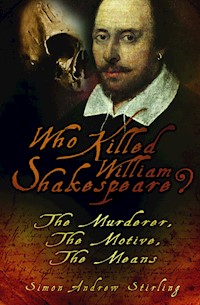
William Shakespeare lived in violent times; his death passed without comment. By the time he was adopted as the national poet of England the details of his life had been concealed. He had become an invisible man, the humble Warwickshire lad who entertained royalty and then faded into obscurity. But his story has been carefully manipulated. In reality, he was a dissident whose works were highly critical of the regimes of Elizabeth I and James I. Who Killed William Shakespeare? examines the means, motive and the opportunity that led to his murder, and explains why Will Shakespeare had to be 'stopped'. From forensic analysis of his death mask to the hunt for his missing skull, the circumstances of Shakespeare's death are reconstructed and his life reconsidered in the light of fresh discoveries. What emerges is a portrait of a genius who spoke his mind and was silenced by his greatest literary rival.
Sie lesen das E-Book in den Legimi-Apps auf:
Seitenzahl: 532
Veröffentlichungsjahr: 2013
Das E-Book (TTS) können Sie hören im Abo „Legimi Premium” in Legimi-Apps auf:
Ähnliche

















An ART & WILL Book
To my parents,Brenda and Norman,with love
Contents
Title
Dedication
Author’s Note
Preamble: ‘The Apotheosis of Shakespeare’
Part One: Means
1. Being Merry at a Tavern
2. A Sculptor’s Workshop
3. Marred by a Jagged Hole
4. As He Hath Hit His Face
5. We Wondered, Shakespeare
Part Two: Motive
6. Now am I in Arden
7. Herne the Hunter
8. Hall the Priest
9. The Primrose Way
10. The More Fool I
11. Remember Me
12. Chaos is Come Again
13. The Way to Dusty Death
14. Striding the Blast
15. There is a World Elsewhere
Part Three: Opportunity
16. Our Revels Now Are Ended
17. All is True
18. Double Falsehood
19. Blest be the Man
20. Look How the Father’s Face
Selected Bibliography
Plates
Copyright
Author’s Note
I AM not, and have never been, a Roman Catholic; neither, for that matter, am I an Anglican or a Lutheran. I wish to make this clear from the outset, lest any reader be tempted to accuse me of bias.
Religion in Shakespeare’s day was a tortured affair. It is perhaps best to regard it as a sort of spectrum. At one end of this spectrum were the diehard Catholics who remained loyal to the Church of Rome and the form of Christianity which had been practised in England for 1,000 years; many of these ‘papists’ were in fact converts who, in defiance of the severe penalties for embracing the ‘Romish’ religion, had adopted the traditional creed.
At the opposite end of the spectrum were those who, for the sake of convenience, we call ‘Puritans’ (a word which seems to have come into usage in the year of Shakespeare’s birth). Following the accession of Queen Elizabeth I in 1558, these extremists sought to purge the Church of England of all remaining vestiges of ‘popish superstition’ and ‘trish-trash’. They frequently called themselves ‘the godly’ or ‘the Elect’.
Between the two extremes were those whom we call Protestants, a word which came from an occasion in 1529 when a minority group of reformers presented a Protestatio – or affirmation – of their beliefs at the imperial Diet in Speyer. Initially, the word was applied exclusively to Germans who followed the teachings of Martin Luther and Huldrych Zwingli; only later did it come to be used of all those who defied the orthodoxy of Roman Catholicism.
In reality, these three groups – Catholic, Protestant and Puritan – tended to shade into one another. Even today, the Church of England comprises the ‘High’ and ‘Low’ forms of Anglicanism which, respectively, lean towards the Catholic and Calvinist extremes. In Shakespeare’s day, there were strict Catholics (best exemplified by those missionaries of the Society of Jesus which had been established by a Spanish ex-soldier, Iñigo López de Loyola: the Jesuits swore absolute obedience to the pope) and hard-line Lutherans; there were also ‘soft’ Catholics, who attended Protestant church services and celebrated Mass in secret, and easy-going Anglicans who shuddered at the bloody-mindedness of the holier-than-thou Puritans.
Though it has often been argued that one of Elizabeth I’s strengths was her commitment to a ‘middle way’ between the Roman and Germanic extremes, it should be remembered that Protestantism was a relatively new phenomenon, born in the time of Elizabeth’s father, and that Puritanism was newer still. From the point of view of the traditionalists – who, in some parts of the country, were the majority – Queen Elizabeth’s religious compromises were themselves a form of extremism. The ruthlessness with which the adherents of the old faith were persecuted suggests that Elizabeth’s via media was no compromise at all. Rather, it was a new form of religion which elevated the power of the State at the expense of the Church.
If religion was a bit of a mess in Shakespeare’s day, currency was even more of a muddle. Generally, though, England worked on the ‘£.s.d’ system of pounds, shillings and pence. There were 12 pennies in 1 shilling, and 20 shillings in a pound (a ‘groat’ was 4 pence; a ‘guinea’ was 21 shillings, or 252 pence). The currency in Britain was not decimalised (£1= 100p) until 1971.
My own rule of thumb for converting prices in Shakespeare’s day into something resembling prices in our own is to multiply by 1,000. Thus, the schoolmaster of Stratford earned £20, which we can multiply by 1,000 to reach a pre-decimal £20,000 – although a more realistic estimate would be to multiply £20 by 240p by 1,000 and then divide by 100 to arrive at £48,000 in modern decimalised currency, which is within the range of a teacher’s salary in Britain today – while the dagger that killed Christopher Marlowe cost 12 pence, or approximately £50 in today’s money.
Dates are another problem. Catholic Europe adopted the Gregorian calendar, named after Pope Gregory XIII, in 1582. Being resolutely Protestant, the Elizabethan government refused to accept such a ‘popish’ innovation and England stuck doggedly to the older Julian calendar (named after Julius Caesar) for another 170 years. There was, at the time, a difference of ten days between the two calendars, which led to no end of confusion; as Hamlet observed, ‘The time is out of joint’.
According to the Old Style calendar (as the Julian calendar is also known), the year began on 25 March, rather than 1 January. In line with standard practice, I have followed the New Style (Gregorian) dating system, so that what to Will Shakespeare would have been 10 February 1615 is, in our modern calendar, 10 February 1616.
Most of the Shakespeare quotations in this book are taken from The Oxford Shakespeare: The Complete Works, Second Edition, published in 2005, which is surely the most readable and accessible edition of Shakespeare’s works, although I have also consulted other editions, in particular the Arden and New Penguin Shakespeare series. For the Sonnets, I have relied on the Quarto edition, published in 1609, preserving much of the original punctuation but updating the spelling as necessary.
For reasons of space, as much as relevance, it has not been possible to refer in this book to everything written by Shakespeare.
Finally, I wish to offer my unconditional and heartfelt thanks to: John Cheal, Merima Hadzic, Andrea Nelson, Sally Paley, Tejvan Pettinger, Ralph Richardson, Canon David Rogers, Catherine Simpson, Dr Silvia Uhlemann, the Oxford Preservation Trust and the Worcestershire Archive and Archaeology Service for their help with the images for this book, and special thanks to Richard Peach for allowing me access to his superb photographs of the skull; my teachers and tutors, especially Gary Hedges and Professor Edwin Barrett, and to Vicki Mansfield for the tours of Shakespearean places; those I have had the pleasure of working with and learning from, including those producers (Andrew Brown, Natasha Carlish, Mark Forstater, Tony Garnett, Joy Lale, Chris Parr, Hilary Salmon), directors (Lindsay Anderson, Brian Astbury, Tom Bailey, Sue Colverd, Colin Cook, Richard Digby-Day, Robert Hamlin, Helena Kaut-Howson, Liz Light) and actors (Geoffrey Bayldon, Duncan Campbell-Godley, Stefan Dennis, Richard Griffiths, John Inman, Malcolm McDowell, Ron Moody, Neil Pearson, Alexander Siddig) who particularly inspired me; my editor, Lindsey Smith, and the team at The History Press; and, most of all, to Kim and Kiri, for putting up with me.
Preamble
‘The Apotheosis of Shakespeare’
SOMETHING ODD happened in the second half of the eighteenth century. The man known as William Shakespeare was forgotten, his place taken by a national myth. This was the myth of Shakespeare the ‘universal’ genius.
A by-product of that development was another myth – that Shakespeare the player could not have written the plays which made him famous.
It all started in Shakespeare’s garden.
The more tree
WILL SHAKESPEARE bought the ‘pretty house of brick and timber’ on the corner of Chapel Street in Stratford-upon-Avon in 1597. The ‘Great House’ had been built about 100 years earlier by Hugh Clopton, a prosperous silk merchant who rose to become Lord Mayor of London. It was the grandest residence in Stratford: three storeys high, with five gables and ten fireplaces, a frontage of more than 60 feet, two barns and two gardens.
By the time Will acquired the property it had become known as New Place and was in need of restoration. He paid for the renovations, selling the leftover stone to the Stratford Corporation, which used it to repair the Clopton Bridge over the River Avon.
In one of the gardens to the rear of New Place, Will planted a mulberry tree. A horticultural tradition in Warwickshire held that a quince tree should be planted on the north side of a property and a mulberry to the south. Whether or not Shakespeare followed this tradition to the letter we do not know – but when he introduced the legend of the mulberry in A Midsummer Night’s Dream, he did so via the agency of a character named Quince.
As with so much in his life, Will’s planting of a mulberry is open to interpretation.
In 1608, King James I issued an edict to the Lords Lieutenant of ‘the several shires of England’, urging them to ‘persuade and require such as are of ability to buy and distribute in that County the number of ten thousand Mulberry plants’. The King was eager to promote a home-grown silk industry, the leaves of the mulberry being the favoured food of the silkworm, and His Majesty led the way by planting 4 acres of mulberries on the site of what are now the gardens of Buckingham Palace.
Many mulberry trees were planted. But they were the wrong kind of mulberry. Had King James really been interested in stimulating a domestic silk-weaving industry (a move fiercely opposed by the silk merchants of London), he should have insisted on the cultivation of the white mulberry, Morus alba, rather than the black mulberry, Morus nigra, which was enthusiastically but pointlessly planted throughout England.
By ordering the wrong kind of mulberry trees, James I did nothing to encourage silkworms. He might, however, have succeeded in neutralising a potent symbol.
The black mulberry yields a blood-red fruit which stains anything it touches. Also known as the morberry or ‘more tree’, it was associated with Sir Thomas More, the one-time Lord Chancellor who was beheaded in 1535 for his opposition to the religious policies of King Henry VIII. The Italian name for the mulberry, il Moro, had provided Sir Thomas More with his family crest: the impaled head of a North African Moor. Erasmus of Rotterdam referred to his friend as ‘the black man’ and dedicated his 1509 essay ‘In Praise of Folly’to Sir Thomas, the Greek title, ‘Morias Enkomion’, also meaning ‘In Praise of More’.
Sir Thomas More had died for his allegiance to the Church of Rome. His bloodstained shirt became a holy relic. Those who honoured him as a Catholic martyr were afflicted with the same ‘folly’ which had driven More to defy his tyrannical king. They were ‘more fools’; ‘God’s lunatics’, in the words of their Puritan enemies.
The very name of More was an anagram of Rome and, through the wordplay of the time, was linked to the idea of Love, Amor in Latin, which, as a reflection of Roma, came to stand as a metaphor for the Catholic faith.
The planting of a ‘more tree’ could be an act of defiance. Its dark fruits, ‘purple with love’s wound’, bore witness to More’s blood sacrifice. The mulberry became a symbol of the religious ‘folly’ which led to death (Mors in Latin) and of the Catholic resistance to the Protestant policies of King James and his predecessor, Elizabeth I.
In times of sectarian conflict, symbolic acts are imbued with significance. King James ordered the widespread cultivation of black mulberries in order to rob the ‘more tree’ of its subversive symbolism. This in turn raises questions about Shakespeare’s motivation when he planted his mulberry at New Place.
Did the tree represent his Catholic convictions, or was he conniving in a royal scheme to undermine the sacrificial symbolism of the morberry?
‘I John Shakespeare’
IT IS a measure of the grandeur of Will’s Stratford home that Queen Henrietta Maria spent three days there in 1643 as a guest of Shakespeare’s daughter.
After the death of Shakespeare’s granddaughter, New Place was sold to Sir Edward Walker, formerly the Secretary at War to King Charles I. The house soon returned to its original owners, the Clopton family, and was remodelled early in the eighteenth century. By 1756, it had come into the possession of the Reverend Francis Gastrell, who chopped down Shakespeare’s mulberry.
The townsfolk of Stratford responded to this outrage by smashing the windows of New Place and threatening Gastrell’s family with violence.
The remains of the tree were bought by an enterprising watchmaker named Thomas Sharpe, who carved a variety of keepsakes – ‘snuff-boxes, goblets, punch-ladles, toothpicks and tobacco-pipes’ – from its wood. The mulberry furnished so many souvenirs that Sharpe was suspected of sharp practice. The American author Washington Irving would write of his visit to Stratford in 1815, ‘There was an ample supply also of Shakespeare’s mulberry-tree, which seems to have had as extraordinary powers of self-multiplication as the wood of the true Cross.’ Thomas Sharpe was so stung by these slurs that he:
called in the Mayor and one of the standing Justices of the Peace of the borough, and ordered a friend to draw up an affidavit, wishing to convince the world to the contrary of such insinuations and enable him to set a proper value upon the relics of the celebrated tree.
He swore ‘upon the four Evangelists, in the presence of almighty God’ that all his curios were carved ‘from the very Mulberry-tree which was planted by the immortal Bard’.
In the meantime, a startling discovery had been made.
A builder named Joseph Mosely was replacing the roof tiles on the Shakespeare Birthplace property on Henley Street when, on 29 April 1757, he came across a hand-stitched document which had been hidden among the rafters. Though the first page was missing, it was clear that the manuscript was some sort of Catholic last will and testament. Almost every one of its handwritten paragraphs began with the words ‘I John Shakespeare’.
Mosely passed the document to Alderman Payton of Stratford. The manuscript was also seen by John Jordan, a local tour guide, who created a new first page for it and sent his transcript to the Gentleman’s Magazine, the editor of which mentioned the discovery to the Shakespeare scholar Edmond Malone. Malone contacted his friend James Davenport, vicar of Holy Trinity Church, Stratford, and received the original five-page manuscript from Alderman Payton.
Malone declared himself ‘perfectly satisfied’ that the will was genuine when he published the original pages in his Plays and Poems of William Shakespeare in 1790. Within a few years, though, he had changed his mind. ‘I have since obtained documents,’ he wrote, ‘that clearly prove it could not have been the composition of any one of our poet’s family, as will be fully shewn in his Life.’
Edmond Malone died before he could write his ‘Life’ of William Shakespeare. No documents pertaining to the ‘Spiritual Testament’ were found among his papers. Even the original will had vanished, never to be seen again.
Rage and curses
THE DISAPPEARANCE of the ‘Spiritual Testament’ from Malone’s study allowed scholars to dismiss it as a forgery. It was an age of Shakespearean forgeries: Malone himself had exposed a raft of spurious documents – including Shakespeare’s Protestant ‘Profession of Faith’ – as the work of a young fraudster named William-Henry Ireland. But the discovery of the will hidden beneath the roof tiles of the Shakespeare Birthplace was dynamite. It offered compelling evidence that Shakespeare’s father had been a closet Catholic willing to ‘endure and suffer all kind of infirmity, sickness, yea and the pain of death’ for his beliefs – if, that is, the testament was genuine.
It was not until the 1920s that a Spanish version of the will was found by a Jesuit scholar in the library of the British Museum. Entitled Testamento O Ultima Voluntad del Alma, it had been printed in Mexico City in 1661, but its author had been Cardinal Carlo Borromeo, Archbishop of Milan, who died in 1584. Copies of the ‘Testament of the Last Will of the Soul’ had been smuggled into England by Jesuit priests who passed through Stratford in the summer of 1580.
An English-language copy of the testament, published in 1638, finally came to light in 1966. Consisting of twenty-four miniature pages, this ‘Testament of the Soul’ corresponded exactly with the document found in the roof space of the Shakespeare Birthplace in 1757. John Shakespeare’s ‘Spiritual Testament’ had not been a forgery after all.
Only the year before John Shakespeare’s incriminating testament was discovered, Rev. Francis Gastrell had chopped down Will Shakespeare’s mulberry tree, possibly because of its ‘papist’ associations. Now a document had appeared which identified Shakespeare’s father as a committed Catholic.
Rev. Francis Gastrell had left Stratford after the mulberry incident, but he was still the owner of New Place and therefore liable for the property tax which paid for the maintenance of the poor. Gastrell quarrelled with the Corporation over the assessment of his monthly levy, and eventually, in 1759, he razed New Place to the ground.
The preacher must have arrived mob-handed. The Corporation appears to have been powerless to stop him.
Gastrell was marched out of Stratford ‘amidst the rage and curses of the inhabitants’, and the Corporation passed a by-law forbidding anyone named Gastrell from living in the town.
In the space of four years, Shakespeare’s mulberry had been axed, its wood going on to form a host of ‘relics’; a Catholic will, signed by Shakespeare’s father, had been found among the rafters of the Birthplace; and Will’s substantial home had been demolished by the same preacher who had felled his mulberry tree.
Rev. Francis Gastrell’s actions require better explanations than his supposed annoyance with the sightseers wishing to view Shakespeare’s mulberry and his row with the council over taxes. The mulberry and the ‘Spiritual Testament’ had revealed Will’s family as secret ‘papists’, and so the physical traces of Shakespeare’s existence were attacked and destroyed by a Protestant bigot.
Shakespeare’s Jubilee
THERE WAS now a yawning gap on the corner of Chapel Street where Shakespeare’s home had stood. The Stratford Corporation started looking for a new way to honour the town’s most famous son.
The old Town Hall at the other end of Chapel Street had been blown up during the Civil War, shortly after the Catholic queen, Henrietta Maria, stayed at New Place. The Town Hall was rebuilt in 1767. The new building of golden stone had an open niche on its north side which was intended to hold a statue of Shakespeare. All that was needed was a benefactor to provide the statue.
The Corporation approached the famous actor and theatre manager David Garrick, offering to elect him an Honorary Burgess of the town and to present him with a testimonial, granting him the Freedom of the Borough, in an ornate box ‘made of that very mulberry-tree planted by Shakespeare’s own hand’.
Garrick had made his name playing Shakespearean characters. He had even built a temple to Shakespeare in the grounds of his house beside the River Thames. Flattered by the honours and the ‘elegant and inestimable box’ bestowed on him by the aldermen of Stratford, Garrick saw an opportunity to host a huge festival, during which the new Town Hall would be named Shakespeare’s Hall and his effigy of Shakespeare paraded through the streets. He chose to call this festival ‘Shakespeare’s Jubilee’ – even though it took place five years after the bicentenary of Shakespeare’s birth, and in the wrong month.
A three-day programme of events was planned. As a letter published in The Public Advertiser and the Gentleman’s Magazine put it, ‘The Whole will conclude with the Apotheosis of Shakespeare.’
A large rotunda, known as the Amphitheatre, or the Great Booth, was specially constructed on the riverside in Stratford. The wardrobe of the Drury Lane Theatre was emptied, with ‘upwards of 150 large boxes of dresses and scenery’ packed up and transported from London, 100 miles away. As the first day of the Jubilee drew near, Stratford was inundated with visitors anxious to take part in the festivities. The numbers vastly exceeded the available accommodation in the town.
‘The god of our idolatry’
HALLEY’S COMET passed through the sky on the first night of the Jubilee. To some, this was a sign of impending disaster.
The festival-goers awoke to a ‘hateful drizzling rain’ on the second day, Thursday 7 September 1769. This soon became a downpour. The Amphitheatre was crowded for the dedication of Shakespeare’s statue. David Garrick recited his ‘Dedication Ode’:
’Tis he! ’tis he! – that demi-god!
Who Avon’s flow’ry margin trod,
While sportive Fancy round him flew,
Where Nature led him by the hand,
Instructed him in all she knew,
And gave him absolute command!
’Tis he! ’Tis he!
‘The god of our idolatry!’ …
SHAKESPEARE! SHAKESPEARE! SHAKESPEARE!
Garrick gave way to Mrs Baddeley, who sang the sixth air of the Ode: ‘Thou soft-flowing Avon, by thy silver stream, / Of things more than mortal, sweet Shakespeare would dream.’ As Sophia Baddeley prepared for her encore, David Garrick threw open the doors of the Amphitheatre. The meadow was flooded. ‘Flow on, silver Avon! in song ever flow,’ sang Mrs Baddeley, while the river burst its banks.
A masquerade ball was held in the Amphitheatre that evening. Horses waded knee-deep to bring the costumed gentry to the ball. ‘Such a flood has not been witnessed there in the memory of a man,’ wrote an observer. James Boswell was there, desperately trying to read out his own poem for the occasion and ‘dancing with the water over his shoes’. The great fireworks display fell victim to the torrential rain: ‘The rockets would not ascend for fear of catching cold, and the surly crackers went out at a single pop.’
The Jubilee horse race went ahead the following noon, but the high point of the festival – a grand procession of 170 persons ‘properly dressed, in all the principal characters to be met with in Shakespeare’s plays’ – was cancelled because of the weather. And so Garrick’s Folly, as it came to be thought of, fizzled out. The actor-manager had lost about £2,000 on the event.
The townsfolk of Stratford were blamed for the festival’s failings. ‘The low People of Stratford upon Avon are without doubt as ignorant as any in the whole Island’, wrote one correspondent to the St James Chronicle. ‘I talked with many, particularly the old People, and not one of them but was frightened at the Preparations for the Jubilee, and did not know what they were about.’ The Stratfordians were hardly alone in this – a labourer from Banbury, paid to transport a double-bass viol to the event, apparently believed that he would be witnessing the ‘resurrection of Shakespeare’. But the metropolitan elite were especially critical of the people of Shakespeare’s hometown: ‘It is impossible to describe their Absurdity; and indeed Providence seems by producing Shakespeare and the rest of his Townsmen, to shew the two Extremes of Human Nature.’
The London crowd convinced itself that the residents of Stratford were too comical to be capable of appreciating Shakespeare. Garrick’s triumph had been ruined by the local clowns.
Ten days after the Jubilee ended, the London Chronicle published an anonymous piece, ‘Garrick’s Vagary: or England run Mad; with Particulars of the Stratford Jubilee’, in which a character named Nettle fulminated about the people ‘running out of Town, pell-mell, after a Brat of Judaism, a since foster-child of Popery, now, forsooth, revived by an Actor, to the very imminent and most alarming Danger both of Church and State’. It was a satirical portrait, no doubt, but one which reflected the views of some towards Shakespeare (a ‘foster-child of Popery’). The piece ended in the ‘Apollo Room at the Shakespeare’s Head, Covent Garden’, with members of the Mulberry Club ‘sitting round a Table, on which is a Representation of the Mulberry Tree’: ‘Let Critics dissent, or let them agree, / We’ll sing, and dance round the Mulberry-tree.’ Shakespeare’s mulberry, the felling of which had sparked outrage in Stratford, had become a metropolitan reminder of a bucolic past that never was.
Avarice and vanity
DAVID GARRICK took his revenge on the people of Stratford. At his Drury Lane Theatre, on 14 October 1769, he presented his stage adaptation of The Jubilee. It culminated with the elaborate Pageant of Shakespearean characters which had been rained off in Stratford.
The entertainment opened with an early morning scene in an old woman’s house in Stratford. The old woman and her neighbour gossiped fearfully about the Jubilee. They were joined by a country bumpkin who insisted that the pope was responsible for the Jubilee, or maybe the (Catholic) Pretender to the throne, and claimed to have seen men fiddling with gunpowder in a barn, which he assumed was a plot to blow up the town.
The waiters at the White Horse Inn were seen struggling with the demands of hungry guests. Pedlars touting relics from the mulberry tree accused each other of cheating. ‘The general Hurry and Spirit of the Whole,’ wrote one reviewer, ‘give us an agreeable Idea of the Distresses and Bustle of the Jubilee at Stratford, and the audience may enjoy both, without having the Inconveniences of partaking either of the one or of the other.’
The Jubilee was performed more than ninety times during the Drury Lane season of 1769–70. Its success made up for the costly and chaotic proceedings in Stratford.
But, as one of Garrick’s enemies implied, the whole thing had been more a celebration of David Garrick than of the Bard: ‘Avarice and vanity prompted G---k to the deed. He wanted to fleece the people and transmit his name down to posterity, hand in hand, with Shakespeare.’
One of the oddities of the 1769 Jubilee was that not one of Shakespeare’s plays was performed during the festival. Not a single sonnet or soliloquy of Shakespeare’s was recited. During the whole three-day event only one line from Shakespeare was heard, and that was misquoted. There were plenty of poems and songs about Shakespeare, but none of his own. The entire Jubilee was devoted, not so much to Shakespeare, as to the idea of Shakespeare.
Garrick’s Jubilee drove a wedge between the ‘low People’ of Will’s hometown and the metropolitan sophisticates. Only the educated elite were refined enough to understand Shakespeare (even if they couldn’t be bothered to quote him accurately). The Stratfordians were too stupid, too superstitious, to be taken seriously. The flipside, of course, was that the townsfolk were probably horrified by the tasteless spectacle and fearful that their Shakespeare was being taken from them.
As far as Garrick’s crowd was concerned, Shakespeare – ‘Our SHAKESPEARE’ – had become the ‘god of our idolatry’. Verily, the Jubilee had seen the Apotheosis of Shakespeare. Except that it was not Will Shakespeare. It was a pseudo-Shakespeare, cut off from his roots and planted on a painted pedestal. Not a flesh-and-blood Shakespeare, but a political construct: a myth.
All that is known
GEORGE STEEVENS was no fan of David Garrick. He had in fact been instrumental in getting Garrick involved in the plan for the Shakespeare statue at Stratford’s Town Hall, correctly presuming that Garrick could easily be flattered into overreaching himself.
Steevens had edited and published twenty of Shakespeare’s plays in 1766. With the help of Dr Johnson, Steevens then put together a ten-volume Works of Shakespeare. Setting the bar for Shakespeare biographers, Steevens set it very low indeed: ‘All that is known with any degree of certainty concerning Shakespeare, is – that he was born at Stratford-upon-Avon, – married and had children there, – went to London, where he commenced actor, and wrote poems and plays, returned to Stratford, made his will, died, and was buried.’
Surprisingly little has changed since Edmond Malone quoted Steevens’ summary of Shakespeare facts in 1780. Those who stray from the narrow path sketched out by Steevens are deemed guilty of wandering into the fairy dells of speculation. The awful truth is that we know so little about Shakespeare. ‘What we would not give for a single personal letter,’ cried Samuel Schoenbaum, ‘one page of a diary!’
And yet, this too is a myth. It sprang from the deification of Shakespeare which Garrick achieved with his Jubilee. To preserve the lofty image of ‘Our SHAKESPEARE’ it was necessary to assert that the Bard was an unknown quantity.
Just as the felling of Will’s mulberry gave rise to Garrick’s asinine ballad of Shakespeare’s Mulberry-Tree (‘As a relick I kiss it, and bow at the shrine’), with no mention at all of the clergyman who chopped it down or the anger of the townsfolk at its desecration, so the local memory of Shakespeare was ridiculed and ignored in order to allow the ‘immortal Bard’ to become the focus of patriotic projections. The ‘Apotheosis of Shakespeare’ created a national poet who was brilliant because he was invisible, a ‘demi-god’ who was never really mortal in the first place.
Little wonder, then, that when the Reverend James Wilmot left London to become the rector of Barton-on-the-Heath, near Stratford, he began to have his doubts about the authorship of Shakespeare’s works. How, Wilmot wondered, could the humbly born Shakespeare have been ‘received as a friend and equal’ by men of culture and breeding? Thus, another myth was born in 1785, when Rev. James Wilmot first suggested that somebody else must have written the plays.
On the one hand, the theory that Shakespeare the player could not have been the playwright was born of sheer snobbery. But, like the axe which was taken to his mulberry, the hatchet used to attack Will’s reputation was wielded by extremists: Delia Bacon, who championed Francis Bacon as the ‘real’ Shakespeare, came from a family of New England Puritans; Thomas Looney, who argued that the Earl of Oxford was the author of the plays, belonged to a proto-fascist sect called the Church of Humanity. The refusal to see Shakespeare as he was owes more to fanaticism than fact.
The three interrelated myths – that of Shakespeare the ‘demi-god’; the myth that nothing is known about Shakespeare; and the Alternative Authorship nonsense – all came into being against a backdrop of rising religious tensions.
After the death of the ‘Old Pretender’, James Francis Edward Stuart, in 1766, the Papacy in Rome formally recognised the Protestant Hanoverian dynasty as the lawful rulers of England. This paved the way for the removal of the penal laws against Catholics, beginning with the first Catholic Relief Act of 1778. This modest Act provoked violent anti-Catholic riots in London. Another fifty years would pass before England’s Catholics finally achieved emancipation.
With feelings running so high in the late 1700s it was only to be expected that any hint of Catholicism in Shakespeare’s background would be judiciously erased – it would hardly have squared with Garrick’s Apotheosis of Shakespeare as the national poet of Protestant England. And so the ‘Spiritual Testament’ signed by Will’s father was conveniently lost and a Protestant ‘Profession of Faith’ was forged. The real Shakespeare had to be buried for the ‘god of our idolatry’ to arise.
We have paid a price for this. By denying Shakespeare’s Catholic roots, scholars have rendered his life and works unintelligible. His plays and poems are urgent despatches from the front line of a vicious conflict, a brutal power struggle between the old communal world and the new commercial one. There were many victims of this strife, and Will Shakespeare was one of them – but you wouldn’t think it from what the academics are prepared to admit.
Means, motive, opportunity
I WITNESSED this censorship when I attended a talk at the Shakespeare Centre in Stratford about the publication of a ‘lost’ play which forms a crucial piece of evidence in the matter of Will’s death.
At one point, the issue of John Shakespeare’s incriminating ‘Testament’was raised. The country’s leading authority on Shakespeare quickly stifled that line of inquiry. Remarking that another academic had dismissed the Catholic document as a ‘boilerplate job’ – ‘there were hundreds of those things around at the time’ – the professor swiftly steered the discussion away from the contentious topic.
It is true that thousands of those testaments were smuggled illegally into England. But to pretend that no inference can be drawn from the fact that Will’s father signed his name to such a document is facetious. Merely by possessing his copy, Shakespeare’s father was guilty of treason.
To downplay the significance of John Shakespeare’s testament is to engage in a cover-up – an ongoing, 400-year-old cover-up that extends into all aspects of Shakespeare’s life and times.
The popular view of the criminal law in the United States is that a jury must be convinced of three things before judgement can be passed. The jurors must believe that the accused had the ability or means to commit the offence, the reason or motive to carry it out, and the chance or opportunity to do so.
In the first part of this book, we shall examine how Shakespeare met his death (the ‘means’). In the second part, we review his life and career (the ‘motive’), and in the final section we will consider the circumstances leading up to his murder (the ‘opportunity’).
During the course of our investigation, a picture of Will Shakespeare will emerge which differs from the familiar, squeaky-clean image of the Bard.
There will be no sweeping of vital evidence under the carpet. We owe him that.
Those who are touched in their property and person,
torn by cruel rage and wounded by the government,
cry aloud to heaven that they are abandoned.
And so all about us are groans,
and complaints,
and tears of blood.
They live in a perpetual dread
of losing their property today,
their liberty tomorrow,
their life the day after,
as has happened to many.
Nicolò Molin
Venetian Ambassador to England
1605
1 George Vertue’s 1737 sketch of Shakespeare’s funerary monument, Holy Trinity Church, Stratford.
Part One
Means
There thou mayst brain him,
Having first seized his books
William Shakespeare
The Tempest
1
Being Merry at a Tavern
IT IS by far the most visited parish church in England.
Eight hundred years old, the Collegiate Church of the Holy and Undivided Trinity stands on the west bank of the river in the Old Town of Stratford-upon-Avon. Approaching along a paved avenue lined with lime trees, the visitor steps through the vaulted fifteenth-century porch and, passing the font in which William Shakespeare was baptised, enters an echoing space illuminated by brightly coloured windows.
The best windows light the east-facing chancel, with its medieval choir stalls, its ornate tomb of Thomas Balsall (who built the chancel in 1480) and its recumbent effigy of Shakespeare’s friend, John Combe. The high altar is a rare example of a pre-Reformation altar still in use in England; buried for many years under the chancel floor, it escaped the rage of the Puritan reformers.
The grave of William Shakespeare lies in front of the altar. On one side is the grave of his widow, Anne; on the other, the graves of Thomas Nash (who married Will’s granddaughter), Dr John Hall (who married Will’s daughter, Susanna) and Susanna herself. It is the grave of Will Shakespeare which lures so many visitors to Holy Trinity Church. The gravestone is smaller than those on either side and is inscribed with a four-line doggerel verse, laying a curse upon anyone who ‘moves my bones’.
The register of Holy Trinity Church records the burial on 25 April 1616 of ‘Will Shakspere gent’. Overlooking the grave from the north wall of the chancel, a funerary monument, installed within a few years of Shakespeare’s death, reveals that the poet died on 23 April, aged 53. He was buried two days later under a gravestone which does not bear his name.
An Oxford University student toured Holy Trinity Church in 1694. In a letter to a friend he wrote of Shakespeare’s grave that ‘they have laid him full seventeen-foot deep, deep enough to secure him’. Combined with the curious injunction on his gravestone not to ‘dig the dust enclosed here’, the extraordinary depth of the grave ensured that Will’s remains were unlikely ever to be disturbed.
A NEW vicar arrived in Stratford in 1662. The Rev. John Ward was eager to find out all that he could about the famous poet who lay buried in his church and gave himself a reminder to look in on Shakespeare’s daughter, Judith. Whether or not John Ward spoke with Judith – she died that same year – the parson did glean some information from his parishioners.
‘I have heard that Mr Shakespeare was a natural wit,’ he wrote, ‘… he frequented the plays all his younger time, but in his elder years lived at Stratford, and supplied the stage with two plays every year, and for that had an allowance so large that he spent at the rate of a thousand a year, as I have heard.’ Those were spectacular outgoings; £1,000 was a great deal of money. Rev. John Ward continued his memorandum: ‘Shakespeare, Drayton and Ben Jonson had a merry meeting, and, it seems, drank too hard, for Shakespeare died of a fever there contracted.’ This is the only known reference to the circumstances surrounding Shakespeare’s death.
Ward’s interest in the Bard was far from idle. He concluded his note, ‘Remember to peruse Shakespeare’s plays and be versed in them, that I may not be ignorant in the matter.’ But his memorandum sadly lacks detail; the vicar made no mention of where or when the ‘merry meeting’ took place. We can, however, hazard some educated guesses.
Traditionally, Shakespeare is said to have been born, as he died, on 23 April. As we shall see, the coincidence of him having died on his birthday, and in the town where he was born, is not without significance. As for a possible venue for the ‘merry meeting’, we need look no further than a few yards from Shakespeare’s home.
New Place stood to the north of Holy Trinity Church, on the corner of Chapel Street. A short distance away, heading along Chapel Street and the High Street, was a half-timbered house known as Atwood’s. For five years, a wine merchant named Thomas Quiney had owned the lease on Atwood’s for the purpose of running a tavern.
The Shakespeares and the Quineys had been close for years. Adrian Quiney had served with Will’s father, John Shakespeare, on the Stratford Corporation. Adrian’s son, Richard Quiney, addressed a letter to his ‘Loving good Friend and countryman’ Will Shakespeare in 1598. It was Richard’s son, Thomas, who now ran the tavern on Stratford High Street. On 10 February 1616, a few weeks before Shakespeare died, Thomas Quiney married Will’s daughter, Judith, who was still alive forty-five years later when Rev. John Ward came to town.
The tavern run by Will’s newly acquired son-in-law was a three-minute stroll from New Place, and so it was perhaps at Atwood’s that Shakespeare had his fateful ‘merry meeting’ with Drayton and Jonson.
OF THE three poets present, only one had a reputation for heavy drinking. This was Ben Jonson, the youngest of the trio.
William Drummond, a Scottish poet who had the pleasure of Jonson’s company during the winter of 1618–19, left a character sketch in which he remarked of the 46-year-old Ben: ‘He is a great lover and praiser of himself, a contemner and scorner of others, given rather to lose a friend than a jest, jealous of every word and action of those about him (especially after drink, which is one of the elements in which he liveth).’ Drummond added that Jonson was ‘a dissembler of ill parts which reign in him’ and ‘a bragger of some good’ that he lacked.
Ben’s fondness for the bottle, particularly the sweet wine known as Canary, had probably contributed to his burgeoning girth. He weighed in at some 278lb (126kg) and boasted a ‘mountain belly’ to match his ‘rocky face’. That face had once been lean and hollow-cheeked but was now fleshy and pockmarked. His beard and moustache were wispy, a shade or two lighter than his thick dark hair. The portrait of Jonson painted in about 1617, and now in the National Portrait Gallery in London, gives him a broad nose with a pronounced ridge at the top where his eyebrows meet. The playwright Thomas Dekker described him as a ‘staring Leviathan’ with a ‘terrible mouth’.
Michael Drayton had no such reputation for drinking. The eldest of the three poets at the ‘merry meeting’, he was admired for his probity. The churchman Francis Meres, whose Palladis Tamia of 1598 compared his contemporary poets with the poets of the classical world, held him in the highest regard:
As Aulus Persius Flaccus is reported among all writers to be of an honest life and upright conversation: so Michael Drayton … among scholars, soldiers, Poets, and all sorts of people, is held for a man of virtuous disposition, honest conversation, and well governed carriage, which is almost miraculous among good wits in these declining and corrupt times …
His portrait in the National Portrait Gallery, painted in 1599 when he was about 36 years old, presents a thin and scholarly looking man of clean skin and neat appearance, the oval of his face accentuated by a trim gingery beard, his brown hair crowned with a wreath of laurels. A later portrait from 1628 shows that Drayton’s jowls had begun to sag and his beard had shrunk to a tuft of greying hairs. His face had lost none of its pallor, while the clear eyes of 1599 had become careworn and distrustful.
Warwickshire folklore recalls the adolescent Shakespeare as an enthusiastic and accomplished drinker. This reputation did not follow him down to London. His theatre company endeavoured to prove that they were ‘Men of grave and sober Behaviour’.
Writing later in the seventeenth century, John Aubrey – who noted that Ben Jonson tended to fall into bed drunk – remarked that Will Shakespeare was a ‘handsome, well-shap’t man, very good company’, who was ‘the more to be admired quia he was not a company keeper’ and ‘wouldn’t be debauched’. When invited to make merry, he would excuse himself, saying ‘he was in pain’.
At home, he might have let his guard down. An anecdote preserved in the second volume of Aubrey’s Brief Lives finds Will in a Warwickshire saloon:
One time as he was at the tavern in Stratford on Avon, one Combe, an old rich usurer, was to be buried, [Shakespeare] makes this extempore epitaph:
Ten in the hundred the Devil allows,
But Combe will have twelve, he swears and vows:
If anyone asks who lies in this tomb,
‘Hoh!’ quoth the Devil, ‘’Tis my John o’Combe.’
John Combe of Old Stratford died in 1614, a couple of years before Shakespeare; his effigy lies close to Will’s funerary monument in the chancel of Holy Trinity Church. John Combe left Shakespeare £5 in his will. Will in turn bequeathed his sword to John’s nephew and heir, Thomas Combe, a Catholic.
A somewhat kindlier version of Will’s ‘extempore epitaph’ for John Combe was recorded by Nicholas Burgh, a Poor Knight of Windsor, in a document dating from 1650. Burgh’s manuscript also recalled an occasion when Shakespeare and Jonson had been drinking together:
Mr. Ben Jonson and Mr. William Shakespeare being merry at a tavern, Master Jonson having begun this for an epitaph: ‘Here lies Ben Jonson, / That was once one’, he gives it to Master Shakespeare to make up, who presently writes: ‘Who while he lived was a slow thing, / And now, being dead, is a nothing’.
A similar anecdote was discovered among the papers of Thomas Plume, Archdeacon of Rochester and vicar of Greenwich, who died in 1704. In Plume’s account, Will ‘took the pen’ from Jonson and wrote:
Here lies Benjamin –
With short hair upon his chin –
Who while he lived was a slow thing,
And now he’s dead is no thing.
The playful epitaphs for John Combe (who was dead) and Ben Jonson (who wasn’t) were not up to Will’s usual standard. They can be compared with a jingle that Shakespeare reputedly wrote to accompany a pair of gloves. The gloves were made by Will’s father for the Stratford schoolmaster, Alexander Aspinall, who gave them to his bride, Ann Shaw, who lived near the Henley Street home of the Shakespeare family. The wedding present came with a note: ‘The gift is small, / The will is all: / Alexander Aspinall.’
The word ‘will’ was a slang term – as ‘willy’ is today – for the penis. Elsewhere, Shakespeare made use of the term ‘glove’ as a familiar metaphor for the female genitals, and so the wedding gift became, as the ditty suggested, a token of something more meaningful: the easing of the groom’s enlarged ‘will’ into his bride’s little ‘glove’ when the marriage was consummated.
Something of the same bawdy nature can be glimpsed in Will’s jokey epitaph for Ben Jonson. Nicholas Burgh and Thomas Plume recorded slightly different versions of this epitaph, but the tenor of both was the same – Ben, while he lived, was a ‘slow thing’ and, once dead, would be ‘nothing’.
Then, as now, a ‘thing’ could be a penis. Shakespeare is known to have used ‘thing’ and ‘no thing’ to designate the male member and its female counterpart. This sheds an unsavoury light on his off-the-cuff epitaph for Jonson. Ben himself had started it off with ‘Here lies Ben Jonson, / That was once one’. Shakespeare then took the pen and wrote that Ben was a ‘slow thing’ – a dullard, a flaccid penis – who died and became ‘no thing’, a rotting pudendum.
Before long, Jonson was recounting his own version of the impromptu epitaph. He told the Scottish poet William Drummond (who noted how quick Ben was to take offence, especially when he had been drinking) that his ‘Epitaph, by a companion written, is:
Here lies Benjamin Jonson dead,
And hath no more wit than a goose in his head,
That as he was wont, so doth he still
Live by his wit, and evermore will.’
(‘Ane other’, wrote Drummond in 1619: ‘Here lyes honest Ben / That had not a beard on his chen.’)
Jonson’s account of his epitaph ‘by a companion written’ was clearly a sanitised version of the ones later recorded by Burgh and Plume. Gone are the dubious references to slow things and no things. Instead, Ben contrives to live eternally by his wit, even though he has less wit in his head than a ‘goose’.
Coming within three years of Will Shakespeare’s death, Ben’s own account of his epitaph suggests that other versions were already doing the rounds. These alternative versions, later written down by Nicholas Burgh and Thomas Plume, made it clear that Shakespeare was the companion who had made up the original.
We are left with the impression that some sort of epitaph game was played by Shakespeare and Jonson while they were ‘being merry at a tavern’. Shakespeare was said to have composed an extempore epitaph for his friend, John Combe, in a Stratford tavern in 1614. The occasion of the Jonson epitaph was quite possibly the ‘merry meeting’ of 1616, at which the poets ‘drank too hard’ and Will caught the ‘fever’ that killed him. Ben was soon promoting his own, more self-flattering version of the epitaph, thereby implying that the alternative account was already in circulation. This would suggest that a third party was there to witness the moment when Shakespeare insulted Jonson with his ‘no thing’ jibe.
That person was probably Michael Drayton, the third poet at the ‘merry meeting’.
LIKE SHAKESPEARE, Drayton was a native of the Woodland, the spiritual and geographical heart of England. Born in the village of Harthill, on the north-eastern boundary of the Forest of Arden, he was about a year older than Shakespeare.
In his childhood Michael Drayton entered into service with the Goodere family of Polesworth. His first patron was Sir Henry Goodere. An important local figure, Goodere served as High Sheriff of Warwickshire in 1570, but was committed to the Tower of London the following year over his dealings with Mary, Queen of Scots. He recovered his fortunes, however, and was later knighted, becoming a trusted Gentleman of the Privy Chamber.
Drayton remained in service with the Gooderes of Polesworth Hall until the death of Sir Henry in 1595, when he was ‘bequeathed’ to the dazzling Lucy Harington, whose parents were based at Coombe Abbey, near Coventry. Lucy married Edward Russell, Third Earl of Bedford, at about the same time as she inherited the poet Drayton. As Lucy, Countess of Bedford, she became the ‘universal patroness of poets’, but her relations with Drayton soon soured. He complained in a bitter verse that she had abandoned him in favour of ‘deceitful Cerberon’, a ‘beastly clown too vile of to be spoken’. It is probable that this beastly ‘Cerberon’ was Ben Jonson, who dedicated his satirical play Cynthia’s Revels to the Countess of Bedford in 1600.
By 1602, Drayton had a new patron, Sir Walter Aston, whose mother was the daughter of Sir Thomas Lucy, the lord of the manor of Charlecote, near Stratford. Sir Thomas Lucy was a magistrate, a Member of Parliament and a fanatical persecutor of Catholics: among those who suffered at his hands was a glove maker of Stratford called John Shakespeare and his eldest son, William.
Unlike Will Shakespeare and Ben Jonson, Drayton never married. The love of his life was Anne Goodere, the daughter of his first patron. She became his ‘Idea’ – his Muse – and he dedicated his pastorals and a collection of sonnets to her in the early 1590s. Around the time of her father’s death in 1595, Anne married Sir Henry Rainsford of Clifford Chambers, a manor just 2 miles south of Stratford-upon-Avon. The lovelorn Drayton took to spending his summers at the half-timbered Manor House, with its clear view of the wooden spire of Holy Trinity Church. He would remain the devoted poet-shepherd, ‘Rowland of the Rock’, forever inseparable from his ‘Idea’ and her marital home of ‘dear Clifford’.
It was during one of his extended stays at Clifford that Drayton was cured of a recurring fever by Dr John Hall of Stratford. Hall’s notes reveal that Drayton was given an emetic with syrup of violets, which ‘worked very well both upwards and downwards’. In 1607, Dr John Hall married Shakespeare’s daughter, Susanna. He also treated Drayton’s beloved ‘Idea’, Lady Anne Rainsford.
Drayton was also a close friend of Will Shakespeare’s ‘cousin’, Thomas Greene, a trained lawyer and a minor poet in his own right – Greene composed a sonnet ‘To Master Michael Drayton’, which was prefixed to Drayton’s long poem ‘The Barons’ Wars’ of 1603. That same year, Greene was appointed Steward of Stratford-upon-Avon, and between 1603 and 1611 he and his family lived at New Place as guests of the Shakespeares, who probably stood as godparents to Greene’s children, William and Anne.
When Shakespeare retired from the public stage in 1611, Thomas Greene and his family moved out of New Place and into a large house in Stratford’s Old Town. Five years later, after the death of Will Shakespeare, Greene promptly resigned his position as town clerk, sold his house and relocated to Bristol, more than 60 miles away. Writing to his old associates in 1617, he referred to his years with the Stratford Corporation as his ‘golden days’.
MICHAEL DRAYTON merely dabbled in writing for the theatre. He collaborated with other playwrights – Anthony Munday, Henry Chettle and Thomas Dekker – and was a good friend to Francis Beaumont, but he is best remembered for his poetry.
Ben Jonson also expected to be chiefly remembered for his poetic achievements. Among Ben’s published Epigrams are two he addressed to Lucy, Countess of Bedford, who had once favoured Drayton. Perhaps Jonson had Drayton in mind when he wrote that the ‘bright and amiable’ Lucy had:
a better verser got,
(Or Poet, in the court account) than I,
And who doth me (though I not him) envy.
In a later poem, entitled ‘The Vision of Ben Jonson, on the Muses of his Friend, M. Drayton’, Jonson openly displayed the ambivalence of his feelings towards the Warwickshire poet: ‘It hath been questioned, MICHAEL, if I be / A Friend at all; or, if at all, to thee.’ As Professor Sara Van Den Berg observed in the Cambridge Companion to Ben Jonson, ‘It is impossible to decide the poet’s answer to [this] initial premise.’
What makes Jonson’s equivocation so remarkable is that his ‘Vision’ was written as a preface to Drayton’s 1627 collection of his best poems. After showering Drayton’s poetry with overblown praise, Ben concluded his dedicatory verse:
I gratulate it to thee, and thy Ends,
To all thy virtuous, and well chosen Friends,
Only my loss is, that I am not there:
And, till I worthy am to wish I were,
I call the world, that envies me, to see
If I can be a Friend, and Friend to thee.
Eleven years on from the fabled ‘merry meeting’, Ben Jonson was quibbling – was he, or was he not, a friend to Michael Drayton? It is a strange sort of dedication. Jonson indicated that he was ‘not there’ among Drayton’s ‘virtuous and well chosen’ friends, and he challenged the reader to determine whether he was, or even could be, Drayton’s friend. The praises he heaped on Drayton’s work sound disingenuous and tongue-in-cheek. If the reader still doubted Jonson’s friendship, the fault lay entirely with Ben.
One of the poems published by Drayton in his 1627 miscellany was ‘The Shepherds’ Sirena’. In this, he depicted his idyllic rural retreat as threatened by ‘Roguish swineherds, that repine / At our flocks like beastly clowns’. He had previously referred to ‘deceitful Cerberon’ as a ‘beastly clown’, but he now gave another name to his nemesis, the ringleader of the ‘Roguish swineherds’:
Angry OLCON sets them on,
And against us part doth take,
Ever since he was out-gone
Off’ring Rhymes with us to make.
The mention of ‘Angry OLCON’ might mean little were it not for an earlier poem, Drayton’s Eighth Eclogue of 1606, in which he had shown his resentment towards ‘Sirena’ – Lucy, Countess of Bedford – for having transferred her patronage to ‘deceitful Cerberon’. Rewritten in 1619, the Eighth Ecloguewent on to denounce ‘great OLCON, which a PHOEBUS seemed:
Whom all good Shepherds gladly flocked about,
And as a God of ROWLAND was esteemed,
Which to his praise drew all the rural Rout:
For, after ROWLAND, as it hath been PAN,
Only to OLCON every Shepherd ran.
As the poetic ‘Rowland’, Drayton had seemingly been in awe of ‘great OLCON’, as had the other poets or ‘Shepherds’ who flocked to greet him. But great Olcon had since deserted Drayton, and ‘to the stern Wolf and deceitful Fox, / Leaves the poor Shepherd and his harmless Sheep.’ Great Olcon had offered to make rhymes with Drayton and his companions, but he had been ‘out-gone’ – surpassed, bested, outdone. Olcon then departed angrily, abandoning poor ‘Rowland’ to the ‘stern Wolf and deceitful Fox’ and inciting his ‘Roguish swineherds’ to menace Drayton in his rural paradise.
This was how things stood in 1619, three years after the ‘merry meeting’ in Stratford. Only the year before, Drayton had struck up a long-running correspondence with William Drummond of Hawthornden. Drummond was in his early thirties at the time. He was the laird of Hawthornden Castle, 7 miles south of Edinburgh, and he was well connected: his father had been a gentleman-usher to King James I of England, while his mother’s brother was secretary to James’ queen, Anne of Denmark.
Soon after Drayton and Drummond began writing to each other, Ben Jonson set out on foot from London to Edinburgh. The 300-mile journey took him seventy-one days – no mean undertaking for an overweight, middle-aged alcoholic.
Jonson spent a fortnight or more with Drummond at Hawthornden Castle over Christmas 1618. Drummond’s notes of their conversations included Ben’s version of his ‘Epitaph, by a companion written’. They also discussed Michael Drayton. Jonson told Drummond that ‘Drayton feared him, and he [Ben] esteemed not of him.’ He declared that Drayton’s ‘long verses pleased him not’ – so the praises he lavished on Drayton’s poems in 1627 were hardly sincere – and he complained that Sir William Alexander, the poet, playwright, First Earl of Stirling and close friend of Drummond’s, had been ‘not half kind to him, and neglected him, because [Sir William was] a friend to Drayton’.
Drummond’s notes also refer to a lost play of Jonson’s:
He hath a pastoral entitled The May Lord. His own name is Alkin, Ethra the Countess of Bedford’s, Mogibell Overbury, the old Countess of Suffolk an enchantress … In his first story, Alkin cometh in mending his broken pipe. Contrary to all other pastorals he bringeth the clowns making mirth and foolish sports.
It is not known when The May Lord was written. Jonson’s most recent biographer, Ian Donaldson, suggests that he wrote it ‘for private study’ in 1618. William Drummond perhaps sent details of it in a letter to Drayton after Jonson’s visit, giving Drayton time to add the stanzas referring to ‘great OLCON’ to his Eighth Eclogue, published in 1619.
By his own admission to Drummond, Jonson had characterised himself as ‘Alkin’, a name borrowed from classical mythology. The Roman poet Gaius Valerius Flaccus portrayed Alcon as a skilled archer whose arrows never missed their mark. Jonson no doubt flattered himself into thinking that his satirical barbs invariably struck home.
The ‘great OLCON’ and ‘Angry OLCON’ of Drayton’s poems was surely the Alcon or ‘Alkin’ with whom Jonson wished to be identified. In the first scene of The May Lord, as Jonson told Drummond, ‘Alkin cometh in mending his broken pipe’. Drayton would soon write of ‘Olcon’ that he ‘forsakes the Herd-groom and his Flocks, / Nor of his Bag-pipes takes at all no keep’. Those who knew of The May Lord, including such noble patrons as Lucy, Countess of Bedford, and William Herbert, Third Earl of Pembroke, would have recognised Drayton’s allusion to ‘OLCON’, the angry poet-satirist, and his ‘beastly clowns’.
Evidently, by the winter of 1618–19, the relationship between Drayton and Jonson had broken down. There had been bad blood between them before, when Jonson stole Lucy, the ‘universal patroness of poets’, from Drayton, but Drayton’s Eighth Eclogue of 1619 suggests that they had then buried their differences. ‘Olcon’ had been considered a ‘God of Rowland’, second only to Drayton in the admiration he received from other poets. But then, after some sort of rhyming contest, instigated by ‘Olcon’, Jonson abandoned Drayton to the tender mercies of the ‘stern Wolf and deceitful Fox’.
Jonson, meanwhile, was telling William Drummond that ‘Drayton feared him’. Drayton would later claim that ‘Angry OLCON’ had unleashed his roguish followers against him. They threatened to destroy his treasured peace and quiet at Clifford Chambers by attacking him with ‘holly whips’ and ‘hazel goads’. This was published in the volume of 1627, which Jonson commended with his ‘Vision … on the Muses of his Friend, M. Drayton’, even though he ‘esteemed not’ of Drayton, whose ‘long verses pleased him not’.
SOMETIME BEFORE Christmas 1618, Ben had offered to make ‘Rhymes’ with Drayton and another poet. We know from William Drummond’s sketch that Jonson was ‘given rather to lose a friend than a jest’, and on this occasion he was ‘out-gone’. The occasion might well have been the ‘merry meeting’ of 1616, when Shakespeare, Drayton and Jonson were gathered together, ‘being merry at a tavern’.
Jonson had commenced his own rhyming epitaph before passing it to Shakespeare, who completed it with a pungent pun: ‘Who while he lived was a slow thing, / And now he’s dead is a no-thing.’
Shakespeare then died ‘of a fever there contracted’, according to Rev. John Ward’s informants in Stratford. Ever since, Drayton had lived in fear of Jonson and his ‘swineherds’.
The manor of Clifford Chambers, though now part of Warwickshire, in Shakespeare’s day lay in the neighbouring county of Gloucestershire. The sixth volume of The History of the County of Gloucestershire, published in 1965, remarks of the moat-encircled Manor House that one of its rooms was ‘called after Drayton’, who stayed there so often, 2 miles from Stratford-upon-Avon.




