


1,99 €
Mehr erfahren.
- Herausgeber: Publisher s13381
- Kategorie: Geisteswissenschaft
- Sprache: Englisch
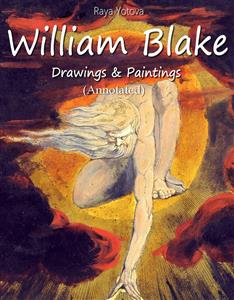
William Blake was an English bard and visual artist of Romanticism who had no fame and recognition at the time of his life, but today he is considered one of the most important and significant poets and artists of this aesthetic movement. While he was alive, Blake was even called "eccentric" and "crazy" by some of his critics, because in no case his creativity and views could be called "normal" or mediocre. Later, however, over the years, literary and artistic criticism increasingly began to appreciate the philosophical views and depths of the artist's thinking and described him as "a forerunner of Romanticism." William Blake lived in London, and throughout his life as a poet and artist, he was interested in the meaning of human existence by calling the "Body of God" the Imagination and considered it the Supreme Sense. Disgusted by the narrow and dogmatic interpretation of the Bible, the poet-artist was fascinated by the ideals of the French Revolution and later by the American Revolution.
Das E-Book können Sie in Legimi-Apps oder einer beliebigen App lesen, die das folgende Format unterstützen:
Veröffentlichungsjahr: 2018
Ähnliche
William Blake
Drawings & Paintings (Annotated)
Annotated by Raya Yotova
––––––––
First Edition
*****
Copyright © 2018 Annotated by Raya Yotova
Table of Contents
Title Page
Copyright Page
Foreword
Drawings and Paintings
Foreword
William Blake was an English bard and visual artist of Romanticism who had no fame and recognition at the time of his life, but today he is considered one of the most important and significant poets and artists of this aesthetic movement.
While he was alive, Blake was even called "eccentric" and "crazy" by some of his critics, because in no case his creativity and views could be called "normal" or mediocre. Later, however, over the years, literary and artistic criticism increasingly began to appreciate the philosophical views and depths of the artist's thinking and described him as "a forerunner of Romanticism."
William Blake lived in London, and throughout his life as a poet and artist, he was interested in the meaning of human existence by calling the "Body of God" the Imagination and considered it the Supreme Sense.
Disgusted by the narrow and dogmatic interpretation of the Bible, the poet-artist was fascinated by the ideals of the French Revolution and later by the American Revolution.
Drawings and Paintings
Satan Approaching the Court of Chaos, 1784 - 1785, Graphite with pen and gray ink and gray wash on medium, slightly textured, cream laid paper, 235 mm x 337 mm
––––––––
America, a Prophecy, Plate 1, Frontispiece
1793, brown print, pen, black ink and watercolor on cream-colored paper, 235 mm x 168 mm *




