


Erhalten Sie Zugang zu diesem und mehr als 300000 Büchern ab EUR 5,99 monatlich.
- Herausgeber: Jonathan Ball
- Kategorie: Sachliteratur, Reportagen, Biografien
- Sprache: Englisch
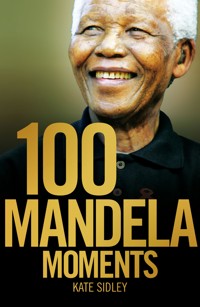
How do you retell the well-worn life story of a national icon? One way is this: a palimpsest of a hundred memories of the great man, revolutionary, world leader, and family figure, to celebrate the 100th anniversary of his birth. Kate Sidley offers renewed and touching insight into Mandela by retelling humorous, heart-warming and momentous moments from his life, roughly chronologically, drawing from his own writing and the memories of contemporaries, historians and ordinary people. The reading experience is multi-varied and complex, touching and inspiring, like Madiba himself. 100 Mandela Moments is divided into sections, according to the many roles Mandela played in his lifetime: the school boy, the student, the lawyer, the outlaw, the prisoner, the negotiator, the statesman, the elder. Each story or "moment" is short and encapsulates something about the man behind the legend, and the book can be read cover to cover or dipped into.
Sie lesen das E-Book in den Legimi-Apps auf:
Seitenzahl: 228
Veröffentlichungsjahr: 2018
Das E-Book (TTS) können Sie hören im Abo „Legimi Premium” in Legimi-Apps auf:
Ähnliche

















100
MANDELA
MOMENTS
Kate Sidley
Jonathan Ball Publishers
Johannesburg & Cape Town
CONTENTS
Timeline
Mandela the boy
Naming rites
Of donkeys and dishonour
School days
The Royal House
Becoming a man
Broadening horizons
Among the intellectual elite
Principals and principles
Escape to the city of gold
Mandela the young man
Founding the ANC Youth League
First love
‘When I met Mandela …’
Defiance Campaign Volunteer-in-Chief
Mandela and Tambo Attorneys
Love and marriage
In the ring and on the road
The People Shall Govern!
The policeman’s knock on the door …
Mandela on the run
The Black Pimpernel
In hiding and on the run
No to the white republic
The Spear of the Nation
At the ‘safe’ house in Rivonia
Seeking Africa’s support for the struggle
A case of mistaken identity
Military training for the MK commander
Travelling boots
Captured!
Courtroom drama – and jail time
Mandela the prisoner
To the Island
I call on Nelson Mandela …
The State vs Nelson Mandela and Others
The joker
Robben Island prisoner 46664
Taking the struggle to the Island
The University in the quarry
Holding the baby
Know your enemy …
Cold comfort and icy showers
Letters from inside
Heartbreaking news from home
‘Here you are amongst friends’
Family photos
The mystery of the manuscript
Robben Island Shakespeare
The prisoners plan their escape
Mandela the negotiator
To a different prison
The power of touch
Crackers for Christmas
Almost free
Ready to talk about talks?
Happy Birthday to you …
Last stop on the road to freedom
Freedom for some
At last! ANC unbanned, Mandela to be freed
Mandela walks free
His first walk to freedom
A hero addresses the nation
Making friends and winning support
Who are you?
Mandela and Tambo, together again
Mandela, peacemaker
Free Mandela (from Mrs Thatcher!)
The murder of Chris Hani
In the ring with Ali
Don’t mess with Mandela
A surprise visit from the president
Disarming humour
The native who caused all the trouble
Charming the journos
Conflict about the Nobel Peace Prize
Mandela as president
Mandela casts his vote
A new South Africa, a new president
The presidential inauguration, the party everyone wanted to be at
There is no more you and us
Money where your mouth is
It’s all about the children
Cooking fit for a king
Justice for all at the Constitutional Court
Reunion at Robben Island
It was the time of my life …
United in rugby
Melktert in Orania
Dancing with the Queen
Woza Nelson Mandela, Welcome Prince Charles
Reach for a dream
‘Asimbonanga’ – We have not seen him …
Two presidents
Hello, neighbour
Mandela the elder
Late blooming love
Oprah’s gift
Taking action on HIV/Aids
Eternal flame of democracy
The Mandela movie
Mandela’s dream – a hospital for the children
Sing it right
Christmas at Qunu
Winning the World Cup bid
Don’t call me, I’ll call you …
Dare not linger
Hamba Kahle Tata
Sources
About the Book
About the author
Imprint Page
TIMELINE
191818 July: Nelson Mandela born at Mvezo, in the Eastern Cape
1939enrols at University College of Fort Hare
1941comes to Johannesburg
1943joins the African National Congress (ANC)
1944marries Evelyn Mase; forms the ANC Youth League
1948National Party comes to power
1952Defiance Campaign begins; Mandela sets up law practice with Oliver Tambo; arrested for violating the Suppression of Communism Act and given suspended sentence
1955ANC adopts the Freedom Charter
1956Mandela arrested and charged with treason; start of Treason Trial
1958divorces Evelyn and marries Winnie Madikizela
1960Sharpeville massacre; State of Emergency declared; ANC and PAC banned
1961South Africa becomes a republic
1961Mandela is acquitted of treason, goes underground
1961Umkhonto we Sizwe (MK) is formed
1962Mandela secretly leaves the country for military training in Africa
1962arrested and sentenced to five years’ imprisonment for leaving the country illegally
1963charged with sabotage in the Rivonia Trial
1964begins life sentence on Robben Island
1982transferred to Pollsmoor Prison
1985State of Emergency declared
1986second State of Emergency declared
1988Mandela transferred to Victor Verster Prison
1990ANC and other liberation organisations unbanned and Mandela freed after 27 years in prison
1993Mandela awarded the Nobel Peace Prize (with FW de Klerk)
1994first democratic election; Mandela inaugurated as President of South Africa on 10 May
1997steps down as ANC president
1998marries Graça Machel on his 80th birthday
1999steps down as President of South Africa
2004retires from public life
20135 December: Death of Nelson Mandela
MANDELA
THE BOY
NAMING RITES
On 18 July 1918 at Mvezo, a tiny village in the district of Umtata (today Mthatha), a baby was born to Nosekeni Fanny and Gadla Henry Mphakanyiswa. The baby’s father was a chief and an advisor to the local king, and they were a family of some standing in the community, minor royalty of the Thembu tribe. This new baby would grow up in the royal household, although he was not in line to the throne.
The child was named Rolihlahla Mandela. The literal meaning of the isiXhosa name Rolihlahla is ‘pulling the branch of a tree’, but it is more generally understood to mean ‘troublemaker’. There’s an old saying that a loved child has many names, and this was the first of many names assigned to the child by family, culture and affection.
The day he started school, the teacher gave every child an English name, as was then the custom. His new name was Nelson, which he later speculated might have been for Lord Nelson, the great British naval hero.
In his long life, Nelson Rolihlahla Mandela both caused and experienced trouble, and proved himself to be a great leader. So perhaps the names were well chosen.
Madiba, his clan name, referred to the Thembu chief who ruled the Transkei in the 18th century. In later years, Mandela was widely and affectionately known by this name.
Once he had been through the traditional Xhosa initiation ritual, Mandela was given the name Dalibhunga, which means ‘founder of the council’.
His city friends sometimes called him Nel when he was a young man. Over time, Mandela became known, affectionately, as Tata, the isiXhosa for ‘father’. And then Khulu, a shortened form of the word for ‘grandfather’. Old struggle comrades sometimes referred to him as ‘the old man’.
OF DONKEYS AND DISHONOUR
A young Nelson Mandela and the local boys were taking turns to jump up onto the back of an unruly donkey. When his turn came, just as Mandela jumped up, the beast bolted into the nearby thornbush and he was soon thrown, scratched and bloody, to the ground, much to his humiliation (and, doubtless, the great amusement of the other boys).
Mandela’s autobiography, Long Walk to Freedom, describes how this childhood humiliation taught him a lesson. He wrote: ‘I had lost face among my friends. Even though it was a donkey that unseated me, I learned that to humiliate another person is to make him suffer an unnecessarily cruel fate. Even as a boy, I defeated my opponents without dishonouring them.’
It was just one of many lessons he learned growing up in the small village of Qunu. Mandela spent his time playing in the veld with the village boys, stick-fighting, gathering fruit and honey, catching birds and fish, walking the hills and swimming the streams, and tending and herding cattle. It was an upbringing that gave him a deep and long-lasting love of the land. Much later, during his years in prison, he would think back to those days and write about the simple pleasures of a rural childhood – drinking milk straight from a cow’s udder, roasting mielies over an open fire.
Mandela was to face many powerful and oppressive opponents. While he fought them courageously, with full force, when the time came that he had the power, he allowed them the opportunity to come over to his side without humiliation.
SCHOOL DAYS
At seven years of age, Rolihlahla was given a cut-down pair of his father’s trousers, held up with a piece of string, and sent to school. It doesn’t sound particularly remarkable, but he was the first person in his family to go to a formal school.
It was the word of a retired schoolteacher that set Nelson Mandela on his educational path. This man, George Mbeka, was a friend of Mandela’s father, and an exception in the village, being both educated and Christian. One day, he paid a visit to Rolihlahla’s mother and said, ‘Your son is a clever young fellow. He should go to school.’
She didn’t know what to make of this completely unexpected suggestion – no one in the family had ever been to school, and neither she nor her husband was literate – but she did relay it to her husband, who decided that their youngest son would be the first.
And off he went, in his too-big trousers, to the one-room school over the hill from his home.
THE ROYAL HOUSE
Unexpectedly, Rolihlahla had to leave the village of Qunu, the only home he’d ever had, the huts and fields and pastures he’d played in and the children he’d known all his life. His father had died of tuberculosis and his mother announced that they were leaving Qunu.
Mother and son set out on foot. The place they came to was grand by comparison, a large whitewashed home with a fine garden, vegetables and flowers and fruit trees, and large healthy herds of cattle and sheep. Even a motorcar! This was the Great Place in Mqhekezweni, the royal residence of his father’s cousin, Jongintaba Dalindyebo, the regent of the Thembu people. He was to become Mandela’s guardian and benefactor. The regent’s handsome son Justice was to become his older brother and best friend.
Without any display of sentiment, just a tender look, Mandela’s mother left her boy in the place where he was to be raised and educated in a style that she could not provide. He was nine years old, and adapted eagerly to his new world.
At the local school, Mandela studied English, Xhosa, History and Geography, and again this clever boy caught the attention of his teachers (although he would attribute his success more to doggedness and self-discipline than to cleverness). But he learned as much from watching and listening to the chiefs and headmen who came to the Great Place to consult the regent and settle disputes. He heard tales of African heroes and warriors, the likes of which he’d never known. He heard of the evil white Queen across the waters. It was an important formative time. He internalised the notion of ubuntu – that we are bound to each other, as humans, in mutual compassion and respect.
He paid attention as cases were presented and adjudicated at tribal meetings, intrigued by his first taste of legal matters. Mandela later wrote that his own ideas of leadership were profoundly influenced by the regent and his court. Every man who came before the court was heard, from the grandest to the most modest, and the regent listened without interrupting. The meetings would continue until consensus was reached. Mandela regarded this as the purest democracy, and followed the principles himself in his political life. He would always remember Jongintaba’s view that a leader should shepherd his flock using gentle persuasion, drawing strays back to join the main body of the flock.
BECOMING A MAN
It was time for young Rolihlahla to become a man. He was 16, but his age was not the defining factor. In Xhosa tradition, a boy becomes a man through initiation and circumcision. Without going through this ritual, no matter how old he is, he remains a boy. Traditionally, he may not marry, or inherit, or officiate in tribal rituals, without taking this important step.
A group of boys take this journey from boyhood to manhood together, isolated from the rest of society. Mandela was to go through the initiation ritual alongside Justice and other boyhood friends, 26 in all.
It was customary for the boys to perform some brave deed before the ceremony. In the old days, this might have been a battle or raid, but in his time any daring deed would do. They decided to steal a pig, luring it out of its kraal with a trail of the sediment from homemade beer. The old pig ‘gradually made his way to us, wheezing and snorting, and eating the sediment. When he got near us, we captured the poor pig, slaughtered it, and then built a fire and ate roast pork under the stars. No piece of pork has ever tasted as good before or since.’
In his autobiography, Mandela describes this as a sacred time, enjoying the last days of his boyhood with his fellow initiates.
After circumcision – which must be endured in stoic silence, except for the cry of ‘I am a man!’ – he was given the name Dalibhunga, meaning ‘Founder of the Bungha’, the traditional ruling body of the Transkei.
Mandela recounts his reaction to the speech Chief Meligqili made at the great ceremony that ended the initiates’ seclusion, in which he honoured the young men and the ritual they had been part of, and then changed tack, telling them that the promise of manhood is an illusion: ‘For we Xhosas, and all black South Africans, are a conquered people. We are slaves in our own country. We are tenants on our own soil . . . The abilities, the intelligence, the promise of these young men will be squandered in their attempt to eke out a living doing the simplest, most mindless chores for the white man …’
Mandela was angry at the chief’s ‘ignorant’ remarks spoiling his proud and special day. But, he wrote, ‘His words began to work on me. He had sown a seed, and though I let that seed lie dormant for a long season, it eventually began to grow. Later I realised that the ignorant man that day was not the chief but myself.’
As well as marking his entry into manhood, initiation marked the first stirrings of political consciousness.
BROADENING HORIZONS
There was dancing and singing. A sheep was slaughtered. It was a great occasion. And it was all in honour of young Rolihlahla Nelson Mandela.
One day, this man would head political organisations. He would be awarded a Nobel Peace Prize. He would be inaugurated as President of South Africa. But this was the first celebration held in his honour and the achievement was relatively modest – he had finished and passed primary school, and was soon to make his way to high school. Mandela was delighted at the celebration, and at the regent’s gift – the boy’s first pair of boots.
The regent had plans for Mandela. And they did not include working in the white man’s gold mines. He was to become a counsellor to the king, and that meant he needed an education. He enrolled at Clarkebury Boarding Institute, which was the oldest Wesleyan mission and the best school for Africans in the Transkei. It had particular significance to the Thembu royal family. Mandela’s great-grandfather had been instrumental in the founding of the school, having given the land on which it was built. The regent himself had studied there, as had his son Justice.
Clarkebury was strict, rigorous and hierarchical – a real change from the village school. Here Mandela met African teachers with university degrees, and the Reverend Cecil Harris, the school governor, whom the regent considered a white Thembu.
Mandela soon discovered that no one was particularly impressed by his illustrious lineage – he was just one of the boys. And a country boy at that. Clomping around in his unfamiliar new boots, ‘like a horse in spurs’, he drew teasing and laughter from the girls, to his fury and humiliation.
He soon found his feet. He went on to pass the three-year programme in two years, and followed Justice to Healdtown, the Wesleyan college at Fort Beaufort. It was one of the biggest schools for Africans on the continent, with more than 1 000 pupils, and was strictly run on the English model, with a largely Eurocentric curriculum focused on British history, geography and culture.
Renowned Xhosa poet and praise singer Krune Mqhayi came to Healdtown, and his visit struck the young scholar ‘like a comet streaking across the night sky’. The students and staff were assembled in the dining hall, at the end of which was a stage. A door led from the stage to the house of the principal, Dr Wellington. ‘The door itself was nothing special,’ Mandela wrote. ‘But we thought of it as Dr Wellington’s door, for no one ever walked through it except Dr Wellington himself.’
The door opened and in came the poet, dramatically dressed in a traditional leopard-skin kaross and hat, carrying a spear in each hand. Mandela later wrote: ‘The sight of a black man in tribal dress coming through that door was electrifying. It is hard to explain the impact it had on us. It seemed to turn the universe upside down … At one point, he raised his assegai into the air for emphasis, and accidentally hit the curtain wire above him, which made a sharp noise and caused the curtain to sway … He faced us, and newly energised, exclaimed that this incident – the assegai striking the wire – symbolised the clash between the culture of Africa and that of Europe. His voice rose and he said: “… the assegai stands for what is glorious and true in African history; it is a symbol of the African as warrior and the African as artist …”’
The poet railed against foreigners who did not care for African culture: ‘One day, the forces of African society will achieve a momentous victory over the interloper. For too long we have succumbed to the false gods of the white man. But we shall emerge and cast off these foreign notions.’ Mandela was astonished, galvanised and conflicted by this powerful, outspoken speaker, and never forgot him.
AMONG THE INTELLECTUAL ELITE
In 1939, Nelson Mandela enrolled at the University College of Fort Hare. The institution had been going for just two decades, and had only 200 students, but it was the home of the black intellectual elite, many of whom would go on to become leaders.
Mandela loved Fort Hare. He was exposed to new ideas, brilliant minds and all manner of pursuits, intellectual, physical and social. He joined the drama society and learned ballroom dancing. He played soccer and competed in cross-country running. He wrote that the latter sport taught him to compensate for his lack of natural running talent with diligence and discipline: ‘I applied this to everything I did. Even as a student, I saw many young men who had great natural ability, but who did not have the self-discipline and patience to build on their endowment.’
It was here that Mandela first met Oliver Tambo, who would go on to become his law partner, comrade and beloved lifelong friend. Tambo was a top scholar and debater and, unlike Mandela, was already politically active. The two were not close during their university days, and there was as yet no indication that their lives would be intimately entwined for decades to come.
Mandela’s mentor at the time was Kaiser Matanzima, who, although he was Mandela’s nephew, was older and more confident and sophisticated than Mandela, and destined to be a king of the Thembu line. At the time, Mandela idolised KD, as he was called, and the two were always to be found in each other’s company. Tall and well turned out, they cut quite a dash. Matanzima remembered of them at that time: ‘The two of us were very handsome young men, and all the women wanted us.’
Their close relationship would not last. Their political trajectories couldn’t have been more different. While Mandela found his home in the African National Congress (ANC), Matanzima became ‘state president’ of the Transkei and a champion of the apartheid government’s ‘homeland’ system, which created sham independent states to which black South Africans were assigned according to their ethnicity.
PRINCIPALS AND PRINCIPLES
It was while he was at Fort Hare that Mandela first clashed with authority over a matter of principle, showing the ‘proud rebelliousness, stubborn sense of fairness’ that he believed he had inherited from his father. He was two years into his studies when he was faced with a difficult decision that would have a significant impact on his life.
Ahead of the election of the Student Representative Council (SRC), students raised their grievances – poor food, and not enough real power to the SRC – and agreed to boycott the election unless the university authorities accepted their demands. Mandela was among the six representatives elected by the small minority of students who did vote. The representatives resigned. A second vote was held with the same result – a small turnout, and the same six representatives. This time, the other representatives agreed to stay on the SRC – but not Nelson Mandela. In the belief that this result did not represent the will of the majority of students, Mandela resigned his position.
The university principal, Dr Kerr, asked him to reconsider, and warned Mandela that if he insisted on resigning from the SRC, he would be expelled.
This left Mandela with a difficult decision to make – whether to follow the path that he felt certain was the morally correct one and sabotage his academic career, or to stand down and complete his degree.
He followed his principles and his own sense of agency, as he explains in his autobiography: ‘I knew it was foolhardy for me to leave Fort Hare, but at the moment when I needed to compromise, I simply could not do so … I resented his absolute power over my fate. I should have had every right to resign from the SRC if I wished …’
ESCAPE TO THE CITY OF GOLD
When Mandela returned to Mqhekezweni after his exams, his guardian, the Thembu regent, Jongintaba Dalindyebo, was not at all pleased with what he regarded as the young man’s inexplicable and nonsensical stand at Fort Hare. Why throw away a promising career over such a matter? He told Mandela to do as the principal wanted – apologise and return to university.
A few weeks into the break, the regent summoned his son Justice and Mandela, and dropped a bombshell – he had arranged marriages for them both to girls from good families. These were young women whom they knew but had no attraction or particular affection for – in fact, the girl chosen for Mandela had long been in love with Justice. No matter, lobola was arranged, and the marriages were to take place immediately.
This was all within the provisions of Thembu law, and it was not for the two young men to argue. Again, Mandela was in a bind. The regent had taken him in after the death of his father, brought him up as his own son, and paid for his education. Mandela owed him a great deal. But an unwanted marriage to a young woman he did not love? No. Mandela, the self-described romantic, was not going to have someone else choose a bride for him – even if that someone was the regent. Justice felt the same. In defiance of tradition and authority, they decided to reject the regent’s plan. In that time and place, this was a deeply rebellious act. The two young men hatched a plan to run away to Johannesburg. To fund their escape, they sold two of the regent’s prize oxen to a local trader.
And so, in 1941, began Mandela’s life in the fabled city of gold, glittering with electric light and possibility. Here, after a brief stint as a watchman on the mines, he made a start on the things that would define him – his law career, love and family, and his developing political consciousness.
He had left Fort Hare without completing his degree, but Mandela had not given up on his ambition to become a lawyer. A helpful cousin offered to introduce him to an influential businessman and local leader who worked in the property business and might be able to help. That man was Walter Sisulu.
Sisulu listened to Mandela’s story – the trouble at Fort Hare, his determination to become a lawyer, his intention to study by correspondence. He described their first meeting in an interview: ‘I was at once struck by the personality of Nelson. I had, by the way, at this time already joined the African National Congress and was able to attend the conferences of the ANC. And so when he came I found a person who just answered my hope, my aspiration. This is a young man who must be developed, who has a great part to play in the movement. His personality was very striking, very warm. If he had not come the next day, I would have gone looking for him.’
Sisulu, with his fine intellect, was to become a mentor to Mandela. Many years later, in 2011, Mandela, speaking at Sisulu’s funeral, said: ‘From the moment when we first met he has been my friend, my brother, my keeper, my comrade.’ Sisulu’s more immediate influence was to introduce Mandela to Lazar Sidelsky, a progressive white lawyer. And so Mandela got his first job in a law firm, working as a clerk while he completed his degree.
Mandela was poor, sometimes travelling on foot the 20 kilometres from his home in Alexandra township to his job in town, to save the bus fare. But he was making a start on his career, supporting himself and expanding his horizons in the big city, Johannesburg. It was here that he made his first white friend, was invited to multiracial get-togethers, first came across communists, earned his BA degree. Here, he fell in love and had children. He started a law firm. And it was here that he developed the political ideas and consciousness that would come to define his life.
MANDELA
THE
YOUNG
MAN
FOUNDING THE ANC YOUTH LEAGUE
The Sisulu house in Orlando was a home-from-home for Nelson Mandela and other activists. The welcoming atmosphere, enthralling political discussion and Ma Sisulu’s cooking drew them, and it was here that Mandela met someone who would have a lasting influence on his life – Anton Lembede.
One of the few African lawyers of the time, Lembede was possessed of multiple degrees, a brilliant and unusual mind, and a magnetic personality. His views on African nationalism struck a chord with Mandela, Tambo, Sisulu, Peter Mda, Dr Lionel Majonbozi and others. To these young men, the ANC leadership seemed old, tired and insufficiently militant. A Youth League would be just the thing to shake – and wake – things up, and to press the ANC into mass action.




