


7,00 €
Mehr erfahren.
- Herausgeber: Garnet Publishing
- Kategorie: Sachliteratur, Reportagen, Biografien
- Sprache: Englisch
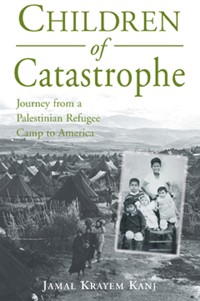
A great deal has been written over the years addressing the Palestine-Israel conflict, and the creation of the Palestinian refugee problem. However, few works on the subject really present the personal aspect: What is it like to be a refugee? What propels a decent human being to take up arms, to become a freedom fighter or a terrorist? This book tells the remarkable story of one such refugee, following his journey from childhood in the Nahr El Bared Palestinian refugee camp in Lebanon, becoming a member of the PLO, through to eventual emigration, a new life as an engineer in the United States, and a 'return' trip to historic Palestine. Running parallel to the personal narrative, the book also documents the story of Nahr El Bared itself: the story of a refugee camp that grew from an initial clump of muddy UN tents to become a vibrant trading centre in north Lebanon, before its eventual destruction at the hands of the Lebanese army as they battled with militants from the Fatah Al Islam group in the summer of 2007. Throughout it all, the spirit of the remarkable people of the camp shines through, and the book provides a moving testament to how refugees in Lebanon have managed to persist in their struggle for their right to return, as well as survive socially, economically and politically despite more than sixty years of dispossession, war and repression.
Das E-Book können Sie in Legimi-Apps oder einer beliebigen App lesen, die das folgende Format unterstützen:
Veröffentlichungsjahr: 2010
Ähnliche



















Children of Catastrophe
.
Journey from a Palestinian Refugee Camp to America.
Preface
There are many individuals that I would like to acknowledge for making this book a reality: some who have directly encouraged me to write, and others who supported me consciously or unconsciously by listening to the stories shared in this book.
At first, I hesitated to take the book project very seriously but for two major motivations: first, my children, with whom I shared some of the book’s accounts as they blossomed at a young age; and second, my parents, without whom there would have been no story to tell. For the children, I wanted to connect them with their roots far from their comfortable home in California, and for my parents, a deserving tribute to preserve their memory beyond life.
I knew writing a book was going to be a long and protracted project. I remember reading George Orwell’s 1953 book, England Your England, where he aptly etched: “Writing a book is a horrible, exhausting struggle, like a long bout of some painful illness.” As Orwell did, I understood the challenge, especially since the text had political and historical nuances and not just a personal narrative.
Finally an opportunity materialized when I left San Diego for a job on the island of Bahrain. With very few friends on the island, I had much free time after work and during weekends. To fill the time, I started in late 2006 to find a quiet corner at home or at the Seef, and later in the city center’s Caribou Coffee, to sketch down the story. I told myself that even if nothing came out of it, at least it would be a written legacy for my children.
At times, like Orwell, it was indeed an “exhausting struggle” recording my internal emotions onto a lifeless computer. Nevertheless, soon after I began to organize my thoughts, jog down the general ideas and review my writings, I started to enjoy the project. For the first time, I was able to see the story from afar, not just as the person who lived the events but also as part of an audience. I discovered another by-product of the writing, a soothing therapeutic experience while searching for the soul of humanity in all the events and the people I got to know and grew up with in the camp. At the end, Orwell must have failed to mention that completing a book could also signal the start of a lifetime healing process.
***
I planned and canceled two visits to the camp in the summer of 2006 and 2007. The first was due to Israel’s 33-day war against Lebanon and the second a full-blown battle between Fatah al Islam and the Lebanese army. The 2007 confrontations culminated in the complete destruction of the camp. This event is detailed in Chapter 9.
The events of 2007 added new emphasis to the story of a camp that had progressed from a place of destitution in 1949 to a lively self-sufficient community in 2007. With its destruction, the shared stories in the book took on new meanings and created an additional urgency to record the collective memory of this faded place. Indeed, the stories in this book are owned equally by the people who were left homeless again sixty years following their first expulsion from Palestine. Since I was in a position to do so, I felt it was my obligation to share their fate with the rest of the world.
I stayed in touch with my parents by phone following the clashes of summer 2007. We talked almost every Thursday, but I failed to make a call on the last Thursday of January 2008. Then, on the following Sunday evening, 3 February, we received a frantic call from my sister Aziza in San Diego with the news that my mother had suffered a serious stroke.
I came to learn afterwards that, on the prior Friday, my dad had received special military clearance to visit the remnants of their home in the destroyed camp. Up until then, my mother had harbored some hopes that the house or their lifelong possessions might still be recovered. In the evening, my father came back to tell her “Al’awad Bi Allah”, “Our ultimate compensation is with God.” In other words, everything was gone.
Next morning, while talking with my sister on the phone, my mother became incoherent and out of nowhere began telling Aziza that “Jamal” would be calling today. The following day she suffered a debilitating stroke. Even though my mother survived, she has not convalesced fully, eventually losing her sight and much of her short-term memory. Following the second dispossession of their lifetime, my father’s new purpose is now to comfort her throughout her grave disability. Although she ended up losing her vision, my mother never lost her foresight. Her insight shall remain a guiding light in the darkest alleys of my life.
Recognizing my powerlessness to help my parents persevere much longer, I hope by sharing their lifelong struggle or “jihad”, their memories and that of the Palestinian refugees in Nahr el Bared will live throughout the pages of this book in perpetuity.
***
Most of the people who provided invaluable advice throughout the writing process shall remain nameless. However, I would particularly like to acknowledge friends such as Ed and Ethel Sweed, who reviewed and critiqued the first of the many drafts, the counsel and encouragement I received from long-time friends Jim Rauch and Doris Bittar, and the support I received from those individuals with whom I share a common struggle and commitment to human justice, such as Yousef Abu Dayyeh, Larry Christian, Basheer Idoui, Stephanie Jennings, the late Terry Christian, and the many others who knowingly or unknowingly influenced my writing. Special thanks are due to Garnet Publishing, especially to the commissioning editor Dan Nunn who made this possible.
A deep heartfelt appreciation goes to my five brothers Ghazi, Majed, Kamal, Kamel, Abed el Nasser and my sister Aziza, who collectively inspired me to reach for the maximum potentials in my journey to a new American home.
My gratitude would be incomplete without expressing my deepest appreciation to Taghrid, the woman with whom I share two loving sons, Naseem al Carmel and Bassel Jamal, and an adorable daughter, Kenana Noora: for you are the utmost reasons I strive to excel in life.
Lastly but not least, this book is dedicated to my father Krayem for challenging my human limitations, and for my mother Noora whose bottomless compassion made me a better human being, and finally to Nahr el Bared Refugee Camp, home to the Children of Catastrophe.
Introduction
This book is about growing up in a Palestinian refugee camp in Lebanon, and about the refugees’ intractable resolve to survive and succeed.
While all refugees suffered the same terrible problem of adjusting from statehood to statelessness, the refugees in Lebanon represented a special and unique case. From the outset, Palestinian refugees in Lebanon were treated as foreigners with no social, labour or political rights. Unlike refugees in the West Bank and Jordan who were granted citizenship, and Syria where refugees were accorded full residency privileges, Palestinian refugees in Lebanon were prohibited from working in more than seventy trades and professions. The Lebanese government instituted special regulations restricting the movement of refugees within the state and limited their ability to build or to own property in the country.
BACKGROUND
The creation of the State of Israel in 1948 culminated in the displacement of 805,067 Palestinians and the destruction of 531 indigenous villages, resulting in the expulsion of roughly 85 per cent of the native population and the seizure of 92 per cent of the land.
Meanwhile, Britain, the recognized mandate power, abdicated its moral responsibility towards the colonized native population when, under its tutelage, it facilitated the arming, empowering and the resettlement of foreign Europeans in Palestine. In fact, more than fifty per cent (413,790) of the Palestinian refugees were forced out of their homes by the Zionists while Palestine was still ostensibly a British protectorate.1
The expulsion of the native population by the Zionists was part of a systematic and deliberate programme which began at the turn of the nineteenth century. In response to the rise of European anti-Semitism, Theodore Herzl, the Hungarian founder of modern political Zionism, advocated a Jewish homeland in whatever land “is given to us”.2 To arrogate the “real estate” deal with illegitimate colonial land brokers, the Zionist leadership exhibited portentous apathy toward the indigenous population. For the Zionists, the natives were either expendable transferable objects or a disregarded nuisance.
In 1896 Herzl described the ominous plan in his diary:
We shall endeavor to expel the poor population across the border unnoticed, procuring employment for it in transit countries, but denying it any employment in our own country.3
The Zionist leadership contemplated places such as Argentina, Cyprus, Sinai and Uganda as potential locations for their proposed homeland. Regarding Argentina, in his book Der Judenstaat, or The Jewish State, Herzl wrote:
Argentina is one of the most fertile countries in the world … The Argentine Republic would derive considerable profit from the cession of a portion of its territory to us.
With regard to Palestine as another option, and attempting to exploit the Ottoman Empire’s dire financial straits, Herzl wrote in the subsequent paragraph:
If his Majesty the Sultan were to give us Palestine, we could in return undertake to regulate the whole finances of Turkey.
When the financially troubled sick man of Europe (Turkey) rejected the generous funding offer, and as other alternatives became less attainable, the Zionists turned their eyes toward the likely World War I victor and the new colonizer in the region, Great Britain.
To that end, Zionist lobbying succeeded in 1917 to bring about the British government’s letter to a wealthy Jewish banker, Baron Rothschild, in what otherwise became known as the Balfour Declaration. The letter promised the banker the British government’s intent was to help establish “a national home for the Jewish people” in Palestine. Following World War I, Great Britain, the new victors’ self-designated mandate authority, appointed a professed British Zionist, Sir Herbert Samuel, as the High Commissioner for Palestine. In his role, Samuel facilitated new European immigration to the territory to help transform the demographics of the local population with the new Jewish settlers.
Nearly fifty years following Herzl’s 1896 prophecy, the Zionist’s “Transfer Committee”, headed by the first Israeli prime minister, Ben Gurion, consciously or unconsciously assigned jargon tantamount to ethnic cleansing to their military operations, from names such as matateh (broom), tihur (cleansing), biur (a Passover expression meaning “to cleanse the leaven”) and niku (a Hebrew word for cleaning up).4
This was a plan which Joseph Weitz, the head of the National Jewish Fund, described in his diary on 20 December 1940 as:
NAHR EL BARED CAMP
Palestinian refugees who settled in Lebanon came mostly from towns and villages in the northern part of historical Palestine. Naturally at first, most of the refugees settled in southern Lebanon, in proximity to their homes across the border. However, to avoid potential conflicts with Israel, the Lebanese authorities decided to relocate the refugees from the southern borders and divide them into smaller groups. As an adjunct to this, several UN humanitarian services were created to help the newly established refugee camps throughout Lebanon.* The UN emergency aid services to the temporary refugee camps were led at first by a network of the League of Red Cross Societies, the American Friends Service Committee, Non-governmental Organizations (NGOs) and other UN organizations.
In November 1948, the UN established the United Nations Relief for Palestinian Refugees (UNRPR) as an umbrella organization to coordinate the work efforts of the NGOs and other UN agencies. On 8 December 1949, the UN General Assembly voted for the establishment of the United Nations Relief and Works Agency (UNRWA). UNRWA started its operations in May 1950, with a renewable mandate every three years, to provide services to all registered Palestinian refugees.
The replacement of the interim relief agencies with UNRWA was intended to provide long-term relief and work for Palestinian refugees. However, leaders of the Palestinian refugee community were concerned that the new organization was part of a larger international covert program emphasizing long-term settlement, and de-emphasizing the need to implement UN resolution 194 calling for the refugees’ right of return to their original homes.
Nahr el Bared Camp was initially founded by the League of Red Cross Societies (LRCS) in 1949 to service refugees relocated from the south and from the region of the Beqaa Valley (A’njar) in eastern Lebanon. The camp was situated on the Mediterranean shorelines, approximately ten miles north of the city of Tripoli and about fifteen miles from the Syrian borders. It was built on the shore of Nahr el Bared, which means “Cold River” in English, hence the name Nahr el Bared Camp, along the main highway linking Lebanon with Syria and far from any major Lebanese population centres.
The main road became an important economic lifeline for trading and commercial activities servicing the surrounding Lebanese towns and villages, as further explained in Chapter 5 of this book, on the camp’s economy. Likewise, the river and the sea equally played very important roles in sustaining its future economy. Early on, the river was the only available semi-clean source of running water for refugees to bathe and to wash their clothing in. The sea was an important source of fishing, construction aggregates and trade.
* Four of the camps were eventually destroyed and removed either by Israeli invasions or as a result of the Lebanese Civil War. Today twelve Palestinian refugee camps remain in Lebanon.
TRANSFORMATIONS
The camp experienced approximately five major transformations following its establishment in 1949. In the early years, it was a muddy clump of tents over an area of less than one square mile for a population of fewer than 5,000 inhabitants. In the mid- to late 1950s residents started to replace the temporary tents with permanent huts; in the early 1970s, having a soaring population of about 18,000, the camp went through a construction boom to accommodate this increase. In 1982, a new wave of refugees escaping the Israeli invasion and occupation of southern Lebanon took shelter in the camp. In the late 1980s and early 1990s the camp started to expand outside its official boundaries into what later became known as the new camp. In the summer of 2007, the camp was completely destroyed by the Lebanese army.
Despite the population’s natal growth between 1949 and 1969, the area of the camp remained unchanged as people were not permitted to expand beyond the original demarcation lines established by the Red Cross in 1949. Furthermore, the Lebanese authorities imposed severe limits on building permits, even for minor expansions or simple home renovations inside the camp proper. In the early years, residents were not even permitted to build restrooms inside their properties and had to use public latrines built by UNRWA. Camp inhabitants were not permitted to build concrete roofs or to pave infront of their courtyards. Water was to be carried physically from community public fountains and the digging of water wells was strictly controlled.
There were also harsh security and civil measures taken against persons suspected of political activities. I knew of individuals who were relocated by the Lebanese Interior Security from refugee camps in the south for being suspected of, or arrested for, trying to cross the borders illicitly to visit their homes and properties under Israeli occupation. These individuals were placed under partial house arrest and were required to show up twice a day at the hated Interior Security Office to prove their continued presence in the camp.
Following the camp uprising in 1969, which resulted in the withdrawal of the Lebanese security forces and the entry of the Palestine Liberation Organization (PLO), the camp experienced significant construction activities to ease overcrowding and to meet natural population growth. Initially the new construction was mostly to replace dilapidated tin roofs, carry out overdue renovations and room expansions within homes. Later, as a result of demand and the lack of any official building authority oversight, home dwellers encroached onto public alleyways and open space areas throughout the camp. Thirty years later, the camp had become one of the most densely overcrowded square miles in the world.
In 1982 and following the Israeli invasion and the displacement of refugees from southern Lebanon, the PLO acquired a small piece of land adjacent to the northern boundary of the camp to house the new group of refugees. Since Palestinians cannot legally purchase or own property in Lebanon, the PLO had to deed the land to the Lebanese Islamic endowment. Subsequently, Lebanese land owners in the adjoining properties began to subdivide their land and offered it for sale to interested buyers. Several residents invested their life savings in purchasing new plots of land, which frequently remained under the name of the Lebanese land owner but with a real estate “power of attorney” in the purchaser’s name. The new area became known as the new camp. I shall elaborate further in the coming chapters on the development of the camp from penurious conditions to becoming a major commercial hub competing with traders in the second largest city in Lebanon, and then to the eventual destruction of the camp.
THE FUTURE
Since 1948, and having professed otherwise at first, Israel has consistently blocked the implementation of UN resolution 194* ordering the return of refugees to their original homes. It used diplomacy as a tactic to prolong negotiations indefinitely‡ (negotiation for the sake of negotiation) while it continued to transform the demographics on the ground, preempting the outcome of future peace talks. It continues to do so today by building illegal settlements in the area slated for negotiation between Israel and the Palestinian Authority. No doubt Israel has mastered the art of temporizing in its diplomacy: as a past president of the World Jewish Organization, Nahum Goldman once said, in the mid-1970s, that “Diplomacy in the Middle East is the art of delaying the inevitable as long as possible.”6 The passage of time, however, has so far failed to change the resolve of the refugees. Instead of taking responsibility for driving the Palestinians from their homes, Israel deludes itself into hoping that time will metamorphose the refugees into a mirage in the vast Arabian landscape. In analyzing Palestinian refugee concerns after 1948, an Israeli Foreign Ministry official document projected that:
The most adaptable and best survivors would ‘manage’ by a process of natural selection and others will waste away. Some will die but most will turn into human debris and social outcasts and probably join the poorest classes in the Arab countries. [State Archives, FM, 2444/19]7
Every people in the world lives in a place. For Palestinians, the place lives in them.8
* Israel also continues to evade compliance with UN Security Council’s Resolutions 242, 338 and the US road map.
‡ Following the Madrid negotiations sponsored by the first Bush administration, Israeli prime minister, Yitzhak Shamir, admitted his strategy was to deliberately drag negotiations on for a decade.
Notes
1 See the Palestine Land Society map at www.plands.org/map_ english.htm, retrieved May 2008.2 Isseroff, Ami, ‘The history of Zionism and the creation of Israel’, http://www.mideastweb.org/zionism.htm, retrieved June 2009.3 Pappé, Ilan, The Ethnic Cleansing of Palestine (Oxford: Oneworld Publications, 2006), p. 250.4 Ibid.5 Masallah, Nur, Expulsion of the Palestinians: The Concept of Transfer in Zionist Political Thought (Washington, DC: Institute for Palestine Studies, 1992), pp. 131–32.6 Safiah, Afif, ‘Diplomacy in the Middle East: The Art of Delaying the Inevitable’, July 2001, http://www.passia.org/publications/Pal-Id/ afif06.pdf, retrieved 4 December 2008.7 Segev, Tom, and Weinstein, Arlen Neal, 1949 The First Israelis (New York: Owl Books by Henry Holt and Company, 1998), p. 30. (Quoted originally from: Middle East Information, ‘The Problem of Arab Refugees’, State Archive, Foreign Ministry, Refugees, 2444/19.)8 Rubinstein, Danny, The People of Nowhere: The Palestinian Vision of Homeland (New York: Times Books, 1991), p. 120.
.
1 The Making of a Refugee
“You can take the boy out of the country, but you can’t take the country out of the boy.” This is a Rwandan proverb I first heard in the early 1980s while watching a 60 Minutes interview with American actor and singer Dean Reed who was self-exiled in the former East Germany. Reed was talking about his deep connections to his home in America. I was also taken from my home, but before birth. I was born ten years after my parents were expelled from their homes in Palestine. Yet Palestine must have been embedded in my DNA structure. In this case the proverb could fittingly be restated, “You can take the egg out of the country, but you can’t take the country out of the egg.”
I come originally from an old Palestinian Arab tribe known as “Arab Al Haib”. The equivalent English translation of Al Haib is “those with ‘charismatic demeanour’ ”. My family belonged to the tribal branch that settled the shores of Palestine north of Acre and next to a town called Al Zeeb. My parents were married around 1940 when my father was about sixteen years old and my mother had barely reached puberty. She tells the story that while playing in the neighbourhood with friends of her age, she was told, “You are marrying Krayem”. The story goes that Krayem’s father Nayef settled a debt with Noora’s father Ghathian, who in turn agreed to wed Noora to Krayem. The young teenagers Noora and Krayem did not have any choice but to honour the arrangement made between their elders. Since they married so young, seven years passed before the birth of their first child in 1947. Ghazi, my oldest brother, was born several years after Palestine became a preferred refuge destination for Jews escaping the early Nazi repression and later the Nazi Holocaust in Europe. My father told me years later that Palestinians at first welcomed the new immigrant European Jews as there was already a small native Jewish community living peacefully in Palestine. However, by the 1930s it became clear to the indigenous population that the new wave of European immigrants, abetted by the British occupiers, was part of a much larger Zionist plan to replace the native Palestinians and establish a Jewish homeland instead.
Palestinian Jews were for the most part successful artisans, especially in carpentry, and lived around the city of Jerusalem. Native Jews were skilled merchants who passed down their trades within the family from generation to generation. Besides, members of the native Jewish community, as well as their fellow upper-class native Palestinians, exhibited little interest in agriculture and considered farming an inferior trade, and farmers as a primitive class of people.
However, and unlike the native Jewish community, the new European immigrants established exclusive Jewish settlements far from Jerusalem, showed special interest in land acquisition and less interest in the archetypal native Jewish pious tradition around the holy city of Jerusalem. The aggressive land ownership activities and the exclusionary farming communities established by the new immigrants, segregated even from the native Jewish community, roused the suspicion of native Palestinians. Little did the Palestinians know at the time about the forty-year-old furtive program of the Zionist Jewish National Fund (JNF) to purchase land to benefit and encourage European Jewish immigration to Palestine ...
The JNF was established by the Fifth Zionist Congress in 1901 to purchase land and to lease it “exclusively to Jews at a nominal rate”.1 JNF strategy promoted the Zionist’s slogan, “conquest of labour” (Kibbush avodah), which advocated the hiring of “Jews and only Jews”2 while denying “employment” to the “poor population” as envisaged by the founder of Zionism, Theodore Herzl, several years earlier.
Nearly fifty years later, by the time of the creation of the state of Israel, the JNF and the Zionist movement had only managed to acquire about 7 per cent of the land of Palestine, or 1,585,365 dunums.3In his book The Birth of the Palestinian Refugee Problem, Israeli author Benny Morris confirms that by 1947, Jewish land ownership in Palestine was less than 7 per cent.4 This fact was corroborated, to a degree, by the Jewish National Fund, which stated that “By the time Israel declared independence in 1948, the JNF owned 12.5 per cent of all the land of Israel.”5
Since 1948, the JNF has led an international scheme to cover up the destroyed Palestinian villages with a specious environmental forestation campaign promoting the planting of trees in Israel.
The JNF boasts that it “… has planted over 240 million trees in the land of Israel”.6 The JNF does not, however, disclose to its unsuspected donors that at least eighty-six of these forests and parks are built over the ruins of destroyed Palestinian villages.7 I visited some of the sites disguised as parks and forests to see old chiseled stones from demolished homes and mulish cactus plants sprouting, which exposed Israel and the JNF’s gambit to hide the evidence of emptied and destroyed villages. As an example, the well-known Israeli Canada Park was built on the ruins of the ethnically cleansed villages of Emmuas, Yalu and Bayt Nuba; the trees in Biriya Forest grow over the foundation of the village of Amuka; the town of Reihaniyeh is buried under Ramat Menashe Park and the remains of Ajur are fertilizing the greenery in Park Britain.8
Where the JNF did not reforest what were once peaceful villages and as part of Israel’s conjured history, Israel has bestowed Hebrew pseudonyms on the locations, replacing the native names of Palestinian towns. Thus, Tel Rabi became Tel Aviv, Lubya turned into Lavi, Al Zeeb transpired into Gesher Haziv, Saffuriyya into Tzippori and Beit Jala metamorphosed into Gilo.
JOURNEY INTO REFUGEE LIFE
Ignoring the facts on the ground, on 29 November 1947 and under pressure from the British and cohorts of guilt-ridden Western governments, the United Nations General Assembly voted to partition Palestine between the native Palestinians and the new Jewish immigrants. Under the UN plan, the native Palestinians who owned 93 per cent of Palestine were offered less than 44 per cent of their registered properties, while the Zionist movement, who held less than 7 per cent, was awarded more than 56 per cent of the land. Naturally, the Palestinians rejected the UN plan as unjust and called for a fair resolution that recognized the rights of the indigenous landowners.




