


18,15 €
Mehr erfahren.
- Herausgeber: Paraclete Press
- Kategorie: Sachliteratur, Reportagen, Biografien
- Sprache: Englisch
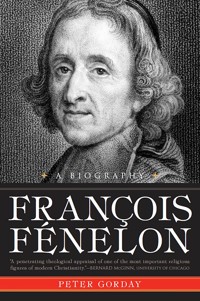
Discover the wisdom of this controversial theologian whose counsel and meditations have found a wide audience for more than three centuries. François Fénelon was a seventeenth-century French archbishop who rose to a position of influence in the court of Louis XIV. Amid the splendor and decadence of Versailles, Fénelon became a wise mentor to many members of the king's court as well as to the controversial Madame Guyon. Later exiled from Versailles for political reasons, Fénelon set out to improve the lot of peasants of his diocese and to deepen the spiritual life of all with whom he came in contact. Until his death, he corresponded with those at court who had become his spiritual "children." Twenty-first century Christians are rediscovering the wisdom of this spiritual thinker. Together with Pascal—who was an old man in Fenelon's youth—he showed how it was possible to have devotion and faith in the Age of Enlightenment. He battled heresies, faced charges of heresy himself, and wrote masterful books of insight into the spiritual life. "Peter Gorday's life of Fenelon is a gem. I recommend it to anyone with an interest in Fenelon or Christian mysticism in general." –Dr. Chad Helms, Professor of Modern Foreign Languages, Presbyterian College, and editor of Fenelon: Selected Writings (Classics of Western Spirituality) "Gorday traces the complex situation in Fenelon's time and the varying perspectives of his interpreters. He declares him not cunning but tough as a thinker. In this book, we get not only a fascinating story but also a subtle guide to self-examination." -Dr. Eugene TeSelle, Emeritus, Vanderbilt Divinity School; author of Augustine the Theologian
Das E-Book können Sie in Legimi-Apps oder einer beliebigen App lesen, die das folgende Format unterstützen:
Veröffentlichungsjahr: 2012
Ähnliche




















FRANÇOISFÉNELON
A BIOGRAPHY THE APOSTLE OF PURE LOVE
PETER J. GORDAY
PARACLETE PRESS
BREWSTER, MASSACHUSETTS
François Fénelon: A Biography—The Apostle of Pure Love
2012 First Printing
Copyright © 2012 by Peter Gorday
ISBN 978-1-55725-801-4
Library of Congress Cataloging-in-Publication Data
Gorday, Peter J.
François Fénelon : a biography—the apostle of pure love / Peter J. Gorday. pages cm
Includes bibliographical references and index.
ISBN 978-1-55725-801-4 (pbk.)
1. Fénelon, François de Salignac de La Mothe-, 1651-1715. 2. Authors, French—17th century—Biography. 3. Theologians—France—Biography. I. Title.PQ1796.G55 2012282.092—dc23
[B] 2011052032
10 9 8 7 6 5 4 3 2 1
All rights reserved. No portion of this book may be reproduced, stored in an electronic retrieval system, or transmitted in any form or by any means— electronic, mechanical, photocopy, recording, or any other—except for brief quotations in printed reviews, without the prior permission of the publisher.
Published by Paraclete PressBrewster, Massachusettswww.paracletepress.com
Printed in the United States of America
CONTENTS
INTRODUCTIONMan, Quietist, Mystic
ONEClassical Education and Priestly Formation 1651–1677
TWORising Intellectual Star 1675–1689
THREEPedagogue to Royalty 1689–1697
FOURMadame GuyonTHE CATALYST 1688–1695
FIVEMadame de Maintenon, Saint-Cyr, and the Question of “Pure Love” 1689–1697
SIXFrom Issy to the Maxims and BeyondFÉNELON AT HIGH NOON 1694–1699
SEVENLouis Thunders, the Pope DecidesFÉNELON HUMBLED 1699–1715
EIGHTAt Cambrai “PURE LOVE” IN ACTION 1695–1715
EPILOGUEFénelon for Us
ACKNOWLEDGMENTS
NOTES
SELECTED BIBLIOGRAPHY
INDEX OF PROPER NAMES
“So it is to ensure that the operation of grace may remain a mystery of faith that God permits it to be slow and painful.…We would much rather be consumed at once by the flames of pure love, but so speedy a process would cost us nothing. It is utter selfishness that we desire to attain perfection so cheaply and so quickly.”
—INSTRUCTIONS AND ADVICE, 36 (TR. EDMONSON)
“As for myself, I am in a dry peace.…But the world seems to be like a bad comedy, which is going to disappear in a few hours. I distrust myself more than the world. I classify everything as a ‘makeshift,' and it is in the depth of this ‘makeshift' status of everything here below that I find peace.”
—LETTER TO THE COMTESSE DE MONTBERON NOVEMBER 7–8, 1700
INTRODUCTION
Man, Quietist, Mystic
The winter in northern France along the border with the Low Countries that year was particularly harsh. It was the final strain on the increasingly frail health of the sixty-four-year-old archbishop and duke of Cambrai, François Fénelon. People noticed at Christmas services when he presided in the stately Gothic cathedral that he looked extremely drawn and feeble. He described himself as “a walking and talking skeleton that sleeps and eats a little bit.”1 He had already been asking officially for help with administrative duties that were beyond his strength, although his mind was as sharp as ever. His mood and spirit were resigned, yet tranquil and hopeful. In the first week of January—the year was 1715—he took a sharp turn for the worse with what seems to have been bronchial pneumonia.2 Medical help was summoned to no avail. Friends, family, local clergy, and supporters gathered in order to be with him as the end approached. There were final devotions and exchanges of affection, administration of the last rites, and the last blessing from the archbishop on all present. He was in considerable pain that night. By early morning on January 7, though, he was more peaceful; he kissed the crucifix for the last time and quietly expired.
Fénelon's will was uncomplicated, because, as his secretary Ramsay said, “after his death he was found to be penniless and debt-free,- he died as poor as he lived.”3 He swore his allegiance to Louis XIV in a final statement, asking His Majesty only to assure a pious successor to the archbishopric and the continuing supervision of the seminary by the Society of Saint-Sulpice. He had requested that the funeral observances be kept as simple as possible, so that, he said, “the modesty of bishops' funerals would teach the laity to forgo the vain expenditures” that had become customary. It was decided also to dispense with any eulogies despite his saintly reputation.4 He was deeply mourned and fondly remembered as an exemplary priest and pastor. It is extraordinary, therefore, that such a beloved and revered man should have left such a complex legacy. Yet complex it is, at least partly because of the fascinating spiritual currents that will always swirl around his name.
At the center of this whirlpool was the fact that he had spent the last years of his life under the shadow of a papal condemnation that his own monarch, Louis XIV, had aggressively sought. By official pronouncement in March 1699, Pope Innocent XII had censured in the work of Fénelon certain theological propositions about the nature and import of “pure love.” The matters were highly technical in nature, and the force of the censure was somewhat unclear. But, nonetheless, Fénelon had immediately and in good faith submitted. Others quickly disseminated his controversial writings, however, and his ideas spread like a devotional flood that could not be suppressed. Louis's disapproval and the pope's judgment failed to hold back the tide.
Thus, the lack of eulogy at his funeral notwithstanding, massive praise of Fénelon (as well as heated criticism) had already begun during his lifetime, only to mushroom after his death in a process that continues to this day.5 Our retrieval of the man and his message can still bear much good fruit.
The Maxims of the Saints
François Fénelon is either idealized or demonized because he continues to strike deep chords in the life of the spirit. For students of the history of Christianity he is remembered primarily as the author of the notorious work that led to his papal condemnation, the Maxims of the Saints (its full title is Explication of the Maxims of the Saints on the Inner Life). First published in 1697, then condemned in 1699, its further publication was suppressed until the nineteenth century. Modern readers are always surprised that such a dry composition should be so controversial. The Maxims is a strikingly innocuous composition at first glance.
Each of the “maxims” is actually an affirmation, or contention, about some aspect of how it is that the human soul, hungering for the perfection of spiritual life, can draw closer to God in prayer. After being stated in what Fénelon considered a correct and orthodox form, the individual maxim is then coupled with an erroneous and distorted statement of the same central point. The intention is to help the reader separate a “true” from a “false” formulation of what is at issue. The core argument of the whole work, the underlying theme, is that “all interior paths tend toward pure or disinterested love” and that “this ‘pure love' is the highest degree of Christian perfection.”6 In other words, if you want to grow in your relationship with God, then you must practice what Fénelon calls “pure”— that is, totally disinterested—love. The terms are slippery, but the claim is bold and is raised by Fénelon to the very highest level of intensity. The implications are radical and unsettling. And yet, says Fénelon, such an idea of “pure love” has always been at the heart of the best spiritual teaching in all times of the church's life. Consequently, the Maxims actually stirred up a hornet's nest.
But there was even more to it. By publishing the Maxims Fénelon aimed at accomplishing something else on a deeply personal level. He wanted to vindicate the essential insights of his friend Madame Jeanne Guyon. She had been a catalyst in his development. He considered her a saintly, well-intended, but misunderstood and mistreated spiritual teacher. Her book, A Short and Easy Method for Prayer, had been well received initially by seriously devout readers in the most aristocratic circles. Then doubts arose. Careful examination by church authorities had turned up some troubling expressions. Her personal history was also controversial, even scandalous. In the prolonged struggle that was set in motion Guyon was apprehended, then interrogated by Jacques-Bénigne Bossuet, bishop of Meaux and senior theologian of the French church, and then invited to produce a defense. Fénelon rose to her side in the Maxims, but failing to exonerate her, he brought about his own condemnation as well. As part of the complex fallout Fénelon came under official censure, and his intimate relations with Louis XIV and his consort, Madame de Maintenon, were ruined for good.
The grounds of the condemnation are somewhat obscure to us today. In essence Fénelon was accused (as had been Guyon earlier) of the doctrinal heresy known as “quietism.” The label had come to be linked specifically with the notorious heretic Miguel de Molinos, whose writings and life had already been condemned by the pope in November 1687, following which Molinos was thrown into prison. His rejected teaching, now labeled “quietist,” made use of the concept of “pure love.” So in the minds of many people “pure love” automatically implied “quietism,” and “quietism” meant the forbidden teachings of Molinos. Fénelon's name and his ideas about “pure love” thus came to be permanently associated with a formal heresy, and the very concept of “pure love”—despite a respectable legacy in orthodox theological discourse—became tainted. It is this version of the quietist Fénelon that is best known to students of church history.
Two Problematic Terms: Quietist And Mystic
So it is that we must come to grips with two terms if we are to begin to understand Fénelon. The first charge is that he was a “quietist.” And the second is that his spirituality is “mystical” and that he is a “mystic.” Both concepts are closely associated in the tradition and thus must be taken in tandem. What makes definition difficult here is that they had achieved a kind of red-flag status in the later seventeenth century because each of them had become an “ism,” that is, a set of doctrines. There was quietism and there was mysticism. As soon as one of them was used, people judged their orthodoxy or unorthodoxy. Can good Catholics be quietists and mystics? At the very least, both terms suggested to the minds of many people dangerous tendencies in religion.
But there was distortion here. In the Molinist form in which it had been condemned, quietism consisted, to be sure, of a set of (officially objectionable) theological propositions, and this is how it is defined in theological encyclopedias. In its more original and more general usage the term referred, as Ronald Knox argued,7 not to an articulated doctrinal posture of some sort, but rather to a type of pastoral guidance common in the seventeenth century. Pious souls were encouraged to embrace what was sometimes called the “sleeping devotion” or “the prayer of quiet” or “the prayer of simple regard.” In theoretically articulated form it was a devotion that had roots in Spanish and Italian circles and was then popularized in France by Francis de Sales. Traditionally considered a higher and more advanced form of prayer for monastics, it proved to be quite helpful for ordinary layfolk as well. The purpose of this kind of prayer was to help devotees avoid two perennial traps in the disciplined practice of prayer, especially where concern with method was paramount: scrupulosity about intention (am I doing this with the right spirit?) and self-conscious preoccupation with technique (am I doing this in the right way?). What then happens, ironically, is that the “self” of the worshiper becomes the center of attention instead of God. Henri Bremond, the great historian of the history of French spirituality (to whom I shall refer often), described the dilemma in terms of the anxious “disquietude” that easily fills our hearts when we are “self”-focused in prayer.8 The “prayer of quiet” is then a way to shift the focus onto God, so that the soul of the one who prays might be filled with trusting “quietude.” It was a bit like telling someone who is learning to dance to stop thinking about their feet and just swing with the rhythm. The goal is a worthy one.
So, where's the problem? While everyone agreed that the prayer of quiet is a good thing for particularly distressed and fretful souls—which is all of us at times—there are deeply important questions about the nature of this prayer. What exactly happens between the soul and God in such prayer? If we practice such prayer, what are the implications for more ordinary meditative practices and devotional disciplines, for the use of the sacraments, for relations to church authority, and, most of all, for Christian ethics? All of these require methodical attention to duties and “correctness.” How is the requirement to love thy neighbor affected? Or loving God? If I quietly love God in my prayer, is it acceptable to hope for something as well? Or does that let anxiety about whether I am doing it “right” slip in by the back door? Fénelon addressed all of these questions eventually. As we shall see, much of this devolved into a debate about the relation between “self-love” and love of the “other,” in this case God, or “a love of God for what he does [for me] and a love of God for what he is [in himself]”9—a debate just as alive in our own time as in that of Fénelon.
The core quietistic idea is solid. It is the belief that God is found by the still, resting, empty, and contemplating mind, not by the mind as it actively manipulates quasi-visual imagery or verbal constructs, that is, not by discursive mental labor or meditation. When God “comes” to the patiently waiting and expectant soul, it is because we listen and cease talking,- it is because we sit in stillness and wait for God and (seemingly!) cease to do anything. We do not find God, but God finds us: it is one way of emphasizing the priority of grace and gift, of receptivity, in the spiritual life. Quietist writers often make this point by saying that we must get the “self” out of the way in making ourselves available to God. This “self” may be understood morally as our prideful, arrogant, conceited, self-important self, but also more cognitively as our consciously thinking, analyzing, self-reflexive (thinking about ourselves and self-aware) self. Notice also, though, that this contrast may be formulated as “the self doing something” in the presence of God, that is, in “action,” versus “the self at rest” in the presence of God, that is, in a “state” of repose. It is one small step, then, to say that this “self” must be “annihilated” if we wish to give ourselves over to, or “abandon” ourselves to, God's presence and then to divine providential care. The intention is clear, but the language is risky.
The point at which “mysticism” enters the picture is with the contention that this abandoning of ourselves or giving ourselves over to God must proceed by means of a rediscovered, intensely felt, and profoundly inward sense of the immediate presence of God.10 The consequent yielding of the self to this experience of God must happen at a hidden location deep within the individual's inner “space,” often called the “center” or “fine point” of the soul. “Mysticism” then denotes this sense of being “filled” with divine presence deep within. We should notice as well that the sense of being “filled” may be expressed positively or negatively. That is, God may be present, for example, as a burning fire (positive) or, paradoxically, as a desolating emptiness (negative). Likewise the presence may be depicted with vivid imagery (positive) or, contrariwise, by means of an abstract language of negation (negative). The experience may be one of joy (positive) or agony (negative). And so on. There was also the issue, often heard in Fénelon's time, of whether mystical experience was reserved only for adepts or something to be desired for all Christians.
Now in the early stages, this inward experiencing of the mystic is marked by a retreat from the mundane, from the outward, superficial, and distracting world of daily concerns and activities, in order to pursue a re-centered, “purified” sense of the self (a “losing of the self to find the self” experience). But then in its more advanced stages the soul, no longer or not entirely invested in a retreat from the outward, may move back to the mundane with “eyes that have been opened,” with, we might say, “the eyes of God.” Bremond's more technical definition is that “mysticism” denotes “that natural disposition which leads certain souls by a sort of sudden compulsion to seize with direct and daring love on the spiritual beneath the veil of sense, the one in the many, the order amid the confusion, the eternal in the transitory, the divine in the created.”11 The mystical consciousness generalizes; having started in prayer, it becomes a way of perceiving everything. For Fénelon, as we shall see, it is not so much that the world looks different because of mystical experience, but that he understands it differently (as being providentially ordered by grace, rather than meaningless), and he can now ethically relate to it differently (with the will of God, rather than with his own).
It is useful, then, to combine the terms. If we say that this quietist prayer of repose combined with the deep inwardness of the mystical experience is something genuine, even something beautiful and highly to be desired, it may also have a dangerous and subversive quality about it. Sometimes the mystic, immersed in a deep and inward quiet with God, overlooks and even bypasses the ordinary practices and disciplines of community life. Trouble then begins and conflict ensues with authoritative traditions and offices in the church. The stage is set for charges of heresy, or immorality, or “special revelations” vouchsafed to mystical “prophets.” Precisely because of their unregulated nature, quietistic-mystical spiritualities tend to be manifestations of individual religious genius. They may be freewheeling, undisciplined, ineffably private, vulnerable to the one-sidedness of idiosyncrasy, bizarre and extreme language, and grandiose claims for personal authority. Religious fanaticism, pathology, and delusion, as well as outright charlatanism, may enter the picture. All of the rules are broken, or at least stretched. The mystic does not have to live by the ordinary requirements because he or she operates on a higher level of consciousness and “knows” better.
Fénelon was exceedingly careful here. We will see how hard he labored to restrain what appeared excessive with Guyon. Quietistic-mystical spirituality does tend toward overstatement, he admitted. But abuse does not do away with correct use. We will also see that he was equally intent on preservation of a rich essence as well. This spirituality is fecund with spiritual renewal for all of us, but it must be rightly understood. It was the function of the titanic struggle with his archrival Bossuet about these matters that allowed him to craft the all-important distinctions and clarifications. His purpose was to “detoxify” quietist-mysticism, to show that it contains a way of relating to God and a way of living that are authentically Christian. That way is “pure love.” And in this he was eminently successful, despite the official condemnation of his masterwork.
Fénelon the Man and the Spiritual Teacher
For most modern readers of spiritual texts, the old ecclesiastical disputes with their sometimes arcane and off-putting technical language may seem, perhaps, like dinosaurs. We are more likely to know Fénelon as the benignly smiling figure (in the famous Vivien portrait) who graces the book jackets of anthologies. These are usually abbreviated selections drawn from compilations put together after his death or excerpted from his vast correspondence. In such collections we do not meet Fénelon the embedded controversialist and polemicist on matters of seventeenth-century church dogma. Instead, we encounter a more user-friendly Fénelon, who seems more contemporary because he is dealing with perpetual matters. This Fénelon is an expert on prayer, a passionate lover of all that is beautiful and exalted, and a therapist for the sin-sick soul, all at once! One danger in such a way of experiencing Fénelon, though, is that his ideas about “pure love” can have a certain vapid quality, as if the very notion is a harmless vagary of “sweet” Fénelon! One of the purposes of this biography is to honor our modern interest in Fénelon the man, but also to re-immerse the concept of “pure love” in Fénelon's own context, so that it might shine more clearly, as it were, with its own peculiar light.
Typically in the volumes of selections we hear Fénelon at work as a spiritual director. Serious Catholics at the court of Louis XIV, the group known as the dévots, sought out certain clergy or laypersons with a reputation for mature spiritual wisdom to function in the role of spiritual directors. Either in direct meeting or through letters, the director kept the directee hard at work in the development of mature interiority. Growth in the practice of prayer, sensible regulation of the passions and appetites, the practice of devotional habits (such as the cultivation of silence), appropriate preparation for sacraments, thoughtful and balanced self- examination, and practical charity might all be included. Much stress was laid on faithfulness to role, duty, and vocation, as director and directee discerned and understood these. Practically from the beginning of his priestly ministry, Fénelon was sought out as a director, and thus passages of direction are often cited in modern collections.12
His directees were male and female, young and old, laity living very active lives in the world (including soldiers), and especially members of religious orders. It is in this capacity that he eventually became known as “the Swan of Cambrai,” renowned for his charming presence, graceful literary style, and disarming gentleness of manner (the source of his “sweetness”). We should be clear, however, that just as he was a rigorous thinker, a determined and sharp opponent in debate, and a biting adversary when he wished to be, his spiritual direction was nothing if not forceful. The contrast with Bossuet as “the eagle of Meaux,” with razor-sharp talons ready for the defense of churchly orthodoxy and royal absolutism, is often overstated, with the implication that Fénelon was “soft.” In fact, he operated, as we shall see, with a velvet-gloved fist—all smooth and soothing on the outside, but hard and potentially crushing on the inside. To some people he seemed cunning and arrogant, but the truth is that he operated with the kind of street smarts that the aristocratic milieu of Versailles required. People experienced him (mostly) as a good friend or (on occasion) as a rugged adversary, although he could be both at different times with the same individual. Call it versatility.
Part of what makes him so enjoyable to read is that he had the ability to use words in that polished lapidary fashion that is a mark of the high literature of the French seventeenth century. His way of stating ideas often has a gem-like, proverbial quality. This style of smooth, pellucid writing (called the “Fénelonian style”) made him, in French literary tradition down through the nineteenth century, an acknowledged master of classical literary elegance and an exemplar to be imitated. We know from the popularity of his slightly earlier contemporary La Rochefoucauld (1613-80) that epigrammatic writing was vastly popular at this time, and surely Fénelon exemplified the trend in a powerfully evocative way. (One of my favorites, packed with Fénelon's theology, which we will unfold in the course of this biography, is: “Privations are the bread of the strong.”)13 Spiritual truth simply stated and with maximum economy of words has a timeless quality.
His personality comes through as well in these letters, and there are famous descriptions of Fénelon's graceful, almost mesmerizing self-presentation from his Versailles contemporaries. Many of them were captivated by, but some were maliciously envious of, his suavely aristocratic demeanor (his politesse), and others were just put on edge by him. The descriptions often come from courtiers and royal officials, that is, people who appreciated subtlety and nuance in the arts of self- presentation. As descriptions they may, of course, say more about the describer than the one being described. The most sophisticated characterization comes from the royal chancellor Henri d'Aguesseau and deserves full quotation: “Never has one man better united in himself qualities so contrary and incompatible with one another. Uncomplicated but fine-grained, transparent but profound, modest but ambitious, feeling but indifferent, able to desire and yet have disdain for everything, always agitated but always tranquil, aloof from everything but entering into everything, Sulpician and missionary and yet a courtier, ready to play the most brilliant roles and yet to live in obscurity, finding his sufficiency in everything and yet self-sufficient, a versatile genius who could assume any character without losing his own, whose depth was an imagination fecund, gracious, and dominant without causing one to feel that domination.”14
But the most famous description—archly ambiguous and deliciously cutting—is drawn from the reminiscences of the frustrated and envious aristocrat, the Duc de Saint-Simon, a man “of misanthropic character and satirical spirit, more given to censure than praise.”15 To him Fénelon was marked by “a charming wit and pleasing manners,” mixed with much “ambition,” and “a piety which made him all things to all men,” so that his “constant craving for admiration” allowed him to please everybody.16 Indeed, Saint-Simon's favorite words for Fénelon would be “ambitious” and “charming.” Thus, Saint-Simon is the source for the common perception that Fénelon's “softness” was a mask for cunning. Literary personality portraiture was almost a cult in the time of Louis XIV, and we should be careful here of some overembroidering. Sabine Melchior-Bonnet, Fénelon's most recent biographer, goes so far as to make the bewitchment that people experienced with Fénelon's person (Fénelon l'enchanteur) the central mystery of the man.17
I suggest, by contrast, in this biography that our present intellectual perceptions of Fénelon are much the more important ones, the ones that can make him spiritually significant and edifying for us. In fact, he was a first-rate mind capable of articulating a tough and continually compelling spiritual vision. Appreciation of Fénelon as a thinker, therefore, is critical. A short recalling of the history of the interpretation of Fénelon's thought can frame our narrative and position us to hear him afresh.
The Archbishop's Legacy: The First Two Hundred Years
So, as low-profile, quiet, and austere as his earthly end was, in the relative obscurity of pastoral responsibility in a frontier diocese for his last twenty years, Fénelon died as a hero and martyr for his many contemporary admirers. He had been officially “disgraced” because of the condemnation of the Maxims and the friendship with Guyon. But he also had aimed impolitic criticism at Louis as well as sharp reproof to his consort, Madame de Maintenon. The result was banishment (being dismissed from Versailles was tantamount to exile) to Cambrai. But well before his death his work was being anthologized for posterity, and in due course he passed into the French national heritage as an icon of various spiritual, political-moral, and cultural values. But in different ways for different generations, since “each age has ‘its Fénelon' in accordance with the sensibilities of the time and the records that historians have managed to unearth.”18 In broad terms the history of his veneration, or as it may be, his vilification, has passed through three phases.
The initial phase, that of the eighteenth century with traces persisting to the present, was inaugurated by means of the first, profoundly hagiographical biography (1723) of Fénelon, that written by his devoted disciple, the chevalier André-Michel Ramsay (actually a Scot, Andrew Michael Ramsay).19 He was the first to argue that the idea of a pure love for God in which the lover eschews all self-interest is the heart of Fénelon. By going on to suggest that this “pure love” can be seen as the universal master key to the truth of all religions, Ramsay created the image of Fénelon that endeared him to the Enlightenment. Unselfish loving is the ideal for human goodness everywhere. This way of viewing what Fénelon meant by “pure love” made him the ultimate liberal and model of Christlike goodness. The paradox here was that a devout Catholic archbishop became the mostly secularized arch-representative of tolerance, reason, and humanity.
Enlightenment readers loved certain of his compositions. As the author of a treatise advocating liberal education for young women, the Treatise on the Education of Daughters, he was seen as a forebear of the progressive ideas of the great Jean-Jacques Rousseau. As the author of an apologetic work, the Demonstration of the Existence of God, in which some arguments, traditional (part 1) and contemporary (part 2), for the reality of God are set forth with grace and clarity, he was seen as an orthodox but also intelligent and urbane philosopher of religion. As the author of animal fables in the style of the ancient Aesop and the modern La Fontaine and moral dialogues in the style of the ancient Lucian of Samosata and the modern Fontenelle, he was seen as an educational writer and moralist of particular elegance and charm. But most of all, as the writer of The Adventures of Telemachus, a spin-off from Homer's Odyssey and a long lesson on the virtues of the enlightened ruler, he was seen as a great defender of a humane political order of universal justice far in advance of its time. Study of the Telemachus eventually became a mainstay of French culture and maintained that position until the First World War. Telemachus made Fénelon a champion of freedom and earned him an honored place, despite the changed and lowered status of the Catholic Church, in the roster of heroes of the French Revolution.20
But with the reestablishment of the church's authoritative position under Bonaparte, and then the return of the monarchy at Napoléon's downfall, the time was ripe for the retrieval of Fénelon as a widely respected writer, but also a good Catholic. A Fénelon dusted off and taken back from the secularists for churchly use, despite the charges of error and the old condemnation, was much to be desired. In order to effect this reappropriation it was important to recognize all of his enlightened values and writing, but also to downplay the stains left by the quietist controversy. It became customary on the part of Catholic defenders now to minimize, or qualify, the official condemnation by arguing that the pope had frowned only on certain tendencies, certain dangers, in Fénelon's expressions, but that his essence and his person, solid and good, remained orthodox and untarnished. Protestants, as they had from the beginning, continued to see the old condemnation as simply unjust, another example of unevangelical ecclesial repression and papal tyranny.
For both sets of interpreters, much depended on an assessment of Madame Guyon. Was she an asset or a liability? How valuable and sound was her teaching on the spiritual life? What was the degree and nature of her influence, for better or worse, on Fénelon? There were some few Catholics who defended her. On the one hand, the marquis Gabriel-Jacques de Salignac-Fénelon, grand-nephew of Fénelon and the first comprehensive collector of his personal papers (published 1734), acknowledged and valued her influence.21 On the other hand, a spiritual writer such as the Jesuit Jean-Pierre de Caussade, already eager to respect the views of both Bossuet and Fénelon on mystical prayer by synthesizing them, completely ignored Guyon's existence.22 It was entirely different with Protestant writers, who, beginning with Pierre Poiret's early edition of her collected works in nineteen (!) volumes between 1713 and 1732, greatly valued her quietist spirituality. Moreover, distinguished American Protestant readers of Fénelon in the nineteenth century, such as Horace Bushnell and William Ellery Channing, tended to see Guyon and Fénelon as inextricably linked in a favorable mutual influence.23 All of these efforts at reclaiming Fénelon's writing had the effect of vindicating either his essential orthodoxy (for Protestants), or his essential Catholicism (for Roman Catholics), or his spiritual usefulness (for both readerships and others as well), while the status of Guyon remained controversial.
But then there was the matter of his relationship with Bossuet. Protestants saw the bishop of Meaux primarily as a fawning ecclesiastical tyrant of the ancien régime, while for Catholics, especially in France, he always remained an esteemed figure. Considerable effort was invested in showing that at heart there had been no real disagreement between the great Fénelon, whatever his errors in the Maxims, and the great Bossuet on substantive matters. It had all been just a morass of personal animosities, hurt feelings, rivalries, and misunderstandings, with a bedrock of real love and affection underneath. Interpreters of Fénelon's work, while greatly valuing his perspectives, were able to appreciate important elements of truth in Bossuet's side of the debate as well. A consensus view emerged in which it was argued that Fénelon was wrong with regard to those dangerous quietist leanings on which the church, led by Bossuet, condemned him, but right on a range of disputable questions, where Bossuet was obtuse. They tended, as we say, to talk past one another. The battle between them was a draw.
Such was the posture, for instance, of Cardinal Pierre de Bausset, author of the first multivolume critical biography of Fénelon (first published in 1808, third edition in 1817), and of Jean Gosselin, general editor of the two major nineteenth-century editions of Fénelon's collected works. Furthermore, after a long period of obscurity the letters between Fénelon and Guyon became widely available to scholars only at the beginning of the twentieth century, so that major reassessments were in order. One result was that Guyon's influence over Fénelon appeared to have been less comprehensive than had been thought, and the struggle with Bossuet began to look more political and psychological than theological. Thus Henri Bremond, eager to revive the pure-love spirituality of Fénelon by reinstating him with all good Catholics, produced his famous 1910 Apologie pour Fénelon. The book is a defense of both Bossuet and Fénelon, who as wise spiritual teachers, Bremond thought, aimed at the same truths, loved the church dearly, and were ultimately upholders of true Catholic orthodoxy. Ronald Knox in Enthusiasm (1950) articulated a similar, mediating position, but with this difference: Bremond admired Fénelon's depth, beauty, and boldness, while Knox admired Bossuet's balance and caution.
And, of course, rarely is the whole truth in complex debates on one side, and the tendency is for opponents to caricature one another through overstatement. The critics and historians agreed that Fénelon had indeed tapped into a powerful and important stream of spirituality, but that Bossuet, better informed than often realized (or than Fénelon could admit), had been right to raise warning flags, especially in light of the sometimes bizarre nature of Madame Guyon's contribution.
Context is all-important here, because profound-sounding statements can be tweaked in so many directions. When, for instance, Fénelon tells us that privations are the bread of the strong, he is articulating a classic quietist tenet—that by divine intent suffering is gracious and loss is gain, so long as they lead us into the death of self and a closer relationship with God. Is such a statement a mere truism, dangerously one-sided, or profoundly wise? Certainly it is more than a banality (“no pain, no gain”). Nor is it mere popular Stoicism (“through bitter things to the stars”). Nor with the insight of our post-Freudian and feminist age can it be seen as an invitation to a kind of spiritual masochism with a perverse delight in, or rationalization of, passive acquiescence in suffering (“living is hurting”). Bossuet came close to understanding Fénelon that way. Bossuet was only being sensible, so the argument goes, whatever the lack of subtlety in his own thought, to be deeply suspicious of the incautiousness, the exaggeration, the fondness for extreme statement, and the subjective enmeshment with fantasy and fanaticism attending some quietist thinking. The only problem was that he had misunderstood Fénelon, who was, I suggest, voicing a deep insight into the nature of love—an insight that tends to escape merely “reasonable” people.
Fénelon and Jansenism
Before we can fully appreciate Fénelon in the twentieth century and for our own time, we must address one more major factor in how he is viewed by historians. In addition to “quietism” and “mysticism,” another seventeenth-century “ism” dogs his steps, not because he is labeled with this “ism” but precisely because he is not. This is the phenomenon known as “Jansenism,” which has played an immense role in French religious and cultural history.
Eventually condemned by the pope for certain of its doctrinal tenets, Jansenism is often compared with the teachings of figures collectively labeled as the “French School” of spirituality. The followers of the French School, which would include Fénelon (although technically he is not classed with them, because he came later), supported mystical prayer, whereas the followers of Jansenism did not. Writers of the French School inclined toward quietist practice, and the Jansenists hated it. We will deal with the French School in chapter two, but let us glance here at the nature of the Jansenist movement and then consider why it is important for understanding the complexity of pro- and anti-Fénelon positions.
Jansenism has been described by its opponents as a Catholic crypto- heresy and by its defenders as a form of Catholic orthodoxy hostile to the powerful Jesuit order.24 Essentially it was a movement of church reform. But it ended up having profound political and cultural ramifications for all of French society up to the time of the Revolution. It began with a Dutch theologian at Louvain, Cornelius Jansen (1585-1638), and his book Augustinus (posthumously published in 1640). Jansen set out for his academic readers his own interpretation of controverted matters in the theology of Saint Augustine. Issues of the nature of human sinfulness, grace, free will, and predestination—central concerns of the Protestant Reformation and the Catholic Counter-Reformation—were the focus. Jansen took a hard position. We are utterly depraved by sin, he said, and reduced to total helplessness, and salvation must be entirely by means of a special dispensation of God's grace given only to that portion of humankind destined for salvation. Prickly questions abounded. How does grace work? What about human free will in salvation? Does the depth of our sinfulness disable the power of human reason? And so on. Jansen's reading of Augustine was within orthodox boundaries, but the devil was in the details and the implications that others drew.
Indeed, others did pick up Jansen's ideas, because a hard reading of Augustine lent itself to a “get tough” policy in church discipline. And in a time of heightened secularism the atmosphere was ripe for it. Jean Duvergier de Hauranne, known as the Abbé de Saint-Cyran (1581-1643), and the famous Sorbonne theologian Antoine Arnauld (1612-94) translated Jansen's teaching into a “rigorist” set of prescriptions for devotional practice. One of the most controversial was that, given our radical sinfulness, we should come to Holy Communion infrequently. We must receive the Eucharist not just in a state of attrition, or simple recognition of the wrongfulness of our sin coupled with a salutary fear of divine judgment—as the Jesuits taught—but rather in a state of deep contrition, that is, love for God's holiness and deep sorrow for the insult to God caused by our sin.
This is harsh talk, but it caught on like wildfire. Catholic monastic orders and schools were deeply affected, and some became predominantly Jansenist in practice. The culmination was in the spiritual and cultural life generated by the two massively influential religious communities named Port-Royal in the Paris area. Under the influence of scholar-teachers in these communities, a whole generation of distinguished thinkers, artists, and writers provided some of France's best minds. The most famous are the dramatist Racine, the philosopher-theologians Pierre Nicole and Antoine Arnauld, and the mathematician-spiritual savant Blaise Pascal. Many clergy and laity were indirectly affected. Jansenist influence suffused everywhere.
Initially supportive of all aspects of culture and learning, Jansenist thinkers gradually became, as their doctrine hardened under persecution, more puritanical, more austere, and more hostile to any practice that seemed to weaken Christian witness by compromising with a secular spirit. With regard to ecclesiastical politics, they tended to operate with a sectarian mindset, resisting the control of local bishops, even when backed with royal authority, where this conflicted with their basic theology or practice. When the backlash came, the church hierarchy was aroused and eventually charges of heresy were raised; the upshot was a papal pronouncement in May 1653. Jansenist doctrine was condemned as Calvinist error in the famous five propositions supposedly extracted from Cornelius Jansen's work. A subscription oath was placed on clergy and university teachers. Public conformity coupled with private resistance on various levels followed. Complicated and convoluted debates continued until finally Pope Clement IX terminated the furor with an imposed silence. We will address some of the subtleties of Jansenism later and will see Fénelon's part in all of this during his Cambrai years.
Where the modern understanding and assessment of Fénelon enter the picture, though, is with the viewpoint often articulated since the nineteenth century: that the Jansenist movement was the real spiritual center of authentic Christian spirituality in Fénelon's time. The usual reasons for this view have to do with admiration for Pascal and the power of his emotional, passionate witness for Christ—and this admiration is then generalized to all of Jansenism—and admiration for the resistance that many Jansenists made to an absolutist monarchy and an authoritarian church when constraints were imposed. The Jansenists are seen as advocates for freedom against tyranny. But if the Jansenists are the spiritual heroes of the age, then their opponents, including Fénelon, are the villains. This contrast has been worked up in many ways.
Two noted examples illustrate the point. The most distinguished proJansenist, and thus anti-Fénelonian, writer of the nineteenth century was the literary critic Charles-Augustin Sainte-Beuve. He has been closely followed by the twentieth-century expert on French ecclesiastical history, John McManners. In his famous study of Jansenism, the five-volume Port-Royal, finished in 1859, Sainte-Beuve presented the Jansenists of Port-Royal as truly Christian, as having “spiritual magic.”25 He admired the sturdy, vigorous quality of their belief and practice. In the excellence of their writing he saw them as the true forerunners of all that would be progressive, free-spirited, and aesthetically superior in the artistic productions of later times. Their resistance to churchly authority made them harbingers of the Republic. Even their negativity to aspects of their contemporary culture manifested the ability to be “critical” in an age of fawning panegyric. Referring to the hermit-scholars of Port-Royal, for whom he had the highest regard, Sainte-Beuve praised them for their “exceptional moral adventure” and for representing “the magnificent example of a society of beings, pure and courageous.”26
Fénelon, by contrast, Sainte-Beuve described27 as an admirably spiritual man, a man of beautiful thoughts, whose intentions were good (he taught the Duc de Bourgogne that “a king is made for the people”28) and his writing elegant, but whose actions manifested weakness and vacillation (a man of an “excellent mind,” but also an “irritating gentleness”), who is always counseling “submission” to authority.29 In a similar way, as well, he saw a certain manliness and robustness in the great Bossuet, despite the wrongheadedness of that court-prelate's royal absolutism, since his vigorous statements of Catholic truth always contrasted with a certain “feeble side”30 in Fénelon, even if the latter had truth on his side. “His piety had wings,” said Sainte-Beuve of Fénelon,31 but he was a “patriotic dreamer” in the end, and a “deviser of pastoral utopias,” says McManners.32 Furthermore, by comparison with Pascal, that great martyr of human moral struggle and the stormy, agonized search for God, Fénelon's piety, contended Sainte-Beuve,33 had a smooth, unruffled, overly intellectualized quality about it (a “feline deftness,” says McManners).34 And so on, in a comparison of virile “strength” and feminized “weakness”—in which making the Jansenists look good entails making Fénelon look bad!
Again as an arch-example, the counterbalance to Sainte-Beuve is Bremond, who popularized the idea that the Jansenists were basically Catholics in the tradition of the French School, but who, under Calvinist influence, gradually slipped more and more into a dark and anti-mystical reading of St. Augustine.35 Catholicism rightly understood, argued Bremond, is a “devout humanism,” that is, a combination of the central Catholic dogma of the Incarnation and the affirmation of all that is best in human culture. The seventeenth century, begun by Francis de Sales and then blossoming in the French School, represents this authentic Catholic balance. The point is that Fénelon and “pure love” captured and completed the work begun by Francis de Sales, whereas the Jansenists in all of their puritanical rigor, all of their sense of the dark tragedy of sin and the mystery of God's separation of the saved and the damned, were the antithesis.
Bremond was a Catholic Modernist. He was one of those scholar- historians who, around the turn of the twentieth century, were beating the drum for the more disciplined use of historical scholarship in Catholic self-understanding. By publishing his 1910 work on Fénelon, and then in composing his massive eleven-volume Histoire littéraire du sentiment religieux en France between 1916 and 1933, he was attempting to make a case for what he considered the more humanistic, less dogmatic side of Catholicism, namely, the tradition of the great mystical writers. In this perspective where spiritual inwardness is placed at the center and strict doctrinal orthodoxy is subordinated to the dynamics of religious experience, Fénelon was once again tending to be read with respect. What historians call a “pietist” tradition of spirituality now began to link up with nineteenth-century romanticism and the renewed interest in emotional and aesthetic experience as a reaction to the rationalism of the Enlightenment. Mysticism moved center stage, because it involved feelings; it is soulful, not denatured by the (seemingly) cold intellectuality of dogmatic theology, or the formal creeds of an institution, or the logical constructs of the rational mind. Heart-religion is coming to seem more authentic than intellect-religion. We will see in due course, though, how valid this contrast is in understanding Fénelon.
Quietism and Mysticism in Fresh Perspective
With the new availability of critical editions of his work in the nineteenth century, especially his letters, and with the church's own increasingly historical-critical understanding of its own past, Fénelon was rediscovered. People began to encounter him in the way that most of his contemporaries knew him, that is, as a sage and guide for the inner life, a sophisticated psychologist for the spiritually hungry soul. Such subjects as the nature of prayer, the pursuit of holiness, and the desire for “perfection,” gifts of the Spirit, and the discernment of vocation, the interest in meditation and the cultivation of contemplative practices, and so on, began to make Fénelon a favorite for pious readers. What then happened is that this kind of reading tended to bring back into focus the whole story of the quietist controversy once again, along with all of the debates with Bossuet about the “states” of prayer, the nature of passivity in the devout soul, the meaning of “indifference” in Christian living, the hope for salvation, and the elimination of the “self” in the quest for God. The whole relationship with Madame Guyon and her “short way” to God comes back into focus again as well.
The difference is that the quietism and mysticism of Fénelon and Guyon could now begin to be viewed as modes of religious experiencing and as ways of spiritual practice. They could be viewed as spiritual phenomena. What I termed above the “ism” quality of quietism and mysticism—their status as a set of technically formulated doctrines—was coming to seem less important than the record of divine-human interaction that they might contain. If we can understand that record, empathize with it, grasp its essence, then it may become accessible to us as well. Even more, quietism and mysticism may in their own way contain elements that are vital components of all living religion and thus have something to say about the universal human condition.
The question that the nineteenth century addressed to Fénelon was not about the orthodoxy of his teaching, but about its meaning. It is this meaning that makes it relevant for us as well, and potentially of very great interest. The way we say this today is that we are looking for “wisdom,” wisdom that is convertible and usable, in Fénelon's experience and teaching. We seek insight into spiritual truth. But these insights will take the form not so much of theological statements as of reports of what it is like to be close to God and how we can get there too.
The answer that Fénelon gives here is that the way to God is open. In order to walk that way we must become serious about what he calls “pure love.” We can enjoy the deep satisfaction—what he terms “dry peace”— of the quietist practice of inward prayer, as well as the mystical sense of immediate encounter with God, once we recognize that “pure love” is the indispensable key. But then we must spend some time pondering what this “pure love” really is, because its nature is not self-evident. Some deep reflection is in order, since misunderstanding is perilously easy. It is impossible to obtain a firm grip on what Fénelon meant by “pure love,” I would suggest, without retracing the steps and the history by which he worked out his mature thought.
“Pure love” has its critics, even in our modern age. For many there is a suspect air about the concept because there is the sense that it contains something overstated, angelic, unrealistic, ultimately inhuman. This is Bossuet's old criticism, implied as well in Pope Innocent XII's condemnation of the Maxims, and more recently echoed by Thomas Merton in the 1960s.36 One is also reminded of Reinhold Niebuhr's criticisms of utopianism in the name of “realism.” “Pure love” as something highly desirable is not necessarily obvious or legitimate. The case has to be made.
The problem always is to get clear about what Fénelon meant by the phrase, because he insisted that, however deserved the papal condemnation, he was only trying to say in a perhaps inadequate and misleading way what great teachers had always said. Augustine himself, after all, had asserted in a famous passage from the Confessions “that we are to love God and then do as we wish,” and all will be well. Everybody, including Madame Guyon, quoted that tag from the Confessions, but the question for Fénelon was: how seriously, really, do we take that statement? So it is that we will have to revisit Fénelon's use of classical sources, including Augustine, to appreciate his thinking about “pure love.” Everything depends, says Fénelon, on what this “love” is, and what it means for it to be “pure,” if we are really to approach God and really to be transformed. A great deal is at stake indeed.
So, in what follows, we are going to be looking for points of entry into what Fénelon meant by “pure love.” We will discover that a galaxy of themes, gradually emerging in the course of his biography, crystallize and cohere around this concept. By way of introduction, let us hear from Fénelon himself as his earthly end approached, when, in an offhand manner, he offered a concise summary.
In the last of his extant letters of spiritual advice, posted from Cambrai on December 30, 1714, one week before he died, Fénelon hit the essential notes of his life's work. The letter is a very occasional piece, and written to someone whom he did not know, a woman member of a religious order, but all the more significant and touching because of that. He had been urged to write to her, and possibly visit, because informants had indicated that both he and she would profit from a spiritual conference face-to-face. He indicates that he cannot make this visit, although he urges her to open her heart “in all simplicity” to him. From his side he would like nothing more, he says, than to be instructed by God's spirit working through her, since his personal desire always is to be “the least and smallest of God's children,” however much he has been invested with high pastoral authority. To receive her advice, and even correction, would be a joy to him. For, after all, his sole goal has been always “to be without a will of his own” in submitting to the maternal embrace of the church. He then adds, tellingly, that this desire to give up his own will arises from a more fundamental urge to place himself in submission to every human being (1 Peter 2:13), “so as to die to self-love and his own pride.” He apologizes for his intimate directness in this letter, since he does not know her personally, but his sense is that she genuinely seeks God, and thus, as he finishes this short letter, he indicates his wish to engage in that search with her.
There we have it. Simplicity, spiritual childhood,37 the release of the selfish self, the transformation of the will—these are major points of entry into what Fénelon means by “pure love.” They were themes that resonated with the sweeping spiritual currents of his time and culture. They were themes that he evoked with a kind of transparent freshness to the very end. His critics accused him of hypocrisy—of exalting himself by means of the language of self-abnegation, where all talk of the rejection of self-love is nothing but a cover for the most egregious forms of the thing itself—but we shall have to assess that for ourselves as we revisit his biography, allow ourselves to be enlightened as to the nature of love of God, and attempt to reclaim Fénelon's legacy.
“Beware of your own intellectual gifts and those of others. Judge no one according to them. God, the only wise Judge, takes a very different tack: he gives preference to children and the childlike mind.”
—LETTER TO SR. CHARLOTTE DE SAINT-CYPRIEN,NOVEMBER 27, 1695 (TR. EDMONSON)
“However, religion ought to be in practice what it is in speculation. That is, it has to actually go as far as knocking our intellect off its feet and surrendering us up to the foolishness of the crucified Savior. How easy it is to be a Christian on the condition that we are wise, masters of ourselves, full of courage, great, punctual in fulfilling our duties, and marvelous in every way!”




