


Erhalten Sie Zugang zu diesem und mehr als 300000 Büchern ab EUR 5,99 monatlich.
- Herausgeber: Jonathan Ball
- Kategorie: Sachliteratur, Reportagen, Biografien
- Sprache: Englisch
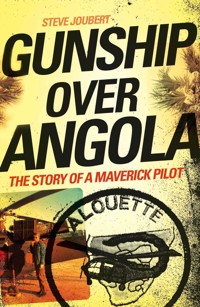
Growing up in suburban Pretoria, Steve Joubert dreamed of a career as a pilot. After undergoing SAAF pilot training, a freak injury put an end to his hopes of flying fighter jets. Instead he learned to fly the versatile Alouette helicopter. He had barely qualified as a chopper pilot when he was sent to the Border, where he flew missions over Namibia and southern Angola to supply air cover to troops on the ground. As a gunship pilot, Steve saw some of the worst scenes of war, often arriving first on the scene after a contact or landmine attack. He also recalls the lighter moments of military life, as well as the thrill of flying. A born maverick, his lack of respect for authority often got him into trouble with his superiors. His experiences affected him deeply, and led him eventually to question his role in the war effort. As the Border War escalated, his disillusionment grew. This gripping memoir is a powerful plea for healing and understanding.
Sie lesen das E-Book in den Legimi-Apps auf:
Seitenzahl: 360
Veröffentlichungsjahr: 2019
Das E-Book (TTS) können Sie hören im Abo „Legimi Premium” in Legimi-Apps auf:
Ähnliche


















Gunship
Over Angola
The Story of a Maverick Pilot
Steve Joubert
Delta Books
JOHANNESBURG & CAPE TOWN
To Diane,
my anchor, my greatest critic and my best friend
I now know why men who have been to war yearn to reunite. Not to tell stories or look at old pictures. Not to laugh or weep. Comrades gather because they long to be with the men who once acted their best, men who suffered and sacrificed, who were stripped raw … right down to their humanity.
– Ray Haakonsen
Author’s note
It is often said that ‘writing about it’ is one of the most cathartic things that human beings who have undergone extreme trauma can do. I firmly believe this, and can personally testify to the truthfulness of that statement. Often, while writing this book, I sat down at my laptop to continue writing but nothing of any substance was forthcoming. I’d try in vain for ten minutes, 20 and sometimes even longer until suddenly, like a veil being drawn back to reveal the scene, I was back in the cockpit and the sights, sounds and smells were as they’d been more than 35 years ago.
As I’ve aged, I have felt compelled to tell some of the story of my life and, by doing so, to end my family’s practice of stoically avoiding telling its own history and forcing those who might be interested in the subject, like me, to delve into obscure inscriptions in centuries-old family bibles and piles of sepia-tinted photographs to decipher our origins.
I have five children, a son-in-law, a daughter-in-law and three granddaughters who, I must admit, haven’t yet become avid fans of my writing, but who I hope, in years to come, might spend some time reading my story.
‘How long have you wanted to be a pilot?’
The plastic chair stood in the centre of a sprung wooden floor in a large room in a nondescript building at the South African Air Force Gymnasium in Valhalla, Pretoria. Spread around it in a semicircle were 13 office chairs, in which sat an intimidating collection of 12 senior officers of the South African Air Force (SAAF) and a single brigadier representing the South African Medical Services (SAMS). In front of each officer was a desk.
Outside this room, waiting for the command to enter, was me, 74257684BC Private Stephen Pierre Joubert, national serviceman (NSM) and aspirant military aviator.
The door opened and a voice, with a clear tinge of sadism, said, ‘It’s your turn. Go!’
My heart, which was already thumping like a V-twin Harley-Davidson at full throttle, immediately tried to burst free from my pounding chest. I stepped gingerly onto the threshold, aiming, as I’d practised over and over again in the days leading up to this moment, first to pause for a second or two, calmly gather my thoughts, and allow my eyes to adjust to the comparative gloom before I entered to face the inquisition within.
But, in my blind panic, all I saw was the empty chair, and like a condemned convict fixated on the noose that will shortly change the direction of his life, I headed straight for it without hesitating. Six inches from the chair I realised with morbid certainty that I had miscalculated the distance and impact was unavoidable and inevitable. When my right knee, while crashing to a military-grade halt, thumped into the back of the chair, the concomitant transfer of kinetic energy caused the fragile piece of furniture to launch dangerously towards the general sitting directly in front of me.
In a moment of surprising eye-hand coordination, my right hand shot out in a partially successful attempt to prevent the chair hitting one of the innocent observers, but in doing so I upended the wretched thing. It crashed thunderously onto the wooden floor.
The noise echoed around the sparsely furnished room.
Flustered, I bent over to set the errant object right side up, but in so doing my cap fell to the floor. I frantically jammed it back on my head while still bent over and only then stood up.
In a moment that I will remember forever, I came face to face with General Bob Rogers, decorated veteran of the Second World War and the Korean War, legendary aviator, then Chief of the SAAF and the chairman of the SAAF Pilot Selection Board.
I lifted my right hand to salute him, just like I’d been trained to do.
But instead of the peak of my cap being at eye level, it was pointing steeply skywards at a 45-degree angle, like that of a bus driver. The intended salute (touch the tip of your right index finger to the peak, my boy) couldn’t be completed correctly under the present conditions. I compromised, but in doing so only served to make the picture even more ludicrous. My hand hovered in the space between where it should have been and where the peak was, making my attempt at paying respects look like a watered-down Heil Hitler.
I stood there mortified, my mouth slightly agape and changing colour like a chameleon on a box of Smarties.
Inside my chest, feelings of despair were already oozing out. It was the most important day of my young life and I’d blown it … and I hadn’t even opened my mouth yet.
Blinking furiously, I tried to gauge the situation, my desperate gaze seeking a hint of encouragement from any one of the assembled brass, but in vain. In addition to General Rogers, there was at least one more general, perhaps two, a bevy of brigadiers and a collection of colonels.
Their faces stared back, deadpan. No one cracked even the slightest smile, despite the unintentional vaudeville farce being enacted right in front of them. Instead they all looked at me as I imagined they would a blob of sticky dog turd accidentally attached to the toe of their perfectly polished shoes.
After what seemed like an age, General Rogers finally spoke.
‘Have you finished?’ he asked brightly.
He was answered by a voice that sounded vaguely like mine, had I just been punched hard in the larynx.
‘I think so, sir.’
‘Then try to pretend for a moment that you’re not driving a tram, take off your cap and sit down,’ he said.
I sat forlornly in that seat, certain that I’d just tossed out the window the career that I’d dreamt about since I was a small boy.
In anticipation of facing the selection board that day, I’d had my formal uniform dry-cleaned, pressed to a parade-ground crispness, I had polished my shoes to a mirror-like sheen, and shone my brass buttons and cap-mounted eagle so bright that one risked eye damage looking directly at them.
The preceding weeks had been a whirl of medical examinations, with assorted specialists probing and prodding every nook and cranny and psychologists trying to establish if I was psychologically equipped to be a flyboy. I’d seen 90 per cent of the guys who’d started the final selection process with me get eliminated for even the slightest aberration. Some, on hearing the news of their rejection, had stood rooted to the spot, sobbing with frustration and disappointment before being led away by friends and colleagues.
We were told, and I didn’t know if this was fact, that 7 500 young men had applied to become SAAF pilots in the current intake (at the time the SAAF selected pilot trainees twice a year). Only 700 of them had been invited to the medical evaluation process, and there were just 115 of us facing the final stage, the Pilot Selection Board.
All I’d done and all I’d experienced had led up to this moment, and in a matter of a seconds I had misjudged the distance to the chair and set this career-terminating disaster in motion.
In that situation, I reverted to the only defence I knew – I’d make them laugh.
So, when the General asked the first question, ‘How long have you wanted to be a pilot?’, instead of giving the expected answer, ‘Ever since I can remember, General’, I said, ‘Since I stopped wanting to be an ice-cream seller, sir!’
‘An ice-cream seller? Please explain,’ the General said, somewhat taken aback.
‘Well, sir, when I was very little, I thought the greatest job in the world was that of the guy driving the bicycle with the bin of Dairy Maid ice creams through the neighbourhood. Since that dream faded, I wanted to be a pilot.’
‘Not much ambition there,’ he muttered, more to himself than to anyone else.
‘On the contrary, sir,’ I said, and his eyebrows arched.
‘Explain?’
In for a penny, in for a pound, I thought.
‘Don’t get too comfortable in that chair, sir. I’d like to sit there some day!’
A funereal silence followed.
‘Does anyone have any questions to ask this young man?’ the General asked the other officers in the room, confirming, as if I hadn’t already known, that he was done with me.
From the left, someone asked, ‘How does a jet engine work?’
‘The air comes in the front, gets compressed and heated and shot out the back,’ I offered hopefully, while suspecting that this particular level of brevity was unlikely to win anyone over.
‘Anyone else? No? Thank you. You can go.’ This statement was made without even a hint of hesitation between the words.
I got groggily to my feet, replaced my cap, fashioned a salute, this time more like how I’d been taught to do it, then spun around so quickly that the sole of my shoe under the ball of my left foot struck a raised joint between two planks and stopped turning! There was an audible crack from the area of my ankle.
‘I say, are you all right?’ inquired General Rogers.
‘Fine … urgghh, thanks … sir!’ I gasped through tightly clenched jaws as I came close to passing out from the excruciating pain in my left leg.
Somehow, I managed to stagger from the room, blinded by embarrassment, despair, frustration and dismay. So ended possibly the shortest Pilot Selection Board interview in the history of the SAAF.
Part I
The age of innocence
1
A rebel is born
Those who have come to know me through my life are patently aware that I am not a military man at heart. I also come from a long line of non-military-minded men, the first of whom to arrive in South Africa was a rebellious-minded but principled French Huguenot called Pierre Jaubert (the a soon became an o). He hailed from La Motte-d’Aigues in Provence in the south of France and arrived at the Cape in 1688 aboard the Dutch East India Company ship Berg China.
The ancestors that I have been able to trace were all conscripts or volunteers in times of war. My great-grandfather fought on the side of the Boers in the Anglo-Boer War, and both my grandfathers served in the Second World War. Uncle Joffre, my grandfather’s brother, was a navigator on Liberators and Mosquitos during the Second World War and played a role in the Allied supply drops during the Warsaw Uprising of 1944. I met him a few times as a young boy and was struck by his boundless energy, which bordered on, and sometimes exceeded, the bounds of sanity. I recall that he was married seven times and that he also crashed motor cars with some regularity. And Dad did a few months of national service in Northern Rhodesia (now Zambia) with the British Army.
Apart from these family members, why do I not consider myself to be a military man? Well, for one thing, I question everything, a trait that will not make you too many friends in high places in the military hierarchy anywhere in the world. I also struggle with carrying out orders that don’t have a rational expectation attached.
*
I was born in Chingola on the Copperbelt in Northern Rhodesia on 3 July 1958. My dad was born in Pretoria and named Pierre after the original Huguenot ancestor. My mom was Inez (née Wilson) and she was born in Brakpan but would never admit to that fact, preferring instead to say that she was born ‘near to Johannesburg’. Dad’s family had moved to the Copperbelt immediately after the Second World War and both Grandpa and Gran worked at Nchanga copper mine in Chingola.
My mom, who was in all likelihood a direct descendant of King George IV, albeit from illegitimate lineage, was halfway through her matric year at Guinea Fowl School in Gwelo in Southern Rhodesia on the day she turned 16 in July 1950. Her parents, who’d divorced when she was only four, seem to have cared little for her, and she was shuttled off to various boarding schools after the divorce. On that day, a telegram arrived at the school, instructing her to use the small amount in the accompanying postal order to purchase a train ticket and return home to Brakpan, where her mother, who was living there with a new husband, would help her to find gainful employment.
Mom was in her final year of schooling and just months away from completing her matric, a rarity for a young woman in those days, but this seems not to have mattered to her mother. Bitterly angered and disappointed by this dismissal of her academic aspirations, and with no viable alternative, Mom caught the train from Gwelo to Bulawayo the next day.
Bulawayo was the junction where the railway line going south to Johannesburg met the one going west towards Francistown, in Bechuanaland (now Botswana). In Bulawayo, it was necessary for Mom to change from the westbound train to a southbound service for the final leg of the journey home. True to her independent nature, and to protest the anger that she felt for her parents, when she reached Bulawayo she walked boldly up to the ticket office and asked, ‘How far north does the train from Johannesburg travel?’
The three-toothed man in the ticket office replied: ‘To the edge of beyond, my sweetie!’
‘That’s good enough for me!’ she said, and promptly bought a ticket to Chingola, where the northbound line terminated.
Emerging from Chingola station late the following afternoon, she found a nearby boarding house run by a young couple, Ben and Hazel Rens. They immediately adopted her.
Mom quickly adapted to the frontier nature of the town and got a job in the assay lab at the Nchanga copper mine. Her boss, Una Joubert, had a son, Pierre, who was just finishing his own matric at Grey College in Bloemfontein. Not long afterwards, introductions were made, she and my dad became an item, and they married on 12 December 1954.
Debbie was born first, ‘prematurely’, six months later. Then there was a reasonable two-year gap before Jacqueline was born. I followed 13 months later, and Mark followed barely ten months after that. My mom had her last three kids in 23 months!
Legend has it that my dad, upon learning of my birth – my being the first boy after two daughters (somehow that was important then) – instead of going to the hospital as a new father would today, set off with his best friend, John ‘Buck’ Jones, into the bush, with the intention of hunting and dispatching a trophy buffalo/sable/roan/elephant to mark the momentous occasion of my emergence into the world.
This was not an unusual practice, as the matron of the Chingola hospital, like many people at the time, felt that fathers were an unnecessary impediment to the birthing and neonatal phases. Men were not permitted in the maternity ward, let alone the delivery room, and so disappearing into the bush for a few days with one’s mates at the birth of one’s progeny was nothing unusual.
Dad and Buck were accompanied on the hunting expedition by Peter Chibemba, the manager of our household. Before they left, the trio cleared out the local bottle store of all available stocks of brandy and beer, which they imbibed with abandon on the way to and from the hunting grounds. In their thoroughly inebriated state, they proceeded to wage war on the wildlife that inhabited the untamed border area in their quest to harvest the trophy of trophies – with no clear idea what they were looking for! Many, many rounds (of ammunition, brandy and beer) later, and with nothing to show for it but four-day stubble and extreme body odour, they came to the considered opinion that they should return to relative civilisation and make my acquaintance in person.
Being in a fairly intoxicated state, and with a desire to enjoy the return journey sitting or lying on the Land Rover’s bonnet and on its roof, they told Peter Chibemba to drive the vehicle. Peter was only marginally acquainted with engines and gears on a wheeled vehicle. Nevertheless, being the least sozzled of the trio, and despite causing all kinds of damage to the vehicle, road signs and assorted passing village architecture, he somehow managed to guide the vehicle back to Chingola, but not without running over and killing a stray goat while negotiating a dirt track through some obscure hamlet.
Triumphantly, the freshly expired goat was lifted up onto the roof of the vehicle by the intrepid trio, and they arrived at the Chingola hospital late at night, tyres squealing and gears grating, in a cloud of suffocating dust, and immediately set about attempting to gain entry thereto. The deceased goat, draped across my dad’s shoulders, now represented the originally desired trophy.
Dad’s ‘gift for my boy’ stared vacantly at the unfolding scene.
Understandably denied access by the indignant matron and nursing staff, the trio regrouped and, using their formidable combined intellect, changed strategy. They set off stumbling and guffawing around the hospital perimeter to the maternity section, where they then proceeded to serenade the obstetric wing at the top of their voices while brandishing their ‘trophy’.
The song that they sang, somewhat discordantly, but fittingly, was, ‘Hang down your head Tom Dooley.’ I swear that my first memory is of my mother, laughing uncontrollably, holding me in her arms while standing on the first-floor balcony, looking down fondly at the performance.
*
The surrounding bush played a major role in my toddler years, and I recall with great fondness the lessons in bushcraft taught to me even at that tender age by Dad and Peter. We had at least one bushbaby as a pet, and I also developed a liking for chameleons, each of whom I named Charlie.
Chameleons were not permitted in the house, as they tended to terrify the domestic help. When I smuggled them in, Peter would take them out into the garden and release them at the first available opportunity. I would become distraught when I was unable to find the latest Charlie where I had left him and would begin to cry. Finally, an exasperated Peter would take me into the bush to look for Charlie and, irrespective of whatever chameleon we found, he’d convince me that it was Charlie and peace would return for a time.
I learnt at a young age that a stick of bone-dry hartebeest biltong provided effective relief for teething pains in babies, that anthills invariably contained red ants that bit mercilessly at one’s tender parts, and that fathers in that part of Africa never came home early on a Friday evening.
A weekly battle raged in our home at around midnight each Friday when Mom would try to stop Peter from heating my long-overdue Dad’s dinner in the oven. Mom would put the plate into the fridge to ensure that the fat would congeal. But, as soon as her back was turned, Peter would take it out of the fridge and return it to the oven. This battle would rage on for hours. Peter was dismissed from our employ at least 15 times every Friday night.
Weekend fishing expeditions to the Kafue River were a regular occurrence and helped give me a deep love for the African bush, which endures to this day. I have one abiding memory from one of these trips.
During this particular adventure, my younger brother Mark, who was but a toddler, had been settled, naked, in the back of our Opel Caravan station wagon to sleep through the heat of the tropical day. Temperatures around the 40°C mark were quite common.
The Opel’s tailgate was open, as were all its doors. Somehow a hungry blue vervet monkey got into the back of the car and, while sorting through the buffet of tasty treats on offer, grabbed what he probably thought was a juicy caterpillar, but which turned out to be Mark’s willy.
My mom and the other ladies, who were chatting nearby, suddenly saw the monkey in the car, and a great shriek was heard. Mark woke up, saw and no doubt felt the monkey and also started to wail. Alarmed and confused, the monkey joined the cacophony, wondering what was causing the hysteria.
My dad and his mates, hearing the barrage of panic-stricken noise, came running. On seeing the sight before them, they collapsed in a heap on the ground, laughing until they cried, much to the chagrin of Mom and the other ladies.
At that moment, my brother, in an instinctive effort at self-preservation, tried feebly to hit the poor ape, which prompted Buck Jones to comment, ‘Isn’t Mark a bit young to spank the monkey!’
*
In 1963, when I was five years old, my parents decided to leave Northern Rhodesia and move south. This followed the tragic death of my sister Jacqueline in 1961. She died at our home in Chingola when she fell between two treated poles that formed the apex of a rose arch in our garden. Her little head caught in the gap, preventing her from breathing.
She was just two and a half years old and was buried in the Chingola cemetery. This devastatingly traumatic event, coupled with the rise of Uhuru-related violence against white people in that part of the world, led to our moving to a place where my folks hoped that the agony of Jacqui’s passing might be mitigated. Mom and Dad carried the acute pain of her loss for the rest of their lives.
My dad had little intention of going far, but Mom had other ideas. Dad had designs on us settling at Lake Kariba. He was a shoo-in for a job as a ranger in Operation Noah, which was aimed at rescuing animals stranded by the waters rising behind the newly built Kariba Dam. This enormous structure was constructed in a gorge on the Zambezi River, which formed the border between Northern Rhodesia and Southern Rhodesia (today Zimbabwe). Until the day he passed away in 2003, even a mention of Kariba and the Zambezi valley would cause Dad to drift off into a state of melancholy and longing for the African bush and the undying regret that he hadn’t played a greater role in its conservation.
As it happened, my mom didn’t post his job application to the relevant authorities. Many years later, the discovery, in an old trunk, of this unposted set of documents led to the most epic of rows in the Joubert household, spanning several days at least.
Might this have been an act of revenge on Mom’s part, possibly seen in the context of Dad’s actions a number of years earlier? Let me explain. When they decided to get married, spurred on by the fact that my eldest sister was definitely going to be born three months ‘prematurely’, my folks lacked the funds to buy either engagement or wedding rings. It was only after they had been married a few years that they were able to afford a decent wedding band, and so my dad was dispatched to Chingola town to make the long-awaited purchase of the symbol of their marital union.
However, on entering the single-street Chingola central business district and just before reaching the jewellery shop, he passed the Land Rover dealership. A bright, new, short-wheelbase Land Rover was on display.
Had this been a fight, the referee would have ruled ‘no contest’ within seconds of the opening bell. The price of the Land Rover and the price of the ring were about the only things equal in this one-sided contest. Everything else in the equation was, in Dad’s mind, logically weighted. Before long, he was happily driving home in something practical, as opposed to something ornamental … His arrival at our home at 33 Briar Street in Chingola was not greeted with the same euphoria. It was to carry consequences for which he would pay dearly, right then and in the years to follow.
Self-preservation dictated that he left home a few seconds after arriving, and he did so without clothing, equipment or supplies, his ears ringing from Mom’s tirade. He then picked up his friend Buck and went to christen the Rover in the wilderness.
Suffice to say that our destiny as a family was largely determined, some would say, by the unfortunate positioning of two shops on a dusty Copperbelt street!
As our impending departure for South Africa drew closer, Dad got grumpier and grumpier. He ranted and raged about the Rhodesian Wildlife Authority’s ‘downright rudeness and arrogance’, with their failure to confirm his Lake Kariba appointment central to his chagrin. Preparations for the move progressed at an alarming rate with Mom’s knowing, but mostly concealed, smile a constant source of friction between them.
Suddenly, the morning of departure dawned and it was time to go. Our Peugeot 404 station wagon, bought new for the occasion by trading in the Opel and the Land Rover, was jam-packed with all manner of household goods and three little wide-eyed kids aged eight (Debbie), five (me) and four (Mark), respectively. The roof rack was piled high with an assortment of chests and trunks covered with a green canvas tarpaulin.
Peter, dressed in his uniform of short white trousers and white shirt, stood barefooted next to the car. In his hand was the tiniest little suitcase you have ever seen.
‘Where do I sit?’ he asked Dad.
‘You can’t go with us, Peter,’ my father responded.
‘Why not?’ asked Peter.
‘Because the family is moving to South Africa, Peter,’ replied my dad firmly.
‘But I am family!’ he pleaded.
‘But this is your home, Peter. South Africa is not,’ my mom tried to reason with him.
‘My home is with my children and my family,’ shouted Peter, ‘and you are they!’
For a full ten minutes the exchange raged on, by the second becoming more charged with emotion. Peter couldn’t accept that he was not coming with us. The sound of his voice, beseeching first my mom, then my dad, to allow him to sit on the roof for the duration of the 3 000-kilometre journey to South Africa, remains with me to this day.
Finally, with tears flowing freely, and too choked up to say another word, my parents bundled our loudly wailing family into the Peugeot, with Peter standing resolute alongside, tears coursing down his cheeks. We drove off slowly down the road.
I was one of those three little faces staring out of the rear window watching the ever-diminishing image of Peter, tiny suitcase in hand, trotting down the dusty road after us.
He finally disappeared in the cloud of dust kicked up by our car.
*
We entered South Africa on Dingane’s Day, 16 December 1963. My paternal grandparents lived on a farm just north of Pretoria, and we joined them there and lived on the farm for a few months.
During this time, I started attending Loreto Convent in Gezina, Pretoria. When Mom picked me up after my first day and asked whether I had enjoyed myself, I let her know quite firmly that ‘I didn’t mind it but I don’t think I need to go back there any more.’
Each day when I got back from school I’d ask Lettie, the housekeeper, whether Peter Chibemba had arrived that morning. When she replied, as she always did, that he hadn’t, I would go to the start of the long driveway, which ran down the boundary fence of the farm all the way to the Great North Road a few kilometres away, and stare down it for hours.
I told anyone who asked that I was waiting.
Waiting for Peter to appear.
*
Before too long, my folks bought a house in the suburb of Valhalla, in the southwestern part of Pretoria. Valhalla was where many of the serving military personnel of the South African Defence Force (SADF) lived, due to its close proximity to the vast military complex of Voortrekkerhoogte and the airfields of Air Force Base (AFB) Swartkop and AFB Waterkloof.
Dad went on to forge a successful business career, adjusting surprisingly well to corporate life, but ultimately his desire to be in his own business prevailed and he formed and ran a short-haul construction company right until he died in 2003. My mom was a specialist in state-of-the-art printing techniques and soon joined the Council for Scientific and Industrial Research (CSIR), where she was still employed at the time she passed away so tragically.
From the time we moved to Valhalla in April 1964, Debbie and I would catch the school bus to and from General Andries Brink Primary School in Voortrekkerhoogte, the only primary school in the area that taught in English. I do not remember the exact details of what happened one Friday afternoon in October 1964 while we were on the homeward-bound school bus, but I think it started with our driver failing to heed a stop sign at a T-junction in Valhalla. He turned a corner directly into the path of a large truck carrying a load of enormous cement sewage pipes.
In the carnage that followed the collision between the bus and the truck, thirteen children lost their lives, including the two who were sitting on either side of me. I was pulled from the mangled wreckage by rescuers. I had suffered quite severe head injuries. An ambulance rushed me to Pretoria General Hospital, where I teetered between life and death for a few weeks before ultimately making a full recovery.
The crash left me with a permanent aversion to crowded places. But it also introduced me to my guardian angel, who has hovered around me my whole life.
This photo was taken shortly before I was discharged from hospital after the bus accident.
*
My schooldays went by in a flash of sport, friends and fun. I had a great sense of privilege while growing up, and I don’t mean privilege in the material and financial sense of the word. My folks and my friends’ parents were neither wealthy nor poor, though they tended towards the latter. ‘Dumplings’ to fill our bellies and ‘bread and scratchit’ were regular items on the supper menu, often before the middle of the month.
Our education in the government schooling system was relatively backward by today’s standards, and television was not yet a reality. Yet we were wealthy beyond price. For example, just across the road was Laureston Farm, where a dairy herd of approximately 100 cows produced the freshest milk and the richest cream you could imagine. There was also a natural slip-and-slide chute shaped into the black clay on the banks of the Six Mile Spruit (today known as the Hennops River), which could be made even more slippery by spreading cow dung on it, and delivered hours and hours of glorious fun and laughter.
The Six Mile Spruit, or ‘the Spruit’, as we fondly called it, was central to the freedom of our outdoor existence. In those days, it flowed only about twice a year. I say ‘flowed’ but I really mean ‘flooded’, as it would burst its banks after a typical Highveld cloudburst, and the resultant spate would always create a playground of gooey mud in which we played rugby and football, emerging unrecognisable at the end of the games. Not surprisingly, clothes had a short lifespan in that neck of the woods.
On the banks of the Spruit we built a football field where, practically every single day, summer or winter, matches of ‘international importance’ were played, and it was on the Laureston Farm field that a crop of genuinely good players honed their natural skills. A significant number later went on to play professional football in South Africa and abroad.
Afrikaans was the dominant language in Pretoria during this period (1965–1975). I estimate that Afrikaans-speaking families outnumbered their English-speaking counterparts in Valhalla by about eight to one. Even though it was 70-odd years since the end of the Anglo-Boer War (1899–1902), many of the Afrikaans-speaking kids had grandparents and great-grandparents who still had vivid personal memories of their awful treatment at the hands of British forces, or ‘khakis’. From time to time, English-speakers growing up in the area unfairly bore the brunt of that lasting animosity.
In our little part of Valhalla, the very southern tip of it, we ‘Rooineks’ formed a gang, telling ourselves that it was for protection against the ‘Dutchies’. In practice, it really meant that we could get up to more mischief as a group than we could have done as individuals.
One day my mom, ever the voice of reason in troubled times, asked me to name the members of our Rooinek gang.
‘Well, that would be the Van Jaarsvelds, the Swarts, the Du Toits and the Jouberts, Mom,’ I replied.
‘And the Afrikaans gang members?’ she asked.
‘Those bloody Robinsons, Beavers, Allisons and Smiths!’ I answered.
But, then again, what’s in a name?
The competition between the local gangs was not fierce and never resulted in more than the odd bloody nose, blackened eye or bruised ego. However, individual feuds, though rare, did exist. I had one that extended over a few years with an Afrikaans kid named Christo. He was a year or two older than me but could never be mistaken for a street fighter by any stretch of the imagination.
The origins of the friction between us started with his father’s ownership of a reasonably large peanut field, which lay adjacent to our bush playground. In great anticipation each year, we would wait for the arrival of the mobile peanut processing plant, which harvested, separated and packed the peanuts into hessian bags. Then we would strike with military precision on a daring mission across enemy lines to liberate a single 30-kilogram bag of unshelled raw nuts from behind the harvester/bagging machine. Enormously proud of our freshly acquired loot, and using the thick bush adjacent to the peanut field as cover, we would lug the heavy bag towards the Spruit and our hideaway, salivating at the thought of an endless supply of groundnuts at our disposal for at least a few weeks.
One year, in the midst of this clandestine operation and while we were crossing the open ground a short distance away from the relative safety of the Spruit, we heard a shout. There, 50 metres away, skulking behind some bushes, were Christo and his short, dumpy, red-faced and irate father.
‘That are my nuts!’ screeched Christo Snr. ‘Bring them here, you rooinek diewe (thieves)!’
‘Run for your lives!’ shouted Brian Swart, and someone else screamed, ‘The mad fucker’s got a gun!’
Holding on to our loot for all we were worth, we dashed for the sanctuary of the riverine foliage, but there was suddenly a loud bang and my back and legs felt the excruciating sting of a thousand hornets.
Dramatically, one of us (I admit it may have been me) screamed, ‘I’m hit!’
‘We’ve all been hit, you silly shit!’ trumpeted Tula Billett. ‘The bastard just shot us with coarse-grained salt!’
Apparently, this non-lethal deterrent had been used effectively and frequently on would-be peanut liberators in the past. Explaining the welts on the back of my arms and legs to my mother as I prepared to shower that evening – ‘Got attacked by a swarm of bees, Mom’ – produced a disbelieving response.
But, as the sins of the father shall be visited upon the sons, I stored the events of that day in the recesses of my mind and plotted my revenge against Christo Jnr.
For more than two years all my carefully hatched plans came to naught as Christo dodged every move I made like a skilled chess master. Try as I might, I could not pin him down. At one stage I even pretended to fancy his sister and hid in the hedge with her at his front gate, hoping to trap him. But blood is thicker than water, and when she realised what I was planning, she gave me up and thwarted my dastardly scheme to wreak my revenge on her brother.
Then I got a break.
At Valhalla Primary School, where I was the head boy at the time, the principal tried to encourage good behaviour. Each week, the best-behaved student would be allowed to leave school an hour early the following Friday. Months went by before I finally managed to be chosen as BBS (best-behaved student) and was rewarded with the prized early Friday departure. Christo, who was already at high school in Voortrekkerhoogte, travelled home by bus each day, but I had never managed to reach his stop before he’d disembark and run for home, successfully dodging our inevitable confrontation time and time again.
But the extra hour that I’d earned that particular Friday gave me more than enough opportunity. I waited in delicious anticipation, hidden in the bushes behind the bus stop, for a full 30 minutes before his bus, with a squeal of brakes, stopped with a jerk and Christo disembarked. As the bus departed and Christo began the usual two-minute carefree saunter towards his home, I stepped out from my hiding place and said something like ‘So, we finally meet, Dutchie!’
As quick as a flash he turned and scarpered, and I just barely managed to clip his heels with my outstretched foot, which caused him to sprawl headfirst into the dirt and devil thorns on the roadside. Cornered, he got to his feet and raised his fists while his lower lip quivered, tears only seconds away.
I suddenly realised that he was substantially bigger than me, and that should he decide to turn aggressor I might end up on the receiving end. So, to keep the initiative and him off balance, I aimed one at his nose but missed and split his lip instead.
Bellowing like a stuck pig, he broke free and hightailed it for home with me running behind him roaring invective and insults like a seasoned sailor. Occasionally I managed to connect my foot and his bum until he finally made it to his house and scurried inside like a rat diving into a sewer.
With the swagger of a man who knows he’s won a long-anticipated battle against a superior-sized enemy force, I strutted my oh-so-self-satisfied way home. Revenge is so very, very sweet, or so I thought … The time to savour my hard-earned victory would not last long.
Reaching our house at 58 Viking Road a few minutes later, I decided to reward my Herculean effort with a doorstep-sized slice of French polony jammed precariously between two eye-wateringly large slices of fresh Boerstra’s bread, dripping with butter and All Gold tomato sauce – a veritable feast in my part of the hood! I had just sunk my teeth into my giant sarmie when, without any warning, I was yanked out of the kitchen, lifted clear off the ground and pinned to the wall outside, my feet dangling a full six inches off the floor.
All I could see in front of me was a hand, the fingers like bunched pork sausages, balled into a fist, cocked and ready to smash my 11-year-old face to a pulp. The other hand had me by the collar and was shaking the bejesus out of my slight frame. All the while, a high-pitched porcine squeal emanating from the hand owner’s fat lips tore into my ears in a screeched warning that he was going to batter the life out of me and feed my jellied remains to the pigs.
Although I was battling to focus and to breathe, I recognised the face of the peanut farmer who’d shot us with coarse-grained salt. It was Christo Snr. But then, as this bully with the contorted face stopped to draw breath before unleashing his fist, a supremely authoritative voice, the sweetest sound I’d ever heard, cut through the noise and said, calmly and clearly, ‘Sir, put Stephen down or I will hit you very hard on the head with my rolling pin!’
The voice belonged to Violet Mokabudi, my second mother, the keeper of our house and my saviour on many previous occasions.
‘Shut up, you black bitch!’ roared the peanut farmer.
‘Sir, I will not tell you again. Put Stephen down or I will hit you very hard with my rolling pin and also put pepper in your mouth for the bad words,’ Violet said, her voice taking on a steely edge.
Perhaps there was some intelligence and restraint left in that anger-twisted head, or perhaps he valued his own life over mine, but after a few seconds of deep contemplation Christo Snr stopped shaking me and slowly lowered me to the ground. As my feet touched the floor I broke away and dashed to safety behind Violet’s ample frame. I still remember thinking that I must have done wrong and was going to get a serious pasting from my dad when he got home, if this brute didn’t get me first.
Knowing instinctively that he was living on borrowed time if he remained at our kitchen door, Christo Snr shuffled away towards his big-winged American car.
‘Get your father to phone me, you fokken krimineel!’ he spat.
Later that evening, when my dad got home from work, as he came in the front door he asked Violet, as was his daily bantering habit, ‘What stories are we hearing today, Mrs Mokmac?’ (his nickname for her). Every day, Violet would reply with her customary ‘No people speaking today, sir’. But today was different, and she said ominously, ‘Beeeeeeeg, beeeeeeeeg trouble, sir’ before spilling the beans on the events of the afternoon.
From my secret hiding place behind the rhubarb plants near the kitchen door I sat quivering like an autumn leaf as I heard Violet tell Dad her version of what had transpired. I fully expected to hear the thunderous summons ‘Stephen, come here!’ at any moment. But it didn’t come, and I waited and waited and waited for what seemed an eternity.
Then the rhubarb leaves parted and Dad sat down on the ground right next to me. Tears immediately streamed down my petrified cheeks and I mumbled, ‘I’m sorry Dad, I’m so sorry Dad.’
I remember like it was yesterday, the utterly incredulous look that came over his face as he stood up, then bent over at the waist and lifted me into his arms like a little baby, telling me over and over again that I’d done nothing wrong while he carried me into the house and laid me on the couch with a little blanket over me because I was suddenly so cold.
We waited for my mom.
She arrived home a few minutes later, and a short time after that my dad went out, ‘to pay a visit to someone’, Mom said.
I didn’t ask any questions but Christo Snr never did lay criminal charges.
*




