


Erhalten Sie Zugang zu diesem und mehr als 300000 Büchern ab EUR 5,99 monatlich.
- Herausgeber: The Lilliput Press
- Kategorie: Sachliteratur, Reportagen, Biografien
- Sprache: Englisch
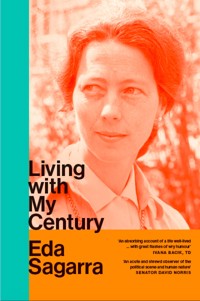
Professor Eda Sagarra, born in 1933, has been a significant and influential figure in Irish and European academic policy-making, contributing to the early development of the Erasmus scheme. Now, aged nearly 88, this memoir gives striking evidence of her self-discipline and formidable energy. This substantial memoir by one of the foremost female academics in Ireland starts with Sagarra's own perspective on committing her life story to history during the pandemic lockdown of 2020: The following memoir recalls for those born in the present century and schooled without the strong sense of Irish history, which defined our people from the Great Famine of the 1840s until recent times, what it was like to grow up as a woman in the twentieth century and seek a career in a man's world. It tries to re-capture as much what it felt like to the person experiencing it as what was happening in society. Younger people today who read of the restrictions to which women were subject in the 1930s, 1940s and 1950s, will find it difficult to comprehend why our generation and the one that followed ours didn't challenge them. But probably the greatest contrast between the Ireland of then and now was the room for manoeuvre – or rather the absence of it. Today our lives are premised on a constantly changing world. Ireland is more connected across the globe than ever it was. Today most people are mobile. The Ireland when I was young was in almost every respect a static, hierarchical and paternalist society, one in which the accident of your birth would generally determine your whole life. No life is representative, but every person's experience is unique and worth recording for those who come after us. A south Dublin convent girl, Sagarra probes childhood and family, schooling, and UCD — with a perceptive commentary on the Ireland of the 1930s and 1940s. Her remarkable memory and shrewd eye for detail present at times a painfully honest account of family and in the upper middle-class world of Catholic south Dublin, revealing the profound influence of Europe during her postgraduate years in post-war Germany, Switzerland and Austria. Running through this forensic account of her academic life is a keen awareness of the constant if subtle barriers to female advancement. For contemporary critics reconstructing the history of gender equality in Ireland and for readers of feminist history, this makes for essential reading. Her description of retirement since 1998 is colourful, poignant and revealing, and her reflections on old age and youth resonate.
Sie lesen das E-Book in den Legimi-Apps auf:
Seitenzahl: 517
Veröffentlichungsjahr: 2022
Das E-Book (TTS) können Sie hören im Abo „Legimi Premium” in Legimi-Apps auf:
Ähnliche


















Livingwith My Century
For Clodagh and for Mireia and John
Livingwith My Century
Eda Sagarra
THE LILLIPUT PRESS DUBLIN
First published 2022 by
THE LILLIPUT PRESS
62–63 Sitric Road, Arbour Hill
Dublin 7, Ireland
www.lilliputpress.ie
Copyright © 2022 Eda Sagarra
Paperback ISBN 9781843518358
eISBN 9781843518440
All rights reserved. No part of this publication may be reproduced in any form or by any means without the prior permission of the publisher.
A CIP record for this title is available from The British Library.
10 9 8 7 6 5 4 3 2 1
The Lilliput Press gratefully acknowledges the financial support of the Arts Council/An Chomhairle Ealaíon.
Set in 12pt on 16pt Garamond by iota (www.iota-books.ie) Printed in Kerry by Walsh Colour Print
Contents
Acknowledgments
Author’s Note
— ONE —
The 1930s: Who I am and where I came from
— TWO —
The 1940s: School
— THREE —
The 1950s I: University
— FOUR —
The 1950s II: Emigration
— FIVE —
The 1960s: The Ireland we left behind
— SIX —
The 1970s: Return
— SEVEN —
The 1980s: Changing Ireland
— EIGHT —
German studies at Trinity and beyond
— NINE —
On the threshold of modernity: Ireland from the 1980s to the 1990s
— TEN —
The 2010s: towards the finish?
— ELEVEN —
The 2020s: looking back – and forward
Select Bibliography
Index
Illustrations
Acknowledgments
I would like to thank all who read the manuscript critically and made helpful comments: my sister Clodagh and my nieces, Syra and Moira Forshaw, my cousins, Eoin O’Brien and Ronan Lyons, my colleagues in Trinity, especially Daragh Downes and Frank Barry, together with Gisela Holfter (University of Limerick) and Finola Kennedy, and my golfing friends who kept me at it: May Redmond and Anne Valentine.
And thank you too to my publisher, Antony Farrell of The Lilliput Press, to my sage editor, Djinn von Noorden and to Julitta Clancy and her daughter Elizabeth for the index.
Author’s Note
This memoir was written in my eighty-seventh and eighty-eighth years during the Covid-19 lockdowns of 2020/21, when the country and much of the world was in a state of suspended animation. During the first three or four months of the virus, we old people (a term I still think as only applying to other people) were not allowed go outside our homes. Nor even to engage in conversation with those kind family members and neighbours who took on the chore of doing my shopping. I have lived almost all my life surrounded by people and I love to talk. How was I to fill the long days ahead?
What about a memoir? I had tried to write one when I turned fifty, but the results had long been confined to the wastepaper basket. Then I recalled a conversation in 2018 with my German friend Wolfgang Frühwald (1935–2019): ‘write as though you were just telling a story’. And so, every day from late March 2020 onwards between 5 and 6 am, I would sit up in bed with a large pot of tea beside me and start reminiscing. After a brief breakfast and a surreptitious trot seven times up and down the pavement outside the house before the neighbours were awake,* it was up to the laptop in my study at the top of the house to start writing for a couple of hours.
At ten it was time to take a break, listen to mass broadcast on TV and put in the rest of the morning attacking the masses of yellow celandine invading the overgrown back garden (the weather in the first lockdown was wonderful). Trying to bin each of the ten or so little nodules attached to those hundreds of celandine roots, which if left would choke every other growing thing, was a great distraction. So, after a brief post-prandial siesta (I am Spanish, or rather Catalan, by marriage), it would be back to the desk till six in the evening in time to get dinner with the shopping dropped outside my hall door – no one, but no one, was allowed in or near. You could only talk to people at due distance across the railings – and I am getting deaf.
Living in this new isolated world after my gregarious life was very strange. In normal times I would be out most of the day, walking or playing golf, dropping in for a cup of tea with friends or visiting those who were sick or housebound, or at work down in the College or other libraries. Now I could only read about what was happening in the outside world in the newspapers or on Irish and English TV and try to imagine what it must be like to live permanently alone without family or cooped up in a two-roomed flat with small children who had nowhere to play, or in packed tenements where people got on each other’s nerves.
After a few weeks being confined to barracks, I began to live in two worlds, in my ‘barracks’ but also, and increasingly, immersed in the world of my past, which in an odd way, became ever more vivid as the lonely weeks passed. The very fact that normal social as well as economic life was at a standstill defamiliarizes the present and awakens us to an awareness of all sorts of things and freedoms we had always taken for granted. Perhaps remembering past times and more particularly people in my past and recalling them in a story would give me some perspective on what was happening right now?
This book is written in a time of restriction that is, mercifully and thanks to the vaccines, perhaps no more than a pandemic-enforced hiatus. Much of the book is, however, written about a time when restrictions were the norm. The Ireland of the decades I was born and grew up in – the 1930s, 40s and 50s – was as different from the Ireland of today as you could imagine. Younger people today who read of the restrictions to which women were subject in that time will find it difficult to comprehend why our generation and the one that followed ours didn’t challenge the system. But probably the greatest contrast between the Ireland of then and now (at least pre-Covid) was the room for manoeuvre – or rather the absence of it. Today most people are mobile. The Ireland when I was young was in almost every respect a static, hierarchical and paternalist society, one in which the accident of your birth would generally determine your whole life.
In my late teens, I read a book that made me realize for the first time how much history is encapsulated in a single life: Mary Carbery’s The Farm by Lough Gur (1937).* It tells the story of the daughter of a ‘strong’ farmer in Limerick, Mary (Sissie) O’Brien, as told in her mid-eighties to and recorded by her young companion Mary Carbery. Apart from Sissie’s vivid recall of the personalities, customs and manners of post-Famine Ireland in the 1860s and 70s, a particular fascination of Mary Fogarty’s story lies in showing the extraordinarily long reach into the past a good memory and a habit of observing people can give. I don’t have a Mary Carbery to listen to my memories, so I’ve had to write them down myself. Of course, memory plays tricks on us. I have never believed a writer (there may be exceptions) who ‘so accurately’ remembers things that have happened to her or him at two or three years of age. I imagine many of my own earliest ‘memories’ were shaped by what I was later told by adults.
As a child I kept a diary, but mine was a nature diary, a record of birds or wildflowers I had seen that day. It was written in spidery writing, one page for a whole month, as paper was a scarce commodity in and after the war years 1939–45. My subsequent diaries, kept intermittently over my adult life, provided an uneven record of events, thoughts and feelings, serving as an occasional useful memory prompt in writing the present account. Much more graphic in recalling the past at a given point are letters. Clodagh and I wrote weekly letters home from boarding school and our parents, especially my father Kevin O’Shiel, were great letter-writers. Unfortunately, most got lost in the various house moves. However, my correspondence with my Manchester friend Tony (A.O.J.) Cockshut and his wife, the children’s author Gillian Avery, has survived. The correspondence, which extends over half a century, began in a desultory way when they moved to Oxford in the mid-1960s. Gill’s and my letters, written at intervals until shortly before she went into care in 2016, are characteristically full of ‘non-events’, which she always managed to make amusing and worthwhile. His are much more serious, mainly about politics, history and religion – he was an early convert to Catholicism from public school in Winchester and would become our daughter Mireia’s godfather. A few years after we moved to Ireland in the late 1970s the correspondence became weekly. At the time I would have preferred a more leisurely exchange, such as with Gill, but Tony was strong-willed and peremptory in his demand for a reply within the week to his every missive. When we visited them once or twice a year, we would take a year of the correspondence and read each other’s letters aloud. It was astonishing how immediate and how vivid was my then recall of events, personalities and impressions long since buried in memory, which these sessions evoked.*
When, most unwillingly, we first-year students at University College Dublin in 1951 attended the obligatory classes in logic, one of the first things we learnt was that one must never generalize from the particular. Yet every autobiographer nurtures the belief that their life is in a special way representative of the times she or he has lived through. And so it is, but only of the limited sector of society in which that individual lived and worked. My mother’s Cork family was thoroughly matriarchal and our father, like many fathers with daughters but no sons, was in effect if not in name a feminist. Moreover, I was fortunate to find myself in a profession, at least in Britain and later in Trinity College, where gender discrimination was a good deal less marked than it was for most Irish women in the workplace.
This book, then, is written in the belief that, while no life is amply representative, every person’s experience is a unique reflection of the times through which they have lived. As such, each of us has a story worth recording for those who come after us.
Thus begins, on the far side of double vaccination against the coronavirus, my own long reach into the distant past.
Dublin, August 2021
* That is, just about one kilometre.
* The Farm by Lough Gur. London: Longmans and Green, 1937, re-issued Dublin: Lilliput Press, 2010 and 2018.
* I still write and send my weekly missive to Tony, who at ninety-four has lost his sight and is slowly dying, full of fortitude, visited regularly by his friends at Oxford. His daughter sends regular updates on his condition and she re-directs my letters to his carers who read them to him. After our deaths, the archivist of Tony’s Oxford College, Hertford, has agreed to accept our correspondence of almost 3000 letters (c. 1500 from each) for the use of future historians.
— ONE —
The 1930s: Who I am and where I came from
FAMILY
My elder sister Clodagh and I were the relatively uncommon mixture of Irish counties, our father from Tyrone in Ulster and our mother from Cork, the largest and most southerly county of the province of Munster. In Ireland we all have our stereotypical associations of the character of each county, of Tyrone people as being frugal and (to outsiders surprisingly) proud of their rugged landscape,* while Corkonians are regarded as having an irritating sense of superiority, documented in their alleged fondness for a white map of Ireland with only Cork in red, the rest being marked ‘not Cork’. At the time of his marriage to our future mother Kevin O’Shiel at thirty-eight was thirteen years older than his wife. In the secretive manner of Irish families in those days, we were never told about his first marriage nor of his two sons, our stepbrothers, who had died at birth, the second costing his mother her life. And when as a child I came across a large cigarette box inscribed in Irish ‘Do Caoimhghín Ó Siadhail le linn a phósta … 22 Mí Lúghnasa, ó n-a Chó-ofigigh 1922’* and shared my exciting discovery with Clodagh, it never dawned on either of us to speak about it to our parents. We only discovered about our deceased half-brothers sixty years later during a visit to our father’s sister, Syra.
In common with most Irish families, we were descended on both sides from small farmers (my mother would insist, ‘medium farmers’). The O’Shiels were a long-established Ulster family, hereditary physicians to the princely Ulster O’Neill family. They had changed their name to Shields in penal times, having had their ‘profitable lands’ confiscated in the 1660s for being ‘on the wrong side’. Kevin’s father, the mild-mannered Francis Shields, had been apprenticed by his eldest brother to a local solicitor, a characteristic step at that time among the slightly better-off farming classes concerned with upward social mobility. Francis’ mother, Elizabeth (Mitty) Roantree (1864–1932), granddaughter of a butcher and daughter of a primary school teacher and later inspector of schools, was evidently made of stern stuff. She was certainly much more socially ambitious than her husband – to her son Kevin’s frequent embarrassment. When she announced to her husband and their then teenage children that she was going to apply for membership of the local tennis club only to be told that she wouldn’t succeed: ‘There are no Catholics in Omagh Tennis Club’, she simply said, ‘There will be when we are members.’ And Mother was always right. She didn’t wholly approve of Kevin’s choice of second wife, who evidently didn’t take her mother-in-law’s pre-wedding advice to buy a ‘good serge suit for Sundays’. Instead, she like her four sisters preferred to make her own (fashionable) clothes and loved, as my father did, fancy hats and high-heeled shoes to show off her shapely legs. We never knew our northern grandmother, but my impression of her is indelibly shaped by my first encounter with her authentic voice in the form of her will. I suppose the desire to exercise influence on the living beyond the grave is part of human nature, but never a good idea: Working on my father’s biography in the National Archives in 2004, I checked our various ancestors’ wills and encountered the following: ‘I divide my possessions between my son Frank and my daughter Syra. To my eldest son, Kevin O’Shiel, I leave the sum of £150 which is more than the value of all the presents he gave me in his lifetime.’
The fertile townlands of Imovalley farmed by the Smiddy ‘tribe’ from East Cork, whose men were as small in stature as in their holdings, were worlds removed from the stony ground of eastern Tyrone tilled by my O’Shiel ancestors. Cecil’s paternal grandfather William Smiddy was probably the first of his family to realize the potential of his own holding and moved to the outskirts of Cork city in the late 1870s. Cecil’s maternal grandfather, Cornelius O’Connell, had gone into the timber business and could afford to send his only surviving daughter Lilian, born in 1879, to Paris for a year to train as a painter. His money was well spent. Several professionally executed portraits and studies of still-life in oils and water-colours adorn the walls of Lilian’s descendants. She married Willam Smiddy’s eldest son Timothy in 1900, who was employed by his father-in-law in the family business, but unfortunately abandoned her art after her marriage, probably following the birth of four children in five years. Cornelius O’Connell died in 1904 but when his widow Mary followed three years later, she left the family business to her youngest son, aged twenty-two, disinheriting his elder brother and making no mention of Lilian or her grandchildren, whose father was now out of a job. Women’s power is often termed ‘soft power’, but clearly, as suggested by these two female ancestors, Mary O’Connell née Crowley and Elizabeth O’Shiel née Roantree, ‘softness’ could on occasion be toxic.
For decades I liked to pride myself on our typical ‘Irish peasant’ origins. Closeness to the land, as my father so often told me, was a feature of the Irish psyche, and as a young adult after years of being made to feel different following four teenage years in an English boarding school and in all more than twenty years living abroad, I continued to identify myself and our family with ‘the broad mass of the Irish people’. It was only when confronted with the historian Roy Foster’s description of my biography of Kevin O’Shiel (2013) as an uncommon document on an upper middle-class northern Catholic family, and more particularly when I read Tony Farmar’s study of middle-class Ireland from the late nineteenth to the mid-twentieth century,* that I was forced to face the fact: ours were privileged lives. For, despite its financially straitened circumstances and narrow tax base, where a mere 60,000 citizens were liable for income tax, the Irish Free State (1922–48) paid its senior civil servants handsomely. At the time of my birth in 1933 my father as Land Commissioner had a salary of some £800 a year and my mother could afford to employ two country girls, Josie as housemaid and Dolly to look after us as small children. Josie wore a navy cap and uniform in the morning, pale brown and cream in the afternoon; Dolly, whom we idolized (and who together with Josie for years was prayed for each night), wore a dark blue dress with a large white apron except when taking us to the park for our daily walk. Though they had free ‘bed and board’ and ‘the mistress’ supplied their uniforms, they would have been paid for a six-and-a half-day working week a wage of no more than sixty or seventy pounds a year. This they would put towards their ‘dowry’; Dolly in due course got married from our house.
When in 1970 the pioneering Thekla Beere began her two-year research as newly appointed chairman of the Commission on the Status of Women (1970), she was, as she later explained in her understated manner to an interviewer, ‘surprised by what we found’.† People of her world, she said, had little or no conception of the harsh lives of ‘the broad mass of the Irish people’, more particularly of women. If they were married, many women were worn out at the age of forty by multiple births, if single, generally forced to spend their lives as unpaid labourers on the family holding. Domestic service in 1930s and 1940s Ireland was one of the few options for single women in Ireland whose parents could not afford to pay for secondary education (the preserve of the ‘privileged few’). It was a lottery as to whether one’s employer treated her servants as human beings;‡ if not, the employee had little redress since her ability to change jobs in the hope of better conditions was entirely dependent on the ‘maid’s reference’. ‘When reading a reference always look for what isn’t there,’ my grandmother would advise, and this was at least as true in terms of insight into the character of the employer as for those seeking work.
CATHOLIC IRELAND
To my generation and to the following one, ‘Catholic Ireland’ was self-evidently the context of our world. Most Irish families had relations in female or male religious orders or among the diocesan clergy. We were no different. A sizeable percentage of any final-year school class in mid-twentieth-century Ireland would ‘enter’; relatively few before the 1970s would ‘drop out’ before their final profession as nuns, monks or priests, not least on account of ‘the shame’ this would bring upon their families and community. All but one of ‘ours’ stayed the course. On our mother’s side was a great-uncle, Brother Aloysius, who spent seventy years as a Christian Brother, more than half as headmaster of the Richmond, later known as O’Connell School(s). Of the nuns I can only recall Great-aunt Nora, probably because our aunt Muriel hated going to see her as a young child, ‘as she always had a bit of cabbage stuck between her front teeth’. On our paternal grandparents’ side of the family, we had one (Jesuit) priest, Fr Daniel Shields, a pillar of conservative values who served many years as chaplain to one of the Guards Regiments in Britain. Three of our Roantree grandmother’s sisters became nuns in different orders. None of our own aunts or uncles or their children entered religion, probably reflecting the greater career opportunities by then available for middle-class Irish Catholics. For the proliferation of priests and nuns in mid-nineteenth-century Ireland had been a relatively recent phenomenon. At the time of the Union (1801) there had been a mere eleven convents or houses for women religious on the island; a century later these numbered 358 and thirty-five respectively. An essential element was socio-economic. Career opportunities in Ireland both for women and men in nineteenth-century Ireland were narrowly circumscribed, and the religious life offered a ‘career’. The convent provided a place where the Catholic middle classes, growing in numbers and prosperity from the 1860s onwards, could ‘place’ their unmarried daughters, some of whom would train as teachers and nurses. To be head of a prosperous convent was one of the few careers between about 1870 and the early 1950s where gifted and ambitious Irishwomen could find an outlet for their abilities. ‘Soft power’ in the hands of those who know how to exercise it is a force to be reckoned with and ‘Reverend Mother’ could wield considerable local authority. In 1886 James Shields, our grandfather’s eldest brother and heir to the family farm, decided aged forty-four that he needed to get married ‘to ensure the succession’. Accordingly, he appeared for his appointment with the Superior of Loreto Convent Omagh and made his wishes clear. His chosen bride would be of a good local family, healthy and young. ‘Mother’ had three candidates to hand, all in their mid to late teens, and his choice fell on Margaret McElhinney, in due course our dear great-aunt Maggie, daughter of a local merchant. She, a quarter of a century younger than her husband, now became mistress of our ancestral farmhouse, grandly named Altmore House, with its ever-open front door to the hall where chickens roamed in and out.
Of my father’s three maternal aunts who became nuns, only one achieved the status of ‘Reverend Mother’. This was Aunt Syra (1862–1952), eldest of her nine siblings and evidently favourite sister of my northern grandmother (1864–1932). Both had been educated in Normandy by the religious of Christian Education,* which Syra joined on finishing school.† The order had been founded by one Fr Lafosse after the French Revolution of 1789; chained to a fellow priest, he had survived one of the notorious death marches organized by the French revolutionaries of the 1790s as part of their effort to exterminate the clergy, symbol of the hated ancien régime. Great-aunt Syra was indeed a formidable phenomenon. She and two other members of her Norman convent were sent in the year 1900 to ‘help convert England’, by establishing a boarding school for Catholic girls in Salisbury. The school later transferred to Farnborough, near the British military garrison at Aldershot, to provide suitable boarding school education inter alia to the daughters of officers who might be sent for service abroad. Farnborough was the home of the exiled and extremely pious Spanish-born Empress Eugénie Montijo, widow of Emperor Napoleon III. Soon Mother Roantree was a regular visitor to tea in the ex-Empress’s residence, the palatial Farnborough Hill, originally built in the 1860s for the London publisher Thomas Longman. When the empress died in 1920 Mother Roantree managed to secure the impressive mansion for her ever-expanding convent school. Her Fénélon-inspired educational philosophy laid much stress on the development of critical powers – how else were English Catholics, still the object of much public prejudice, to compete with their peers in the ‘real’ world?
When I came back to Farnborough as a secondary schoolgirl, I used to visit her after lunch in her cell, where, then in her eighties, she was permanently confined to bed, with a lay sister known as ‘the Tug’ to look after her every need. At the end of the visit, I would stand up to go so as not to be late for class, whereupon she would admonish me grandly with: ‘when I visited the Empress, I always waited until she dismissed me’.* Her cell window high in the north wall of the convent chapel looking straight down on the altar was inspired by the Spanish king Philip II’s bedroom in his former palace of El Escorial. Under her direction the convent had prospered to the extent that she could have the large and severely neo-Gothic convent chapel built in 1920, designed not by some diocesan Catholic builder but by the Anglican architect Adrian Gilbert Scott, whom she personally engaged and who had worked with his brother Giles on Liverpool’s cathedral and on the current House of Commons. She once told me that Scott had said to her on his final visit to the now completed chapel: ‘I suppose, Mother, you’ll now fill it with your pious statues?’ ‘I wouldn’t dream of it. I’m low church,’ she told me she had assured him. And apart from the simple Stations of the Cross along the walls, there was but one austere statue of the Virgin Mary in the Lady chapel. Our order, she would remind me regularly, aimed to teach us to think for ourselves: ‘Nous ne sommes pas les soeurs de l’instruction catholique,’ she would add mischievously, enjoying a dig at her ‘less enlightened’ religious sisters, ‘nous sommes les dames de l’éducation chrétienne’ (we are not the sisters of Catholic instruction, we are the ladies of Christian education). When she died the Aldershot Military Gazette dedicated a substantial obituary to her, declaring her to have been ‘erect as a guardsman’ and ‘the best type of regimental officer’. Aunt Syra’s younger sisters, the equitable Ursuline Mathilda (Aunt Tilly) and the rather intense Sister of Charity Elizabeth (Aunt Nancy) were educated in Ireland and entered Irish religious orders. Perhaps, after setting up three of his sons as medical doctors (uncles James of Dún Laoghaire, Joe of Newbridge, and Dan in Bray), money was getting tighter for great-grandfather Daniel Roantree. For all so-called choir nuns needed a ‘dowry’ to be accepted into their order, the amount varying according to the standing and wealth of the convent. Girls who felt they had a vocation, and no dowry, became lay sisters, effectively unpaid domestic labourers but with the advantage of bed and board for life.
Religious ritual became a central part of our life. In September 1938 the whole family embarked on the Princess Maud at Dún Laoghaire (which the Roantree cousins still insisted on referring to as the much grander sounding ‘Kingstown’) to travel to our new school at Farnborough Hill. Here Clodagh, now aged seven, would follow the tradition of our Ulster family and make her First Communion there. And Aunt Syra further decreed, ‘Eda might as well go along as well.’ To my parents my age was not an issue: ‘She’s a bit young but the young understand love.’ How right they were.
I can still see myself clutching my one-armed teddy bear climbing up as far as I was allowed on the ship bringing us to Holyhead from Dublin so that ‘he could see the view’. I don’t remember any classes or school rooms at Farnborough apart from what we called Signorina’s lair, where a white-haired Italian lady was responsible for mending, her room full of wonderful materials and heaps of torn sheets and clothes. My bed in the big dormitory was beside that of the nun who supervised us ten little girls at night. As there were no other children of my age in the school, I probably spent the term ‘helping’ Signorina, who like her fellow countrymen idolized small children and whom I loved passionately in return. But the absolute highlight of 1938 was our First Communion on 8 December, a day subsequently celebrated by the family every year in a much-loved ritual. To this day it is marked by exchange of telephone calls or emails between Clodagh and me. My mother, aunt Muriel and godfather Vincent Kelly came over for the occasion (and no doubt to enjoy a trip to the London shows). Besides the excitement of someone spilling tomato soup on Muriel’s check suit, there was so much to remember and relish in later years. There were our fine muslin Communion dresses and little satin petticoats with real lace on the hem, made by my mother, which we would later endlessly dress up in as long as we could squeeze into them; there was the beautiful chapel early in the morning lit by candlelight followed by break-fast in the mysterious nuns’ dining room with a whole boiled egg for myself. We had been prepared over weeks by an old Jesuit, Fr Aloysius Roche, author of a lovely prayer book in verse used by generations of small children. He had continually told us over the previous weeks not to be afraid, as God loved us, but I for one was not convinced that He wouldn’t be cross. When it came to the dreaded moment of First Confession in the little room off the chapel, Fr Roche asked me if I would like to sit on his knee. The rug on his lap looked most inviting but I felt far too guilty to accept and remained behind the little grille to confess my awful sins.
And the sins? I was a confirmed thief. The other seven-year-olds in our dormitory would regularly lose their baby teeth and the tooth fairy would leave them a silver sixpence on the windowsill overnight. I had no hope of earning one as my teeth seemed stuck in my mouth, and as I always woke early, I would slip out of bed to ‘inspect’ the windowsill and if luck was on my side add the sixpence to my collection. Eventually of course I was caught, sent supperless to bed, to revel in the luxury of victimhood. And do it again when I thought I could get away with it. I had had the three conditions to get absolution from my sins firmly lodged in my little mind as part of our preparation for the Sacrament of Confession: full knowledge, full consent and firm purpose of amendment. (The last proved a problem for me.)
Many years after, twenty-two to be exact, my husband asked me, ‘Did your parents not love you to send you off to boarding school from the nursery?’ As a Spaniard he couldn’t figure out how on earth families could part with their young children. Surely it must do lasting damage. I certainly didn’t feel that way.
As an adolescent I always looked back on late 1938 as marking a new stage in my life. While they moved to a new house, my parents decided to send me for several weeks to stay with my grandfather in Omagh in the care of his eccentric but splendid housekeeper Bridget. Bridget had come from a small farm to Highfield as housekeeper when my grandmother died in 1932 and would stay till his death seventeen years later, nursing him in his last illness. We children were fascinated by the fact that she lived entirely on tea and brown bread and butter, never sharing the fatty roasts and the dreaded sago puddings my grandfather liked. Bridget was a woman of strong views, her pet dislike being the Murnaghan family – Mr Murnaghan (known later as ‘young George’ to distinguish him from his father ‘old George’)* was our grandfather’s partner in his solicitors’ firm Shields and Murnaghan in John St Omagh (still in business, though no longer with ‘Shields’); her prejudices regarded them as ‘uppish’ and in no way the equal of her beloved master. The problem was that I simply loved going to tea with the Murnaghans, not just because Joan, the tenth and youngest in the family, was my playmate, but because Mrs Murnaghan was such a lovely motherly person, a wonderful stepmother to the eight children of her deceased sister and dear mother of Joan and her elder brother Kevin (named after my father). And because tea was far more lavish and tastier than at Highfield and it was so much more fun being with all Joan’s big brothers and sisters who teased us and took us hazelnut-picking.
Highfield was a one-storey house set back from Omagh’s Crevenagh Road. I remember going up the few stairs to the attic bedroom with my candle (there was no electricity). My bedroom overlooked the potato fields and from the window Granddaddy would shoot pigeons. Shelves were stacked with old National Geographic Magazines, a later source of wonder. Now and again we visited Bridget’s small family farm on her day off where I was allowed to feed the hens and look for eggs. Other pictures in my mind were of rides with my grandfather in his pony and trap when he went out to visit clients in the countryside or when I was allowed to ‘help’ him with his tomato plants and accompany him to inspect his potatoes and Jerusalem artichokes in the large vegetable garden. And then there was that never-to-be-forgotten occasion on a hot summer’s day when I persuaded Joan Murnaghan that we should abandon our dresses and run around the terraced front garden in our knickers. Nothing escaped the sharp eyes of Omagh’s upright citizens! The ‘scandal’ was even reported to my grandfather in his office, and I squirmed at his gentle but stern reprimand. For our grandfather, unlike his allegedly quick-tempered spouse, was a most easy-going man with a dry sense of humour, measured in all his ways, and his censure carried weight.
The next memory I can date precisely: it was 3 September 1939, the day the Second World War broke out. I was playing in the garden at Cherrywood and the bandage on my cut knee had slipped so I got Padraig, the gardener, to fix it. I’m not sure what he did but the result was blood poisoning, a serious matter in those pre-antibiotic days. For weeks I was made to stay in bed, forced to lie on my front because the whole back of my right leg was covered with great big green-headed boils. The treatment involved a yellowish paste called antiphlogistine, administered twice daily. To keep it all in place and protect the bedclothes, the infected parts were covered by dark green waterproof sheets, which had to be ripped off before each fresh application, breaking the barely formed ‘crust’. It was painful and horrible, and I remember feeling infinitely ill-used when my endless bleatings of ‘come up and talk to me!’ went largely ignored, apart from mealtimes and at night. Eventually the boils healed but not long after that an outbreak of smallpox called for vaccination. I can still recall the thrill when our family doctor drew an inky line across my thigh with his fountain pen to indicate where the needles should go in. I don’t know what went wrong but I suffered a dreadful reaction. It again involved endless bed rest and nothing to do but lie there and brood on my wrongs. That too eventually passed, and I could at last join Clodagh at her new school in Bray, some three or four miles away but accessible by bus from the end of Cherrywood Road or from Shankhill railway station a mile or so over the hill. No question in those days of being driven to school. In any case very soon private cars were taken off the road as the war cut off petrol supplies in Ireland for all but the army, the police, the fire brigade and a few doctors, plus of course the more influential politicians;* our little Austin took up its position on wooden stands in one of the stables for the next five years.
Miss Brayden’s small school near the Bray railway station in the summer of 1939 was utter bliss, not least because you had to climb up and down a great big metal bridge over the railway line to get there. A big thrill was the workbook, a copy book with a pale blue cover in which you were allowed to write – something I had always been in trouble for doing up to then. (You wrote in pencil because that could be rubbed out and the workbook then used by the next class.) At six I was ostentatiously reading and leaving around my father’s history books to get attention, proudly reciting the dates of English kings and queens from a red history of Britain (no Fenian heroes here) and being shushed as a show-off. Our joy in Miss Brayden’s was alas brief. Public transport was becoming increasingly problematic on account of the war, so my parents sent us as weekly boarders to Loreto Convent Bray. I remember being brought up on the first night to our dormitory to see our beds surrounded by curtains, no towels to dry your hands on, cold water and no heating except in the dining room and the huge hall, which held six different classes. Within weeks we all had chilblains, exacerbated by our rush to warm our freezing hands on one of the few available radiators. Soon we had chilblains on our toes as well, red and raw and itchy. Discipline was strict, not to say harsh and sometimes unforgiving. One day eight-year-old Clodagh, normally a model child, ‘gave cheek’ to a teacher. She was summoned by Mother Mercedes and forced to walk from one end of the long hall up on to the stage, between the six now silent classes, to be slapped on her hands with a wooden ruler and ‘shamed’ in sight of the whole junior school. One evening a new arrival, aged six, was sitting unhappily at my table with a plate of egg, potatoes and peas in front of her. As any sensible child might she turned her fork around to scoop up her peas and was scolded by the table nun for ‘bad manners’: you pick up peas one by one. She was made to stand up for the whole meal and then sent to bed with no supper.
Far worse was the daily ritual in our dormitory. A homesick little friend of mine wet her bed each night. Every morning she was made to stand up at the dormitory door holding the wet sheet in her little hands, so that we and the girls from the neighbouring dormitories could see her as they filed down past our door to breakfast. How to explain such wanton cruelty to small, homesick children? Four or five years later, my father, who never commented on school or teachers, gave me an explanation that in retrospect made some sense to me. When I was about eleven, I suddenly started not wanting to go to school. Our French teacher Mother C., tall and gaunt, had started slapping us hard if we couldn’t recite our irregular verbs on demand. I failed to give her the preterite tense of the French verb naître (to be born) and got a wallop on my fingers. (I have never once been called upon to say ‘je naquis’ – but I have never forgotten it.) My father explained that Mother C. was the only daughter of a prominent Dublin surgeon’s large family. Her mother had died. She was unlikely to attract a marriage partner and the surgeon’s prospective new wife had made it a condition of marriage that the daughter be got out of the house. The local convent was the answer. Yes, I agreed, she must be miserable, but why take it out on us?
Fortunately, in 1941 Clodagh and I got infested with nits in Bray. When the nits refused to yield to the awful weekend scraping of our scabby skulls by the fine-tooth comb, and when they hatched and lice were added to the mix, we were removed from Bray and sent as day girls in October to the newly opened Loreto Foxrock, where all sorts of delights awaited us. Principal among them were for Clodagh her two lifelong friends, Dorothy Purcell, now Stafford-Johnson, and Helen Briscoe who inhabited the enormous Brennanstown House in Carrickmines alone with her South African ex-goldminer father and statuesque mother. For me it was my two great friends Maryanne MacDonald (1933–2019) and Fionnuala (Fin) Murphy (1932–2018), daughters of ESB (Electricity Supply Board) engineers, both of whom had been centrally involved in the Shannon rural electrification scheme of 1927. And there were many more. We survivors still meet regularly almost eighty years later, no longer to climb trees but to play bridge and reminisce: Helen Darcy, Marjorie Byrne, now Beattie, the beautiful Cynnia McCaffrey (née Costello, sister of Paul, the designer). At Foxrock there was hockey and then hockey matches, there were the big grounds with trees to climb and play hide-and-seek in, there was Sister Louis Gonzaga, our brilliant teacher of maths and Irish, soon our favourite subjects, until she went ‘off to the missions’ and, as so many of my and subsequent generations experienced, her successors hadn’t an idea how to teach that beautiful language. For me the star was Mother Edmund, hardly taller than us and who had never darkened the door of a university but who taught history in a way that determined me, aged eight, that I would be a historian and nothing else. For two decades I never lost sight of this goal. That I didn’t manage to realize it belongs to the social and cultural history of Irish women and to a later chapter of these memoirs.
Clodagh and I were temperamentally and in character and interests so different that we virtually never, as far as I can recall, played together. She was careful with her things and tidy in appearance, where I was messy, treating her belongings as my own and no number of protests from her or reprimands from our mother inhibited my borrowing her books, often to be returned with jammy fingerprints. At all events I remember being much on my own, reading any storybook I could get hold of, writing up my daily nature diary, and with that complete self-absorption of the child, being very conscious of each ‘stage’ in life I was inhabiting. Numbers had colours in my mind, green and yellow ones for ‘favourite’ ages – five, seven and nine. To be seven was, I felt, to have left small childhood behind me. Nine was a wonderful age, but ten something to be dreaded. I remember counting and relishing the days in July and August before my tenth birthday and wishing they could last for ever.
* See the 1962 guidebook: Tyrone Among the Bushes, published by the Tyrone Association.
* The inscription reads: ‘To Kevin O’Shiel … 22 August 1922 from his colleagues’ (in the Provisional Free State government of 1921–2). Ironically, his marriage took place the morning after his friend Michael Collins’ assassination.
* Farmar, Tony. Privileged Lives: a social history of middle-class Ireland 1882–1989. Dublin: A&A Farmar, 2010.
† Quoted in Bryson (2009, 62).
‡ For an eloquent literary example of inhumane treatment by her ‘respectable’ employer, who liked to demonstrate her piety and social status by entertaining the parish priest to handsome dinners in their ‘Kingstown’ (i.e. Dún Laoghaire) home, see the figure of the cook in James Plunkett’s Strumpet City (1969), cast off in old age after decades of faithful service into the workhouse.
* I still have her well-thumbed French prayer book on my desk; my own aunt Syra (named after her) told me her mother always spoke French to her at home in Omagh once she had started learning French in Farnborough.
† How great-grandfather Daniel Roantree (1824–1898) managed to send his two eldest daughters to a Norman convent, I have no idea. For a somewhat idealized but representative portrait of French-speaking Belgian and Irish convents see Kate O’Brien’s novel The Land of Spices (1941).
* As Queen Elizabeth does in the Netflix series, The Crown.
* It became confusing as in time ‘young George’ had a son, also George, who had in time had another George, who I believe had another George …
* Thus Minister Seán McEntee and his wife Margaret, née Ryan, could buy up our Brittas bungalow where we spent the summer, as without petrol we had no way of getting there.
— TWO —
The 1940s: School
CHERRYWOOD HOUSE
In late 1938 my parents made the felicitous decision to live in the country. My mother had grown up in Cobh and Cork city, my father in Omagh, but he had remained at heart a countryman. Cherrywood House, attached to our neighbours’ Cherrywood Lodge, had been built in the Bride’s Glen valley in 1736, a beautiful, twelve-roomed Georgian house with nearly an acre of mature garden. The house mouldered gently, riddled with dry rot and in urgent need of repair, which our benign landlord could never afford to address as the rent was only £2 per week. We children didn’t notice, and it didn’t seem to bother our father too much that each morning, when he took his leather shoes out of the damp hall cupboard to go to work, he had first to clean off their covering coat of greenish blue verdigris. There was no heating apart from the hall and kitchen and the spluttering fire (with damp turf ) in the study where the family sat in the evenings except on Sundays. In winter it took at least two hours to get warm enough in our cold beds to fall asleep, unless childhood illnesses or a sharp frost prompted our mother to give us one of those heavy ceramic bed-warmers against which small toes got unmercifully stubbed. Early bed was de rigueur for us children. One of my abiding memories is of the distinctive sounds of each downstairs door as I lay in bed: the heavy hall door, the doors to the study, the drawing room and the dining room with its little half-circular corridor running into it from the hall, the old cottage-type door leading to the kitchen. Their quiet sounds would be regularly punctuated by the tum-tum of the diesel train crossing the great viaduct over Cherrywood Road en route between the city and Bray. The house was full of mice, with rats in the stables; we had no cats as my mother was allergic to them. Our two Scots terriers, the overbred Kim and Sam, were useless, Kim afraid even of the chaffinches who would swoop down to share his dinner and Sam who was too lazy to notice. Clodagh, no nature-lover and ever practical, devised her own method of dealing with the mice. She would put some cornflakes in an empty box in our bedroom fire-place, and as soon as she heard the scrabbling, would seize the box, cover it with a book and rush out to the yard where a cement-leveller was kept handy to decapitate the wretched beasts as they emerged. I, guilty by association, watched and did nothing to stop the slaughter.
But it was the setting of Cherrywood in its valley – now buried under Soviet-style industrial ‘development’ – that became and has remained the locus of my imagination. Still today when I read of a country house, a stream, an old garden or a country lane in a novel, as, say, in The Mill on the Floss, an image of these once-familiar surroundings presents itself and has to be adapted to the fictional reality of that world.
Coming up the half mile from the main road at Loughlinstown village now on the N11 highway, a big rusty gate on the right-hand side of Cherrywood Road led to a neglected driveway. Just inside on the left was a huge climbable chestnut tree with a long protruding branch ideal for hanging upside down on, with or without a book, and scaring visitors. Best of all, but on the right-hand side of the drive were the twelve-to fifteen-feet-high sturdy laurel trees, cut in the exact shape of Cherrywood House and Lodge: you could climb up at one end and negotiate your way right across to the other. My friends and I would spend whole afternoons up there, only reluctantly coming down for our tea of milk and bread and jam or orange Galtee cheese. The driveway ran parallel to the road, separated from it on the left-hand side by a rather rank piece of ground where the septic tank was located, covered probably intentionally with strong-smelling wild garlic. Up at the corner of the house stood a gigantic redwood sequoia tree, further along from which was a former tennis court, now a neglected lawn on to which the windows of the dining and drawing rooms on the south side of the house faced. My father’s favourite spot was just under one of the dining-room windows, with his tea-cup-marked paperback copy of Chekhov’s stories or a Turgenev novel plus one or two nature books invariably beside his chair. To the right of the drive was the main garden, which must have been laid out on the south-facing slope by generations of great gardeners. The house itself, its porch added later, faced east looking out on to a large stretch of gravel and a rock garden and a lawn edged to the east and south by rickety pergolas covered in roses in summer. Beyond, the garden was divided into three sections by three parallel paths. The top and middle thirds had fruit bushes, with vegetables beyond, tended once a week by Padraig the gardener; the bottom section had three apple trees and beyond were the many potato ridges and masses of rhubarb. Tall trees at the end, bounded at the entrance by our laurel tree house, hid a lane beyond which was a high-walled orchard owned by a neighbour, which we could peep into but were not allowed to enter.
At the back of the house and sheltered by a steep hill to the north was a large yard with various outhouses and the two-storey broken-down stables, the top storey occasionally used by a neighbouring farmer to store his hay. They were full of swallows’ and house martins’ nests in summer, attracted no doubt by the swarms of midges, which got into your hair and itched unmercifully at night. My mother was a keen gardener, in summer the place was full of flowers, fruit and vegetables. I would lie by day under the raspberry bushes on the carpet of speedwell and stuff myself till I was covered in hives, and in summer nights slip out of bed to stock up on apples for leisurely later consumption.
My father, like his father before him, was a nature-lover and amateur ornithologist. An early photo in our family album shows him pointing out a wildflower to my four-year-old sister (who wasn’t particularly interested). It wasn’t till I was seven that he started teaching me the names of the wildflowers on our walks, graduating eventually to birds when he felt I could identify with his help most of what we had come across in A Flower Book for the Pocket.* Sometimes before going to bed on a summer evening he would take us out to the sequoia tree and make scratching noises on the bark as if he were a cat. Immediately the three or four roosting tree creepers would start up and fly away in alarm. Saturdays from then on were deemed birdwatching days and our ‘bible’, the small, battered volume of The Observer’s Book of British Birds,† always accompanied us on our walks. When I was about eleven my father made me and my school friend Fin members of the Dublin Naturalists Field Club, accompanying us for the first year. Afterwards, under the stern eye of elderly members, the stout-booted Miss Brunner, the impossibly lean Mr Brunker, the ancient Colonel Scroope or even Ireland’s greatest field naturalist, Mr Lloyd Praeger,‡ we bussed each Saturday afternoon to the lanes, fields and woods past Bray, Enniskerry and Greystones, up the Dublin mountains, or across to the Bull Island in North Dublin to watch waders, ducks and geese. The Field Club members extended our knowledge to less common birds, advising us when and where rarities such as the shore lark, snow bunting or Arctic geese were to be found, and familiarized us with the songs and habitat of individual species; all the sort of things which learnt as a child are never forgotten. For hours we would tramp, later joined by a young boy in wellingtons far too big for him, Christopher Moriarty. Fin was the fortunate possessor of first-class field glasses, a present to her electrical engineering father P.G. Murphy when he left Siemens in Berlin to come back to the ESB, eventually as chief engineer. My father bought binoculars from Thomas Gill’s, one of the long-established shops in that once most elegant of Dublin streets, Dame Street (pre-pandemic a heavily polluted thoroughfare clogged with buses and rushing pedestrians tethered to their mobiles). Later Fin and I each acquired a telescope for watching distant shore-birds. Whenever Fin, who lived in Blackrock some six miles away, came back to stay, we would pool our knowledge and gradually became quite expert, especially after my father bought us the five-volume standard work on birds, Witherby’s British Birds.* Every evening I would record the names of all the birds seen in my nature diary. (Three-quarters of a century later I can still identify most common birds as they flash by and if loud enough by their call or song.)
Equally scarce, though we didn’t appreciate it, was running water.† In the mid-1940s, if some 48 per cent of Irish households had an indoor water supply, only 9 per cent of rural households had that luxury – and almost half of these still depended on the nearest well, which could be fields away. Fetching water was, as it still is in many parts of the world, ‘women’s work’. We did notice one of the village pumps on Cherrywood Road as we walked to and from the bus stop, and sometimes saw an elderly neighbour from one of the cottages bent over her heavy bucket. It never dawned on us to offer to help – help would probably have been refused as ‘not proper’. When after the war petrol was available again and we had our car back on the road, my mother would stop to give anyone she saw from the cottages a lift to Sunday mass. Afterwards we children would complain of the way they smelt – the sweetish smell of unwashed poverty, had we realized it – and be regularly ticked off for snobbery. It did not occur to us to find it strange that our maid slept in the smallest room in the house, nor that she was expected to work six-and-a-half days a week, to get lunch before having her afternoon off on Sundays and to be back by 10 pm. Once, when our young maid was getting over a bout of diphtheria (rife in our poverty-stricken Loughlinstown village), we were allowed to visit her in St Colmcille’s, the ex-workhouse hospital. I do remember our being shocked at the wretched conditions of the ward where she had been isolated for weeks, far from home, with just a coverlet over her, no sheet nor pillowcase on the bolster in a bed in which I imagine others had slept before her. We missed her when she was discharged home and never took to her successor Lily, a Dubliner, in stature almost a dwarf. Lily got on well with our mother and stayed with us for six years. At night I would find her sitting at the kitchen stove reading her way through the Children’s Encyclopedia, no doubt in the hope of bettering herself. At the very least her reading awakened her political awareness. She would spend her free afternoon with her aunt and one morning, after all those years with us, she decided she had had enough. ‘Me aunt,’ (pronounced ‘ant’), she informed my mother in Clodagh’s and my presence, ‘me aunt says, it’s too far out, the money isn’t enough and I’m goin’ on Monday.’ And she went.
The only time I do recall being shocked out of my comfortable self was on one of our annual visits to town on 8 December, the Marian church feast of the Immaculate Conception and the anniversary of our First Communion. Every year from 1939 until we went to boarding school at fourteen, my godfather Vincent Kelly would collect us at the bus stop in Merrion Square, take us to mass in St Andrew’s Church on Westland Row where we had been baptized. (Most middle-class babies were born in city nursing homes in those days and baptized within a week.) From there we would walk up to his club, the United Services Club on Stephen’s Green, where an old waiter in crumpled white tie and tails would ritually tie a large white serviette around our necks and serve us our porridge like grown-ups. One Christmas in the early 1940s my mother needed to do a message off Gardiner Street, once the hub of upper-class social life and at the time the worst of Dublin’s notorious slums. As we passed a yard full of children, I saw a tiny toddler just about able to walk with nothing but a vest on him, his little nappy-less bottom, quite literally, blue with the cold. Hardly surprising that infant mortality was rife among the Dublin poor.
˜
On




