


Erhalten Sie Zugang zu diesem und mehr als 300000 Büchern ab EUR 5,99 monatlich.
- Herausgeber: The History Press
- Kategorie: Sachliteratur, Reportagen, Biografien
- Sprache: Englisch
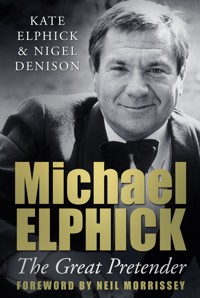
Michael Elphick was a young electrician working at the Chichester Theatre when he was discovered by Laurence Olivier, who arranged for him to join the Central School of Drama. It was here where he met Bruce Robinson, who would later cast him in one of the most popular British films of all time – Withnail and I. Elphick's illustrious career also included major supporting roles in films such as Quadrophenia, The Elephant Man, Gorky Park and Dennis Potter's Blue Remembered Hills. On television, there was Private Schultz and Boon, which gave his acolyte and friend, Neil Morrissey, his first starring role. One of his characters' owned houses in Coronation Street whilst another wooed Peggy Mitchell in Eastenders. However, Elphick's private life was every bit as varied as his acting career. Racked by alcoholism and devastated by the early death of his partner, Julia, Elphick died at the age of 55. And yet, his friends and family will always remember his hugely humorous personality, and everyone he met was left with a 'Mike Elphick story'...
Sie lesen das E-Book in den Legimi-Apps auf:
Seitenzahl: 397
Veröffentlichungsjahr: 2013
Das E-Book (TTS) können Sie hören im Abo „Legimi Premium” in Legimi-Apps auf:
Ähnliche



















Contents
Title Page
Acknowledgements
Foreword by Neil Morrissey
Preface by Kate Elphick
Preface by Nigel Denison
1 The End
2 When Michael Met Julia
3 The Beginning
4 Barefootin’
5 Hey Jude
6 Cabaret
7 Lemon Popsicle
8 Pennies from Heaven
9 Schultz
10 Going Global
11 Portugal
12 Three Up, Two Down
13 ‘Go Number One’
14 Hi Ho Silver
15 The White Swan
16 Go Number Two
17 My Mum’s Death
18 The Great Pretender
19 Be Lucky
Epilogue
Plate Section
Copyright
Acknowledgements
This is a book that would never have happened without the time and memories of others. We hope that we have done justice to their spoken words.
First, to the siblings of my parents, to Auntie Sue and Uncle Robin and his wife Janie, our thanks. Likewise, to Ros, Sylvia and Peter, who shared their early days with Mum, and Bill Bray and Julian Sluggett, who grew up with my Dad. Thanks to those voices from Central: to Michael Feast, Bruce Robinson and Stephen Barnes, and for the help of ‘Smudger’ Smith, James Snell and Andy McCulloch from way back when.
Thank you Neil Morrissey; what a brilliant host, raconteur and star you are. Our book is defined by your Foreword.
Some of the busiest people around found time for our story: Gwen Taylor, Dame Helen Mirren, Kate Williams, Kenneth Cranham and Sir Richard Eyre. Thank you to Brian Hammond and the Henley News and Peter Vandrill and Mycal Miller for their ‘Henley stories’. ‘Thank you’ is hardly appropriate for the long-term contribution of Cilla and Clive Dunn, but here it is anyway. Thank you to Dick and Leni Hill, and Elizabeth Howell, for being there then and for being there once again now.
Where would we have been without Esther Charkham? Her wonderful memories and networking led us to Tony May, Paul Knight and Ray Burdis. Thank you to them, as well.
Thank you so much to Liz.
There were also many others whose asides and anecdotes we used, to whom we are very grateful. Thanks are due to Juliet and Charmian for their valuable feedback. And finally…To Pat for her support, suggestions and subbing when they were most needed; and to Luke, who has been such a support throughout this busy year, particularly looking after the zoo and children each time there was a need to fly back to the UK.
K.E. & N.D.
Foreword
by Neil Morrissey
I remember the very first time that I met Michael. The producer of Boon at the time was Esta Charkham and she called me in. She had championed me at drama school, and had auditioned me for Robin of Sherwood, and then this part had come up. The character was described as being ‘all dressed up in leathers with a helmet on’, but when he took his helmet off, he had this long flowing hair and a puppy-dog face; Esta thought that I would be perfect for the role. She auditioned me and I got the part, but I still had to meet Michael to get approval for this new character on a show that by now was massive. I can’t remember where we met now, but I sat down and we started chatting; I don’t know who was with us or what we talked about, I was just nervous about meeting such a huge star but we did talk together for about half-an-hour and it went really well. You see I was nervous but I wasn’t shy, which made a great difference. So he said, ‘Well that’s that, then. Let’s go to the pub.’ So to the pub we went and a very good job we were being driven around by Central TV at the time – there was no way I could have got on a bike or driven a car after that first session. I am sure that he realised then that he’d found another like-minded soul for socialising. He later said, ‘You can drink in my company, but don’t try and drink with me,’ because he knew that he could out-drink any person on the planet.
What I had found was a great mentor in every sense. When he was on the set he was never ‘starry’ and visiting guest stars discovered that they couldn’t be ‘starry’, either. You couldn’t do that sort of thing in front of Michael, because he wouldn’t wear it. He always came out of his camper without paper. He’d have his words learnt already, no bits of paper, so it would be kind of embarrassing if any actors were on set trying to learn their lines, which happened a few times. For him, it was first of all a matter of pride; secondly, he wanted to be ready to help those, like me, less equipped, who might be floundering a bit. He was amazing: he taught me how to hit marks. It was very important in those days, when they were using film, to get to the right position exactly and not be an inch out for close-ups. There’s more latitude these days with digital cameras because you can shoot, reshoot and reshoot again and more. In film, it was the maximum three takes a shot. There was a game we used to play which taught me everything you needed to know about cameras and lenses and shots and apertures. Michael was technically amazing; wherever the camera was, we were allowed to ask what was the size of the frame. So, we then had to guess what was the distance from the lens, and what was the size of the aperture, and the nearest won a fiver; he took so much money off me, the bastard. But, basically, that game taught me all the technicalities of filming, knowing the size of the lens meant that you knew how to play to the lens. Occasionally I beat him and I was so pleased. So now, whenever I’m on a film set, I’ll always ask the size of the frame and I can pretty much gauge the lens size and when the stops are going to be. These days, of course, we rarely shoot on film so the techniques are very different.
He was such a quiet mentor: no question of telling you off. He just wanted you to maximise everything that was going on in that frame. He was always good friends with the crew. When guest actors turned up, they could see clearly how we were so in tune with the crew, the props guys, and certainly the lighting guys, ‘the sparks’. He’d say, ‘They’re the most powerful union in the business, and if you’ve pissed off “the sparks”, you’re going to look ugly! They’re not going to bother lighting you correctly – they just want to get on with their job and get home.’ He was very friendly with all the technical staff as well. We’d go out drinking with the props and the lighting guys, and the occasional guest star joined us. I didn’t understand how any hierarchy worked, so for safety’s sake Michael said I should call everyone ‘sir’. He said it was important that you had the right respect for everybody. Certainly he did for the DOP and the camera-operator – it was always ‘sir’.
‘Michael, could you …’
‘Yes, sir, no problem, sir.’
And it was that respect and discipline that I’d also learnt from this guy, Brian Hadley, in my youth theatre days. It always makes your job a lot easier. Michael said that you should always be on time. You don’t wait until there’s a knock, knock on your camper door. Whereas these days you might get people turning up late on set, you would never find Michael doing that. In fact, if anyone was late turning up, he’d go and knock on their door and say, ‘Come on now, we’ve got a job to do. We all like sitting around doing nothing, but we can do that at the end of a day’s work, after this job’s done.’
So what I learnt from him was respect. I never hang round my camper; I’m always first out. I like to be on the set and get the job done. I’ve had that attitude bred into me during all those nine years of filming with Michael. I’d like to tell him how professional I’ve turned out to be as a result of that early discipline. I don’t think that he was ever quite aware of what he was giving me. He was a teacher, not a preacher. It was always like a pat on the back. It would be, ‘Well done, how about we do it like this’, and there would be a little tweak, like planing a bit of wood smooth. He was a great listener as well; if you came in with new information, he’d store it. I expect that, when I was in my early twenties, which is what I was when I worked with him, I’d over-boast, you know, full of ideas, wanting to impress and he never told me to shut it; he might just go, ‘Rocky, shh …’ I am sure he’d have had a sense of pride in me, the way I advanced. He was around for Men Behaving Badly and would have seen me getting better during the series at delivering comedy lines and things like that. His timing was brilliant; I learned by watching him, by observing, in the same way as learning the technical stuff that he had turned into a game. If he was around now, I’d like to say to him, that on my behalf, he doesn’t have to be guilty: quite the opposite, in fact. He always used to say that he would probably die of guilt. He was full of guilt the whole time. It was guilt that came up in those late-night pre-bed conversations. He felt terrible about the neglect of his family, neglect of this person or that. He’d say, ‘I must get in touch with …’ and make notes. So, I’d like to say to him, ‘I’m proud of you. I’m thankful to you for giving me so much in my early days when I needed it. Otherwise I might have been an arrogant shit, or some starry arsehole because that wasn’t your style at all. Thank you for taking me under your wing, and without making me feel useless, giving me a brilliant apprenticeship.’
Preface
by Kate Elphick
Over the years, Dad and I often discussed him writing his autobiography. Some days he’d be enthusiastic about the idea: We’d talk about travelling by train around West Sussex with a dictaphone and stopping off at all the places from his childhood, recording his memories together. Other days, he’d say he wouldn’t want to write an autobiography, in case people thought it self-indulgent or vain. I think this view stemmed from the fact that the drink had taken a hold, and he couldn’t see a happy ending. After Dad died, it suddenly became very important to me that I should write his biography, to record such an amazing catalogue of work, and as a tribute to both my dead parents: a way for my children to know a bit about the people that they were, my beautiful, brave, calm and optimistic mum, and my hilarious, fun-loving, gentle and inspirational dad. I love you both.
For me, I think what has been beneficial is reliving the years when my parents were alive, and understanding, as an adult and as a parent myself, the situations we went through as a family. Fame, alcoholism, cancer and relationship problems were all issues that I dealt with then, but I can understand them differently now, as I view them from an adult perspective.
The words of The Great Pretender were handwritten in a little frame above my father’s bed. It is the song that I have always associated with him. I remember hearing him singing it from when I was very little. He even made a recording of him singing it, which I cherish to this day. So, not only was it his own, personal anthem, but also, I think, a fitting title for this book, describing as it does an incredibly talented actor – The Great Pretender:
Oh-oh, yes I’m the great pretender
Pretending that I’m doing well
My need is such I pretend too much
I’m lonely but no-one can tell
Oh-oh, yes I’m the great pretender
Adrift in a world of my own
I’ve played the game but to my real shame
You’ve left me to grieve all alone
Too real is this feeling of make-believe
Too real when I feel what my heart can’t conceal
Yes, I’m the great pretender
Just laughin’ and gay like a clown.
I seem to be what I’m not, you see
I’m wearing my heart like a crown
Pretending that you’re still around
Preface
by Nigel Denison
This has been one of the strangest, but most rewarding experiences of my life, despite getting off to such an inauspicious start. Kate first approached me about six years ago to help her write her parents’ biography. Whether it was the inertia of the newly retired or a genuine feeling of being unequal to the task, I’m not sure, but it was definitely one for the ‘back burner’. Kate didn’t press me, but I gathered that she had been disappointed before when the project had failed to get off the ground. She never dwelt on how the loss of both her parents had affected her. I knew she wished that her children could have had access to Julia, and Michael, particularly when he was well. She, herself, had been robbed of a mature relationship with them and she felt that any that her parents may have had with each other had been blighted by all the adverse press coverage that they had had to endure. I suppose I felt that it was going to be just a bit presumptuous for me to be the one going into that psychological hinterland. So I did nothing.
I think, perhaps, for me, it was the rash of funerals that we come across at a certain age that hastened the project’s re-emergence. I know that Kate was delighted when we agreed to proceed with our publisher. She wanted to provide a family history of both parents, how they met and their careers prior to her birth, plus everything that happened thereafter. I knew Julia’s parents and Mike’s Mum, and both of them, more or less from the time that they met, but for both Kate and I, there were many more gaps to fill than words to fill them. I had the benefit of retirement time, while Kate was employed full-time with a young family, living in Portugal. We decided that I could be the research foot-soldier in the UK, and that we would both be writing. It was an odd notion, but we felt it best if we wrote jointly in Kate’s voice: that anything we learnt along the way would be as Kate discovered it. We had the best of two worlds: people could perhaps be franker with me than they might be with a friend’s daughter, but they could be more familiar sometimes with Kate than they might be with a stranger.
What I had not expected was how frank Kate herself might be. She proved more than equal to the task of objective biographer. It was established fairly early on that there would be no hiding from Mike’s alcoholism. We felt that if his relationships with women were part of a narrative development, we would refer to them, otherwise we would pass over them. We would quote his stories as he told or wrote them, knowing sometimes there might be a little exaggeration. Granny Joan, Mike’s mother, has been one of our greatest aids, being an indefatigable collector of cuttings about her son. Sadly, in most cases, her scissors removed all reference to provenance: the date and name of publications and authors, for which we have to apologise. Kate Robbins, who has been an unofficial biographer of Mike, over the years, was also very helpful.
We have tried to indicate with some of our chapter headings Mike’s love of songs, many shared intimately and exclusively with certain individuals. ‘Be Lucky’ is what he wrote with his signature as an autograph.
People use the word ‘journey’, employed un-geographically nowadays, very loosely, but it would be the mot juste for where Kate and I have been and the people that we have met in assembling this book. Throughout, there has been an understandable request to protect her parents’ reputations, to honour her father’s supreme acting skills and a huge celebration of his larger-than-life contribution to so many lives. Kenneth Cranham said that Mike should have lived in another age, that he stepped out of a Henry Fielding book; that he was actually too big for the age that he had arrived in. It has been a privilege to work with Kate to bring the story to a wider public.
The End
It was a Saturday, the day Dad died, Saturday 7 September 2002.
He had been in and out of casualty during the time preceding his death with a series of drink related problems … At this time he was hardly recognisable as the good-looking, rugged, leather-clad biker Boon. His body was now struggling, badly bloated and weak. He looked ill, his face puffy and eyes discoloured and watery. He was suffering with diabetes and his body was straining now, seriously, with the effects of years of alcohol abuse and neglect. Above all, at this time, to me he looked sad: so sad, and lost. It broke my heart every day.
He would get up, not late, each morning, pull on his old, blue soft towelling dressing-gown and meander from the kitchen to the garden for a fag, finally settling for a while on the sofa in front of the morning news. Sometimes I would catch him (as I peeked around the door, having quietly come to bring him a coffee and to say ‘Hi’) sitting forlorn with his head in his hands. I knew that he hated being a slave to the drink, hated what it had done to him and to the rest of us …
We had divided the two floors of our beautiful Edwardian home so that my little daughter Jasmine and I lived upstairs, converting one of the four bedrooms into our living room, whilst Dad had turned what was once his study into his bedroom. It was a lovely, spacious room at the front of the house with the huge bay window facing out to the front garden and the road. When I was little, my dad’s study had a piano that I would go in and play – Chopsticks mostly; he had wanted me to learn, as he wished that he had learned to play the piano himself … and to tap dance! The room always smelt of him – a mixture of his aftershave, tobacco and his own scent. I remember so well that smell I loved. Now his bedroom, the walls were still terracotta and covered with pictures: some framed posters of plays and pantos he had performed in, memorabilia from Boon, and even a framed silver disc of ‘Hi Ho Silver’, the theme tune from the series. There was a signed Francis Bacon amongst other prints and various paintings, and also a cork board of photos and children’s drawings and cards from Jasmine, and even mine from the past. The ceiling-to-floor dark-green curtains were always closed to allow him his privacy and I think that he liked the dark, safe, cosy effect with the soft lighting. The mahogany desk and piano were now replaced with a double bed and bedroom furniture.
We shared the kitchen, the focal point of most houses. It was where our paths would cross throughout the day: a beautiful, big country kitchen that reminded us both of Mum. We would share some time there in the morning before Dad headed out. The smart, original black-and-white chequered tiles of the huge hallway would give way here to polished floorboards, on which stood a big pine table, breakfast bar and an old pine dresser, displaying Mum’s collection of country plates and jugs picked up from different antique shops and fairs. Opposite the door, above the sink was a huge window, filling the room with light; to the right, as you faced it, were stable doors leading through to the utility room, Dad’s shower room and the back door to the garden. Dad had chosen the colour of the walls – ‘primrose yellow’ he had wanted.
I would cherish that morning-time, alcohol-free, when we would chit-chat about nothing, relaxed in each other’s company. After a while Dad would chuck on his shabby, dark tracksuit bottoms, squeeze his (now unkempt) feet and overgrown toenails into black trainers or slip-on shoes, find a t-shirt, and walk up to the top of our tree-lined road, onto the grubby, bustling Willesden High Road. Around the corner was the bar, ‘Sparkles’ as we locals called it (even though, I think, its actual name at this time had changed to ‘The Isobar’). It wasn’t one of your traditional pubs, far from it, being what I always described as ‘a bit of a dive’. It was a converted shop in a parade with constantly sticky floors and stinking toilets. However, during the day it was quiet, and Dad knew all the regulars. He would sit by the glass front, so that he could watch the world go by, with a script or The Guardian. He had got to know the manager Zaman Bader well and occasionally relied on him for a lift home.
Some weeks before he died, Dad had spent a short spell in the Central Middlesex Hospital, where he had been admitted after collapsing in our road on the way back home from the bar. Since then, he had seemed to be noticeably more concerned about his condition: not that this, as far as I could tell, had been reflected in his need to drink. He had got into the habit of calling up ambulances whenever he felt slightly unwell, but then swiftly discharging himself when he felt a little better. That is exactly what happened the night before he died.
On the Friday afternoon he had again had to call an ambulance; this time to pick him up from ‘Sparkles’. To my mind, the whole thing was getting ridiculous: he called me about six o’clock in the evening, asking me to come and get him, with a change of clothes, as he was going to discharge himself. I was absolutely furious. We then had the same disagreement we’d been having daily for months: ‘You need treatment … You have to stay in … They say you must stay in … You can’t keep discharging yourself’.
I was so fed up. I had become totally exhausted from the constant worry: calls from the hospital to say that he was there, or visits from the neighbours to say he had collapsed. Then, within a day, he had discharged himself and the whole sorry process would begin all over again. I called my boyfriend, Luke – reluctantly, as we hadn’t been together that long (less than a year). I needed a lift, and some moral support, but felt nervous about exposing him to too much of our family drama, for fear of scaring him off. However, he was great. We had lived on the same road through our school years and even walked there together as kids, as his older sister was in my year (we had reconnected through her earlier in the year). We took Jasmine to a friend living nearby and set off for the hospital. The light was now fading and Luke was quiet during the journey as we sat in the usual London traffic, sensing my anger at the situation. And my fear. I think he knew there were no words to console me.
We arrived at the hospital and were swiftly ushered into a room to meet a couple of doctors who were obviously concerned. Their advice was very straightforward: I had to tell Dad that the best course of action was for him to be admitted. They said that he was in serious need of medical attention.
I felt as if a huge scream was welling up inside me shrieking, ‘Yes, I do know! I do live with him!’ It was a scream that had been fed for more than ten years by Dad’s concerned friends telling me that I really should try and get my dad to stop drinking. It was as if they thought that the idea had never occurred to me, as if I had never tried. ‘You know,’ they would say, ‘he should get help; maybe a move abroad would improve his chances?’ or ‘He probably needs a hobby; has he ever tried golf?’ Only the family of an aloholic can tell you that it’s pretty difficult to convince them that golf can be a substitute for vodka or that it’s best to live where booze is even cheaper.
We left the hospital in silence. I gave Dad that look that indicated I was too angry even to speak to him. I marched tight-lipped and stony-faced to the car. Dad trundled on behind, looking like a guilty child awaiting his fate. But it was so hard to stay cross with him for long. He was such a gentle man and so vulnerable in these circumstances. He lowered himself into the passenger side of Luke’s new Mercedes C200 Sport with a cheery, ‘Nice motor, mate!’ and as we moved off they both began discussing cars. Soon he had us both laughing over some story or other – I wasn’t really taking on board the substance. The stress of the previous few hours had begun to take its toll.
With some relief I leant my head against the window in the back of the car, listening to the murmur of the two men chatting in the front. It felt like an out-of-body experience, as I watched the rest of the world go about its business outside the bubble of Luke’s car. It was a warm night, around nine by now, and the ‘Friday Nighters’ were on the move as we drove through Willesden Green; girls clattered by, dolled up for drinking and clubbing later; local lads began to collect in groups outside the fried chicken and kebab shops; a tired driver was taking the 260 bus back to the depot. Like on most Friday nights, litter was beginning to build up across the pavements and the street benches were moving to full occupancy as even the poor and needy were settling in for the weekend.
I was beginning to doze. The colours from the different lights in the road were reflected in the window ahead, as we turned past the tube station, into our road. What happened next was as shocking as it was predictable. When we look back, Luke and I find ourselves as saddened as we are amused by it. ‘Typical!’ is what everyone would say.
Luke slowed the car to turn the corner. ‘Hang on!’ Dad cried, catching us unawares as he had already opened the passenger door to make good his escape, ‘Got to see a man about a dog,’ he grinned. The car never actually stopped before he had shot out the door. He turned to give us a wave and quick thumbs up as he headed off to Sparkles. Luke pulled the car up by the pavement; he was completely taken aback: ‘Has he actually gone to the bar? God, Kate, I really don’t think you should let him go – he’s just got out of hospital!’
I looked at him. ‘What do I do?’ I asked quietly. ‘Go in there and make a scene? Demand that he leaves? Drag him out? Even if I do that, he’ll just go and buy a bottle to drink at home.’ So there he was: a man who had experienced his fair share of salubrious drinking holes, back in Sparkles in Willesden Green. ‘Come on, Luke,’ I said, ‘I’ve got to get back and pick up Jasmine.’
It’s strange but I’m really glad now that I didn’t try to intervene with Dad’s progress to the bar. He usually came home well before eleven on a Friday, before the DJ started his routine and the bar began to fill with youngsters. However, I heard him get in at about one-thirty, so I knew he had had a good night. Apparently, all his friends had been in and Zaman’s brother had dropped him off and he’d seemed fine. So I am glad that his last night alive wasn’t spent rowing with me or sitting drinking alone.
During the early hours of Saturday morning – it was about 5 a.m., I think – I was woken by a terrible noise; the sort of noise that wakes you up instantly and completely. All senses alert, I was sitting up in bed before I was aware that I had been woken. Then I heard it again and I felt sick: ‘AAAAAArrgh!’ Dad was shouting out in agony. I rushed downstairs into his room. He was lying on his side, his face screwed up, contorted in pain. I watched as he struggled to move his great bulk, looking for a position that might bring him some relief from the pain. Each movement seemed to hurt him more and he held his arm weakly to his chest.
I helped him (as best I could) to sit up and told him that I was going to call an ambulance; the phone was in the hall just outside his room, so I could see him as I dialled. There was a very gentle female voice at the end of the line asking me questions; as she asked, I was reminded of a first-aid class I’d attended and a video we’d watched of a man having a heart attack. The operator’s voice was calm and I was calm. There was no way that I could actually be feeling calm, but I did seem to be responding in a very calm way. I told her everything that was happening and prepared myself for any instructions that I might be given to administer first aid.
Perhaps through shock, the memory of events is now a little erratic. After I put the phone down I went back into the bedroom. Dad was now sitting on the edge of the bed. Under my breath I know I was thanking God for letting him live a little longer. I think subconsciously I had been preparing myself to go back into that room and watch him die. We put his dressing-gown on him and waited together for the ambulance. Jasmine was asleep upstairs, so when it came, I told Dad that I would meet him at the hospital, once I had sorted out somewhere for her to stay.
He seemed a little better now and certainly more relaxed. The paramedics were really sweet, a young girl and guy, gentle and caring. The lad turned to Dad and said something along the lines of: ‘You know we can’t keep coming out to get you, if you won’t stay in? You mustn’t keep discharging yourself!’ I hoped to God that he’d pay heed to the advice this time. The three of them left, Dad leaning heavily on them for support. His head was bowed as they slowly made their way down the path towards the flashing lights of the ambulance in the road.
Having seen him play so many parts, this seemed like yet another – except now he wasn’t framed by the edges of a TV screen, and I could feel the cool, intrusive night air on my face. The ambulance drew away. After a while I shut the door and called his partner, Liz.
By the time that I had organised myself and Jas, and got to the hospital, it was about nine o’clock and Liz was already there. Dad was in casualty, sitting up on a hospital bed, a gurney, waiting for a ward bed to become available. The doctors had told him his heart was struggling to survive, as were most of his organs. On hearing this he had agreed to stay in for treatment. I was totally elated that at long last he’d seen reason. He told me it was going to mean a long spell in hospital and giving up booze for good, but that he didn’t want to die. He realised that he had to go through with it. He had agreed to everything the doctors had planned for him and he meant it. I couldn’t believe my ears; I could tell that he meant every word.
We waited in casualty, as you do, waiting for a bed, reading newspapers and drinking endless cups of not-very-nice tea. Late in the morning Dad said I might as well get back to Jas: there was no point in hanging about all day. It was my friend Amber’s birthday and she was having a barbecue. I said that I’d pop in there and be back later that evening. Liz was going to stay with him. I felt as if a huge weight had suddenly been lifted. Dad was staying here – away from the bar – safe.
As I bent to kiss him goodbye, he put a hand round my waist and gave the low of my back a little rub. The papery skin of his hands felt rough but his touch gentle and reassuring. I remember feeling very conscious of that tiny action, almost as if I were hyper-sensitised. I can recall it perfectly even now. It was the last time I would ever see my dad or feel his touch again. He died early that evening from a massive heart attack.
When Michael Met Julia
When you are writing about your parents there is a large part of their story that is inevitably outside your experience because it precedes you. Here I have been reliant on some press interviews that Dad gave, and diaries, but mostly on the collective memories of their friends and our relations. What will always fascinate any child is where their parents met – in my case Chichester, or more specifically Chichester Theatre – the place that I have to thank for being brought into the world. Chichester was also Dad’s home town, or city, rather, as the residents will be quick to remind you.
When you’re excavating past times it’s always good to remember how quickly places can change within a generation or two, and a lot was changing rapidly in post-war provincial England (something that my parents’ contemporaries have been keen to emphasise).
My parents met in Chichester in the 1960s. It wasn’t exactly a backwater but according to my mum’s friend Ros Lemm, who grew up there (and was responsible for my parents’ meeting each other) it had a slow, traditional pace of life – resistant to change and unimpressed with the rapidly exploding cultural scene of the capital, less than 70 miles away. It had been a relatively prosperous market town, now city, with a history of livestock farming. Dad’s family had been cattle farmers.
Ros remembers a childhood of insufferable boredom. When she describes it, though, it seems to me idyllic. Children ‘played out’ – no one worried about them, they were independent, could go riding off on bikes, taking picnics, and not returning home till dark. My Uncle Robin remembers cycling to Bognor with a group of children – he was four. A sort of Enid Blyton freedom. But Ros says that nothing seemed to happen. Market day was a highlight. The ‘pictures’ provided entertainment and all children went unaccompanied on a Saturday morning. She remembers a neighbour getting the first television – to watch the Queen’s coronation in 1953 – and being allowed to go in and watch during the short time each day when it broadcast a programme. In their own house they continued to gather round the ‘wireless’ before her father gave in to her (and her brother’s) insistent clamours for a TV. But when they got one it came disguised as a sideboard with doors that closed firmly over the screen. Television gradually gained a hold of the local consciousness and cinemas began to close. As the new rock-and-roll phenomenon reached the south of England, one local band member recalls that it was slow to catch on in Chichester: ‘there were ten times as many local dances in nearby Bognor.’
Every child was faced with the 11+ exam – the most divisive benchmark in the English education system, which, in effect, weeded out 80 per cent of children. Children who had played together through the primary years were suddenly separated. If you passed, you went on the bus, bedecked in brand-new uniform, far too big (so you could grow into it), to the grammar school. Everybody else attended the local secondary modern. People, to this day, talk about the stigma of failing the 11+. You probably remember John Prescott, Tony Blair’s deputy prime minister, confessing that he never got over it. Ros passed. She got a new bike as a reward. My dad failed. Ros went to the Chichester Girls High School, and my dad to the Lancastrian Secondary Modern School. In 1971, the Lancastrian was to merge with Chichester Boys High as part of the government’s comprehensive school plans, but in my dad’s day, in shire England, class and education operated a highly successful apartheid system. The chances of the two of them meeting socially would be virtually zero. Their expected future pathways would be different too: hers, to pass exams and move to a campus far away; his, to leave school at the first available opportunity and get on with the real business of life. A view not shared by my grandparents at all.
My dad never got over failing the 11+. I wonder whether his determination to favour the underdog, his visible dislike of privilege – he was quick to challenge the sort of braying smugness of ‘Hooray Henrys’, to the shocked amusement of lookers on – was rooted in that?
School was really not for him – and teachers were exasperated (except for one). But he was no slouch when casual work was in the offing in the early days. Like many of his contemporaries he found that a good source of revenue was to be found in a newspaper round, although as a child he had always dreamed of running away and joining the circus. One used to come to Chichester every year and he was very cut up when the site for the circus, which was also the traditional site for the annual Chichester Sloe Fair, was later designated for council development. What he was to discover in time was that ‘the development’ was a car park for a brand new theatre.
His round took him close to where the foundations of the theatre were being laid, and he said that he used to pause every morning to see how far they had advanced since the day before. When he was much older, when he’d had his first starring role on television in a series called Holding On, he met the author of the original book, Mervyn Johns, at a reception. He was surprised at his greeting: ‘You’ve come a long way since you delivered my papers!’ the famous writer said to him.
In his early teenage years he was always on the lookout for a bit of paid work. He got a job at Goodwood Racecourse, picking up litter and tidying up after race meetings. There was also a little rowboat ferry that crossed Chichester harbour between Itchenor and Bosham. For the pedestrian it could save you a 13-mile round trip, but it was mostly used by mariners who wanted to be taken to their moored boats. Anyway, Dad – who by the age of thirteen had managed to grow a noticeable, if not luxuriant, moustache – became a part-time ferryman as well.
He also found ways to spend money. His best friend of those days, Bill Bray, remembers them both being members of the same youth club, St Georges. As Bill says of those days, ‘So little happened then. You had to create your own excitement. So every Saturday night we hired a room at the back of the New Inn and brought a quarter of a bottle of gin, for 11 shillings each, for a ritual get-together.’ Dad later went on record to say:
I’ve always looked much older than I am. In fact, I had my first pub drink, a brown ale it was, when I was about thirteen. I got caught once. I was in the school athletics team. I took the Sussex record, for my age, for the 880 yards, and the local paper printed a picture of me together with my age. ‘What’s this mean?’ said the landlord that evening. ‘Printing mistake.’ I said.
But what Bill remembers most about Dad in those years – and what brought Ros and him into the same ambit from different sides of the town – was the wonderful world of drama: a world neither he nor his best friend at the time realised was going to change his life.
Mr Stubbs was the one teacher who saw the germs of his talent. English lessons at that time often consisted of play readings. Dad was evidently good enough for his teacher to encourage him to join the Drama Club. He was in quite a few productions. Bill Bray remembers playing a servant to Dad’s Madame Coupler, when he was dressed in a crinoline, in Sheridan’s A Trip to Scarborough. According to the programme, Mr Stubbs was in charge of make-up for the production: he must have had his work cut out, transforming Dad into an eighteenth-century lady. Dad was also in school productions of Noah and A Midsummer Night’s Dream and was Shylock in The Merchant of Venice.
But Mr Stubbs had more ambitious plans for young Elphick. In 1932 there had arrived in Chichester an optometrist, a businessman, called Leslie Evershed-Martin. He had been a committed member of amateur dramatic societies in other English towns in which he’d lived, and was astounded that no such organisation existed in his adoptive city. He decided to put this to rights and using the local newspaper, the Chichester Observer, as recruiting sergeant, organised a meeting: a large crowd attended and The Chichester Players were born in 1933. More of Mr Evershed-Martin as we progress but Mr Stubbs, nearly thirty years after The Players were instituted, was keen for his protégé to experience a broader theatrical experience: namely, The Players’ production of The Lady’s Not For Burning in The Assembly Rooms in Chichester. It wasn’t a large part but it gave Michael a little bit more confidence to tread the boards outside the school environment.
It’s not difficult to imagine how this young boy from the other side of the tracks regarded the polite society of The Chichester Players. He really wasn’t going to hang around there. By chance, one of the young Players, Julia Goodman, had become involved in a new youth drama group. New organisations like this – just for the benefit of young people – were terribly outré. The new organisation was called The Attic Players. It was called this because one of its founders, Julian Sluggett, had a father who was a prominent accountant in Chichester, and who had a spare attic in the offices of his practice. Here the young people could rehearse whenever they wanted to (free of charge) prior to performing in whatever church hall or temperance club was available. Tom Chadbon, who has been a perennial performer over nearly five decades of television, was also a founder member. Later, as membership grew and productions got bigger, it moved to a room over a pub, with a fish-and-chip shop conveniently situated nearby.
Julian met my dad when they were fourteen, and he was the one who encouraged him to join The Attic Players. As his father was an old friend of Granddad Elphick, he must have realised that Dad had done some stage work. Anyway, as he remembers it:
I was standing outside The Punch House, one Saturday afternoon with these two girls – I think one was Julia Goodman – talking about finding another man to do the fourth Knight Templar in Murder in the Cathedral. It was always the same problem: you could find the women, but not the men. Suddenly, Mike appeared round the corner carrying a football. One of the girls said, ‘Why not ask him?’
I did. He agreed and I said, ‘You might as well get rid of that football. You’re not going to have time for that in the future!’ And, indeed, he didn’t.
Ros Lemm joined The Attic Players and remembers appearing in a review they had written. The production of Murder in the Cathedral took place in Wick village church. Bill Bray was working backstage and out front with any lights that might have been available. In June of 1962 The Attic Players performed the play Billy Liar in Stockbridge Hall. Dad played Billy’s father, Mr Fisher. It’s such a sign of the times to read the review in the local paper:
Members of Chichester’s youthful Attic Theatre Company faced their most difficult task to date with the production last week of Billy Liar a satirical comedy set in the North Country. A play of this type is not easy to perform successfully even with a cast of experienced campaigners, and in all the circumstances, the standard of both acting and production reached a high level … With a little more experience the Attic Theatre Company must surely go places … lovers of amateur dramatics in Chichester can expect some worthwhile entertainment in the future. It was a spirited and bubbling performance by Tony Fabian in the title role. He obviously enjoyed himself in the part, and his enthusiasm and verve transferred itself to the audience. He received first class support from Michael Elphick as his grumbling, self-asserting father, a man who is sure he knows what is right and who is not afraid to call a spade a … shovel – which he does perhaps too frequently in the play. Others who caught the eye were Patrick Hastings as his friend Arthur and Julia Goodman as his tarty girl friend Rita.
Apart from the subtext giving us a clue to the latent disapproval of such a play, it’s interesting to note that ‘the places’ that some of the company would ‘go’ to were: Dad, Julia Goodman and Julian Sluggett, The Central School of Speech and Drama; Tom Chadbon, RADA; Patrick Hastings, Oxford University Drama Society. But the appeal of The Attic Players was about to be superseded by an even more powerful influence on Dad’s life.
My dad’s first non-school acting experience had been with The Chichester Players, whose founder, Leslie Evershed-Martin, was going to have an even more profound effect on his life, indirectly, by being a television viewer. Mr Evershed-Martin, as well as being a successful Chichester businessman, was also a well-liked and able local councillor. He had risen to be mayor of the city and was thinking of retiring from this arena of public life.
One evening in January 1959 he sat down by the double glow of the fire and his black-and-white television set to watch the arts programme Monitor




