


9,99 €
Mehr erfahren.
- Herausgeber: Allen & Unwin
- Kategorie: Sachliteratur, Reportagen, Biografien
- Sprache: Englisch
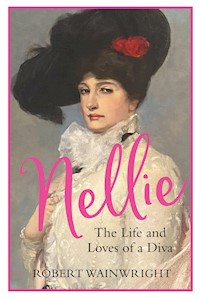
'In this highly readable biography of Nellie Melba...Robert Wainwright tells the story of the girl with the incredible voice who, by sheer force of her personality and power of her decibels, took the operatic world by storm and managed to escape from her violent husband' Ysenda Maxtone Graham, DAILY MAIL Nellie Melba is remembered as a squarish, late middle-aged woman dressed in furs and large hats, an imperious Dame whose voice ruled the world for three decades and inspired a peach and raspberry dessert. But to succeed, she had to battle social expectations and misogyny that would have preferred she stay a housewife in outback Queensland rather than parade herself on stage. She endured the violence of a bad marriage, was denied by scandal a true love with the would-be King of France, and suffered for more than a decade the loss of her only son - stolen by his angry, vengeful father. Despite these obstacles, she built and maintained a career as an opera singer and businesswoman on three continents which made her one of the first international superstars. Award-winning biographer Robert Wainwright presents a very different portrait of this great diva, one that celebrates both her musical contributions and her rich and colourful personal life.
Das E-Book können Sie in Legimi-Apps oder einer beliebigen App lesen, die das folgende Format unterstützen:
Veröffentlichungsjahr: 2022
Ähnliche















Praise for Robert Wainwright
‘The charm of Wainwright’s biography is that he makes us see what an engaging, admirable and sometimes heroic quality it is to be a life-enhancer like Sheila’ Daily Mail on Sheila
‘As social history Sheila Chisholm’s life is fascinating … it’s undeniably enjoyable to read of all that glitter and gold’ The Spectator on Sheila
‘A marvellously entertaining story that at times resembles a glossy television period drama’ Daily Express on Sheila
‘Muriel Matters’s name is apt: she certainly does matter … [a] highly readable biography’ Daily Mail on Miss Muriel Matters
‘[A] compelling biography… As a study of a man whose greatness we would do well to remember and applaud, it sparkles’ Independent on The Maverick Mountaineer
‘Wainwright chronicles it all with aplomb… Wainwright has done a fine job of rescuing his protagonist from the footnotes of climbing history’ Telegraph on The Maverick Mountaineer
‘Robert Wainwright has conjured up the rasp of crampons on sheet ice, the taste of peaches eaten from the tin, and the bitchiness endemic among the frozen-bearded tribe of climbers and explorers’ The Spectator on The Maverick Mountaineer
Also by Robert Wainwright
Enid: The Scandalous Life of the Formidable Lady Killmore
Rocky Road: The Incredible True Story of the Fractured Family Behind the Darrell Lea Chocolate Empire
Miss Muriel Matters: The Fearless Suffragist Who Fought for Equality
The Maverick Mountaineer: The Remarkable Life of George Ingle Finch
Sheila: The Australian Ingenue Who Bewitched British society
Born or Bred? Martin Bryant, the Making of a Mass Murderer
The Killing of Caroline Byrne: A Journey to Justice
The Lost Boy: A Search for Life, a Triumph of Outback Spirit
Rose: The Unauthorised Biography of Rose Hancock Porteous
First published in Australia in 2021 by Allen & Unwin
This hardback edition published in Great Britain in 2022 by Allen & Unwin
Copyright © Robert Wainwright, 2021
The moral right of Robert Wainwright to be identified as the author of this work has been asserted by him in accordance with the Copyright,Designs and Patents Act of 1988.
All rights reserved. No part of this publication may be reproduced, stored in a retrieval system, or transmitted in any form or by any means, electronic, mechanical, photocopying, recording, or otherwise, without the prior permission of both the copyright owner and the above publisher of this book.
Every effort has been made to trace or contact all copyright holders. The publishers will be pleased to make good any omissions or rectify any mistakes brought to their attention at the earliest opportunity.
10 9 8 7 6 5 4 3 2 1
A CIP catalogue record for this book is available from the British Library.
Hardback ISBN: 978 1 83895 509 0
E-book ISBN: 978 1 83895 510 6
Printed in Great Britain
Allen & Unwin
An imprint of Atlantic Books Ltd
Ormond House
26–27 Boswell Street
London WC1N 3JZ
www.allenandunwin.com/uk
To my mother, Rae
CONTENTS
Prologue
1 Opposites attract
2 ‘I must make some money’
3 ‘You wait and see’
4 The audition
5 The house of women
6 The dress
7 Becoming Melba
8 ‘You are the star’
9 Covent Garden
10 A doctrine of rivalry
11 ‘An Australian girl’ takes Paris
12 The devil who leaves
13 The patron
14 Taking a cold house by storm
15 Prince Gamelle
16 A diva meets a duc
17 To Russia with lust
18 Melba nights
19 ‘I’ll whip him and see what he’s worth’
20 Crossing boundaries
21 Armstrong v Armstrong
22 A just dessert
23 Facing the music
24 Murphy’s law
25 A resolute intent
26 The first singer in the world
27 A fall from grace
28 Of envious men
29 A Wagnerian tragedy
30 A Star-Spangled Banner
31 Divorce, Texas-style
32 Australia finally
33 The brutal Truth
34 ‘I am five feet eleven inches’
35 The long farewell
Epilogue
Acknowledgements and Notes on Sources
Bibliography
PROLOGUE
25 March 1919London
Philippe sat at the desk beside the window, barely noticing the hotel room’s opulence. Staff had drawn the heavy curtains for the night but the faint clop of harnessed horses could still be heard in the street outside, mingled with the chug of early-model cars and overladen buses taking office workers home.
London was beginning to reopen in the lee of the Great War, the world at an uneasy peace as the terms of Germany’s surrender were thrashed out in what would become the Treaty of Versailles.
But Philippe’s mind was elsewhere this night, head bowed in concentration and pen poised over a sheet of hotel stationery, excited and yet uncertain about what he should write.
He was normally a man of supreme self-belief, even though others had prevented him from attaining what he considered his birthright. Philippe d’Orleans, ‘pretender’ to the French throne, had lived most of his life in exile from his Paris home, a fate he regarded as worse than a prison sentence. He was locked outside rather than locked within.
Philippe was used to writing about complex political affairs but the task tonight was different and deeply personal. Although the words he chose would have no public consequences, they would determine what might happen next in an important relationship that had been lost and only now rediscovered. Other than the title he would never officially bear, this loss had been the greatest disappointment of his life.
Finally, he scrawled a dateline at the top of the letter—From the Ritz Hotel, Piccadilly. It was unnecessary given that it was here, in the city’s most famous hotel, just a few hours before that he had met the woman he once adored and even wanted to marry. But formality was the way of the world for both of them—a blessing and a curse—he a king without a crown and she in the twilight of a stage career that had shone like few others. And he wanted her to know that he had sat down to write immediately after she had left, the feelings still warm and unsettling.
They had first met thirty years ago. They were young back then; he was a wilful prince with thick blond hair dusted with faint rust, pale blue eyes and a square jaw and she was a striking, powerful soprano taking the London opera by storm with her golden trill and feisty colonial spirit. Their affair had risked all, burned brightly and was then extinguished before the flame could take hold.
It all seemed so long ago and yet this afternoon those same feelings had returned. They were both older, of course, each successful but worse for wear, physically and emotionally, from life’s rigours and uncertainties. He still had the bearing of a man used to an active life but a waxed moustache and pointed beard flecked with grey hid a middle-aged chin while she had arrived at the hotel wrapped in chinchilla that only served to enhance the inevitable widening of a once lithe frame.
But the changes only served to confirm that their love was more than just lust, and that behind the tingling pleasure of their reunion there had been regret, on his part at least and he hoped on hers. What might have been if not for the demands, antiquated rules and expectations of others.
Both had married others and neither relationship had lasted. She had one child but he had no heirs and his title, for what it was worth, would pass to a nephew when he died.
Who could say if their union might have been different if it had been allowed to flourish and settle, but if his feelings these long years later were any test, then the answer was surely ‘yes’.
Their meeting today had been all too brief, barely enough time to confirm with a touch of hands that the passion they had held for each other so many years before had not disappeared. But there was so much more to say, to express and to explore. He wanted to see her again, not to reignite the fires of their brief love affair but to re-establish their friendship. Tomorrow they would dine together and talk, he hoped, as he finally put pen to paper.
My dear Nellie,
What can I tell you of the tender emotion that I have felt again after so many years? It seemed to me that it was yesterday that I said au revoir to you and that I found myself near to you the same, in spite of the age I then had nearly thirty years ago. I was so happy to find you in spite of your sufferings, moral and physical the same Nellie who has never changed and who remains in my life, sometimes so sad, the only constant and faithful friend whom—even in the delirium of death that I so closely escaped—my soul and heart reached across space. For you know me and understand me! In spite of all the world has done to separate the one from the other, I am satisfied because the confidence you give me is my recompense. Thank you again for the few moments in which you have really made me happy in evoking the best years of my youth that I have relived through you and with you. I count the minutes that separate me from the moment when I will see you tomorrow evening. I hope for longer than this evening? I have so many things to say to you that I cannot write. But that tomorrow evening will come of themselves from my lips when I am near to you. I do hope you will give me time to tell you all that I have in my heart. Meanwhile, my dear Nellie, I kiss most affectionately your pretty hands and am always your old Tipon.
The letter was delivered to Nellie the next morning as she prepared to move into a house she was renting barely a kilometre from the hotel, just behind St James’s Park and within sight of Buckingham Palace, where she had been a regular visitor during the reign of Victoria and her son, Edward.
She had arrived in London the previous week, making the icy journey across the Atlantic from New York for an unexpected return to the concert hall in which her fame had been cemented and celebrated across the world.
Queen Victoria’s grandson, George V, had asked that she perform at the reopening of the Covent Garden Opera House to celebrate the end of the war. The building had been shuttered and used as a furniture warehouse during the years of conflict and, although its paint had faded, gilded stalls dulled and curtains worn, it was time to reawaken the city’s cultural heartbeat. And Nellie Melba, the supreme soprano of her day, was the person who would headline its revival.
But it was not the upcoming concert that had dominated her thoughts in the days since her arrival but the man whose infatuation with her had threatened to wreck her career at the very moment it was set to triumph. Despite the furore that followed, she had never once regretted their liaison, rather she had mourned its demise. There were few people who knew the details or the depth of their affection.
She had long known that Philippe lived in a great house named Wood Norton at Evesham on the edge of the city, but something had always stopped her from making contact. She was not sure why. After all, the scandal that had surrounded their affair was long forgotten and, for those who did remember, hopefully understood and forgiven.
Things were different now; this was a time of rebirth and revival.
Perhaps that was the driving force behind her decision to contact Tipon, a nickname she’d given the Duc d’Orleans, as he was then known, to hide their liaison. Given all the heartache and loss around her now, how could she deny herself the opportunity of a rekindled friendship?
A few days after she got off the boat in Liverpool, Nellie sent a short telegram to Philippe. It was succinct, but written with all the eagerness of a lovestruck teenager.
At the Ritz. Can I see you?
He replied almost immediately, as eager as she to meet again. There was a risk, of course, that the encounter might have been disappointing; a cordial acknowledgement of a past that had no future. Instead, Philippe had felt strongly enough to write immediately after their meeting and express his love for her and the impact she’d had on his life. She had felt the same, otherwise she would not have sought him out.
The risks were too great during their affair to write anything to each other except the simplest note, and certainly nothing with tender yearnings in case it fell into the wrong hands. The missives were all destroyed. Perhaps that was why this letter meant so much, and why it would remain among her most treasured papers and souvenirs of a life so full of adulation.
Philippe must have followed her career, read of her operatic triumphs and perhaps even attended performances as he had when he pursued her, because he had known of her sufferings behind the public facade of success, not just for him but for her son. His words made clear that he had also treasured her discretion and loyalty over the years.
They would dine together tonight and talk more.
A few weeks later she would write her own letter, not to Philippe, with whom she would stay in contact, but to her fans through The Times. The Covent Garden performance was a great success and she had been overwhelmed with letters, telegrams and floral tributes. A letter was her only means to acknowledge the response, as she wrote:
It is physically impossible for me to acknowledge these individually; but to everyone who has expressed sentiments of appreciation and affection I am now and forever indebted. Will they please accept my warmest and most heartfelt thanks? I will not attempt to convey in words my feelings of gratitude. My heart is full, and I can only say that my joy at being once more in England is indescribable.
It was not that simple of course. Nellie’s feelings for the great city and its part in her life were much more complex, just as she was a woman who appeared to be as supremely confident as her celebrated voice and yet had always harboured doubts and anguish about her place in the world.
1
OPPOSITES ATTRACT
Helen Porter Mitchell was an unusually naughty child; incorrigible, unreasonable and unmanageable, incapable of behaving even by accident. These were her own words, an unkind self-assessment delivered much later in life, possibly as a means of justifying why her parents did their utmost to prevent her from pursuing a career as a singer.
Her father, David Mitchell, was a God-fearing man who would have regarded his oldest daughter’s voice as a heavenly gift, and yet he could not abide the notion of her taking the stage professionally. It was one thing to sing at a charity concert for the church or the local school but entirely another for a woman to warble for money—‘shilling entertainments’—much less in costume and grease paint. That would be promiscuous and lacked respectability before God; and his Nellie, as Helen would always be known, would not be a part of it.
When she was an eager teenager, Nellie decided to hold a drawing-room concert to raise funds for the repair of a cemetery fence at the local church. She wrote to friends asking them to donate and attend the concert, even creating and pasting colourful posters on walls around the neighbourhood advertising the show, but when her father heard about the event he wrote to each of the invited guests asking, as a personal favour, that they stay away. When Nellie stepped out onto the makeshift platform there was an audience of just two. She sang anyway but never forgot the experience.
Neither time nor her success would dull her father’s hardline view. Many years later, when she returned to Australia as the most famous soprano in the world, Nellie sang in Scots’ Church, Melbourne, which her father had built. It was a magnificent homecoming and yet, afterwards, when she asked her father if he had liked her singing, his only response, delivered in his gruff Scottish burr, was ‘I dinna like your hat’.
And yet her father was her hero; a strong and dependable rock but impenetrable and unyielding.
David Mitchell had arrived in Melbourne penniless and yet he made a fortune, hewn from his learned skills as a stone mason. He was responsible for many of Melbourne’s most enduring sandstone structures, including the Royal Exhibition Building.
He met dark-eyed Isabella Dow, the daughter of a business associate, at church one Sunday in 1857 and they married a few months later. They would start a family immediately but, tragically, their firstborn, a girl, and then a boy would both die in infancy. Nellie was their third child, born on 19 May 1861. The Mitchells watched anxiously over her and celebrated with prayers when she reached her first birthday.
There would be another seven Mitchell children, roaming around a large, turreted house called Doonside, built by their father in inner-city Richmond, but Nellie’s heart lay at the end of an 80-kilometre stagecoach ride out of the city to an old cattle station known as Steel’s Flats, which was beyond the town of Lilydale.
It was here that she thrived, happy fishing or swimming alone in the nearby creek, exploring bush tracks and gullies beneath towering eucalypts filled with raucous birds or clambering into the foothills of the ranges behind the homestead; her wanderings limited only by the endurance of her pony and her imagination.
Nellie was a contradiction, a young woman who was happy in her own company and yet someone who needed affirmation. She was stung by criticism but ultimately used it as a driving force to succeed.
But it was her father she so desperately sought to please. ‘If he was a stern master then I was a willing pupil,’ she would later write in her memoir. As much as she looked like her mother, it was her father after whom Nellie took; they were both resourceful, fearless and determined but also stubborn and quick to anger—character traits that would serve her well but also have consequences.
She could never say from where her abilities came. David and Isabella Mitchell were both musical but neither was more than accomplished, and certainly far from extraordinary. Nellie would sit beside her mother’s feet as she practised the piano and on her father’s knee as he played the harmonium.
Singing seemed as natural as breathing, her constant humming around the house an irritation to her mother but, in retrospect, an unintentional vocal exercise that helped develop her famous trill.
Nellie was six years old when she performed at a Sunday school production and just eight when she sang in public for the first time, at a fundraising concert in the Richmond Town Hall in which she accompanied herself on the piano and earned several encores. An enthusiastic reporter from The Australian newspaper observed: ‘She is a musical prodigy and will make a crowded house whenever she is announced again.’
Nellie’s parents were hoping for ‘docility’—for their daughter to conform to the expectations of the time that young women should stay quiet and not express an opinion—but they only succeeded in entrenching her rebellion and forming an enduring sadness about being misunderstood. She hated the strict boarding school she was sent to, especially as it was so close to home she could see her father riding to work.
Those memories would never fade: ‘A girl should not be brought up too strictly,’ she remarked in an interview in 1910. ‘Particularly, she ought to be allowed to choose what she will do with her life.’
Although she found school distressing, it was the music program at the Presbyterian Ladies’ College, East Melbourne, that set her on the pathway to success. It was here she found her first singing teacher, Mary Ellen Christian, a concert contralto who had studied at the Royal Academy of Music in London. When she left school, Nellie continued studying singing with Pietro Cecchi, a tenor who had studied in Rome’s Academy of Music. The foundations had been laid.
Nellie’s mother died in October 1881 at the age of forty-eight. It wasn’t unexpected—she had been ill with chronic hepatitis for some time—but, even so, her death from liver failure came as a shock.
In her last days, she had made Nellie promise to take care of the youngest child, four-year-old Florence, known as Vere. Not simply to watch over her but to protect her as a mother.
In the bleak months that followed the funeral, Nellie, aged twenty, felt the weight of that solemn vow. The sight of Isabella’s body being lowered into the ground in a coffin and covered with dirt was haunting. But death was also a beginning, and there were consequences for the living; her little sister had become a responsibility in a life that, until now, had none.
Nellie’s response was to move Vere’s cot into her own room, to tend the child as one would a newborn baby. It was as if she could not let Vere out of her sight lest something happened and yet, despite her attention, one evening barely three months later Vere fell ill. It was too late to call a doctor, so Nellie put the feverish girl to bed and hoped her temperature would subside by morning.
Unable to sleep, she listened with increasing concern to Vere’s wheeze, clearly the girl had an infection in her chest. As she finally began drifting off to sleep, Nellie was disturbed by the sense that a third person was in the room. Unable to rid the notion, she sat up to see what she thought was a dark figure near the fire. In her anxiety and drowsiness she pictured her mother wearing the simple black dress in which she had been buried. Nellie watched, transfixed, as the spectre moved slowly across the room and stood over Vere’s cot where it raised its hand and pointed at the child before making a sweeping motion and disappearing. Nellie raced to the cot where Vere was asleep, peaceful and cooler to the touch. Was it possible or the hallucinated vision of a stressed mind?
The next morning she told her father what had happened, including the appearance of his late wife’s apparition. David Mitchell, on his way out to attend to business, dismissed his daughter’s concerns with a wave of his hand and insisted that she delay calling a doctor to tend Vere until he returned that evening.
But he was tragically wrong. The little girl’s condition worsened through the morning, her raw throat causing her to gasp for breath. Nellie waited, hoping her father would return so they could call the doctor, but by the time David Mitchell returned, his young daughter had choked to death.
Nellie was distraught. She had failed her mother, and her sister who had died in a horrible fashion. The funeral and Vere’s tiny coffin being laid next to their mother only heightened her shame.
She would later recall her father’s condescending words when she pleaded for a doctor: ‘“Tut, tut girl. Get those foolish notions out of your head.” By the evening it was too late. My sister died at four o’clock. These are the facts, unadorned. I do not seek to explain them.’ It was as close as she would ever come to criticising David Mitchell.
A renewed pall of doom settled over Doonside. Nellie, who now shared home duties with her sisters Anne and Belle could not shake the sense of shame over the deaths of her mother and Vere. ‘Death on my youthful horizon shocked and bewildered me,’ she would write four decades later, the memories still powerful.
David Mitchell, normally so unemotional, could see the impact the losses were having on her. There was nothing he could do to bring back his wife or youngest child but he could save his oldest.
He had taken a contract to build a mill for a property at Marian, 24 kilometres inland from the township of Mackay in northern Queensland. He decided to take Nellie on a business trip north for several months, leaving the other children to the care of staff. The change of atmosphere might lift her spirits, he thought. It was a decision that, in a perverted way, would be her making.
Mackay, built low and spare at the edge of mangroves, had a population large enough to justify three newspapers, six schools, two banks, a hospital, library and a dozen hotels to slake a tropical thirst. Nellie would describe the town as barbaric, despite there being a thriving social and cultural community into which she soon fell, joining an amateur company as a pianist and second-string singer. Her first two performances were to raise money for a cricket club and another for the local church. She was well received by audiences who flocked to the town’s wooden theatre but considered inferior to a local girl named Julia Wheeler.
But, by the end of the year, Nellie had become an indispensable performer, ‘rapturously encored’ according to one report in the Mackay Mercury, which concluded: ‘This lady has firmly established herself as a favourite and no amateur concert is likely to be held without her assistance.’
The applause only confirmed to Nellie that she desperately wanted a career on the stage, as she intimated in a letter home to Cecchi. The letter also revealed a competitive streak that would be both a blessing and a curse: ‘I had great success at two concerts I sang at, so much so that all the ladies up here are jealous of me. I was encored twice for each song, and they hurrahed me and threw me no end of bouquets.’
The sunshine of Queensland had thawed Nellie’s spirits, as David Mitchell had hoped, and she settled into Mackay society with its endless rounds of tea parties, riding and boating trips, even writing home about the fun she was having flirting and then fending off the eligible young men of the town.
At age twenty-one, Nellie Mitchell was handsome rather than pretty, with dark, almond-shaped eyes and a fine-lipped mouth that seemed lost between a long, distinctive nose and prominent oval chin. Her hair was usually worn tied up with tight curls splashed across her forehead, hinting at her mother’s Spanish heritage, as did her light-olive complexion and shapely figure accentuated by a tiny waist.
She was a young woman whose attractiveness came as much from her personality, with a magnetism that radiated the sense that she was someone with whom to be reckoned. She possessed a mind of her own at a time when women were supposed to be meek and complacent. It lent credence to a story that she once stripped off to swim nude in the Yarra River with the boys of Richmond and another story that, during a particularly tedious church service, she played ‘Can’t You Dance the Polka?’ on the organ instead of the requested hymn.
She enjoyed the attention in Mackay and took none of it seriously, although there was one young man she couldn’t shake off. Charlie Armstrong was rangy, good-looking and strong in the lean manner of someone who has lived an outdoors life, with ice-blue eyes and a shock of blond hair bleached almost white by the sun. He had a demeanour to match; an authority that made men wary and women feel protected.
He was the antithesis of his background, the youngest son of an ageing Irish baronet who was in his mid-sixties when Charlie—his thirteenth child—was born. The baron died when the boy was aged five. It was little wonder then that Charlie’s early adult life was spent wandering from job to job, trying to find his place.
At the age of seventeen he was sent to Australia to work on the family station outside Brisbane. He thrived in the bush where his skills and bravery were admired and no quarter was expected or given. Along the way he had picked up the nickname Kangaroo Charlie, which some linked to his ability to stay aboard a bucking stallion until its snorting fury had calmed, while others attributed it to his devastating boxing skills, able to dispatch opponents with calm ring craft rather than brutal thuggery.
Either way, it was clear that he and Nellie came from different worlds. Nellie was the oldest child of a self-made man and Charlie the youngest of an entitled baronet; Nellie was a city girl who wanted to ride in carriages and dreamed of singing opera while her beau was a rodeo-loving country boy whose interest in music began and ended with music hall ditties. But there was an instant attraction between them, perhaps not only a physical desire but a shared spirit of independence, and an impulsiveness that could lead them into trouble.
Charlie was looking for a change, away from the loneliness of campfires, rough sleeping and the company of men. The vivacious girl from Melbourne was fun but prickly at times, akin to a wild horse that he now wanted to tame.
David Mitchell was not quite sure about the relationship. Yes, Charlie Armstrong came from an aristocratic family but what good was that in Australia where a man needed drive and skills to get ahead? From what he could see, Charlie had plenty of drive but precious little when it came to skills, beyond breaking horses.
Perhaps he could also see that his daughter and Charlie were too alike to be a good match. He had already witnessed them lose their tempers and worried at what might happen if they were both angry at the same time. Although he had doubts, there was no sense in refusing the young couple. By November 1882 Charlie had proposed and Nellie had accepted. And on 22 December, they were married in Brisbane.
2
‘I MUST MAKE SOME MONEY’
Two months after the wedding Charlie Armstrong punched his new wife in the face. They had been arguing in their bedroom at Doonside about money. He wanted Nellie to hand over her purse but she had refused. His response was to lash out. To make matters worse, Nellie was pregnant.
Even in the context of nineteenth-century misogyny it’s impossible to minimise the brutality of such an attack and the impact it would have had on Nellie, physically and psychologically. Once a man had hit his wife it meant that he was capable of doing it again. In future when they argued—which was frequently—Nellie would automatically brace herself for the next blow.
It came soon enough, only this time the violence was in public. They were out driving a buggy one afternoon when Charlie lost his temper and began whipping the horse. Nellie tried to intervene and grab the whip but she was struck in the face with the butt end. Still angry, Charlie pulled to a stop and forced her to watch as he flogged the horse. She almost fainted at the sight. Years later she would recall the incident with some distress, not only for the poor animal but also the clear implication that it could have been her.
It was a pattern of behaviour that would continue as the months went by, their disagreements quickly turning into arguments. They were both hot-headed individuals who refused to retreat from their point of view, but it was only Charlie who descended into physical violence. Far from the charming individual he appeared to be, Charlie Armstrong was an entitled man who believed his wife was a possession for him to control. When that was challenged, he felt he had every right to respond physically.
Charlie became more and more frustrated with city life, struggling to find work while Nellie resumed singing lessons with Signor Cecchi and wondered why she had made such a rash decision to marry.
It was no surprise that Charlie returned to Mackay a few weeks later. He had gone with David Mitchell’s blessing who, despite his new son-in-law’s lack of management experience, had appointed him to run the Marian sugar mill.
Nellie followed him a month later, bound for Sydney where Charlie was supposed to meet and escort her to Queensland. But he was delayed so she waited a fortnight before deciding to continue on alone. While in Sydney she had found an enthusiastic audience, performing at several private parties and a concert: ‘They all call me the Australian nightingale,’ she told Cecchi proudly in a letter.
To compound her misery, Nellie was seasick on the voyage from Sydney to Mackay, a combination of Pacific swells and morning sickness. It started raining a few days after she arrived and didn’t stop for six weeks. She sought refuge in a boarding house while her new marital home, a tin-roofed cottage being built alongside the mill, was finished.
There were moments of joy, linked mainly to the arrival in town of a travelling opera company that filled the local theatre for a week with performances from Faust and Il Trovatore. Nellie longed to join them onstage but could only watch from the audience. It felt like a prison.
Any social fun was spoiled when she almost drowned during a boating trip with Charlie and a friend. Their yacht was hit by a squall off Mackay and capsized, leaving them clinging to the hull until help arrived. She was five months’ pregnant and lucky not to lose the baby.
It would be September before she and Charlie moved into the cottage, just in time for the birth of their son. George Nesbitt Armstrong was born on 16 October 1883 and named after Charlie’s older brother who was a doctor in Melbourne.
It was not an easy birth, and the months afterwards would be made worse by the sapping heat of a tropical summer and living in a five-room timber cottage alongside a thumping sugar mill. Tempers frayed quickly here. Charlie was annoyed by the nurse hired to help take care of baby George while Nellie recovered her health, and before long he had confronted the woman’s husband which, as usual, ended up in a fist fight.
It was the smell of mould that Nellie would remember most, the acrid rot and puffs of powdery mildew every time she sat at the piano to play in a bid to drown out the drumming tattoo of tropical rain on the iron roof of the house.
What was she doing here, in the middle of nowhere, married to a man she hardly knew whose chief love was breaking horses and fighting? All she wanted to do was sing but there was no audience out here in the bush, save the mill workers who mistook her voice for the whistle sounding a return to work.
Her clothes, cumbersome and restrictive at the best of times, were heavy and damp in the muggy heat. Even the mantlepiece crumbled one night when Charlie rested his elbow on it.
Insects flourished, buzzing and scurrying in the lamp-lit gloom, and reptiles nestled in the humid darkness beneath the marital bed. Bathing meant a walk to the nearby river, past trees writhing in green snakes, where she washed quickly to avoid leeches that clung to and puckered her skin. At the back of her mind was the giant crocodile that was said to live just upstream. By the time she walked back to the house, she was wet from the humidity again.
The cottage’s broad veranda seemed to provide some relief from the cloying heat, although there was little to watch other than the lush tropical jungle growing in front of her. She was lonely out here, far from the energy of Melbourne.
‘I am very unhappy. There is no music; there is no nothing,’ she told Cecchi in one letter, adding that the couple had found it impossible to live off Charlie’s meagre income. Even her husband could see the problems that lay ahead and consented to her trying to establish a singing career to keep the family afloat. She wanted Cecchi to organise a touring group.
‘My husband is quite agreeable for me to adopt music as a profession,’ she wrote, underlining the words that she wanted to emphasise.
I do not mind telling you that times are very bad here, and we are as poor as it is possible for anyone to be. We have both come to the conclusion that it is no use letting my voice go to waste up here, for the pianos are all so bad it’s impossible to sing in tune to them. Not only that, the heat is so intense that I feel my voice is getting weaker every day. So you will understand that I am anxious to leave Queensland as soon as possible. I must make some money.
The letter made clear that, although he was a wealthy man, David Mitchell had not stepped in to help his daughter and grandson, despite the fact that it was he who had sent Charlie back to Mackay with the promise of a meaningful job. Whatever he was paying his son-in-law to manage the fledgling mill it was not enough. The couple would have to make their own way.
Signor Cecchi immediately replied to Nellie’s desperate letter, telling her to come back to Melbourne as soon as she could. On 12 February 1884, Nellie boarded a steamer with baby George and headed back to Melbourne, alone.
Nellie had no intention of ever returning to Mackay, even when Charlie followed her south, hoping to lure her back with promises of better times ahead. When the discussions turned to arguments he left again, hoping that time might change her mind if her attempts to begin a singing career failed.
David Mitchell hoped so too, unsure what was worse for his daughter—a bad marriage or a stage career. Even so, he accompanied her to her first concert on 17 May, where she was the only amateur performer in a charity event at the Melbourne Town Hall in front of two thousand people. Despite last-minute nerves, she sang an aria from the Verdi opera La Traviata.
Two days later, she spent her twenty-third birthday poring over newspaper reviews, including a critic from The Australasian who described her voice as ‘one picked out of ten thousand’, adding that the concert ‘will never be forgotten on account of the delightful surprise afforded by Mrs Armstrong’s singing and everybody who heard her will desire to hear her again, and everybody who did not hear her is at this moment consumed with regrets at not being present’.
It was the moment she realised that her voice was special. But what did that mean outside Australia? How good was she?
‘I had never heard a great singer in my life, never been to an opera,’ she would later write. ‘I had no possible means of comparing my own voice with the voices of singers who had already made their reputations. But still, I felt the people of Melbourne could not be after all so very different from the people of Europe, and if I could have this success before them, surely I could at least command a hearing in other places. To go to England was my ruling ambition.’
Despite the bouquets and kind words, the next four months produced few engagements, and in early September she relented to Charlie’s continued entreaties and made the long journey back to Mackay, where she found her husband had moved into a hotel.
Nellie decided to make the best of it and offered to organise a charity concert for the district hospital. The gala event was scheduled for 20 October but her hopes of gaining social acceptance in the town were dashed six days beforehand when Charlie’s fists got him into trouble yet again.
Charlie Armstrong delighted in his reputation as a fighter, so much so that he had offered £100 to any man who could best him. The rumour had gone around Mackay like wildfire but no one had taken him up on the offer until a man named Michael Ready was reportedly keen. But the challenge never materialised.
A few weeks later Charlie spied Ready in the billiards room at the back of the Wills Hotel. ‘Is it true you want to fight me?’ he demanded. ‘Come outside and I’ll thrash you.’
Ready shaped up, Marquess of Queensbury-style, to his opponent. ‘If you want to fight then I’ll give you plenty,’ he managed, adding, ‘but not outside, in here.’
Ready was foolish enough to drop his guard for a moment and Charlie struck him with a punch to the jaw that sent Ready staggering backwards against the billiard table. The older man regained his balance, grabbed a cue and rushed back at Charlie. Charlie easily ducked and caught Ready with another blow, this time to the stomach.
It became obvious that Ready was no match for a trained boxer like Charlie Armstrong. Finally, swollen and bloodied and backed up against a wall, Ready dropped his hands in submission. ‘You wouldn’t hit a man with his hands down, would you?’
‘No, I wouldn’t,’ Charlie replied.
But Ready had been humiliated and wanted revenge. ‘You bastard. I’ll kill you, and if I can’t then I’ll get a man who can.’
Charlie ignored the threat and went to a nearby hotel where he continued drinking. Around eight o’clock that night he was finally on his way home, when he heard a shout. ‘There he is. There’s Armstrong.’
Charlie looked up to see Michael Ready and five or six men. Outnumbered, Charlie and his pal were chased up the street to the Wills Hotel where they sheltered until the local constabulary was called and calmed tempers.
It might have been the end of the matter but Charlie demanded a court order to ensure that Michael Ready kept the peace. The Mackay courthouse was packed on 17 October to hear the case. A dozen witnesses gave evidence of the one-sided contest. The magistrate ruled that Charlie had started the fight and couldn’t expect the court to protect him from the man he beat up. Besides, he was more than capable of taking care of himself. The case was dismissed.
Three days later, Nellie was the star at her own concert before a full house at the arts theatre, singing half-a-dozen songs to encores and praised for ‘devoting herself heart and soul’ to organising one of the town’s most successful charity events. But she did not stay for the plaudits. A few hours after singing her last song, aptly titled ‘Goodbye’, she and George once again boarded the steamship bound for Melbourne. This time there would be no going back.
3
‘YOU WAIT AND SEE’
Her marriage was in tatters but Nellie’s dream to sing professionally was soon realised, initially with appearances at the Melbourne Liedertafel, a choral club that held regular concerts, and a smattering of one-off events including a concert above Allans Music Shop in the city, held to advertise the arrival of a new piano. It was hardly the attention she had imagined but it was a start.
Not that she was under any illusions about the road ahead. Success in the professional world was not about polite applause at afternoon tea parties but discipline, struggles and knock-backs. Success was earned. She was her father’s daughter, whether he approved of her choices or not, and her day began at 6 am with scales, and she was unapologetic at waking the rest of the household.
Her breakthrough came in June 1885 when she was offered £20 a week to join a tour of Melbourne and Sydney. She was not the star of the show, rather she was support for a virtuoso violinist named Johann Kruse, a hometown boy who had struck it big in Germany. The month-long tour would not fill her coffers but it would instil her with the confidence that she was on the right path. She followed the experience with several concerts in Ballarat and then a tour of Tasmania, all of which sharpened her desire to go overseas.
‘I would give ten years of my life to be able to get to Europe to have a trial,’ she told a female friend in a letter. ‘I feel certain I would have some success for I am so anxious to get on. I work like a Trojan now, so what would I do if I had a proper trial. I do not want to boast, dear, but since I have been singing with Kruse I have made a great name for myself. All the papers say I am the first concert singer in Australia.’
That was true of the Melbourne newspapers although the Sydney critics had been more reserved: a clear, well-cultivated voice ‘worth respectful attention’ summarised their response as they questioned the depth of her voice and her acting ability. But by the end of the concerts they had warmed to her potential: ‘The lady improves in the impression she has made on the public with every performance,’ the Sydney Morning Herald concluded.
The tour also highlighted a complexity in Nellie’s life—her relationships with men. She was a married woman—billed on concert flyers as Mrs Armstrong—and her father had seen fit to send her sister Annie to Sydney to act as a chaperone. To be seen in the company of men, however innocent it may have been, could be viewed by others in the wrong light, and yet Nellie didn’t seem bothered by what others may think.
She met Jack Moore and his friend Arthur Hilliger at a house party in Darling Point the evening before her first performance at the Theatre Royal. Both men were infatuated with the songstress, Moore so much so that he bought tickets to eleven of the twelve concerts and ‘was allowed to escort her back’ from the theatre to the hotel each night ‘where the supper parties were full of fun and friendliness’, as he would recall four decades later.
‘As she and I were nearly of an age, and both in our early twenties, it was natural that she should talk freely about her hopes and expectations,’ he wrote for the Sydney Morning Herald many years later. ‘It was to be the prelude to something very much greater, and indeed the future Melba one evening after the concert as we walked together, declared frankly her intention one day to be a real prima donna—with the world at her feet. I laughingly remarked that it was well to aim high, and she retorted: “Well, you wait and see; give me time”—or words to that effect. Her poise and self-confidence were in evidence then; and her determination and initiative were as refreshing as her voice was beautiful.’
Arthur Hilliger also had eyes for Nellie, who enjoyed the attention, as she had the young men of Mackay before being swept off her feet by Charlie Armstrong. David Mitchell would have been outraged had he known that his two daughters, one of them married, had accompanied two young single men on a beach picnic to Narrabeen.
Nellie was keenly aware of the dangers of flirting, even if they were just friendships, as she wrote to Hilliger after returning to Melbourne: ‘I have not heard anything of my husband for such a long time. I am rather glad, for when he writes, it is only to insult me . . . I am awfully unhappy. If I could see you I would tell you my troubles but I dare not put it in black and white.’




