


Erhalten Sie Zugang zu diesem und mehr als 300000 Büchern ab EUR 5,99 monatlich.
- Herausgeber: Allen & Unwin
- Kategorie: Sachliteratur, Reportagen, Biografien
- Sprache: Englisch
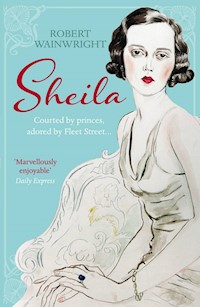
Vivacious, confident and striking, young Australian Sheila Chisholm met her first husband, Lord Loughborough, in Egypt during the First World War. Arriving in London as a young married woman, she quickly conquered English society, and would spend the next half a century inside the palaces, mansions and clubs of the elite. Her clandestine affair with young Bertie, the future George VI, caused ruptures at Buckingham Palace, with King George offering his son the title Duke of York in exchange for never hearing of Sheila again. She subsequently became Lady Milbanke, one of London's most admired fashion icons and society fundraisers and ended her days as Princess Dimitri of Russia, juggling her royal duties with a successful career as a travel agent. Throughout her remarkable life, Sheila won the hearts of men ranging from Rudolph Valentino and Vincent Astor to Prince Obolensky, and maintained longstanding friendships with Evelyn Waugh, Noël Coward, Idina Sackville and Nancy Mitford. A story unknown to most, Sheila is a spellbinding account of an utterly fascinating woman.
Sie lesen das E-Book in den Legimi-Apps auf:
Seitenzahl: 525
Veröffentlichungsjahr: 2017
Das E-Book (TTS) können Sie hören im Abo „Legimi Premium” in Legimi-Apps auf:
Ähnliche














ROBERT WAINWRIGHT
First published in 2014
Copyright © Robert Wainwright 2014
All rights reserved. No part of this book may be reproduced or transmitted in any form or by any means, electronic or mechanical, including photocopying, recording or by any information storage and retrieval system, without prior permission in writing from the publisher. The Australian Copyright Act 1968 (the Act) allows a maximum of one chapter or 10 per cent of this book, whichever is the greater, to be photocopied by any educational institution for its educational purposes provided that the educational institution (or body that administers it) has given a remuneration notice to Copyright Agency Limited (CAL) under the Act.
Allen & Unwin 83 Alexander Street Crows Nest NSW 2065 Australia Phone: (61 2) 8425 0100 Email: [email protected] Web: www.allenandunwin.com/uk
Cataloguing-in-Publication details are available from the National Library of Australiawww.trove.nla.gov.au
ISBN 978 1 74331 131 8
E-book ISBN 978 1 92557 539 2
Internal design by Lisa White Set in 12.5/18 pt Minion by Post Pre-press Group, Australia
Image credits: (Margaret) Sheila MacKellar (née Chisholm), Lady Milbanke (1895–1969) by Cecil Beaton © National Portrait Gallery, London Lady Milbanke as Penthesilea, the Queen of the Amazons © Madame Yevonde Archive Lady Sheila Milbanke by Simon Elwes RA (1902–1975) © Peter Elwes All other images © The Earl of Rosslyn
To my own Sheila, Paola,
CONTENTS
PROLOGUE: A PRINCESS RETURNS
1. TO PROVE THAT A GIRL COULD DO IT
2. I THOUGHT THIS MUST BE LOVE
3. “HELLO, CALL ME HARRY”
4. A SON AMID THE AIR RAIDS
5. “CALL THEM SIR AND TREAT THEM LIKE DIRT”
6. THE 4 DO’S
7. A DUKEDOM FOR A SHEILA
8. MOLLEE AND THE PRINCE
9. NO MAN IS WORTH LEAVING ONE’S CHILDREN
10. EVER YOURS SINCERELY, ALBERT
11. AN EXTRAVAGANT PEER
12. A STRANGE SEX ANTAGONISM
13. PALM BEACH NIGHTS
14. “WEDDING BELLS ARE ALL BUNK”
15. LINDBERGH AND THE DERBY BALL
16. AN INCOMPARABLE SHEILA
17. A TEMPORARY UNSOUND MIND
18. THE “IT” GIRL
19. VIVID, GAY, UTTERLY CHARMING
20. WHEN THE CAT’S AWAY
21. YOU’D BETTER ASK MRS SIMPSON
22. POOR LITTLE RICH GIRL
23. TIME CHANGES MANY THINGS
24. A JOURNEY HOME
25. THE SHADOW OF WAR
26. “I’M NOT CRYING; THERE’S RAIN IN MY EYES”
27. SO COMPLETELY IN THE HANDS OF FATE
28. A FEELING OF UNCERTAINTY
29. A PRINCE OF RUSSIA
30. SMELL THE WATTLE AND THE GUM
NOTES ON SOURCES
SELECTED READING
PROLOGUE
A PRINCESS RETURNS
The lady graced, rather than sat on, the hotel couch; at ease, as one might have expected, in the luxury of her temporary surroundings. Her face, famed in her youth for its ethereal beauty, was still bright and eager, her make-up spare. Wide clear eyes creased faintly when she smiled, framed by thick, carefully styled silver hair that sat shoulder-length—longer than in her heyday, when she had helped make short, sharp hair fashionable. Pixyish, an admirer and frustrated suitor had once described her. That compliment still held true four decades after it had been given.
But she had some other, special quality. Her interrogator, the women’s magazine journalist perched on a chair opposite, scrambled mentally for the phrase that might definitively encapsulate the woman before her. It was on the tip of her tongue, and yet somehow elusive. Prim or matronly did the lady a disservice, despite the cascading strings of pearls around her throat and the modest length of her skirt in this summer of 1967. Even graceful was too simplistic an assessment of a woman with an air that evoked much, much more. Then it came to her—regal. She had a bearing that could only have come from a life of stature.
The lady’s name was Princess Dimitri Romanoff, but she was Russian only by name. As Sheila Chisholm she had been born and raised on a sheep and horse station on the Goulburn Plains in southern New South Wales, where she defied her parents and smoked at the age of twelve and rebelled against well-meaning but demanding governesses: “Mother told me she would never keep on a governess who was unkind to me so, whenever they actually tried to teach me something, I said they were being unkind. Governesses came and went like butterflies. I was a monster,” she confided to the journalist, with a half smile and only a hint of contrition.
But this same wilful child would become as intimate with royalty as any Australian woman of her time. Born into a family that had helped settle and explore Australia and then craft the European settlement from the days of the early fleets, Sheila, as she would always call herself, left Australia as a teenager in 1914 just as political rumblings stirred fear of a war in Europe. She would return home just three times in the next fifty years—her first visit as the wife of a Scottish lord, her second as the wife of an English baronet, and now as the wife of a Russian prince. Through it all, she remained quintessentially an Australian country girl.
“I married all my husbands for love,” she’d told a throng of media waiting at Sydney Airport when she had arrived a few days earlier. “I certainly didn’t care about titles, and none of them had any money.”
In the forty-eight hours since arriving in Sydney the prince and princess had lain low, taking their time acclimatising to the twin demands of time and seasonal change. They had come from the twilight and damp cold of an English winter to the glazing, steamy heat of an Australian summer; the temperature had bubbled at over 102 degrees Fahrenheit (39 degrees Celsius) when they’d arrived at Sydney Airport and sat in a room with a broken air conditioner while three television stations took their turns interviewing the couple. One reporter, sensing their distress, had offered Prince Dimitri a glass of water. His reply—“No thank you; I never drink water”—delighted them; they interpreted it as the motto of a vodka man without knowing he had once made his living selling whiskey.
Sheila knew the impact of change more than most. Her life had been shattered twice by world wars—her first marriage devastated, at least partly, by the impacts of the Great War on her psychologically-fragile husband and the life of one of her sons taken in battle during World War II.
Traumatic upheaval had haunted her generation, as the man who now sat beside her could testify. As a young man Prince Dimitri had escaped the violence of the Bolshevik Revolution, which had claimed the life of his uncle, the last Tsar of Russia, Nicholas II. His family had been under house arrest for eight months before they were rescued and taken to London; he was one of only thirty-five of the famed Romanoffs who survived. In reply to a question from the magazine writer, he recalled: “We slept in our clothes, always hoping for escape. We were starved.” He had survived, rescued by the English King, George V, but, notwithstanding his grand title, he had spent most of his adult life working, including some years in the United States as a factory worker making refrigerator parts.
His wife’s life had been the opposite: born in the obscurity of the Australian bush but, by a combination of fate and opportunity, finding her way to the centre of the world, in London. In her heyday the public had been fascinated by Sheila’s life, which had been reported on regularly over the years, not only by Fleet Street but by newspapers across the United States and the sub-continent. Back home, even the smallest regional papers had carried regular reports gleaned from the wire services, for readers eager to explore her success and wonder how a young woman from the plains outside Canberra had managed to spend half a century inside the palaces, mansions and clubs of the rich and powerful.
Sheila’s story was deliciously evocative, as the reporter would observe in her feature article for The Australian Women’s Weekly: “When you talk to [her] the air seems to fill with the ghosts of a long-ago glittering world, with the sound of far-off trumpets, the swirl of beautiful Court dresses, the flash of light of ceremonial swords.”
The newly federated Australian nation was still finding its feet when Sheila Chisholm left its shores with her mother Margaret—wife of the pastoralist, grazier and prominent racehorse breeder, Harry Chisholm—and headed for the social glamour of Europe: “Canberra didn’t exist when I left,” she reminisced; the national capital was still a political wilderness in the middle of nowhere, with barely a shovel hole. Its development would be further delayed when the Great War was declared a few months later, which meant she had not seen it until now.
This trip home—for that’s the way she would always feel despite the infrequency of visits—was a sentimental pilgrimage of sorts. Her last, thirty years ago, had been to see her mother, who was then seriously ill; there had been little time for sightseeing. The onset of World War II a few years later would prevent her returning for her mother’s funeral. After that, there was little reason to make the arduous trip, which in those days meant hopping from continent to continent and cost the equivalent of two years of a working man’s wages.
Now she wanted to reconnect with the place and the people she had left behind: “I want to see the Blue Mountains again—and a koala farm. I want to surf again, to see if I can surf without being knocked over.” It was no idle wish.
There would also be time to visit friends in high places: “First, we go to Canberra to stay with the British High Commissioner, Sir Charles Johnston, and his wife Princess Nathalie, who is Dimitri’s cousin,” she explained matter-of-factly, unselfconsciously name-dropping, although strangely neglecting to mention that another cousin was Prince Philip, Duke of Edinburgh and husband of Queen Elizabeth. “Then back to Sydney to do all those things I dream of. And I want to meet all my old friends again, and have Dimitri meet them.”
What about change? They had seen so much in their lifetimes, the reporter suggested. Princess Dimitri nodded: “I was reared in a world of servants and chaperones. Today the young have no chaperones and almost no help, and they manage their lives magnificently. I’m not bothered by Beatles haircuts. Half the boys at Eton have long hair, and it horrifies their fathers. But what does it matter? Basically, they’re very much alive, and they just want to be different. They’re very tough.”
She might have been speaking about her own resolute determination, after arriving in London half a century before as one of a handful of Australian-born women making their way in a society that demanded blood and position as an entry card. Somehow, her personality and beauty—in that order—would open doors and not only invite her into the most inner of sanctums but allow her to stay and become a leading figure in a society that might otherwise have ignored her.
There would be great highs—the patronage of kings, movie stars, celebrated writers and even heroes. She would become a fashion icon, among the first to go hatless and adopt the daring hairstyles of the raging 1920s and 1930s; she would grace magazine advertisements for beauty products, pose for famous photographers and be pursued by the world’s richest and most eligible men.
As the limelight of her youth faded, she would reinvent herself as a businesswoman and a celebrity travel agent: “I started it as just a counter in Fortnum & Mason’s with a staff of two,” she explained about her business. “I couldn’t even read a balance sheet, but somehow the thing snowballed. Now we employ two hundred in our London office and we have branches everywhere, even in Australia.
“I was chairman of the company for a long time, though still unable to read those balance sheets! Now I mainly help with publicity. I can be very useful persuading our friends to use the agency, and, oh, yes, in persuading them to pay up. The rich don’t pay, you know. No, they don’t, Dimitri.”
Dimitri smiled quietly. He understood his wife’s subtle point. There was a perception in society that the powerful classes were, by definition, also the wealthy. But, as their own lives would show, the richness was in the experience.
1
TO PROVE THAT A GIRL COULD DO IT
It was a farewell tea, or at least that’s the way the occasion would be described in the social pages of The Sydney Morning Herald. In hindsight though, this casual social event was probably more a beginning than an end. The young woman at the centre of attention was on her way to adult life—with all its possibilities and pitfalls.
On the afternoon of March 31, 1914, eighteen-year-old Miss Sheila Chisholm and a few dozen friends and family chatted over tea and sandwiches beneath the arches on the first-floor balcony of the grandest establishment in Sydney, the Hotel Australia. Out on the balcony, they chose to ignore the hotel’s interior splendour, with its soaring red marble Doric columns and mahogany staircase, so as to relish the autumn sunshine and the noise of the city and Castlereagh Street below.
Not far away, in the midst of the harbour jostle lay the steamship SS Mongolia, due to leave the following morning for a six-week voyage to London with a cargo of the best of Australia’s produce—wool, leather, fur, tin, copper and lead, as well as cases of refrigerated meat and meat extract, crates of apples and boxes of pearl shell. The ship would also carry a human cargo—up to 400 first- and second-class passengers plucked from the Australian capitals—as she made her way around the southern coast and then across the Indian Ocean toward Africa, the Suez Canal and on to Europe. Among those who paid £45 for passage, the equivalent of seven months’ wages for a working woman, were Sheila Chisholm and her mother, Margaret, who were travelling to Europe for at least six months—France, England, Germany and Italy—hence the farewell gathering.
Australia may have grasped a degree of political independence after its declaration of federation in 1901, but its upper echelons remained firmly attached to the matronly bosom of England; the wife and only daughter of prominent grazier and bloodstock agent, Mr Harry Chisholm, were joining the great annual migration of well-to-do families paying homage to the rituals of British society.
It was daunting and exciting, particularly for a young woman who had spent the best part of her life on a grazing property named “Wollogorang”, a local Aboriginal word meaning “Big Water” because the property bordered a large lagoon, which was a two-day ride south of Sydney and 60 kilometres from where Canberra would eventually rise.
Like her father and older brothers, John and Roy, Sheila had been born in the main bedroom of the two-storey stone homestead and reared in the practical, if privileged, colonial environment of working men. Her birth notice in The Sydney Morning Herald—sans the names of either the mother or daughter—had reflected a world that was spare, both in its comforts and attitude to women: “CHISHOLM—September 9, the wife of Harry Chisholm, Wollogorang, Breadalbane, a daughter.”
When the baby was finally named, she was christened Margaret Sheila MacKellar Chisholm, but from an early age she would go by her second name, taken from the heroine of a book that had inspired her mother, who eschewed her husband’s suggestions of naming her after one of two godmothers or Queen Victoria, as “the idea of the former is mercenary and the latter snobbish”.
Despite the challenges of a rural life, Sheila was brought up in what she later described as “an atmosphere of love and sympathy. I adored my mother and father.” Harry Chisholm was tall and prematurely silver-haired, with the firm-eyed gaze of a man who spent his days in the sun. In the months before his daughter was born in 1895, he had pursued his love of racehorses by establishing what would become Australia’s largest bloodstock agency. He was a hardened businessman but at home Sheila would recall a doting father who filled her head and heart with stories about heroic bushrangers like Captain Thunderbolt and quoted poems from Adam Lindsay Gordon. He couldn’t resist his young daughter, even her habit of referring to him by his nickname, “Chissie”, something his sons would never dream of doing.
Harry had known Margaret MacKellar since they were children and married the slim, fair beauty when she turned sixteen. “She was an extremely intelligent woman, twenty years ahead of her generation and a suffragette at heart,” Sheila would recall in her unpublished memoir, which she would begin penning in the late 1940s. “Had we lived in England, I can easily imagine her doing violent things and being under the influence of Mrs Pankhurst.”
The family homestead was an English retreat inside a spare colonial landscape of “brown rolling country, purple hills beyond and gentian-blue skies”. The main building was pale yellow washed stone with French doors opening onto trim lawns with English oaks and elms, and a wooden bridge leading to a pond surrounded by willow trees, all created seventy years earlier by her paternal grandfather, James Chisholm, son of a Scottish soldier who arrived in Australia with the Third Fleet in 1790. Her father had inherited Wollogorang after his older brother, Jack, had died when thrown from his horse. Jack Chisholm’s ghost is said to still haunt the homestead.
This was a wealthy household, with a main house containing dining room, drawing room and her mother’s sitting room downstairs and her parents’ private rooms upstairs. There were also two wings: one for Sheila, her brothers and guests, and the other for the household staff of five, including Sheila’s nanny, whom she called “Ninget”. Sheila would always remember the wallpaper in her bedroom, patterned with clusters of tiny roses “all seeming to have little faces. I constantly counted them as I lay in bed—an eccentricity I have to this day.”
Her childhood home was “beautifully run but old-fashioned and rather shabby”, always with masses of flowers arranged by her mother, who wore elaborate, clinging dresses known as tea-gowns in the evenings while her father and brothers wore dinner jackets, a formality that was rare among station owners.
John, or “Jack” as he was known, and Roy were seven and four when their sister was born: “They had both prayed ardently for a baby sister and I became a toy to them. They alternately spoiled and teased and tormented me. I was rather a timid child, but I tried to be brave and to do all the things my brothers did because they were proud of me and said I was almost as good as any boy.
“I was sensitive and imaginative with large, hazel eyes and a pale, heart-shaped face and short hair. I was allowed to go about in riding breeches except on Sundays when we all went to church. Then I had to wear a stiff muslin frock with a wide sash bow at the back. The parson and his tiresome wife usually had luncheon with us afterwards. I disliked her because she constantly remarked: ‘Little girls should be seen and not heard’. She never said anything disagreeable about the boys. I hated being a girl and used to pray that God would turn me into a boy overnight.”
The conflict of being a female in a male world and being expected to behave in a certain manner would be a constant struggle and a mark on her life, Sheila once making herself sick by drinking a bottle of Worcestershire sauce when challenged by her brothers “to prove them wrong and in defence of my sex”. She adored the wildness of her fourteenth-birthday present, a black mare named Mariana, which she rode with deliberate abandon and laughed when the grooms told her she would “break her bloody neck”.
These were important statements of independence, perhaps not so much intended for those around her but to satisfy herself, like the day she harnessed Mariana to a cart called a longshafter and, without telling anyone, drove to the nearby village of Breadalbane to collect the mail, only to be thrown and almost killed when her horse bolted after being confronted with a rare sight on country roads—a motor car: “It did not teach me a lesson,” she wrote. “Nothing ever does.”
Sheila loved the farm, separated from the main house by a dusty ribbon of road, but was caught between its mystery and its horror; delighted at the overnight arrival of baby pigs, goats and cows, and disgusted yet intrigued by the bloody slaughterhouse: “I occasionally sat on the fence and watched the pen man cut a sheep’s throat and then skin the poor animal.”
The shearing shed was the real attraction, with its rough workers like Jock, who had amputated his own foot with an axe rather than let the poison from a tiger snake kill him. The shed was no place for a girl, he told her, before allowing her a turn at being a tar boy, to dab and brush tar to seal nicks on sheep when the shears drew blood. “This made me feel most important, but I was always sorry for the sheep, their lives seemed to me to be hideous: they were eternally herded together in their thousands, driven for miles amidst clouds of dust in the burning sun, dogs snapping at their heels, kicked and cursed, then shorn and often badly cut. No wonder they looked so bewildered!”
The young girl sat enthralled on top of the 6-metre fence of the “round yard” to watch her brothers break horses. By the age of nine they had taught her to ride any horse, swim and crack a stock whip. She had killed her first snake and watched it be devoured on an anthill and once galloped for hours at dawn in a wild kangaroo hunt with her brothers and a pack of dogs. “It had taken months to persuade an apprehensive mother and indulgent father . . . that I was old enough and could ride well enough to go out with the boys. I had a strong will and I knew it. I was excited and secretly terrified . . . my heart beating so fast I could hardly breathe . . . but of course, I never admitted it.”
She kept a variety of pets, including a piglet and a lamb born on the same day, which she fed with a bottle and which followed her everywhere. When a pet died, she would arrange an elaborate funeral service. The body of the animal would be placed on a goat cart, which the gardener then led to a pet cemetery near the orchard. Sheila followed dressed in the robes of a nun: “The ceremony would always include Mummy and Ninget . . . and occasionally Jack and Roy if they felt in the mood. I would read a few words of the burial service and a cross with the animal’s name on it would mark the grave.”
Of all her animals it was the rabbits she collected that especially caught her heart; forbidden creatures she’d hide in the wine cellar when the government inspectors arrived every few months, trying to eradicate the introduced menace that was so out of control across Australia that if Sheila gazed off into the distance at dusk their sheer numbers made it look as if the hard brown land was moving.
As always though, there was a practical side to rural life: “Although my heart always ached for the rabbits, once they were dead it seemed different. Jack and Roy taught me to skin them expertly in 30 seconds. I was proud of the achievement.”
Occasionally Sheila would remove herself from the male world of the station and lie in the long grass of the orchard beneath the pear trees, where she would construct plays in her head, once convincing her brothers to dress up and put on a play she had written about a woman who ended up as a convent nun because of unrequited love.
Margaret Chisholm, encouraging her daughter’s creative spirit, gave her a bound copy of Elizabeth Barrett Browning poetry for her fourteenth birthday, as well as a copy of The Rubáiyát of Omar Khayyám and Thomas Hardy’s Tess of the D’Urbervilles. Her imagination soared: “I sometimes dreamed of flying to England and America in an airship, not unlike Arabian Nights and magic carpets.
“I suppose I was a queer mixture of romanticism and boyishness. I wrote these sentimental poems and stories, and yet was really happy with my horse and dogs and particular family pets. I liked to go out all day and help to round up the sheep and cattle, and I once swam my horse over a swollen river for a bet. I was quite unconscious of my looks.”
Jack and Roy would certainly not tolerate any notion that their sister was anything but a tomboy, washing her face under an old pump near the kitchen the day they detected she had a dash of powder on her nose and teasing her about having a 43-centimetre waistline. Sheila accepted it with good grace but was embarrassed when they found her secret book in which she wrote her poems and began tittering over a verse titled “Is It Love?”:
Is it love, this nameless longing? This aching, lonely feeling, that round my heart seems stealing, and makes my pulse race. Is it love that makes me want you? Feel I cannot live without you, is it love that makes me doubt you? With your strange, elusive face.
Despite the isolation Sheila had several girl friends, relationships mostly made when the family rented a house in Sydney each year during the late summer. Mollee Little was her best chum, one of five children of the prominent pastoralist and businessman Charles Little, who had settled his family in a grand old mansion called Brooksby House, at the bottom of Ocean Avenue as the slope of Darling Point flattened out and slid into Sydney Harbour.
Mollee would come and stay at Wollogorang for holidays where they memorised Alice in Wonderland and read the poems of Baudelaire, talked about life and love and confided in each other: “We wondered what was just around the corner, beyond the lagoon—unknown, intangible, mysterious, exciting things—the places where you will never be, the lover you will never know. We didn’t really understand half the time what we were talking about. We decided that when we married, we must feel like the poem by Elizabeth Barrett Browning, ‘A Woman’s Shortcomings’”:
Unless you can think, when the song is done,No other is soft in the rhythm;Unless you can feel, when left by One,That all men else go with him;Unless you can know, when unpraised by his breath,That your beauty itself wants proving;Unless you can swear “For life, for death!”— Oh, fear to call it loving!
Sheila’s brother Roy was in love with Mollee, and Roy’s best friend, a boy called Lionel who would also come to stay at the property, was infatuated with Sheila. Although Mollee felt the same about Roy, Sheila couldn’t bring herself to declare romantic feelings for Lionel who pestered her about the future, promising to one day marry her and take her around the world in a “flying machine”. Despite her rebuttal of Lionel’s advances, they hung around with Roy and Mollee during holidays at Wollogorang as an “inseparable” foursome.
Sheila once tried to explain her feelings for a boy with whom she was quite happy to lie in the fields and wish on the evening star but knew she would never marry: “I suppose I loved Lionel in a childish way. I loved him as I loved my brothers only slightly differently which I couldn’t even explain to myself.”
As Harry Chisholm’s business grew, so did the demands on his time in the city of Sydney, 200 kilometres to the north; here he made his way up the business and social ladders of colonial society, marking out his business territory in the heart of the CBD and creating his political base as a committeeman at the Australian Jockey Club.
Sheila had been educated at home for most of her formative years, making life as difficult as possible for the series of governesses who travelled out from Sydney only to be sent packing. This was the norm for girls, in a society moving only cautiously toward the notion that women were “robust” enough to tackle a formal education.
She and her mother would make the occasional trip to Sydney, usually catching a steamer at Kiama as it made its way up the coast from Melbourne. Sheila was gradually introduced into Sydney society circles, at first as a twelve-year-old dressed as “Cherry Ripe” at a children’s fancy dress party at Government House and then graduating to being seen at race meetings as a seventeen year old—“Miss Sheila Chisholm, beech brown silk poplin skirt and coat, black hat with a crown of Bulgarian silk, finished with a long black quill.”
The trips also meant she could catch up with Mollee, where the poetry readings and talk of love were replaced with high jinks, getting in trouble for wild pranks and dares, as Sheila would recall: “I’m afraid we were rather naughty, disobedient, wild girls and we did some pretty foolish things. We had a favourite expression ‘I will put you on your mettle’ which, on thinking it over, I suppose meant ‘I double-dare you’.”
Their antics were at times dangerous, particularly at Bondi Beach where they loved body surfing and swimming out further than other swimmers, often out beyond the breakers despite warnings about sharks—“our boast was we liked to go out further than the furthest man”—until the day they watched the water boil crimson as a nearby swimmer lost his leg to a shark. “This episode dampened our enthusiasm for showing off.”
The formal shift from country to city life came in 1912 when Wollogorang was sold after seventy years as the family home. Despite her deep passion for the property, Sheila would make just a bare mention of the sale in her private memoir, blaming it on an inability of her brothers to “get on together”: “Chissie said he didn’t want them to wait for him to die and so he gave them the money,” she wrote. “Jack bought an enormous property in Queensland called Wantalayna. Roy bought a place called Khan Younis in NSW. Chissie and Ag [Margaret] decided to live in Sydney.”
The Chisholms settled among the grand houses of Woollahra and Sheila finished her education at Kambala Anglican School for Girls in Sydney’s eastern suburbs, where she was among the original enrolment of fifty girls who moved into the school’s rambling premises overlooking Rose Bay.
It was a peaceful, uncluttered environment at Kambala, a name apparently derived from an Indian word meaning “Hill of Flowers”, which was among the first private schools for girls established in Sydney as debate raged about the ability of young women to handle a male education curriculum. Until the latter part of the 19th century, girls had largely been educated at home but more and more schools were now opening, particularly to the upper classes, and Sydney University had recently even opened its gates to female matriculants. The girls at Kambala did not wear uniforms and were taught mainstream subjects such as English, French and Latin, as well as Mathematics and Science. Other classes offered included Elocution, Dressmaking, Dancing, Singing, Music, Drawing and Painting. “The moral training of the girls, both in character and manners, is most carefully watched over,” a prospectus of the day reassured parents.
But this breakthrough in education was a mere stepping stone on the long and difficult path to equality; for the moment, the expectation for most young women remained one of marriage and children: “Chased and chaste,” her mother warned. Sheila’s destiny seemed no different and, as she took leave of her friends at the Hotel Australia gathering, it was time for her to make the transition into the adult world—her finishing school would not be in the classroom but in the social whirl of Paris and Munich and possibly even in being presented as a debutante at Buckingham Palace.
Her parents had talked about it for years, particularly her mother: “She was ambitious for me and wanted me to finish my somewhat sketchy education in Europe—an idea that many parents acquired years later. Anyway, she argued, I was far too young to be married, even though Chissie reminded her she was sixteen when they were wed.”
Margaret may also have been encouraged by a reading she once received about her daughter from a famous Chinese astrologer who told her that he couldn’t tell her anything about Sheila’s future because her stars belonged to the northern hemisphere and he was only able to read stars from the southern hemisphere. Chissie declared it hokum and dubbed her the “child of fate”.
Harry Chisholm, easygoing and good-natured, particularly with his daughter, was not among the guests at his daughter’s farewell that afternoon, or at least not mentioned in the list of mostly young friends who sipped tea and exchanged pleasantries for a few hours. He was probably in his elegant sandstone office one block away, at the corner of King and Castlereagh streets, his attention fixed on the annual Easter sales at his yards in Randwick where dozens of established thoroughbreds and 237 yearlings would go under the hammer.
Perhaps Chissie would have acted differently, and been more attentive to the plans of his wife and daughter and insisted they stay home, if he had had a more realistic sense of what lay ahead for his family and the nation. Even though there were storm clouds of war on the horizon the future must have seemed so bright and the possibilities endless. The threat of war in Europe simply seemed so far away, physically and politically. The First Lord of the Admiralty, Winston Churchill, had reassured them just a few days before that the British Navy was superior to the German fleet and that Australia was safe because of Britain’s alliance with Japan.
But these assurances were naive, and the threat was real. Most of the dozen or so young men attending Sheila’s farewell that afternoon would enlist within a year to fight for King and Country on the other side of the world. Many among them would return physically shattered or psychologically damaged, but other guests would not. William Laidley, a friend of her brother Roy, would be awarded a Military Cross for gallantry in August 1918, only to die a few days later amid the human carnage of the Somme.
The party moved inside as the afternoon breeze threatened to remove the ladies’ hats and send them fluttering off the balcony and into the street below; it finally broke up so that Sheila and her mother could go home to finish packing for what they thought would be a six-month sojourn. Next morning, as Sheila boarded the Mongolia and waved goodbye to her father on the dock, there was no sense that it would be more than six years before she would see him again.
“I felt excited by the prospect of this trip but sad also,” she would reminisce. “It would probably be enjoyable to see new places and meet new people and would only be for a few months. I hated the thought of leaving Chissie, my brothers, Mollee and my pets but to my surprise I hated to leave Lionel most of all. I suddenly realised I would miss him, and remembered how often we had both been entranced by the beauty of the black swans on the lagoon at sunset and by the brilliance of the multi-coloured parakeets that perched in the trees or wheeled screeching overhead as we rode through the paddocks in the early morning and the haunting scent of the wattle and the gum trees. He appreciated sunsets and dawns and black swans and white blossoms and the scent of wattle, and understood how it made one feel. But did he really understand?
“I felt these emotions so deeply myself that I wanted to share them with somebody else, even if I had to pretend. When I was very young I had always dressed up my dolls, and to me they became real people who thought and spoke and lived, exactly as I wanted them to think and speak and live. They also lived in imaginary dream houses, which I could see so vividly at night, just before going to sleep. Mummy warned me against this trait in my character. She said: ‘You must be careful, this make-believe may bring you unhappiness some day. Do not try to turn people into what you want them to be; do not fancifully decorate them as one decorates a Christmas tree for, if you do, the awful moment will surely come when you will find the branches bare, stripped of all the ornaments of your lively imagination pinned upon them. It is better not to live in a world of dreams’.”
The Sunday Times newspaper also reported their departure, the short but prescient mention appearing in the social pages:
Mrs Harry Chisholm and her daughter, Miss Sheila, were among the travellers who left for Europe on Wednesday by the Mongolia. They have gone for a tour of Europe and expect to be away for some time. Mrs Chisholm was a Miss MacKellar and was one of the belles of Sydney. Miss Sheila Chisholm is very popular.
2
I THOUGHT THIS MUST BE LOVE
June 18, 1914: The London Season was approaching its peak and the attendant Sydney Morning Herald journalist, writing the column “A Woman’s Day”, was glowing in her delight:
At the moment the world amuses itself; the sun shines brightly, trees are at the zenith of their beauty, roses abound and, above all, it is Ascot week. To those who know England much is summed up in this sentence. Though Tuesday, the first day of Ascot races, was cold enough to demand wraps, we have had glorious weather ever since. On Tuesday Ascot was “cloaked”. There has never been such a sudden dash into popularity as this incursion of the cloak. It swept everything else before it. Cloaks of fine cloth, of satin, taffetas, velvet and lace; no costume seemed complete without one. In the fine gossamer-like material the cloak simply hung from the shoulders of its wearer, looking, as the wind caught its voluminous folds, like a huge butterfly.
The Season was an event to embrace rather than to attend, created to give society women a reason to accompany their husbands to the city during the sitting of parliament; an endurance test of presentation and deportment. It lasted not for a few days or even weeks, but for months—from the middle of April, when the spring slowly thawed, through May with the court ball at Buckingham Palace and June when the crowds flocked to Epsom for the Derby and the Royal Ascot week. Then followed the Henley Regatta and the Eton v Harrow cricket match at Lords after which the crowds travelled to the Isle of Wight for the Cowes yachting regatta before the rich and privileged at last began packing up their city houses and shifting back to their sprawling, if crumbling, country estates.
And before the Season proper came the debutantes—a 200-year-old ritual, in which society mothers presented their teenage daughters to the royal court to signify they were now of marriageable age. This tradition had been begun in 1780 by George III, who held a ball each January to celebrate the birthday of his wife, Queen Charlotte; it had then become entrenched through the 19th century as a rite of passage—the sovereign’s blessing.
By the 20th century the presentations were held through March, when the cold winds still blew up The Mall, forcing the young ladies in their virginal white gowns and plumed feathers to scurry across the gravel forecourt of Buckingham Palace, holding their trains in gloved hands as they disappeared through its austere facade. Once inside they would wait nervously in lines to be presented to the King and Queen; a deep curtsey to the Queen—graceful descent, left knee locked behind the right, arms by the sides to balance—then three sidesteps and another curtsey to the King.
There were three debutante presentations in 1914. Margaret and Sheila had missed them all by the time they arrived in London in the July after several weeks in Paris, but the rounds of garden parties and balls had only just begun as they rented a flat at St James’s Court, in the heart of the city abuzz with society and those who wanted to be a part of it.
Sheila had been dazzled by the trip even before reaching Europe, the journey by ship accentuating the distance and cultural divide between her homeland and the rest of the world, as if drawn from the pages of the books she loved—“flying fish and sunsets across the Indian Ocean, rickshaws in Galle drawn by sweating, coloured men wearing only a loin cloth, the barren rocks of Aden, the stifling heat of the Red Sea. Then the wonder of the Suez Canal and the riotous colours of Port Said.”
They had landed at Marseilles and joined a boat train to Paris where Sheila was immediately enchanted by the rich splendours of the city. They stayed at the Hotel Lotti, the city’s newest and most fashionable hotel, and she pestered her mother into allowing her to go one night to the restaurant Maxim’s, which had featured in the opera The Merry Widow that had toured Australia in 1913. Not one to let an opportunity pass, Sheila then revelled in the “shock and disapproval” of other restaurant guests when she accepted a dance invitation from a professional dancer: “He was a typical gigolo, I had never seen anything like him before.”
Talk of war had forced them to abandon planned trips to Germany and Italy so Sheila and Margaret headed for London where there was another opportunity to be presented at the palace, this time as part of a select group of Australian women. The event was reported back in Sydney, Margaret and Sheila “among Australian ladies either attending or being presented at the drawing rooms at Buckingham Palace. Lady Samuel is presenting Mrs Chisholm and her daughter”. Viscountess Beatrice Samuel was the wife of the British Postmaster General, Herbert Samuel, and an active member of the Women’s Liberal Federation whose aim was to give women the vote.
At other times during the endless round of society events it was hard to get noticed in the crowd, particularly when the venue was one of London’s most exclusive, the hostess among the most famous society women of her day and the room full of aristocrats:
July 20 Queensland Figaro and Punch: The unusually warm weeks which have preceded the end of the London season have driven some people out of town but there were still a number of parties every afternoon and evening . . . Lady Grey-Egerton gave a very large “At Home” at Claridge’s last week. She wore a white lace silk gown and her daughter, Miss Aimee Clarke, wore powder blue cloth. Among the guests were many notable English people including the Countesses of Selkirke, Dudley, Limerick, Lindsay, Annesley, Ranfurly and Brassey, Katherine Duchess of Westminster, Lady Blanche Conyngham, Lady Constance Combe, Lady Templemore, Lady Helen Grosvenor; and of Australian interest Lady Denman, Lady Reid, Lady Mills, Lady Fuller, Lady Coughlan, Lady Samuel, Mrs Collins, Mrs Smart, Mrs Primrose, Mrs Chisholm and numbers of others.
But the excitement would end quickly. No one had quite believed that war would be declared. The Germans didn’t have the money to fight a war and, besides, they would be beaten within weeks or, at worst, months. But on July 28, a week after Lady Grey-Egerton’s select gathering, the first shots were fired.
On August 4, Londoners crowded into the city centre to sing and cheer when the announcement was finally made that Britain had no choice but to enter the conflict that had been ignited by the assassination of Archduke Franz Ferdinand in Sarajevo. Any thoughts Margaret and Sheila might have had of booking their passage home to Sydney were now placed on hold. Sheila could hear the crowd from the apartment: “I have remembered all my life the dull roaring sound of the crowd that surged around Buckingham Palace. ‘God Save the King’ was sung over and over again,” she would recall years later. “The cheering went on for days and nights. It was mob hysteria. It seemed a crusade. London was electric.”
Margaret didn’t know what to do. Neither did Chissie, who was keeping in touch by cablegram. Should mother and daughter remain in the relative safety of London or risk a three-month boat trip back to the sanctuary of Sydney? In the end the decision was made to stay. They were still in London in late October, when Roy Chisholm was married, not to Mollee Little as Sheila had expected but Miss Constance Coldham, daughter of a wealthy Queensland businessman and racehorse owner her brother had met. The wedding was celebrated at the Australia Hotel—the same place Sheila’s farewell had been held seven months before. The Townsville Daily Bulletin noted: “A cablegram was received from Mrs Harry Chisholm, who is still away with her daughter Sheila on the wedding day.”
And there was further important news for the family. Older brother John had joined the Australian Expeditionary Forces and was headed for Egypt in preparation for the push into France. “Jack”, a lean, 6-foot-tall man with the ingrained deep tan of a grazier, cut a commanding figure and was assigned to the 6th Australian Light Horse Regiment and given the rank of sub-lieutenant. The regiment was part of the 2nd Australian Light Horse Brigade, which would be based at Maadi on the outskirts of Cairo where they would wait for orders.
Margaret Chisholm made up her mind—mother and daughter would go to Cairo to be near their son and brother.
Margaret and Sheila left England in November through the fog that clung to Tilbury Docks, amid little of the fanfare that normally accompanied departing ships. These were serious times.
They arrived in Cairo in December, a month before Jack and Roy’s childhood friend Lionel who had also signed up. Meanwhile, Sheila and Margaret settled into the strange, almost twilight existence of a city that was being commandeered for war. The opulence of the colonial outpost remained, with hotels like the grand Shepheard’s where they stayed, but this was a city in transition.
Sheila was one of few women among thousands of men, many of them young and single who accepted that the next day might be their last: “I was usually dressed in riding breeches or as a Red Cross worker, always surrounded by dozens of men in various uniforms,” she would recall. “I had many would-be-admirers but they didn’t interest me in the least.”
Among them was a coterie of English aristocrats including the Duke of Westminster, “considered one of the most attractive men in England. I liked him but thought him rather old. I suppose he was thirty-seven at the time.” Others included Lord Parmoor, and his brother Colonel Fred Cripps who would lead the last-ever cavalry charge against the Turkish guns at El Mughar and later become Chancellor of the Exchequer.
Her daily confrontation with death only drove Sheila and her companions to explore what they could of life, with sailing trips up the Nile in dahabiyas and crazy night drives in cars to see the Sphinx by moonlight, stars hanging like lanterns against the night sky. At other times Sheila rode Arab stallions out into the desert in the evening to watch the sunset, or at dawn to watch the sunrise.
Although there was an illusion of normality with lively bars and restaurants filled each night, Cairo had been converted into a sprawling hospital campus, where every available public building was emptied and refilled with iron-framed beds hauled from hotels, and others made locally from palm wood. Even before the medical staff faced the overwhelming influx of wounded Allied soldiers, they were challenged by infectious diseases; they were simply unprepared for the mammoth outbreaks they encountered of measles, bronchitis, pneumonia, tonsillitis, meningitis and venereal disease.
Alongside the arrival of the Australian divisions in January, the Heliopolis Hotel was commandeered to provide another 200-bed hospital; its lavish furniture and fine carpets were rolled up and carried away to be stored while its four floors were turned into kitchens and wings for officers, soldiers and nursing staff. Beds were placed in great hallways beneath marble columns and soaring curved windows. But this still wasn’t enough. By late February an infectious diseases hospital, to treat an outbreak of measles, was housed at a local skating rink, and there were another 400 patients in a separate venereal disease hospital under canvas at the aerodrome.
Sexually transmitted disease, not war-related violence, was the greatest health risk in the months between December 1914 and April 1915. To try and limit its occurrence, the Australian and British commanding officers decided to create a series of clubs to try and corral their soldiers into an environment that might be safer than letting them loose into the local community.
The biggest soldiers’ club was a converted ice rink at Ezbekiya Gardens in Cairo, which could hold up to 1500 people. It was a honey pot for young soldiers, who knew death was potentially just around the corner and approached life accordingly, and for “beauties from any nations tickled to be escorted by bronzed giants from Down Under”, as one lieutenant would later observe. On Sunday evenings lanterns would sway and twinkle in trees against a sky heavy with the aromatic scents of the East, while the band competed with endless Arabic chants. The streets bustled day and night with a mix of horse-drawn carts and limousines.
On April 17 the officers of the Australian Light Horse hosted a dinner-dance—as a thankyou to the local people for their hospitality but also as a farewell from officers who knew many of their company would die in the coming months as they faced battle for the first time. The dinner was held at the grand Tewfik Palace, its grounds and terraces lit with rows of coloured lights and the ballroom decked with a combination of palm trees and roses. Among the guests were Margaret and Sheila Chisholm, happy to have been reunited with Jack after his arrival and unwilling to consider the worst-case scenario. The next morning Jack and Lionel were among the tens of thousands who left Cairo for the Dardanelles off Turkey, and a week later the fighting began with the ill-fated landing at Gallipoli.
No one was prepared for the reality of war, as an Australian government report prepared in the aftermath recorded:
The weather was beautiful, and anyone might have been easily lulled into a sense of false security. In April however, a trainload of sick arrived. Its contents were not known until it arrived at the Heliopolis siding. The patients had come from Lemnos and numbered over 200 sick. On the following day, however, without notice or warning of any description, wounded began to arrive in appalling numbers. In the first 10 days of the conflict, 16,000 wounded men were brought in to Egypt.
Sheila was a witness to the horror: “The news was appalling, like a nightmare. About 500 wounded were expected but 10,000 arrived.”
A casino was taken over, then a sporting club, a factory, three more luxury hotels, even Prince Ibrahim Khalim’s palace. By the second week of May 1915, the initial plans for one hospital of 520 beds had grown into eleven hospitals housing 10,600 beds, most of which were now being made of palm wood. By the end of August, the wounded and sick would number more than 200,000, handled by a daily staff of fewer than 400.
The crisis was not merely because of a lack of space and facilities but also a lack of staff; many nurses began to break under the strain. Reinforcements were on their way, but there was a desperate need for civilian help. Margaret and Sheila Chisholm were among a number of Australian women who volunteered to stay on and help.
Margaret, or “Ag” as Sheila began calling her mother in gentle mockery of Margaret one day declaring: “Goodness, I am becoming an old hag,” had been working for the Blue Cross taking care of injured horses. She and Sheila also helped establish the Australian Comforts Fund, which provided basic items, such as blankets and socks, for the soldiers at the front; they spent hours each day going from one hospital to another, visiting men they didn’t know, listening to their stories and providing reassurance. Against protests from officialdom, they even provided free cigarettes to convalescing soldiers, rather than force the men to spend their wage of 5 shillings a day on the tobacco they needed to take their minds off the pain and horror.
Sheila worked alongside her mother tending the wounded and dying, much to Ag’s annoyance who thought her daughter, aged nineteen, too young and delicate (“how it bored me to be thought too young”, Sheila would later recall). The young woman, who a few months before had been dressed expensively while attending parties almost nightly and mingling with the upper echelons of London society, was now clad in the practical garb of a hospital volunteer.
But she did not remain unnoticed, particularly when she accidentally destroyed several thermometers by leaving them for too long in boiling water and was relegated to cleaning duties for a period. She would always cringe at any reminder of that particular mistake.
Two decades later, at a reunion of nurses in Adelaide, her contributions would be remembered. Miss Sinclair Wood, principal matron of the Army Nurses Reserve, who was in Egypt when the first wounded came back from Gallipoli would recall:
There were five of us at Mena Hospital, and one night we got word that 248 men were coming. We set to and made up beds, prepared wards, and waited. The men had been in the ship for a week and no one knows what they had gone through. When we got the opportunity to snatch two hours’ sleep some of the Red Cross women, among them Sheila Chisholm, who was one of the loveliest girls I ever saw, came over, rolled up their sleeves and it was wonderful what they did.
A Sunday Times gossip column in early May 1915 described her as one of “four beautiful Australian girls to be seen in Cairo quite recently”. It seemed she could not be mentioned without a comment about her beauty.
Margaret and Sheila had other roles outside the hospital, including organising the delivery of Australian and English newspapers so the men could feel as though they were still a part of the world outside the war. There were even moments of levity in the bleakness of the dusty city. The cable sent to Australia by Margaret to begin an appeal for newspapers mangled her surname, which appeared as “Mrs Chicolo”. Not only did papers arrive in their thousands but more than a hundred letters came addressed to Mrs Chicolo, thanking a “foreigner” for her kindness. “Some of the epistles are written in French and Italian, and others from people I know,” she told The Sydney Morning Herald.
In the bloody tide of death that accompanied the Allied invasion of the Gallipoli peninsula during the last weeks of April and the first weeks of May 1915, it is understandable that the details of a bullet wound to an individual soldier would escape the attention of military chroniclers, even though the injured man was a British peer. When a cable about this incident lobbed in London a week later, headed “Sub-Lieutenant FES Lord Loughborough”, it gave scant information about the incident beyond the staccato: “Wounded in action nr. Dardanelles . . . reported from hospital Cairo . . . progressing satisfactorily . . . wounded right shoulder”.
“FES” referred to the young lord’s “regular” name—Francis Edward Scudamore St Clair-Erskine. He was the elder son of the Earl of Rosslyn and heir to a lifetime seat in the House of Lords at Westminster as well as Scottish lands a few kilometres outside Edinburgh, which included the world-famous Rosslyn Chapel.
His injury was inconsequential compared to the thousands of men lying in muddy fields with their innards ripped open or lungs filled with mustard gas; yet such was the British deference to its class system that the young peer’s misadventure made a few lines in a Daily Mirror story which described the military folly as “The magnificent story of the landing of the Allied troops at the Dardanelles and their successful advance against the Turks”.
It was a convoluted task deciding how to refer to such men of title in the field of war. “Francis St Claire-Erskine” would have been too plain, but “Lord Loughborough” gave no Christian name, hence the unwieldy combination. Peers were also entitled to ranks that set them above the ordinary soldier and were often slotted into roles that did not fit their capabilities. Because of this, there would be numerous examples of poor aristocratic decision-making, often with tragic consequences for ordinary soldiers.
Lord Loughborough—“Loughie”, pronounced Luffy, to his friends—was twenty-three years old. Tall, rakishly handsome and affable, so far he had found it difficult finding a place in society beyond his birthright, let alone meeting the demands of the military. He had been in Rhodesia when the war broke out, but joined up within a month of returning to London in the autumn of 1914. On application, he had been assigned to the obscure new armoured car division of the Royal Navy Volunteer Reserve.
Loughie was dressed in his uniform when he appeared in a court in January 1915 accused of writing a bad cheque. According to the charge, he had, in April 1913, signed a cheque for £200 to cover a gambling debt. Not only had the cheque not been honoured, but it had been post-dated to November to cover the fact that Lord Loughborough had not yet come of age. The newspapers covered that case too and even published a small but embarrassing photo of the young man, head down, scurrying from the Courts of Justice in the Strand.
The reason that this matter had taken so long to get to court was that, two months after writing the cheque, he had fled to Rhodesia. At the time his father, Lord Rosslyn, explained publicly that celebrations for his twenty-first birthday would be delayed for a year while his son was “off farming”. When he finally returned he would “probably hold a dinner”, Lord Rosslyn said, without any mention of the pending court case.
It was the timeline of events that allowed the sitting judge of the King’s Bench, Justice Rowlatt, to decide that, because Lord Loughborough had been still a minor when he wrote the cheque, his actions should be excused and the charge dismissed. It was a fortuitous escape and one from which an important lesson should have been learned but, alas, the incident would be the beginning of an ultimately tragic narrative.
For the moment though, Francis St Clair-Erskine would enjoy some good fortune, if going to war could be seen as such. Two months after his court appearance he joined the Armoured Motor Machinegun Squadron, which was stationed on the Greek island of Lemnos; he arrived in March 1915 as preparations gathered pace for the disastrous Gallipoli campaign which lay ahead.




