


Erhalten Sie Zugang zu diesem und mehr als 300000 Büchern ab EUR 5,99 monatlich.
- Herausgeber: The History Press
- Kategorie: Sachliteratur, Reportagen, Biografien
- Sprache: Englisch
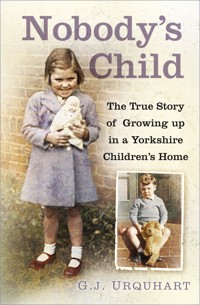
Not yet four years old, Gloria was forcibly separated from her baby brother Kevin and entered into the often-brutal world of the Rothwell Children's Home, where she found occasional moments of caring among the toughest of environments. In this book, we move through Gloria's childhood and learn of the deep friendship of two 'aunts' she meets during the fostering process, the twists and turns in her search for Kevin, her nervous breakdown and her incarceration in an old Victorian-style institution where Gloria is visited by two unfamiliar relatives, with whom she is forced to live. Aged twenty-one, Gloria starts independent living, allowing her to re-establish her friendship with her aunts, who reveal her father's identity. True love then follows as she meets and marries Robert Urquhart, who supports her unwaveringly in her desperate and passionate quest to find her brother. This powerful memoir sheds light on what life was like in a 1950s children's home and follows the author on her compelling journey to find happiness and a family of her own.
Sie lesen das E-Book in den Legimi-Apps auf:
Seitenzahl: 332
Veröffentlichungsjahr: 2020
Das E-Book (TTS) können Sie hören im Abo „Legimi Premium” in Legimi-Apps auf:
Ähnliche



















For Robert, David, Moira, Jamie, Eleanor and Ivan, with all my love.
First published 2020
The History Press
97 St George’s Place,
Cheltenham, GL50 3QB
www.thehistorypress.co.uk
© G.J. Urquhart 2020
The right of G.J Urquhart to be identified as the Author of this work has been asserted in accordance with the Copyrights, Designs and Patents Act 1988.
All rights reserved. No part of this book may be reprinted or reproduced or utilised in any form or by any electronic, mechanical or other means, now known or hereafter invented, including photocopying and recording, or in any information storage or retrieval system, without the permission in writing from the Publishers.
British Library Cataloguing in Publication Data.
A catalogue record for this book is available from the British Library.
ISBN 978 0 7509 9646 4
Typesetting and origination by Typo•glyphix, Burton-on-Trent
Printed and bound in Britain by TJ International Ltd.
eBook converted by Geethik Technologies
CONTENTS
Foreword
One Identity
Two Rothwell
Three Grave Hunting and Visitors
Four Michael
Five A New World Outside the Walls
Six Manse Child
Seven Leeds Market and Special Outings
Eight Royals and Market Traders
Nine Ellen, Mumps and Birthday Cake
Ten ‘Cos God Says So’
Eleven Too Close to the Manse
Twelve Auntie Agnes
Thirteen Another Home, Another Bed
Fourteen Real Child Welfare
Fifteen Fly the Crow’s Nest
Sixteen My Father’s Gift
Seventeen The Deans of Leighton Buzzard
Eighteen Beyond All Understanding
Nineteen Broken Bones and Aeroplanes
Twenty Pink Elephants on White Clouds
Twenty One Bicycle Rides
Twenty Two Dear Old Granny
Twenty Three Prolonged School Days
Twenty Four Siblings Have Rights
Twenty Five A Strange World
Twenty Six Silver Linings
Twenty Seven Wedding Bells
Twenty Eight Circles of Life
Twenty Nine Pandora’s Box
Memorandum
Acknowledgements
FOREWORD
Prior to the Second World War, orphans and other children who were lacking parental care frequently ended up in long-term residential care provided by charities or religious organisations. In addition, children who were destitute might find themselves in the care of county and borough councils who, in 1930, had taken over the responsibilities of the former workhouse authorities, together with their stock of institutional accommodation, much of which dated from Victorian times.
In 1945, the government appointed a committee, chaired by Miss Myra Curtis, to consider how best to make provision for children who, for whatever reason, were deprived of a normal home life or parental care. The committee’s report recommended that for such children the best option was adoption, the next best being fostering, with institutional care the least favoured.
The report’s proposals formed the basis of the 1948 Children Act, which gave local authorities the primary responsibility for providing care and supervision for any deprived child. To fulfil this broader remit, local authorities were required to appoint a Children’s Committee and Children’s Officer to put the new approach into action. However, the limited supply of suitable adoptive and foster parents meant that residential care – often in rundown buildings – continued to play an important role.
It was into this fledgling system that three-year-old Gloria Urquhart was thrust in February 1950 when, after the loss of her mother, she was placed in the care of Leeds City Council’s children’s department. Her memoir provides a unique insider’s view of this important, though rather neglected period when the modern-day care system was still finding its feet. Much more than this, though, her vivid and extraordinarily detailed memories of the people and places she encountered make compelling reading. Her life in the council’s various homes veered between violent abuse and warmth and kindness, while a taste of life outside came via a weekend ‘aunt and uncle’ scheme, eventually leading to a long-term foster placement.
But at the heart of Gloria’s chronicle is her determination to track down her birth family, especially her baby brother, Kevin – a journey whose twists and turns, joys and heartbreaks, battles with officials, and the ultimate triumph of her indomitable spirit – that makes this book so captivating and moving. When I first read Gloria’s manuscript, I found it almost unputdownable. She is a wonderful writer and her story is one that will stay with you for a long time.
Peter Higginbothamchildrenshomes.org.uk
One
IDENTITY
‘Your mother is dead and in a box with a lid on. You are not wanted!’ shouted the woman who was stripping off my clothes.
I was so scared. If my mother was in a box, would a lid be put on this thing I was standing in? Would I soon be dead?
In reality, I had just been plunged into a large, white porcelain bath of hot soapy water and my hair covered with the foulest smelling cream, which quickly took away the terrible itching that made me scratch. I had never had a bath before. Whenever washing had been considered necessary, I was bodily lifted into the sink and scrubbed with a rough facecloth lathered with yellowish soap. Standing there in my birthday suit, I could look out over greying net curtains and watch other children playing in the street.
This new experience of a bath was so frightening. Crying was rewarded with hard slaps on my bare, wet legs that hurt terribly and left large red marks. Relieved to be physically pulled out of the bath still alive, I searched for my own clothes.
‘They are in the dustbin!’ yelled the woman. More tears, more slaps. I only wanted my own clothes! But I was forced to put on the ones provided. I was given a pair of black, ugly and very heavy shoes. I could not fasten the laces and was slapped again and told, ‘You will soon learn.’
‘Where are my own shoes with the buttons? I can fasten them,’ I cried, as I tried desperately to tuck the leather laces into the shoes given to me. I stumbled down the stairs behind the awful woman.
Surely all would be well soon. After all, I had just left my father and my baby brother, Kevin in the hall downstairs. Despite the fact that Kevin had recently started to walk, he was on this occasion wrapped in a dirty shawl and firmly held in my father’s arms. The woman who opened the door to us had told me to give Kevin a big cuddle and my daddy a kiss. I loved cuddling baby Kevin and had gladly held his tiny body against mine before being hauled off to the bathroom.
Returning to the hall, I was horrified to find no one there. I screamed and screamed as I realised I was now alone. I received such a beating from the woman who had bathed me. When the beatings ceased and I stopped crying, I was told, ‘You are not wanted.’ I could not understand what she was saying. Who didn’t want me? The woman said, ‘From now on you will live here with the other children.’
Broken hearted, I searched the building looking for my little brother and listened for his cry. All I could hear was the sound of lots of children’s voices, who seemed to be coming from everywhere and were heading towards a room just off the hall. A very skinny girl with dark hair and broken teeth dragged me along to a huge dining room at the end of the long, musty smelling corridor. I was told to sit next to another girl, who dug me in my ribs and warned me in a brusque voice, ‘Shut up and eat, or you will go to bed hungry.’
My salty tears trickled down into the corners of my mouth, adding some flavour to the otherwise bland food, which I was now forced to consume. That night, I slept fitfully in the strange bed, surrounded by the curled-up bodies of other girls who would wake in the morning and usher me along to the row of white stone handwash basins lining the ablution room wall. I was given a toothbrush and an enamelled pint pot already bearing a sticker with my name on. At least I had my own brush!
When it came to clothing, I joined the queue at the communal clothing store cupboard. After much searching, second-hand knickers, a liberty bodice and dress were hastily handed down to me. Again, I cried as I waited for the next instruction. An older girl took hold of my hand and gently squeezed it in a reassuring manner, which gave me a little comfort. I followed her into the dining room and began to eat the breakfast I was given.
I spent the rest of the day governed by a strict timetable and bellowed commands of dos and don’ts by the staff whose job it was to care for me. I was utterly scared in this alien environment. I could no longer play with other children in the street or run errands to the corner shop and be rewarded with a piece of bread and jam. I desperately longed to run away to my own home, but all the huge doors in my new abode were securely locked. So began my first day in the Reception Centre, Street Lane, Leeds, and the start of my life in children’s homes.
***
Confusion reigned. Whatever had I done wrong? Only bad children are not wanted. My young mind could not decipher all the recent events. My father had gone. Kevin had been taken from me. I was alone in a very frightening place.
The deep anguish caused by the separation from my baby brother remained firmly rooted in my heart. His red hair, big blue eyes, lovely smile and a dirty shawl were my last memories of him. I held on to these brief memories in the deepest recesses of my mind.
The clothes provided by my mother and father had been thrown into a dustbin. I reasoned that if only I could find the bin, I could get my blue dress out of it and keep it, but the bins were outside the building, and I was locked in. I was two months off my fourth birthday, and at this age I probably had little concept of what condition my clothing was in. Even if other people thought my clothing unacceptable, they could be washed, and they were my clothes. Now, I had absolutely nothing to remind me of my former life with my family except a few memories and a deep longing to return home.
So traumatic were the events leading to the family breakdown and subsequent separation, followed by admission into this awful place, I could only think I was in some way to blame. A deep sense of rejection and inner loneliness lingered in my heart. There was no sign of Kevin anywhere. I grieved for the loss of the brotherly contact I had known. I was so sad and terribly lonely in this horrible, crowded place. I cried most of the time. I desperately wanted to return to my family.
Street Lane Reception Centre in Leeds was certainly not a pleasant environment for anyone to live in. I hated the awful musty smell of the entire building and found the long, dark corridors very scary. I longed to play out in the fresh air, but I was never allowed out of the building. I found the constant sound of children crying so distressing; their cries seemed to go unnoticed. There were no comforting arms, no cuddles and no love. The very tiny children seemed to spend hours sitting in long rows on metal potties. They were smacked hard if they tipped them and the contents over. Daily, I searched amongst the toddlers to see if I could find Kevin, but my search was in vain.
Whenever I saw the woman who had bathed me on my arrival, I was terribly afraid and bodily trembled. During the day, I remained in the dayroom along with other young children, who also seemed very frightened. There were no further beatings or aggression directed towards me. However, I did witness other distressed children being shouted at and sometimes beaten for what seemed very trivial reasons.
***
One day, a member of staff called out my name during breakfast. Nervously, I went with her to the staffroom. I was introduced to a very tall, thin woman by the name of Miss Goddard, who said she was my care worker. I had no idea what a care worker was.
‘You are coming with me. There is someone I want you to see,’ she said.
My heart pounded; I thought it might be Kevin. A taxi was parked outside the front door ready to take us to our destination. The driver left us at the bottom of a steep hill in an area of rundown houses. Many little children were playing in the street. Most looked dirty and dishevelled, but they were happy and running freely in their own back yards. I longingly watched them as I hurried along beside my first care worker.
‘You are to accept the plans I have for you,’ she said.
‘What plans?’ I asked myself. No one had told me anything.
We arrived at a very rough wooden door. Miss Goddard pushed it open. Stepping into the room, I was amazed to see an old lady lying in a bed near the window. I held back the tears of disappointment when I realised that it was not Kevin I had been brought to see. The lady must have been aware of my sadness and called me over to her side. She gently took my hand and said in a broad Yorkshire accent, ‘I am sorry I can’t take you, lass.’
Tears filled her old blue eyes and streamed down her wrinkled face. There followed a heated discussion between the two women. The old lady looked so ill and very sad. As we took our leave, she slid her hand under the little lacy cloth covering a small table near her bed and brought out a threepenny bit, which she placed in my hand. Reaching forward, she kissed my forehead with a rather toothless, sloppy kiss that I instantly rubbed away.
We returned to the main road where the taxi was waiting. Another adult and small child shared the taxi on our return journey to Street Lane. Not a single explanation was ever given to me about the day’s events. All I could do was to hold on to the memory in the hope the future might throw some light on the visit. That same night, lying in the darkened dormitory as others around me slept, I sobbed until my whole body ached. I vowed I would one day find my little brother Kevin.
Two
ROTHWELL
Then came the day when I was bundled into a car along with some other children. No one had the grace or decency to explain to us that our destination was Rothwell Children’s Home, Wood Lane, near Leeds. The old Victorian, red-brick buildings were known to the locals as ‘The Orphanage’, or to some folk as ‘the bad kids’ home’.
Despite the fact we had been bathed only a few hours before leaving the reception centre, on our arrival we were dunked in lukewarm soapy water and scrubbed around all orifices. Stinking of a second application of lice-killing disinfectant, we emerged, red-faced and aching into the laundry room. A bundle of clothing was handed to each child. An older girl insisted we get dressed quickly. We hastily redressed in the grey jumpers, black gymslips, horrible black stockings and shoes more suited to elephants’ feet than our little feet. Only then did we realise we were not returning to Street Lane Reception Centre.
We had arrived at teatime. White pinafores were slung round our necks and draped over our second-hand attire. Entering one of the dining rooms, we were ushered to sit on hard wooden benches alongside long, scrubbed wooden tables almost identical to those in the reception centre. Other occupants joined us, and for what reason I cannot now recall, they began pelting us with eggshells and banana skins. As the youngest new arrival, I was scared. I did not enjoy my boiled egg.
After tea we watched the older children clear the tables and reset them for breakfast. Even the cornflakes were poured into the dishes. The next morning, the mice had left their droppings amongst the flakes. As newcomers, we watched in horror as the rest of the household flicked out the black specks and proceeded hungrily to devour their breakfast. I recall feeling quite sick at the thought of eating my breakfast but satisfying my hunger pangs soon blinded the eye to the black specks. The mice were frequent visitors to all areas around the orphanages; their numbers, I am sure, would easily match the 150 children in residence.
***
We were housed in one of four large red-brick buildings. A fifth building was used as a nursery. The sound of crying children constantly emanated from the nursery courtyard. On the outside of each building, a rusty wrought-iron staircase spiralled down to the ground from the third-floor landing. These ancient fire escapes were out of bounds to all but the staff. I was not sure if this meant we had to get permission to use it in the event of a fire! It seemed the mice required no one’s permission; they frequently scampered up and down the steps, much to our amusement.
Around the front of the complex were large, black, wrought-iron railings and an enormous black gate where the so called ‘good children’ could peep through at the orphans, and we, on the other side, could stare back and put our tongues out at them. One of the older residents took me on a tour of the buildings. The entrance hall had a beautiful, patterned tile floor; all the colours and shining surfaces fascinated me. It would not be long before I would discover that hard work and sore knees would bring about the shine. A large, round, glazed pillar in the centre of the hall supported a rather old, crumbling ceiling. The walls were panelled in dark brown wood; some areas were scratched with names or drawings. I was told that anyone caught scratching the wall would get a severe beating. My informant added, ‘Wait until your last day before scratching your name and then run like ’ell out of this place and don’t come back.’ I certainly felt like running like ’ell now!
On the ground floor, one room had lockers from floor to ceiling. I was assigned a low-level locker with my name on it. Inside was a wooden box for my outdoor shoes. Along the corridor, there were two more dining rooms, known to the children as the ‘mouse holes’ or ‘Ratty’s bedroom’, due to the scampering of their feet across the stone floors.
The large kitchen was subdivided into two sections separated by a huge cooking range and numerous large, stone sinks. A group of boys were washing stacks of plates watched over by a stern-looking housemaster. I was warned there was always strict segregation in the kitchen area. We were never allowed to talk to the boys without the consent of our housemother. Girls were scrubbing pots and pans in a sink near the door. One girl was on her knees scrubbing the pantry floor. Turning to me, she said, ‘I’ll look after y’r, luv, when I’ve finished me scrubbing.’
True to her word, this girl, called Ellen, came and transferred my meagre possessions of a toothbrush and now an old, second-hand nightdress from the isolation room where the group of children from the reception centre had slept on the first night into a dormitory on the third floor. Sixteen girls slept here in very poor, cramped conditions. Each occupant had a small, black iron bedstead on top of which were neatly folded red or grey blankets, two sheets and a pillow.
I was assigned an old-looking wooden locker and shown how to fold items of clothing until they measured nine inches by nine, regardless of the bulkiness of some items. Thank goodness, I was the smallest in the room! As far as I could understand, the only garments that were stored here were vests, nightdresses and the black berets worn for church. Every other item of clothing seemed to come from the large linen cupboards outside the dormitory.
At the end of a long, cream-tiled corridor, there were two large bathrooms each with six deep, cast-iron baths and no screening between. On the floor beside the baths were wooden, slatted boards, known as duckboards. I was told these were scrubbed every Friday, hence the white and much-worn appearance. I was reminded that the signs of boys and girls only on the doors were to be strictly adhered to, on pain of punishment. Girls were forbidden to enter any part of the boys’ sections of the building without a member of staff present. Recently introduced new rules allowed boys and girls to be together in the courtyard, but again only with staff in attendance. Ellen warned me that all broken house rules, and there were many, would result in a severe beating by the matron, Miss Silverwood.
***
So far, I had only met Miss Green, the senior member of our house, also known as the housemother, who treated me kindly. I soon discovered that Miss Green had a voice like a foghorn. When she shouted, we all jumped, but her voice belied her gentleness.
Our housemother had only one major dislike – nits in the hair – for which she had developed her own means of eradication. Every night before the little ones went to bed, they had to kneel down around the old fire range in the dining room, and while they sang hymns, the older children would tug fine toothcombs through each singer’s hair. Any poor unwitting nit would soon wing its way into the roaring fire, and we would go to bed without the itch.
Each night, we sang a different hymn. One verse had to be learnt and sung solo by an individually named child. Older children were responsible for teaching younger children the words. One of the boys, who lived in the home opposite ours, was very musical and played the piano extremely well. He was allowed supervised visits to our house in order to teach us how to sing. He taught us the following words:
Now the day is over,
Night is drawing nigh,
Shadows of the evening,
Steal across the sky.
Now the darkness gathers,
Stars begin to peep,
Birds and bees and flowers,
Soon will be asleep.
When the morning wakens,
Then may I arise,
Pure and fresh and ‘nit less’
In Thy holy eyes.
When my solo night came, I sang the last verse with great gusto, only to receive a sharp clip around the ear and a peal of laughter from the reverent kneelers. For punishment, both my errant instructor and I had to learn another verse:
Grant to every sufferer,
Watching late in pain,
Those who plan some evil,
From their heart restrain.
(Sabine Baring Gold, 1834–1924)
We also had to sing the correct words, ‘Pure and fresh and sinless’, ten times to ensure we would know the correct words in future.
Miss Green had a lovely singing voice and a good repertoire of classical, modern music and wartime songs. Our housemother often serenaded us with her rendering of Vera Lynn’s ‘White Cliffs of Dover’ or Bing Crosby’s latest ballads. We were encouraged to listen to the radio. I entered the imaginary world of the stories of the BBC Home Service Children’s Hour, a programme that came on about teatime. If you were in the house about four o’clock, you had to be quiet so the staff could listen to ‘Mrs Dale’s Diary’. Mrs Dale’s family had a cat called Captain who, by all accounts, was well loved: we envied the cat!
Apart from these few minor likes and dislikes, Miss Green had very few restrictions. She treated each child with disciplined kindness. We heard from children in other blocks that their housemothers were always sending someone to Miss Silverwood, resulting in them getting very severe beatings and physical punishments. The only time we met the dreaded Matron was if Miss Green or other members of staff were on days off.
***
The cleanliness of our house was maintained by strict daily cleaning regimes set by the staff. Each day, a rota was pinned on the noticeboard, and every child, regardless of age or ability, had some chores to complete before nursery or school. How quickly I learned from the older children to complete any allocated chores and then hastily disappear behind the building – out of sight, out of mind!
We had to get up at six o’clock Monday to Friday and at seven at weekends. Our first task was to fold all bedding and stack it at the end of the bed. Windows were flung wide open, regardless of weather conditions, to air the beds. No bed bugs would survive the icy cold blasts that blew through the dormitories in winter! Bedroom floors were swept daily and scrubbed on Saturday mornings.
All dirty clothing was placed in wicker baskets, which were stored overnight at the end of each corridor. The next morning, two girls carried these heavy baskets down rickety flights of stairs, across a stone-flagged courtyard and into a huge laundry room that reeked of disinfectant that stung our eyes and irritated our noses. Older children on laundry duty would begin washing the endless items of clothing, ensuring all socks were placed into separate bowls for the younger children to wash by hand. Our fingers were often very raw and painful as we rubbed pink carbolic soap onto each sock, before dropping it into another bowl to be rinsed and squeezed through heavy old mangles and hung out to dry. In bad weather, the washing was draped over long wooden rods, suspended on large heavy pulleys, which required strong arms to hoist them up to ceiling height.
All these tasks had to be completed before the seven-thirty breakfast bell sounded, and a rush of hungry but exhausted children would walk in silence to the dining room. Breakfast dishes were washed in the deep stone sinks and restacked on shelves near the servery. Other items were re-laid, ready for the next meal.
As soon as these jobs were finished, those assigned to scrub the kitchen floor would begin their task. This was truly hard labour. It was difficult for the children to finish the floor with enough time to change into school uniforms and run as fast as their legs could carry them before the school bell would sound.
By the time the various tasks were completed, many children had little energy, and often less concentration levels, left. There were occasional reports of some children falling asleep at their desks. Often this led to the sleeper receiving punishments, both at school and in the home, and sometimes resulted in the allocation of harder tasks. This was horrendously cruel.
I was nearly five years old, still in the kindergarten and young enough to have a much-needed afternoon nap. I found this quiet time lying on a canvas cot covered by a grey blanket very peaceful, cosy and comforting. So far, I had not had to scrub the kitchen floor. I had, however, to scrub and polish the tiled hall floor along with older girls.
Most children, even those in dire circumstances, have the ability to turn work into fun. Amazingly, we found such moments in the general drudgery. The easiest way to clean the stair banister was to slide down it from top to bottom. If the staff had caught us enjoying our helter-skelter ride down the banister, we would have got a good hiding and possibly more punishing tasks to complete.
The tiled floors were scrubbed daily with hard scrubbing brushes. Ellen taught me how to wrap the floor cloth around the brush and wipe this across the floor, making the task less arduous. I was also shown how to drop the cloth into the bucket and use the brush if any staff came into the hall. One girl would be selected to act as a lookout and warn us of approaching staff.
We had great fun with the large, long-handled, heavy wooden bumpers used for polishing the floors. Liquid Ronuk polish was first spread over the floor and I soon learnt not to step on this slippery liquid after skating across it and landing heavily on my bottom. I laughed only because everyone else did, but I had a sore behind for several days. Beneath the blocks of wood, pieces of old woollen blankets were securely fastened with string.
An older girl showed me how to push the bumper with all my might to the girl opposite, who would return it in the same way. The floor would shine, and we developed large biceps, which could soon be put to good use if anyone thought of testing them at school. We sometimes held competitions to see which pair of girls could send the most bumpers flying. However, Ellen warned me not to be conned, as the winners were only doing more work than the rest! Little ones were easy targets for such a game.
***
Along the road from the orphanages there were several large buildings, known to the locals as the old workhouse, but posh, enlightened folk called it ‘St George’s Hospital’. Even in our time, it was a place to be dreaded. No one wanted to go there. We heard constant stories of people living in locked wards and never allowed out.
One day, I was taken along with some other girls into the first building; we were all terrified, fearing we too would be locked in forever. There seemed to be so many people moving about. Some had very strange expressions on their faces; others were mumbling odd sayings. One woman came over to me and started to stroke my face. She looked so old. Her face was wrinkled and care-worn; she had sad, deep brown eyes beneath white bushy eyebrows and thick whiskers on her chin. Her mousey colour hair had been plaited over her head.
She pursed her toothless mouth, pushing out her lips and pretended to throw me a kiss. I tried to move away from her, but she followed me. I moved again. Letting out a raucous laugh, she ran down the corridor and flopped down on a mat near the door. Another younger woman came towards me and grabbed the ribbon out of my hair. She pushed the bow under her lips like a moustache and started to waddle from side to side like a duck. I hastily covered my mouth in an attempt to stifle a giggle. Realising I would have to account for my lost ribbon, I reached out to retrieve it. A woman in crisp white uniform and brown-laced shoes grabbed hold of my coat collar and dragged me away. Releasing her hold on me, she ordered the group of now frightened children to march quickly behind her.
We hurried down a long, cream-tiled corridor and out under the glass-roofed walkway between two buildings, then out across a courtyard and into a small office. Here, we were ordered to undress. Our height was measured and charted on sheets of paper. We were asked to bend down and touch our toes, stand up and stretch our arms in the air and count to ten. The doctor asked each child if they had ever wet the bed and a large tick was scrawled across the page beside the offender’s name. Children with ticks against their names were ordered to stand together and await a further medical examination.
I was in this large group, as I had unfortunately not developed full nocturnal bladder control. I certainly suffered the awful psychological pressure of a lecture every night about the badness of wetting the bed. I slept fitfully, fearing the wrath to come in the morning.
Daybreak always began with the shouts of the staff berating and humiliating the children who had failed to stay dry. If only they had realised all children have feelings and long-term memories! These harsh treatments only compounded the stress of not waking before the action of the bladder kicked in and, despite all attempts, we woke in a puddle of urine. Some staff even resorted to sending the poor wet child with sheets in hand to the matron’s office for a beating for something that was certainly out with their control. We considered ourselves very fortunate if Miss Green was on morning duty. Her bellowing voice would wake us, but bed-wetters were treated more kindly. ‘Go and get some clean sheets,’ she would say, ‘and ask God to forgive you.’
‘Please God, forgive me for wetting the bed; I’m only little.’
We were all very relieved when the doctor instructed us to get dressed, and even more relieved when we returned to our usual accommodation. Although we hated living in the orphanages and longed to get away home to our families, we were very glad to be back on familiar ground and not left in the old workhouse.
Three
GRAVE HUNTING AND VISITORS
Sunday was always a more restful day. Only the minimal chores were done. For breakfast, we had boiled eggs and freshly made toast, with not a black speck in sight as the tables were wiped down before the toast was made. Weekday clothes were always stored away on Saturday night and Sunday-best clothes were issued for church. The floral dress I had been given was a few sizes too big, but I thought it was lovely, even though it was a little over-starched around the collar and left a red ring around my neck. The boys wore grey flannel suits, knee-length stockings and school caps that had never been to school! On cold, wet days, all children wore black gabardine raincoats over their attire. Only when coats were worn did we have to wear our obligatory black berets. How we hoped the sun would shine every Sunday!
Dressed in this manner, we would be marched in crocodile fashion, two by two, towards Rothwell village. The boys always led the way; their housemasters would bellow at any lad who broke ranks or turned around to look at the girls. The sad thing was that some of the boys had sisters in the care system, and they would try desperately to make contact with their siblings, only to be thrashed for their efforts if caught.
When pedestrians were coming towards us, we had to merge into single file and allow them to pass. Miss Green was a stickler for good manners, she would call out, ‘Show respect and move over quickly!’ However, many of the locals would pass us by on the opposite side of the road. Some of the children who saw this as rejection of the so-called ‘bad kids’, lived up to expectations and pulled gruesome faces behind their backs.
On arrival at the parish church, the boys would remove their caps. Everyone would gladly remove their itchy black woollen gloves, tuck one inside the other, and place them in a large box provided for our use just inside the door. A member of staff would give each child one penny. All 150 children plus staff would shake hands with the verger. The poor man must have dreaded our arrival, but his hand pains would soon be forgotten when he counted all the extra pennies in the collection plate!
Many of the children had lovely sweet musical voices, which resounded around the old stone building. At first, I joined in the singing too, if I knew the hymn. I could not understand why my singing prompted such stares from other children, until a young boy turned around and said, ‘Shut up. Ya can’t sing!’ Thereafter, I mimed the words. (I may not have had a singing voice, but I could chatter. Many a surreptitious clip around my Yorkshire lug was aimed with such accuracy for my misdemeanours.)
Older and much wiser children had developed a sign language they used in the long sermons. In time, I too learnt their sign language, but there was no sign for giggling, so the clips around the ear kept coming.
As we waited for the crocodile line to form outside the church, I would look along the gravestones to see if any had my dead mother’s name on it. Somehow, I had it in my mind that she may have had the same name as me, but there were none bearing my first name. At that stage in life, I could not spell my surname. However, that did not stop me from looking every week for her grave. Indeed, this became for me a Sunday ritual.
I made many an excuse that I needed to go to the outside toilet at the back of the church so I could look at the gravestones behind the building. On one of these jaunts, I came across some graves with bones and skulls carved on the stone. Back at the home, I asked what these graves were and was informed, ‘Pirates that ull get ya.’ I no longer needed the toilet, but this did not stop me hunting for my mother’s grave at the front and side of the church.
***
Sunday lunch was always special. A large roast of beef was carved on the kitchen table and served with Yorkshire pudding, gravy, over-stewed cabbage or mushy peas. Again, manners were important. Miss Green insisted we wait until everyone had been served and grace said before we could start eating. Many a scrap of food found its way into hungry mouths during grace. We would peep out and ensure Miss Green’s eyes were reverently closed. Of course, they were always firmly shut!
After lunch, we were sent out into the playing fields behind the home, regardless of weather conditions. At one end of the field, a large wooden hut provided shelter in bad weather. Inside, children sometimes used the raised wooden stage to enact their life stories. On other occasions, there would be rehearsals for seasonal fundraising concerts and plays for the village ‘good kids’ and their parents. Most children preferred to play out of doors, however.
There were strict rules for Sundays. Surprisingly, we could use the swings, but only if we did not rattle the chains loudly. Singing in the yard was banned for fear of disturbing the neighbours. Ball games and skipping ropes were not allowed. I could not understand why we could do all these things come Monday without fear of reprisal. Perhaps our neighbours only enjoyed the cacophony of children’s voices on weekdays!
Some of the girls showed me how the seedpods of the willow herb plant, which grew profusely in the grounds around the home, could be split open revealing long silky threads. Together, we collected the pods and planned the day when we would have enough to make silk dresses. We were most disappointed when our first collection turned into dry shrivelled seeds that we scattered with our dreams.




