


Erhalten Sie Zugang zu diesem und mehr als 300000 Büchern ab EUR 5,99 monatlich.
- Herausgeber: Parthian Books
- Kategorie: Sachliteratur, Reportagen, Biografien
- Sprache: Englisch
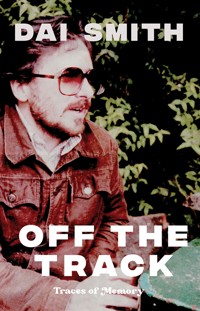
'From its first paragraph almost to its last, Smith's precise, luxuriant prose style dazzles in its ability to simultaneously set off syntactical fireworks and marshall precisely into shape the considered thoughts of a lifetime's intellectual curiosity and self-reflection.' – Dylan Moore, Nation.Cymru A boy running around a running track in the early evening opens a memoir of candour and insight. From a working-class Rhondda childhood through to the glamour of Barry Grammar and onto a coveted Balliol College scholarship and study in New York, David Smith was the rising intellectual star of a generation. In this beautifully written memoir Dai Smith engages and entertains with a personal life and times with the characteristic verve of a writer who has illuminated the modern history of the people of South Wales.
Sie lesen das E-Book in den Legimi-Apps auf:
Seitenzahl: 646
Veröffentlichungsjahr: 2023
Das E-Book (TTS) können Sie hören im Abo „Legimi Premium” in Legimi-Apps auf:
Ähnliche

















Remembering(always)Chris Reynolds (1945–1972)andHywel Francis (1946–2021)
CONTENTS
Running On
Rooted
Caught
Going Away
Sidestepping
Ways and Means
Home Runs
Taking the Weight
Team Play
Swimming Back
To remember is to dream.
There are ghosts in these pages, and this story is largely a tale of spirits who have continued to touch me in dreams as they once did in life.
I hope the whole coheres, for the reader of what is my story as it has been told within the history of others.
The facts are easy but the least important.You ask yourself, how did you really feel?
Alun Richards, Days of Absence: Autobiography (1986)
Running On
I am running around the oval playing field of the Mid-Rhondda Athletic Ground. It is known to us as the Track. We do not know why it is called that. We have not asked, nor been told. It just is, is all, like everything as yet in our young lives. It is about six o’clock in the evening, still light. The air is soft after the heat of a summer’s day. It smells of the scent of freshly cut grass. The trampled grass under our feet is damp and flattened. In places, shimmering clouds of midges hover and sway. This is the end of one of those seemingly endless six-week summer holiday days when, for the most part, we did not go away anywhere but spent the time scrambling together over the mountainside above our streets, scaling the slabbed stone walls of abandoned quarries, sliding on corrugated iron sheets down the small-coal slopes of immense, conical tips and damming up twisting, brown streams to make translucent ponds in which to paddle. The Track is not usually open for use at this time of the day. The groundsman, Mr Hickman, usually padlocks shut the high iron gates at four o’clock in the afternoon. He does this, even during the school summer holidays, by decree of the Urban District Council. And then he leaves his brick-built refuge, coal-fire banked in the grate for heat and baked potatoes to share with us in the winter, and winks at us as we watch him shoulder an army-issue knapsack over his council-issued navy-blue dungarees, and depart down the hill.
Normally, we would wait until he left to scale the high concrete walls at the ground’s street end, our end. The walls dipped a bit in height from the ground as they ran up the slope from the gate to the start of the mountainside. We clambered on two bent backs to reach for the top of a section of wall, then from above, we would stretch arms to haul the next ones upwards. The drop from the wall, ten foot or more perhaps, would be onto a chosen square of springy mountain turf, flat and boggy underneath, adjacent to Jack Hickman’s hut. Then a dash across the cinder path perimeter, a duck under an encircling iron barrier and onto the field of play. There would be dozens of us at any one time, kicking heavy leather-panelled footballs or bowling and batting with pitted cork balls before dustbin wickets or chasing each other up and down the wooden bench tiers of the small, tin-roofed grandstand at the field’s northern end, and in which spectators once gathered. Not that we knew this either, or even presumed it.
Above the Track, running a parallel line, was the railway whose trucks only carried coal. Beyond that, only the slopes of the mountainside. The Track sits at the top of the steepling hill which shoots up past four intersecting terraced streets from the township at the bottom with the gasping river beneath its rubbish-strewn banks. We are strangely proud that the river water is a viscous black. Unique to us. The Track is a flat disc levelled across the lower slopes of the mountain. My street runs right up to the gates which Mr Hickman locks nightly. At its furthest end from the gates, beyond the single-bar enclosure, bushes and untended undergrowth tumble down to the iron railings which mark its boundary end. Outside the railings, the land falls further down into the steeply cut defile of Nant Gwyn through which a gravity incline rail track takes iron drams laden with small coal and stone waste from the Naval Colliery to be dumped onto the flanks of our particular coal pyramid. The Tip. The drams pivot at the top of their journey, empty themselves of their waste and clatter, fast and loose on their return trip downwards. At the very top, as they turn, but only if we are quick enough, we can grab at a battered rim to jump into a dram onto the rust and rubbish to ride back down the incline rail of the miniature gorge which is Nant Gwyn. We are constantly warned not to do it, reminded forcefully of boys who slipped and fell under unrelenting iron wheels, their legs squashed or worse. We do not listen. This is our domain. Our black domain of abandoned and derelict former collieries – the clustered Anthony, Pandy and Nant Gwyn pits all finished working since the 1920s – with a strange playground of machinery set amongst the rubble of bricks and steel and glass and mortar, and glacial feeder dams of indefinite depth and, inside the shells of arched pithead buildings, there are frayed and twisted metal hawsers swinging from the remnants of roofs above the deep pools of undrained water on the coal-jewelled floors. In these prolonged school holidays of summertime when we only ever leave the valley for an organised day trip, buses or train, to go to the seaside, our normal playtime, out of sight of any restraining hand or eye, is as wild as it is disorganised. Only not this evening as I run and run, lap after lap, around the half-mile perimeter of the Track which constrains me.
It is 1954, so I am 9 years old. The Track has been kept open this evening because there has been organised athletics training, and we, turned away from our usual feral pursuits, have been its sole spectators. This is the era of pounding middle-distance runners like Gordon Pirie and explosive finishers like Vladimir Kuts and Christopher Chataway and, of course, the legendary lung-busting under-four-minute miler Roger Bannister. We have seen the high-pitched patriotic newsreels with commentaries in accents as improbable to us as the heralded feats themselves. Some of us have glimpsed their floodlit forms, diminished to puppet size, on our nine-inch grainy black-and-white television screens. And now they are here amongst us. Running, running, pointlessly, in circles. We are fascinated by them. Or rather by these, their local, unlikely equivalents, ones with their own school or college scarves, striped and trailing glory, with discarded tracksuits and spikes glinting on the soles of their black running shoes. In their billowing running knicks and sleeveless running vests they look, to us, to be impossibly touched by some fleeting glamour. They are the Grammar Schoolboys and College students we do not aspire to be, a social wedge of difference in this immediate post-war world; of us maybe, not yet, if ever, us in a reality not yet come. Never to be, it turned out, for most of us. They are the educational and sporting elite of our Welfare Society, not that we thought of it as such amongst ourselves even here in this prime locus of a classic British proletariat where the benchmarks for us children were school-delivered spoonfuls of slick and foul cod-liver oil and a sympathetic dilute of orange juice. The ranks of the elite were a minority most of my friends would not join. From my mixed primary school class of around thirty pupils, only four boys would pass the eleven-plus examination, the literal passport away from a secondary modern education and a projected life of manual labour, most likely to work underground in the collieries, replete with full post-war employment. But that evening, as dusk dropped slowly over Tonypandy we were all trying to run, for a while anyway.
It had started after the young men, no girls or women on the field itself, had stopped lining up for hundred-yard sprints or arcing their silvery javelins into far corners or hefting shot-puts to thud into the turf. We had lingered near as they changed out of their kit, smoking untipped cigarettes, chatting to any accompanying girlfriends. One of these gods of the Track smiled at us, began to tell us what could be achieved, even by us, if we trained, if we persevered. One of us asked him how many laps of the field he could do without stopping. Oh, I dunno, he said and grinned at his girlfriend, maybe twenty or so. Why don’t you give it a go, he said, see how far you shape up for a couple of laps. All of you, he said, run together. In those days we always did whatever it was we did, together, so we bunched up, together, and he lined us up at the start line whitewashed into the grass.
There would have been about ten of us, of roughly the same age and from adjacent streets but taller, skinnier, plumper and so on. I was, as I would remain through life, the shortest and the stockiest. We were to do, as proposed by our mentor, two entire laps, so about a mile in all, with the sides of the oval field considerably longer than the elliptical top and bottom. It was not a race, he insisted, just a training stint to complete at our own pace. Nonetheless, as we set off under his ready-steady-go instructions we ran as if there had to be a winner. There always was. It would be lanky Gwyn or thickset Derek or slight and fleet Dale. Certainly not me. I soon fell behind as boys who could run faster ran as quickly as they could to the front of the pack.
I ran in a steady concentration, a tiny figure in a blue-and-white striped T-shirt, called by us a Sloppy Joe, and stiff khaki shorts held up by an elasticated snake belt, no socks in my black rubber-soled daps. After one lap at a swift pace some boys clutched their sides, pained by the dreaded ‘stitch’, and dropped out. Others grew bored and just stopped. Two sprinted down the final straight stretch towards our self-appointed coach to see who could finish first. Both collapsed over the line. The rest of us straggled on, the coach, his interest in us fading, shouting ‘Well done, boys’ as he turned away from us, me not the last one in the bunch, him clapping and calling out ‘More laps, next time!’ He rejoined his friends as they started to pack up their equipment.
Was it that wild admonition for a next time that spurred me on to keep running in that present time, or was it a stubbornness I already knew was in me for good or ill? I think it was that I just wanted to see for how long I could run if I really tried. I didn’t say anything to anyone. I just kept running. Alone. Solo. Myself. I am writing about this now because I knew at the time, and have never forgotten, that what was happening was some kind of statement of intent, one that was coming directly out of me, and, too, as I review the whole thing from this late perspective that I was, completely unknown to that child then, entrammelled by a fate which was encircling me within that oval field, and which has never loosened its grip.
It was not a competition, not a race, as he’d said. I was just running, and I did not stop even as it grew darker and my friends drifted away. I think as I ran on and on, that I was finally running as if in a dream, unable to stop myself, failing to count down the laps in my head once I had done six. I am not sure how many more. Eight at least; perhaps more, when suddenly the coach stood in front of me and asked what the hell I was still doing. To just stop. That what the hell was the matter with me? Too young, too little, to run on and on like that. So I stopped and went home. But I had somehow been impelled to run, to run for myself, to see if I could, and I had, and like many other things I would go on to do, a form of running would be the start of things, but then running on and on ceaselessly would prove to be a hallmark of my life. I would win against myself within the odds I had been set, however they were set, knowingly or not. The oval’s loop of a track had no exits unless you chose to stop and go through the gates.
* * *
The Track around which I had been running had been opened by the Mid-Rhondda Athletic Company in 1903 for the spectator sport of ticketed events from cycling to rugby in the pre-First World War boom days of the Rhondda Valleys – to which my grandfather would come as one of its migrant workers. But first, on leaving his natal Blaenau Ffestiniog and the slate quarries of North Wales, my maternal grandfather Dafydd Humphrey Owen (1888–1965) – soon to be known locally as Dai – went with his older brother, Will, to lodge with their married brother Dic in Aberfan where all three worked underground. Uncle Will stayed on to live and work throughout his life in that village to which we travelled for occasional family visits into the early 1950s. My grandfather found regular employment as a collier in the expanding pits of mid-Rhondda and it was there in 1908 he settled, having sent for and married his childhood sweetheart Maria Roberts. The young couple had lodgings in Williamstown – up the main hill from Penygraig in the pits of whose Naval Colliery he cut coal by hand – where their three children were born. A son, christened Alexander Owen, in 1913, and soon to be another forlorn statistic in Rhondda’s staggering infant mortality rate, an average of one hundred and ninety deceased amongst one thousand live births of children every year from 1900 to 1914. There would be two daughters to follow and live, my aunty, Mon, as Morfydd Esther (1914–2004) would be known, and my mother, Nin, or Enid Wyn (1918–2018). In the 1920s the family were living more centrally in 128 Primrose Street, Tonypandy, just above Tonypandy Secondary School which both girls would attend. Then, a final move, to Tonypandy’s topmost terrace, Ely Street, a bay-fronted house now, number 59. At the far end of Ely Street, surmounting Empire Hill, were the gates of the Track, from where in 1954 no memory traces had yet converged for my later discovery, nor was a history of names and events readily uncovered to add meaning to our apparently random lives. Nonetheless, it was to this insistent duality of rhythm that my feet were responding as I began running in pursuit of knowing how what preceded me defined me.
The Track was so named not because sponsored athletes once ran foot races for prize money around the oval circumference, though they had indeed done so, but for the elevated bicycle track which had originally marked the outer boundary of the enclosed field. Professional cycle racing, cut-throat and dangerous, was one of the avidly relished sporting passions of Edwardian working-class life. It was a rival to boxing in the South Wales Coalfield and an equal producer of world-class champions who crisscrossed the Atlantic to etch their names in the record books as they lined their pockets with money made more easily by racing than by cutting coal by hand. Money was always a first consideration. As a game, rugby union football held off the pressures of the professional code, founded as rugby league in the north of England in 1895, by the peculiar compromise of inter-class XVs in the port towns of Cardiff, Newport and Swansea alongside the (not-so-hidden) payments to the working-class amateurs in such teams: the colliers, tinplate men, dockers and steelworkers. But there were plenty of individual defections to the new professional game by talented players. Allegiances were not invariably steadfast as arenas like the Track demonstrated in a world that was still being shaped.
Paid rugby league did not see off the cultural grip, patriotic and progressive, of the union game, but it tried hard before 1914, in Aberdare and Merthyr as well as in the Rhondda, where a mid-Rhondda side was formed. The high-water mark, not so coincidentally on the Track ground itself, was in 1908 when in a full-scale rugby league international game, Wales beat England before a crowd of some fifteen thousand people. A touring Australian side met the same fate playing the same rugby code on the same venue in the same year. The new craze for soccer in South Wales around the same time, however, saw a Mid-Rhondda Football Club formed in place of the rugby league side in 1912 with, again, the Track as its home ground. They were so successful, pre and post-war, that their overnight success saw them nicknamed The Mush; for they had sprung up like mushrooms, only to disappear by 1928 as the economic blizzard of the interwar years decimated such initiatives in the Valleys. The peak population of nearly one hundred and seventy thousand in the Rhondda in the mid-1920s was never attained again.
The Track was culturally emblematic of this fall from grace. Its early heroic age ended under the pall of the epic strikes of 1921 and 1926. When I began to undertake historical research into the political and social depredations which these industrial conflicts wrought upon the two generations before me, I was absorbed in the print of newspapers and official documentation and the narrative of events and consequences. I missed the more plangent significance of play and gesture: the irony of dressing-up and the defiance of carnivals. I should have been looking at the photographs of the tournaments held on the Track during the six months lockout of 1926. Different kinds of spectator sport now: the catty and doggy contests of hitting a stick, in turn and to competitive effect, into the air. The competitors wore dress suits and top hats, or versions of them, and sported burnt cork moustaches as idle colliers cheered them on from the banking and the tin-roofed grandstand. The massed Gazooka bands marched in through the gates and blew their squeaking, bleating kazoos with the solidarity of the about-to-be-slaughtered, a great wail of insolent noise from improbable parades of toreadors, gondoliers, Zulu warriors, gypsies, and Welsh mams, breaking out into a tintinnabulation of dance band tunes, ragtime syncopation and the songs from the Great War in which so many of these marching, limping jazz bands had recently fought. The real, joyless world to which they had returned to fight in other struggles was being indicted, held up to account and to ridicule, in this brief world-turned-upside-down of carnival and riot.
The revolt, if that is what the 1920s psychedelic encounters of Actuality and Dream were, subsided with the scream of defeat which, in turn, became a stubborn, subterranean resistance. Communities, for this is what these settlements had become, succoured themselves until an institutional social democracy became possible after yet another world war. That would be the world into which I would be born in that place. Too much, too soon, would be taken for normality by my oh-so-lucky generation. A short glance backwards gives a more multifaceted view.
In 1933, even in the maw of overwhelming social bankruptcy and financial disaster, the ground was taken into municipal ownership. The field was given over to more general recreational usage, for play as well as organised sport, for schools as well as fêtes, for a space for some of Rhondda’s long-term unemployed to congregate as individuals or, as Gwyn Thomas’ perennially dark philosophers, to cogitate. The bank raised for the cycle track had fallen into disrepair and was levelled to enable those wider purposes. Fifty years after its original inception it was still known to us as the Track.
* * *
What, then, I did not know as I ran on, around and around, in my stubborn trance was that once, on this Track, and not long before 1954, so I was closer to all of it at that time than I am now to 1954, there had been scrolled out a spectral diorama of the history of industrial South Wales, an unseen and unheard unspooling of time by which I was being framed. To learn the facts later was not to have them freeze-frame a public memory in situ, more to sense a frisson of connection with evidence for which I was no past (innocent) witness but to which I would be a future (willing) accomplice as I recovered it. Here, in the corner of the field on the cold, blustery afternoon of 8 November 1910, thousands of striking Cambrian Combine miners had gathered to hear the Stipendiary Magistrate read out a message from the Home Secretary, Winston Churchill. As a ‘friend’, he said, he was not sending troops, only Metropolitan police. That night saw riots outside the Glamorgan Colliery in Llwynypia and the destruction of Tonypandy’s commercial high street. Police and troops did arrive and did stay for a year to stymie any effective mass picketing. Soldiers would encamp on the Track. The strike would end in bitter defeat in September 1911. Forty years later I would be sat in picture houses with those who did remember, because they did know, and so led a cacophony of booing whenever Churchill appeared on newsreels. This was visceral memory in action. Later still, for me it would be forensic, cerebral recall as I investigated the sequence of events and the motivation of crowds that November to prove that the action behind the riots was directed and conscious as the community in mid-Rhondda began its course of redefinition. Like all good detectives, I had to have a gumshoe’s intimacy with his locus of enquiry if I was to get beyond the description of what happened to the why of explanation. I really did possess intimate links no other historian could have: by place, by age, through people.
Which brings me back to photographs. Or more specifically to the orchestrated crowd scenes engineered for us by the indefatigable and ubiquitous, self-styled ‘Photographic Artist’, Levi Ladd of Dunraven Street, Tonypandy. In normal times, in his potted-plant decorated studio, his artistry was limited to respectable portraits of Sunday-best dressed couples or family groups, posed into stiff formality. Throughout the disturbances of 1910–11, however, he and his assistant trudged up and down hill, lugging their state-of-the-art laborious photographic paraphernalia. What he captured through his lens was historic and dramatic, fleeting and fragmentary, dynamic and destructive. That was, sensationally, an album of reportage. But what transfixes our attention even more, I believe, are those mass portraits of the men, and they are almost exclusively men, poised to strike or ready to riot, neither act yet undertaken but both already an irrevocable commitment. I saw my grandfather’s face in one of the first of Ladd’s crowd panoramas when the Cambrian Combine workers are stacked one upon the other from the bottom of the Empire Hill which rockets up to the Track. That was on 2 November 1910, outside the Empire Theatre of Varieties (which gave its name to Gelli hill) when the decision to picket-out all the pits in the Combine was taken. The other heart-stopping panorama of upturned faces – Ladd must have been positioned on the embankment above the road and the entrance to the Glamorgan Colliery in Llwynypia – was on the afternoon of 7 November before an oncoming assault-at-arms between police and strikers; it is the quiet before the storm which will the next day bring on a further, more ferocious clash and the wholesale smashing-up of Tonypandy’s commercial spine. I shudder when I think how many of the men in this becalmed sea of witnessing I would have passed on the street in the first decade of my own life or watched playing snooker with my retired grandfather in the upstairs room of the Unemployed Club at the bottom of Empire Hill.
This last, I suppose, is what made me look in turn at each face beneath the scalloped lines of Dai caps. A few late-middle-aged Victorians, an array of moustachioed Edwardians in their prime and, no surprise given their percentage as a make-up of the entire workforce, fresh-faced teenage Apaches with their basin-cut hair and wild eyes. A handful of Gilbert and Sullivan policemen at the back in front of the open entrance, more a guard of honour than any kind of colliery bodyguard. It is a motion-picture moment expanded rather than reduced by being a still. The cast of extras who will soon be the principals have been assembled on set. The director has not yet called ‘Lights! Camera! Action!’. That will come, but just for the moment Levi Ladd, photographer and artist, has cast his spell. What did he say to them, say it so well that they gazed as one at his time-eating camera and waited to be exposed in all their collective power for all time? Not that he loses their individuality, one by one they stare at us and imprint themselves on us, and as individuals we can see, too, that they know they will only control something of their own lives, in the challenge of work and in their fracturing community, if they assert a collective presence. They are, clearly, ready for that challenge. They will, literally, make history and change destinies. And not just their own.
The problem with looking back is that the first images shrink even as the bigger picture becomes clearer. We think we know the end of which contemporaries cannot possibly be aware. If we take out of that picture reel the long careers of those who would live on to claim outcomes and offer explanations, then those who were honoured by contemporaries at the time might return to show us more of the integument of the lives being experienced and the dreams being projected. No figure more so than that of John Hopla, checkweighman or miners’ representative at the Glamorgan Colliery and a key figure in the Cambrian Combine Committee which would, in essence, direct and organise the action of the strike after 7 and 8 November.
Hopla died, aged 32, in 1914, so no career and no speeches awaited him. His moment was then: imprisoned for riot in 1911, weakened by hard labour, memorialised in 1916 by a plaque in the Llwynypia Workmen’s Institute. A worthy, then, to be saluted and forgotten. Contemporaries knew better. For them, Hopla encapsulated a pragmatic concern with and delivery of a living wage and medical care, all done with a fervour for direct action that was quasi-insurrectionary. The authorities knew full well what they were doing when they first prosecuted and later imprisoned him. When he, and his fellow conspirator Will John (Rhondda West’s Labour MP from 1920 to 1950), were released in 1912, they were welcomed home by a mass rally of men and women congregating, in defeat and defiance, on the open field in front of the grandstand of the Mid-Rhondda Athletic Ground, the Track.
In 2016, when I was 71 and years distant from my earlier scholarly research, I was asked to write a booklet to accompany the re-dedication of the wall plaque erected to Hopla’s memory in 1916. I wrote a booklet, The World John Hopla Turned Around, stirred again by the enormity of what had occurred on my home patch in those defining pre-First World War years but also in honour of the courage and brevity of Hopla’s years. My analysis, as before, centred on the collective dynamism of that community-in-the-making and I was surely right to stress, again, the entwined nature of an interaction between individuals and their society. And it was then that I stumbled upon the trivial, yet moving for me, fact that only a wall and four decades had separated my infants’ cot in our lodgings in Ardwyn Terrace and the dying Hopla’s bed. My mother, nearly one hundred years old when she died in January 2018, had had dementia for a few years before her death, so I had not been able to ask her anything about that time just after the Second World War, though I did know she had known the Hopla family from before the war. Then, the ghost of connection chose to visit my pages once more as I contemplated in 2020 the beginning of this present memoir.
In the booklet there is a photograph from April 1912, the perspective is one taken from the cycle track of the oval, and to the left. It is of the grandstand and rows of men sitting on the benches with a speaker on his feet to address the crowd we can assume to be on the field in their thousands. This is the Welcome Home rally for John Hopla and Will John. In the left foreground of the picture are some young colliers, standing or sitting below the grandstand on the concrete steps. I had paid it scant attention in 2016. Hopla cannot be clearly identified. He was too enfeebled to speak. But he was there, and as I looked again at it, as a kind of memory jog for the Track and this present writing, I began to stare at the image of the young man who sat and himself stared into a near distance. Once the image was magnified, then the slightly hooded eyes and the jut of the jaw confirmed his identity. My eyes knew his face, one whose features my childhood fingers had tracked over and over. Here was my twenty-four-year-old grandfather, not yet a father himself with a first child, the boy Alexander Owen born in the summer of 1913, to be interred as an infant, and out of poverty, to be placed in a common municipal grave. Here was the man to whose house in Ely Street I would go after I had endlessly circled the Track in 1954. He was there on the Track in 1912 to pay homage and respect to John Hopla, and it is his presence on the Track then which leads me to write now of the human agency which sought to end the enclosure of any lives dispossessed of any future promise by the presence of forbidding gates.
That was the connection, the joined-up bit, which contemporaries instinctively understood beyond the diurnal. It was Hopla, I have since come to discover, who, more than any other, linked the social revolt of the riots, those against both the coalowners and the local shopocracy, to the necessity of an institutional organisation of collective power. And it was Hopla who, after my mother died, touched me personally again as I sorted her letters and papers. An Identity Card for National Registration of Under Sixteen Years filled out for me by my mother as ‘Smith David B’ in 1945 to last (in theory) until 11 February 1961, and on which card our one-room downstairs lodgings in Tonypandy in 1946 is given as 6 Ardwyn Terrace, a dog-leg short terraced row where, next door, in number 5 Ardwyn Terrace, John Hopla had died in a front room on a Friday morning in April 1914. Hundreds followed his funeral procession to the cemetery and the streets of mid-Rhondda were lined with all the people once again.
* * *
As I was running, endlessly and without heed around the Track, just four decades after Hopla’s death I had no notion, of course, that I was running around all that the Track had once held within its boundaries; nor, of course, that I would be, in another sense, running around all that the Track had signified for the rest of my life. When I stopped running on that evening in 1954, the open gates had offered me a moment out of time as well as an exit: the street I entered to walk home held, in those days, no known past nor consciously burdensome associations for me to consider and from my grandfather’s house I would only sense the world opening up to me in ways which left any historic Rhondda in their wake.
ONE
Rooted
Exit time in 1957 from all the world I had ever known was an uprooting that came all too soon for me. Entrance time, or as I was frequently told in the first decade of my life, was equally dramatic. All through the day and into the night before I was born, a snowstorm had begun and blew without let over South Wales so that the valley was overlaid with the granular whiteness of drifts of snow and all known landmarks and signage were made to disappear beneath this miraculous gift of forgetting. After the blizzard, the cold gripped for days on end and from the eaves of the roofs icicles stubbornly lingered and glinted. It was mid-February 1945. The Second World War had not yet ended. My conscripted and invalided father was on sick leave, staying with my mother in my grandparents’ house in Ely Street. Living also in the house was my mother’s older sister and my six-year-old cousin, Robin. His English father, ‘Bill’ Bailey, a pre-war professional Royal Marine, would not return from the Far East and the Royal Navy for another five years when he would take his wife and son away with him to Deal in Kent, where he served as Marine Bandmaster, from 1950. I would grow up with Robin (1939–1998) as a brother until his martinet father, scarcely known to him, uprooted him, too, and in his case took him out of the world of caring women as well as the valley which had nurtured him.
Number 59 Ely Street was exactly in the middle and on the left-hand side of the humpbacked street as it swayed its way up from the gates of the Track. It was from this house that my father, Burt, braved that February’s bitter, night-time weather to run and stumble the mile or so to be with my mother in the cottage hospital at Llwynypia. She had not been expected to survive in giving birth to me, and there would be no more children until my twin brothers were born in 1954. Such exceptional weather conditions, a dreadful war’s ending, adult survival, a new world, a new birth, all those things can make the feel of specific circumstances become embellished by family lore but this time, for a memoir, I wanted to avoid any hint of reconstruction, so I looked for the tie-in of facts and found them in the Western Mail. Even then, there was a time delay in verification because weather reports were still officially delayed to disallow any advantageous knowledge, especially of an apocalyptic freezing-over, that might be of use to the enemy.
On Monday 12 February 1945, the weekend, since the Saturday afternoon of 10 February, was described as having ‘freak weather conditions’. After hailstorms that ‘carpeted the countryside in white’ came ‘thunder and lightning and heavy rain’ whilst ‘a pall of inky-black cloud created a darkness two hours before dim-out time’. I was born in the early hours of 11 February. The local temperature was the lowest across all of Great Britain for days to come. The heavy snowfall had arrived, as the official censor now revealed as ‘blinding snowstorms’, which had driven people off the streets, and as howling blizzards whose after-effect was to prevent all movement of any kind until late Monday morning. Except, that is, by one new father on foot and crashing up the valley through snowdrifts to greet me.
As a family, we would first leave the valley one year later in January 1946, upon my father’s official demobilisation. We went to live in his native Yorkshire, to Ravensthorpe, a town near Dewsbury, with a name as grim and foreboding as any Victorian gothic chiller. My father, after early teenage years spent sweeping up on the floors of cotton mills, had been briefly apprenticed in an engineering works but rebelled against the incessant noise and the regimented work undertaken by his father and older brother. I think he felt cheated of a better destiny. He would tell me of the scholarship exam he had sat for entry to Bradford Grammar School and how a particular essay he had written – something about an encounter between animals and humans which sounded like the Jack London sagas he cherished – won him the prized entrance. But that he was – somehow, but by whom? – deemed to be too young to go, and that a year later he was – somehow, but how? – ineligible, so did not go. It all sounded improbably, and yet likely, a family outcome perhaps, and the resentment was deep inside him. So, instead, after other false starts, he began his training in the late 1920s in a ‘high-class’ fishmonger’s and poultry establishment in bustling Bradford.
In the days before refrigeration and mass marketing the preparation of such produce, often highly seasonal in nature, and no less in its presentation, as any photograph of ‘high-class purveyors’ demonstrates, was a skilled trade, years in the making. My father left school in 1926 age 13. In 1946, twenty years later in Ravensthorpe, he was a shop manager. But my mother, in that place, was miserable, isolated and homesick. By the summer of that year, we had moved back to the Rhondda. First, to that one-room lodging in Ardwyn Terrace in Tonypandy and then, in 1947, to two-room accommodation at 118 Hendrecafn Street, in nearby Penygraig where, age 3, I first went to school.
My father worked in a small, one-slab fishmonger’s called Morgan’s in De Winton Street, set right above the river and the stone ruins of the eighteenth-century woollen mill, the pandy, which had been there before the late nineteenth-century coal rush and gave our mid-Rhondda township its eponymous name: Ton-y-Pandy. That we were poor – much more so than colliers returning to full employment in a nationalised industry – and that serious prospects of material advancement would always evade him, so forever a shop manager and never a shop owner, there could be no doubt. What saved them from relative destitution was the death of my grandmother, Maria, called MamMam at home, and whom I do not truly remember except in a conjured-up image of a pale face in a bed brought downstairs. She died a slow and painful death from cancer, not yet 60, in September 1948. We moved, again, back to Ely Street. Aunty Mon and Robin would be gone a year or so later and, with room enough to spare now, we settled permanently, rent-free, in my DadDad’s house.
I never thought to ask my father whether he felt any personal difficulty in completely transplanting himself to the Rhondda from the West Riding of Yorkshire. Indeed, although we took brief holidays there, and I can recall his twinkling, diminutive mother (‘Ma’ Smith, whose husband, my unknown grandfather, had died pre-war) and his warm-hearted elder siblings, Harold and Annie, and my Yorkshire cousins, their respective children, Eric and Norma, the patently foreignness of accent and geographical distance forever made his past Another Country. If anything, their antecedent relationship to their Burton – his sole forename, taken from a respected relative who had prospered – seemed to impinge uneasily on who we had made him become in our country. He had, in part, also made himself different. In his youth, he had felt self-conscious, bothered even, by the near dialect his family and friends talked and by the manner in which some shop customers in genteel Bradford found his broad pronunciation nearly incomprehensible. He worked to bypass the one and round out the flat vowels of the other. He read what he called ‘the classics’ (so Jeffrey Farnol’s Beltane the Smith remained, in its battered red covers, a lifetime favourite), and he read aloud to himself in the extensive woodlands around his village. He strove for a standard pronunciation, strained out the traces of a Yorkshire accent and ended up being thought by most who knew him in my lifetime, to be simply Welsh.
He had been born in 1913 in Cottingley, near Bingley. It was a workaday offshoot more than a picturesque village, one whose expansive, surrounding rural setting of manor house and woods and streams, was belied by its miniaturised urban and industrial nature. It sat at the top of a little hill just off the main Bingley to Bradford road. When I went there with him to visit in the early 1950s nothing very much of that ambience had changed in the previous half-century. At the end of the twentieth century the special character of Cottingley, it being a piece of the jigsaw that had been set apart, would be lost entirely in the sprawl of house building that spread over it as it became a commuter base for the larger towns and cities on its axis. But when I first saw it, Cottingley was just as it was when he grew up there in 6 Skirrow Street. It was a tiny settlement then, of around one thousand inhabitants, even less with the men away on war service to 1918. The end of the Great War was exactly the time when Cottingley had its lasting moment of notoriety, a poignant footnote to the widespread need for psychic comfort induced by the carnage exacted by the war. The attendant psychological gullibility simply followed on from that.
The incident, of course, was the investigation in 1920 and 1921 by willingly convinced luminaries, including Arthur Conan Doyle, of the authenticity of the photographs taken in 1917 by two Cottingley girl cousins. One was aged 16 and the other was 10 at the time. In the sensational photographs, with one or other girl within the frame and all set against the bluebell-carpeted woods or against the waterfalls and fast-flowing becks of sylvan Cottingley, were dancing, gauzy and playful fairy figures. Actual fairies, real fairies which had appeared for them and been caught on camera. Or so the girls said and, look, here they are incontrovertibly present, or so the photographs proclaimed.
An inchoate belief, one shading into a palpable desire for the tangibility of a spirit world, became momentarily intensified. The papery cut-out fairies, posed and painted and double-exposed, were more than a puckish prank. They were an act of will illuminated by the girls’ wish fulfilment of a revelatory other world. The cousins, through long lives, never denied the woodland spirits they had conjured up as a real existence and my seven-year-old father, on the spot at the time Conan Doyle wrote about the Cottingley fairies in The Strand magazine so that the London press splashed his sensational verification on their front pages, was one who went looking in glades and under stone bridges over streams to see if they would show themselves again. Or so he liked to tell me when I was the same age. For sure, when I walked with him in the broad-leaved woods and wildflower meadows of his childhood after another terrible war had ended, he encouraged me to look, too, in the same places, with myself as innocent as he once was and attuned to see beyond the veil of our limited world, or so he somehow caused me to believe. For himself, there was never to be any assured religious beliefs or church attendance in his adult life, but there was a vague yearning, a desire he sometimes slaked by reading a best-selling spiritual guidebook by the woozy American, Ralph Waldo Trine. It was called In Tune With The Infinite (1897), a hope which I would attribute to a dashing of hopes too early and not the unreachability of an alternative existence to the one he had, perforce, to lead.
For working-class young men of my father’s generation, it was not that the individual choices were stark, it was more that there were no personal choices. Other than what might be imagined. The pastoral idyll of the rural hinterland of Cottingley was not what actually supported life in the village. Duality was at its very core. Those who knew the families of the fairy begetters, Frances Griffiths and Elsie Wright, also knew that the father of Elsie was, in the light of day, a car mechanic in sole service at the mansion house dwelling of the millionaire Briggs family, whose scion was famed, for a while, for his personal collection of Rolls Royce cars, and his financing of that prestige firm. In the magic world of his darkroom, however, Elsie’s father was an experimental amateur photographer whose expensive glass plates his daughter had borrowed to project her fantasies, and it was he who had developed the images into print. Neighbours neither speculated nor believed. They simply knew how dreams were made. There are, of course, other photographs of Cottingley from around this time. Pictures you might say of the actual Cottingley though not, proprietorially, of the whole thing, of the real Cottingley, its mind as well as its matter.
These public representations of Cottingley life are dismal scenes of unmade muddy streets with their dreary millstone grit back-to-back flat-fronted houses squatting just two paving stones above the muck. One or two basic-provisions shops and a branch of the Bingley Industrial Cooperative Society. Slumped against house walls or sat on windowsills at street corners are poorly dressed people, apparently sullen witnesses of their own unchangeable fate. The photographer, with a neat lexical appropriateness, was one A. Verity.
Verity in truth, for this was a segment of the working-class world of Edwardian Britain in unflattering cameo form. But the profile lacked the depth that the dimension of common living gave to Cottingley. There was a connecting main street artery that led to the road out and a further couple of attached rows of houses, all sharing pairs of outside lavatories with the use of a common midden. Community could be fertilised in any number of ways beyond ratiocination. Work, for men and women, was to be had for a pittance in a large mill in lower Cottingley where my grandmother toiled as a girl or further afield, a thirty-minute tramcar ride, in one of Bradford’s gargantuan cotton-spinning hells. There were power relationships to be negotiated and challenged here as much as in South Wales. In 1891 a nineteen-week-long strike at Manningham’s mill over wages and hours led directly to the forming of a Bradford Labour Union and two years later, in 1893, to the formation of Keir Hardie’s Independent Labour Party in Bradford. The Manningham strike had seen police wielding their batons and light infantry with fixed bayonets deployed in Bradford streets. Another Tonypandy foretold. Everywhere in this world a plasticity of options for change or stasis.
My Cottingley grandfather worked as an engineering mechanic, credited with safety invention and improvements from which he did not profit, in the huge tramsheds at Shipley near Saltaire, itself a model village with superior public and private amenities which Sir Titus Salt had built in the 1870s and named after both himself and the river which ran through it. Living there came, however, with Salt’s strict rules as to behaviour and morals, which not all his employees could stomach. Cottingley was a betwixt and between sort of place: it lacked the cosmetic cultivation of Saltaire and the flamboyant popular culture of Bradford where the Alhambra Theatre of Varieties became a favourite haunt of my fun-loving father, yet it provided a set of cultural developments of its own. There was an actual, if small, Italianate Town Hall dating from 1870; a day school available from 1865, and later expanded, a Mechanics Institute from the same year, soon to have a library of almost a thousand volumes and daily newspapers to peruse. Voluntary associations flourished – a Band of Hope, a choral society, the Independent Order of Rechabites and, in 1904, the Cottingley Women’s Guild. There was soccer in winter and cricket in summer, with organised teams as well as pick-up games, and the ancient Sun Inn as well as St Michael’s Church. By the turn of the twentieth century, amateur theatricals and concerts and festive occasions were regular and lively affairs. Cottingley may have been slightly off the beaten track and still touched close up by the farms, pathways and common land of a pre-industrial England, but it was, too, shaped economically and moulded socially by the culture of industrialisation and its attendant working-class world. When my father left it for the Rhondda, he was only stepping from one classic proletarian locus to the one where his wife had been born in 1918.
But there is one more thought or circumstance to explore before he finally takes that road to Tonypandy, thereby denying me the Yorkshire boyhood he had had, and it is that for both of them there were other roads closed off by war and necessity. I am reaching for the sense of youthfulness and style I see when I look at their photographs, before and after they met, in a late 1930s world of thronged dances, swing music, ersatz glamour and an American-flavoured classless popular culture. There is my father, unrecognisable to me, in a mid-1930s snap taken in the front parlour of Skirrow Street, a room tricked out with a piano, a hanging pendulum clock and some framed pictures or prints: he is shown in what is clearly his chosen face-the-world mode. He is wearing a dark double-breasted suit, his shirt knotted by a silk tie flaunting a flaxen-haired bathing beauty, and he gives the box camera, held by his brother Harold, a cigarette-lipped unflinching gaze downwards. His hands are hidden as if for some unknown action, thrust deep in the pockets of his jacket. All bespeaks his admiration for Hollywood’s decidedly dapper and allegedly dangerous movie actor, George Raft, only this posed tough-guy film-star gangster, with not a spat or toothpick in sight, is shoeless, only wearing the socks which, I guess, he did not imagine could be seen.
Was it this dressed-up confidence that attracted my younger mother to this saturnine, dark stranger? Her surviving letters reveal that she had plenty of admirers of her petite and pretty bounciness, both at home in Wales and abroad in foreign England. The war made the biggest decision for them as it did for so many. They would remain together thereafter, but I do believe that bigger dreams were somewhat quashed. Deprived of the disguise of make-believe costume and the illusory open-endedness of youth they settled for less in post-war Britain. My father was always resolute, but he was not confident enough to be bold and, in some ways, too soon perhaps, they beat a retreat. She had been given two names, Enid Wyn, as had been her older sister, Morfydd Esther. Her early years were blighted by the strikes of 1921 and 1926, the length of the lockout almost making her father accept a job as a caretaker at a London club. That offer had come about through a church network, for he was deeply involved in church activities as choirmaster at Eglwys Dewi Sant, a Welsh-language church in Tonypandy’s main street. My mother’s upbringing, at church and at home, was entirely in Welsh, and her facility to speak and write the language, though it grew rusty, was quickly oiled to use when needed. In her very last days, in the winter of 2018, she would, half in and half out of sensibility, often talk and sing in Welsh. Her childhood, if the typically tough one of interwar South Wales, was undoubtedly within a caring and loving home. There was an extended family on both sides and an enclave of fellow incomers from North Wales, also church and not chapel-goers. My grandfather was intermittently unemployed and when he did work, as a collier at the coalface, he was badly injured by a roof fall which broke his legs. He was on crutches, then sticks, for two years. He passed exams to become a foreman, until his retirement in the early 1950s, at the Cambrian Colliery, Clydach Vale.
In the war, he helped defuse or detonate unexploded enemy bombs as a lieutenant in the Bomb Disposal Unit. His politics, it seems, were elastic. He voted for Arthur Horner to become the first communist President of the South Wales Miners’ Federation in 1936 but for Churchill to remain as Prime Minister in 1945. This was eccentricity more than conviction for, in all else, his opinions were very eloquently and staunchly Labour. There were, of course, no family holidays for them other than the occasional day trip to Barry Island in an organised caravan of others, but the girls, habitually known then as Mon and Nin, were sent away by train for some summers to live with their grandmother Hannah Owen, in Blaenau Ffestiniog. She died in 1934, aged 89, with the funeral being another marker of family legend. Notably, DadDad’s older brother, Morris, did not attend.
That was not the only thing that marked Morris out. He was the Golden Boy and the Black Sheep all in one, the family outrider who fascinated and repelled at the same time. Indeed, when I was offered common entrance to Oxford in the autumn of 1962 my father blinking away mingled tears of pleasure and disbelief, muttered: ‘Just don’t become like Uncle Morris’. What Morris had done, from a slate quarryman’s cottage before the First World War, was to succeed academically and then compound the familial distance with the social shift which made him, as he removed himself further, a familial pariah.
The Owens of Tanyclogwyn Terrace, Blaenau Ffestiniog, that moonscaped epitome of a slate quarrying town, were church not chapel. They overcame the odds of losing their father, Richard, in an explosion in the quarry when he was setting charges. Two of the sons migrated south as quarrying began its precipitous decline in the early years of the last century. My grandfather had joined his older brothers to live in the Taff Valley and worked in pits there, and in Nelson, before settling in the Rhondda.
The three Owen daughters married and also moved away: Lizzie as a personal maid married to the chauffeur of Lord and Lady Leverhulme; Hannah to a husband who was a lighthouse keeper in the north of Scotland and then, on his death, to a widowed doctor she’d met in Rhyl; and Annie who married in Hastings but took the family to Birkenhead, Liverpool, to open and run a large-scale ‘hand’ laundry business with the employment of many in what was the largest concentrated population of Welsh speakers on earth. Scarcely a family without get up and go then but shaped, too, by the parameters of late Victorian possibilities for a diligent working class: employment and marriage. And then there was Morris, with only my grandfather to come as the last and youngest, born when his mother was already 43.
From school in Ffestiniog, Morris impressed enough to enter the newly available higher education at Bangor where the university had been established with strong links to the surrounding quarrying districts. He studied physics and chemistry and on graduation, presumably on a scholarship of some kind, went to Heidelberg for advanced work. He was not slow in the marriage stakes either. First, to a diamond merchant’s daughter, (two children resulted), and then to the Bishop of Taunton’s daughter. Morris would have graced the pages of an Anthony Powell sequence of ambition and social climbing. He had turned to education as an administrative career in the outposts of Empire, to India to be exact, where he was the Principal of a college, and from where he once returned to Blaenau with Indian servants in tow to put up at the Queen’s Hotel to the astonishment of those who had once been his peers. Various posts of public service followed – the Censorship Board in the Second World War, a visiting prison official in Lewes Gaol and, post-war, onto the NCB Board in which inspectoral advisory capacity, he came to the Rhondda and, at his brother’s insistence, stayed with us in 1952 in Ely Street.
That was the only time I met him. At home, the feelings about him were decidedly mixed. My only vivid recall is of being told to go up to the middle bedroom, normally my own, entrusted with a large china bowl full of hot water, to knock and tell him that my mother was cooking breakfast. After this, a breakfast of eggs and bacon was fried up, and another as he failed to appear until in exasperation my grandfather told me to go up again. Uncle Morris in a paisley dressing gown was sat on the bed, laid with the best blue silk counterpane, waiting, it seems, to be called. He gave me half a crown. The most money I had ever received. When I told my grandfather, who was teetotal and also never swore, he broke the second rule by saying, ‘That’s more than the bugger has ever given anyone else’.
I stress this because Morris Owen was clearly one of us, and yet not with us anymore. The only family member who had gone to a university. And never worked with his hands. Education had been for him a way out of limited life expectations. Our expectations. A son of his, her cousin my mother told us, had taught at Rugby School (this after I had read Tom Brown’s School Days) before making lots of money in the City (itself a concept that only conjured up notions of bazaars and whatever ‘merchants’ were). A daughter, Marjorie, had worked in Bangkok for the League of Nations (or so my mother put it). These snippets were brought up as alien titbits of amazement yet never as possibilities to be attained, emulated, or even desired. There was no sense of envy or resentment for the path Morris had taken, or where he had led. There was only contempt for how he had changed. And, in my father’s case as I would discover, an underlying fear that the pattern might be repeated.
Partly, perhaps, this was also because his own schooling had ended so abruptly. A few years at a higher grade school was no compensation for that denial of access. My father, though no autodidact, was thoughtful and literate but not, as he would see it, properly educated. Not educated in the way my mother and her sister, despite all their family difficulties, had been. Neither of them were ever sent ‘into service’, a common lot for girls of their background, nor into shop work before marriage. Both went to Tonypandy Secondary School, the local grammar, and both did well there. Up to a point. Then economic reality curtailed matters. Mon was definitely a university prospect, but there was no prospect of supporting her. She left school to train and become a nurse, eventually a hospital sister. My mother stayed in secondary education until she was 18. There was talk of a teaching career, or at least a foot on the ladder, as the testimonial she obtained from her Headmaster (E. Hugh, M.A. BMus), conveyed in December 1936:
Enid Wyn Owen was a pupil of this school from 1930 to 1936 and gained the school certificates (Central Welsh Board) in 1935. She spent a further year in the Commercial Department and gained RSA and Pitman certificates in shorthand up to 80 words per minute and in typewriting (RSA elementary certificate).
Her conduct and progress were excellent throughout her school career. She was a very loyal and conscientious pupil and her work as prefect was very satisfactory indeed –she was the mainstay of her house team in netball and in hockey.
I can thoroughly recommend her as a very promising candidate for the teaching profession.




