


Erhalten Sie Zugang zu diesem und mehr als 300000 Büchern ab EUR 5,99 monatlich.
- Herausgeber: Jonathan Ball
- Kategorie: Sachliteratur, Reportagen, Biografien
- Sprache: Englisch
There's an entire generation of South African women who ought to read this book.' – Sara-Jayne King, author of Killing Karoline 'Ougat is masterfully written – raw, unpretentious, unsettling. Shana Fife captures all the darkness from her body, psyche and life with fearless honesty and transparency.' – Frazer Barry, award-winning theatre practitioner, writer and musician By the time Shana Fife is 25 she has two kids from different fathers. To the Coloured people she grew up around, she is a jintoe, a jezebel, jas, a woman with mileage on the pussy. She is alone, she has no job and, as she is constantly reminded by her community, she is pretty much worthless and unloveable. How did she become this woman, the epitome of everything she was conditioned to strive not to be? Unsettlingly honest and brutally blunt, Ougat is Shana Fife's story of survival: of surviving the social conditioning of her Cape Flats upbringing, of surviving sexual violence and depression and of ultimately escaping a cycle of abuse. A powerful, fresh and disarming new voice – Shana's writing is like nothing you've read before.
Sie lesen das E-Book in den Legimi-Apps auf:
Seitenzahl: 345
Veröffentlichungsjahr: 2021
Das E-Book (TTS) können Sie hören im Abo „Legimi Premium” in Legimi-Apps auf:
Ähnliche


















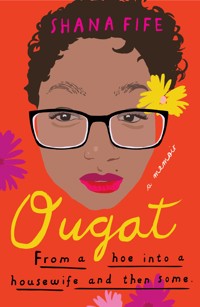
From a hoe into a housewife
and then some
by
Shana Fife
Jonathan Ball Publishers
Johannesburg • Cape Town • London
Praise for Ougat
‘There’s an entire generation of South African women who ought to read this book, for in it they will find themselves and hopefully forgive themselves for believing every lie ever told about them and every expectation ever imposed on them simply by virtue of their having a vagina. Fife’s candour in telling her story with such searing honesty is both exciting and empowering – her voice is an important one in our collective journey as women of colour to healing and, ultimately, acceptance of ourselves just as we are. Ougat is breathtakingly frank, unapologetically honest, and refreshingly relatable.’
– Sara-Jayne King, author of Killing Karoline and host on Cape Talk
‘What a shock to the system Shana Fife’s Ougat is, as she lays bare the multiple layers of her gritty vulnerability. Fife takes one into the heart of the customary uncle swagger and complicit auntyness of being and right into the convoluted realities of defiant youth. Always battling on, with her wounds oozing riotous emotions, psycho-social toxicity, battered physicality and guilt-tripped spirituality, Ougat’s odd-ball fixations are bound to leave you catching flies as the jaw drops, laughing insanely or wiping away tears of empathy. Yoh! What a read.’
– Bronwyn Davids, author of Lansdowne Dearest
‘How do you manage to write a book in which you describe your deepest secrets, your most intimate thoughts, your darkest hours and your greatest humiliation in fine detail and honesty? Shana Fife captures all the darkness from her body, psyche and life with fearless honesty and transparency. I am relieved that in our country we have brave women like her who can use her writing skills to give a voice, not only to her story, but to thousands of other women who experience abuse daily. Ougat is masterfully written. It is one of the most important books of our time.’
– Frazer Barry, award-winning theatre practitioner, writer and musician
‘Rich, rewarding and revealing … A rip-roaring, no-punches-pulled account of a life from someone with a hell of a lot to say – and the means to do so.’
– Francois Bloemhof, bestselling author
Contents
This book is dedicated to
my husband and children,
and my mom and dad.
You all are my whole heart –
I would go through it all again
to have what I have now, in all of you.
And it’s also dedicated to God, of course.
A note from Shana
The events in this memoir are based on my understanding and interpretation of them at the time. Ougat is written from my perspective using the information I was privy to, whether accurate or inaccurate at the time, how I perceived this and, by extension, how it shaped my actions and viewpoints. Others might have experienced these events differently, and I respect that. Memory and truth are subjective. I have relayed all of these events as accurately as possible, to capture how I saw things as a young girl.
Chapter 1
‘Aspoestertjie’ and other innocent words
The very first rule that you are given as a Coloured child who has a vagina is that no one is allowed to touch it. Ever. Even with your consent. Especially not with your consent. The revelation of your pussy is prohibited and will bring shame to your father, to your brother and most importantly, to God. Trying to not disappoint God is a massive weight to bear for a five-year-old. But the weight of male approval is just as heavy. Even at this tender age, every man in your family will tell you about how – when you are old enough to have a boyfriend, which is never – they will kill him, mafia-style, as a warning to all other men that you are from a respectable, male-dominated tribe.
This, of course, is a testament to the fact that all men are trash and all men know that they are trash … These men are willing to protect the women they know from the other trash, but only to protect their own honour, by protecting her honour. It is all a convoluted fuck-up.
Regardless, you will remain a virgin until your wedding day, while your family completely ignores the irony that you may actually need to date someone before they know you well enough to propose. The proposal is the goal. Every step you take from birth to the ultimate marriage proposal is an audition for a man to choose you, like an object in the shop, or a career, or a Pokémon. And of course, along the way, everyone will ask you when you are getting married, but will judge you for having male suitors; and yes, there will be rumours of your compromised chastity.
Even at high school, when you realise that you have sexual desires just like the boys do, the boys at your school will only talk to you if you put out. But they will only date you if you pretend you don’t put out. Then you must put out. But you mustn’t like it. Unless they ask if you like it. To which you will mumble a shy, ambiguous non-response because you are so fucking confused at what is happening that it is safer to go with the flow and not look absolutely inexperienced – or too comfortable.
But your sexual identity and desires will morph and grow, continuously in conflict with your morality, until you are nothing but an obsessively masturbating, churchgoing, virginal daddy’s girl with two illegitimate children.
My name is Shana Fife and this is my story.
As of writing this, I am 30 years old. A series of unfortunate, yet retrospectively somehow necessary events has led me to my very unconventional calling: telling people about my vagina. I also speak about abuse. Sexual abuse. Gender-based abuse. And everything else that makes people roll their eyes and whisper ‘fucking feminazi’.
Professionally, I write for corporates and create content that is digestible to the masses. I specialise in lifestyle articles about decor and diets and ‘What to do when you’re having an asthma attack’, but that’s just a cover-up for what I really do: I am a blogger in the vagina and feminism market. Even in 2021 the term ‘blogger’ is synonymous with ‘influencer’ or ‘wannabe writer’. So, when I introduce myself I mostly mumble ‘I’m a journalist’ when I am asked what I do for money.
I’m also a certified failure to my community, my orthodox Catholic Coloured family and Jesus. (I suppose we should use the past tense here; I got married in 2017 so now I’m golden.) But mine is a story of the sum of the things that made up the Coloured community in the 80s and 90s, the tale of a child who wasn’t quite sure of where she fitted into society or her very diverse family. It’s a story about a constant battle of choosing between who I was, who I was expected to be and who I wanted to be.
And guilt and conditioning.
Oh, and how I got into an abusive relationship that nearly fucking killed me.
But let’s get back to this thing of failure.
In 2014 I found myself three years out of journalism school. I was broke and alone and had just given birth to my second illegitimate child.
Second. Illegitimate. Child.
I hate that term: illegitimate.
Illegitimate
/ˌɪlɪˈdʒɪtɪmət/
Adjective
1.not authorized by the law; not in accordance with accepted standards or rules.
As if the child isn’t real unless you’re married to a man.
I was also in the throes of leaving Lyle. I was living back at my parents’ home, in a single room with both of my kids – my son Sidney-Jonah and my daughter, Lyle’s daughter, Syria-Rose. On one bed. Amidst boxes and extra cupboards and things. A storage facility, really. My life had taken another nosedive and I wasn’t seeing any hope at the end of the tunnel this time.
I remember certain parts of that year distinctly, but there are days and weeks that seem blurry. Some things I have successfully blocked out, while other memories linger unwanted and visit me at 3am when my house and mind are too quiet.
And many such thoughts, even almost six years later, are of Lyle and all the things I let him do to me, to my body and to my mind.
I had been so defeated and dehumanised, I had no skin left on my face. I was lonely, disappointed by who I was and how I had become her.
One day, in the emotional whirlwind that was 2014, I sat down, defeated. Angry. Angry at my life. Angry at myself. Angry at my vagina, which seemed to be at the centre of all my problems. How had I fallen pregnant so many times? Why had no one sat me down and explained contraception, sexual desire and sperm to me? Was I the only one who didn’t listen in Life Orientation? Surely women should constantly be teaching other women about sex? Am I just hornier than other women? Am I a whore? Am I an idiot for letting someone beat me to a pulp, rape me and still come near my children? Am I now spoiled for all mankind? A decent man would never hitch his wagon to my calibre of woman.
And most importantly, the question that would forever change my life: do other women feel the same way I do?
I sat down at my parents’ dining room table and looked over the entirety of Pelican Heights, out over Strandfontein Beach to the ocean – and used the only marketable skill I had. I wrote. For no one. For myself. I wrote a short blog about having my card declined while buying milk or something. I just needed to vent. I didn’t have friends to lose. I didn’t have anyone’s respect to lose. There was a long battle with myself about what was appropriate to write about. A push-pull between what was embarrassing, what made me sound good and what was true. The line between authenticity and self-deprecation became thinner the more I delved deeper into what was really happening and into who I really was. And when I posted it, I remember closing my laptop and going to the park next to my house with my children. I sat there holding Syria on my lap and watched Sidney play. And I cried. Not wildly or dramatically. I just sat there as the tears streamed down my face while Sidney, oblivious to the failure his mother was, played happily on the merry-go-round. I didn’t know it yet, but from that day on, my life would do a 180.
I am getting ahead of things. We will get back to this story. We will get back to Lyle. We will get back to my pregnancies, my fall and my eventual rise. I promise this book will have all of the elements that make for a real Coloured skinnerstorie.
Perhaps I should answer the first question you probably have: who is Lyle and why is he significant? Of course, my memoir needs to centre around how I was affected by a man, right? Why else would anyone want to read it? Women aren’t fucking interesting. Books about women are about boring shit like eating and praying and loving.
Well, this memoir is about how a man affected my life. How ‘men’ as a concept, particularly in the Coloured culture, has affected my life since I was a child. It speaks of how what is clichéd – but still toxic – masculinity can shape and trap a woman from the cot to the cot (because our whole purpose, from when we are babies, is to eventually have our own babies).
But I start this book with him at the forefront because Lyle was the turning point in my life, or at least the catalyst for what would be the start of my mental and spiritual awakening. He was the first real boyfriend of my adult life and the more I think about it, my first encounter with evil.
I met Lyle when I was 21. We started out as friends, but the relationship quickly turned into a master–slave relationship. I endured beatings, rape and emotional destruction under his reign, and yet my story is by no means unique to my gender, to my race or to the world. I will share the sordid details nonetheless, on the off chance that it is a cautionary tale that saves at least one woman – on one condition: that it is understood that even though Lyle is the main subject of my life thus far, he is not the main character. I am.
And he is not the only part of my story.
Chapter 2
A brief herstory
To really understand why I ended up tied by the vagina to a cretin from the underworld, I need to look at where I come from. As a young woman, I aspired to be like the unhappy, but married, women in my circle. There were exceptions like fun aunties and independent cousins, but I remember mostly pitying the women who hadn’t been lucky enough to find a man to tame them. From my peripheral viewpoint as a child it seemed that married women looked at single women with a mixture of disgust, pity and jealousy. Very confusing for my newly emerging sense of self. I had a sponge for a mind and it soaked up every sentiment expressed by the people I was told to look up to or else. Observing from my low angle, I was aware that men and boys were exempt from common decency – and that even though ‘boys will be boys’ and women were nurturers, matured faster and were fixers, men were destined to rule.
It made sense, but it didn’t. But it did.
As a child, I was privy to the interesting dynamic between boys and girls and men and women that only Cape Coloured kids will understand. You only need to attend one wedding at a civic centre and see the women anxiously waiting for mediocre, drunk men to ask them to jazz to understand the entirety of heterosexuality in my community. But like I said, admitting that I was aware of anything above my age level – or expected chastity level – would mean that I was ‘fast and forward’. I preferred to dumb myself down to the point of pretending to be shy about trivial things, rather than let people know I had found my own vagina. And that I thought that they, even at 20 years older than me, were fucking stupid.
Even as a seven-year-old I noticed the disparities between men and women. But I knew very well I was to keep my observations to myself, no matter how accurate they were. There was a certain way I was to behave, or I would be ‘in the eyes’. In my very first memory of my extended family in our Woodlands home, my mother’s brothers and sisters and their children are all gathered to celebrate my grandparents’ fiftieth anniversary. My cousin Louis and I were the youngest children of my ma’s daughters. Apparently, that was significant to these old farts, so it was our duty – our honour – to present my grandparents with their gift: a box-shaped colour TV. Everyone was so excited at the idea of presenting this monstrosity to them. Like with any Coloured affair that needed planning and coordination, everyone was also angry. (My family doesn’t do well under pressure. Every emotion can somehow slide into anger.) Regardless, after the half-assed speeches and an awkward pause for me and my cousin to unveil the gift, I remember hearing my uncle mutter a drunken, ‘Lat Louis dit oop maak – hy’s die boy.’ I honestly had no idea what that meant. Even my baby brain knew that there was no logical link between the two sentences – why should Louis open it, just because he was the boy? But everyone else seemed to understand, leaving me doubting my own judgement.
After an anticlimactic unveiling, it was time for the food. I cannot remember what was on the menu, but I am willing to bet it was biryani and chicken something. It was always chicken something. And let me tell you, the dishing up always went the exact same way. The women would spend hours in the kitchen cleaning and cooking and preparing treats, while the men did something enjoyable in the other parts of the house. Whether the men indulged in a sports match on TV or sat and had a few drinks in the yard, they were always having a good time while they waited for the food. Once the food was prepared and laid out on the table, the women would stand back as the men were given first pickings of the dishes: ‘Lat die mansmense skep.’
Men dished up first. This was the rule. And on the odd occasion that a woman was at the front of the line, she was probably dishing up for her incapacitated husband.
Following the meals, women would hurriedly excuse themselves from the dining table to make their way to the kitchen again, this time to clean and pack away the dishes and leftovers, and to make way for the cakes and tea that they would prepare. As the men recovered from a hard day’s worth of doing absolutely fuck all.
But it always seemed like the women were happy to be on their toes, parading around for the men. Instead of having their own identities, their entire self-worth was based on how well they served their husbands, on how other women, and men, saw them serving their husbands. The manlier their wifely servitude made their men look, the more accomplished the women felt.
Come back to the present with me for a second.
The parameters for being a woman have both changed and remained the same in the minefieldesque online landscape we live in. Yes, we are making up words now; just go with it.
These days, you are allowed to be a liberated woman. It is encouraged, mostly. As long as your femininity comes with a comfortable sexuality. A calm sexuality that isn’t aggressive.
You may embrace your vagina, but in a demure, shy way. Even if you aren’t shy, pretend to be, it’s cute. You know, fragile masculinity cannot handle women speaking of their own vaginas as if they are proud or something – only men are allowed such liberties: to speak of our vaginas. Any liberties, really. Liberty is only a lady, because she was created for the enjoyment of straight men.
Though in another twist of irony, if you do decide that you are tired of years of oppression and want to use your lady bits for your own pleasure, you have to tell everyone about it. If you don’t, you might find yourself, instead of fighting the patriarchy, fighting those who fight the patriarchy. They tell you exactly why you are complicit in the oppression of women – but they do this by not allowing you to be a woman outside of their parameters. Instead of identifying their own internal struggles with authority, their own failed relationships with men and with themselves, they force you into their definition of liberation. Oppressively liberating their idea of you and who you should be into only one type of freedom: the freedom to shout vulgarly about your pussy, even if you don’t particularly want to.
But the alternative is whispering it quietly and coyly so that the men who know you are proud of your silent, ladylike take on this New Aged feminism bullshit.
You cannot simply exist as an equal to everyone, with sexuality just being a normal part of who you are. It must either be only who you are, or definitely who you are not.
Of course, marriage is no longer the goal, unless you want it to be; but other women should definitely aim for it, because you are pretty sure they are just responding to loneliness with fake independence. Your independence is different, though; you like being alone – until you find a man who is worthy of you, or will put up with your absolute lack of personality and your unwillingness to compromise on anything. So that your feminist friends and woke men compadres can be proud of how you are actively breaking the mould. So that you can instead be the bully and right every prejudice – by cancelling anyone who disagrees with you, believing every woman who has a claim against any man and throwing people into jail for merely defending themselves (unless the said offenders are people you know personally: then it is okay to empathise and work on a case-by-case basis). Never back down, but also accept duality with an open chakra. Align your goddamn chi, or decalcify your pineal gland by avoiding fluoride, but for the love of God, hygiene – you’re a lady. Nobody likes a smelly woman. Jy lê lanks ’n man.
And if you do want to get married, you can pretend to agree to ‘be submissive’ in your vows, just for the show (because being too liberated isn’t conducive to being wifey material – and true liberation does not exist off Facebook, right? Activism means sharing the right memes to make a difference. But we still like piel in real life). It is fine to be a wild feminist until a man finds it endearing, but once you are married you can stop the charade: you have made your point, love. Now you must be as liberated as your husband allows you to be and constantly give him props for his open-mindedness, or he might just say you can’t be liberated anymore. You wouldn’t want to embarrass him. Especially if he allows you to be yourself and doesn’t expect you to do ‘all the wife things’, because he takes your goals into consideration. What a legend.
Get that education, girl. Have that corporate career – but remember to be home before your husband gets there so that you can feed him, bath the kids and sex him. Because he is a good man, who helps you (with chores that should actually be split equally, because you know, he lives there too). Make your feelings known, but don’t complain or get flustered. You look pretty when you smile.
Thank God we have progressed from that 1950s way of thinking. Life as a woman is so much simpler now. Also, men are openly murdering us at an exponential rate, so there’s that.
I have entered this arena, fully prepared to be cancelled for having an opinion. It comes with the territory.
But I digress. The way women are believed to be only there for masculine pleasure is abuse in my opinion. Full-on abuse of an entire gender, masked as fucking tradition.
And it goes even deeper than that. Coloured children are abused under the same guise too – one that is ingrained in us as discipline and respect.
Abuse is an interesting concept, a multi-layered one. I envision it to be an iceberg. The tip of the iceberg is the outright swearing and violence which acts as a means to call it out and act appalled, but beneath the surface the wide, fat ass of abuse is so hidden that we only acknowledge the tip and let everything else slide. I think that all of us are a little bit abused. From childhood, we are so desensitised by ‘acceptable abuse’ that is hidden under the surface of everyday interaction, and by ‘cultural norms’, that we eventually stop noticing the massive bottom of the iceberg. I really suck at metaphors.
As Coloured children, we are taught that our bodies belong to our parents. We are given hidings when we step out of line. This is accepted by all the other adults around us and applauded as a ‘good upbringing’. I think this instills the belief that when we step out of line, we deserve to be physically assaulted as long as the person doing it has authority in the relationship. Parent/child. Teacher/learner. Husband/wife.
My mother was a disciplinarian. But, in her defense, the community and family she came from likened sparing the rod to dooming the child. I never understood why certain offences in my home held a corporal punishment, but what my developing brain did understand was that everyone who knew that my mom was disciplining me in this way was okay with it. It wasn’t the same as when people abused their kids. The difference is still lost on me, but that is a whole other can of worms. It is not my place to set the moral parameters for just how much someone may harm their own child. Though perhaps, as a community, we should set new boundaries and weed out the abusers from behind the cultural safety nets. In fact, shouldn’t those safety nets be for the children? The damage is so deep that even now, children who were beaten out of ‘love and discipline’ will as adults defend their parents. Perhaps having to accept that our heroes are fallible is harder than standing up for ourselves against years of tradition. Because then we will need to be introspective and cease hitting our own kids, an honour we have been waiting for as if it is a rite of passage – our hard-earned, God-given turn to be the bullies.
In the Coloured community I grew up in, all of my friends and acquaintances got hidings from their parents. Being grounded was for white children. We didn’t come from families who could afford to give us an allowance, never mind withhold it from us as punishment. Coloured laaities were moered (at least, those of us from respectable homes). We would be so desensitised to violence that we would all share the stories of how our parents hit us and laugh at whoever’s story was the most erg. Besides, we saw people die in the roads we lived in more often than we should have. Complaining about a few warme, deserved klappe was childish; and the last thing a Coloured child wanted to be was ‘like a laaitie’.
‘Remember that day your taani moered you with a bag of rollers?’ I would ask my friend and laugh. ‘Yoh, she hit you in your poes! You were kak cross.’ And my friend would laugh with me, because the offences were just part of our lives. We would laugh them off, as a coping mechanism, I see now. It was also comforting that all of us could relate. It was hard to see the line between what was a ‘normal hiding’, or when your friend was in trouble. We weren’t really allowed to speak out of our homes, though, so we couldn’t report anything that we saw that we thought wasn’t okay. It wasn’t our job to think, not until we were out of our parents’ houses, under our own roofs.
An incident in my teens would affect my perception of both what was allowed to happen between parent and child, and within a relationship that I didn’t know yet. It altered and perverted what I thought a woman’s role should be.
One night, a friend of mine had a party at her home. I can’t remember what the party was for but all of my friends from the area were there, and we had alcohol and weed seeping from our pores. Surrounded by the boys from my neighbourhood, it felt so lekker to be young and thin and have long hair. We were drinking beers and laughing at mediocre jokes told by unsuccessful young boys who, unbeknownst to us then, would turn into heroin addicts with no teeth in our thirties. The ignorance and bliss of youth is unmatched.
When the dop was sufficiently trekked through our young bodies, we decided to walk each other home. We all lived five minutes away from each other, so naturally, in line with the law of Coloured neighbourhood kids, we made sure to walk everyone to their doors – most feminine first, with the roughest of the lot making a run for it alone in the dark last. As we exited the party, my friend’s dad was waiting outside the house.
Now, to give you context; he was the dad that we were all scared of – he crossed the line that made us feel endangered. We gave him the most respect though, because he commanded it. He instilled the most fear – and was therefore by default the authority – the alpha dad. A military man in his youth, he had married my friend’s mom when she was a teenager. This was apparently an achievement for her, even though she went on to be a prisoner of war in her own home. She had three children from him and wasn’t allowed to work or learn to drive. He was a provider to a fault. Removing his wife’s rights, under the guise of taking care of her needs. Unwelcome help is also abuse, but beneath that calm water …
When we saw him standing outside at the party, we knew he was there for his daughter. She was in trouble. She was the eldest of all of us. Already 20, but with the earliest curfew. I had mentioned her limited liberties to many adults before, but I was always met with disgust at how ungrateful she was. She was a Coloured child, from a family that had married parents – she had a dad who took care of her financially – what difference were a few rules, or a few black eyes? We wouldn’t even understand the implications of having no freedom as a child, then being expected to run your own life as an adult until much, much later.
I can still feel my jaw tighten in anxiety when I recall him spotting me as I exited the party. He asked me where she was. For anonymity, we will call her Felicia.
‘Shana, is Felicia daar binne?’ He asked me about her because he was most familiar with me, because he and my mother were allies in discipline. I tried to straighten up my intoxicated spine. Because I came from a disciplinarian home, he trusted me the most.
‘Hello uncle, no she isn’t, she uh …’ I remember needing to pee.
He read through my lies. ‘Moetie vir my liegie, Shana.’
I wanted to tell him the truth immediately. He was like my mother, my body memory tensed up. The alcohol was my saving grace – the only reason I didn’t cry.
Before I could answer, Felicia stumbled drunkenly out of the front door behind me. She didn’t know her father was outside. She didn’t have time to react either. He reached over my shoulder and grabbed her by the face. He threw her to the ground. Pelican Heights is notorious for its loose sand – it clung to the mucous and spit and alcohol-induced sweat on her face. And he just stood there. One friend shouted, ‘You can’t hit her like that,’ and I remember feeling she was out of line to tell a father how to handle his child. He hit her all the way home.
I went home and told my parents. My mother and a friend’s mother went to speak to him the next day. We weren’t allowed to sit in on the meeting, of course. It was for big people. Grootmens praatjies. I sat in the room with my friend. I watched her ice her blue, swollen face. When we got home, I asked what had happened. My mother told me that we shouldn’t question what goes on in other people’s homes. She had no business telling a man how to discipline his drunk, unruly daughter. ‘Wat soek ’n meit soe dronk, soe laat buite?’
When I visited my friend again, the family seemed to have forgotten about the father’s transgression. She was still grounded, though, because she was the child who was disobedient, a girl who had put herself in danger. Her father’s actions were deemed chivalrous in comparison to her insolence.
He died many years later when I was already married. At his funeral, I stood and watched as everyone lauded him. His widow was in tears. His daughters stood there, readying their last goodbyes in their heads. Everyone spoke of what a good, stern man he was. A pillar of the community.
The pastors who had previously spoken to him about how beating his wife wasn’t permissible, the community leaders who saw him beat his children. They all went just short of giving him a 21-gun salute. And he was a good man to other people: the people who didn’t have to live with him or carry his heavy coffin to his grave.
A look even further back into my psyche will reveal other seemingly irrelevant happenings, that became the building blocks of my personality.
My family has a history of alcohol abuse as well as more general abuse. In the 90s, many of my mother’s siblings were AA members. AA, or Alcoholics Anonymous, was something everyone in my community encouraged others to go to.
I would go as far as saying that the lower-middle class Coloured community is plagued by alcohol. But saying it isn’t my place. Only learned politicians who have never lived there are allowed to speak of our statistics. I can speak of my family and the adults I was exposed to all my life, though. Women of my mother’s generation had a very unique relationship with liquor. A self-respecting woman didn’t drink with the men; it was a recipe for self-inflicted disaster. It was shameful, anti-feminine and certainly not Christian to be open about drinking; so I watched my mom sneak a dop or two from the geyser cupboard.
My uncles were alcoholics out loud. Before my one uncle James died, I witnessed him and his brother drink so much whiskey that they fell asleep, faces first in their respective plates of food. They burped and farted and toasted like Vikings – swollen with pride (and gout). James was also notorious for getting drunk and abusing his wife. At my sister’s wedding he drank so much red wine that he started throwing wine glasses at her. His sons were livid. They wanted to attack him. But at the next family function, they sat beside their father, upright and happy, as if nothing had happened. At his funeral he was also lauded as a family man – a hero.
Here, it is important to say that my mother’s family lived in various parts of Mitchell’s Plain. And like the different areas of the Plain, the family members each had a unique economic status. My family from Colorado were well-off, much like my aunty in Portlands. Some stayed in the painfully middle-class Westridge, and those who really felt fancy moved to Strandfontein and denounced their allegiance to the Plain in its entirety.
Another uncle, Kenny, unfortunately lived in Eastridge – the gutter of the suburbs according to my family’s standards (not mine). And with life in Eastridge came alcoholism and shame. He was an officer of the law: an addict with a licensed firearm. At one point he lived with us, because his wife had wanted to leave him because of his drinking and violent ways. I was young, and the details are quite fuzzy, as I wasn’t really privy to the struggles of the adults. (We don’t bring up these things anymore.) Regardless, his behaviour was no secret to my extended family, who encouraged the two to remain married, because of ‘the will of God’, and other made-up bullshit statements that help keep wives at the mercy of narcissistic bastards.
His daughter, my cousin, was one of my closest friends when I was growing up. I remember my mom taking pity on her as the only girl in my uncle’s household. He had two older sons who were the unfortunate bearers of his toxic masculinity. So, sometimes my cousin would sleep over by us. She would wear my clothes, and my mom would make sure to split all my things down the middle. But my mother also had days where she didn’t want the burden of another person’s child, so when her generosity was depleted, we would rip my cousin from the safe haven of our upper-class home and drive down Spine Road, to Eastridge. She would silently cry in the back seat and I would be secretly happy she was going home because it wasn’t lekker to share all of my stuff. I disliked her for being poor. It irritated me. I was told by many people that being poor was a choice.
Hulle hou mos van soe lewe. Aspris. Obviously, they liked it that way.
When we stopped outside my uncle’s house he was standing in his underpants in the front yard. As we approached, I saw my mother grit her teeth in the rear-view mirror. Only in retrospect can I identify the internal struggle of her grimace. This was her goddamn problem now. This wasn’t how she had planned her day. My uncle was screaming and shouting profanities to an invisible audience. He was piss drunk. His chest was pushed out, in baboon-male bravado. She drove right past the first time, parked on the next road and closed her eyes.
‘Mommy, we drove past the house.’ I get it, I was annoying.
Silence. She often didn’t feel the need to respond to me.
‘Mommy?’
‘Hou jou bek, Shana,’ she screamed at me to shut up.
I looked at my cousin.
‘I don’t wanna go home,’ she mouthed.
I smiled, insincerely.
After a few minutes, my mom drove around the block and parked in front of my uncle’s house.
‘Kom,’ she signaled my cousin. ‘Bly jy inni kar,’ she told me.
I sat back in the car as ordered and watched my cousin reluctantly slide off the backseat and into the street. She grabbed her smelly backpack and my mom closed the car door behind her. Her stuff always smelled like it had been wet and never allowed to fully dry. A poverty damp, the smell on all of her family’s clothes.
My uncle came to the window to kiss me hello. I smelled sour whiskey on him. I didn’t want to kiss him, but that wasn’t an option. His puckered lips were wet.
My cousin walked into the house and didn’t come back outside. My mom sped off.
‘Mommy, we can’t leave her here, uncle looks angry.’
I meant drunk, but saying it would have been out of line.
‘Die is haar pa, Shana.’ My mom was annoyed that I was being her conscience. ‘Sy kannie vir iewag by os gebly het nie. Die is nou weer haar kruis.’
And that was it. She could not stay away from home, stay with us. It was her cross to bear. Your portion is your portion. I never thought to expect more than mine after that lesson.
And so, with these unwritten rules burned into my subconscious, I navigated the next 20 years of my life. Men were exempt from repercussions and women were there to be silent and enjoyed. Especially sexually, I would learn.
Chapter 3
A vagina monologue
My first encounter with my sexual awareness happened when I was only five years old, before it was my turn to be branded a jintoe, Jezebel, jas or any other judgemental jab by the people of my culture. This was before I had even heard of the term ‘ougat’, or understood the connotation the phrase ‘old-fashioned’ carried in the community. My kink at the time was apparently the presenter on KTV, or at least that is what I think I remember about the day I first orgasmed independently. Little did I know, independently would be the only way I would orgasm consensually until marriage. A ghastly waste of a G-spot, in my opinion.
I have an older sister. She is much older, by 13 years. This particular day my sister was home instead of at school and my mother had chosen to spend time with her, instead of bothering with my annoying five-year-old shenanigans. They made themselves comfortable in one of the rooms of our Woodlands, Mitchell’s Plain home, while I was left to entertain myself in the lounge. And, oh boy, did I.




