


Erhalten Sie Zugang zu diesem und mehr als 300000 Büchern ab EUR 5,99 monatlich.
- Herausgeber: Cinnamon Press
- Kategorie: Sachliteratur, Reportagen, Biografien
- Sprache: Englisch
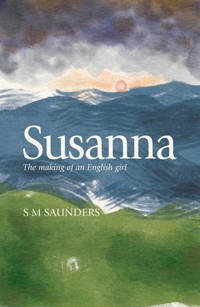
Thrust into a hostile world, and unable to comprehend the language, Heike, an immigrant and 'enemy' child, struggles to understand the English islanders as she adjusts to the new identity demanded of her. Intent on escaping the traumas of growing up in fascist Germany and the horrors of its post-war desolation, Heike's mother will marry the charismatic English officer she met during the Allied occupation of Lüneburg. Her daughter, who will be known as 'Susanna' from now on, must be kept innocent of her mother's past and grow up to be English. As this memoir of displacement, national character, and misunderstandings unfolds, S M Saunders becomes the detective in her own story, searching for the truth that will reconcile her double identity and conflicting emotions. But this is far from a misery memoir. This is a tale of love—the narrator's intense love for the extraordinary and eccentric English people whose positive influences not only shaped her and her mother, but also lent her the strength to come to terms with both her own identity and with her mother's complex, harrowing story. Susanna: the Making of an English Girl explores a childhood that is sad, beautiful, funny, rich in detail and marked, above all, by love.
Sie lesen das E-Book in den Legimi-Apps auf:
Seitenzahl: 560
Veröffentlichungsjahr: 2023
Das E-Book (TTS) können Sie hören im Abo „Legimi Premium” in Legimi-Apps auf:
Ähnliche



















Contents
Title Page
Copyright
Dedicaton
Half Title
Epigraphs
Part 1
At The Horseshoe, Surrey 1947
Lüneburg, May 1936
The Horseshoe, Coulsdon 1947
Lüneburg, Summer 1936
Coulsdon, June 1947
Carshalton, September 1948
Lüneburg, October 1932
Carshalton 1949
Lüneburg 1936
Birdhurst Road, Wandsworth 1952
Die Volksliste—The Race Census, Germany 1938
Part 2
Putney 1953
Gütersloh, March 1942
Putney 1959
Lübeck Luftwaffe training camp 1942
Putney, 1961
Paris, April 1944
Lüneburg, Germany 1961
Lüneburg, 1945
Lüneburg 1961
Lüneburg November 1946
Lüneburg 1961
Part 3
Putney 1961
Lüneburg 1946/47
At The Horseshoe, Surrey 1947-4
Susanna
The Making of an English Girl
S M Saunders
Published by Leaf by Leaf an imprint of Cinnamon Press,
Office 49019, PO Box 15113, Birmingham, B2 2NJ
www.cinnamonpress.com
The right of S M Saunders to be identified as author of this work has been asserted by her in accordance with the Copyright, Designs and Patent Act, 1988. © 2022, S M Saunders.
Print Edition ISBN 978-1-78864-935-3
Ebook Edition ISBN 978-1-78864-952-0
British Library Cataloguing in Publication Data. A CIP record for this book can be obtained from the British Library.
All rights reserved. No part of this publication may be reproduced, stored in a retrieval system, or in any form or by any means, electronic, mechanical, photocopying, recording or otherwise without the prior written permission of the publishers. This book may not be lent, hired out, resold or otherwise disposed of by way of trade in any form of binding or cover other than that in which it is published, without the prior consent of the publishers.
Designed and typeset by Cinnamon Press.
Cover design by Adam Craig © Adam Craig.
Cinnamon Press is represented by Inpress.
Editor’s Note: Some of the names used in this book have been changed to protect the privacy of people referred to, though family names have been preserved.
To the memory of my mother
Sophie Agnes Chmieloviec
and to my father
Susanna
The Making of an English Girl
Sorrow is a small beginning.
Letters. Vincent Van Gough
What cannot be said will be wept.
Sappho
1
At The Horseshoe, Surrey 1947
An elderly couple stood side by side in the hall like salt and pepper pots waiting to greet us. My mother stretched her hand and they spoke words I couldn’t fathom. The old man’s shoes were black and bulbous, defined by the white square of the checked floor, his feet placed together like inseparable twins. The old woman wore glossy brown lace-ups with pointed toes facing away from each other. I could barely stand. My legs were giving way and my toes hurt in my outgrown ankle boots. I was irritable and hungry. We hadn’t eaten anything all day but for a piece of rye bread early that morning. I pulled at my mother’s coat and asked to go home. The old woman looked alarmed and stepped back. The old man stared down at me and pinned me to his gaze.
Then the stranger, Leonard, guided my mother and me up the stairs. Candles on the dressing table in a back bedroom transformed the world to a little space. Papery figures presided over me as I lay helpless on the bed floating on the wave of half sleep. Too exhausted to protest, I felt my mother untying my bootlaces and pulling off my damp coat and dress. She tucked me in the cold double bed in my vest and knickers. Then whisperings at the door and the candles were blown out. The burnt waxy odour of the smouldering wick I would always associate with a fear of being left, helpless and adrift. I tried to lift myself up to follow her when I heard footsteps descending the stairs, but I saw the burning eyes of the wolf in the forest. I lay timorous and defeated.
Our early days in England began with the scraping of the shovel collecting ash in the grate downstairs, echoing up through our bedroom’s chimney piece. I watched from the safe distance of the top stair as the elderly lady padded through the hall to the front door with her bucket of dying embers to be scattered on the ice-capped paths. Afterwards, the men bustled in and out of their bedrooms and the bathroom, and the kettle whistled in the kitchen adding to the morning busyness that amounted to the daily deliveries of the early post, the milk, and newspapers.
The bustle looked promising. Once the men had left for the city, I was dressed, my hair brushed and re-plaited, a task my mother always performed impatiently, irritated by my whimpering. Weekday breakfast was a slice of white bread, thinly spread with margarine and warm milk, which I took in the kitchen while the old lady dusted the furniture. Weekends, we might have the treat of a boiled egg, but not often.
Meanwhile, my mother later told me, she awaited instructions, unsure of what was expected of her in her prospective in-laws’ house. Dressed as a guest in her best skirt and blouse to show her respect to her fiancé’s parents, I remember her shivering by the kitchen sink looking out through the window, the lower panes patterned with ferns and exotic flowers of hoar frost.
‘Gut, ja? Be good. We must both be good,’ my mother whispered. ‘We’re in enough trouble already.’
I didn’t understand the precise nature of the trouble, but I understood the importance of obedience by the tone of her voice. Yet despite my efforts to be quiet, having already equated being good with not making a sound, it soon became clear the sight of me caused my step-Grandmother considerable anxiety. I noted her scowl of disapproval whenever her eyes settled on me. Then one day, while minding me during my mother’s outing with Leonard, she cut off my plaits and gave me a rough pudding basin haircut. It was a truly short bob with a side parting and a hairclip in place to keep strands from falling over my eyes. That I allowed her to manhandle me was a measure of my fear and confusion and the importance of behaving well drilled into me by my mother. The ‘de-lousing’ and cutting of my hair was for me at least a relief, freed from the discomfort of plaiting.
But when my mother returned with Leonard, she let out a loud cry enough to disturb the neighbourhood. Later, she said, my changed hairstyle was tantamount to a personal assault. We were after all in possession of each other, and I belonged to her, and was not anyone’s child to be interfered with in such an underhand way. She could barely contain her despair:
‘Gott im Himmel! Du armes Kind, was hat man dir getan?’
God, whathave you done to my poor child?She ran up the stairs. I remember we stood still as trees in the kitchen, listening to her sobs fill the house. My grandmother took a deep breath and pursed her lips as if to hold back her distain, or maybe sympathy. Confused and afraid, I climbed the stairs to comfort my mother lying across the bed.
‘Mutti, Mutti, Mama, don’t cry.’ But the sight of me, shorn and ugly, only brought on a fresh wave of sobbing and left me feeling unloved for my looks.
Despite my new hairdo and effort at being quiet and undemanding, Grandmother’s intolerance of me intensified as the weeks wore on. If forbidden words flew out of my mouth by mistake and settled on Grandmother, she brushed them off with the slap of her hand like a swarm of plague-flies, clicking her tongue and shouting strange words. My mother turned away and didn’t defend me. I was too young to judge her, or fathom her betrayal, although I felt it. My unhappiness was caused not so much by Grandmother, but my mother’s necessary collaboration. It was only when Grandmother wrapped my lace-up boots in newspaper and threw them in the dustbin, removed my blue dress, and replaced it with a knitted skirt with shoulder straps, and a jumper of many colours made from her old, unravelled cardigans, that she probably allowed herself to feel I was partially cleansed of sullied traits. Her work on my transformation made me presentable to the outer world to avoid shame, embarrassment and ameliorate the affront to the unshakeable core of democratic principles. It didn’t matter to me then how I looked. I had no idea which arrangement of features was considered ugly or beautiful. The human face had to be learned, especially the expression made by the mouth and in the eyes where I looked for love and approval. My mother would often suck on her cheek to hold back her waxing indignation. I knew nothing of my mother’s plans or the reasons for her tolerance. I kept watch, trying to fathom the mystery of the bond between my mother and Leonard the stranger, and their bond with Grandmother. I wanted nothing more but to escape the flyblown house and be free of Grandmother’s surveillance. I was frightened most of the time although never threatened. It was as if something terrible stalked the house and had its sights on me. My mother persistently lied to me when I asked, ‘Mutti, Mutti, Mama,Mama,when are we going home?’ I could feel the scar on my leg burning with unhappiness.
‘Ach! Soon. Soon,’ she lied. Hope was rekindled, but it led to nothing but a worse kind of unhappiness. I knew we had been captured and I longed to be free again.
Meanwhile, in keeping with the adult insistence that I behaved as quiet and timid as a mouse, I was forbidden to run, jump, skip, tumble, laugh, cry or sing—the cardinal rule being that the English language was the only one tolerated ‘inside these four walls.’ The language my mother and I shared was ‘filthy and vile’. The sound of ‘G’ words were enough to cause Grandmother to spit expletives into the broom cupboard next to the kitchen. She also had the habit of climbing the stairs, muttering under her breath. I soon picked up the habit since I had no one to speak to in my own language apart from secret whispers under the bed covers with my mother. I found it pleasurable listening to my own whispered words addressed to an invisible self equally exiled. As I was lonely, I made myself into two girls—my Other was mute and always a sympathetic listener. In Grandmother’s case, talking to herself probably released tensions of having to do the decent thing for her son, and for her own sense of self as a fair-minded, tolerant English woman. But my mother and I later agreed, she probably found herself torn between the powerful, malicious urge to be rid of us, and her duty, which involved her campaign of over-meticulous care and training to make us good British citizens.
Mostly I ate in the kitchen alone, except on Sundays, when I was perched on a red velvet cushion covered in a napkin to protect it from my droppings as I tried to manoeuvre the two large instruments, which my mother later called a fork and knife—in that order—around the minefield called a plate. I was allowed in the sitting room at the back of the house overlooking a long garden, the snow-blooms turning blue in the midday twilight. But I was only allowed to occupy certain areas. Grandfather’s chair to the right of the fireplace and Leonard’s to the left, were out of bounds. Also, Grandmother’s corner of the sofa was her precious territory. My mother was allowed to sit at the other end of the sofa, but I was always nudged out of the space between. Any prolonged proximity to Grandmother caused her brow to furrow. Instead, I would lean into my mother so she would take me on her lap until unable to bear me any longer, she let me slither down to sit by her feet.
There was a wicker stool by the French windows I could use, but I preferred to kneel beside it behind the sofa and pretend it was my very own table. It was here I turned the illustrated pages of a story book and gazed at little pictures depicting a bear living in a paradise of summer sunshine, and green hills I pretended were my true origins. I took pleasure in hiding because I was no longer under the critical eye of adults and relished the delicious sensation of freedom under the parsimonious glow of the crooked standard lamp, where I whispered my filthy words: Liebchen… Mutti… Tante Minnie… kleiner Bär… my darling Mama, Auntie Minnie, my little bear.
It was forbidden to go into the garden unsupervised. Unless you were a cat. But even then, rarely, for the neighbour’s cat ventured there only at dusk. Once, I managed to slink off down the side of the house feeling daring and naughty, only to sense the burning smog in my throat and step inside before my crime was discovered. It was also forbidden to enter the larder or wander off into the dining room and lift the lid of the unused piano and tinkle the ivory keys. These rules were reinforced by the fact that Grandmother’s face indicated there was little to be happy about in this world.
In the meantime, my mother was confined upstairs to our guest bedroom, which had consequences. Leonard’s room at the front of the house was out of bounds. This would explain why he often tiptoed into our room in the evenings to sit at the foot of our bed close to my mother. I would pretend to sleep, opening my eyes a slit to catch them kissing and fondling. I imagined my mother didn’t like him doing that because I wouldn’t have liked it. Why she wanted to please him, I had no idea. I felt for her. Sometimes, she leaned away from him, and he would place his hand under her chin and draw her face close to his. It was difficult for my mother. She had to please everyone. I remembered her words that we had to be good because of the trouble we were in, and so I waited for some kind of outcome, for something momentous, either as a reward or a catastrophic failure. Every day dragged me towards the awaited moment. I could sense the anticipation thickening the air, the expectation, the promise, fear and excitement and the hope one day, now that we were captured, we would be set free to go home.
But my mother had her chores to do first, following her prospective mother-in-law with the carpet sweeper from room to room, pushing and pulling the tinny contraption over the carpets to squeak up the crumbs. After her first day at The Horseshoe, when an attempt to sit prettily provoked Grandmother’s sour look of disapproval, my mother returned her best clothes to the suitcase, and dressed in a darned sweater and an old skirt, did as she was told.
‘It’s impossible to get servants these days so we must all pull together,’ said Grandmother talking to my mother as if she could understand. My mother, sensitive to context, understood the gist of Grandmother’s words, and would try to smile while she dusted, brushed and swept, and washed the hall and kitchen floor on her hands and knees. I think it gave Grandmother a deep satisfaction to see my mother occupied in suitably lowly, contrite chores. But Grandmother suffered from bad faith. From her high moral ground, she relished her power over us; our daily submission, our futile efforts to please her reinforced her sense of a higher purpose compensating for the shameful burden put upon her to accommodate us. Her fear was almost as tangible as mine. You sensed she wanted to say, ‘Leave my son alone. Go back to the misery you deserve!’
It was the neutral and transient territory of the stairs and its large square of landing with the plush red carpet and brass stair rods that became my special place, free from watchful eyes and instructions. From here in the soupy light pouring from the stained-glass window, a mosaic of sharp oranges and blues, I watched the domestic traffic below. Leonard, now less of a dark stranger, and Grandfather returning from work in the evenings, stamped their shoes free of freshly fallen snow on the doorstep; taking off their hats, and black coats, hooking them to pegs on the umbrella stand. Grandfather would tap the weather-clock on the wall, and with the evening newspaper rolled in his fist, went to warm his backside by the living room fire. Leonard always lingered to smooth his hair back in the stand mirror. My mother greeted him from the dining room doorway, his arms held her close insisting on a stolen kiss; Grandmother hissed along with a hot tureen folded in a kitchen towel.
Their habits and daily rituals helped me build a sense of security although what I desired was to be free of them. And yet despite the stifling rigour of Grandmother’s routine, there was something new to learn every day. Not only did she try to conceal her emotions, but all bodily functions had to be performed behind closed doors. If she didn’t have time to climb the stairs to the lavatory, she slunk outside along the covered passageway, closing the kitchen door behind her to pass copious wind. On Grandmother’s return to the living room, my mother neutralised her amused face, and stared blankly at the wall. I copied her as it seemed the right thing.
Our capacity for duplicity matched Grandmother’s in other ways too. On rare occasions when she went visiting in her fox-fur to take tea with her daughter-in-law Dolly in Purley, my mother would watch her departure from the dining room window and when she disappeared past the postbox on the corner, we broke the rules. In the larder we stole sultanas, cocoa powder mixed with sugar, thin slices of seed cake, bread and margarine, but only very little so the thefts were less likely to be detected. I would run around the house and enter forbidden rooms. I pounded the piano unheeded, and then ventured up the stairs to poke about in Grandmother’s inner sanctum where I delighted in the pots of creams and lotions, the silver implements, the cut-glass scent bottles, the pins and pearls, the sumptuously soft powder-puffs, the photographs of ladies with tulle hats and men in butterfly collars.
In the mirror was an astonished face, a liquid portrait: large blue eyes, enormous fat cheeks and a baby mouth with tiny rows of almost transparent teeth. In the reflection you could also see an extraordinarily high bed, a little footstool at the side and two china pee-pots tucked underneath. The room reeked of Grandmother’s personal odour, which matched nothing in this world; not entirely unpleasant, but heavy with her cloying musk of censure and condescension. I remember her smell permeated our clothes and hair like a reminder, so in her absence, she was always present. I gave a small shudder when I came across personal objects in the house imbued with her rancour: the fold-over pinny draped over the back of the chair, her shopping hat sagging on the hat peg in the hall, and her knitting bag tucked in the corner of her sofa.
But the best part was we didn’t have to whisper. We could talk freely; my mother’s language was like being kissed repeatedly. I craved the sounds and cadences. It satisfied a hunger for the world of home. When she spoke, I felt caressed and loved by her.
To keep warm on these liberated afternoons, my mother lit the gas cooker and kept the door open, so the hot air blasted over her legs. Then she fetched paper and pen, and a bottle of blue ink from the writing-bureau, and wrote letters home at the kitchen table. The iridescent ink from the pen made my mouth water. I asked my mother yet again when we were going home. It became my obsession. She found a pencil in the string drawer and told me I must write to Oma and Opa, my Grandma and Grandpa. I scribbled my message frantically in whirls. The request was clear: ‘We are in bad trouble. Please come and take us home!’ My mother showed me how to draw kisses and folded my letter and placed it inside her letter and sealed the envelope, which she hid in her apron pocket. Then she put everything back, switched off the gas and checked that all the rooms revealed no signs of our insubordination. We climbed the stairs and huddled on our cold bed under her fur coat. As I lay pressed beside her, I remembered sweet things that drop from trees in Grandpa’s garden called Äpfelchen—little apples.
In time, I learned that our parcels and letters home over a period of many years were never answered and in awe of my mother’s persistence, she taught me never to give up hope.
Lüneburg, May 1936
What could be better than this moment to enjoy the beauty of abundant blossom and be enveloped in its sensual glow? At dusk, the blossom’s whiteness intensified like a mass of stars. Sophie, my mother, just sixteen, turned her face towards its voluptuous layers, the branches creaking in the breeze, and breathed in the perfume in deep gulps, a glutton for its opiates. Returning to the house for supper it seemed nature’s promise was more precious than politics. The conversation at the table was silenced by a familiar voice booming out of the wireless. It spat out the need for alliance with Britain to safeguard the interests of the Fatherland. The Lion and the Unicorn will lie with the Eagle in harmony.
Wasn’t there a similar image in the Bible? Sophie recalled the words as she chewed on tough beef: ‘And the wolf will dwell with the lamb, and the leopard will lie down with the kid, and the calf and young lion and fatling together, and a little child shall lead them.’ At the table, the words, the voice from the mouthpiece—appeasement, sacrifices, glory, the protection of German blood—seasoned the boiled beef, red cabbage and mashed potato.
Ordnung muss sein—Order must prevail. The Führer insisted on a neat and tidy appearance and above all cleanliness. Reinheit macht frei—purity makes you free.
The Führer was always saying things full of wisdom. But like so many other young girls, Sophie realised that whatever the Führer spouted, it could easily be dismissed. After all he was a bit of an ugly old bore most of the time, insisting that women stay at home and cook and clean and bear housefuls of children. Instead, Sophie daydreamed of a different, exciting life; she didn’t want to end up like her mother, worn down by farm-work. She saw herself free from toil on the land, from marital and maternal duties, enjoying the sophistication of city life, the clubs, theatre and restaurants. She was certain to be rescued from this domestic servitude by a wealthy, handsome man. It was what every girl wanted; to be loved to distraction, cosseted, to wear fine clothes and live a luxurious life. She looked across at her father at the table eating and listening anxiously to the wireless; he was concerned that the Führer’s generous annual allowances to farmers might be rescinded. So far, the Führer was doing a good job: building fine roads, new houses for the poor, getting the economy moving again, making Germany a proud nation once more. Sophie’s mother looked tired and pinched. Not only did she organise the farmworkers and their shifts, but she also worked with them, joining the band of workers that turned up every morning outside the back door. They came from old established farming communities fallen on bad times. And there were the apple and pear orchards to weed, the flower production to oversee, the potato, and vegetable plots to be nurtured.
Her mother looked up from her meal and gave Sophie a critical look. She wished she had a daughter less restless, closer to the land. She saw Sophie as heartless and selfish much of the time, only interested in her own pleasure. It was necessary to constantly rein her in, remind her of her thoughtless ways. That was the trouble with modern girls; they had their heads in the clouds. She blamed the new politics, putting all kinds of ideas in girls’ heads about romance, heroism and men in uniform. She worried her daughter would get into trouble with men who were always in pursuit. Close to her sat Erich her handsome son. He was destined to follow in his parents’ footsteps. Although he dreamed of becoming an architect, he knew the land was in his blood and that he would inherit the large estate. But unlike his father, Erich was less optimistic. He knew about things going on in Hamburg and Berlin that made his blood cold, things he didn’t tell his father about, or his mother or sister Sophie. He always filled his mouth to its capacity. This disgusted Sophie who was careful not to spill meat juice on her dress. She ate the way film stars did, placing delicate portions from the tip of her fork into her mouth, lips pursed, rotating in small movements, her nose twitching like a mouse.
The Horseshoe, Coulsdon 1947
Grandmother at The Horseshoewould not tolerate a mouse in her house or any creature without a human face, so when Leonard found a black mouse leaping about in the bath, slithering, sliding down the sides to escape, my heart went out to it, especially when Grandmother approached wielding a rolling pin. To our relief, Leonard scooped the mouse up in his palm and held it upside down by its tail at arms-length. It broke into spasms, wriggling and squealing all the way to the back door.
The following day, after the morning’s scouring and polishing, a visit to the ironmonger’s became a priority. My Grandmother was impressed with his selection of mousetraps and the demonstrations that followed. My eyes widened as the old ironmonger demonstrated the power of the trap’s springs. Using a pencil, he made squeaking noises, followed by tapping the end towards the trap. When the spring snapped down, I flinched which made him throw back his head and laugh. Then he had the audacity to tweak my nose, which made my eyes water. Indignant, I turned away.
Trussed up in my coat and a scratchy wool scarf Grandmother always wound round my neck and crossed over my chest at the front, tying the ends in a lumpy knot at the back, and my hair tucked in a knitted pixie cap with a strap under my chin, I retreated to feel the luxurious silky textures of various seeds slip through my fingers in open sacks by the door. Then guided away and bundled into a pushchair by Grandmother in her little wedge-shaped hat secured with a large needle-pin, I barely had time to contemplate the brown curls escaping from her delicate round face with its small doll-like features. I thought she looked rather pretty despite her grim mouth set against rodents and us, and of course, there were other looming dangers to consider.
Under stress, preoccupied with fear about how her association with us in public might arouse hostility, Grandmother made sure her going out rules were just as strictly adhered to as her being in rules. Now that she had, in her view, successfully Anglicised my appearance, I had already passed the test under her scrutiny by the hat-stand, although I registered the dismissive look she often gave my mother who failed miserably on several counts. My mother’s fur coat was decidedly contemptible; excessively flamboyant and therefore vulgar. In Grandmother’s estimation a fur coat was associated with mistresses and disreputable women. She was unaware that in Berlin, a fur coat commanded enviable approbation, and was much sought by most women. It was a pity, because my mother had bought the coat at an exorbitant cost on the black market—to my mind a nightmare place of dead animals rotting in the dark.
Later, long after the thaw, I remember watching my mother, sitting on the bed, cutting the coat into jagged pieces to make rugs for the floor. It disturbed me. The energy fuelled by anger as she used the scissors like a saw to cut the hide as if determined to blunt them. The tears flowing from her eyes told me this was not an act of domestic necessity, but of vengeance against herself, against the world. At moments, when she couldn’t make the scissors work, she tore at the cuts with both hands making an unearthly noise at the back of her throat. I was thrown into helplessness and dejection. On the bed were pools of silk lining. Staring down at them, I knew this was the end. I didn’t understand why, but I knew we could never return home if my mother no longer had her fur coat. We were both doomed to remain prisoners. I never asked to go home again.
Before that incident, venturing out without a hat, gloves or handkerchief was forgivable in Berlin or Hamburg. Quite respectable, unlike here in Coulsdon. Bombed to brick-dust, the old sartorial customs and dress etiquette of German cities were buried among the rubble, renewed in a different way when the old buildings were replaced. My mother did eventually buy a hat Leonard called a ‘titfer.’ It was like a beret with a little upright piece of felt in the middle like a plum stalk. She could never bring herself to wear a scarf, which she associated with disreputable classes, the enslaved ‘brick women’ clearing rubble in German cities.
After inspecting our appearance in the hallway, Grandmother would sashay up the path with her shopping basket on her arm, ration books in her clip-up handbag, head in the air, with her dubious tenants in tow. She was confident she had the upper hand, for both mother and child had been instructed not to utter a single word in public under any circumstances whatsoever. With some trepidation and our mouths shut, we followed the diminutive figure in her everyday-battleship-grey-coat and black hat to the High Street down the hill.
After the mousetrap purchase, the next stop was the sparsely stocked butcher’s where the vile stench of dried blood mixed with sawdust on the floor, made my stomach churn. Next into the greengrocer’s with its gratifying waft of wet cabbages and clods of earth—a pungent and more familiar fragrance than I had experienced at home—and then into the dark chemist’s with its curious display of gigantic coloured vials in the window; down the splintering wooden steps into a wizard’s den, the walls lined with numbered drawers from floor to ceiling and a forbidding counter, where a man smelling of chemicals in a white overall with bulbous eyes stretched across to deliver into Grandmother’s tiny gloved hand a corked bottle of Tonic. This was given copiously to women suffering nerves or who felt off colour. We had to queue outside the baker’s waiting for the bread van to arrive. I listened to the strange, sing-song utterances of the women, the tutting and spitting, coughing and grouching, my feet numb with cold, and my nose cut off by the icy wind.
The most interesting thing on these shopping expeditions was the sight of children dragged along by the arm or yanked forward by reins or sitting hunched in prams too small for them. Fascinated to encounter others as small as myself, I couldn’t help staring. Eyes would meet in instant recognition as a species apart, and I grew excited stifling the urge to touch or speak. I had no idea that my separation from other children was against nature. Sometimes, children would gaze back without life in their eyes, strangely incurious, indifferent to their surroundings.
Home again, home again—to lunch of bread and margarine and sweet tea and put to rest in the double bed. Rest from what? Rest for what? I lay looking up at the ceiling rose and counted all the little stucco balls arranged in circles around the light: Eins, zwei, drei, vier, fünf… round and round, counting and recounting balls to twelve, believing numbers stopped at twelve, until my eyes grew weary of the demanding circuits.
Sundays were bad. It was a day of Weltschmerz—world-weariness—with a sprinkle of indulgence, marking the day sour with dinner-time tyranny. My mother took orders in the kitchen, improving her culinary vocabulary. Afterwards, the pans and the oven had to be scoured to perfection, a process that seemed to take her all afternoon.
It was also the day of the prolonged presence of men. In the morning, Leonard and his father, settled to read papers by the coal fire, lit early for their comfort while I had to be seen, which meant my presence was required in the living room where the men might indulge in a bit of horseplay to amuse themselves at my expense. Grandfather liked to play hide and seek and would sometimes chase me around the dining room table, wagging his white beard making roaring and grunting noises, while Leonard would magic sixpences out of my ears and pocket them for himself.
‘Now then, now then,’ said Grandmother carrying the gravy boat. ‘Bertie, don’t get the child too excited. You know it will end in tears.’
I couldn’t fathom the function of men. They spent a great deal of time at work, whatever that was, and on their return were indulged with food and comfort, contributing very little, as far as I could see. As well as being bossed about, they were subject to variable and unpredictable mood swings, from the downright morose to the hilariously jovial on rarer occasions. One was expected to fit in with their moods and respond according to their expectations.
If it suited him, Leonard chose to be most provocative at my bedtime; he would tickle me under my armpits on the bed until my breathing stopped, or take delight in my screaming at the end of bath time, in fear of going down the plug hole. He also liked to tease me in the pushchair when we were let out for walks. I allowed only my mother to push me, but he enjoyed my cries of protest if he took over. Then, once in the semi-dark, leaning over me in bed, he showed me his upper set of false teeth, moving them up and down like a ventriloquist’s dummy. He looked so repulsive and wicked, I burst into tears. Later, he sprang nursery rhymes on me, and there was one he thought particularly funny:
It was Christmas day in the workhouse.
The snow was falling fast.
We don’t want your Christmas pudding.
Stick it up your…jumper!
Leonard’s laughter was a wheezing ‘he, he, he.’ I listened dispassionately having no idea what the words meant. I bristled when he touched me and sulked when he paid me attention. No one told me his behaviour was rude and my reaction likewise.
Leonard’s older brother, Harold, married to a lady called Dolly, was easier to endure since he didn’t live at The Horseshoe. Whereas Leonard was tall and considered handsome, urbane and charming, Harold was stout, his face as broad as a spade topped with hair so fine, it showed his pink scalp. He shyly thrust his paunch before him, a barricade balancing on spindly legs. An insurance clerk, he loved the quiet, uncomplicated suburban life, tending his mixed variety of dahlias and taking his dog for walks.
And yet, every other weekend, his presence created a frisson, a kind of zip in the air of something at odds with the sedate ritual of tea-time. Looking through the banisters there was Harold transformed. Trussed in black leather, squeaking head to foot, his goggles thrust up onto his leather cap he looked like an enormous dung beetle stretching on its hind legs. Resting in the drive, stood his shiny monster, to which a sidecar was attached especially for Dolly who arrived with her bones shattered, escorted into the hallway by her elbow. In his leathers, Harold was cavalier, kissing his mother, bowing his head to his father, and slapping Leonard heartily on the back, before being released by Dolly from his squeaky carapace.
Grandfather called the proceedings ‘a palaver’ under his breath, and once the palaver was over, Harold sank into the sofa enervated, soft and pink as a peeled prawn, gazing into the fire, panting with the contortions of it all. The whole process would be reversed at dusk and we would wave at the gate, Leonard wheezing with laughter as Harold once more his plucky self, regressing, or progressing, depending how you looked at it, roared away on his silver beast, side-car lights blinking, and a giant glove waving farewell as he disappeared into the yellow smog.
Other visitors were rare, but there came a time when Grandmother succumbed to the pressure of friends and neighbours urging her to invite them to tea and encounter a real German. Believing my mother couldn’t understand English, because she spoke so few words, Grandmother complained in her presence how difficult it was to live with Germans, their meticulous cleanliness, their sly greed and arrogance. The visiting ladies enjoyed commenting on my mother’s appearance, trying to pin-point which aspects of her general makeup indicated she was still in all likelihood a member of the Nazi party. My mother later told me Grandmother had told nothing but lies about her, but she was unable to protest and this necessary acquiescence brought on bouts of depression and despondency.
It didn’t help that the English women’s ways were confusing to my mother. She hadn’t yet picked up the art of English conversation, riddled with irony, double entendre, and other subtle nuances of tone, including knowing looks exchanged between the listeners, creating an atmosphere of disapproval and distaste that belied friendly expressions, the smiling, the polite nodding of heads of gratitude when offered a plate of bread-and-butter triangles. The German women were less diplomatic and circumspect. If they disapproved of anyone they said so or point-blank refused invitations so you knew where you stood. This kind of bluntness would be abhorrent to the English known for their impeccable manners.
Grandmother’s friends also occasionally focused on me, but being young, silent, and exceptionally plain, it was my mother’s gracious presence and good looks that held them awestruck right through to the second cup of tea. They enjoyed these meetings so much that afternoon tea with Grandmother became a regular feature of their uneventful afternoons. This was an entertaining change from their dreary parsimonious lives of make-do, patching, bottling, queuing, scrubbing, darning and knitting. They had suffered and were most likely good women with unappreciated talents. I imagine as they left The Horseshoe they were in no doubt about Grandmother’s forbearance and kindness to her foreign intruders, leaving them equally delighted and horrified to have met my mother—the way one might feel after having taken afternoon tea with a notorious murderer or Hitler himself. Soon they hoped, they would be invited again to Rosa’s. So exciting. They all looked forward to it. Of course, it wouldn’t be the done thing to invite the German woman and her child to their homes. They watched. They were prepared to wait. It was as if they believed my mother’s dignified exterior would crack under the pressure of their conviction, her black heart exploding behind the breast plate, splattering everything with spots of poison.
But nothing remained the same for long. The snow lost its flinty lustre and melted to slush, gutters became gullies, gurgling and sluicing away black ice. There were watermarks along the outside walls, lacing the lawns and paths. The trees sprang open their green umbrellas. Sunlight leaked weakly and settled in the corners, snaked along the sills and it seemed everything was reaching out to touch everything else. Grandmother said I had to keep my arms close to my side at the table, and I wasn’t to slouch. She arched my upper body by pressing her fist into my back to make a hollow and I sprang up like a pale shoot.
Another important change was that my mother’s English was coming along well. We could venture out without supervision, lessening my Grandmother’s burden.
The butcher, baker and grocer greeted my mother with enthusiasm. The butcher’s face brightened when he saw her and he taught her new words: sausages, minced beef, minced lamb, joint of pork and chop, which she pronounced shop. Sometimes, when no other customers queued up behind her, he might say, ‘All I’ve got for you today, my beautiful Fraulein, is spam,’ and then he’d wink at her and hand over a blood parcel of pig’s liver.
In the greengrocer’s my mother knew how to ask for potatoes, cabbage and carrots. The greengrocer lady with a gold front tooth taught my mother how to count holding up her fingers, so I was learning, too. In the grocer’s the man with a wart on his neck offered my mother a chair with a sweep of his arm. He was always trying to sell my mother things Grandmother had not written down on the list: a tin of peaches, or expensive date biscuits.
‘Ach, nein no thank you,’ my mother would say, mixing up English with a bit of German, her eye fixed on the golden slab of cheese under the glass dome. The grocer weighed everything, scoop in hand, ready to retrieve or pour out more sugar. ‘A little extra for you,’ he intimated with a smile. I liked the silvery rush of sugar falling into the blue paper bag and the way he folded the edges, so the corners stuck up like little mouse ears.
The grocer didn’t care to teach my mother English. He preferred to touch her arm, even dared to stroke her shoulder. Grandmother would have told him to keep his arms to himself. I prided myself on knowing the rules. Sometimes the grocer took my mother to view the tins of precious fruit piled on the shelf behind the counter where I couldn’t see what he was doing with his hands. My mother said he was always after her coupons.
There was one ugly incident that threatened to become dangerous. I remember it well because I held myself responsible. Liberated without Grandmother’s presence, I became feckless and babbled in German outside the baker’s empty shop in a long queue and my mother answered in a mixture of German and English.
Moments later, we became aware of an uneasy silence among the women waiting in the queue. My mother looked about her uncertain whether to remain. The women were moving away from us and the queue became broken into small groups all looking towards us. A low, swarming murmur became louder, the words mumbled, hooded, disguised as if muffled behind cloth.
Then a woman with a headscarf, forced her way towards us, and spat in my mother’s face. My mother wiped her cheek with her glove. She was transfixed as if her whole system had shut down. They could have done anything they liked to her. The women, too, remained perfectly still, waiting. Then the other women shouted and hissed and one punched my mother’s shoulder, so she almost fell but righted herself. I wanted her to push our way out of the crowd, but when I looked up, I saw her frozen expression, her eyes staring through the angry distorted faces, I could feel my scar prickling. Soon the women pressed, and all I could see were legs and feet and swaying skirts. My mother swayed too. I felt sick. A man’s voice bellowed from the baker’s doorway, ‘What’s going on out ‘ere? The bread’s in ladies. C’mon!’
The women turned their shoulders towards him; then paused as if their business with us could not remain unfinished, but then one woman let out a loud cheer. The spell was broken. My mother woke from her trance. Using me in my pushchair as a protective ram, she forced her way through the small dispersing crowd, the women stepping back so we could make our escape. My mother knew it was always dangerous to look back, to draw attention. She marched along Brighton Road, past Coulsdon railway station, and up the hill and into the safety of the empty park. Shaken, she sat on a bench under the cherry blossom trees and after parking me beside her, smoked one cigarette after another. I patiently sucked my thumb, my face whipped by the wind. I kept quiet. I knew I was to blame. Next time I must not speak when we go into the world. Grandmother was right all along.
And although the English spring was full of green promise, the idea that something beneficial and enthralling was about to happen became comforting. The world, indifferent to our skirmishes, got on with its business, dressing itself up for something unknown to me—the egg-shell blue of forget-me-nots and the trumpeting daffodils in garden among clumps of sprouting perennials, Grandfather pruning the roses, had the eloquence of a runaway tongue I envied.
Yet, incontrovertibly, at The Horseshoewe felt the chill of taciturn winter trapped inside, so the furniture did not bud or blossom, and Grandmother never opened the windows to let the wickedness out. She was fearful of cold draughts, of spiders, mice, midges, flies and bright sunshine that showed up the dust in corners and the shabbiness of the drapes and carpets. Without domestic servants these days the mammoth spring clean was out of the question and had to be abandoned.
Her hostility to nature and foreign guests became more palpable. It left marks on her face, and her mouth sagged. She winced at the slightest sound and yet snapped at us and raised her voice, slammed doors. Her suffering was like a cult around which her household revolved. Each person chafed against the other. My mother cried at the sink. She would turn the tap, water gushing into the tin bowl to disguise her sobs. She cried down the side of the house. My mother cried walking the streets. In the bedroom I leaned into her to comfort her. Sometimes I rested my head on her arm, and she would cry and stroke my hair while I hurt for her.
Lüneburg, Summer 1936
School was over. It was time for daydreaming of when she would be free. Sophie saw herself as a girl with prospects. It was her ambition to rise above the farming community, looked down upon as a class of peasants by her classmates whose parents were in trade or the professions. As her older brother Erich would inherit the market gardening business, she believed marriage alone was her destiny. She decided the meeting with a man would occur at a dance. They would exchange a glance of recognition across the dance floor, and in slow motion she would watch him walk towards her and claim her. Love at first sight. A love to cherish forever. But first would be the months, maybe years, of toiling on the land; helping her mother in the fields and home, ruining her hands, the winds whipping and drying her skin. She wished her school life wouldn’t come to an end.
Her heart lurched. The woman was there again standing opposite the school in the shadow of a tall house with its covered porch. Something about her made sixteen-year-old Sophie very much aware of her: an intensity of look, the expression of a person in search of someone else but not in a casual confident way, but anxious and stressed. Although, Sophie surmised, she was probably waiting for one of the pupils to come out of school and take her home, no one seemed to know her. And why stand back like that and not come towards the gate and look over the iron railings towards the main gate, where the pupils came pouring out into the street?
Her appearance added to her allure. The people of the little spa town of Lüneburg were country folk in the main, dressed in their old-fashioned clothes, more suited to the beginning of the century. Many travelled to Hamburg and other cities and knew how the fashionable townswomen dressed, causing amusement and astonishment, but no one looked like the attractive lady staring across at the school. It was June, but there was a fresh breeze wafting up in surges from the riverside quay, which meant the cream skirt with soft folds, and a long jacket to match that hung loosely around her hips, were perfectly appropriate. Her stockings were cream too and her shoes were white like her hat with its narrow brim shading her forehead. It was difficult to see the colour of her hair without staring, which would have been rude. Sophie tried to recall the last time she saw the woman in the exact same place. It must have been the previous year, but in the winter because the stranger had worn an ankle length coat with a fur collar.
As she and her friends, Lotte, Maria and Tia, left the school grounds, saying goodbye and going their separate ways, Sophie stopped at the kerb and looked across at the woman. For a split second there was a connection. Maybe Sophie just imagined it. The woman’s face looked as if it would break into a half smile, but then remained impassive.
Sophie grew doubtful that the woman was a stranger at all. Maybe she was one of her father’s customers. Maybe she had delivered plants or apples to her house. Her heart pounded when she thought of the secret police and spies, and the warning all mothers gave their daughters to keep them in check: if you don’t behave, you could be reported by any family member and sent to a correction camp. Sophie had heard gossip about bad girls who went with boys in the woods and got pregnant. They went off to correction camps with their defiant heads held high and a belly big with a baby. But when the local girl Helena returned, she didn’t have her baby with her and sat at home all day staring at a tree through the kitchen window.
With a start, Sophie stepped back from the kerb, and once she had reached the end of Rotestrasse, ran across the town square to arrive safely in the street that led to the bridge and home, breathless with a pain in her side. Sophie didn’t tell anyone about the stranger. Her mother already called her a silly dreamer and as the woman never appeared again, Sophie didn’t trouble herself about the last sighting, but she never forgot her. There remained a seed of hope, that this woman might be her real mother who would one day come to claim her and save her from a life of slavery on the land.
Coulsdon, June 1947
Now I was ready to put an end to everything. It must have been a desperate Saturday afternoon when the impulse came to me in the High Street. Despite it being summer, I remember the wind had a chill and the air was laden with rain. My mother and Leonard had decided not to take the pushchair on the train to Croydon, so I walked beside my mother who urged me to pick up my feet and walk faster. The idea to run away, or cause a stir, came to me on impulse; like an unexpected visitor. I saw an approaching double-decker bus turning into the road as we waited to cross. A compulsive and unthinking opportunist, I slipped my hand out of my mother’s grasp, stepped off the kerb and ran into the main road.
Unable to judge the speed of vehicles, I flung myself down onto the asphalt as the approaching bus droned towards me at considerable speed. My heart knocked hard against my chest, and my body tingled with anticipation and fear. I could feel the hot flow of wetness between my legs. I kept my head down, my eyes closed, and my cheek pressed into the asphalt waiting for deliverance. The red monster gobbled me up and spewed me out of its back end. This was my first resistance to life.
I heard screams. The bus came to halt further down the road. Someone lifted me up into his arms, and I fainted. When I woke, I found myself lying on a high shelf, lined with newspaper in the local hospital, my mother and Leonard and a young doctor in attendance. Were they going to wrap me up in newspaper and dispose of me the way Grandma wrapped my new boots, fish heads and meat bones to put out for the dustbin? I remember the off-white cracked wall tiles and a tall ceiling like a funnel and the glare of naked light bulb far off and the sour smell of my own sick. I was prodded all over by a doctor. Then he took hold of my limbs and bent them back and forth. Then he examined my head with both hands staring into my eyes. His gaze was too overpowering, so I let my eyes wander over his brow. The child before him, he observed, was in a dazed state and needed a good meal, but nothing was broken. He told my mother I was to be returned to homepromptly and put to bed after a cup of tea. Grandmother made me a boiled egg with ‘soldiers’ when she heard of my accident. She admonished my mother and Leonard for not instilling road sense into the half-witted child. She hoped this would be a lesson to everyone concerned. On the doctor’s advice I was put to bed. Tucked up, my shivering body pinned down by the top sheet, I was appalled to find myself, not on some adventure leading to home, but returned to Grandmother’s unrelenting domain.
Despite the cold climate at The Horseshoe, and my failed attempt to escape, I remained a greenstick reed without roots, while unbeknown to me on August 12th, 1947 my mother, Sophie Agnes Groth, nee Chmieloviec,married Frederick Leonard Saunders in Epsom, Surrey. There were two witnesses, a German couple called Herr and Frau Lembke, who were resident in England since the 1930s and recently released from internment on the Isle of Man; they were introduced to my mother by Dolly who met the couple in church.
I have no recollection of this significant day because I was not invited to the wedding. Records show it was a bright mid-summer’s day. There are no photographs of the newly married couple, so I don’t know what my mother wore, certainly not her fur coat in August, but most likely her stylish cream and black striped jacket and black skirt. I don’t know if she held a bouquet of lilies or wore one of those hats with a demure net over her eyes and took a lace handkerchief for tucking up her sleeve. As for her shoes, I can only imagine she wore her black suede high heels with ankle straps. It was, she told me later, a private affair, a euphemism I decided for everyone’s disapproval so Leonard declined to send out invitations. There were no celebrations; no showers of paper rose petals, and no loved ones to wish the couple luck and happiness. They returned to The Horseshoe and life continued as it had before the event so you would never have known. Leonard remained in his room, and my mother and I slept in the back room allocated to us from the beginning.
Shortly after this, I became a problem. I was due to be sent to school not as a German girl, but in disguise as an English girl. I was not consulted of course, and everyone wondered if I could pull it off. ‘She’ll be strung up in the playground if we don’t do something,’ said my Grandmother who devised a damaging and yet protective strategy. She instructed my mother never to speak to me again in German. Grandfather Bertie, Leonard and Harold were all in agreement that this was the only solution. No one gave Dolly a chance to express her opinion.
‘It makes sense. The more she is spoken to in German, the less likely she will learn English. It is time she was at school.’ Grandmother was eager to gain everyone’s support.
‘If you leave it any longer,’ warned Grandfather, ‘it’ll be difficult to explain her lack of knowledge at a late age. She’ll fall behind and the authorities will want to know where she’s been. You can’t have them finding out what she really is.’
‘And most certainly, she’ll fall behind if we don’t act now.’ All this sounded frightening. Their words were enigmatic and threatening.
Grandmother’s strategy was put into immediate operation and my mother spoke to me in her broken English while I chattered away in my mother-tongue when Grandmother was out of ear shot. As a consequence, my mother’s refusal to speak to me in our shared indigenous tongue created a deepening schism between us. I was hurt, and perplexed. Our mother tongue was beautiful and precious to me, a link to our brief but shared past and lost family. The only time my mother had spoken to me in German was secretly under the bedclothes at bedtime. Now that our language was totally forbidden and as I couldn’t speak English, although I was beginning to understand it, I had no choice but to remain silent. It wasn’t long before my mute condition struck my mother with mortification and fear.
‘Ach Gott, Heike! Speak to me,’ my mother implored as I stood beside her bed witnessing her distress. She took me in her arms. Meine Liebchen, Meine Mutti—my darling Mama, I repeated silently in my head but dared not speak.
Grandmother was too practical to be waylaid by sentiment or melodrama. You had to admire her strength and pragmatism. ‘The child must have English lessons. I’ll put it to Dolly. She doesn’t have children of her own. She’s not a teacher, I know, but she’s a patient soul and kind to animals.’
That summer, I was dispatched to Dolly’s house. Grandmother took me by bus every day to learn English, although I had no idea of the purpose of the visits. I welcomed the change of house. Harold opposed the arrangement, but eventually relented and in any case, he was at work in the city, and the quicker something was done about the child, he reasoned, the quicker his mother would be relieved of her burden of having the Germans in her house. He would have to talk to his brother again about moving out, although he knew accommodation was hard to find.




