


Erhalten Sie Zugang zu diesem und mehr als 300000 Büchern ab EUR 5,99 monatlich.
- Herausgeber: The History Press
- Kategorie: Sachliteratur, Reportagen, Biografien
- Sprache: Englisch
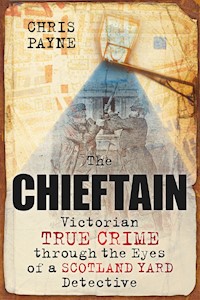
George Clarke joined the Metropolitan Police in 1841. Though a "slow starter," his career took off when he was transferred to the small team of detectives at Scotland Yard in 1862, where he became known as "The Chieftain". This book paints the most detailed picture yet published of detective work in mid-Victorian Britain, covering "murders most foul," "slums and Society", the emergence of terrorism related to Ireland, and Victorian frauds. One particular fraudster, Harry Benson, was to contribute to the end of Clarke's career and lead to the first major Metropolitan Police corruption trial in 1877. This fascinating book uses widespread sources of information, including many of Clarke's own case reports.
Sie lesen das E-Book in den Legimi-Apps auf:
Seitenzahl: 622
Veröffentlichungsjahr: 2011
Das E-Book (TTS) können Sie hören im Abo „Legimi Premium” in Legimi-Apps auf:
Ähnliche



















To Meg, Kate and Rob
CONTENTS
Title Page
Dedication
Acknowledgements
Preface
1 The Journey to Scotland Yard
2 A Murderous Year
3 The Fenians are Coming
4 Back to Basics
5 The Tichborne Claimant, Theft and Fraud
6 Suicide, Accidental Death or Murder?
7 The Great Turf Swindle and Police Corruption
Epilogue
Notes
Bibliography
Plate Section
Copyright
ACKNOWLEDGEMENTS
This book has only been feasible because of the patience, support and encouragement that I have received from my wife Meg and our children, Robert and Katherine. The realisation that one of my great-great-grandfathers had been a detective in the London Metropolitan Police emerged from research that I was undertaking on family documents written by my grandfather, Charles Payne. Without these papers and the care taken to preserve them by my grandmother, Ida Payne, and my father, Rupert Payne, there would have been no such book.
The research that I have undertaken has been greatly assisted by a number of outstanding national and regional archives and libraries. In particular, my thanks go to the following organisations and their staff: The National Archives (Kew), the British Library (St Pancras) and the British Newspaper Library (Colindale), Westminster City Archives, the Parliamentary Archives London, the Metropolitan Police Historical Collection, Cumbria Libraries (Kendal), Lancashire Libraries (Carnforth), Warrington Library, the Bodleian Library at Oxford University, the University of Lancaster Library and the Library and Museum of Freemasonry. Online facilities that have been invaluable have included Wikipedia, Ancestry.co.uk, Old Bailey Proceedings online, the Cengage digital archives of The Times and nineteenth-century British Library Newspapers.
I have been helped and advised by several people who have read and commented on draft sections of the book. Clive Bravery and Robert Payne have kindly read all chapters and provided helpful comments. Vincent Comerford, Padraic Kennedy, Rohan McWilliam, Canice O’Mahony, Michael McCarthy, Stefan Petrow and Niall Whelehan have given me the benefit of their academic expertise on individual chapters. Particular thanks go to Niall Whelehan for introducing me to the first-hand accounts of the Fenian conspiracy written by Octave Fariola, and to Padraic Kennedy for providing me with references to George Clarke that he had located in the National Archives of Ireland. Other individuals who have provided information and encouragement that has been beneficial to the content and progress of this book include: Nene Adams, John Archer, Phillip Barnes-Warden, the late Maggie Bird, Phillip Bonney, Andrew Brooks, Sioban Clarke, His Honour Judge Peter Clarke, Nanette and Michael Crenol, Paul Dew, Gillian and Graham Douglas-Smith, Rod Elwood, Clive Emsley, Anne Featherstone, Martin Hagger, John Hicks, Carla King, Joan Lock, Peter and Jonathan Meiklejohn, Alan Moss, Neil Paterson, Paul Rason, Keith Skinner, Linda Stratmann, Eileen Summers, Donald Thomas, Margaret Webb and the members of the South Lakes U3A Genealogy Group. The final content and style, as well as any overlooked errors and omissions are, of course, my responsibility.
I would also like to thank Diane Clements of the Library and Museum of Freemasonry, Freemasons’ Hall, London, for permission to include information on George Clarke’s membership of the Freemasons. For advice on copyright issues affecting text and images from documents held in the National Archives, I am most grateful for the guidance received from Tim Padfield and Paul Johns.
I am most grateful for permission to include extracts from the following sources:
Axon Ballads, No 16 (Chetham’s Library)
Bowen-Rowlands, Ernest, Seventy-Two Years at the Bar (Macmillan Publishers, 1924)
Comerford, Vincent, The Fenians in Context: Irish Politics and Society, 1848–82 (Wolfhound Press, 1985)
Howard, Sharon, Old Bailey Proceedings Online (University of Sheffield, 2010)
Jenkins, Brian, The Fenian Problem (McGill-Queen’s University Press, 2008)
Kennedy, Padraic, Intelligence and National Security (18, 2003), pp. 100–27
O’Mahony, Canice and Ferguson, Kenneth, The Irish Sword (22, 2000), pp. 36–50
Petrow, Stefan, Policing Morals: The Metropolitan Police and the Home Office, 1870–1914 (1994, by permission of Oxford University Press, Inc.)
Ridley, Jasper, The Freemasons (Constable & Robinson, 1999)
Thurmond Smith, Phillip, Policing Victorian London (Copyright 1985, reproduced with permission of ABC-CLIO, Santa Barbara, CA, USA)
Images have been reproduced with the permission of the copyright or collection holders, where appropriate. Thanks are due to:
Mary Evans Picture Library – for photographs of Sir Richard Mayne, the Earl of Cardigan, Fenian Guy Fawkes, Michael Davitt, Sir George Lewis and Sir Edward Clarke
Getty Images – for photographs of Charles Bravo and Florence Bravo
Peter Meiklejohn – for the photograph of John Meiklejohn
Kjell Hoel and Brian Attree – for the photograph of George Hammond Whalley
The National Archives – for photographs of William Henry Walters, Charles Howard, Harry Benson, Charles Bale, Frederick Kurr and Edward Froggatt; with particular thanks to Paul Johnson
The Metropolitan Police Historical Collection – for the photographs of Superintendent Robert Walker and A Division colleagues and of Sir Edmund Henderson
The Parliamentary Archives, London – for photographs of the Tichborne Claimant and Sir Richard Assheton Cross
Every effort has been made to secure necessary permissions to reproduce copyright material, though in some cases it has proved impossible either to trace copyright holders or to generate a response. If any omissions are brought to my notice, I will be pleased to include appropriate acknowledgements on reprinting. A small number of corrections to the original text have been incorporated prior to the production of the ebook format in 2013.
Finally, I would like to express my gratitude to Reuben Davison for introducing the concept of this book to The History Press, and to thank Simon Hamlet, Lindsey Smith, Chrissy McMorris, Abbie Wood and the team at The History Press for their enthusiasm and skill in generating the finished product.
PREFACE
Many people read about detectives, and they see things upon the stage about detectives, and they think it is a very good sort of life; but when they come to try it they find it is earning your livelihood, like lifting bricks and everything else, and they get tired of it.
Superintendent James Thomson, 18771
Many of us enjoy a good crime story and can readily recall the names of our favourite fictional detective, whether it be Sherlock Holmes, Sexton Blake, Philip Marlowe, Hercule Poirot, Maigret, Morse, Rebus, Wallander or many others. Fewer of us, I suspect, can recall the names or exploits of those who investigate crime in the real world. Thus when I discovered that one of my ancestors, George Clarke, had been a detective chief inspector in the London Metropolitan Police in the 1870s, it meant little to me. It was only later that I found some information that was sufficient to persuade me that his story would be an intriguing one to investigate. During my research, it soon became obvious that George Clarke had been a leading figure at Scotland Yard and was well known by the Victorian London public, especially those who crossed the boundary from legality to crime. Indeed, when it comes to Victorian detectives Clarke was the real thing, but his story has essentially remained untold until now. This book sets out to open up the world of Victorian crime and the diverse investigations of the early Scotland Yard detectives, through Clarke’s eyes and experiences.
In 1840, at 21 years of age, George Clarke joined the London Metropolitan Police. After twenty-two years’ service he had only achieved promotion to sergeant, but, in 1862, he was transferred to the small group of nine detectives that then constituted the plain-clothed detective department at Scotland Yard; the only detectives within the Metropolitan Police at that time. By May 1869 Clarke had risen to the rank of detective chief inspector and, by his retirement in January 1878, he had been second-in-command of the department for nine years. By that time he had become known to colleagues and to members of the criminal fraternity as ‘The Chieftain’ or ‘The Old Man’.
During much of his time as a detective (particularly between 1864 and 1878) Clarke’s career can be tracked reliably, not least because he was the only ‘George Clark(e)’ within the very small team in the Scotland Yard Detective Department. His involvement in major cases required the preparation of reports, several of which, bearing his clearly identifiable signature, have survived in the National Archives. In addition, the universal interest in crime as a topic for the press of the day has ensured that Clarke’s activities were well reported by the national and provincial newspapers of that era. Information on Clarke’s earlier life between 1818 and 1864 (the subject of Chapter One) is less readily accessible and its interpretation requires some informed speculation.
From 1864 onwards (the subject of Chapters Two to Seven), Clarke played a substantial part in many of the major criminal investigations and trials of the mid-Victorian period. These included: the hunt for the perpetrator of the first murder committed on a British train; the investigation of a headless corpse at Plaistow Marshes; the policing of Irish terrorism (including Clarke’s role in the arrests of a leading mercenary and a Fenian arms organiser); investigating theft at Windsor Castle and the Earl of Cardigan’s premises; breaking up gangs of foreign burglars; providing important evidence that contributed to the conviction of that greatest fraudster of his era, ‘the Tichborne Claimant’; enforcing legislation for the regulation of betting and the control of turf frauds; pursuing investigations into ‘baby farming’; solving a series of financially damaging arson attacks in the East End; eventually bringing to justice the murderer Henri de Tourville in a court in Austria; leading the police inquiry into the suspicious death of Charles Bravo (a case which titillated the British public in 1876 and has subsequently provided fertile ground for the imagination of several true-crime authors); and many other cases. Trusted by his superiors, Clarke was highly regarded and considered a safe pair of hands, until two ruthless and clever convicted fraudsters sought to offset their heavy prison sentences by giving evidence that corruption existed within the ranks of the Scotland Yard Detective Department.
British detectives have achieved only a passing mention in many accounts of Victorian crime despite the public prominence they achieved in the press of their day. Kate Summerscale’s book The Suspicions of Mr Whicher is a rare exception in providing a centre-stage description of a detective’s role.2 Detective Inspector Whicher was a Scotland Yard colleague of Clarke from 1862 until Whicher’s retirement in March 1864. In the essentially chronological sequence of events that I have recounted in this book, I have likewise sought to ensure that Clarke and his police colleagues are in the spotlight again, whether their roles were heroic, merely competent, incompetent or criminal!
When trying to separate fact from fiction in the events that took place at Scotland Yard more than 130 years ago, the most important research documents have been the primary sources that have not been subjected to the ‘Chinese whisper’ effect of errors and misinterpretations that can be found in some secondary sources. The extraordinary range of research resources that we are privileged to have available in the United Kingdom have helped me locate many such documents, including Clarke’s original reports of several cases and contemporary newspaper accounts of his investigations. I have also used additional information to place Clarke’s experiences in the wider context of the events and social and political attitudes that prevailed in the mid-Victorian era. In this way, I have tried to ensure that the account that I have presented is set in context and, hopefully, objective. To help capture the atmosphere of the nineteenth century I have made frequent use of quotations from reports and newspapers, contemporary to the period, and from articles and books written by individuals who were directly involved in some of the events that are related here.
I have written this book with the general reader predominantly in mind. However, I hope that it will also prove of value to those with an academic interest in the history of policing and crime detection and, for this reason, I have included references to all documents and published texts that I have cited.
1
THE JOURNEY TO SCOTLAND YARD
1818–64
This town is paraded with policemen in blue
They carry a mighty big staff and make use of it too.
They batter your sconce in for pleasure,
In the station house poke you for fun,
They take all your money and treasure
And fine you five bob when they’ve done!
Tom Lawrence1
Early Days in Therfield
George Clarke was born in July 1818 in Therfield, Hertfordshire, a village on the ancient Icknield Way amongst the chalk hills some 3 miles south-west of Royston. He was the fifth child and fourth son of Robert Clarke and his wife Catherine (née Gatward). Catherine’s family, which included several members who encountered the wrath of the law, had been resident in Therfield for several generations, while Robert, whose occupation was variously recorded as ‘agricultural labourer’ or ‘gardener’, had been born in the nearby village of Barley. Married in December 1807 at Therfield church, Robert and Catherine had at least ten children between 1809 and 1833 (six boys and four girls).2
The Clarke family must have been on the margins of poverty, though they managed to avoid the workhouse. In 1821, Robert and Catherine and five of their children were sharing a house in Therfield with Catherine’s parents and six of Catherine’s younger brothers and sisters; a total of fifteen people in the one house.3 Between 1793 and 1815, the agricultural sector, and those employed in it, had profited from the need to sustain food production during the wars with France. However, after the wars had ended, peace brought only poverty to those employed on the land.4 Under these circumstances life for the Clarkes was undoubtedly hard, and it is little wonder that several of Robert Clarke’s sons explored different ways of earning a living. Amongst George Clarke’s three older brothers, only Leonard, the older brother nearest in age to George, followed in his father’s footsteps as an agricultural labourer, but later immigrated to Australia. The two eldest, Thomas and Robert, spent their lives in Therfield but earned their living from occupations other than agricultural labouring, albeit in allied trades. The eldest brother, Thomas, was variously a butcher, jobber and cattle dealer. Robert initially earned his living as a butcher and carrier, but by 1861 had become a shopkeeper in the village, a position that he occupied for much of the rest of his life.
George Clarke was the first member of his family to move to London to obtain work, joining an exodus of working men from the countryside to the city. He was not to be the last, as his younger brothers Henry and John Clark (sic) had followed suit by 1845 and 1856 respectively.5 In addition, by 1861 two of his younger sisters, Susan and Jane, had married and were based in London, living in Bethnal Green and Marylebone with their respective husbands, Samuel Sitch (a carpenter) and Joseph Norton (a fruiterer).
It seems unlikely that Clarke’s application to join the Metropolitan Police in 1840 was his first job in London, but the precise timing and nature of his initial move from Therfield is a matter of speculation. His police ‘joining records’ provide some possible clues.6 Every applicant wishing to join the Metropolitan Police had to submit three written testimonials of character, one of them being from their last employer.7 Clarke’s testimonials came from a Thomas Garratt of Kingston House, and from two others (whose names are illegible in the records) located at Regent’s Park and Portland Terrace, suggesting that Clarke was already working in London by 1840. Between 1837 and 1842, Kingston House, a mansion in Westminster, was let to Richard Wellesley, the eldest brother of Arthur Wellesley (the Duke of Wellington).8 Between 1822 and 1832, the Duke of Wellington’s youngest brother, Gerald Wellesley, had been Rector of Therfield at a time when George Clarke was growing up.9 The Clarke children were all baptised at Therfield church and the family were probably regular churchgoers. Thus, one possibility is that George Clarke initially gained employment in London as a member of the household staff of Richard Wellesley, following earlier contact with the Wellesley family in Therfield.
London and the Metropolitan Police
The London of 1840 was crowded, noisy, smelly and dark. The population was predominantly English but had significant ethnic minorities and was becoming increasingly multicultural. Industrial premises existed cheek by jowl with crowded housing, and the principal use of coal as a fuel added to the smell and created the smoke-blackened buildings and the fog-laden atmosphere. Gas lighting had brightened up some streets and buildings. The more select areas contained the gated communities and mansions built in the Georgian and Regency periods, owned by rich merchants, politicians and landowners in London for the season. The busy streets were crowded with handcarts and horse-drawn vehicles of all shapes and sizes, but a revolution in transport had started with the opening of a primitive terminus at Euston by the Birmingham Railway Company in 1837 and the construction of the Great Western Railway from Paddington to Maidenhead in 1838. For many it was a place of brutality and hardship; child mortality was high, life expectancy low. Numerous diseases were prevalent and the arrival of cholera in 1832 simply added to the problems faced by those living in crowded and unsanitary conditions without clean water and effective sanitation or medication. In 1840, London was also in the middle of the worst economic depression that had ever afflicted Britain. In this environment, the Metropolitan Police were doing their best to maintain order and prevent crime.10
The London Metropolitan Police had been set up in 1829, the necessary legislation being driven through Parliament by the Home Secretary and later prime minister, Sir Robert Peel. The orthodox history of the force is that an incompetent and corrupt system of parish policing in pre–1829 London made it essential to establish a more effective and centrally organised police force for London.11 More recent historical analyses have questioned this perception of the ‘before and after’, though the details need not concern us here.12 After the enabling legislation was passed in Parliament, Peel had appointed two commissioners, responsible to the Home Office, to establish and manage the force. These were Colonel Charles Rowan and Richard Mayne. Rowan was 47, with a distinguished military record in the Napoleonic wars. Mayne was a 33-year-old Dublin-born barrister who had not held any administrative post. The appointments proved to be shrewd and effective ones and the two men worked well together right up to the time of Rowan’s retirement in 1850.13 From 1855 Mayne became the sole commissioner and operated in an increasingly autocratic manner until his death in 1868.14 Between 1862 and 1868, after joining the detective department at Scotland Yard, George Clarke found himself working in close proximity to Commissioner Mayne and at times received his orders directly from him.
The original Metropolitan Police district was a 10-mile radius from Charing Cross, excluding the City where a previously established City Police was retained under the City of London Corporation. The Metropolitan Police headquarters was established in Whitehall Place, adjoining Old Scotland Yard. The district was managed within several divisional areas, each headed by a superintendent; seventeen divisions were operational by May 1831 and by 1834 the number of London policemen was just short of 3,400.15 It was the two commissioners, Mayne and Rowan, who drew up and implemented the operational strategy for the force. Embodied in the early police instructions was the philosophy that the principal role of the Metropolitan Police would be to contribute towards crime prevention.16 Creation of a small plain-clothes detective force (focusing on crime detection) was delayed until 1842, not least because of political and public concerns that this would lead to a civilian-spy system similar to those found in some European countries, and further fears that men in plain clothes were more susceptible to corruption.17 These concerns were real in the minds of many people, and remained so for many years. James Davis, who was appointed in the 1870s as the legal adviser to the Metropolitan Police commissioner and worked on a daily basis with the detective department, expressed the following views to a Home Office Commission in 1877:
… the principle of having police in plain clothes is, in my opinion, an evil, and I think that their being in uniform is one of the greatest guarantees for good conduct. I may say that all action in plain clothes, which is to a certain extent a disguise, and where there is no public control over the officer in question, is an evil. No doubt there are exceptional cases where the advantages outweigh the evil, but I still think that a detective force, that is to say, men going about who are police officers not in uniform, is of itself a great evil.18
However, Davis did not allow his personal principles to prevent him ‘supping with the devil’ when at work.
The accountability of the force to the Home Office, rather than to local administrative authorities in London, was justified on the grounds that the police would need to perform tasks of national importance, such as protecting the monarch, the royal palaces, Parliament and public buildings, and protecting society from terrorist threats.19 Centralised government control ensured that functions additional to the prevention and detection of crime were added to the Metropolitan Police remit, to aid the smooth running of a variety of aspects of society. These included traffic regulation, the licensing of cabs and street-sellers, supervising the prevention of disease amongst farm animals (which were still numerous in London in the mid-nineteenth century) and implementing government legislation established to protect individuals from their own ‘moral weaknesses’ (including drunkenness and gambling).20
From the outset, efforts had been made to ensure that the all-male police was not regarded as a militaristic organisation. This started with the selection of the policeman’s uniform, which initially consisted of top hats and blue swallowtail coats with the minimum of decoration, in contrast to the colourful military uniforms of the time.21 A future police colleague of Clarke’s, Timothy Cavanagh, was not impressed by the uniform, describing it retrospectively as ‘a cross between that worn by the ex-Emperor Zoolooki of the Squeejee Islands, and the policeman in the pantomime’.22 Apart from the uniform, some other operational aspects of the force were closer to a military regime, including the hierarchical structure. In addition, many of the commanding officers were former soldiers, and constables were subjected to strict discipline and had to cope with ceremonial drill and its associated cleaning and polishing.23 One consequence of the strict discipline was a high turnover of policemen. Of the 2,800 constables serving in May 1830, only 562 remained in the force by 1834 – drunkenness being one major problem. As late as 1865 the annual staff turnover rate in the Metropolitan Police was still high at 13.5 per cent.24
The work was also uncomfortable and often dangerous, and recruitment mainly attracted unskilled or at best semi-skilled labourers who would be less discouraged by these features of the job and the low pay.25 Constables were paid 21s a week, of which 2s were deducted for section house accomodation. Sergeants received 22s and 6d a week. All ranks were required to give their whole time to the service, wearing their uniforms on and off duty and, even if they matched the qualification criteria for the electoral roll, policemen were not entitled to vote.26
It is always difficult to make meaningful comparisons between the comparative values of salaries, not least because of the differences in living standards and taxation regimes between eras but, using one comparator, the annual salaries of a constable and sergeant in 1830 would be worth approximately £2,700 and £2,900 in 2010.27 Little wonder that Peel’s new police were regarded as underpaid by modern standards. However, for Victorian labourers (including those from the agricultural sector who would only be drawing that scale of wage in the weeks when work was available) a job in the police gave them continuity of employment, and large numbers applied to join. Of 5,056 individuals recruited into the Metropolitan Police between 1840 and 1900, 48 per cent were labourers, of which 24 per cent were from the agricultural sector. From a regional perspective only 18 per cent of all recruits were from the London area, a further 24 per cent were from the Home Counties and 42 per cent from the other English counties, with the remaining 16 per cent from Scotland, Wales, Ireland or abroad.28
Applications from men like Clarke were welcomed:
From the first day of the Metropolitan Police, the policy pursued, in recruiting for the force, was to endeavour to get men from the agricultural community, not only because of the superior physique of the rural worker, but because countrymen without previous experience of town life, made more trustworthy policemen than those who were London bred and might be described as knowing too much about London. The countryman’s mind had the advantage, from the point of view of those who had to train him as a constable, of being fallow and not ‘infertile’; the Londoner’s might be more fertile, but it was usually far from fallow.29
The establishment of the new police in 1829 was not greeted with much enthusiasm by Londoners (and the same could be said for the press of the day). When Londoners joined they not infrequently found that their decision had distanced or even ex-communicated them from their families and friends.30 However, by 1840 perceptions of the force had started to improve somewhat, largely through the efforts of Rowan and Mayne in establishing clear operational procedures and high standards. Indeed, as early as 1834 a Parliamentary Select Committee report described the new police as one of the most valuable modern institutions.31 In addition, though policemen remained the butt of many a joke and still encountered some public anger, the increasing adoption by the press and public of the more affectionate nickname of ‘Bobbies’ for police constables (rather than the more dismissive ‘Peelers’) suggested that some of the initial hostility had eroded.
In 1839 a second Metropolitan Police bill extended the district of the Metropolitan Police to a radius of 15 miles from Charing Cross, and the force’s manpower was increased to 4,300 to accommodate this. In 1829 the infamous Bow Street Runners had originally been retained as a distinctive body, but they had functioned more as a private detective agency than a public service and there was confusion over the powers of the Metropolitan Police commissioners vis-à-vis the chief magistrate of Bow Street. Following the 1839 legislation the Runners were disbanded and were offered the opportunity to transfer into the Metropolitan Police, though it seems that few did.32 Other changes in the new legislation meant that the stipendiary (paid) magistrates of London lost their police role and their offices were transformed into the Metropolitan Police Courts, including Bow Street and twelve other such courts.33 By the time that George Clarke decided to apply to join the Metropolitan Police, the essential elements that he would encounter in his career, with the exception of the creation of a detective department, had been put in place.
The Uniformed Policeman
George Clarke, warrant number 16834, formally joined the force on 6 April 1840 at Scotland Yard. Of the eight new recruits listed alongside his name that day, only George Clarke was still in the police fifteen years later, the others having variously resigned or been dismissed.34 For Clarke to have been accepted, he had satisfied several recruitment criteria. His testimonials must have proved satisfactory, and a brief medical examination had ensured that he was physically fit and ‘intelligent’ and met the minimum height requirement of 5ft 7in.35 He had also needed to demonstrate that he could read and write and was able to understand what he had read. Aged 21, he was comfortably below the maximum recruitment age of 30.36 During the early recruitment of constables for the force, only one in three applicants met these basic criteria.37 Successful applicants such as Clarke were then sent for basic training, during which wages were 10s a week. Each preparatory class numbered about thirty men who were required to parade at the Wellington Barracks drill ground for several hours each day, six days a week, for a fortnight. Close-order drill and sabre practice constituted the bulk of this training, which was supplemented by two afternoon lectures by a superintendent and a considerable amount of legal material to be learnt by rote. Following this, the new constable patrolled with an experienced man for about a week; he was then moved to his division and sent out on his own.38
Clarke was allocated to S Division (Hampstead), one of the larger divisions in terms of area and at the time relatively rural. S Division had four police stations located at Hampstead, Albany Street, Portland Town and Barnet; Clarke may have initially been located at Barnet or Hampstead, but was probably later transferred to Albany Street. Initially, as a single man, it is likely that he lived in lodgings or in a section house together with other constables.
The principal means by which the new Metropolitan Police delivered its crime-prevention strategy was to give police constables the responsibility for a ‘beat’, which they patrolled in a regulated fashion.39 The day’s duties started with a short parade followed by daily orders being read out by a sergeant. Constables like Clarke had to write up their reports in their own time and until 1854 they were also drilled twice a week, all year long. After that year their drill was reduced to an hour a week in good weather during the summer only.40 Individual beats would vary in length from about 2 miles to 7.5 miles, being longer in rural areas and shorter during the night, with approximately two-thirds of the men placed on night duty at any one time. Beats had to be walked at a steady 2.5mph (to assist timed checks by supervising sergeants). During the day the constable would patrol on the kerb side of the pavement, but at night they would switch to the inner side of the pavement to enable them to check more easily the security of bolts and fastenings on properties. Despite their training in the use of sabres these would have been issued only when dealing with serious disorder; Clarke, on his beat, would only have been armed with a truncheon and a rattle to summon help.41
The workload of a constable and its physical and mental demands were considerable and unremitting, and the frequent solace of drink as an alleviator of pain and boredom was to some extent understandable. They were on duty seven days a week, only had one (unpaid) week’s holiday a year and no absolute entitlement to a pension.42 The records of those retired policemen fortunate enough to be pensioned-off frequently includes the phrase ‘worn out’ as the sole medical reason for their retirement. However, in reality the force had little charity for malingerers and as a deterrent police absent through sickness or injury had their pay deducted by 1s a day, increasing to 2s a day after three months’ absence.43 In 1868 a Home Office departmental committee report on the Metropolitan Police acknowledged that:
The duty of a constable is very severe; if on night duty he goes on duty at 10 p.m. and remains on his legs till 6 a.m.; he then goes back to rest, but has in the course of the day frequently to attend at the police court as a witness, and also occasionally to be at drill, walking sometimes a considerable distance to and from the drill ground. Dr Farr calculates that on average a constable on night duty walks 16 miles … A constable is 10 hours on a day beat, viz., from 6 to 9 a.m. and again from 3 to 10 p.m. and during this period he walks according to Dr Farr’s calculations, 20 miles.44
George Clarke survived the work regime of a constable in S Division for a relatively long period (thirteen years) before he was promoted to sergeant on 27 May 1853, at which time his weekly wage was increased to £1 4s. His brother Henry, who joined in March 1845, remained a constable for fourteen years in N Division (Islington) before receiving promotion. Both brothers were put in the shade, however, by youngest brother John, who joined N Division in April 1856 and became a sergeant only five years later.45 Yet long before George Clarke became a sergeant, he had also acquired a wife.
On 18 November 1843 at the parish church, Islington, Clarke married Elizabeth McGregor, the 19-year-old daughter of John and Elizabeth McGregor from Chipping Barnet. How George Clarke and Elizabeth met is unknown, but if Clarke was indeed located at Barnet Police Station they may have met on his beat (though constables were told to avoid conversation with women while on duty). There could be another explanation, as Elizabeth’s eldest brother, John, was ‘known to the police’ having been sentenced to twelve months’ imprisonment in April 1842 for housebreaking.46
A constable had to get permission to marry and, presumably, the authorities that vetted Clarke’s future wife dismissed any concerns about her errant brother, or were perhaps kept unaware of his criminal tendencies. The marriage was unlikely to have improved their financial situation as a police officer’s wife was not supposed to take paid work, further testing the ability for two to live on a constable’s meagre wage, only supplemented by the regular income and a uniform. In addition, Elizabeth did not have any significant financial resources of her own. Her father was an agricultural labourer and, when he died of pneumonia in April 1855, her mother died only a few months later at the Union Workhouse at Chipping Barnet. Despite the difficulties that the young newlyweds must have had in managing on a tight budget they remained together until death intervened. Between 1845 and 1859 they had five children, three boys and two girls, during which time they rented rooms in Highgate and later St John’s Wood, before moving to Great College Street, Westminster, during the 1860s.47
Clarke’s main duties as a constable would have been in crime prevention, but there were occasions when he had to deal with individuals who had committed a criminal offence. The British legal system entitles the victims of a crime to initiate prosecutions but, increasingly during the nineteenth century, the police replaced the victim as the prosecutor in many cases.48 Offenders were brought before one of three principal courts: petty sessions, quarter sessions or assizes. The least serious offences could be dealt with summarily by magistrates sitting alone or in pairs; in metropolitan London such offences would have been handled in the thirteen police courts established by the 1839 legislation. These courts also decided whether there was sufficient evidence in other, more serious cases to refer them to a higher court. Quarter sessions dealt with these, with verdicts being decided by juries and sentences by magistrates. The most serious cases were entrusted to judges and juries at the assizes. The London equivalent of the assizes was the Old Bailey, which had been re-housed in 1834 in the new Central Criminal Court.49 This was a court which George Clarke would get to know well.
So, what type of criminal cases did Police Constable George Clarke get involved with? This is not as easy a question to answer as it sounds, not least because no relevant divisional records appear to have survived and, until the wider proliferation of newspapers from about 1855 onwards, press coverage was patchy. Additionally, George Clark(e) was a reasonably common name in the population so, even when case records refer to policemen with this name as investigating officers or witnesses, it cannot be certain that the reference is to ‘our’ man. Indeed, there were at least four other serving policemen in the Metropolitan Police with the name George Clark(e) during the 1840s and 1850s. Two of these suffered abrupt conclusions to their career. On 29 June 1846 a Police Constable George Clark was found murdered, his body shockingly mutilated and lying in a field in Dagenham. The murderer was never found.50 In 1854 another Police Constable George Clarke (G Division, Finsbury) also had an unfortunate encounter with the potential hazards of the job, and was retired from the force after ‘an injury to the spine and testicles’ following a fall on to iron railings at Dalby Terrace, City Road. By comparison, the more fortunate third George Clarke (M Division, Southwark) was pensioned off on 14 May 1853 merely for being ‘worn out and unfit for further service’. The fourth only joined the force on 3 August 1858 and was located in R Division, Greenwich.51 None of these officers served in S Division, and this improves the odds that any references involving Police Constable/Sergeant George Clark(e) within the S Division area between 1841 and 1862 are attributable to the Chieftain.
During this period Clarke’s name was associated, in the press and court proceedings, with several arrests and successful prosecutions for theft.52 Although little or nothing stands out, or helps to explain why Clarke was transferred to the Scotland Yard Detective Department, it is probable that Clarke was given the opportunity to undertake some plain-clothes work within S Division (as was occasionally available), and had impressed the divisional superintendent sufficiently to recommend him for a transfer to Scotland Yard when a vacancy arose. Another possible clue to Clarke’s transfer to Scotland Yard comes from his own police contacts. In 1877, the head of the detective department, Superintendent Williamson, was to recall in evidence at the Old Bailey that he had known Clarke ‘over twenty years’. Thus Williamson, who was greatly influential in the history of the detective department, might have had some specific reasons to recommend that Clarke should join the small group of detectives at the Yard. Whatever the factor that triggered his transfer, Sergeant George Clarke moved to the detective department in A Division on 19 May 1862, after a length of service at which many policemen would be seeking to leave the force. He would now receive a significantly improved salary of £2 2s a week, placing him financially just within the economic definition of the ‘lower-middle classes’ for that time.
The Scotland Yard Detective Department
After the disbanding of the Bow Street Runners in 1839 there was no group of detectives working in the Metropolitan Police area, though one former Runner, Nicholas Pearce, had become an inspector attached to A Division in 1840 with special responsibilities for watching the activities of London’s habitual criminals and investigating certain cases of murder or other serious crimes.53 By 1842, an appalling muddle in the police investigation of the murder of Jane Good by Daniel Good, together with some other unsatisfactory incidents, had finally encouraged the Home Office to sanction a small detective force.54 It is not completely clear whether the earlier reluctance had been attributable to the Home Office, to the dragging of feet by the two commissioners, or a combination of the two. However in his authoritative book on Policing Victorian London, Phillip Smith seems to lay the responsibility firmly at the door of the commissioners; quoting from the Victorian social reformer Sir Edwin Chadwick in the 1840s: ‘I know from Sir C. Rowan and Mr Richard Mayne that they disliked detection on principle, and only yielded to its adoption on what they deemed superior authority.’55 The new detective department was created on 15 August 1842 and it was directly responsible to the commissioners. The original staff complement was eight men (two inspectors and six sergeants), which was temporarily increased to ten in 1856 (three inspectors and seven sergeants), the same number as when Clarke joined the detectives in 1862.56 The branch appears to have had no fixed name in those early days, being referred to variously as the detective office, department, force or branch.57
From today’s perspective it seems incredible that in 1842 there were only eight men in plain clothes at Scotland Yard to investigate every case of crime committed in London.58 Some plain-clothes detection work was done outside the detective department, within the divisions, from 1846 onwards, but very few specifically plain-clothes men were used in this role.59 In addition, Commissioner Mayne’s limited enthusiasm for this approach became clear in January 1854 (by which time about 100 plain-clothes men were being used across divisions), when he reminded superintendents that ‘there is no regulation of the Service authorising the employment of Police in plain clothes’ and asked for reports to be made when they were used.60
The first eight detectives employed within the new Scotland Yard Detective Department in 1842 were: Inspectors Nicholas Pearce (the former Bow Street Runner) and John Haynes; Sergeants Braddick, Stephen Thornton, William Gerrett, Frederick Shaw, Jonathan Whicher and Charles Goff.61 Several of these men were soon to become household names (albeit in slightly modified form), as a result of Charles Dickens’ interest in the detective police, which he explained in 1850 in Household Words:
The Detective Force organised since the establishment of the existing Police, is so well chosen and trained, proceeds so systematically and quietly, does its business in such a workmanlike manner, and is always so calmly and steadily engaged in the service of the public, that the public really do not know enough of it, to know a tithe of its usefulness. Impressed with this conviction, and interested in the men themselves, we represented to the authorities at Scotland Yard, that we should be glad, if there were no official objection, to have some talk with the Detectives. A most obliging and ready permission being given, a certain evening was appointed with a certain Inspector for a social conference between ourselves and the Detectives, at The Household Words Office in Wellington Street, Strand, London.62
By the date of the detectives’ visit to Wellington Street only Thornton, Shaw and Whicher of the original 1842 team were still in post (plus Inspector Haynes who was unavailable). Others attending were a new inspector, Charles Field, and two new sergeants, Smith and Kendall. In Dickens’ anecdotes published after the meeting, the detectives became loosely disguised under the pseudonyms he gave them. Thus, Field became ‘Wield’ (and was subsequently used by Dickens as the model for Inspector Bucket in Bleak House), Thornton became ‘Dornton’, Whicher became ‘Witchem’, Smith became ‘Mith’, Kendall became ‘Fendall’ and Shaw became ‘Straw’. Dickens also met another senior policeman, Robert Walker (to whom he gave the pseudonym ‘Inspector Stalker’); Walker was not a member of the detective department but a senior member of the A Division (Whitehall) executive team.63
When Clarke transferred to the detective department in 1862, he would have found Thornton, Whicher and Walker still at work, and it is therefore of particular interest to see how Dickens assessed them in 1850:
Sergeant Dornton about fifty years of age, with a ruddy face and a high sunburnt forehead, has the air of one who has been a Sergeant in the army … He is famous for steadily pursuing the inductive process, and, from small beginnings, working on from clue to clue until he bags his man. Sergeant Witchem, shorter and thicker-set, and marked with the small-pox, has something of a reserved and thoughtful air, as if he were engaged in deep arithmetical calculations. He is renowned for his acquaintance with the swell mob [pickpockets]. Inspector Stalker is a shrewd, hard-headed Scotchman – in appearance not at all unlike a very acute, thoroughly trained schoolmaster, from the Normal Establishment at Glasgow.64
The Apprentice Detective
When Clarke turned up for work as a temporary detective sergeant, on the morning of Monday 19 May 1862, he would have found himself occupying a room in Old Scotland Yard which he would share with the other detective sergeants. A future colleague of Clarke’s later described one aspect of the sergeant’s room: ‘Around the room overhead are a number of plaster casts of the heads of notorious criminals, and hanging at full length beneath some of these are the ghastly looking ropes which have been used in their execution.’65 Aged 43, he was probably amongst the oldest of the detective sergeants when he joined the department. Indeed, on his first day at work at Old Scotland Yard he might already have deserved one of the nicknames that he was later to receive: ‘The Old Man’. Unlike several of his new colleagues, he had arrived at Scotland Yard with twenty-two years’ familiarity with the streets of London, including thirteen years when he had pounded a beat and a further nine years when, as a sergeant, he would have supervised other constables engaged in that function. His capacity to cope with the physical and mental pressures associated with those tasks, and his practical experience of crime on the streets, would serve him well in his future career as a detective.
In 1862 the staffing of the detective department had gone through some further changes, but the complement of ten detectives included Inspectors Thornton and Whicher, together with Sergeants Robinson, Adolphus Williamson, Richard Tanner, William Palmer, Alexander Thomson and James Thomson.66 Clarke filled the temporary sergeant vacancy; the temporary inspector position remained unfilled between 1859 and 1864.67 Sergeant Palmer had earlier that year been transferred from Chatham Dockyard.68 James Thomson had only arrived in February 1862. Regarded as a well-educated ‘gentleman-copper’, Thomson had originally been posted to C Division (St James) but, in less than a year, he had left the Metropolitan Police and moved first to the Devon constabulary before joining the Hampshire force. Deciding to rejoin the Metropolitan Police, he made a special application direct to Sir Richard Mayne, and was appointed as a constable in the detective department in February 1862, the next day being promoted to sergeant.69 This was quite a different career progression to that of Clarke and illustrative of the way in which Mayne was prepared to adapt the recruitment procedures when it came to appointing detectives, creating an eclectic mix of experience and skills in the process.
Of the detectives at Scotland Yard in 1862, the most significant in Clarke’s future career was Adolphus Frederick Williamson, known as ‘Dolly’ to friends and colleagues. Shortly after Clarke arrived, Williamson was promoted to acting inspector, at the age of only 32.70 He was a Scot, whose father had been Superintendent of T Division (Hammersmith). Dolly Williamson’s first job was as a temporary clerk in the War Department before he decided to follow his father into the Metropolitan Police in 1850. Initially working as an assistant clerk in P Division (Camberwell), he gained promotion and joined the detective department as a sergeant in 1852.71 Williamson had worked with Inspector Whicher on cases such as the Road Hill House murder.72 During Clarke’s time at Scotland Yard Williamson was to become the head of the detective department, achieving the ranks of chief inspector, superintendent and chief constable en route. He had a great capacity for hard work, combining it with a dry sense of humour. As time permitted he is said to have been a powerful sculler and a devotee of the annual Oxford-Cambridge boat race but, like Wilkie Collins’ ‘Sergeant Cuff’, Williamson’s principal relaxation was gardening.73 Though Clarke was about twelve years older than Williamson, and always at a lower rank, the two men were to develop a close relationship as colleagues and friends. Indeed they eventually lived very near to one another, with Clarke’s house at 20 Great College Street, Westminster (which he rented from the late 1860s), being just round the corner from Williamson’s in Smith Square. Their relationship was to stand Clarke in good stead throughout his next thirteen years at the Yard, and particularly when times got hard, as they certainly did in August 1877. Richard Tanner also worked closely with Clarke in the early stages of Clarke’s detective career. Thirteen years younger than Clarke, he was described by a friend and colleague as keen and lively, and a favourite of the commissioner.74
In 1862 Commissioner Mayne was the dominant figure who loomed over the small detective team. He directed the strategic priorities of the detectives, as well as the uniformed force, and was known for his long working hours and attention to detail. Under Mayne’s overall direction all serious investigation of crime in the metropolitan area involved the men of the detective department. If anything serious happened in a division it was notified to the Scotland Yard Detective Department and a detective officer was ordered to make enquiries and to report.75 On occasion, a detective would also be deployed to help with serious crimes committed outside of London.76
As a new detective sergeant, Clarke probably shadowed the two inspectors for his first few weeks in the job. The daily operational procedures of the detective department in 1862 are not well documented but, by 1877 at least, men were expected to report daily to their superior officer and to enter into an entry book in their own handwriting the work that they were engaged on each day.77 In addition, office records were kept in a case book and office diary, and regular case reports were written by individual officers for the senior officer in the department, and for the commissioner.78 Attributes that Clarke would have needed to develop would have included surveillance skills and useful contacts, including informers. Out of the office, the surveillance of suspected criminals was a regular chore on many cases. As Andrew Lansdowne (another future colleague of Clarke’s) commented: ‘watching is always a tedious business; when, day after day, no result appears, it is enough to discourage the most sanguine; but one must accustom oneself to monotony to get on as a detective.’79 During such activities, the use of disguises was not encouraged by Mayne or Williamson.80 Informers were regarded as an essential part of the detectives’ toolbox, though to be used with caution. Writing in 1904, George Greenham, a colleague of Clarke’s from 1873 onwards, explained his viewpoint on informers and their associated problems:
One of the pests of society an officer has to meet with is the voluntary ‘informer’, who for monetary consideration offers to discover the criminal wanted. To place too much confidence in such a person is, to say the least, risky, for he will often draw small sums on account for current expenses, and finally deceive you. And yet one cannot altogether ignore him or do without him.81
The costs of informers and the recovery of these costs and other work-related expenses often left the detectives out of pocket, as the reimbursement of expenses by the Yard’s administrators appears to have been a challenging process. Williamson commented in 1877: ‘I am perfectly certain that men often will not put down items of expenses, because they know that they will be disputed, and they would rather lose money than enter into a dispute upon them … I consider it most unfair.’82 It seems likely that the grudging attitude towards expenses stemmed from Mayne’s attitude to these matters (’it is a mistake to give men too much money’), implemented by an eagle-eyed chief clerk.83 The consequences of this approach were considerable. At one extreme, Edwin Coathupe, who became a sergeant in the department in 1863, stated that ‘I had £2 a week and used to spend £3 of my own money to be able to keep myself respectable’.84 As a man of independent means, Coathupe had that luxury. Others (including Clarke) did not have that elasticity in their own finances and either had to fight their corner on the expenses issue or had to rely on additional sources of income to offset their expenditure. One such source was gratuities from those members of the public who wished to acknowledge good service. Subject to the approval of the commissioner, these gratuities could be retained by the individual detectives, and many saw them as an essential subsidy to compensate for the difficulty of recovering their full expenses. The consequences were almost inevitable:
[Gratuities] used to be the great evil of Scotland Yard; not one of the officers of Scotland Yard would ever look at a case of picking up a thief in the streets; it was beneath them. ‘It does not pay’ used to be the answer. ‘I can wait and get a case from Mr So-and-so, or Mr So-and-so’s solicitor which will bring me in £5 or £7’. Those people would hang about the office for five or six days with the hope of getting a case of that kind.85
Such was the world in which Clarke now worked, and in which he had to learn on the job because, like others who found themselves in the detective department in the 1860s, he would not have received any formal training in detective work. Fortunately, he must have done enough in the first few months to satisfy his superiors, as his post was made permanent on 29 November 1862.86
The first press reports of cases involving Clarke after he joined Scotland Yard appeared early in 1863 and involved crimes in cities in the north of England. The first of these was a bank robbery in Manchester carried out by two men, Potter and Welby, who had drilled through to the bank vaults from an adjoining cellar. Having removed some £1,000 in gold and silver (worth £43,000 today), the men were seen to catch a train to London. Likely train destinations and police forces were alerted by telegraph. Welby got off the train at Crewe and was immediately arrested; Potter was arrested by Clarke at Camden Town station (where the trains always stopped for ticket inspection). Clarke found that Potter was carrying a portmanteau containing £346 4s 7d from the robbery. He gave evidence to this effect at the magistrate’s hearing in Manchester and at the Crown Court trial, when both men were found guilty and each was sentenced to twenty years’ penal servitude.87
The second case involved David Charles Lloyd, who had worked as a clerk for a share broker in Newcastle and had dealt with the purchase of £600 of stock in the North Eastern and Berwick Railway Company for a client, James Oliver. After leaving his employment Lloyd had approached the registrars of the stock, claiming to be James Oliver, and asked for a new stock certificate, ‘as he had lost his during a recent move to a new address’. On receipt of the certificate, Lloyd had then attempted to sell the stock, forging James Oliver’s signature in the process, in an attempt to realise the £600 plus any profit. However, an alert clerk suspected fraud and the sale was stopped at the company’s office. Superintendent Hawker of the North Eastern Railway police was then asked to track down the fraudster in collaboration with Clarke. The two men tracked Lloyd to the Gloucester Hotel, Brighton, where Clarke arrested him on 2 June 1863. Clarke gave evidence at the Bow Street Police Court hearing on 9 June and at the Old Bailey trial on 13 July; Lloyd was found guilty and received a sentence of five years’ penal servitude.88 Forgery was also the basis of a third case, where Clarke travelled to Hull on 10 January 1864 to arrest Charles Alberti for ‘forging two checks [sic]’ for £94 and £214. Alberti pleaded guilty at his trial at the Old Bailey and he was also sentenced to five years’ penal servitude.89
It seems more than a coincidence that Clarke’s first three documented cases after joining the detective department involved a link with the north of England, and it may be that each detective sergeant had some liaison responsibility for different sectors of the country. Likewise, all three cases had a link to financial institutions, and it is probable that some ‘division of labour’ was established within the detective department on the nature of the cases that individual detectives would take responsibility for. However, as Clarke’s career developed, he would become involved in investigations of a very diverse range of crimes.
During 1863 and 1864 some further staffing changes were made at the detective department. Inspector Whicher retired on 19 March 1864.90 Whicher later became a private detective and Clarke would meet up with him again, in a major investigation in 1873. Whicher’s position was filled by the promotion of Sergeant James Thomson who, like Williamson earlier, had clearly been marked out for fast-tracking.91 Williamson’s own promotion to inspector was confirmed on 6 August 1863 and Richard Tanner was also promoted to acting inspector on 25 March 1863, an appointment that was confirmed later, in March 1864. These changes restored the full complement of three inspectors.
With some sergeant vacancies also arising during 1863 and 1864, Mayne took the unusual step of appointing Sergeant Coathupe as a direct entrant to the detective department in April 1863. Coathupe had no previous experience as a policeman but had applied indirectly to Mayne through a family friend; he had previously qualified as a surgeon and had been practising as such in Chippenham. Though perhaps the first direct entrant to the department, Coathupe would not be the last.92 Such appointments undoubtedly created tensions; one later appointed direct entrant, George Greenham, confirmed that there was internal jealousy of those men brought in from outside, and James Thomson, one of the ‘insiders’ (though with much less police experience than Clarke), expressed the view that ‘taking people into the service who have no police experience is a great mistake’.93 Coathupe only stayed in the department for three years before becoming head of the detective force at Manchester and, later, head constable in Bristol. Despite this rapid career progression, James Thomson (who seems never to have been at a loss for a robust and dismissive comment on anything and anybody) commented that Coathupe ‘was an amateur policeman and he will be an amateur policeman to the end of his days’.94
Sergeant Coathupe’s arrival was followed by the appointment in October 1863 of 22-year-old Nathaniel Druscovich to fill the sergeant vacancy created by Tanner’s promotion.95 Druscovich, formerly and briefly a constable in C Division, was born in England but had a Moldavian father and an English mother. He also spent some of his youth in Wallachia.96 He was fluent in several languages, albeit not in English, and his appointment caused a further flutter in the Scotland Yard dovecote. Speaking in 1877 with the benefit of some recent hindsight, James Thomson said:
My individual opinion is that it is unwise to let foreigners have anything to do with our police. They think a great deal of themselves, they take too much upon themselves and they get into difficulties. I was strongly opposed to Druscovich coming to Scotland Yard and I advised them at the time not to have him … I thought there was a good deal of the foreigner in him, because when he first came to Scotland Yard … his English was almost broken English.97
To complete the staff changes, Sergeant John Mulvany was transferred to the department in April 1864 from S Division. Born in Chelsea, Mulvany had joined the police in 1848 and was now 37 years old and therefore, like Clarke, one of the ‘old guard’.98 Precisely what Clarke thought of his new workmates is not recorded but, with almost twenty-four years’ police experience under his belt, he had more in common with Mulvany than with Coathupe or Druscovich. By 1864 the department contained a very diverse range of natural ability, experience and skills. Williamson, Clarke, Druscovich and Palmer would remain together for the next thirteen years.
While the detection of crime was the principal objective of the department, not all of its responsibilities were restricted to dealing with criminal cases. There were also activities of national and imperial importance to deal with, including State visits by royalty and international political figures. The detectives were also frequently deployed to work with the uniformed police in the management of public order both in London and at the major horse-racing meetings. In addition, private citizens were entitled to purchase the services of the police for investigations or for the policing of events, subject to the agreement of the commissioner.
During Clarke’s first two years at Scotland Yard, the most important political visit was by Giuseppe Garibaldi in April 1864. Garibaldi, the Italian freedom fighter, was a popular hero amongst the anti-Catholic majority of Victorian Britain.99 However, the Irish-Catholic community did not share this enthusiasm and, in September and October 1863, the Metropolitan Police had found it difficult to deal with violence in Hyde Park when pro-Garibaldi demonstrators were attacked by Irish-Catholics.100 It was therefore likely that the detective department were working behind the scenes to help prevent further violent outbreaks during his visit in 1864. Despite Garibaldi attracting large crowds, events seemed to have passed off reasonably peacefully, partly due to the fact that Garibaldi cut short his visit on health grounds.




